
LENOVO GROUP(LNVGY)

Search documents
联想集团(00992) - 2026 Q3 - 电话会议演示
2026-02-12 07:00
Q3FY26 Earnings Announcement February 12, 2026 2026 Lenovo Internal. All rights reserved. 2026 Lenovo Internal. All rights reserved. Forward-Looking Statement This presentation contains "forward-looking statements", which are statements that refer to the expectations and plans for the future and include, without limitation, statements regarding Lenovo's future results of operations, financial condition or business prospects as well as other statements based on projections, estimates and assumptions. In some ...

联想集团去年第三季度营收1575亿元,净利润同比增长36%
Xin Jing Bao· 2026-02-12 06:37
Core Viewpoint - Lenovo Group reported record revenue and profit growth for the third quarter of the fiscal year 2025/26, driven by strong performance across its three main business segments and significant growth in AI-related revenue [1] Group Performance - Total revenue reached 157.5 billion RMB, marking an over 18% year-on-year increase [1] - Adjusted net profit grew by 36% compared to the previous year [1] Business Segment Growth - Intelligent Devices Group (IDG) revenue exceeded 110 billion RMB, with a year-on-year growth of 14.3% [1] - Infrastructure Solutions Group (ISG) revenue reached 36.7 billion RMB, showing a growth of over 31% year-on-year [1] - Solutions and Services Group (SSG) revenue increased by 18% year-on-year [1] AI Revenue Impact - AI-related revenue surged by 72% year-on-year, contributing to 32% of total revenue [1] Future Outlook - The CEO emphasized the commitment to leveraging AI to enhance growth and profitability, aiming to provide sustainable returns to shareholders [1]
联想集团第三财季营收1575亿元再创新高 三大业务全线双位数增长
Xin Hua Cai Jing· 2026-02-12 06:35
Core Insights - Lenovo Group reported a revenue of 157.5 billion RMB for the third quarter of the fiscal year ending December 31, 2025, representing a year-on-year growth of over 18% and an adjusted net profit growth of 36%, doubling the revenue growth rate [1] Group Performance - All three major business segments of Lenovo achieved double-digit growth: - The IDG smart devices segment generated over 110 billion RMB in revenue, with a year-on-year increase of 14.3%, maintaining industry-leading profitability and achieving a historic high market share in personal computer sales for the fiscal year 2025 [1] - The ISG infrastructure solutions segment reached 36.7 billion RMB in revenue, growing over 31% year-on-year, marking a historic high and moving closer to profitability [1] - The SSG solutions and services segment saw an 18% year-on-year revenue growth, achieving double-digit growth for the nineteenth consecutive quarter, with an operating profit margin rising to 22.5%, supporting overall profitability [1] AI Business Growth - AI-related revenue became a significant growth driver for Lenovo, with a year-on-year increase of 72% in the third quarter, accounting for 32% of total revenue. This includes high double-digit growth in AI PCs, triple-digit growth in AI smartphones, high double-digit growth in AI servers, and triple-digit growth in AI services, indicating a shift towards high-value business structures [1] Industry Trends - Lenovo's leadership highlighted that the computing industry is undergoing unprecedented restructuring driven by AI, with deep integration of hardware and software becoming the main theme of industry development. The value distribution of technology is being reshaped as computing power is embedded in end devices and industry scenarios [2] - The CEO of Lenovo emphasized the commitment to promoting hybrid AI to seize opportunities brought by AI's integration into daily life and business operations, aiming for accelerated growth and improved profitability for sustainable returns to shareholders [2]
联想Q3营收再创新高:盈利增速达营收增速两倍,个人智能和企业智能双轮驱动
IPO早知道· 2026-02-12 05:24
Core Viewpoint - Lenovo Group reported a record revenue of 157.5 billion RMB for Q3 of the fiscal year 2025/26, marking an 18% year-on-year increase, with adjusted net profit growing by 36%, reflecting a high-quality and sustainable growth model [2][3] Financial Performance - The company achieved a record revenue of 157.5 billion RMB, with a profit growth rate double that of revenue growth [2] - Adjusted net profit increased by 36% year-on-year, indicating strong financial health [2] - All business groups within the company experienced double-digit revenue growth, with personal computer sales growth outpacing the market for ten consecutive quarters [3] AI Revenue Growth - AI-related revenue surged by 72% year-on-year, now accounting for 32% of total revenue [3][4] - The growth in AI revenue was driven by significant increases in AI computers, AI smartphones, AI infrastructure, and AI services, showcasing the advantages of Lenovo's hybrid AI strategy [3] Business Strategy - Lenovo's hybrid AI strategy focuses on both "personal intelligence" and "enterprise intelligence" [4] - The company launched Lenovo Qira, a key step in creating a unified AI terminal entry across platforms and devices [4] - Lenovo's enterprise AI initiatives include the release of the Lenovo xIQ technology platform and collaboration with NVIDIA on AI cloud super factory plans [4] Market Position - Lenovo's infrastructure solutions group achieved revenue of 36.7 billion RMB, a year-on-year increase of over 31%, nearing profitability [3] - The solutions and services group reported an 18% year-on-year revenue growth, with an operating profit margin of 22.5%, supporting overall profitability [3]

联想集团第三财季营收1575亿元再创新高|公司头条
Sou Hu Cai Jing· 2026-02-12 05:23
Core Insights - Lenovo Group reported record revenue of 157.5 billion RMB for the third quarter of the fiscal year ending December 31, 2025, representing a year-on-year growth of over 18% and adjusted net profit increased by 36%, exceeding market expectations [1] Business Performance - All three major business segments of Lenovo achieved double-digit growth: - The Intelligent Devices Group (IDG) generated over 110 billion RMB in revenue, a year-on-year increase of 14.3%, maintaining industry-leading profitability, with personal computer sales growth outpacing the market for ten consecutive quarters, leading to a historic high market share for the fiscal year 2025 [3] - The Infrastructure Solutions Group (ISG) reported revenue of 36.7 billion RMB, with a year-on-year growth of over 31%, reaching a historic high and moving closer to profitability [3] - The Solutions and Services Group (SSG) saw revenue growth of 18% year-on-year, achieving double-digit growth for the nineteenth consecutive quarter, with operating profit margin further improving to 22.5% [3] AI Business Growth - AI-related business has become a significant growth driver for Lenovo, with third-quarter AI-related revenue increasing by 72%, accounting for 32% of total revenue. - AI PC revenue experienced high double-digit growth, AI smartphone revenue saw triple-digit growth, AI server revenue also grew at a high double-digit rate, and AI services revenue achieved triple-digit growth [3] Future Outlook - Lenovo's Chairman and CEO, Yang Yuanqing, emphasized the company's commitment to leveraging AI integration into daily life and business operations, aiming to drive growth and improve profitability while delivering sustainable returns to shareholders [3]
联想集团:2025/26财年第三财季营收1575亿,同比增长超18%
Sou Hu Cai Jing· 2026-02-12 04:54
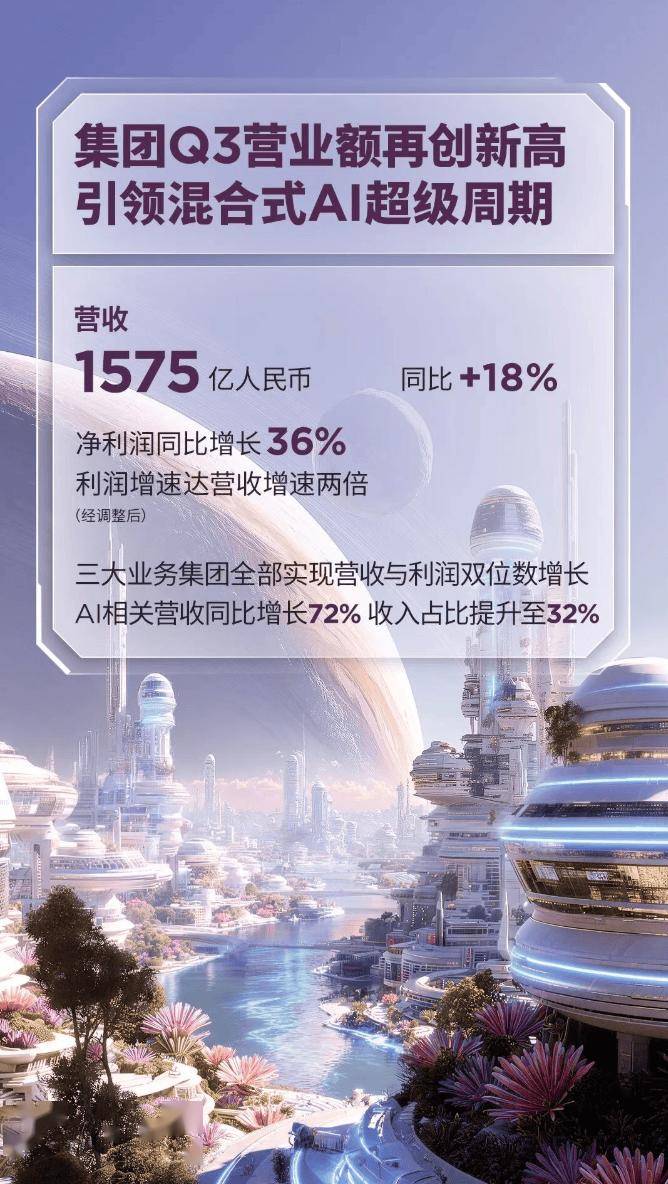
Core Viewpoint - Lenovo Group reported record revenue and profit growth for the third quarter of the fiscal year 2025/26, significantly exceeding market expectations and achieving historical highs [1][3]. Group Performance - The total revenue reached 157.5 billion RMB, representing a year-on-year growth of over 18%, surpassing market consensus [1]. - Adjusted net profit increased by 36% year-on-year, with profit growth rate doubling that of revenue growth [1]. Business Segments - All three major business segments of Lenovo achieved strong double-digit growth: - The Intelligent Devices Group (IDG) generated over 110 billion RMB in revenue, with a year-on-year increase of 14.3%, maintaining industry-leading profitability [4]. - The Infrastructure Solutions Group (ISG) reported revenue of 36.7 billion RMB, growing over 31% year-on-year, reaching a historical high and nearing profitability [4]. - The Solutions and Services Group (SSG) saw revenue growth of 18% year-on-year, marking the nineteenth consecutive quarter of double-digit growth, with operating profit margin rising to 22.5% [4]. AI Business Growth - AI-related revenue surged by 72% year-on-year, now accounting for 32% of total revenue, becoming a significant growth driver for the company [3]. - AI PC revenue experienced high double-digit growth, while AI smartphones and services achieved triple-digit growth, indicating a shift towards higher-value business structures [3].
联想集团Q3再创历史新高:营收1575亿元,净利增速达营收两倍
Xin Lang Cai Jing· 2026-02-12 04:39
Core Viewpoint - Lenovo Group reported record revenue of 157.5 billion RMB for the third quarter of the 2025/26 fiscal year, with a year-on-year growth of over 18% and an adjusted net profit increase of 36%, indicating a strong performance across all business segments [2][5]. Group 1: Financial Performance - The group's revenue reached 157.5 billion RMB, marking a historical high with a year-on-year growth exceeding 18% [2][5]. - Adjusted net profit grew by 36%, with profit growth outpacing revenue growth by two times [2][5]. - All three major business segments achieved double-digit growth: - IDG smart devices revenue surpassed 110 billion RMB, growing by 14.3% [2][5]. - ISG infrastructure solutions revenue reached 36.7 billion RMB, with over 31% year-on-year growth [2][5]. - SSG solutions and services revenue increased by 18%, achieving double-digit growth for the nineteenth consecutive quarter, with an operating profit margin of 22.5% [2][5]. Group 2: AI and Innovation - AI-related revenue grew by 72% year-on-year, accounting for 32% of total revenue [2][5]. - AI PC revenue experienced high double-digit growth, while AI smartphone revenue saw triple-digit growth [2][5]. - The company launched the super intelligent agent Lenovo Qira, with devices expected to be available soon [6]. - Lenovo's enterprise AI strategy encompasses four areas: AI application library, AI technology platform, AI infrastructure, and AI services [6]. Group 3: Future Outlook - The CEO emphasized the integration of AI into daily life and business operations, aiming to leverage opportunities from AI to accelerate growth and improve profitability for sustainable shareholder returns [6].
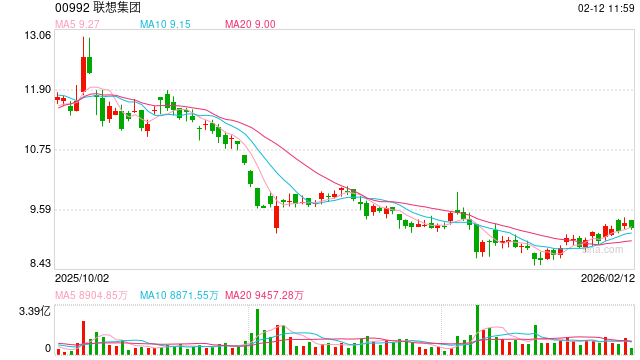
联想集团发布第三季度业绩,收入同比增长18%至222亿美元,人工智能相关收入同比增长72%
Zhi Tong Cai Jing· 2026-02-12 04:36
Core Viewpoint - Lenovo Group reported a robust financial performance for the third quarter ending December 31, 2025, with a record revenue of $22.2 billion, representing an 18% year-on-year growth, driven by double-digit growth across all three major business groups [1] Group 1: Financial Performance - The adjusted profit attributable to equity holders reached $589 million, a 36% increase, doubling the revenue growth rate [1] - Reported profit attributable to equity holders was $546 million, with significant adjustments including a one-time restructuring cost of $285 million and a non-cash fair value gain of $186 million from warrants [1] Group 2: Business Group Performance - The Infrastructure Solutions Group achieved a record quarterly revenue of $5.2 billion, with high double-digit year-on-year growth driven by strong demand for AI servers and a robust project pipeline of $15.5 billion [2] - The Solutions Services Group maintained strong growth with an 18% year-on-year revenue increase, marking the 19th consecutive quarter of double-digit growth, and an operating profit margin of 22.5% [2] - The Intelligent Devices Group solidified its leading position in the global PC market, being the only supplier to exceed 25% market share for two consecutive quarters over the past thirty years [1] Group 3: Cash Flow and Financial Management - Operating cash flow for the third quarter reached $952 million, with free cash flow rising to $451 million, supporting growth plans and capital expenditures across all business groups [2] - Adjusted net financial costs decreased year-on-year, reflecting effective management of working capital and lower market interest rates [2]
联想集团第三财季AI服务器营收同比实现高双位数增长
Ge Long Hui· 2026-02-12 04:32
Core Insights - Lenovo Group reported a strong performance in Q3 of the fiscal year 2025/26, with ISG infrastructure solutions revenue reaching 36.7 billion RMB, representing a year-on-year growth of over 31% [1] Business Performance - The AI server revenue showed impressive growth, maintaining a high double-digit growth rate, with a backlog of orders amounting to 15.5 billion USD, making it one of the core growth engines for ISG [1] - The Neptune liquid cooling technology business achieved a remarkable year-on-year growth of 300% [1] Segment Analysis - The cloud infrastructure (CSP) business continued to benefit from the expanding demand for AI training, sustaining a high level of prosperity [1] - The enterprise infrastructure (E/SMB) business not only saw revenue growth but also improved gross margins through pricing management optimization and operational efficiency enhancements [1] - In terms of regional performance, ISG's business in China made significant breakthroughs, with enterprise infrastructure becoming an important source of profit [1]
联想集团Q3业绩披露:AI服务器订单储备高达155亿美元 海神液冷技术营收同比增长300%
Ge Long Hui· 2026-02-12 04:32
Core Insights - Lenovo Group reported strong financial results for Q3 of the fiscal year 2025/26, with ISG infrastructure solutions revenue reaching 36.7 billion RMB, a year-on-year increase of over 31%, and significant narrowing of losses, exceeding market expectations [1] Group 1: Financial Performance - The ISG infrastructure solutions business group generated revenue of 36.7 billion RMB, reflecting a year-on-year growth of over 31% [1] - The AI server business showed remarkable performance with a revenue increase of 59% year-on-year and a substantial order backlog of 15.5 billion USD [1] - Revenue from Lenovo's Neptune liquid cooling solutions surged by 300% year-on-year, driven by increasing customer adoption in cloud and enterprise infrastructure [1] Group 2: Strategic Partnerships - Lenovo announced a strategic partnership with NVIDIA for the AI Cloud Gigafactory, positioning itself as a key beneficiary in the large-scale AI deployment sector [1]