
LVMH(LVMUY)

Search documents
LVMH Slump Heaps Pressure on Arnault
Bloomberg Television· 2025-06-19 09:26
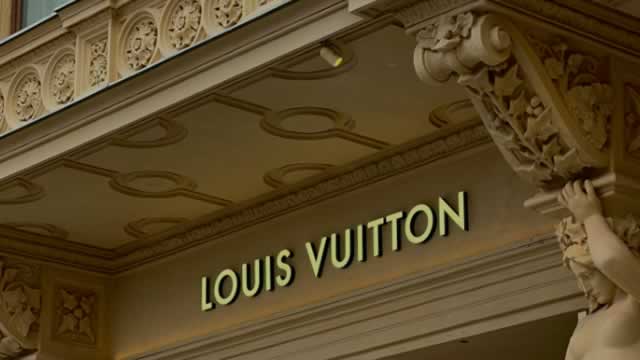
Industry Pressure & Internal Issues - The luxury goods industry faces pressure from US tariffs impacting consumer confidence and an economic downturn in China [1] - LVMH experiences internal issues related to excessive price hikes in Dior and Moët Hennessy, leading to consumer backlash [1][2] - A supply chain scandal involving Dior generated negative publicity [2] Financial Performance & Investment - LVMH shares have lost approximately 50% of their value since reaching a record high two years ago [3] - Bernard Arnault and his family have purchased over €1 billion (approximately $1.07 billion USD) worth of LVMH stock since the end of January [3] Conglomerate Structure & Potential Restructuring - LVMH's conglomerate structure, encompassing 75 brands across diverse industries like hospitality, fashion, and wines & spirits, contributes to a conglomerate discount, which investors scrutinize more closely during market instability [4][5] - LVMH previously considered listing Sephora in Amsterdam in 2021 [6] - Diageo expressed interest in exploring the potential listing of what's in this, but Bernard Arnault dismissed the idea [6]



废除“大漂亮”法案第899条“资本税”!全球大公司高管本周齐聚华盛顿游说美国国会
华尔街见闻· 2025-06-09 02:08
Core Viewpoint - A significant lobbying effort by multinational companies is underway to oppose Clause 899 of Trump's tax reform, which is perceived as a potential threat to millions of American jobs and could reshape international capital flows [1][4]. Group 1: Impact on Foreign Investment - Approximately 70 companies, including major firms like Shell, Toyota, SAP, and LVMH, are concerned about Clause 899, which could jeopardize the 8.4 million jobs these foreign companies provide in the U.S. [1] - The clause is expected to increase taxes on U.S. stock dividends and certain corporate bond interests by 5 percentage points annually over four years for foreign investors [3]. - The implementation of Clause 899 could lead to a significant reduction in foreign direct investment, as warned by industry leaders [4]. Group 2: Financial Market Implications - Foreign banks have underwritten over 70% of foreign corporate debt issuance in the U.S., accounting for nearly one-third of total dollar-denominated debt issuance [5]. - In 2023, these foreign banks lent over $1.3 trillion to U.S. companies, supporting $5.4 trillion in foreign direct investment and generating $270 billion in revenue [5]. Group 3: Legislative and Economic Considerations - Despite the potential for Clause 899 to raise $116 billion for the U.S. government over the next decade, it is projected to increase the national debt by $2.4 trillion by 2034 [6]. - There is growing momentum in the Senate to repeal Clause 899, as it contradicts the government's goal of attracting more investment to the U.S. [6]. - Concerns have been raised that foreign governments may retaliate by altering their laws in response to the U.S. tax changes, potentially leading to significant capital outflows from the U.S. [6].



废除“大漂亮”法案第899条“资本税”!全球大公司高管本周齐聚华盛顿游说美国国会
Hua Er Jie Jian Wen· 2025-06-09 01:21
Core Viewpoint - A significant lobbying effort by multinational companies is underway to oppose Clause 899 of Trump's tax reform, which is perceived as a potential threat to millions of American jobs and could reshape international capital flows [1][2]. Group 1: Impact on Employment and Investment - Approximately 840,000 jobs in the U.S. are provided by foreign companies, and the implementation of Clause 899 could directly threaten this substantial employment base [2]. - The lobbying effort involves around 70 company representatives, including major firms like Shell, Toyota, SAP, and LVMH, indicating widespread concern among foreign investors [1][2]. Group 2: Tax Implications of Clause 899 - Clause 899 is viewed as a "capital expulsion order" that would allow the U.S. to impose additional taxes on companies and investors from countries deemed to have "unfair foreign tax policies" [2][3]. - The clause would increase U.S. tax rates on stock dividends and certain corporate bond interests by 5 percentage points annually over four years, and it would also tax sovereign wealth funds' U.S. investment portfolios, which are currently exempt [3]. Group 3: Financial Market Concerns - The implementation of Clause 899 is expected to disrupt foreign direct investment and could lead to financial market volatility, as highlighted by the International Bankers Association [3]. - In 2023, foreign banks lent over $1.3 trillion to U.S. companies, supporting $5.4 trillion in foreign direct investment and generating $270 billion in revenue, underscoring the importance of foreign capital in the U.S. economy [3]. Group 4: Legislative Outlook - Despite the potential to raise $116 billion for the U.S. government over the next decade, there are concerns that the overall tax reform could increase U.S. debt by $2.4 trillion by 2034 [4]. - There is a growing momentum in the Senate to repeal Clause 899, as lawmakers recognize that it contradicts the government's goal of attracting more investment to the U.S. [4].
LVMUY: Luxury At A Discount - A Contrarian Buy?
Seeking Alpha· 2025-06-08 10:26
Core Viewpoint - The article emphasizes the importance of a comprehensive approach to investment analysis, combining financial, technical, and macroeconomic factors to identify growth opportunities and mitigate risks for clients [1]. Group 1: Company Analysis - The company, Meridian Wealth Management, is a registered investment advisory that focuses on providing tailored investment strategies to clients [1][3]. - The advisor utilizes various valuation methods and modeling techniques to assess the growth and value of companies, aiming to find winning investments for portfolio growth [1]. Group 2: Investment Strategy - The investment strategy involves analyzing a wide selection of funds and themes to identify both short-term trends and long-term opportunities [1]. - The advisor expresses a potential interest in initiating a long position in LVMUY, indicating a proactive approach to investment opportunities [2].
奢侈品为什么卖不动了?十年购买力下降超30%,中产被挤出局!
Hua Er Jie Jian Wen· 2025-06-04 12:41
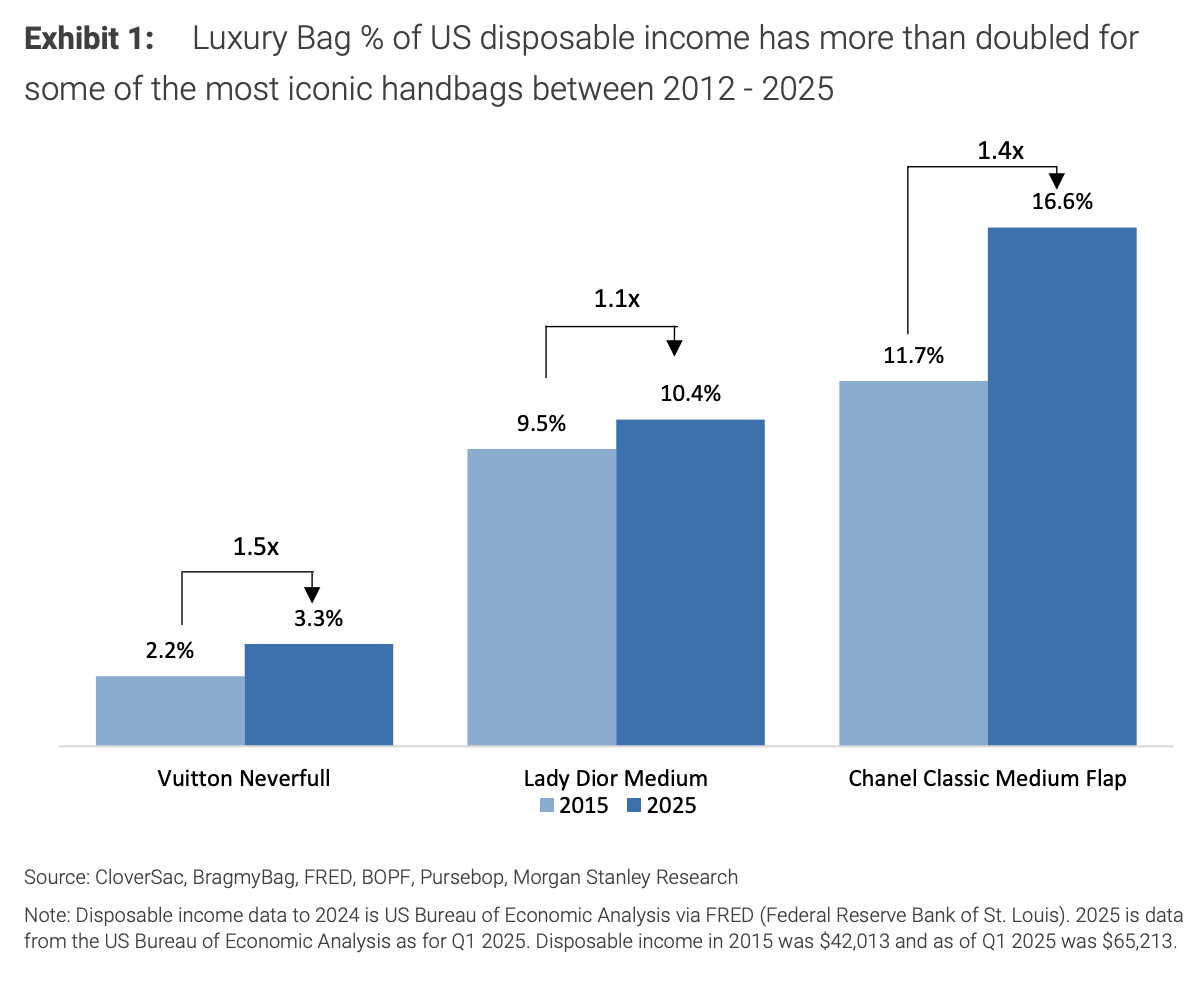
Core Insights - The luxury goods sector is experiencing a significant decline in sales, primarily due to the increasing unaffordability of iconic handbags, which have seen a 10%-33% decrease in affordability over the past decade [1][2] - Middle-income consumers are being priced out of the luxury market, leading to a shift towards more affordable brands like Coach, which reported a 15% same-store sales growth in the first quarter [1][5] - Major luxury brands are facing a growth bottleneck, with simultaneous declines in demand from consumers in China, Europe, and the U.S. for the first time in over 30 years [1][6] Affordability Trends - The price of luxury handbags has risen significantly compared to disposable income growth in the U.S. For instance, the Louis Vuitton Neverfull bag has seen an 8.5% annual compound growth rate in price, while disposable income has only increased by 4.5% [2][4] - Specific examples include: - Louis Vuitton Neverfull: Price increased 1.5 times relative to average disposable income over the past decade [4] - Dior Lady Dior: Price increased 1.1 times [4] - Chanel Classic Flap: Price increased 1.4 times [4] Market Dynamics - The shift in consumer purchasing power is creating opportunities for more price-competitive brands, as evidenced by the strong growth of brands like Coach [5] - The traditional growth model for luxury brands is under pressure, as relying solely on high-net-worth individuals is insufficient to sustain historical growth rates [6] - The luxury sector's strategy of raising prices during economic downturns, which previously worked, is no longer effective in the current market environment [6] Recovery Outlook - The recovery of affordability for luxury handbags is projected to take several years. For example, if prices grow at an average of 2% annually and disposable income continues to grow at 4.5%, it will take approximately 5 years for Dior and Louis Vuitton handbags to return to 2015 affordability levels, and 8 years for Chanel [7]
中国市场承压 LVMH:注意到中国消费者正转向本土品牌
智通财经网· 2025-05-30 03:41
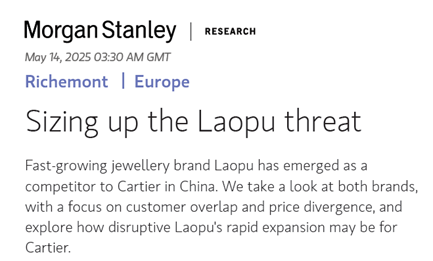
Group 1 - LVMH has observed a growing interest among Chinese consumers in local brands, particularly in the jewelry sector, with a significant surge in demand for Chinese gold jewelry companies [1] - LVMH's financial performance has faced challenges, with a projected revenue decline of 2% to €84.683 billion and a net profit drop of 17% to €12.25 billion for 2024, alongside underwhelming Q1 2025 results [1] - Lao Pu Gold has achieved remarkable sales performance in China, averaging sales of ¥328 million per store in 2024, ranking first in revenue and sales efficiency among all jewelry brands in the region [1] Group 2 - The unique cultural value and intangible heritage craftsmanship of Lao Pu Gold are attracting high-end Chinese consumers who previously favored international luxury brands [2] - Richemont Group's CEO acknowledged the competitive threat posed by Lao Pu Gold, highlighting its deep roots in Chinese culture and its impact on market vitality [2] Group 3 - Morgan Stanley has warned European luxury brands to closely examine the competitive threat from Lao Pu Gold, suggesting that its strong performance could disrupt the long-held perception that local competitors do not pose a threat [3]
奢品包卖不动了?LV等巨头利润大跳水!“做二手奢品包的都在疯狂清库存”,买包理财神话终结
21世纪经济报道· 2025-05-28 11:12
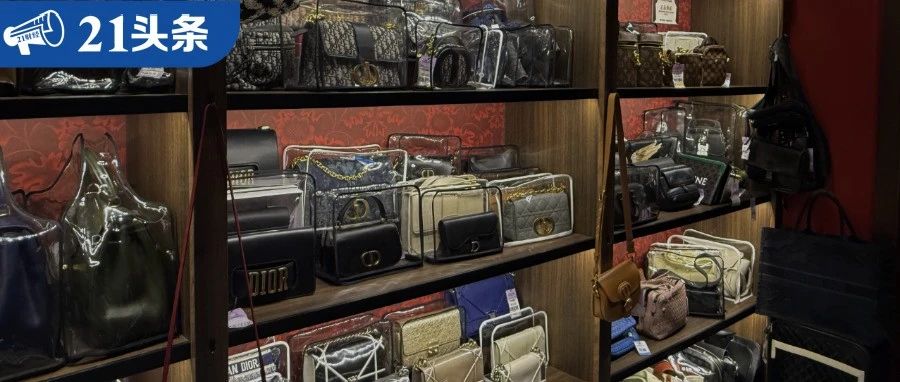
Core Viewpoint - The luxury goods market is experiencing a significant downturn, with major brands like Chanel and LVMH reporting declines in sales and profits, indicating a shift in consumer behavior and a reevaluation of luxury items as investment assets [1][2][3]. Group 1: Industry Performance - Richemont reported a 4% increase in revenue to €21.4 billion for the fiscal year 2025, but a 1% decline in operating profit to €3.76 billion, with the Asia-Pacific market suffering a 13% revenue drop, particularly in China where it fell by 23% [3]. - LVMH's revenue decreased by 2% to €84.683 billion, with net profit down 17% to €12.25 billion, while Kering's revenue fell by 12% to €17.194 billion and net profit dropped by 62% [3]. - Chanel's sales for 2024 were $18.7 billion, a 4.3% decrease year-on-year, with operating profit down 30% [3]. Group 2: Market Trends - The luxury goods market in China is projected to decline by 18%-20% in 2024, returning to 2020 levels, with leather goods expected to drop by 20%-25% [4]. - High-end commercial properties are also affected, with Beijing SKP's sales plummeting 17% to ¥22 billion, and other malls experiencing a 6% revenue decline [4]. - The second-hand luxury market is seeing increased demand as consumers seek value, with significant price drops reported in the resale of luxury items [7][9]. Group 3: Consumer Behavior - Consumers are becoming more cautious, focusing on practicality and value rather than viewing luxury items as investment tools, with many preferring traditional investment options like ETFs and bank deposits [13][15]. - The perception of luxury goods as financial assets is shifting, with consumers recognizing the marketing illusion behind the idea of luxury items as reliable investments [15]. - The second-hand market is gaining traction, with consumers looking for high-value items at lower prices, and classic brands like Chanel and Hermes being viewed as more stable investments [10][14]. Group 4: Investment Shifts - The average annual price increase for Chanel's Classic Flap bag from 2015 to 2023 was 8.5%, while Hermes Birkin crocodile skin bags saw annual appreciation rates of 10%-15% [12][14]. - As traditional investment returns decline, gold is becoming a preferred investment choice among high-net-worth individuals, with 15.7% still considering it their top investment option [15].
汇丰将LVMH目标价从575欧元下调至525欧元
news flash· 2025-05-27 08:59
Core Viewpoint - HSBC has lowered the target price for LVMH from €575 to €525 due to continued pressure in key markets [1] Group 1 - The adjustment in target price reflects ongoing challenges faced by LVMH in its primary markets [1]
特朗普再“开炮”,欧洲奢侈品板块暴跌
第一财经· 2025-05-24 00:07
Group 1 - The article discusses the potential imposition of a 50% tariff on EU products by the U.S. starting June 1, as suggested by President Trump, citing unfair trade practices by the EU [1] - The EU has not yet commented on this new threat and is awaiting discussions between EU trade officials and U.S. representatives [1] - Following the announcement, European stock markets fell sharply, with major indices in the UK and Germany dropping over 1.5%, and luxury goods stocks like LVMH and Hermès declining more than 3% [1] Group 2 - The European luxury goods industry, which includes products like handbags and fashion, is highly sensitive to overseas markets, with the U.S. being a key growth area for the sector this year [2] - France and Italy are the largest exporters of luxury goods to the U.S., with the French luxury sector employing over 600,000 people [2] - Bernard Arnault, chairman of LVMH, emphasized the need for the EU to soften its stance on U.S. trade demands to avoid high tariffs and protect European jobs, as the U.S. market accounts for 25% of LVMH's annual sales [2] - Industry experts indicate that establishing manufacturing facilities in the U.S. to circumvent tariffs is currently impractical due to a lack of skilled labor and expertise [2] - A recent S&P report highlighted that the luxury goods sector is one of the most affected by U.S. tariffs, suggesting that price adjustments may be the primary method for companies to mitigate tariff impacts, although some brands may have limited pricing power due to consumer purchasing capacity [2]



市场消息:路威酩轩(LVMH)据悉警告称奢侈品市场将持续疲软。
news flash· 2025-05-21 15:45
Group 1 - LVMH has reportedly warned that the luxury goods market will continue to remain weak [1]