Microsoft(MSFT)

Search documents
What to Expect in Markets This Week: Fed Interest-Rate Decision, Earnings From Microsoft, Meta, Tesla, Apple
Investopedia· 2026-01-25 10:35
Group 1: Federal Reserve and Economic Data - The Federal Reserve is not expected to change interest rates at the upcoming meeting, but comments from Chair Jerome Powell will be closely analyzed due to pressure from the White House to lower rates [1][4] - The FOMC has lowered rates at three consecutive meetings, but officials are awaiting more economic data on inflation and the labor market before making further cuts [4] - Additional economic data this week includes a delayed report on December wholesale inflation and an update on the U.S. trade balance [5] Group 2: Earnings Reports from Major Companies - Major companies including Microsoft, Meta Platforms, Tesla, and Apple are scheduled to report earnings this week, providing insights into the artificial intelligence sector and the performance of leading firms [2][6] - Microsoft is reporting amid a decline in its share price, while Tesla is facing slowed deliveries, prompting a search for new growth opportunities [7] - Meta's report is expected to shed light on its AI plans as it shifts focus from its metaverse projects, and Apple will likely discuss AI in light of its recent partnership with Alphabet [7] Group 3: Other Notable Earnings and Industry Insights - Other tech firms such as Texas Instruments, ASML, and IBM are also in focus, alongside telecom companies AT&T and Verizon [8] - Earnings from companies like Caterpillar, Boeing, General Motors, and Lockheed Martin could provide insights into the strength of the U.S. manufacturing sector [8]




What to Expect in Markets This Week: Fed Interest Rate Decision, Earnings From Microsoft, Meta, Tesla, Apple
Yahoo Finance· 2026-01-25 10:00
Group 1: Federal Reserve and Economic Data - The Federal Reserve is not expected to change interest rates at the upcoming meeting, but comments from Chair Jerome Powell will be closely analyzed due to pressure from the White House to lower rates [1][4] - The FOMC has lowered rates at three consecutive meetings, but officials are awaiting more economic data on inflation and the labor market before making further cuts [4] - Additional economic data this week includes a delayed report on December wholesale inflation and an update on the U.S. trade balance [5] Group 2: Earnings Reports from Major Companies - Major companies including Microsoft, Meta Platforms, Tesla, and Apple are scheduled to report earnings this week, providing insights into the artificial intelligence sector and the performance of leading firms [2][6] - Microsoft is reporting amid a decline in its share price, while Tesla faces slowed deliveries, prompting a search for new growth opportunities [7] - Meta's report is expected to shed light on its AI plans as it shifts focus from "metaverse" projects, and Apple will likely discuss AI in the context of its recent partnership with Alphabet [7] Group 3: Other Notable Earnings and Industry Insights - Other tech firms such as Texas Instruments, ASML, and IBM are also in focus this week, alongside telecom companies AT&T and Verizon [8] - Earnings from companies like Caterpillar, Boeing, General Motors, Lockheed Martin, and Nucor could provide insights into the strength of the U.S. manufacturing sector [8]
中美,新消息!商业航天,利好来袭!芯片巨头,直线大跳水!周末影响一周市场的十大消息
Zheng Quan Shi Bao Wang· 2026-01-25 09:38
Group 1: US-China Relations - US President Trump is expected to visit China in April, with Chinese leaders planning to visit the US by the end of the year, highlighting the importance of high-level diplomacy in stabilizing US-China relations [2][3] Group 2: Commercial Space Industry - SpaceX aims to achieve fully reusable rocket technology with its Starship, potentially reducing space access costs by 99% to below $100 per pound [2] - Beijing's measures to promote the development and utilization of commercial satellite remote sensing data from 2026 to 2030 include optimizing financial support and encouraging investment in quality projects [3] - The commercial space economy is projected to reach $1.8 trillion by 2035, driven by new infrastructure and applications in the space sector [4] Group 3: Stock Market and IPOs - Recent rumors about tightening regulations for companies seeking to list in Hong Kong have been denied, confirming that current overseas listing policies remain unchanged [3] - The China Securities Regulatory Commission (CSRC) has approved IPO registrations for three companies, indicating ongoing market activity [11] - A total of 28 companies are set to unlock 796 million shares this week, with a total market value of approximately 40.97 billion yuan [12][13]




美联储决议+中美数据+科技巨头财报!全球市场进入“风暴眼”
Hua Er Jie Jian Wen· 2026-01-25 09:24
Economic Indicators - The U.S. durable goods orders for November are expected to show a month-on-month increase of 3%, a significant recovery from the previous decline of -2.2% [3] - China's industrial profits for December are anticipated to decline by 13.1% year-on-year, indicating ongoing pressure on profitability in the industrial sector [3][4] - The U.S. PCE inflation data for December will be released on January 29, providing insights into price pressures in the economy [9] Major Financial Events - The upcoming week is termed "Super Earnings Week," with major tech companies like Microsoft, Meta, Tesla, and Apple set to report earnings, shifting focus from traditional financial metrics to the efficiency of AI capital expenditures [6][10] - The Federal Reserve is expected to maintain interest rates during its meeting on January 30, with Chairman Powell's comments likely to clarify the outlook for future rate cuts [7][10] - The OPEC+ monthly meeting is scheduled for February 1, where oil production policies will be discussed [17] Corporate Earnings - Key tech giants such as Tesla, Microsoft, Meta, and Apple will report earnings, with a focus on AI-related capital expenditures and hardware cycle recovery [10][11] - Storage companies like SanDisk, Western Digital, and Seagate, along with South Korean firms Samsung and SK Hynix, will also report, with market attention on the impact of AI on storage pricing and profitability [10][11] Geopolitical Events - The U.S. Treasury Secretary is expected to announce the new Federal Reserve Chairperson candidate during the week of January 26, which could influence market sentiment [12] - The EU-India summit may announce a historic trade agreement, reflecting the EU's strategic pivot in response to U.S. trade policies [12] - Political tensions and geopolitical risks, including developments in Greenland and the potential for another U.S. government shutdown, are expected to create market uncertainty [12][13] Industry Conferences - The China Academy of Information and Communications Technology will hold a seminar on space computing power on January 26, focusing on the integration of space information and intelligent computing [16] - The European Parliament will host a fusion energy conference on January 27, discussing the EU's fusion strategy [17]



兴证策略张启尧团队:后续还有哪些催化值得期待?
Xin Lang Cai Jing· 2026-01-25 08:52
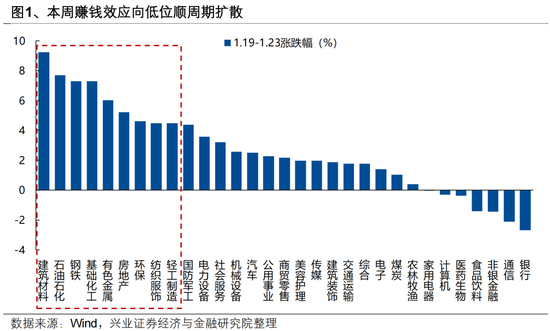
Group 1 - The core logic supporting the upward trend of the spring market remains unchanged despite a slowdown in market rhythm, indicating that the current spring market is still in progress [1][34] - The abundant liquidity environment is driven by insurance funds' strong performance, concentrated maturity of residents' deposits, and the appreciation of the RMB attracting foreign capital back to the market [3][36] - The insurance sector has seen a significant increase in individual insurance premium growth, with many companies reporting over 30% growth, contributing to substantial new capital entering the market [3][36] Group 2 - The peak of residents' deposit maturities is expected in the first half of the year, providing an important window for residents to increase their allocation to equity assets [3][36] - The continuous appreciation of the RMB has led to a record high in foreign capital inflow, with a bank surplus of $99.9 billion in December 2025, including a securities investment surplus of $11.5 billion [5][39] - The favorable macroeconomic environment, supported by improved domestic macro data and coordinated policy efforts in real estate, consumption, and monetary policy, is expected to enhance market risk appetite [6][40] Group 3 - Upcoming weeks will feature a series of significant industry catalysts, particularly the earnings reports from major North American tech companies, which may influence the domestic market [9][41] - The earnings preview period is approaching its peak, with a disclosure rate expected to reach around 55%, which will significantly impact market structure [10][44] - High growth and exceeding profit expectations are concentrated in sectors such as computing power, chemicals, new energy, pharmaceuticals, and non-ferrous metals, with 304 companies forecasting over 50% profit growth [12][45] Group 4 - The sectors with notable profit surprises include storage, battery storage, grid equipment, chemicals, and innovative pharmaceuticals, indicating strong performance potential [15][47] - The upcoming month of February is anticipated to be a core window for market activity, driven by abundant liquidity and a focus on high-growth sectors [26][29] - Historical data suggests that February is one of the months with the highest success rates for major indices, with a focus on small-cap and growth sectors expected to perform well [26][28]


暂停降息?!美联储,重磅来袭!
券商中国· 2026-01-25 07:54
Group 1: Federal Reserve Meeting - The Federal Reserve is expected to pause interest rate cuts during its upcoming meeting on January 27-28, with a 95.6% probability of maintaining the current rate [1][2] - Economists predict that the Fed will keep the benchmark interest rate in the range of 3.50%-3.75%, with 58% forecasting no changes in the first quarter [3] - Political factors and internal disagreements among Fed policymakers may influence future rate decisions, with potential challenges in selecting the next Fed chair [4] Group 2: Earnings Reports - A significant portion of S&P 500 companies, including major tech firms like Apple, Microsoft, Meta, and Tesla, will report earnings next week, focusing on the impact of AI investments [5] - Goldman Sachs forecasts Apple's Q1 FY2026 revenue to reach $137.4 billion, an 11% year-over-year increase, driven primarily by iPhone sales [5] - Tesla's upcoming earnings report will shift investor focus towards advancements in AI technologies rather than traditional financial metrics, with Morgan Stanley predicting a 2.5% year-over-year decline in delivery expectations for 2026 [6]


暂停降息?!美联储,重磅来袭!
Sou Hu Cai Jing· 2026-01-25 07:48
Group 1: Federal Reserve Meeting - The Federal Reserve is expected to pause interest rate cuts during its upcoming meeting on January 27-28, with a 95.6% probability of maintaining rates unchanged [1][2] - Economists predict the Fed will keep the benchmark rate in the range of 3.50%-3.75%, with 58% forecasting no rate changes in the first quarter [2][3] - Political factors and internal disagreements within the Fed may influence future rate decisions, with potential challenges in selecting the next chairperson [3] Group 2: Earnings Reports - Approximately one-fifth of S&P 500 companies will report earnings next week, including major tech firms like Apple, Microsoft, Meta, and Tesla [4][5] - The key theme for this earnings season is whether tech giants will start benefiting from AI-related investments, with concerns about capital expenditures in data centers and infrastructure [5] - Goldman Sachs forecasts Apple's Q1 FY2026 revenue to reach $137.4 billion, driven primarily by iPhone sales, with an expected EPS of $2.66 [5][6] Group 3: Tesla's Focus - Investors are shifting their focus from traditional financial metrics to advancements in Tesla's AI technologies, including Robotaxi and AI5 chip developments [5][6] - Morgan Stanley predicts Tesla's 2026 delivery volume will be 1.6 million units, which is 9% lower than market expectations and a 2.5% year-over-year decline [5]
美股点金丨三大风险事件汇聚!警惕波动性卷土重来
Di Yi Cai Jing Zi Xun· 2026-01-25 05:48
Market Overview - The U.S. stock market experienced volatility this week, with significant declines following President Trump's threats to impose tariffs on European allies, which were later retracted, leading to a rebound in major indices [1] - Intel's disappointing earnings outlook caused a sharp decline in its stock price, negatively impacting investor risk appetite [1] Economic Indicators - The U.S. economy showed strong performance with the October Personal Consumption Expenditures (PCE) report meeting expectations, indicating a month-over-month increase of 0.2% and a year-over-year increase of 2.7% [2] - The unemployment claims data revealed a slight increase to 200,000, which is still below economists' expectations, indicating a stable job market [2] - The third-quarter GDP was revised upward to a two-year high of 4.4%, suggesting economic acceleration in the latter half of the year [2] Federal Reserve Outlook - Market expectations for a Federal Reserve rate cut have decreased, with the probability of a 25 basis point cut next week dropping from 5.0% to 2.8% [3] - The Federal Reserve is expected to pause rate cuts as the federal funds rate approaches neutral levels, with potential cuts anticipated in June and September [4] Corporate Earnings - The earnings season has begun, with 61% of S&P 500 companies exceeding revenue expectations and 80% surpassing profit forecasts [5] - The projected year-over-year growth rate for earnings per share (EPS) is 17%, with the overall S&P 500 EPS growth for Q4 expected at 8.3% [5] Technology Sector Insights - The technology sector, particularly semiconductor companies, is under scrutiny as earnings reports are released, with a focus on actual revenue growth to justify high valuations [6] - Major tech companies, including Apple, Tesla, and Microsoft, are set to report earnings soon, which could significantly influence market sentiment [6][7] Market Volatility - The market is likely to experience increased volatility due to upcoming earnings reports and the Federal Reserve's monetary policy meeting [6][7] - The VIX index has shown fluctuations, indicating that market volatility may not be over yet [6]


“AI 工程师”已上岗!微软 CEO 曝正尝试新学徒制模式:内部工程师的顶级实践全变
AI前线· 2026-01-25 05:33
Core Insights - The article discusses the transformative impact of AI on organizational structures and workflows, emphasizing the shift towards a flatter information flow within companies due to AI applications [2][3] - Satya Nadella highlights the importance of AI in enhancing productivity and efficiency across various sectors, asserting that the true value of AI lies in its widespread application rather than mere technological discussions [3][18] - The conversation also touches on the competitive landscape of the tech industry, suggesting that the continuous evolution of competitors is beneficial for maintaining innovation and growth [16][17] Group 1: AI Applications and Organizational Change - AI is breaking traditional hierarchical structures in companies, allowing for a more streamlined and efficient information flow [2] - Companies, regardless of size, face challenges in adapting to AI, requiring a shift in mindset, skill development, and data integration [2] - The leverage effect of AI is particularly pronounced in startups, which can build AI-adapted organizations more rapidly compared to larger firms with established workflows [2] Group 2: Talent and Global Competition - There is no significant difference in AI talent quality between regions; cities like Jakarta and Istanbul are on par with tech hubs like Seattle and San Francisco [3] - The key differentiator for AI success is the pace of large-scale application rather than the talent pool itself [3] - The U.S. technology stack's core advantage lies in its ecosystem effects, which generate more revenue from the ecosystem than from the company itself [4] Group 3: AI Integration and Future Workforce - Microsoft is implementing a new apprenticeship model where experienced engineers mentor new graduates, leveraging AI to accelerate their productivity [34] - The integration of digital employees (AI agents) into business processes is seen as a way to automate repetitive tasks and improve operational efficiency [31][11] - The future workforce will need to adapt to AI tools, which will significantly shorten the learning curve for new employees [34] Group 4: Market Dynamics and Ecosystem Effects - The article emphasizes that the technology industry is not a zero-sum game; rather, it is expanding, with the potential for significant growth in the tech sector [16][17] - The concept of "diffusion" is crucial for understanding how AI technologies can be effectively integrated across various industries, including healthcare and finance [18][19] - The U.S. must ensure that its technology stack is widely adopted globally, as this will create economic opportunities and enhance trust in the platform [20][21]

慕了!内存芯片巨头年终奖人均64万;32岁程序员猝死背后公司被扒,曾给39万“封口费”;马斯克曝星舰成本将降99%,商业航天受捧|AI周报
AI前线· 2026-01-25 05:33
Group 1 - SK Hynix announced a record year-end bonus of approximately 1.36 billion KRW (around 640,000 RMB) per employee, part of a shareholder participation plan allowing employees to receive up to 50% of their bonuses in company stock [2][4] - The new bonus structure, effective from the end of January, allows for bonuses to be based on 10% of the previous year's operating profit, with 80% paid in the current year and the remaining 20% deferred over two years [3][4] - The company’s operating profit for the previous year is estimated at 45 trillion KRW, leading to the high bonus payout [4] Group 2 - Zhang Yutong, president of Kimi, stated that the company utilizes only 1% of the resources from top U.S. laboratories to develop leading open-source models, which reportedly outperform some closed-source models [5] - Kimi's valuation reached 4.8 billion USD (approximately 33 billion RMB) in its latest funding round, reflecting strong market demand for AI IPO candidates [5] Group 3 - A tragic incident involving a 32-year-old programmer who died due to excessive work hours has raised concerns about workplace culture, particularly regarding the lack of cooperation from the employer in recognizing the incident as a work-related injury [6][7] - The company involved, Vision Shares, has been criticized for its handling of the situation, including offering a "hush money" payment to the family and obstructing investigations into the work conditions leading to the programmer's death [7][8] Group 4 - Volkswagen announced plans to cut 35,000 jobs, including a third of its management positions, as part of a strategy to save 1 billion euros by 2030 amid industrial slowdowns and competition [10][11] - The restructuring aims to streamline management and enhance operational efficiency, particularly as the company transitions towards electrification and digitalization [11] Group 5 - TikTok has established a U.S. data security joint venture to manage data protection while retaining ownership of its algorithm, ensuring compliance with U.S. regulations [19] - The joint venture will be responsible for TikTok's U.S. operations, allowing over 200 million American users to continue using the platform [19] Group 6 - Elon Musk announced that SpaceX aims to achieve full reusability of its Starship this year, potentially reducing launch costs by 99% [15][16] - Musk also discussed plans for deploying solar-powered AI satellites in the coming years, highlighting the efficiency of solar energy in space [16] Group 7 - OpenAI plans to launch its first hardware device in the second half of 2026, aiming to transform user interaction with technology [22] - The device is designed to provide a more focused and less distracting user experience, contrasting with current smart devices [22] Group 8 - Baichuan Intelligence released the M3 Plus model, which boasts the lowest hallucination rate in medical scenarios, enhancing the reliability of AI-generated medical conclusions [27] - The model incorporates unique evidence anchoring technology to provide accurate citations for its outputs [27]