
NIKE(NKE)

Search documents
Leading Brands Including Nike, The North Face and More Honor U.S. Military Communities this Veterans Day with Exclusive Discounts Verified by SheerID
Globenewswire· 2025-11-04 14:00
Core Insights - SheerID collaborates with over 140 brands to provide exclusive offers for military personnel, veterans, and reservists during Veterans Day, emphasizing appreciation for their sacrifices [1][2] - The company utilizes its Audience Network to verify military eligibility, ensuring that only verified members access these special discounts, which enhances brand confidence and provides a seamless experience for users [2][8] Offers Overview - A wide range of discounts are available across various categories, including apparel, health and beauty, lifestyle, outdoor gear, technology, and travel, with discounts ranging from 5% to 40% [3][4][5][6][7] - Notable brands participating in the offers include Nike, The North Face, Bass Pro Shops, and many others, providing significant savings for military families [1][3][4] Company Background - SheerID is recognized for its ability to engage high-value audiences and is trusted by major brands like Amazon and Spotify to enhance customer experiences and limit offer abuse [8][9] - Founded in 2011, SheerID is ISO and SOC 2 Type 2 Certified, ensuring data security and integrity, and is backed by several venture capital firms [9]



Athletic Apparel Icon Nike (NKE) Offers an Informational Arbitrage Opportunity
Yahoo Finance· 2025-11-03 18:30
Group 1 - The article emphasizes the importance of understanding baseline versus conditional probabilities in trading analysis, particularly for options trading, suggesting that analyses lacking this concept are ineffective [1] - Nike (NKE) stock is currently rated as a 56% Sell according to the Barchart Technical Opinion indicator, indicating a negative short-term outlook [2] - The article draws a parallel between baseball managers making critical decisions based on probabilities and retail traders making options trades based on unreliable opinions, highlighting the need for informed decision-making [4][5] Group 2 - The analysis of NKE stock should include empirical probability, defined as the frequency of specific events occurring relative to total observations, to provide a more accurate trading perspective [6] - A comprehensive analysis should also incorporate price clustering or density statistics, which identify the most frequently occurring outcomes in trading [6]
Nike 投资并购研究:从品牌扩张到技术转型的战略演进
Sou Hu Cai Jing· 2025-11-03 15:37
Core Insights - Nike's acquisition history spans over 30 years, characterized by strategic shifts from brand diversification to digital transformation [3][24] - The company has completed 14 acquisitions, with a clear focus on optimizing assets and strategic alignment [3][10] Group 1: Acquisition Phases - Nike's acquisitions can be categorized into three main phases: brand diversification (1990-2000), technology and digital focus (2000-2010), and deepening digital transformation (2010-present) [3][10] - The company has experienced both successful and unsuccessful acquisitions, with notable successes like Converse and failures like Bauer Hockey and Umbro [5][6][10] Group 2: Successful Acquisitions - The Converse acquisition in 2003 for $305 million is highlighted as a major success, with revenue growth from $205 million in 2002 to $1.9 billion in 2019, representing a nearly 9-fold increase [5][12] - Cole Haan, acquired for $95 million in 1998, was sold for $570 million in 2012, yielding a profit of $475 million [10][12] Group 3: Unsuccessful Acquisitions - Bauer Hockey, acquired for $395 million in 1995, was sold for $200 million in 2008, resulting in a loss of nearly $200 million [5][10] - Umbro, acquired for $582 million in 2007, was sold for $225 million in 2012, leading to a loss exceeding $300 million [6][10] Group 4: Technology Acquisitions - In the 2010s, Nike shifted focus to acquiring technology companies to enhance data analytics, AI, and digital experiences, with notable acquisitions including Celect and RTFKT [7][8][10] - The acquisition of Celect in 2019 aimed to improve demand forecasting and inventory management, supporting Nike's direct-to-consumer strategy [7][10] Group 5: Financial Impact - Nike's average investment return rate is reported at 30%, significantly higher than the industry average of 10% [13] - The company's capital return rate (ROC) stands at 21.59%, indicating strong investment returns relative to capital costs [13] Group 6: Strategic Lessons - The acquisition history emphasizes the importance of strategic alignment and synergy, with a shift towards investments that complement existing business operations [10][24] - The company is increasingly focusing on technology investments that provide tangible business value rather than speculative ventures [23][24]
Nike and Target named new CEOs. Why investors shot first and asked questions later.
MarketWatch· 2025-11-03 13:05
Core Insights - The article discusses how changes in CEO leadership can serve as indicators for investment decisions, highlighting scenarios where a CEO shakeup may signal a buying opportunity or a warning to sell [1] Group 1: CEO Shakeup as a Buy Signal - A CEO change can be a positive sign if it follows a period of underperformance, suggesting a potential turnaround for the company [1] - Companies that have experienced a significant drop in stock price prior to a CEO transition may present attractive buying opportunities, especially if the new CEO has a strong track record [1] Group 2: CEO Shakeup as a Sell Signal - Conversely, a CEO change may indicate deeper issues within the company, particularly if the transition occurs after a period of strong performance, which could lead to uncertainty about future growth [1] - If a company has a history of frequent leadership changes, it may signal instability, prompting investors to consider selling their shares [1]
中国消费脉搏 2025 年第三季度_体验式消费引领,高端需求反弹,消费市场格局分化-China Consumer Pulse 3Q25_ Experiential spending leads and Premium demand rebounds, amid mixed consumer landscape
2025-11-03 02:36
Summary of China Consumer Pulse Q3 2025 Industry Overview - **Industry**: Chinese Consumer Market - **Key Sectors Analyzed**: Alcohol, Apparel, Beauty, Travel, Luxury Goods, Autos Core Insights 1. **Mixed Consumer Sentiment**: Chinese consumer sentiment remains mixed, with a notable divergence in spending patterns across sectors [2][29][30] 2. **Experiential Spending Resilience**: Experiential categories such as restaurants (+24% YoY) and travel (+16% YoY) show resilience, indicating a shift towards experiences over goods [2][35] 3. **Premium Demand Recovery**: Onshore luxury spending has improved, with premium auto sales stabilizing and showing positive year-over-year growth in September, ending a 19-month decline [2][30] 4. **Digital Channels Outperform**: Digital retail channels continue to outperform traditional retail, although there are signs of weakness in specific segments like beauty e-commerce, which saw a -3% decline [2][29][30] 5. **GDP and Retail Growth Slowdown**: China's Q3 GDP growth slowed to 4.8% YoY, with retail growth easing to 2.1%, attributed to fading consumer incentives and macroeconomic uncertainties [3][29] 6. **Deflationary Trends**: Deflationary pressures persist across travel and hotel pricing, with moderate price declines observed [12][29] Sector-Specific Insights Premium Beverages - **Weak Demand**: Ultra-premium Baijiu prices continued to slide in Q3 due to weak demand, particularly around the Mid-Autumn Festival [4][30] Apparel and Sportswear - **Mixed Performance**: The apparel market is growing online but remains negative offline, with brands like Adidas showing over 20% growth while Nike faces challenges [5][22] Home Appliances - **Sector Contraction**: The home appliance sector contracted by 7% in Q3, with significant declines in both domestic and overseas exports [7][31] Luxury Goods - **Signs of Improvement**: Early signs of recovery in the luxury market, with brands like Hermès and Louis Vuitton performing well, while Kering struggles [8][9][30] Automotive - **Sales Growth Slowdown**: Auto sales growth slowed to +2.5% YoY in Q3, with EV sales decelerating to +12.5% YoY. However, EV penetration reached 55.1% [10][16][17] Hotels - **RevPAR Declines**: Domestic hotel RevPAR continues to decline, with luxury hotels being the only segment not experiencing persistent declines [10][23] Travel - **Resilient Growth**: The travel industry showed stable positive growth of 16% during the National Day Golden Week, reflecting ongoing domestic travel trends [11][12] Cosmetics - **Moderate Growth**: The cosmetics sector saw a +6.5% YoY increase in gross merchandise value, marking an improvement from previous quarters [13][29] Additional Considerations - **Cautious Consumer Behavior**: The macroeconomic environment is expected to lead to cautious, value-driven consumer behavior, highlighting the uneven recovery across sectors [3][32] - **Investment Implications**: The outlook for various sectors remains cautious, with potential growth in EVs and premium segments, while traditional sectors face challenges [16][17][22][23]





李宁们双十一猛打折去库存
2 1 Shi Ji Jing Ji Bao Dao· 2025-11-02 04:31
Core Insights - The "Double Eleven" shopping festival has intensified competition in the sports market, with major brands offering significant discounts to attract consumers [1][11] - Nike leads the sales rankings on Tmall, promoting discounts with slogans like "Not just 50% off," while other brands like Adidas and Anta are also heavily discounting their products [1][2] Discount Strategies - Nike's flagship model, Vaporfly 4, is priced at approximately 1409 yuan after discounts, with a discount rate of about 8.3% on Taobao and 20% on JD [7][8] - Adidas's Adios Pro4 shows weaker discounting, with rates around 9.1% on Taobao and 9.3% on JD, while remaining at full price on Douyin [7][8] - Anta's C202 6Pro and Li Ning's Feidian 5 Elite offer more substantial discounts, with rates of 8.5% and 6.9% respectively, indicating a trend of greater discounts from domestic brands [8][9] Market Performance - Overall, domestic brands appear to be offering more significant discounts compared to international competitors like Nike and Adidas, which are struggling to maintain their market positions [9][11] - Li Ning reported a decline in retail sales, while Nike's revenue in Greater China fell by 10% to 1.512 billion USD [11][12] - Adidas experienced a 10% revenue growth in Greater China, but still faces pressure as its growth rate has slowed [11][12] Competitive Landscape - The market share of Adidas in China has decreased from 15% in 2021 to 8.7% in 2024, while Nike's share has also declined but remains the highest at 16.2% [12] - Anta and Li Ning have seen slight increases in market share, indicating a shift towards domestic brands [12] - The intense discounting strategies reflect the pressure on major brands to maintain sales amidst a challenging market environment [13][15]


李宁们双十一猛打折去库存
21世纪经济报道· 2025-11-02 04:14
Core Viewpoint - The article discusses the intense discounting strategies employed by major sports brands during the "Double Eleven" shopping festival, highlighting the competitive landscape and the challenges faced by these companies in terms of sales growth and market share [1][7][9]. Discount Strategies - Nike leads the discounting efforts with a slogan "Not just 50% off," offering shoes at prices as low as 200+ yuan, creating a comprehensive discount matrix across channels [1] - Adidas focuses on popular items with a "starting from 50% off" strategy on Tmall, along with additional coupons [1] - Anta promotes discounts of up to 60% off on Tmall, while Li Ning offers similar discounts across multiple platforms, with JD.com providing additional member discounts [1] - Li Ning appears to have the largest overall discounting strategy among the brands [1][5]. Price Comparisons - Nike's flagship Vaporfly 4 is priced at 1409 yuan after discounts, with a discount rate of approximately 8.3% [3] - On JD.com, the same shoe can be purchased for 1369 yuan, reflecting a discount rate as low as 80% [4] - Adidas's Adios Pro4 shows weaker discounting, with rates around 9.1% to 9.3% across platforms [4]. - Anta's C202 6Pro has varying prices across platforms, with JD.com offering it at 1359 yuan after discounts [4]. - Li Ning's Feidian 5 Elite shows significant discounting, with rates as low as 6.9% [5]. Sales Performance - Li Ning reported a decline in retail sales, with a mid-single-digit percentage drop in the third quarter [7]. - Nike's revenue in Greater China fell by 10% to 15.12 billion yuan for the latest fiscal quarter [7]. - Anta showed slight positive growth, but overall growth is under pressure [7]. - Adidas experienced a 10% revenue increase in Greater China, but still faces growth challenges [8]. Market Share Dynamics - Adidas's market share in China has decreased from 15% in 2021 to 8.7% in 2024, while Nike's share has slightly declined from 18.1% to 16.2% [8]. - Anta's market share increased from 9.8% to 10.5%, and Li Ning's share rose from 9.3% to 9.4% [8]. - The competitive dynamics among these brands correlate with their discounting strategies during the "Double Eleven" event [8]. Industry Challenges - The article highlights that the intense discounting reflects broader challenges in the industry, with sales contraction becoming a prevailing theme [7][9]. - Frequent discounting has impacted the financial performance of these companies, with Anta's gross margin declining by 0.7 percentage points [9]. - The rise of domestic brands has eroded the pricing power of established players like Nike [9].
小吊牌藏着“利润剪刀差”:高端服饰定价倍率超10倍!同厂不同价背后,波司登们如何抢“话语权”
Mei Ri Jing Ji Xin Wen· 2025-11-01 06:20
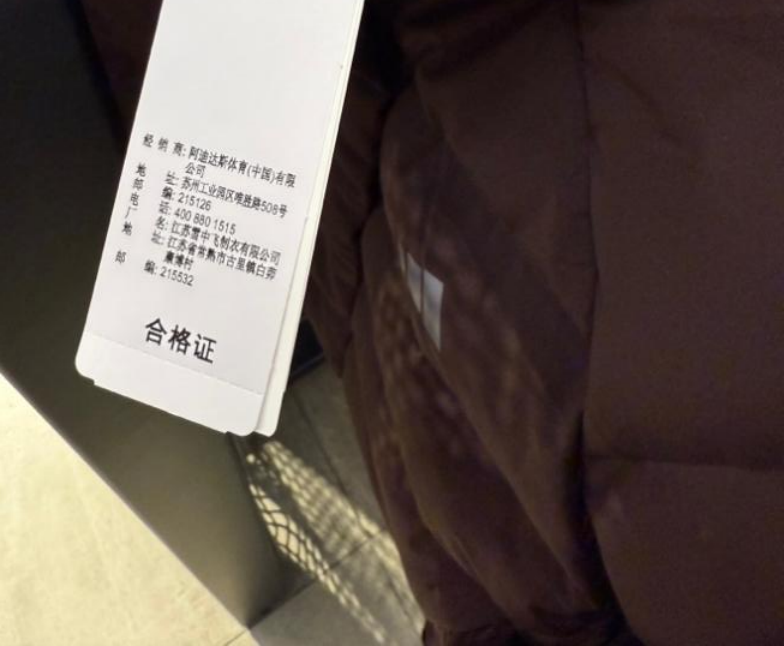
Core Insights - The discussion around the pricing of international brands like Adidas and Nike has intensified, particularly regarding their reliance on Chinese manufacturers like Xuezhongfei, which has led to questions about brand value and consumer perception [1][2]. Group 1: Brand Perception and Consumer Behavior - Consumers are increasingly skeptical of brand premiums and are focusing on the actual value and quality of products, comparing specifications and prices rather than simply relying on brand names [2][9]. - The shift in consumer behavior indicates a preference for products that align with personal values, such as sustainability, rather than just brand prestige [9][18]. - The traditional brand premium model is being challenged as consumers demand transparency and justification for higher prices [7][9]. Group 2: Evolution of Chinese Manufacturing - Chinese manufacturers like Xuezhongfei and Shenzhou International are evolving from mere subcontractors to strategic partners with international brands, showcasing their manufacturing capabilities and quality standards [5][18]. - The Chinese apparel industry has developed a comprehensive and specialized supply chain that is difficult to replicate, maintaining its competitive edge despite some production moving to Southeast Asia [16][18]. - The transformation of Chinese manufacturing is marked by a shift from low-end processing to high-end manufacturing, with a focus on quality, efficiency, and innovation [18]. Group 3: Financial Performance and Market Dynamics - Xuezhongfei, under Bosideng, reported a 26.4% year-on-year increase in its OEM business revenue, indicating a growing market presence and recognition of its manufacturing capabilities [10]. - The financial performance of Bosideng's OEM business highlights the increasing importance of manufacturing partnerships in driving revenue growth [10][12]. - The concentration of major clients poses risks for manufacturers, emphasizing the need for diversification in client relationships to mitigate potential revenue losses [12][18].

BTIG’s Bullish Stance on Nike (NKE) Supported by Progress on Turnaround and Innovation Drive
Yahoo Finance· 2025-10-31 14:50
Core Viewpoint - Nike Inc. is viewed positively by analysts, with BTIG initiating coverage and assigning a Buy rating along with a $100 price target, highlighting it as a "Top Pick for 2026" [1][2] Group 1: Analyst Insights - BTIG's analyst Robert Drbul is optimistic about Nike's turnaround efforts but notes that there is still significant progress needed [2] - EPS projections for Nike are set at $1.70 for FY26 and $2.75 for FY27, with a potential EPS of $3.50 in FY28 as the company aims for long-term operating margins of 12% or more [2] Group 2: Innovation and Product Development - Nike is testing 'Project Amplify', the world's first powered footwear system for running and walking, in collaboration with Dephy, which features a battery-charged motor [3] - This innovation is seen as crucial for Nike's turnaround strategy and regaining market share lost in recent years [3] Group 3: Company Overview - Nike Inc. is the largest seller of athletic footwear and apparel globally, designing, developing, and selling a wide range of athletic products [4]
“血战”双十一:李宁们加速去库存
2 1 Shi Ji Jing Ji Bao Dao· 2025-10-31 12:20
Core Insights - The competitive landscape of the sports market during the Double Eleven shopping festival is intensifying, with major brands like Nike, Adidas, Anta, and Li Ning offering significant discounts to attract consumers [1][5][7] Discount Strategies - Nike is promoting its products with a slogan "Not just 50% off," offering shoes at prices as low as 200+ yuan, creating a comprehensive discount matrix across all channels [1] - Adidas focuses on popular items with a "starting from 50% off" strategy on Tmall, along with additional coupons for larger purchases [1] - Anta is offering discounts of up to 60% on top of existing prices, while Li Ning has similar offers on both Tmall and JD [1] - Li Ning appears to have the largest overall discount, with flagship products like the Feidian 5 Elite seeing discounts of 260 yuan, resulting in a discount rate as low as 69% [2][4] Sales Performance - Despite the aggressive discounting, major brands are facing sales challenges. Li Ning reported a decline in retail sales, particularly in offline channels, while Nike's revenue in Greater China fell by 10% [7][8] - Anta's performance is slightly better, showing low single-digit growth, while Adidas experienced a 10% revenue increase in the third quarter, but still faces growth pressures [8][11] - The market share dynamics show that Nike remains the leader, but its share has decreased from 18.1% to 16.2%, while Anta and Li Ning have seen slight increases in their market shares [8] Price War Implications - The ongoing price war among major brands is impacting their profitability, with Anta's gross margin declining by 0.7 percentage points to 63.4% [11] - Frequent discounts are affecting overall performance, as seen in the declining net profits for both Li Ning and Nike [11][12] - The rise of domestic brands is eroding the pricing power of established players like Nike, leading to intensified competition and further price reductions [12][13]