Nvidia(NVDA)

Search documents
纳微半导体氮化镓芯片产能升级,与英伟达合作深化
Jing Ji Guan Cha Wang· 2026-02-11 20:54
经济观察网纳微半导体(NVTS)作为氮化镓功率芯片领域的领先企业,其产能升级、战略合作及业务转 型等动态值得关注。 公司项目推进 与英伟达在800V高压直流架构开发上的合作持续深化,涉及AI服务器电源方案的三级系统(如固态变压 器和DC/DC转换器),这一合作可能为公司在高功率应用市场带来新机遇。 业务与技术发展 公司正从消费电子领域转向高功率市场(如AI数据中心和能源基础设施),2025年第四季度营收展望显示 资源重组进展,后续需关注订单落地和分销网络优化效果。 以上内容基于公开资料整理,不构成投资建议。 根据2025年11月的技术动态,公司与力积电合作推进8英寸硅基氮化镓产品量产,其中100V系列计划在 2026年上半年实现量产,650V产品代工环节预计在未来12-24个月内从台积电转移至力积电,以提升AI 数据中心和电动汽车领域的供应能力。 合同最新进展 ...


美股科技股,集体上涨


Di Yi Cai Jing Zi Xun· 2026-02-11 20:51
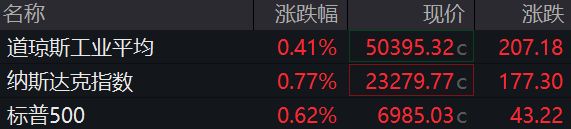
Group 1 - Major tech stocks experienced a broad increase, with SanDisk rising over 8%, Oracle up 2%, and NVIDIA increasing by more than 1% [1][2] - Other notable gainers included Tesla, Broadcom, Apple, and Amazon, all showing positive movement [1] - The three major U.S. stock indices opened higher, with the Nasdaq up 0.77%, the Dow Jones up 0.41%, and the S&P 500 up 0.62% [3] Group 2 - Chinese concept stocks mostly rose, with Kingsoft Cloud increasing by over 11%, Bilibili up more than 3%, and Century Internet and Beike both rising over 2% [2][4] - Storage-related stocks rebounded, with Micron Technology rising over 6% and Western Digital increasing by more than 4% [4]

Barclays Starts Moderna, Inc. (MRNA) Neutral as Biotech Outlook Improves
Insider Monkey· 2026-02-11 20:13
Core Insights - Generative AI is viewed as a transformative technology by Amazon's CEO Andy Jassy, indicating its potential to reinvent customer experiences [1] - Elon Musk predicts that humanoid robots could create a market worth $250 trillion by 2040, reshaping the global economy [2] - Major firms like PwC and McKinsey recognize AI's potential to unlock multi-trillion-dollar opportunities [3] Industry Trends - The AI revolution is characterized by a powerful breakthrough that is redefining work, learning, and creativity, attracting significant interest from hedge funds and top investors [4] - A smaller, under-owned company is identified as holding the key to the AI revolution, suggesting a competitive edge over larger rivals [4][6] - Billionaires and industry leaders, including Bill Gates and Warren Buffett, are positioning themselves around AI, indicating its importance as a technological advancement [8] Investment Opportunities - There is a strong belief that investors will regret not owning certain stocks related to AI advancements in the near future [9] - A detailed report on a groundbreaking AI company is available, highlighting its technology and growth potential [10] - Subscription to a premium newsletter offers access to exclusive insights and stock picks, emphasizing the urgency to invest in AI-related opportunities [12][14]




Will Tech Stocks Bounce Back or Should You Sell Them Instead?
Yahoo Finance· 2026-02-11 20:07
Market Overview - The S&P 500 Index is near record highs, while the Dow Jones Industrial Average Index closed above 50,000 for the first time [1] - Tech stocks, particularly the Magnificent 7, are experiencing significant declines, with Microsoft leading the drop at 25% from its peak [2] Company Performance - Apple is down about 5% from its all-time highs and did not participate in the AI rally, which explains its relative stability [2] - Alphabet has seen a 9% decline from its record highs, while other Magnificent 7 stocks are down in double digits [2] Capital Expenditure Trends - Hyperscalers' capital expenditure is projected to reach $700 billion this year, raising concerns about cash flow and balance sheet pressures for tech companies [4] - Tech giants are shifting from buybacks to raising debt capital for funding capex, with Alphabet recently issuing over $30 billion in bonds, including a 100-year bond [5] Sector Outlook - UBS downgraded the tech sector to "Neutral" from "Attractive," citing concerns over expected capex slowdown, AI-led disruptions, and stretched valuations in tech hardware [6][7] - Despite the downgrade, UBS remains optimistic about AI's potential to create efficiencies in sectors like healthcare and finance [6]



Quantum Hype vs. Profits: Do NVDA and MSFT Have the Edge?
ZACKS· 2026-02-11 20:01
Core Insights - Pure-play quantum computing stocks like IonQ, D-Wave Quantum, and Rigetti Computing have gained significant investor interest due to stock volatility and major technological announcements, but their financial fundamentals remain speculative and early-stage [1] - Analysts recommend established tech companies with quantum divisions, such as NVIDIA and Microsoft, as less risky alternatives to capture quantum upside while benefiting from stable revenue streams [1] Group 1: Financial Performance of Pure-Play Quantum Companies - IonQ has shown solid year-over-year revenue growth and formed partnerships with leading cloud providers, but it has incurred substantial net losses and relies on periodic equity raises to extend its cash runway [2] - Rigetti reported an operating loss of $20.5 million in its most recent quarter, with a non-GAAP net loss of $10.7 million, reflecting ongoing investments in R&D and core operations [3] - D-Wave achieved $3.7 million in revenues in Q3 2025, marking year-over-year and sequential growth, but reported a GAAP net loss of approximately $140 million, primarily due to non-cash charges, while maintaining over $836 million in cash and investments [4] Group 2: Established Tech Companies with Quantum Divisions - NVIDIA focuses on hybrid quantum-classical computing through its CUDA-Q platform, allowing integration of quantum hardware with NVIDIA GPUs, and has established the NVIDIA Accelerated Quantum Research Center to advance quantum algorithms [7][8] - NVIDIA is projected to achieve earnings growth of 55.9% on revenue growth of 62.9% in 2026, with an average price target increase of 34.4% from its last closing price of $190.04 [9] - Microsoft is advancing a full-stack quantum strategy through its Azure Quantum program, focusing on hardware research, cloud integration, and software development, while expanding its quantum development tools [12][13] - Microsoft is expected to report earnings growth of 16% on revenue growth of 24.3% in 2026, with an average price target increase of 44.9% from its last closing price of $413.6 [14]


Daniel Newman on Futurum's "AI 15," PLTR Upside Potential & "Best Idea" in META
Youtube· 2026-02-11 20:00
Core Insights - The focus should extend beyond the "Mag 7" companies in AI, as there are significant opportunities in other firms that are not part of this group [2][3] - The Futurum AI 15 includes companies like Cloudflare, which are seen as key players in the AI landscape [2][3] Infrastructure Layer - The AI infrastructure is categorized into three layers: control layer (infrastructure), operating layer (software), and utility layer (energy and capacity) [3] - Key companies in the control layer include Micron, AMD, Intel, and TSMC, while the operating layer features Cloudflare and Snowflake [3] Memory Sector - Micron is projected to quadruple its earnings this year and double its revenue, indicating a strong position in the memory market [11][12] - The current cycle in memory is more constrained than compute, providing Micron with significant pricing power [12][14] AI Investment Landscape - Companies that effectively utilize AI to enhance productivity and profitability are considered attractive investments [17][18] - There is skepticism about the sustainability of many companies trying to capitalize on the AI trend without a clear monetization path [16][18] Market Dynamics - Nvidia is highlighted as a major beneficiary of the $700 billion capital expenditure commitment, capturing 40-50% of that investment [9][10] - The market is experiencing a repricing of software categories, with a distinction between companies that will thrive and those that may not survive [7][8] Company-Specific Insights - Meta is identified as a strong investment due to its substantial revenue generation from AI initiatives [17] - Microsoft is viewed positively despite recent sell-offs, attributed to concerns around OpenAI, which is part of a larger backlog comparable to Amazon and Google [22][23] - Tesla's stock performance is influenced by differing shareholder perspectives on its future as a tech company versus a traditional car manufacturer [25] - Palantir is recognized for its growth but is considered expensive relative to its peers, reflecting the broader software market repricing [26]

NVIDIA (NVDA) Must Comply with Strict U.S. Licensing Terms for Its H200 AI Chips China Exports
Yahoo Finance· 2026-02-11 19:26
Core Insights - NVIDIA Corporation (NASDAQ:NVDA) is recognized as one of the best performing stocks in the S&P 500 over the past five years [1] Group 1: U.S.-China Trade and Licensing - NVIDIA is required to comply with strict U.S. licensing terms for exports of its H200 AI chips to China, as stated by the Commerce Secretary [2] - The licensing conditions are aligned with a U.S.-China trade truce established in October of the previous year [2] - NVIDIA has been resisting certain provisions, including 'Know Your Customer' requirements, indicating ongoing geopolitical constraints on its China-facing AI revenue [3] Group 2: Investment and Acquisitions - NVIDIA is nearing a $20 billion stake acquisition in OpenAI as part of the AI startup's funding round, which seeks up to $100 billion at an $830 billion valuation [4] - The deal is not yet finalized, but NVIDIA's CEO Jensen Huang has indicated plans for a significant investment, potentially the company's largest ever [4] - Concerns related to chip performance have previously paused NVIDIA's earlier $100 billion investment plans [5] Group 3: Competitive Positioning - NVIDIA's leading role in powering generative AI infrastructure is highlighted by its strategy to maintain leadership in high-performance AI chips amid rising competition from companies like Amazon and SoftBank [6] - The company focuses on designing GPUs and AI computing platforms for various markets, including data centers, gaming, and enterprise [6] - NVIDIA supports high-performance graphics, AI workloads, and accelerated computing solutions on a global scale [6]
Profiting From Growth And Income With Retirement Income Warrior
Seeking Alpha· 2026-02-11 19:10
Investment Strategy - The focus is on creating a stable flow of retirement income through a unique strategy developed by the founder's father, which has proven effective over time [5][6] - The investment approach includes three income portfolios with risk levels ranging from 5% to 12%, and two growth portfolios aimed at capital gains [6][7] - The strategy emphasizes capital preservation, aiming to maintain a majority of funds in dependable stocks with yields of 5% to 7% as retirement approaches [7][11] Portfolio Management - The growth side of the portfolio is gradually reduced over time, with a small percentage retained for potential high returns, exemplified by Tesla's significant growth [8] - In the previous year, the strategy successfully harvested approximately $173,000 in profits from stocks like Nvidia, which were then redeployed into income-generating assets [10] - The approach includes taking profits from high-performing stocks and reallocating them to maintain a balanced income stream [10][19] Market Insights - The energy sector was identified as a major loser in the previous year, but has since rebounded, with stocks like ExxonMobil and Chevron showing significant gains [13][15] - The current market is characterized by high volatility, with the Fed's hawkish statements and upcoming economic data being critical factors to watch [32][34] - Concerns about employment weakening due to AI advancements are noted, with the upcoming employment report expected to be significant for market direction [34] Tax Considerations - Tax loss harvesting is a strategy employed to offset gains with losses, influencing stock movements at the beginning of the year [52][53] - The earnings season has shown a trend where stocks reporting good earnings are still experiencing sell-offs, indicating a cautious market environment [55] Long-term Perspective - Emphasis is placed on maintaining a long-term investment perspective amidst market noise and volatility, with a focus on high-conviction holdings [37][63] - Historical market recoveries are highlighted as a reassurance for investors during downturns, encouraging patience and strategic decision-making [60][62]



Top Democrat on US House China committee open to Nvidia H200 sales
Reuters· 2026-02-11 18:51
Top Democrat on US House China committee open to Nvidia H200 sales | ReutersSkip to main content[Exclusive news, data and analytics for financial market professionalsLearn more aboutRefinitiv]Item 1 of 2 U.S. Representative Ro Khanna (D-CA) speaks during a press conference on the Epstein Files Transparency Act ahead of a House vote on the release of files related to the late convicted sex offender Jeffrey Epstein, on Capitol Hill in Washington, D.C., U.S., November 18, 2025. REUTERS/Annabelle Gordon[1/2]U.S ...

Bull vs. Bear: Are AI ETFs the Best Way to Play the Megatrend?
Etftrends· 2026-02-11 18:17
Core Insights - The article discusses the potential of AI ETFs as a means to capitalize on the ongoing AI megatrend, highlighting the significant impact of AI on productivity and the economy [1][2] - It raises concerns about valuation fatigue and the sustainability of AI gains, questioning whether current enthusiasm represents a bubble [1][2] AI: More Than Software Stocks - AI investing is viewed as a historical opportunity to enhance productivity rather than just focusing on individual companies [1] - T. Rowe Price's Dom Rizzo suggests AI could be the biggest productivity enhancer since electricity, emphasizing the importance of investing in companies that leverage AI for productivity [1] Valuation Fatigue and Circular Capex - The tech sector is experiencing a feedback loop where companies are investing heavily in AI infrastructure, raising concerns about long-term ROI [1] - Despite 91% of organizations increasing AI spending, only 10% are seeing significant returns, indicating potential risks for concentrated portfolios [1][2] The ETF Wrapper Is Perfect for This AI Investing Moment - The proliferation of ETFs since the 2019 ETF Rule allows for targeted investments in AI without overexposing to major hyperscalers [1] - Funds like the Global X Data Center and Digital Infrastructure ETF (DTCR) and the ROBO Global Robotics & Automation Index ETF (ROBO) are highlighted as strong investment opportunities in the AI space [1][2] The Energy Bottleneck and Infrastructure Limits - AI's energy demands are projected to double by 2030, stressing the existing power grid and creating opportunities in energy transition investments [2] - Midstream energy infrastructure funds are positioned to benefit from the growing demand for data center energy, offering attractive yields [2] The Big Question: Is It a Bubble? - Concerns about a potential AI bubble are discussed, with significant investments in AI expected to reach $700 billion this year [2] - Asset managers are cautious, analyzing the sustainability of returns from AI investments, indicating a more nuanced view of the AI landscape [2] Diversification Beyond the "Hype Cycle" - The article notes the narrow market leadership in tech, suggesting a tactical shift towards high-growth themes and diversification beyond major tech stocks [2] - Funds like the ROBO Global Healthcare Technology and Innovation ETF (HTEC) and the Amplify Blockchain Technology ETF (BLOK) are recommended for capturing technological disruption beyond AI speculation [2]