
Pony Ai(PONY)

Search documents
小马智行上涨2.13%,报13.4美元/股,总市值47.61亿美元
Jin Rong Jie· 2025-07-31 13:49
Group 1 - The core viewpoint of the article highlights the financial performance and stock movement of Pony.ai, indicating a slight increase in stock price and a significant loss in net profit despite revenue growth [1][2] - As of July 31, Pony.ai's stock price reached $13.4 per share, with a market capitalization of $4.761 billion and a trading volume of $10.2882 million [1] - For the fiscal year ending March 31, 2025, Pony.ai reported total revenue of $13.979 million, reflecting an 11.64% year-over-year increase, while the net profit attributable to shareholders was a loss of $42.988 million, a decrease of 108.7% compared to the previous year [1] Group 2 - Pony.ai is set to disclose its mid-year financial report for the fiscal year 2025 on August 19, with the actual date subject to company announcement [2] - The company, registered in the Cayman Islands, operates primarily through its domestic subsidiary, Guangzhou Pony.ai Technology Co., Ltd., focusing on revolutionary developments in transportation and mobility through artificial intelligence [2] - Pony.ai aims to implement autonomous driving technology in both the U.S. and China, emphasizing a technology-driven and application-oriented approach [2]
美股异动|小马智行盘前涨超1.6% 大摩预计自动驾驶汽车领域将迎“爆发式增长”
Xin Lang Cai Jing· 2025-07-30 08:20
Core Viewpoint - Morgan Stanley predicts that the global autonomous vehicle market will reach $200 billion by 2030, driven by advancements in artificial intelligence and a significant increase in adoption rates [1] Industry Summary - The adoption of autonomous vehicles is expected to experience explosive growth in the near future, with projections indicating that they will account for 28% of total vehicle sales by 2030 [1] - By 2035, smart driving technologies are anticipated to generate over $300 billion to $400 billion in revenue for related companies [1]
记者试乘Robotaxi,原来未来出行是这种感觉
3 6 Ke· 2025-07-30 03:09
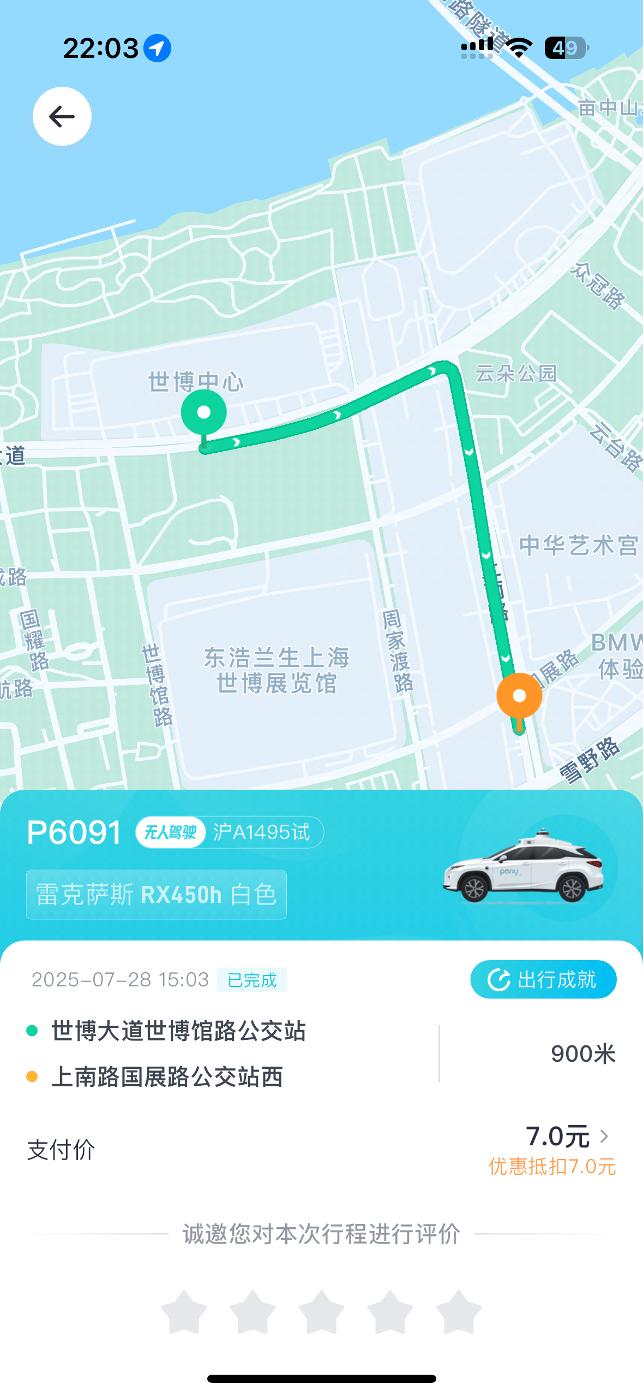
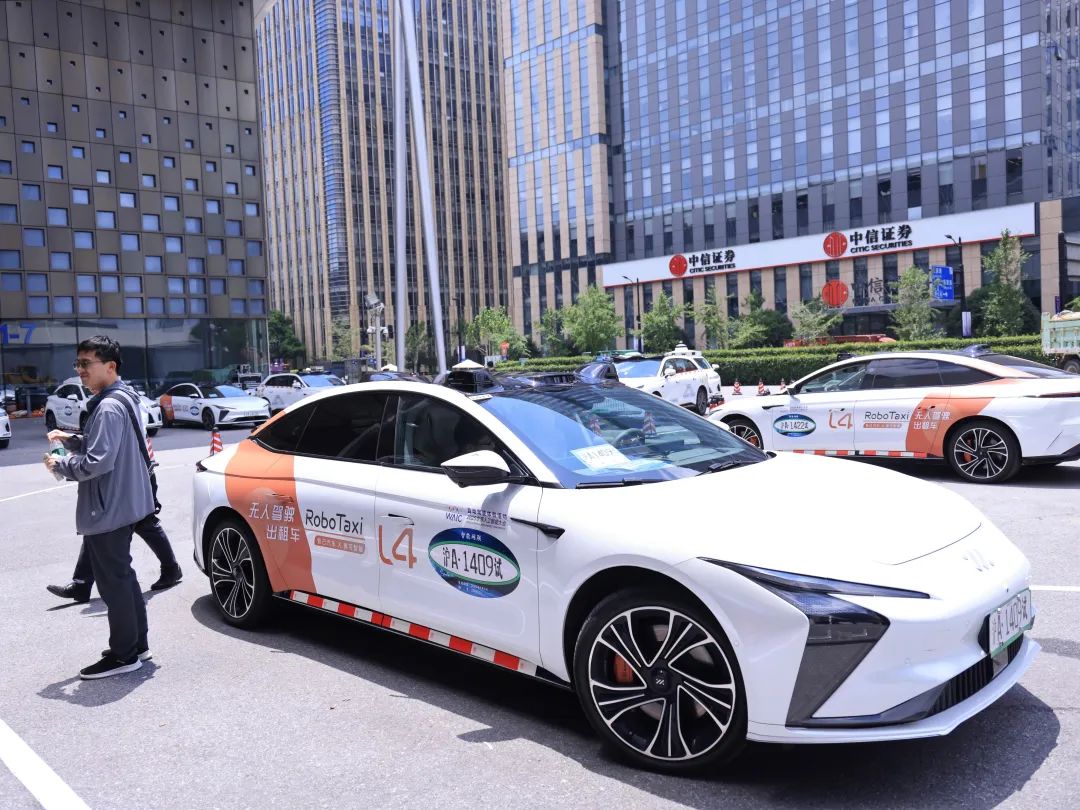
Group 1 - The World Artificial Intelligence Conference (WAIC) 2025 highlighted smart driving, with significant public interest in Robotaxi trial rides [1] - Several companies, including Xiaoma Zhixing and Baidu Zhixing, provided multi-level smart travel services around the WAIC venue [1] - Shanghai issued new operational licenses for intelligent connected vehicles, allowing companies like Xiaoma Zhixing and Baidu Zhixing to offer assisted driving services [1][9] Group 2 - The Robotaxi trial rides were fully booked, indicating high demand for autonomous driving experiences [2] - The trial ride experience covered a distance of 900 meters in 4 minutes, showcasing the efficiency of the service [2] - Passengers must confirm trip details and wear seatbelts, with safety measures in place to prevent interaction with the driving area [5] Group 3 - The Robotaxi service has a starting fare of 14 yuan for the first 3 kilometers, with additional charges for longer distances [7] - The issuance of operational licenses marks a transition of assisted driving technology from experimental phases to commercial applications [7] - Traditional taxi companies are collaborating with tech firms to operate Robotaxi services, enhancing the industry ecosystem [7] Group 4 - Various companies showcased advancements in intelligent driving technology at WAIC, including L4-level Robotaxi services [9][11] - Xiaoma Zhixing's seventh-generation Robotaxi and other L4-level vehicles are set to enter the market, indicating a trend towards mass production [11] - Mogu Car Union's RoboBus has been deployed in 10 provinces, emphasizing the growth of autonomous public transport solutions [12] Group 5 - The industry is witnessing a rise in revenue from Robotaxi services, although many companies are still operating at a loss [14] - Major cities like Beijing, Shanghai, and Shenzhen are leading the way in promoting autonomous driving through regulatory support and open testing roads [14]

纳斯达克金龙中国指数跌超1%
Ge Long Hui A P P· 2025-07-29 16:22
格隆汇7月29日|纳斯达克金龙中国指数跌超1%。热门中概股小马智行跌超8.5%,理想跌6.7%,小鹏跌 3.4%,文远知行跌3%,小米跌2.5%,百度、蔚来、京东跌超2%,阿里巴巴跌1.8%,百胜中国跌0.9%。 ...



商业化速度更快 小马智行暂领跑
BambooWorks· 2025-07-29 09:43
Core Insights - The article highlights the significant expansion of autonomous taxi services in Shanghai, with companies like Pony.ai, WeRide, and Baidu Apollo Go receiving operational licenses for key urban areas [1][2] - Since going public in the US, Pony.ai's stock has risen by 16%, while WeRide's market value has decreased by approximately one-third, indicating a divergence in investor sentiment [1][4] - The competition in the autonomous taxi sector is intensifying, with both companies racing to commercialize their core businesses before depleting their funds [1][5] Expansion of Services - The recent expansion allows autonomous taxi services to operate in the core areas of Huamu and Jinqiao, significantly increasing the service radius to within 3 kilometers of the Lujiazui financial district [2] - This move enhances the operational footprint of Pony.ai, WeRide, and Baidu Apollo Go across major cities like Beijing, Shanghai, Guangzhou, and Shenzhen [2] Business Development Strategies - Both Pony.ai and WeRide are actively disclosing business progress to maintain investor confidence, with WeRide releasing 27 announcements this year and Pony.ai 17 [4] - Despite their similar business models, the stock performance of the two companies has diverged significantly since their respective IPOs [4][5] Financial Performance - In Q1, Pony.ai reported revenues of $14 million, a 12% increase from the previous year, while WeRide's revenue was approximately $1.01 million, growing only 1.6% [5] - The revenue from autonomous taxi services for Pony.ai surged from $576,000 to $1.73 million, marking a twofold increase, while WeRide's taxi service revenue reached approximately $225,000, also doubling but from a lower base [5] Fleet Size and Market Position - As of March, WeRide operated 1,200 vehicles, while Pony.ai expects to have 1,000 vehicles by year-end, indicating a competitive fleet size [6] - Uber has adopted a dual investment strategy, investing $100 million in WeRide while also exploring potential acquisition of Pony.ai's US subsidiary, reflecting its interest in the Chinese market [6] Financial Health - Both companies are currently operating at a loss, with Pony.ai reporting a net loss of $37.4 million in Q1 but holding $739 million in cash and liquid investments, sufficient for 20 years of operation at the current loss rate [7] - WeRide reported a quarterly loss of approximately $5.5 million, with cash reserves of about $6.5 billion, enough to cover over 11 years of losses [7]


上海Robotaxi大跨步:允许主驾无人+收费运营
3 6 Ke· 2025-07-29 00:49
另外,随着浦东新区第三批自动驾驶测试道路的开放,上海市累计开放测试道路里程已突破2700公里,范围覆盖包括部分内环范围的中心城区。 上海无人驾驶出租车(Robotaxi)跨出了一大步。 7月26日,在2025世界人工智能大会·AI赋能自动驾驶创新发展专题论坛上,上海正式发放新一批智能网联汽车示范运营牌照,共8家企业获批。 8家企业包括百度智行、大众交通(集团)、上海赛可出行(上汽集团子公司)、上海强生出租汽车(包含智己汽车、享道出行联合体)、赛可智能科 技、小马易行(小马智行)、上海锦江出租汽车(包含文远知行、奇瑞汽车联合体)、上海友道智途(上汽集团子公司)。 更为关键的是,此次示范运营牌照实现了跨越,部分企业不仅允许主驾无人,甚至全无人,而且可以收费。 这意味着官方、业界对于自动驾驶技术的信心增长,而获批企业智己汽车、萝卜快跑、小马智行、文远知行等企业获得更大空间测试、提升、拓展自动驾 驶业务。 01 8张牌照,多方组合 上海这次发出的牌照,主体有多种,而且主体背后也还有联合体。 本地的上汽集团当然是大包大揽。 不仅子公司上海赛可出行、赛可智能科技、上海友道智途都直接拿到牌照,覆盖了乘用车和商用车两种类型, ...




Pony AI Inc. to Report Second Quarter 2025 Financial Results on August 12, 2025
Globenewswire· 2025-07-28 09:00
Core Viewpoint - Pony AI Inc. is set to report its unaudited financial results for the second quarter of 2025 on August 12, 2025, before the U.S. market opens [1] Group 1: Financial Reporting - The earnings conference call will take place on August 12, 2025, at 8:00 A.M. U.S. Eastern Time [2] - Participants can register online to join the call and will receive a confirmation email with dial-in details [2] - A replay of the conference call will be available until August 19, 2025, with specific dial-in numbers provided for access [3] Group 2: Company Overview - Pony AI Inc. is recognized as a global leader in the commercialization of autonomous mobility, utilizing its Virtual Driver technology [4] - The company aims to develop a sustainable business model for mass production and deployment of autonomous vehicles across various transportation use cases [4] - Founded in 2016, Pony AI has expanded its operations in regions including China, Europe, East Asia, and the Middle East [4]

汽车智能化月报系列(二十六):上海新一批智能网联汽车示范运营牌照7月26日发放,Robotaxi商业化落地加速-20250728
Guoxin Securities· 2025-07-28 08:51
Investment Rating - The report maintains an "Outperform" rating for the automotive intelligence sector [6]. Core Insights - The report highlights the acceleration of commercial deployment of Robotaxi in Shanghai, with new operational licenses issued on July 26 [1]. - The penetration rates of advanced driver-assistance systems (ADAS) and various automotive technologies are on the rise, indicating a growing trend towards vehicle intelligence [3][4]. Summary by Sections Industry News - Tesla's smart assisted driving plan is set to further expand in China within the year [1]. - Shanghai has issued a new batch of demonstration operation licenses for intelligent connected vehicles [1]. - Pony.ai has received approval to conduct Robotaxi operations in central Shanghai [1]. - Various companies, including WeRide and Horizon Robotics, are advancing their autonomous driving technologies and solutions [1]. High-Frequency Core Data Updates - By May 2025, the penetration rate of 8 million pixel front-view cameras in passenger vehicles is projected to reach 66.7%, with 38.6% of that being 8 million pixel cameras, showing a year-on-year increase of 23 percentage points [2]. - NVIDIA's driving chip market share is increasing, with a projected penetration rate of 29% for passenger vehicle driving domain controllers by May 2025 [2]. - The market share of LiDAR in passenger vehicles is expected to reach 10% by May 2025, reflecting a year-on-year increase of 4 percentage points [2]. Intelligent Driving - The penetration rate of passenger vehicles equipped with L2 level or higher functions reached 28.1% by May 2025, up 13 percentage points year-on-year [3]. - The penetration rates for various sensors, including front-view cameras and radar, are also increasing, indicating a trend towards more sophisticated vehicle sensing capabilities [3]. Investment Recommendations - Recommended companies for whole vehicles include XPeng Motors, Leap Motor, and Geely [4]. - For L4 level technologies, Pony.ai is recommended [4]. - Component recommendations include companies like Hesai Technology and SUTENG for data acquisition, and Horizon Robotics for data processing [4]. Key Company Earnings Forecast and Investment Ratings - XPeng Motors: Outperform, with a projected EPS of -3.03 in 2024 and -0.83 in 2025 [5]. - Xingyu Co., Ltd.: Outperform, with an EPS of 4.93 in 2024 and 5.95 in 2025 [5]. - Horizon Robotics: Outperform, with an EPS forecast of 0.18 in 2024 and -0.14 in 2025 [5].


小马智行:获得上海许可;商业化无人驾驶 Robotaxi 运营扩张;买入评级-Pony AI Inc. (PONY)_ Shanghai permits earned; commercial driverless Robotaxi operation in expansion; Buy
2025-07-28 02:18
Summary of Pony AI Inc. (PONY) Conference Call Company Overview - **Company**: Pony AI Inc. (PONY) - **Industry**: Autonomous Vehicle Technology, specifically focusing on Robotaxi services Key Points and Arguments Regulatory Developments - Pony AI has received a permit to offer fully driverless commercial Robotaxi services in the Shanghai Pudong New Area, allowing the company to charge passengers [1] - The company plans to launch driverless services initially in Jinqiao and Huamu districts, with plans to expand to other areas in Shanghai [2] Expansion of Services - The company operates driverless Robotaxis in all four tier-1 cities: Shanghai, Beijing, Shenzhen, and Guangzhou [1] - Pony AI has initiated 24/7 Robotaxi testing in Beijing, Shenzhen, and Guangzhou, enhancing operational availability and potentially increasing revenue per vehicle [3] Technological Advancements - Pony AI has started road testing its Gen-7 Robotaxi model in major cities, collaborating with GAC, BAIC, and Toyota to reduce hardware costs and improve software capabilities [4] - The Gen-7 Robotaxi is expected to enhance gross profits per vehicle due to lower costs and improved technology [4] Financial Outlook - Goldman Sachs has set a 12-month price target of $26.00 for Pony AI, indicating a potential upside of 71.8% from the current price of $15.13 [12][14] - Revenue projections for the upcoming years are as follows: $75 million in 2024, $80.3 million in 2025, $96.6 million in 2026, and $150.4 million in 2027 [14] Risks and Challenges - Key downside risks identified include regulatory challenges, supply chain issues, market growth for Robotaxis, personal information security, infrastructure limitations, pricing competition, and product liability [13] Market Position - Pony AI is positioned as a strong player in the autonomous vehicle market, with a focus on expanding its Robotaxi services and enhancing its technological capabilities [1][4] Additional Important Information - The company is currently valued at approximately $5.3 billion, with an enterprise value of $5.0 billion [14] - Analysts maintain a "Buy" rating on Pony AI, reflecting confidence in its growth potential and market strategy [1][12]