
Qualcomm(QCOM)

Search documents
Should You Buy This Semiconductor Stock Right Now?
The Motley Fool· 2025-10-16 19:24
Group 1 - The effectiveness of AI is driving an increase in global demand for semiconductors [1] - Qualcomm investors are expressing concerns regarding the company's operations in China due to a government investigation [1]


Qualcomm vs. Supermicro Stock: Which Will Be the Next AI Winner?
Yahoo Finance· 2025-10-16 17:41
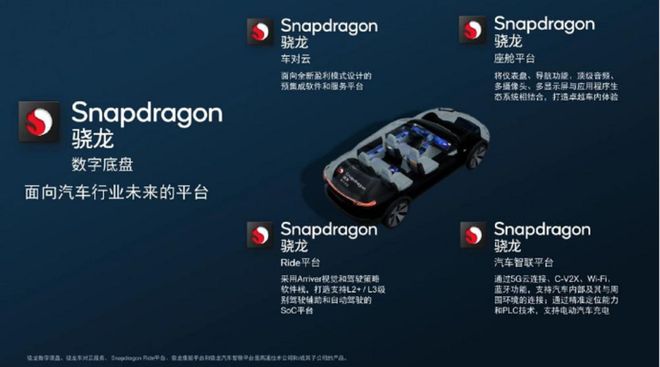
Qualcomm - Qualcomm is strategically expanding into data center AI, aiming to enhance its competitiveness in AI infrastructure and networking technology through the acquisition of Alphawave IP Group [1] - The company's key segment, Qualcomm CDMA Technologies (QCT), generated $9 billion in revenue, reflecting an 11% year-over-year increase, with Automotive and IoT segments growing by 21% and 24% respectively [2] - In fiscal Q3 2025, Qualcomm reported adjusted revenue of $10.4 billion, a 10% increase year-over-year, and adjusted earnings per share of $2.77, marking a 19% rise from the previous year [3] - Qualcomm's licensing arm, QTL, contributed $1.3 billion to total revenue, while the Snapdragon Digital Chassis platform has secured 12 new design wins and 50 vehicle launches in the current fiscal year [2][3] - The company returned $3.8 billion to shareholders in the quarter, including $2.8 billion in buybacks and over $1 billion in dividends, aiming for 100% return of free cash flow to investors [5] - Analysts rate Qualcomm stock as a "Moderate Buy," with an average target price of $180.68, suggesting a potential upside of 10.8% from current levels [6] Super Micro Computer - Super Micro Computer, valued at $32.1 billion, is a key supplier of AI-optimized data center systems, collaborating with semiconductor giants like Nvidia and AMD [8] - The company reported a 47% year-over-year revenue increase to $22 billion in fiscal 2025, driven by strong global demand for AI data center systems [10] - Supermicro's adjusted earnings per share slightly decreased from $2.12 to $2.06 due to tariff pressures, despite the revenue growth [10] - The company has diversified its portfolio into enterprise IT, IoT, and telecommunications, although it recently lowered its revenue target for fiscal 2026 from $40 billion to $33 billion [11] - Analysts predict Supermicro's revenue will reach around $31.8 billion in fiscal 2026, with an additional 24.7% growth to $39.7 billion in fiscal 2027 [12] - The consensus rating for Supermicro stock is "Hold," with a highest price estimate of $60 suggesting an 11.2% potential surge over the next 12 months [13] Comparative Analysis - Both Qualcomm and Supermicro are positioned to benefit from the AI revolution, with Supermicro expected to outperform Qualcomm in near-term growth due to increasing AI server demand [14] - Qualcomm's broad portfolio and strong market position make it a more reliable long-term investment option compared to Supermicro [14]

“瞒天过海”收购半导体独角兽的高通,再遭反垄断调查
Tai Mei Ti A P P· 2025-10-16 01:59
Core Viewpoint - The article discusses the increasing scrutiny and regulatory actions against major companies, particularly in the technology and internet sectors, due to monopolistic practices, with Qualcomm being a prominent example facing investigations and potential penalties for its acquisition of Autotalks [1][2]. Regulatory Actions - Qualcomm has been under investigation by China's State Administration for Market Regulation (SAMR) for failing to legally declare its acquisition of Autotalks, which is seen as a violation of China's Anti-Monopoly Law [1][6]. - The company has faced significant fines in the past, including a record fine of 60.88 billion yuan in 2015 from China's National Development and Reform Commission and an 873 million USD penalty from South Korea's Fair Trade Commission [2][3]. Financial Impact - Following the announcement of the investigation, Qualcomm's stock price dropped by 7.29%, marking its largest single-day decline since August [2]. - If found guilty of violating the Anti-Monopoly Law, Qualcomm could face fines up to 17.9 billion USD, which would represent approximately 70% of its revenue from the Chinese market [7]. Acquisition of Autotalks - Qualcomm's acquisition of Autotalks, a leading Israeli semiconductor company specializing in V2X technology, has drawn attention from regulators due to concerns over potential anti-competitive effects [3][4]. - The acquisition was completed despite ongoing investigations, raising questions about compliance with regulatory standards [6][8]. Market Position and Challenges - Qualcomm holds a dominant position in the mobile SoC market but faces challenges due to a slowdown in smartphone sales and the loss of Apple as a major customer [11][12]. - The company is attempting to diversify its revenue streams through automotive and IoT chip markets, which have shown growth, but these segments are not yet large enough to offset declines in mobile chip sales [11][12]. Strategic Considerations - The urgency for Qualcomm to integrate Autotalks' technology stems from the competitive landscape, where rapid technological advancements are crucial for maintaining market relevance [9][14]. - The company's historical reliance on patent monopolies and its current strategy to expand into automotive technology highlight the ongoing evolution of its business model in response to market pressures [15][16].
Qualcomm just crossed a red line in China: Here’s what happens now
Yahoo Finance· 2025-10-15 17:17
Core Viewpoint - Qualcomm is facing scrutiny from Chinese regulators over its acquisition of Autotalks, which could have significant implications for its operations in China amid rising U.S.-China trade tensions [1][2]. Group 1: Regulatory Issues - China's State Administration for Market Regulation is investigating Qualcomm's purchase of Autotalks, claiming the company did not obtain necessary permissions for the deal [2]. - Qualcomm was informed in 2024 that it would need Chinese consent for the acquisition, yet proceeded to complete the transaction in June 2025 [2][4]. - The deal, valued between $300 million and $500 million, has raised concerns about Qualcomm's compliance with Chinese regulations [5]. Group 2: Market Impact - Following the announcement of the investigation, Qualcomm's shares dropped by over 5%, resulting in a loss of more than $7 billion in market value, which is ten times the expected value of the Autotalks transaction [3]. - The geopolitical tensions, exacerbated by U.S. President Trump's threats regarding tariffs, have further complicated Qualcomm's position in the Chinese market [3]. Group 3: Strategic Importance - Qualcomm views the acquisition of Autotalks as crucial for enhancing its automotive business, particularly in the V2X (vehicle-to-everything) technology sector [4][6]. - By 2026, China aims to standardize V2X communications across all industrial areas, making this technology vital for Qualcomm's long-term development plans [6]. - The global V2X industry is projected to be worth billions by 2030, highlighting the strategic significance of Qualcomm's investment in Autotalks [7]. Group 4: Historical Context - Qualcomm has previously faced regulatory challenges in China, including a $975 million settlement for an antitrust complaint in 2015, indicating a history of scrutiny from Chinese authorities [8].
QUALCOMM (QCOM) Agrees to Acquire Arduino
Yahoo Finance· 2025-10-15 14:20
Core Insights - QUALCOMM Incorporated (NASDAQ:QCOM) has announced its agreement to acquire Arduino, an Italian open-source hardware and software company, to enhance support for developers by providing access to a comprehensive portfolio of edge technologies and products [1][2]. Group 1: Acquisition Details - The acquisition of Arduino follows QUALCOMM's recent integrations of Edge Impulse and Foundries.io, indicating the company's commitment to developing a full-stack edge platform that encompasses hardware, software, and cloud services [2]. - The aim of this acquisition is to boost developer productivity across various industries by combining QUALCOMM's advanced processing, graphics, computer vision, and AI capabilities with Arduino's user-friendly and affordable tools [3]. Group 2: Strategic Vision - QUALCOMM's Group General Manager for Automotive, Industrial, and Embedded IoT emphasized that the acquisitions of Foundries.io, Edge Impulse, and Arduino are part of a strategy to democratize access to leading-edge AI and computing products for the global developer community [3]. - QUALCOMM is recognized as a major player in the semiconductor industry, creating products related to wireless technology, including processors, modems, platforms, RF systems, and connectivity solutions [3].
高通SA8650自动驾驶域控制器拆解分析
芯世相· 2025-10-15 06:07
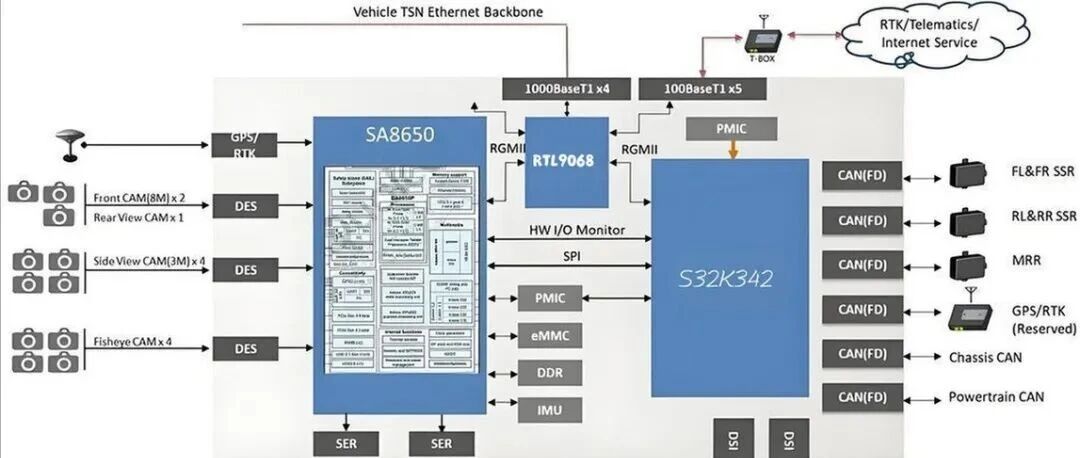
Group 1: Autonomous Driving Domain Controller Overview - The autonomous driving domain controller serves as the "central brain" of intelligent connected vehicles, facilitating the transition from assisted driving to fully autonomous driving [5] - It integrates multi-sensor data, path planning algorithms, and vehicle control interfaces to achieve perception, decision-making, and execution in a unified manner, making it a key platform for L2 and above autonomous driving technologies [5] Group 2: Main Functions of the Domain Controller - Multi-sensor fusion and perception involve integrating data from radar, lidar, cameras, IMU, and high-precision GPS to create an accurate environmental semantic map [6] - Decision planning and path generation require the system to complete path planning and behavior decision-making within milliseconds based on real-time traffic density and speed limits [6] - The controller ensures precise control of acceleration, braking, and steering through interaction with chassis control systems while meeting ISO 26262 ASIL-D safety standards [6] - Data security and vehicle-to-everything (V2X) communication are achieved through 5G-V2X direct communication and encryption algorithms to protect vehicle control data and user privacy [6] Group 3: Hardware Architecture Analysis - The Qualcomm SA8650 core module consists of a main SoC chip, power management chip, and memory chips, integrating various key functional components [20] - The architecture includes a powerful CPU based on Arm v8.2 Cortex technology, a high-performance GPU for graphics rendering, and a Tensor processor for machine learning tasks [22] - The system also features an image signal processor for camera data processing, a video codec module for high-quality video handling, and a dedicated safety island subsystem for critical automotive safety tasks [23] Group 4: Communication and Safety Features - The RTL9068AB switch module supports 1000 Base-T1 standard for high-speed communication, enhancing bandwidth and connectivity in automotive networks [56] - The NXP TJA1145 and TJA1044 CAN transceivers ensure compliance with industry standards and provide low-power modes for energy efficiency [62][68] - The system includes advanced message processing mechanisms and multiple operational states to enhance reliability and performance in automotive applications [64][70] Group 5: Power Management and Efficiency - The LM25143-Q1 is a synchronous buck DC/DC controller designed for high current output, supporting a wide input voltage range and low quiescent current for extended battery life [77][78] - The MPQ8875A is a versatile DC/DC converter with a wide input voltage range, designed for automotive applications, featuring robust fault protection and adjustable switching frequency [91][92] Group 6: GPS Module Specifications - The UM670A GPS module supports multiple satellite systems and offers high sensitivity and positioning accuracy, suitable for automotive applications [122][130] - It features a compact design with a wide operating temperature range and low power consumption, making it ideal for integration into vehicle systems [135][140]
X @The Economist
The Economist· 2025-10-14 13:30
Its investigation of Qualcomm is the latest example https://t.co/ovllqGHkHQ ...
X @The Economist
The Economist· 2025-10-14 12:30
Its investigation of Qualcomm is the latest example https://t.co/y6uGzW5YAC ...
Iridium and Qualcomm Join Forces to Enable Satellite Connectivity in Snapdragon Mission Tactical Radio
Prnewswire· 2025-10-14 11:01
Core Insights - Iridium Communications Inc. has integrated its data services into Qualcomm's Snapdragon Mission Tactical Radio (MTR) for U.S. government and allied users, enhancing satellite communication capabilities in challenging environments [1][2][4]. Group 1: Integration and Capabilities - The integration allows Snapdragon MTR-equipped devices, including handheld radios and autonomous vehicles, to utilize Iridium's reliable L-band satellite communications, especially in areas where terrestrial networks are compromised [2][3]. - The Snapdragon MTR can support multiple Iridium services, such as Short Burst Data (SBD) for low-latency messaging and Iridium Burst for simultaneous broadcasts to numerous devices, enhancing global connectivity [3][4]. Group 2: Government Applications and Future Developments - Devices with integrated Iridium services will be available through the Enhanced Mobile Satellite Services (EMSS) program, providing secure satellite communication access for approved government users [4][5]. - Iridium and Qualcomm are also working on making Iridium data services available via the Snapdragon X75 5G Modem-RF System, targeting government partners for unique satellite connectivity solutions [5]. Group 3: Company Background - Iridium Communications Inc. operates the only mobile voice and data satellite communications network that provides global coverage, enabling real-time connections across various markets [7]. - In 2024, Iridium expanded its capabilities by acquiring Satelles, enhancing its positioning, navigation, and timing (PNT) services [7].


中美人工智能赋能产业发展的现状、趋势及政策建议
Zhong Guo Yin Hang· 2025-10-14 05:41
Group 1: AI Development Trends - AI technology is a strategic driver of the new technological revolution and industrial transformation, emphasized by Chinese leadership as essential for high-quality economic development[5] - The competition in AI, particularly in large models, has expanded from technology to infrastructure, industry ecology, standards, and governance rules between China and the US[6] - By 2024, the performance gap in major benchmarks between top AI models in China and the US has narrowed from 17.5% in 2023 to just 0.3%[7] Group 2: Market Penetration and Application - In the US, approximately 49% of enterprises report that AI has reduced costs, with the financial sector showing the highest penetration rate at 78%[17] - ChatGPT's monthly active users are projected to reach nearly 1 billion by the end of 2025, driven by its innovative features[17] - In China, the daily token call volume for the Doubao model reached 16.4 trillion in May 2025, marking a 310% increase year-on-year[21] Group 3: Commercialization Strategies - The US AI market relies on high-priced APIs and subscription models, with OpenAI's GPT-4.5 API costing $75 per million tokens, significantly higher than China's pricing[55] - China's AI models focus on low-cost APIs, with prices as low as 2.4 yuan per million tokens, promoting widespread adoption across industries[55] - The integration of AI into traditional applications has led to significant increases in user engagement, with Douyin's user base growing by 13.5% year-on-year[60]




