
Qualcomm(QCOM)

Search documents
Cathie Wood Dumps $3.7 Million Of Palantir Stock Despite AI Boom — Here's What She's Buying Instead - Palantir Technologies (NASDAQ:PLTR)
Benzinga· 2025-10-21 02:02
Portfolio Adjustments - Ark Invest increased its positions in Qualcomm and BYD while reducing stakes in Palantir and Shopify [1] - The total value of the sale of Palantir shares was $3.7 million, with 20,208 shares sold at a price of $181.59 [2] - Ark Invest sold 22,393 shares of Shopify for $3.7 million, with shares closing at $164.71 [4] Palantir Insights - Palantir is gaining traction in the AI sector, highlighted by Oracle's CTO emphasizing the importance of proprietary data in AI, an area where Palantir claims unique strengths [3] - Despite the sale, Palantir stock remains strong, with momentum in the 97th percentile according to Benzinga's Edge Stock Rankings [11] Shopify Developments - Shopify's stock has recently surged due to strategic pivots and positive trends in e-commerce, particularly following OpenAI's introduction of the "Buy it in ChatGPT" feature [5] Qualcomm Developments - Ark Invest acquired 20,382 shares of Qualcomm for $3.4 million, as the company faces regulatory scrutiny over its acquisition of Autotalks [6] - Qualcomm's acquisition was completed without notifying Chinese regulators, leading to an antitrust probe [7] BYD Developments - Ark Invest purchased 69,000 shares of BYD valued at $941,850, despite the company announcing a recall of over 115,000 vehicles due to battery-related safety issues [8][9] Other Key Trades - Guardant Health: Sold 124,233 shares, reducing exposure in precision oncology [10] - Quantum-Si: Sold 86,849 shares as part of biotech adjustments [10] - Oklo: Sold 53,353 shares, indicating reduced conviction in emerging energy [10] - Intuitive Surgical: Acquired 9,174 shares, increasing investments in robotic healthcare [10] - Exact Sciences: Purchased 90,731 shares, reflecting confidence in diagnostics innovation [10]



高通“无线关爱”计划新项目:使用VR头显为弱视儿童提供数字化治疗方案
Feng Huang Wang· 2025-10-20 11:49
Core Viewpoint - The "Jingcai Wujie" VR care program was launched to assist children with amblyopia, supported by Qualcomm and various organizations, aiming to address challenges in traditional treatment methods [1] Group 1: Project Overview - The program is part of Qualcomm's "Wireless Care" initiative and is in collaboration with the Red Cross Society of China, Jiangxi Mobile, and Jiangxi Children's Hospital [1] - The project will utilize a VR rehabilitation system developed by Jiangxi Mobile, employing Qualcomm's Snapdragon XR platform to transform visual training into interactive games [1] - The first phase of the program will run from October 2025 to June 2027, targeting 400 amblyopic children in Jiangxi Province for rehabilitation and follow-up services [1] Group 2: Technological and Social Impact - Qualcomm's global vice president expressed the goal of using technological innovation and collaboration to improve vision for more children with amblyopia [1] - The Red Cross Society of China highlighted the initiative as a means to explore new pathways for medical equity through innovative technology, representing a fusion of "VR + healthcare" [1]
2030年VR/MR头戴装置全球出货量预估将达1,440万台
WitsView睿智显示· 2025-10-20 09:19
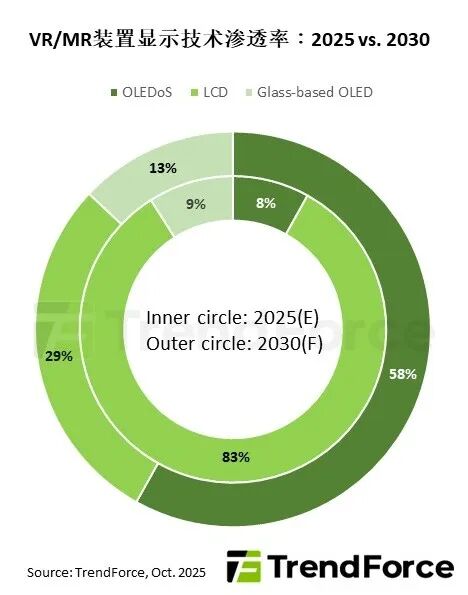
Core Insights - Apple is re-entering the market with an upgraded Vision Pro, focusing on enhancing computational performance and improving weight distribution in VR/MR headsets [2] - TrendForce's report predicts that OLEDoS technology will see a significant increase in penetration, reaching 58% in VR/MR applications by 2030 [2] - Despite a projected decline in global VR/MR product shipments to 5.6 million units in 2025, long-term growth is expected, with shipments reaching 14.4 million units by 2030 [2] Group 1: Market Trends - OLEDoS is emerging as a key display technology for mid-to-high-end VR/MR devices, benefiting from breakthroughs in both supply chain and application [2] - The current market is dominated by high-cost LCD displays, but the expansion of OLEDoS production lines by Chinese suppliers is expected to lower production costs [5] - Major brands are investing in both software and hardware upgrades, which will drive the long-term growth of the VR/MR market [2] Group 2: Competitive Landscape - Apple and Samsung are enhancing user experience through application platforms and generative AI, with Apple’s Vision Pro utilizing the new M5 chip for improved performance [6] - Samsung is collaborating with Google and Qualcomm to launch the Galaxy XR, featuring a 4K OLEDoS display, integrating applications across devices [6] - Meta is also innovating by using a combination of 0.9-inch OLEDoS and Pancake optical architecture to meet the demand for thinner VR/MR products [6] Group 3: Future Outlook - OLEDoS is expected to transition from the mid-to-high-end market to mainstream adoption, becoming a crucial driver for the transformation of the VR/MR industry [6]





TrendForce集邦咨询:预计2030年OLEDoS于VR/MR渗透率将快速增长至58%
智通财经网· 2025-10-20 09:16
Core Insights - OLEDoS technology is experiencing breakthroughs in both supply chain and application, with a projected VR/MR penetration rate reaching 58% by 2030 [1] - Global VR/MR product shipments are expected to decline to 5.6 million units in 2025 due to underperformance from major brands, but long-term projections estimate shipments will rise to 14.4 million units by 2030 [4] - Display technology is crucial for VR/MR product pricing, with LCD remaining the mainstream choice, while OLEDoS is anticipated to gain market share as Chinese suppliers expand production [4][6] Industry Developments - Apple is enhancing its Vision Pro with the new M5 chip to improve computational power and battery life, focusing on better software experiences through generative AI [5] - Samsung is collaborating with Google and Qualcomm to launch the Galaxy XR, featuring a 4K OLEDoS display, integrating applications across mobile and tablet platforms [5] - Meta plans to utilize a 0.9-inch OLEDoS with Pancake optical architecture to meet the demand for thinner VR/MR devices, indicating a shift towards mainstream market penetration for OLEDoS [6] Supply Chain Dynamics - Over ten Chinese companies, including Seeya, BOE, and Sidtek, are establishing 12-inch OLEDoS production lines, which will help reduce production costs as yield rates improve [4][6] - The competitive landscape is shifting as international brands increasingly adopt OLEDoS technology to achieve high-resolution and lightweight VR devices [4]
中国稀土出口管制政策对全球高端制造业的影响分析
Sou Hu Cai Jing· 2025-10-19 06:57
Core Insights - China's new rare earth export regulations, effective from October 9, 2025, significantly impact the global supply chain, reflecting a shift in strategic resource management and the competitive landscape in technology [1][11] - The regulations introduce a comprehensive control system that includes not only the export of raw materials but also extends to products containing Chinese rare earth elements, with a threshold of 0.1% for controlled substances [3][11] Regulatory Framework - The new regulations feature a "full-chain penetration control" approach, covering all aspects of the rare earth industry from mining to recycling [3] - Key elements include a 0.1% content threshold focusing on critical applications like high-performance magnets and semiconductor materials, and a 45-day approval cycle affecting global supply chain timelines [3][11] Global Manufacturing Impact - Rare earth elements are essential in high-end manufacturing, with significant applications in products like the F-35 fighter jet and Tesla Model 3 [4] - China dominates the rare earth market, controlling 70% of global mining, 90% of separation processing, and 93% of permanent magnet manufacturing [4] Case Studies - ASML, the sole producer of advanced EUV lithography machines, faces potential production disruptions due to the new regulations, as its products contain 0.3% dysprosium, exceeding the new threshold [5] - The U.S. military and semiconductor industries are also at risk, with rising costs and potential delays in production schedules due to increased rare earth prices [5][6] Market Reactions - The stock market has reacted variably, with Chinese rare earth companies seeing price increases while U.S. firms like Applied Materials experienced declines, indicating a reassessment of the strategic value of rare earths [6][11] Strategic Responses - Countries are diversifying their supply chains in response to the new regulations, with the U.S. supporting domestic rare earth industries and forming partnerships with countries like Australia and Canada [8] - Companies are adjusting inventory and procurement strategies, with some exploring alternative technologies to reduce reliance on rare earths [8] Industry Evolution - China's rare earth industry is focusing on upgrading and transitioning towards high-end, circular, and clustered development, enhancing its competitive edge in advanced processing technologies [9] - The new regulations signify a shift in China's role in global governance, moving from rule adaptation to active participation in rule-making [11][12]



千帆极轨18组卫星成功发射;消息称台积电2nm晶圆代工价格计划上调50%,高通或将三星列入第二选择丨智能制造日报
创业邦· 2025-10-19 03:25
Group 1 - The world's first mid-infrared solar magnetic field observation device, AIMS telescope, has been officially launched and fills the international gap in mid-infrared solar magnetic field observation [2] - The HICOOL 2025 Global Entrepreneur Summit showcased an intelligent ultra-light aircraft by Anhui Mengshi Aerospace Technology Co., which is expected to be delivered in bulk by June next year [2] - China successfully launched the Qianfan polar orbit satellite group consisting of 18 satellites using the Long March 6 rocket, marking a successful mission [2] Group 2 - TSMC plans to increase the foundry price for 2nm wafers by 50%, causing concerns for major clients like Qualcomm and MediaTek, with expected price increases of 16% and 24% for their chips respectively [2] - The Chengdu R&D and production base of Zhongwei Company has officially started construction, focusing on semiconductor high-end manufacturing equipment, with plans to cover 50% to 60% of key integrated circuit equipment in the next five to ten years [2]


全球智驾芯片TOP 5:华为、地平线上榜
半导体芯闻· 2025-10-18 01:26
Core Insights - The global automotive SoC market is entering a rapid growth phase, with major suppliers like Mobileye, NVIDIA, Qualcomm, Horizon, and Huawei expected to dominate the market by 2035, increasing their combined market share from 69% in 2025 to over 78% [1] - The demand for high-performance SoCs is driven by the need for AI perception, sensor fusion, and redundancy in higher levels of autonomous driving [1][2] - Chinese SoC manufacturers Horizon and Huawei are projected to capture over 50% of the domestic market by 2035 through the rapid expansion of cost-effective L2+ and above SoCs [1] Group 1 - Mobileye's cost-competitive products are anticipated to gain wider adoption in emerging markets such as India, Southeast Asia, Latin America, and the Middle East, helping it maintain its leadership in the L2 ADAS sector [2] - The shift towards centralized electrical architectures by automotive manufacturers is expected to sustain the demand for high-performance SoCs, particularly for L3 and L4 autonomous driving levels [2] - NVIDIA, Qualcomm, and Huawei are expected to see significant market share growth, with a compound annual growth rate exceeding 15% during the forecast period due to their superior and flexible SoC products [2] Group 2 - The automotive market is expected to become more fragmented by 2035, with high computational demand for vehicles projected to grow 3-4 times compared to current levels [4] - SoC suppliers that can balance AI performance, energy efficiency, and cost competitiveness are likely to succeed in the evolving market [4] - OEMs are expected to adopt multi-source strategies to optimize costs for L2 and L2+ autonomous driving chips while managing the costs of high-performance SoCs required for advanced autonomous driving products [4]


Direxion's QCMU And QCMD ETFs Facilitate Countervailing Trades On Tech's Unusual Sleeper
Benzinga· 2025-10-17 16:44
Core Insights - The article discusses the contrasting performance of Qualcomm Inc. compared to its peers in the semiconductor industry, particularly in the context of the AI boom [1][2]. Company Performance - Qualcomm's stock has gained just over 6% since the beginning of the year, significantly lagging behind the Nasdaq Composite's gain of over 17% and its closest competitors, Nvidia and Broadcom, which gained approximately 34% and 52% respectively [2]. - Despite launching new high-performance processors, the Snapdragon X2 Elite and Snapdragon X2 Elite Extreme, Qualcomm's stock performance remains subdued [3]. Market Dynamics - Qualcomm's stock has shown a rare pattern of performance, with eight out of the last ten weeks being up weeks, indicating potential statistical pressure for excessive bullishness [4][6]. - The stock has been sensitive to negative news, such as the antitrust investigation by China into Qualcomm's acquisition of Autotalks, which led to a significant drop in share price [7]. Investment Vehicles - Direxion offers ETFs that provide leveraged and inverse exposure to Qualcomm's stock, catering to both bullish and bearish investors [8][9]. - The Direxion Daily QCOM Bull 2X Shares (QCMU) aims to track 200% of Qualcomm's daily performance, while the Direxion Daily QCOM Bear 1X Shares (QCMD) provides 100% of the inverse performance [9][10]. - The QCMU ETF has gained 3% since its launch, with a notable 28% gain over a seven-week period starting from August 11 [12]. In contrast, the QCMD ETF has lost over 2% since its debut, but its value has risen during periods of skepticism towards AI [14][16].

还没用上Wi-Fi 7,Wi-Fi 8就要来了,这将重塑物联网关键场景
3 6 Ke· 2025-10-17 12:13
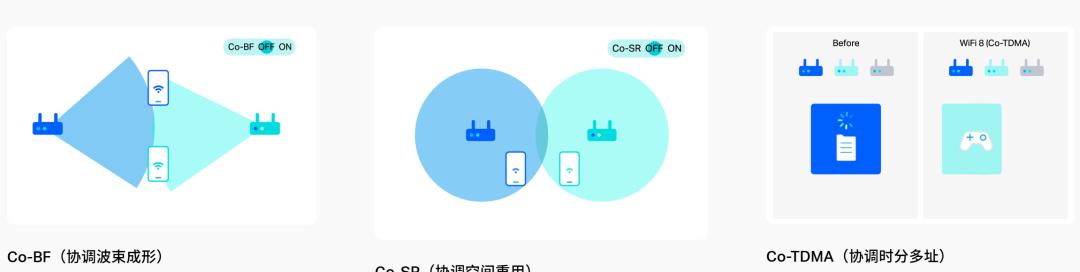
Core Insights - The global Wi-Fi 7 product penetration rate is projected to reach 6.4% in 2024, increasing to 15% by 2025 as more products receive Wi-Fi 7 certification, indicating that Wi-Fi 7 is just beginning to enter the mainstream market while Wi-Fi 8 is already in development [1][2] - TP-Link has successfully demonstrated the connectivity of the next-generation WLAN technology, Wi-Fi 8, marking a significant milestone in its development [1][2] Industry Developments - Major companies such as Broadcom, Qualcomm, Intel, MediaTek, and Marvell are actively preparing for Wi-Fi 8, with Broadcom recently announcing the industry's first Wi-Fi 8 chip solutions [2] - Wi-Fi 8, also known as IEEE 802.11bn, is still in the development phase, focusing on higher reliability, coordination, and resource efficiency rather than just speed [2][3] Technical Features - Wi-Fi 8 aims to provide ultra-high reliability, reducing jitter and packet loss rates by optimizing scheduling mechanisms and enhancing redundancy [5] - The new standard will facilitate seamless connectivity in high-density environments through multiple access point coordination, improving load balancing and reducing signal conflicts [6][8] - Advanced power management features will extend the battery life of IoT devices, allowing them to remain in standby mode for longer periods [9] - Enhanced spectrum utilization will be achieved through predictive traffic scheduling and adaptive channel allocation, improving overall network performance [10] - Wi-Fi 8 will integrate mmWave support, enhancing capabilities for high-density urban areas and fixed wireless access scenarios [11] - The standard will also focus on reducing latency, which is crucial for real-time applications such as AR and VR [12] - Improved coexistence protocols will allow multiple wireless communication systems to operate efficiently without interference [13] - Enhanced security features will be implemented to protect against both traditional and emerging threats [14] Market Implications - Wi-Fi 8 is expected to be officially launched in 2028, with the standard's certification and product preparation anticipated to begin in 2027, providing a clear development roadmap for manufacturers [16][18] - Until Wi-Fi 8 is fully adopted, Wi-Fi 7 and 6E will remain the mainstream technologies, with Wi-Fi 8 gradually being introduced in critical IoT applications [19]


高通被查野心受阻 在华汽车业务要按下“暂停键”
Jing Ji Guan Cha Wang· 2025-10-17 09:28
Core Viewpoint - Qualcomm is under investigation by China's State Administration for Market Regulation for failing to legally report its acquisition of Israeli company Autotalks, potentially violating the Anti-Monopoly Law of the People's Republic of China [1][3] Group 1: Investigation Details - The investigation was initiated on October 10, 2025, after Qualcomm's acquisition of Autotalks was found to have not been reported as required [1][3] - Qualcomm previously faced a fine of 6.088 billion RMB for abusing its market dominance in 2013, marking the highest penalty since the implementation of China's Anti-Monopoly Law [1][2] - If found guilty, Qualcomm could face a fine of up to 1.79 billion USD (approximately 127.7 billion RMB), based on its revenue in China [3] Group 2: Market Impact - Qualcomm's reliance on the Chinese market is significant, with 46% of its global revenue coming from China in the 2024 fiscal year [3] - The company holds a dominant market share of 76% in the cockpit domain control chip market in China as of early 2025 [3] - The investigation could severely impact Qualcomm's operations and its plans for the Snapdragon digital chassis platform, which is crucial for its automotive business [5] Group 3: Competitive Landscape - The acquisition of Autotalks was seen as a strategic move for Qualcomm to enhance its capabilities in the V2X communication technology sector, which is becoming increasingly competitive with domestic Chinese chip manufacturers [4][6] - The domestic market for automotive chips in China is growing, with over 30% of the market now comprised of local products, increasing pressure on Qualcomm [6] Group 4: Broader Implications - The case highlights a trend of intensified scrutiny on major tech companies globally, with similar investigations affecting firms like Nvidia and Google [7][8] - The outcome of Qualcomm's investigation may lead to more equitable conditions for local competitors such as Huawei and ZTE, potentially reshaping the competitive landscape in the semiconductor industry [8]