
Rio Tinto(RIO)

Search documents
Copper's Risk Trifecta Leaves A Surprising Winner - Barrick Mining (NYSE:B), Global X Copper Miners ETF (ARCA:COPX)
Benzinga· 2025-10-10 10:13
Core Insights - Copper prices have surged past $11,000 per ton for the first time since May 2024, driven by a combination of regulatory pressure, political instability, and a narrow supply base, resulting in a year-to-date increase of approximately 21% [1][2] Supply Constraints - Major copper producers are facing challenges, with environmental disputes halting some of the best mines and projects, leading to millions of tons of untapped supply being locked up due to ESG regulations [2][3] - Approximately 6.4 million tons of copper capacity, about 25% of global output, is currently stalled or suspended due to political and social issues rather than geological ones [3][4] - Key blocked projects include La Granja in Peru, Resolution Copper in the U.S., and El Pachón in Argentina, which have faced local opposition and regulatory hurdles [4][5] Operational Risks - The copper sector is experiencing operational risks due to a narrow resource base, with production setbacks reported at Codelco in Chile, Freeport-McMoRan's Grasberg mine in Indonesia, and Teck Resources' Quebrada Blanca project [7] - A recent mudslide at Grasberg resulted in a significant drop of over 15% in Freeport's share price in a single day, highlighting the fragility of the supply chain [7] Political Influence - Political factors are adding volatility to mining investments, particularly in Argentina, where midterm elections have caused a pause in projects like McEwen Copper's Los Azules [8][9] - Los Azules has proven and probable reserves of 10.2 billion pounds and a projected production of 204,800 tons in the first five years, but investor confidence is contingent on political stability [9] Emerging Opportunities - Zambia is positioned to potentially benefit from the supply vacuum left by risks in other copper-rich nations, with a record output of one million tons expected this year and a goal of reaching 3 million tons annually by 2030 [10] - The country has attracted around $10 billion in new investments from major companies like Barrick, First Quantum, and Sinomine Resource Group, indicating a strong investment climate [11]





中国不想再当“卑微甲方”
Hu Xiu· 2025-10-10 04:13
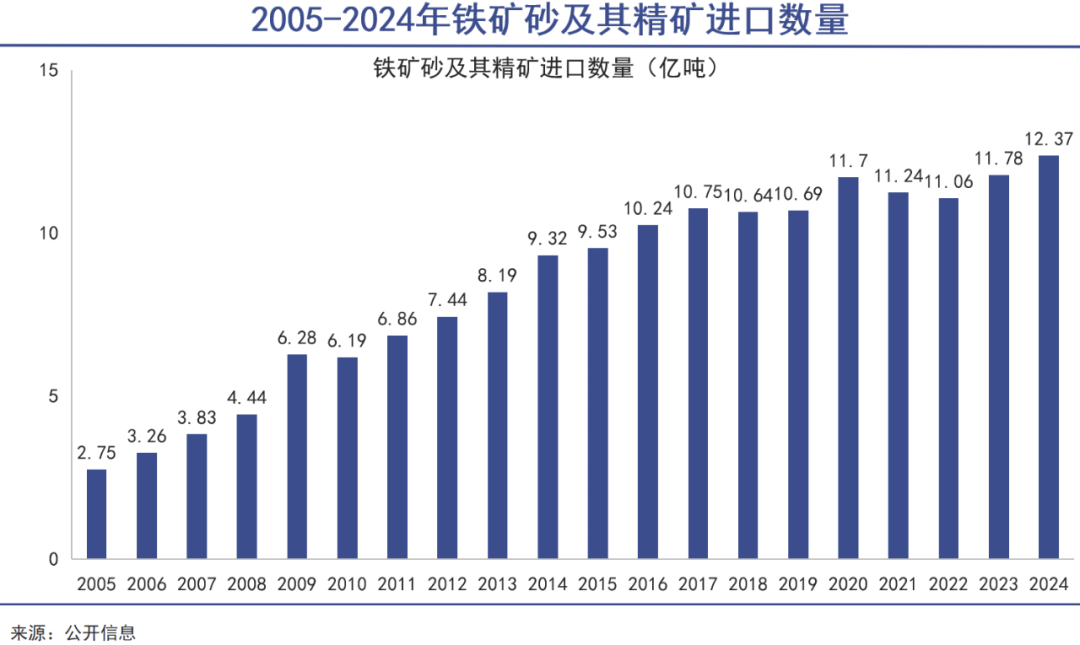
Core Viewpoint - Recent actions by China regarding strategic mineral resource management have garnered significant attention, indicating a potential shift in its pricing strategy in the global commodities market [1][7]. Group 1: China's Actions in Mineral Resource Management - On September 30, 2023, it was reported that China Mineral Resources Group requested domestic buyers to suspend purchases of BHP's iron ore cargo priced in USD, causing a stir in international raw material markets [2][4]. - On October 9, 2023, China's Ministry of Commerce announced export controls on rare earth-related technologies and items, further emphasizing its strategic approach to resource management [5]. Group 2: China's Position in the Global Market - China is the largest consumer of iron ore globally, importing 1.237 billion tons in the previous year, which is nearly five times the amount imported two decades ago, accounting for approximately 75% of global seaborne iron ore imports [8][9]. - Despite being a major buyer, China has historically lacked pricing power, often forced to accept prices set by suppliers, particularly Australian mining giants [9][11]. Group 3: Historical Context of Pricing Power - From 2003 onwards, China has been the largest buyer of Australian iron ore but has been subjected to unfavorable pricing mechanisms, such as the "first-mover-follow" pricing strategy employed by major mining companies [11][12]. - Significant price increases have been imposed on China, with instances of price hikes reaching as high as 96.5% in 2008, reflecting the lack of negotiation power [13][16]. Group 4: Industry Consolidation Efforts - The fragmentation of Chinese enterprises in the commodities market has contributed to its weak pricing power, prompting the establishment of the China Mineral Resources Group in 2022 to consolidate procurement efforts [21][24]. - The group has initiated centralized procurement for iron ore, representing a significant shift from the previously fragmented purchasing approach of over 600 steel companies [25][26]. Group 5: Future Outlook and Global Infrastructure - China's pursuit of global pricing power in commodities is not aimed at economic hegemony but rather to secure fair benefits for its economic development, especially in light of a new global infrastructure cycle [34][40]. - The anticipated infrastructure investments in the Middle East and emerging economies present opportunities for China to leverage its position in the iron ore and rare earth markets, which are critical for construction and new energy projects [35][39].


Rio Tinto (NYSE:RIO) Maintains Positive Outlook with Morgan Stanley's "Overweight" Rating
Financial Modeling Prep· 2025-10-09 00:03
Core Viewpoint - Rio Tinto is actively investing in its operations and maintaining a positive outlook, as indicated by Morgan Stanley's upgraded price target and ongoing projects in the Pilbara region [2][3][4]. Investment and Financial Performance - Morgan Stanley has maintained an "Overweight" rating for Rio Tinto, raising the price target from 5,500 GBp to 5,810 GBp, reflecting a positive outlook for the company's future performance [2][6]. - The current stock price of Rio Tinto is $67.69, with a market capitalization of approximately $109.91 billion [5]. Project Investments - Rio Tinto plans to invest $733 million in the West Angelas Sustaining Project, which aims to enhance the annual capacity of the West Angelas hub to 35 million tons [3][6]. - The company has announced a broader investment plan of $13 billion in mine and plant developments from 2025 to 2027, emphasizing its commitment to long-term growth in the Australian iron ore sector [4][6]. Strategic Partnerships - The investment in the West Angelas project is in collaboration with Mitsui and Nippon Steel, highlighting Rio Tinto's strategy to deepen partnerships and engage with local communities, including the Yinhawangka and Ngarlawangga Peoples [4][6].
美股异动 | 铜业概念股普涨 南方铜业(SCCO.US)涨逾5%
智通财经网· 2025-10-08 15:16
Core Viewpoint - The copper market is experiencing a significant shift from surplus to shortage, primarily influenced by the upcoming Grasberg mine incident in Indonesia in September 2025, leading to a challenging supply-demand scenario in 2026 [1] Group 1: Market Performance - U.S. copper stocks saw a broad increase, with Southern Copper Corporation (SCCO.US) rising over 5%, Freeport-McMoRan Copper & Gold (FCX.US) increasing over 4%, and Rio Tinto (RIO.US) gaining over 2% [1] Group 2: Supply and Demand Dynamics - The copper market is projected to face a "low supply, low inventory, high deficit" situation in 2026, with the supply-demand gap expected to widen to 620,000 to 830,000 tons, marking the most severe level in nearly a decade [1] Group 3: Price Forecasts - Goldman Sachs has raised its copper price forecast for 2026 from $10,000 to $10,500 per ton, while maintaining a forecast of $10,750 per ton for 2027 [1]

Robe River JV to invest $483m in West Angelas Sustaining Project
Yahoo Finance· 2025-10-08 09:27
Core Insights - Rio Tinto, Mitsui, and Nippon Steel are investing A$733 million ($482.8 million) in the West Angelas Sustaining Project, with Rio Tinto contributing A$389 million [1] - The project is part of the Robe River joint venture in the Pilbara region of Western Australia, which is owned by Rio Tinto (53%), Mitsui Iron Ore (33%), and Nippon Steel (14%) [1] - The West Angelas Sustaining Project aims to develop new iron ore deposits and has received necessary state and federal government approvals [1][2] Production Capacity and Employment - The new deposits will sustain the West Angelas hub's total annual production capacity of 35 million tonnes, ensuring long-term mining operations [2] - Approximately 600 jobs will be created during construction, and the project will sustain around 950 full-time equivalent roles once operational [4] Infrastructure and Development - The project will utilize existing West Angelas processing facilities and include the development of new infrastructure, including 22 km of haul roads [4] - The mined ore will be autonomously trucked to the West Angelas hub, with first ore expected by 2027 [4] Future Projects - The West Angelas Sustaining Project is part of a series of replacement projects in the Pilbara region, with plans for the Rhodes Ridge project aiming for an initial capacity of up to 40 million tonnes per annum, with production expected to start by 2030 [5] Cultural and Environmental Considerations - Rio Tinto has collaborated with the Yinhawangka and Ngarlawangga peoples to develop cultural heritage management plans for the project, ensuring the protection of cultural heritage and the environment [3]
Rio Tinto to Jointly Invest $733M in West Angelas Sustaining Project
ZACKS· 2025-10-07 17:30
Key Takeaways Rio Tinto, Mitsui and Nippon Steel will jointly invest $733M in the West Angelas Sustaining Project.The project extends the West Angelas hub's 35M-ton annual capacity and mining life.Rio Tinto plans $13B in mine and plant investments in 2025-2027, reinforcing its Australian iron ore focus.Rio Tinto Group (RIO) announced that it will jointly invest to develop the West Angelas Sustaining Project as part of its Robe River Joint Venture with Mitsui & Co. (MITSY) and Nippon Steel. This move showcas ...

在人民币结算令下,澳大利亚矿业巨头必和必拓与力拓的态度差异引发了广泛关注。
Sou Hu Cai Jing· 2025-10-07 07:45
Core Viewpoint - The sudden shift by Chinese buyers to demand payment in RMB instead of USD for iron ore from BHP has created significant turmoil in the iron ore trade, highlighting the ongoing capital market dynamics and the contrasting responses of major mining companies [1][3]. Group 1: Company Responses - Rio Tinto quickly agreed to the RMB settlement, reflecting its deep financial ties to the Chinese market, which accounts for over half of its revenue and has seen record procurement levels [1]. - BHP, on the other hand, has resisted the shift to RMB, influenced by its American shareholders who are concerned about the potential erosion of the USD's dominance in mineral trade [3]. Group 2: Market Dynamics - The global iron ore market is transitioning from a seller's market to a buyer's market, with increasing supply from countries like Guinea and Brazil, which could threaten BHP's market position if it remains inflexible [5]. - The pricing power in the iron ore market is shifting, with China's Dalian Commodity Exchange now having a trading volume eight times that of Singapore, indicating the emergence of a new pricing center in China [5].

力拓重大接纳人民币结算,必和必拓为何坚决说不?中澳铁矿石博弈内幕披露
Sou Hu Cai Jing· 2025-10-06 23:03
Core Insights - Rio Tinto has adopted a new settlement scheme using the Chinese yuan, while BHP Billiton has chosen to maintain its existing settlement model, highlighting a stark contrast in strategic approaches between the two Australian mining giants [1][3] - The choice of settlement currency has become a significant indicator of a company's strategic flexibility, especially in the context of the deepening demand for stable mineral resource supply from the Chinese market [1][3] Group 1: Company Strategies - Rio Tinto's decision is based on a thorough consideration of real interests, having established a long-term investment presence across multiple sectors in the Chinese market [1] - The company has set up a dedicated yuan account in the Shanghai Free Trade Zone, indicating a forward-looking strategy with a 36-month implementation period [1] - BHP Billiton's decision reflects a tighter connection to international capital markets, with a significant dollar-denominated debt structure that could be adversely affected by a shift in settlement currency [1][3] Group 2: Market Dynamics - The iron ore trade transcends mere commercial transactions, involving complex international relations, particularly between Australia and China [1] - The ongoing fluctuations in exchange rates pose a risk to profitability, with annual iron ore trade volumes exceeding hundreds of millions of tons [3] - The strategic decisions of both companies will be tested over time, with upcoming financial data serving as a critical observation point for market expectations [1]

Rio Venture to Spend $733 Million on Australian Iron Ore Hub
Yahoo Finance· 2025-10-06 22:28
Core Viewpoint - Rio Tinto Group, along with partners Mitsui & Co. and Nippon Steel Corp., is investing $733 million in new iron ore mines in the Pilbara region to sustain production levels from the West Angelas hub, which is crucial for meeting global demand for high-quality iron ore [1][2][3]. Investment and Production Plans - The West Angelas Sustaining Project aims to maintain production at approximately 35 million tons of iron ore annually, with first production expected to commence in 2027 following the receipt of all necessary government approvals [2][3]. - Rio Tinto's share of the investment in the West Angelas project will amount to $389 million, part of a broader strategy to counteract declining ore grades and reserves in existing operations [4]. Industry Context - The need for Rio Tinto to invest heavily in new mining projects is driven by the challenges of falling ore grades and diminishing reserves, which are not unique to the company but affect other miners in the region as well [3]. - The company has previously announced a $1.8 billion investment to expand its Brockman iron ore hub to maintain production levels as older mines are depleted [4].
Rio Tinto, Mitsui, Nippon Steel to invest $733 million in Pilbara iron ore project
Reuters· 2025-10-06 21:38
Core Viewpoint - Rio Tinto announced an investment of $733 million to develop new iron ore deposits at the West Angelas hub in Western Australia, in collaboration with joint venture partners Mitsui and Nippon Steel Corp [1] Investment Details - The investment of $733 million will be utilized for the development of new iron ore deposits [1] - Joint venture partners involved in this investment include Mitsui and Nippon Steel Corp [1] Location and Project Scope - The project is located at the West Angelas hub in Western Australia [1] - The focus of the investment is on expanding iron ore production capabilities [1]
