Rio Tinto(RIO)

Search documents
力拓(RIO.US)Q3铜产量增长10% 核心矿场创纪录 以市场满足需求上升
智通财经网· 2025-10-14 02:17
Group 1 - Rio Tinto's copper production increased by 10% year-on-year in Q3, driven by significant output growth at its Escondida and Oyu Tolgoi mines [1] - The Oyu Tolgoi project saw a record production increase of 78%, supporting the company's growth plans despite stable iron ore shipments [1] - The company aims to expand iron ore production, with the Simandou project expected to supply an additional 60 million tons annually once fully operational [1] Group 2 - Iron ore shipments remained stable year-on-year, with Rio Tinto exporting 84.3 million tons in Q3, a 6% increase from the previous quarter [2] - The company maintains its annual production guidance of 323 million to 338 million tons for iron ore [2] - In other commodities, bauxite production rose by 9% and aluminum production increased by 6% [3] Group 3 - Copper prices have risen over 20% in the past six months, with LME copper surpassing $10,800 [3] - UBS forecasts that copper prices may range between $10,000 and $11,500 per ton in the coming quarters, raising its price prediction for September 2026 to $11,500 per ton [3]

Rio Tinto releases third quarter 2025 production results
Businesswire· 2025-10-13 21:26
MELBOURNE, Australia--(BUSINESS WIRE)--Rio Tinto Chief Executive Simon Trott said: "Safety remains our number one priority. We are deeply saddened by the tragic death of Mohamed Camara at the SimFer mine site and are committed to learning across our business to prevent future incidents. This has been a time for huge reflections on safety across the group. "We continue to strengthen performance from our assets, setting back-to-back quarterly production records in our bauxite business and at Oyu. ...


美国防部拟斥资10亿美元,加速抢购钴锑等关键矿产
Hua Er Jie Jian Wen· 2025-10-13 08:58
Core Insights - The U.S. Department of Defense is seeking to procure critical minerals worth up to $1 billion as part of a global inventory reserve plan to address challenges in the supply chain of key metals [1][2] - The procurement plan includes significant purchases of cobalt, antimony, tantalum, and scandium, highlighting the strategic importance of these minerals for defense systems [1][2] Group 1: Procurement Details - The Department of Defense plans to purchase up to $500 million worth of cobalt, $245 million worth of antimony from U.S. Antimony Corporation, $100 million worth of tantalum from an undisclosed U.S. company, and $45 million worth of scandium from Rio Tinto and APL Engineering Materials [1][2] - The procurement targets exceed conventional market sizes, with the requested quantities often surpassing U.S. annual production and import levels [2][3] Group 2: Strategic Importance - These critical minerals are essential for nearly all weapon systems and technologies such as radar and missile detection systems, indicating their priority status for the Department of Defense [1][2] - The Department of Defense's inventory, valued at $1.3 billion as of 2023, includes dozens of alloys, metals, rare earths, ores, and precious metals stored in warehouses across the country [2] Group 3: Market Reactions - Market analysts expressed surprise at the scale of the procurement requests, with some considering the quantities unrealistic within the proposed five-year timeframe [2][3] - The Department of Defense's focus on securing these minerals reflects a growing awareness of their criticality and the need to support domestic production capabilities [4]
《国企要参》海外视点丨中国展示铁矿石购买力可能为时已晚
Xin Lang Cai Jing· 2025-10-11 12:37
Group 1 - The rise of China has been closely linked to the steel industry, starting from the establishment of Baosteel in the late 1970s, which utilized Japanese technology and Australian iron ore to produce steel products that fueled significant global economic growth [2] - By the early 21st century, China became Australia's largest customer for steelmaking raw materials, with iron ore from Pilbara supplying steel furnaces in Tangshan [2] - Despite the low iron ore prices, Australian mining giants like BHP and Rio Tinto have remained profitable, while Chinese steel mills have faced prices consistently above $80 per ton over the past decade [2] Group 2 - Beijing has long attempted to shift the pricing power balance by funding overseas mines and establishing pricing benchmarks, but these efforts have seen limited success [2] - The establishment of China Mineral Resources Group (CMRG) in 2022 aims to negotiate collectively with major global mining companies to enhance China's influence in the market [2] - Recent disputes between CMRG and BHP over iron ore pricing indicate that CMRG is testing its strength in negotiations without jeopardizing relationships with mining companies [2] Group 3 - Although CMRG maintains a dominant market position, with China purchasing about three-quarters of seaborne iron ore last year, this position is becoming increasingly precarious [3] - India is experiencing a construction boom and is developing its own steel supply chain, which poses a competitive threat to China's dominance in the iron ore market [3] - Geopolitical factors are increasingly affecting trade, leading to higher costs and risks associated with shipping routes [3] Group 4 - Domestically, China is shifting from large-scale economic stimulus projects in construction and heavy industry to advanced manufacturing and services, resulting in reduced demand for steel [4] - While CMRG may assist China in making more informed procurement decisions, it cannot fully mitigate the deeper underlying impacts of this shift [5]


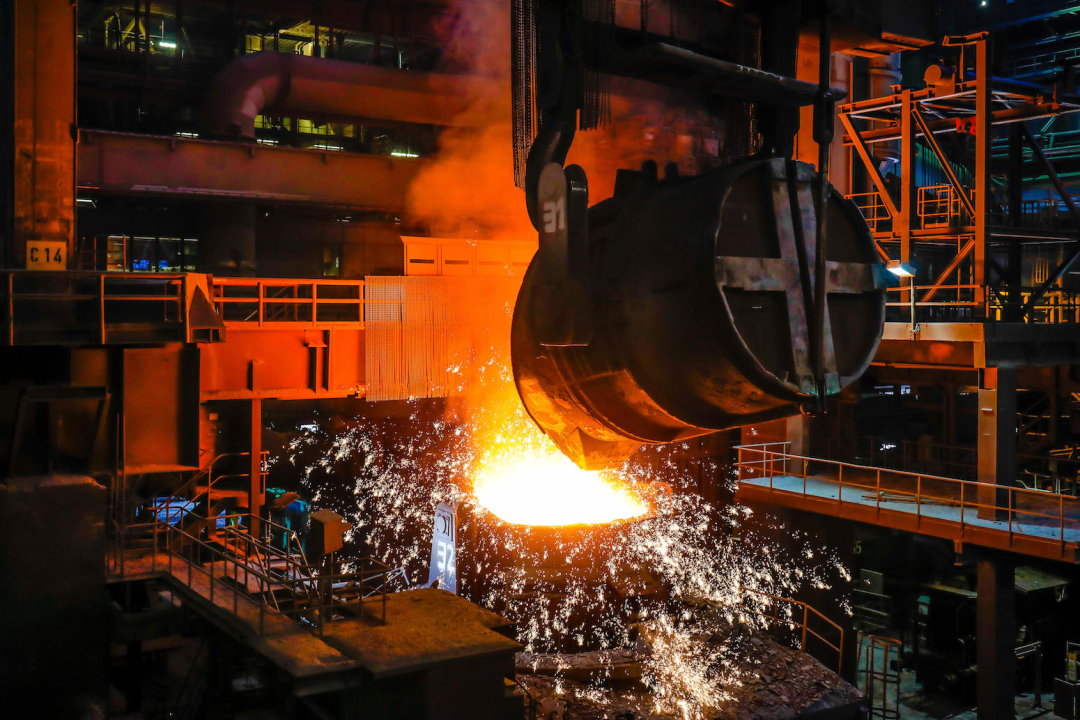
Copper's Risk Trifecta Leaves A Surprising Winner - Barrick Mining (NYSE:B), Global X Copper Miners ETF (ARCA:COPX)
Benzinga· 2025-10-10 10:13
Core Insights - Copper prices have surged past $11,000 per ton for the first time since May 2024, driven by a combination of regulatory pressure, political instability, and a narrow supply base, resulting in a year-to-date increase of approximately 21% [1][2] Supply Constraints - Major copper producers are facing challenges, with environmental disputes halting some of the best mines and projects, leading to millions of tons of untapped supply being locked up due to ESG regulations [2][3] - Approximately 6.4 million tons of copper capacity, about 25% of global output, is currently stalled or suspended due to political and social issues rather than geological ones [3][4] - Key blocked projects include La Granja in Peru, Resolution Copper in the U.S., and El Pachón in Argentina, which have faced local opposition and regulatory hurdles [4][5] Operational Risks - The copper sector is experiencing operational risks due to a narrow resource base, with production setbacks reported at Codelco in Chile, Freeport-McMoRan's Grasberg mine in Indonesia, and Teck Resources' Quebrada Blanca project [7] - A recent mudslide at Grasberg resulted in a significant drop of over 15% in Freeport's share price in a single day, highlighting the fragility of the supply chain [7] Political Influence - Political factors are adding volatility to mining investments, particularly in Argentina, where midterm elections have caused a pause in projects like McEwen Copper's Los Azules [8][9] - Los Azules has proven and probable reserves of 10.2 billion pounds and a projected production of 204,800 tons in the first five years, but investor confidence is contingent on political stability [9] Emerging Opportunities - Zambia is positioned to potentially benefit from the supply vacuum left by risks in other copper-rich nations, with a record output of one million tons expected this year and a goal of reaching 3 million tons annually by 2030 [10] - The country has attracted around $10 billion in new investments from major companies like Barrick, First Quantum, and Sinomine Resource Group, indicating a strong investment climate [11]



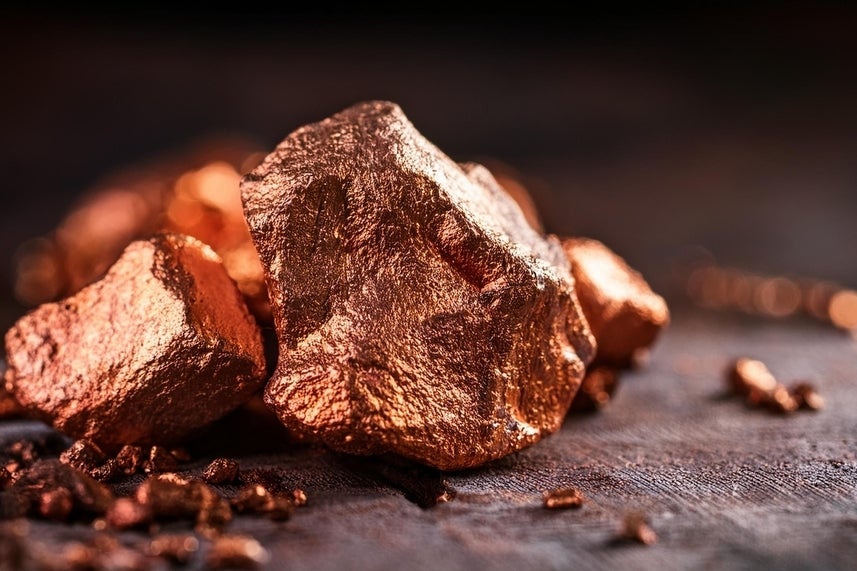
中国不想再当“卑微甲方”
Hu Xiu· 2025-10-10 04:13
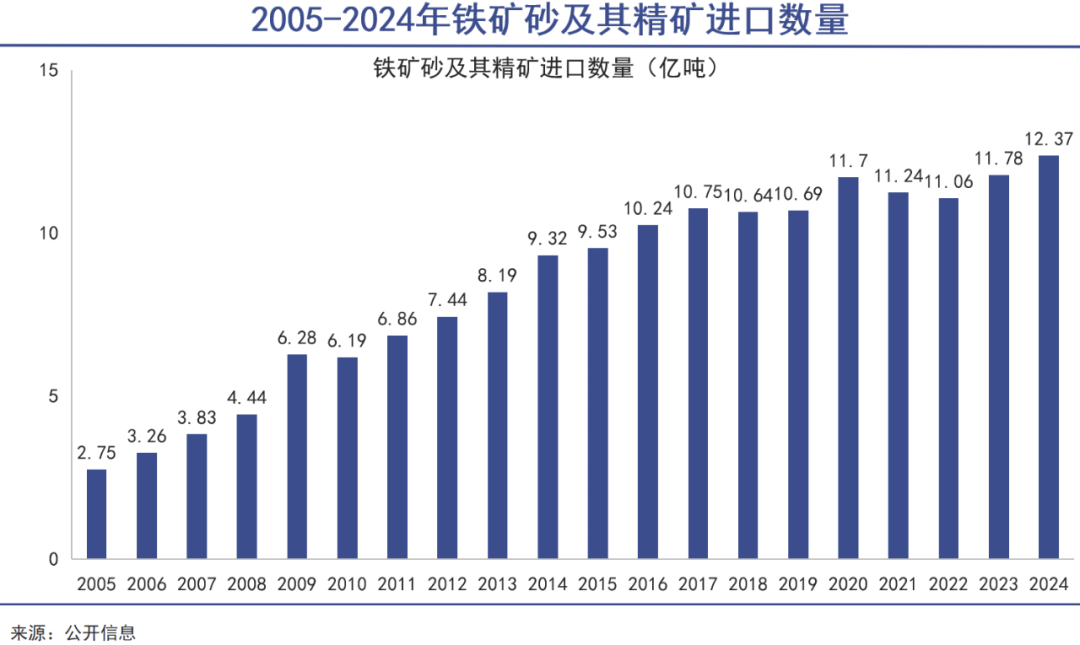
Core Viewpoint - Recent actions by China regarding strategic mineral resource management have garnered significant attention, indicating a potential shift in its pricing strategy in the global commodities market [1][7]. Group 1: China's Actions in Mineral Resource Management - On September 30, 2023, it was reported that China Mineral Resources Group requested domestic buyers to suspend purchases of BHP's iron ore cargo priced in USD, causing a stir in international raw material markets [2][4]. - On October 9, 2023, China's Ministry of Commerce announced export controls on rare earth-related technologies and items, further emphasizing its strategic approach to resource management [5]. Group 2: China's Position in the Global Market - China is the largest consumer of iron ore globally, importing 1.237 billion tons in the previous year, which is nearly five times the amount imported two decades ago, accounting for approximately 75% of global seaborne iron ore imports [8][9]. - Despite being a major buyer, China has historically lacked pricing power, often forced to accept prices set by suppliers, particularly Australian mining giants [9][11]. Group 3: Historical Context of Pricing Power - From 2003 onwards, China has been the largest buyer of Australian iron ore but has been subjected to unfavorable pricing mechanisms, such as the "first-mover-follow" pricing strategy employed by major mining companies [11][12]. - Significant price increases have been imposed on China, with instances of price hikes reaching as high as 96.5% in 2008, reflecting the lack of negotiation power [13][16]. Group 4: Industry Consolidation Efforts - The fragmentation of Chinese enterprises in the commodities market has contributed to its weak pricing power, prompting the establishment of the China Mineral Resources Group in 2022 to consolidate procurement efforts [21][24]. - The group has initiated centralized procurement for iron ore, representing a significant shift from the previously fragmented purchasing approach of over 600 steel companies [25][26]. Group 5: Future Outlook and Global Infrastructure - China's pursuit of global pricing power in commodities is not aimed at economic hegemony but rather to secure fair benefits for its economic development, especially in light of a new global infrastructure cycle [34][40]. - The anticipated infrastructure investments in the Middle East and emerging economies present opportunities for China to leverage its position in the iron ore and rare earth markets, which are critical for construction and new energy projects [35][39].

Rio Tinto (NYSE:RIO) Maintains Positive Outlook with Morgan Stanley's "Overweight" Rating
Financial Modeling Prep· 2025-10-09 00:03
Core Viewpoint - Rio Tinto is actively investing in its operations and maintaining a positive outlook, as indicated by Morgan Stanley's upgraded price target and ongoing projects in the Pilbara region [2][3][4]. Investment and Financial Performance - Morgan Stanley has maintained an "Overweight" rating for Rio Tinto, raising the price target from 5,500 GBp to 5,810 GBp, reflecting a positive outlook for the company's future performance [2][6]. - The current stock price of Rio Tinto is $67.69, with a market capitalization of approximately $109.91 billion [5]. Project Investments - Rio Tinto plans to invest $733 million in the West Angelas Sustaining Project, which aims to enhance the annual capacity of the West Angelas hub to 35 million tons [3][6]. - The company has announced a broader investment plan of $13 billion in mine and plant developments from 2025 to 2027, emphasizing its commitment to long-term growth in the Australian iron ore sector [4][6]. Strategic Partnerships - The investment in the West Angelas project is in collaboration with Mitsui and Nippon Steel, highlighting Rio Tinto's strategy to deepen partnerships and engage with local communities, including the Yinhawangka and Ngarlawangga Peoples [4][6].
美股异动 | 铜业概念股普涨 南方铜业(SCCO.US)涨逾5%
智通财经网· 2025-10-08 15:16
Core Viewpoint - The copper market is experiencing a significant shift from surplus to shortage, primarily influenced by the upcoming Grasberg mine incident in Indonesia in September 2025, leading to a challenging supply-demand scenario in 2026 [1] Group 1: Market Performance - U.S. copper stocks saw a broad increase, with Southern Copper Corporation (SCCO.US) rising over 5%, Freeport-McMoRan Copper & Gold (FCX.US) increasing over 4%, and Rio Tinto (RIO.US) gaining over 2% [1] Group 2: Supply and Demand Dynamics - The copper market is projected to face a "low supply, low inventory, high deficit" situation in 2026, with the supply-demand gap expected to widen to 620,000 to 830,000 tons, marking the most severe level in nearly a decade [1] Group 3: Price Forecasts - Goldman Sachs has raised its copper price forecast for 2026 from $10,000 to $10,500 per ton, while maintaining a forecast of $10,750 per ton for 2027 [1]

Robe River JV to invest $483m in West Angelas Sustaining Project
Yahoo Finance· 2025-10-08 09:27
Core Insights - Rio Tinto, Mitsui, and Nippon Steel are investing A$733 million ($482.8 million) in the West Angelas Sustaining Project, with Rio Tinto contributing A$389 million [1] - The project is part of the Robe River joint venture in the Pilbara region of Western Australia, which is owned by Rio Tinto (53%), Mitsui Iron Ore (33%), and Nippon Steel (14%) [1] - The West Angelas Sustaining Project aims to develop new iron ore deposits and has received necessary state and federal government approvals [1][2] Production Capacity and Employment - The new deposits will sustain the West Angelas hub's total annual production capacity of 35 million tonnes, ensuring long-term mining operations [2] - Approximately 600 jobs will be created during construction, and the project will sustain around 950 full-time equivalent roles once operational [4] Infrastructure and Development - The project will utilize existing West Angelas processing facilities and include the development of new infrastructure, including 22 km of haul roads [4] - The mined ore will be autonomously trucked to the West Angelas hub, with first ore expected by 2027 [4] Future Projects - The West Angelas Sustaining Project is part of a series of replacement projects in the Pilbara region, with plans for the Rhodes Ridge project aiming for an initial capacity of up to 40 million tonnes per annum, with production expected to start by 2030 [5] Cultural and Environmental Considerations - Rio Tinto has collaborated with the Yinhawangka and Ngarlawangga peoples to develop cultural heritage management plans for the project, ensuring the protection of cultural heritage and the environment [3]
Rio Tinto to Jointly Invest $733M in West Angelas Sustaining Project
ZACKS· 2025-10-07 17:30
Key Takeaways Rio Tinto, Mitsui and Nippon Steel will jointly invest $733M in the West Angelas Sustaining Project.The project extends the West Angelas hub's 35M-ton annual capacity and mining life.Rio Tinto plans $13B in mine and plant investments in 2025-2027, reinforcing its Australian iron ore focus.Rio Tinto Group (RIO) announced that it will jointly invest to develop the West Angelas Sustaining Project as part of its Robe River Joint Venture with Mitsui & Co. (MITSY) and Nippon Steel. This move showcas ...