
Rocket Lab USA(RKLB)

Search documents
Rocket Lab: Validation Flywheel Spins Faster Into 2026
Seeking Alpha· 2025-12-22 14:30
Core Insights - Buying Rocket Lab Corporation (RKLB) at slightly below $50 in early November was a profitable decision, as the stock currently trades at $70 [1] Company Analysis - Rocket Lab Corporation has shown significant price appreciation, indicating strong market performance and investor confidence [1] - The analysis suggests that recent developments around RKLB have positively influenced its stock price [1] Investment Context - The investment in RKLB is supported by a background in finance and equity research, highlighting the importance of informed decision-making in stock investments [1]



Rocket Lab(RKLB.US)2025年发射任务圆满收官:全年21次发射 成功率100%
Zhi Tong Cai Jing· 2025-12-22 12:39
Rocket Lab自2023年首次为iQPS执行发射任务以来,已累计为该星座部署了7颗卫星,使"Electron"火箭 成为iQPS的主要发射载具。根据计划,2026年起还将为iQPS执行至少5次"Electron"火箭发射任务。 下一枚"Electron"火箭的发射窗口预计定于2026年第一季度初。 公司表示,此次发射的卫星将加入iQPS的合成孔径雷达星座,通过十二种不同轨道为其全球客户提供 近实时图像服务。 美国商业航天公司Rocket Lab(RKLB.US)于上周日宣布,其"Electron"运载火箭年内第21次发射任务取得 圆满成功,为其多次合作的客户——日本地球成像公司Institute for Q-shu Pioneers of Space(iQPS)将一颗 最新卫星送入预定轨道。 受此利好消息提振,Rocket Lab股价在周一盘前上涨约4%。 ...
Rocket Lab USA's Impressive Growth and Market Performance
Financial Modeling Prep· 2025-12-22 09:00
Rocket Lab USA (NASDAQ:RKLB) is a leading figure in the space industry, known for its comprehensive space services. Since its IPO in 2021, Rocket Lab has been on an impressive growth trajectory, with its stock increasing fivefold, reflecting strong market performance and investor confidence.On December 21, 2025, Stifel Nicolaus set a price target of $85 for Rocket Lab, indicating a potential upside of 20.53% from its current trading price of $70.52. This optimistic outlook is supported by Rocket Lab's signi ...
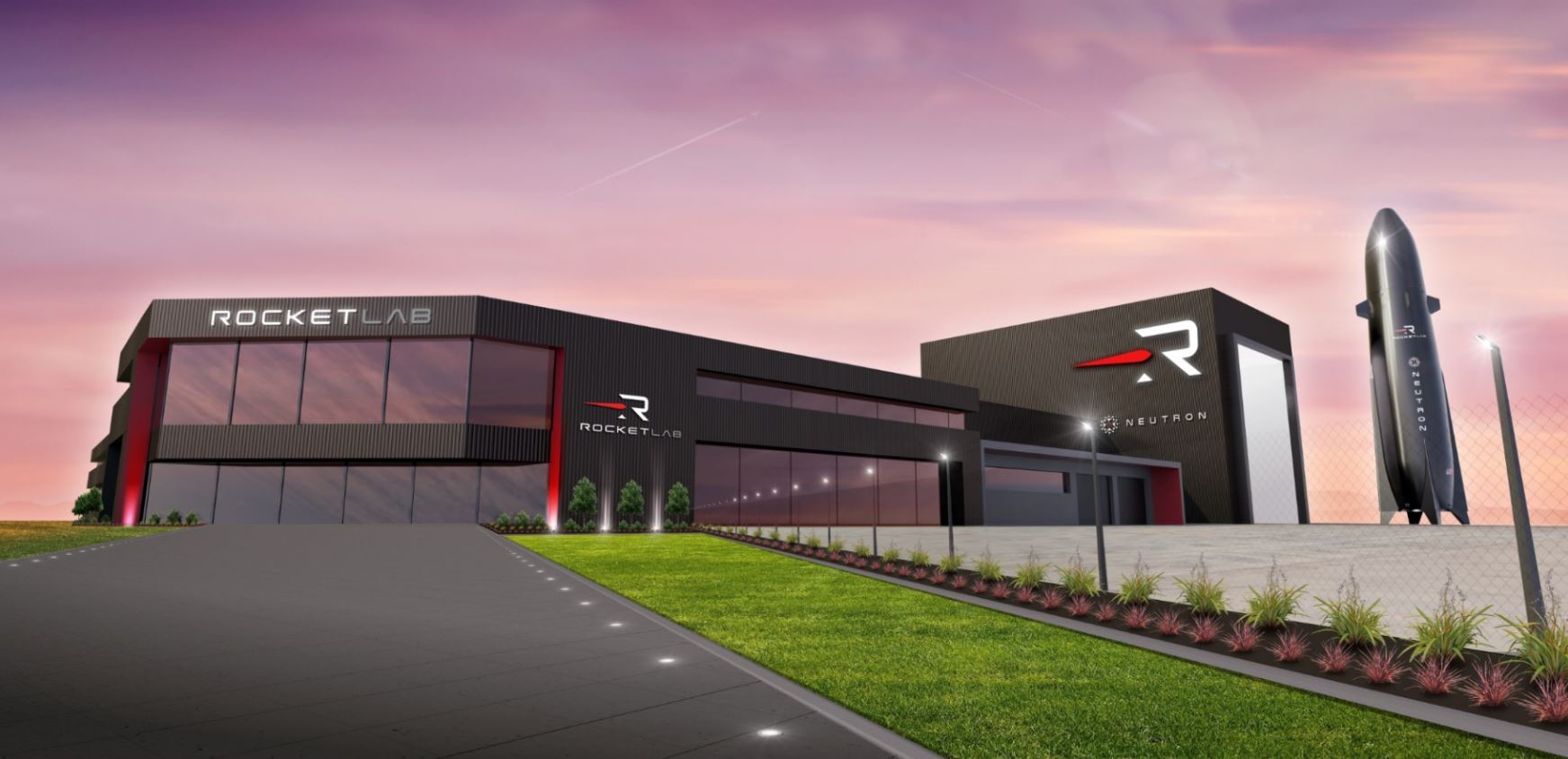
The 5 Best Growth Stocks to Buy Right Now for 2026
The Motley Fool· 2025-12-21 20:40
Core Insights - A group of five growth stocks is highlighted as potential multibaggers for long-term investors, despite recent declines of 22% to 55% from their 52-week highs [1][2] Group 1: Rocket Lab USA - Rocket Lab USA has seen its sales increase nearly tenfold since its IPO in 2021, positioning it as the No. 3 player in the launch services industry [4][5] - The company is expected to launch its Neutron rocket in Q1 next year, which could enhance its competitive stance against larger peers like SpaceX [4] - The space industry is projected to grow from $630 billion in 2023 to $1.8 trillion by 2035, indicating significant growth potential for Rocket Lab, which has a current market cap of $28 billion [7] - Rocket Lab's gross margin stands at 28.93%, and shares are currently 20% below their high, making it an attractive investment opportunity [9] Group 2: Kinsale Capital - Kinsale Capital Group has delivered a 39% total return since its 2016 IPO, with a combined ratio of 77%, outperforming peers with an average of 92% [10][11] - The company focuses on small, hard-to-assess risks, which has allowed it to carve out a profitable niche, although its revenue growth slowed to 19% in the latest quarter due to increased pricing competition [12] - Kinsale's stock is down 24% due to this growth slowdown, presenting a potential buying opportunity [13] Group 3: MercadoLibre - MercadoLibre has transformed from $85 million in sales at its 2007 IPO to $26 billion today, making it a 70-bagger [14] - The company operates in a market where online buying penetration in Latin America is only half that of the U.S., indicating further growth potential [15] - MercadoLibre's logistics network supports its e-commerce and fintech operations, and the stock has dipped 23% from its July 2025 highs, making it a favorable buy [16] Group 4: SPS Commerce - SPS Commerce has delivered 18% annualized returns since 2010, with sales growing 26 times in value during that period [17] - The company has achieved 99 consecutive quarters of positive sales growth, although its growth rate has decelerated, leading to a 55% drop in stock price over the last year [18] Group 5: Dutch Bros - Dutch Bros has seen a 14% annual stock price increase since 2021 and aims to expand from 1,089 locations to 2,029 by 2029 [20] - The company plans to buy back shares using at least half of its free cash flow, marking a shift from previous reliance on issuing new shares [21][22] - Despite trading at 40 times cash from operations, the growth potential could make it a multibagger if expansion goals are met [23]





股价大涨超37%!Intuitive Machines等受益美国全面加速太空军备:特朗普定调“太空优势”,35亿美元订单紧随其后
美股IPO· 2025-12-21 16:03
Core Viewpoint - The article discusses the recent executive order signed by President Trump aimed at enhancing the United States' space capabilities, emphasizing military integration with civilian space exploration and setting ambitious goals for lunar missions and satellite deployment [1][3][4]. Group 1: Executive Order and Military Integration - The executive order titled "Ensuring America's Space Advantage" prioritizes manned lunar missions by 2028, the establishment of a permanent lunar base by 2030, and the development of a space security strategy by the Pentagon and intelligence agencies [4][6]. - The Pentagon has announced a $3.5 billion contract for military satellites, indicating a rapid integration of civilian space exploration with military strategy [3][8]. Group 2: Lunar Mission Goals - The 2028 lunar landing goal is seen as highly challenging, similar to a previous directive from 2019, with delays in NASA's Space Launch System and SpaceX's Starship development impacting timelines [5][6]. - The Artemis program aims for the first lunar landing under this initiative, heavily relying on the progress of SpaceX's Starship [6]. Group 3: Satellite Deployment - The $3.5 billion satellite order includes contracts for 72 infrared satellites for missile warning and tracking, set to be launched by 2029 for near-continuous global coverage [4][8]. - The satellites are part of a phased deployment strategy, with the first batch of 154 operational satellites expected to achieve initial operational capability by 2027 [8]. Group 4: NASA Budget and Challenges - NASA faces budget cuts, with a potential reduction of about 25% from its usual $25 billion budget by 2026, which could jeopardize several prioritized space science programs [12]. - The new NASA administrator has indicated a desire to pursue both lunar and Mars missions, reflecting congressional pressure to focus on lunar initiatives [12][13].




Jim Cramer on Rocket Lab: “I Think It’s a Very Good Spec”
Yahoo Finance· 2025-12-21 15:07
Core Viewpoint - Rocket Lab Corporation (NASDAQ:RKLB) is viewed positively as a speculative investment ahead of significant developments in the rocket industry next year [1]. Group 1: Company Overview - Rocket Lab Corporation provides launch services, spacecraft design, manufacturing, and on-orbit management solutions [1]. Group 2: Investment Perspective - Jim Cramer expressed that while Rocket Lab is not inexpensive, it is a favorable speculative investment at current prices [1]. - There is a belief that certain AI stocks may offer greater upside potential and less downside risk compared to Rocket Lab [1].
AI走向太空:商业航天+太空算力
GOLDEN SUN SECURITIES· 2025-12-21 11:44
证券研究报告 | 行业点评 gszqdatemark 2025 12 21 年 月 日 通信 AI 走向太空:商业航天+太空算力 近期 Rocket Lab(RKLB)股价大幅上涨,我们认为,其背后反映的是资本市场对 商业航天成本曲线拐点的重新定价。在发射频次提升、单位运载成本持续下降的 背景下,围绕低轨与深空的应用场景正加速从"可行性验证"走向"工程化落地"。 我们认为:商业航天是决定太空算力能否成立的核心成本变量,太空算力是商业 航天释放价值弹性的关键应用场景。 一、为什么算力要"上天":获取不受约束的能源 算力扩张的核心瓶颈正从芯片供给转向能源约束。超大规模 AIDC 建设带来的电力 需求呈指数级增长,未来单一训练集群功率需求或达数 GW 量级,超出现有电网 与发电体系的承载能力。美国部分核心数据中心区域电力接入排期长达数年,算 力建设节奏受到实质性限制。同时百万卡级集群下散热需求同步抬升,单位算力 用水成本提升,能源问题(电+水+土地)成为算力扩张的"硬约束"。 算力上天是能源获取路径的重构。晨昏轨道等特殊轨道可实现近乎全天候太阳能 获取,且不受土地、环保及电网接入限制,具备稳定可持续的能源供给力;同 ...
美国全面加速太空军备:特朗普定调“太空优势”,35亿美元卫星订单紧随其后
Hua Er Jie Jian Wen· 2025-12-21 10:46
Core Points - The U.S. is initiating the largest militarization of space since the Cold War, with President Trump signing an executive order prioritizing manned lunar missions, establishing a lunar base, and developing space defense systems [1] - The executive order aims for a manned lunar landing by 2028 and a permanent lunar base by 2030, requiring the Pentagon and intelligence agencies to formulate a space security strategy [1][4] Group 1: Lunar Mission Goals - The 2028 lunar landing goal is seen as highly challenging, similar to a previous 2024 directive, with delays in NASA's Space Launch System and SpaceX's Starship affecting timelines [2] - The executive order reinforces NASA's existing goal of developing a long-term lunar base using nuclear energy, originally set during the Obama administration [2] - The Artemis program will mark NASA's first manned lunar mission under this new directive, heavily relying on the development progress of SpaceX's Starship [2] Group 2: Military Satellite Network - The U.S. Space Force's Space Development Agency announced a $3.5 billion satellite order, indicating an acceleration in military space deployment [3] - Four defense contractors will each receive contracts for 18 satellites, enhancing missile warning and tracking capabilities with near-continuous global coverage [3] - This satellite deployment is part of a strategy to launch new batches every two years, with the first batch of 154 satellites expected to achieve initial operational capability by 2027 [3] Group 3: Space Policy Coordination - The executive order restructures the national space policy coordination mechanism, placing it under the leadership of the President's Chief Science Advisor [4] - The National Space Council, previously uncertain in its future, will continue to exist under a new structure, with the President as its chair [4] - The order also calls for the Pentagon and intelligence agencies to develop a space security strategy and encourages private contractors to improve efficiency [4] Group 4: NASA Budget and Dual Goals - NASA is facing financial pressures, with a potential budget cut of about 25% from the usual $25 billion, threatening numerous prioritized space science programs [6] - The new NASA administrator supports targeting both lunar and Mars missions, reflecting Congressional pressure to focus on lunar initiatives [6] - Legislative focus has shifted back to lunar missions, despite previous discussions about prioritizing Mars exploration [6]


Rocket Lab Successfully Launches for iQPS, Ends 2025 with 21 Launches and 100% Mission Success
Globenewswire· 2025-12-21 08:04
Core Points - Rocket Lab Corporation successfully launched its 21st Electron rocket of the year, setting a new annual launch record with 100% mission success [3][4] - The mission, named 'The Wisdom God Guides', deployed the QPS-SAR-15 satellite for the Institute for Q-shu Pioneers of Space, Inc. (iQPS), enhancing their Earth imaging capabilities [2][4] - Rocket Lab plans to expand its Electron launch services in 2026, targeting more multi-launch constellation deployments and missions for domestic and international space agencies [4] Company Overview - Rocket Lab is a leading space company providing launch services, spacecraft, payloads, and satellite components for commercial, government, and national security markets [5] - The Electron rocket is recognized as the world's most frequently launched small-lift orbital rocket, with a total of 79 missions completed [4][5] - The company is also developing the Neutron launch vehicle to support medium launch capabilities for various missions [5]
大动作!美军宣布:采购72颗
Xin Lang Cai Jing· 2025-12-20 17:01
Group 1 - The U.S. Space Development Agency announced a $3.5 billion contract to procure a total of 72 missile warning and tracking satellites, marking the largest deal for the U.S. military's low Earth orbit constellation to date [1] - Four companies were awarded contracts: Lockheed Martin ($1.1 billion), Rocket Lab ($805 million), Northrop Grumman ($764 million), and L3 Harris ($843 million), each tasked with producing 18 satellites over the next three years [1] - The contracts involve different payloads, with Lockheed Martin focusing on missile warning, tracking, and defense satellites, while others have more specific roles [1] Group 2 - The Space Development Agency is building a "Proliferated Warfighter Space Architecture" (PWSA), which includes near-Earth orbit data relay satellites and missile warning and defense satellites [2] - Currently, the agency has deployed 8 missile warning and tracking satellites and 19 data relay satellites as part of its "Phase 0" experimental constellation [2] - The agency plans to launch an additional 28 missile warning and tracking satellites and 126 communication satellites in a 10-month operation, forming the "Phase 1" constellation [2]