SoftBank(SFTBY)

Search documents
AI大手笔“星际之门”的力量博弈
Di Yi Cai Jing· 2025-06-17 11:33
Core Insights - The "Stargate" project, initiated by the Trump administration, aims to reshape the global digital resource landscape and enhance the U.S. competitiveness in the AI sector, potentially intensifying the AI rivalry between the U.S. and China [1][9] Group 1: Project Overview - "Stargate" is a collaboration among major tech players including OpenAI, Oracle, and SoftBank, with an initial investment of $100 billion, expected to grow to $500 billion over four years [3][4] - The project plans to establish approximately 20 super-sized data centers across the U.S., each with a capacity of about 1 gigawatt, equivalent to the output of a nuclear reactor [3][4] Group 2: Strategic Partnerships - OpenAI will leverage Oracle's data centers for training AI models, while Oracle will benefit from increased revenue in AI content growth [2][3] - SoftBank aims to attract more AI companies to its data centers, enhancing its position in the global data center market [3] Group 3: Global Expansion - OpenAI's "OpenAI for Countries" initiative includes a partnership with UAE's G42 to build a massive AI center in the desert, which will significantly exceed the scale of any existing data center project globally [4][8] - The project is expected to create around 100,000 jobs in the U.S. and stimulate demand for various industries, including steel, aluminum, and energy [8][9] Group 4: Competitive Landscape - The "Stargate" initiative is seen as a strategic response to China's advancements in AI, with the U.S. aiming to maintain its leadership in the global AI arena [10] - The project is compared to the 1980s "Star Wars" initiative, highlighting its geopolitical implications and the U.S. intent to consolidate its technological dominance [9][10] Group 5: Financial Considerations - Initial funding includes contributions of $19 billion from OpenAI, $19 billion from SoftBank, and $7 billion from Oracle and the MGX sovereign fund, with additional investments from unidentified new investors [3][6] - Concerns exist regarding the financial stability of SoftBank and OpenAI, particularly in light of their recent losses and the potential impact on their ability to meet funding commitments [6][7]


T-Mobile美股盘前下跌3.9%,报道称软银拟出售2150万股T-Mobile股票,计划最多融资49亿美元。
news flash· 2025-06-17 08:22
T-Mobile美股盘前下跌3.9%,报道称软银拟出售2150万股T-Mobile股票,计划最多融资49亿美元。 ...
孙正义被告了
投资界· 2025-06-17 08:10
Core Viewpoint - The article highlights the legal battle between SoftBank and Credit Suisse over a $440 million loss stemming from the bankruptcy of Greensill Capital, emphasizing the risks associated with high-stakes investments in unicorn companies [1][10]. Group 1: Background of the Dispute - Greensill Capital, founded in 2011, specialized in supply chain finance, attracting significant investments from SoftBank and Credit Suisse, with SoftBank investing approximately $1.5 billion [5][6]. - The company initially thrived, but the COVID-19 pandemic severely impacted its operations, leading to its bankruptcy in 2021 [6][7]. - The bankruptcy resulted in substantial losses for both SoftBank and Credit Suisse, with the latter facing additional scandals that contributed to its downfall [7][8]. Group 2: Legal Proceedings - Following the merger of Credit Suisse and UBS, Credit Suisse filed a lawsuit against SoftBank for $440 million, claiming that SoftBank's actions led to the loss of funds lent to the construction company Katerra [10][11]. - The lawsuit centers around the claim that SoftBank prioritized its own investment value over the repayment obligations to Credit Suisse, leading to the loss of the funds [11][12]. - The ongoing court proceedings have revealed conflicting narratives, with Greensill's founder stating he was forced to accept SoftBank's restructuring plan [12]. Group 3: Broader Implications for the Investment Landscape - The article reflects on the broader trend of investment firms facing significant losses from high-profile unicorn failures, with examples like Temasek's losses from FTX and eFishery [15][16]. - It underscores a shift in investor sentiment towards more cautious and pragmatic approaches, as many once-prominent unicorns struggle to secure further funding [16][17].

软银48亿美元抛售T-Mobile(TMUS.US)股份 套现加码AI布局
Zhi Tong Cai Jing· 2025-06-17 05:55
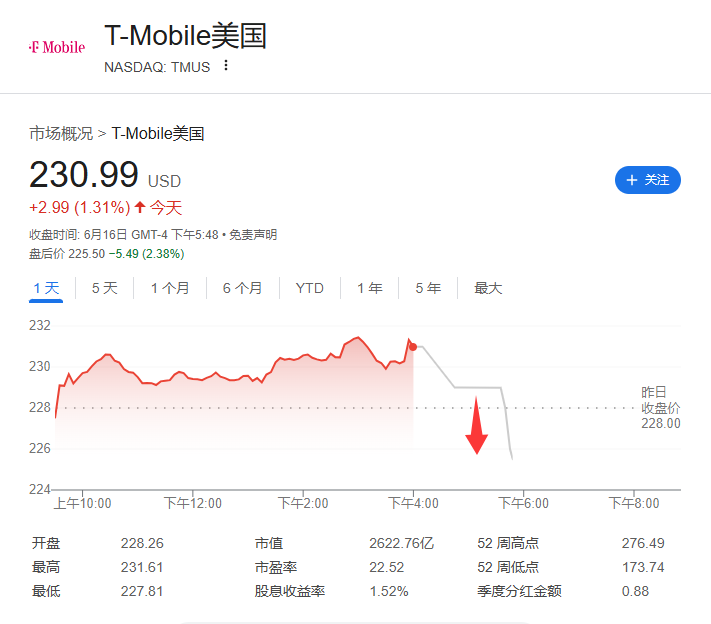
Group 1 - SoftBank raised approximately $4.8 billion by selling shares of T-Mobile, which will support its ambitious AI initiatives [1] - The transaction involved selling 21.5 million shares at $224 each, representing a 3% discount from T-Mobile's closing price of $230.99 [1] - Following the announcement, T-Mobile's stock price fell 3.9% in after-hours trading, while SoftBank's stock rose 2.3% in early Tokyo trading [1] Group 2 - This sale is part of SoftBank founder Masayoshi Son's strategy to fund new ventures using profits from past successful investments, such as early bets on Alibaba [2] - The shares sold represent about 1.9% of T-Mobile's outstanding shares, with SoftBank holding 8.54 million shares, or 7.5% of T-Mobile, as of March 31 [2] - Deutsche Telekom is the largest shareholder of T-Mobile, holding a 59% stake [2] Group 3 - Bank of America acted as the exclusive bookrunner for this transaction [3]
软银股价涨1.7%。此前报道称,日本软银集团拟出售2150万股T-Mobile股票,计划最多融资49亿美元。
news flash· 2025-06-17 00:05
软银股价涨1.7%。此前报道称,日本软银集团拟出售2150万股T-Mobile股票,计划最多融资49亿美元。 ...
软银寻求以49亿美元出售t-mobile股份。
news flash· 2025-06-16 21:57
Core Viewpoint - SoftBank is seeking to sell its stake in T-Mobile for $4.9 billion, indicating a strategic move to divest from telecommunications investments [1] Group 1: Company Actions - SoftBank plans to sell its shares in T-Mobile, which reflects a shift in its investment strategy [1] - The sale is part of SoftBank's broader efforts to raise capital and reduce debt [1] Group 2: Financial Implications - The proposed sale of T-Mobile shares is valued at $4.9 billion, which could significantly impact SoftBank's financial position [1] - This divestment may lead to changes in SoftBank's portfolio allocation and investment focus [1]
6月17日电,软银寻求以49亿美元出售t-mobile股份。

news flash· 2025-06-16 21:55
Core Viewpoint - SoftBank is seeking to sell its stake in T-Mobile for $4.9 billion [1] Group 1 - The sale reflects SoftBank's strategy to divest non-core assets to strengthen its balance sheet [1] - T-Mobile has been a significant investment for SoftBank, and the sale may impact its future growth plans [1] - The transaction is part of a broader trend in the telecommunications industry where companies are reassessing their asset portfolios [1]
日本软银集团拟出售2150万股T-Mobile股票,计划最多融资49亿美元。美国电信运营商T-Mobile(TMUS)美股盘后下跌2.38%。
news flash· 2025-06-16 21:52
日本软银集团拟出售2150万股T-Mobile股票,计划最多融资49亿美元。 美国电信运营商T-Mobile(TMUS)美股盘后下跌2.38%。 ...
软银与英特尔的反击,终将失败?
半导体芯闻· 2025-06-16 10:13
Core Viewpoint - SoftBank and Intel are collaborating to develop a new AI-focused high-bandwidth memory (HBM) that aims to compete with existing products from Samsung and SK Hynix, with a goal to reduce power consumption by 50% compared to current HBM chips [3][5]. Group 1: Project Overview - The new memory will feature a novel wiring structure and is expected to produce a prototype within two years, with commercialization targeted by 2030 [3][4]. - The initiative will be led by a new company named Saimemory, with SoftBank as the largest investor holding 3 billion yen in a 10 billion yen project [6]. Group 2: Market Context - The project faces significant challenges due to the established dominance of Samsung and SK Hynix in the global HBM market, which may further entrench their competitive advantage by the time Saimemory's product is launched [5][6]. - Japan's historical dominance in the DRAM market has diminished, with the last major manufacturer, Elpida, going bankrupt in 2012, leading to increased reliance on Korean suppliers [6]. Group 3: Strategic Implications - The new memory is intended for AI data centers, which have growing demands for energy efficiency and high throughput, aiming to support large-scale AI training more cost-effectively [5]. - Both SoftBank and Intel are currently managing multiple strategic initiatives, including AI chip development and market share recovery in CPUs, which may impact their focus on this project [6].

黄仁勋回应任正非最新讲话;苹果确认部分Mac Mini有质量问题;百度启动最大规模顶尖AI人才招聘
Sou Hu Cai Jing· 2025-06-16 05:46
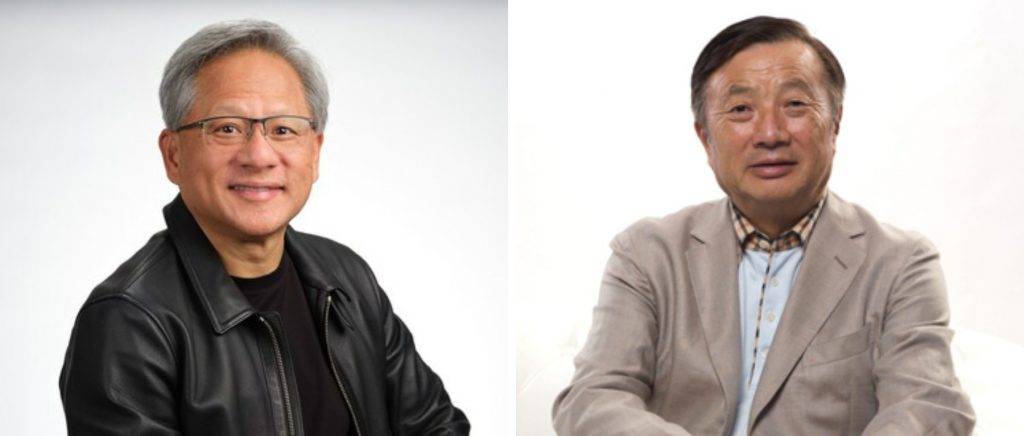
Group 1: Industry Insights - Nvidia CEO Jensen Huang responded to Ren Zhengfei's recent remarks, emphasizing that while Nvidia's technology is a generation ahead, the parallel nature of AI technology means that performance can be achieved with more computers, highlighting China's capability to meet its own market demands with sufficient energy and chips [4] - Xpeng Motors claims to have developed a more powerful autonomous driving chip than Nvidia's, with plans to integrate its Turing AI chip into Volkswagen's upcoming models in China [5] - Baidu has launched its largest AI talent recruitment initiative, expanding job openings by over 60% compared to last year, focusing on cutting-edge AI fields such as large model algorithms and machine learning [6] Group 2: Corporate Developments - Saimo Electronics announced the sale of a 45.24% stake in Swedish Silex Microsystems AB for 2.375 billion Swedish Krona (approximately 1.783 billion RMB), retaining two board seats and the right to participate in major decision-making [7] - Apple confirmed quality issues with a small number of Mac Mini devices equipped with M2 chips, offering free repair services for affected units produced between June 16, 2024, and November 23, 2024 [8] - OpenAI plans to continue its collaboration with Scale AI, which is crucial for developing its advanced tools like ChatGPT, amidst changing dynamics with other tech giants [11] Group 3: Investment and Economic Impact - Amazon announced a plan to invest AUD 20 billion in Australia from 2025 to 2029 to expand its data center infrastructure, marking the largest global tech investment in Australia [12] - Micron Technology plans to invest over USD 200 billion in semiconductor manufacturing in the U.S., which is expected to create approximately 90,000 direct and indirect jobs [14] - DRAM prices have been rising continuously, with a 10% increase in May, driven by expectations of production cuts and shortages from major manufacturers like Samsung, SK Hynix, and Micron [18]