Workflow
Skechers(SKX)
icon
Search documents
贸易政策不确定冲击北美鞋服品牌
Jing Ji Ri Bao· 2025-08-13 21:58
Core Viewpoint - The U.S. consumer spending is weak due to trade policy uncertainties and macroeconomic conditions, significantly impacting the performance of North American footwear and apparel brands [1][2]. Group 1: Company Performance - Under Armour reported a 4% year-over-year decline in revenue for Q1 of fiscal year 2026, totaling $1.1 billion, with a projected 6% decline for Q2 [1]. - Crocs, known for its "Croc" shoes, reported a net loss of approximately $428 million for Q2, with North American revenue down 6.5% year-over-year, and expects a further decline of 9% to 11% in Q3 [1]. Group 2: Impact of Tariffs - The U.S. tariffs on imports from countries like Vietnam and Indonesia have raised costs for major brands such as Nike, which estimates an additional $1 billion in costs due to tariffs [2]. - Gap anticipates an increase in costs between $250 million to $300 million due to the tariffs [2]. - Retailers may need to raise prices by 10% to 12% to offset these costs, which will ultimately affect U.S. consumers, particularly those with lower incomes [2]. Group 3: Consumer Behavior and Market Dynamics - U.S. consumers are cautious with non-essential spending, leading to decreased foot traffic in stores and a preference for cheaper alternatives [3]. - The footwear and apparel industry faces a dilemma: raise prices to maintain profit margins or absorb costs, which would severely impact profitability [3]. - A letter signed by 76 footwear brands, including Nike and Adidas, was sent to the White House, indicating that tariffs pose a "survival threat" to the industry [3].

Skechers (SKX) International Revenue in Focus: Trends and Expectations
ZACKS· 2025-08-11 14:21
Core Insights - The performance of Skechers' international operations is crucial for understanding its financial strength and growth potential, especially given its extensive global presence [1][2][3] Revenue Performance - Skechers reported total revenue of $2.44 billion for the quarter, marking a 13.1% year-over-year increase [4] - International revenues from Europe, Middle East & Africa reached $731.5 million, accounting for 30% of total revenue, exceeding Wall Street's expectations by 25.96% [5] - Asia Pacific contributed $595.5 million, representing 24.4% of total revenue, also surpassing analyst predictions by 3.87% [6] Future Projections - Analysts project total revenue for the current fiscal quarter to be $2.53 billion, reflecting a 7.7% increase from the same quarter last year, with Europe, Middle East & Africa expected to contribute $720.5 million and Asia Pacific $584.48 million [7] - For the full year, total revenue is projected at $9.67 billion, indicating a 7.8% rise from the previous year, with Europe, Middle East & Africa expected to account for $2.59 billion and Asia Pacific for $2.42 billion [8] Market Dynamics - The reliance on international markets presents both opportunities and challenges for Skechers, making the analysis of international revenue trends essential for forecasting future performance [9] - Wall Street analysts are closely monitoring these trends, particularly in light of increasing global interconnections and geopolitical tensions [10]

【招商电子】半导体行业深度跟踪:国内设备/算力/代工等板块业绩增长向好,关注存储/模拟等复苏态势
招商电子· 2025-08-11 09:21
Core Viewpoint - The semiconductor industry is experiencing a recovery in demand, particularly in consumer electronics and AI applications, while inventory levels are improving and capital expenditures are being adjusted upwards by key players like TSMC and major overseas semiconductor manufacturers [1][2][4]. Demand Side - The consumer electronics sector is witnessing a recovery, with AI and automotive applications driving innovation. Global smartphone shipments in Q2 saw a year-on-year growth slowdown to 1%, while domestic shipments declined by 4%. PC shipments increased by 6.5% year-on-year in Q2, but growth is expected to weaken in H2 2025. Wearable devices, particularly AI glasses, are experiencing significant growth, with a 216% year-on-year increase in Q1 shipments [2][3]. - The automotive market in H1 2025 saw a 13.8% year-on-year increase in sales, with new models like Xiaomi's YU7 achieving substantial pre-order numbers [2]. Inventory Side - The Days of Inventory (DOI) for the smartphone supply chain has slightly increased, with terminal customer inventories remaining low. Major chip manufacturers like Intel reported a decrease in inventory levels, indicating a potential for increased shipments as demand rises [3]. Supply Side - TSMC is ramping up its advanced process production lines in the U.S., driven by strong demand from AI data centers. The capacity utilization rates for various foundries, including SMIC and UMC, have shown improvements, with SMIC reaching 92.5% in Q2 2025 [4][12]. - Major memory manufacturers are focusing capital expenditures on high-end memory products like HBM, with companies like Micron and SK Hynix increasing their capital spending forecasts for 2025 [4]. Price Side - Memory prices are showing signs of steady recovery, particularly for DDR4 and NAND Flash products. The analog chip sector is also expected to see potential price increases, which could positively impact the industry [6]. Sales Side - Global semiconductor sales reached $59.9 billion in June 2025, marking a 19.6% year-on-year increase. The Asia-Pacific region, excluding China and Japan, saw a 34.2% year-on-year sales growth, while sales in Japan declined by 2.9% [6]. Industry Chain Tracking - The semiconductor industry is experiencing marginal improvements in various segments, with a focus on companies benefiting from domestic control and recovery in demand. The design and IDM sectors are seeing growth driven by consumer demand and AI applications [6][17]. - The MCU market is recovering, particularly in consumer electronics and automotive sectors, with significant sales increases noted in Q2 2025 [7]. - The storage sector is seeing improved profitability among overseas manufacturers, with domestic companies also expected to recover in H2 2025 [8]. - The analog chip market is experiencing good demand trends, with many domestic companies reporting improved revenue in Q2 2025 [9]. Advanced Manufacturing and Testing - The demand for advanced processes remains strong, with TSMC maintaining a robust growth forecast for AI-related chips. The utilization rates for mature processes are also recovering, although customer inventory demand for Q4 2025 remains uncertain [12][13]. - Major international packaging and testing companies are forecasting significant revenue growth for Q3 2025, with domestic companies increasing investments in advanced packaging capabilities [13]. Equipment, Materials, and Components - Domestic semiconductor equipment manufacturers are showing positive trends in orders and revenue growth, while international firms express caution regarding future guidance due to geopolitical uncertainties [14]. - The push for domestic supply chain independence is accelerating, with ongoing efforts to reduce reliance on foreign components [14]. EDA/IP Sector - Chip design companies like Chipone are reporting record-high order backlogs, indicating strong demand in the EDA sector [15].
Skechers (SKX) Surpasses Q2 Earnings and Revenue Estimates
ZACKS· 2025-08-08 22:25
分组1 - Skechers reported quarterly earnings of $1.13 per share, exceeding the Zacks Consensus Estimate of $0.83 per share, and showing an increase from $0.91 per share a year ago, resulting in an earnings surprise of +36.14% [1] - The company achieved revenues of $2.44 billion for the quarter ended June 2025, surpassing the Zacks Consensus Estimate by 4.50%, and up from $2.16 billion year-over-year [2] - Over the last four quarters, Skechers has surpassed consensus EPS estimates three times and topped consensus revenue estimates three times [2] 分组2 - The stock has underperformed the market, losing about 6.3% since the beginning of the year, while the S&P 500 has gained 7.8% [3] - The current consensus EPS estimate for the coming quarter is $0.93 on revenues of $2.53 billion, and for the current fiscal year, it is $3.65 on revenues of $9.67 billion [7] - The Zacks Industry Rank for Shoes and Retail Apparel is currently in the bottom 30% of over 250 Zacks industries, indicating potential challenges for the sector [8]
Skechers Revenue Jumps 13% in Fiscal Q2
The Motley Fool· 2025-08-08 20:31
Core Insights - Skechers reported Q2 2025 GAAP revenue of $2.44 billion, a 13.1% increase year-over-year, exceeding analyst estimates [1][5] - Non-GAAP revenue reached $2,410 million, surpassing the estimate of $2,351.54 million, with non-GAAP earnings per share matching expectations at $0.83 [1][2] - The company experienced declining margins, with gross margin falling to 53.3% from 54.9% and operating margin decreasing to 7.1% from 9.6% year-over-year [1][7] Financial Performance - Net earnings attributable to Skechers U.S.A. increased by 21.5% to $170.5 million compared to $140.3 million in Q2 2024 [2] - International sales rose by 22.0%, with the Europe, Middle East, and Africa region showing a notable 48.5% increase to $731.5 million [5] - Domestic sales remained stable, with wholesale down 7.5% to $413.3 million, while Direct-to-Consumer sales rose 7.6% to $448.8 million [6] Business Overview - Skechers designs and markets a variety of footwear and apparel, focusing on comfort and innovation, with proprietary technologies like Hands Free Slip-ins and Arch Fit insoles [3][4] - The company has been expanding its international presence and direct-to-consumer channels, emphasizing comfort-based technologies and brand marketing [4] Operational Developments - Operating expenses increased by 15.4%, leading to operating costs rising to 46.2% of sales, driven by higher brand marketing and distribution expansion costs [8] - The impact of foreign currency movements positively affected reported results, contributing $33.9 million to sales and $0.30 to diluted earnings per share [8] Future Outlook - Management did not provide specific financial guidance due to uncertainties in global trade dynamics and consumer behavior [10] - Key issues for investors include managing margin pressure, the impact of new tariffs, and the ongoing sales slump in China [11]
Skechers(SKX) - 2025 Q2 - Quarterly Report
2025-08-08 20:20
PART I [Item 1. Financial Statements](index=3&type=section&id=Item%201.%20Financial%20Statements) The company's Q2 2025 financial statements show strong asset growth, record sales, and increased net income, with notable merger-related costs [Condensed Consolidated Balance Sheets](index=3&type=section&id=Condensed%20Consolidated%20Balance%20Sheets) Total assets grew to **$9.28 billion** by June 30, 2025, driven by cash, with liabilities at **$3.90 billion** and equity at **$5.27 billion** Condensed Consolidated Balance Sheet Highlights (in thousands) | Account | June 30, 2025 | December 31, 2024 | | :--- | :--- | :--- | | **Total Current Assets** | $4,851,711 | $4,449,423 | | Cash and cash equivalents | $1,377,152 | $1,116,516 | | Inventory | $1,871,805 | $1,919,386 | | **Total Assets** | **$9,278,116** | **$8,455,758** | | **Total Current Liabilities** | $2,315,937 | $2,256,484 | | **Total Liabilities** | **$3,902,607** | **$3,635,494** | | **Total Stockholders' Equity** | **$5,273,135** | **$4,730,165** | [Condensed Consolidated Statements of Earnings](index=4&type=section&id=Condensed%20Consolidated%20Statements%20of%20Earnings) Q2 2025 sales grew 13.1% to **$2.44 billion**, with net earnings at **$170.5 million** and diluted EPS at **$1.13**, reflecting strong performance Q2 2025 vs Q2 2024 Earnings (in thousands, except per share data) | Metric | Q2 2025 | Q2 2024 | Change (%) | | :--- | :--- | :--- | :--- | | Sales | $2,440,024 | $2,157,643 | 13.1% | | Gross Profit | $1,301,303 | $1,184,437 | 9.9% | | Earnings from Operations | $173,082 | $206,531 | (16.2)% | | Net Earnings Attributable to Skechers | $170,498 | $140,302 | 21.5% | | Diluted EPS | $1.13 | $0.91 | 24.2% | Six Months 2025 vs 2024 Earnings (in thousands, except per share data) | Metric | Six Months 2025 | Six Months 2024 | Change (%) | | :--- | :--- | :--- | :--- | | Sales | $4,851,595 | $4,409,230 | 10.0% | | Gross Profit | $2,555,677 | $2,366,071 | 8.0% | | Earnings from Operations | $438,207 | $505,329 | (13.3)% | | Net Earnings Attributable to Skechers | $372,934 | $346,924 | 7.5% | | Diluted EPS | $2.46 | $2.24 | 9.8% | [Condensed Consolidated Statements of Cash Flows](index=8&type=section&id=Condensed%20Consolidated%20Statements%20of%20Cash%20Flows) Six-month operating cash flow was **$448.2 million**, with **$315.0 million** used in investing and **$100.1 million** provided by financing, a shift from prior year Six Months Ended June 30 Cash Flow Summary (in thousands) | Activity | 2025 | 2024 | | :--- | :--- | :--- | | Net cash provided by operating activities | $448,178 | $494,432 | | Net cash used in investing activities | ($314,958) | ($240,436) | | Net cash provided by (used in) financing activities | $100,132 | ($163,718) | | **Net change in cash and cash equivalents** | **$260,636** | **$90,520** | [Notes to Condensed Consolidated Financial Statements](index=9&type=section&id=Notes%20to%20Condensed%20Consolidated%20Financial%20Statements) Key disclosures include a proposed merger with **$9.3 million** in Q2 transaction costs, growth across all segments, no share repurchases, and a reduced effective tax rate of **16.4%** - On May 4, 2025, the Company entered into a Merger Agreement with Beach Acquisition Co Parent, LLC. The company recognized **$9.3 million** in transaction costs related to the merger in Q2 2025[25](index=25&type=chunk)[29](index=29&type=chunk) - The company's joint ventures in China, Israel, South Korea, Mexico, and Southeast Asia are considered variable interest entities (VIEs) and are consolidated in the financial statements[31](index=31&type=chunk) - As of June 30, 2025, the company had **$584.3 million** in outstanding borrowings, including amounts under its corporate revolving credit facility and various loans for distribution centers[121](index=121&type=chunk) - No shares were repurchased during the six months ended June 30, 2025. The company had **$789.9 million** remaining under its share repurchase program as of June 30, 2025[55](index=55&type=chunk)[56](index=56&type=chunk) - The effective tax rate for Q2 2025 was **16.4%**, a decrease from **19.7%** in Q2 2024, primarily due to lower earnings in higher tax jurisdictions[64](index=64&type=chunk) [Item 2. Management's Discussion and Analysis of Financial Condition and Results of Operations](index=23&type=section&id=Item%202.%20Management%27s%20Discussion%20and%20Analysis%20of%20Financial%20Condition%20and%20Results%20of%20Operations) Management reported record Q2 sales of **$2.44 billion**, up 13.1%, driven by international growth, despite gross margin decline and increased operating expenses [Overview](index=25&type=section&id=Overview) The company achieved record Q2 2025 sales of **$2.44 billion**, up 13.1%, with broad-based growth, targeting **$10 billion** annual sales by 2026 Q2 2025 Key Highlights | Metric | Value | Note | | :--- | :--- | :--- | | Sales | $2.44 billion | Record quarterly sales, +13.1% YoY | | Gross Margin | 53.3% | - | | Segment Growth | Positive | Increased sales in both Wholesale and DTC | | Regional Growth | Positive | Increased sales in EMEA, APAC, and Americas | | Diluted EPS | $1.13 | - | - The company is focused on building efficiencies to scale for profitable growth and is confident in its goal of reaching **$10 billion** in annual sales by 2026[87](index=87&type=chunk) [Results of Operations – Second Quarter](index=25&type=section&id=Results%20of%20Operations%20%E2%80%93%20Second%20Quarter) Q2 2025 sales grew 13.1% to **$2.44 billion**, driven by international business, though gross margin declined to **53.3%** and operating expenses increased 15.4% - Sales increased **13.1%** due to a **22.0%** increase internationally, with Wholesale up **15.0%** and Direct-to-Consumer up **11.0%**[91](index=91&type=chunk) - Gross margin declined **160 bps** to **53.3%** due to higher costs per unit, driven by higher domestic duties from increased tariff rates[92](index=92&type=chunk) - Operating expenses increased **15.4%**, driven by higher labor costs (**$53.4 million**), facility costs (**$28.3 million**), and distribution costs (**$24.9 million**)[93](index=93&type=chunk) - The effective tax rate decreased to **16.4%** from **19.7%** in the prior year, due to lower earnings in higher tax jurisdictions[95](index=95&type=chunk) [Results of Segment Operations – Second Quarter](index=26&type=section&id=Results%20of%20Segment%20Operations%20%E2%80%93%20Second%20Quarter) Q2 2025 Wholesale sales grew 15.0% to **$1.3 billion**, with gross margin at **41.4%**, while Direct-to-Consumer sales rose 11.0% to **$1.1 billion** with stable gross margin Q2 2025 Wholesale Segment Performance | Metric | Value | Change vs Q2 2024 | | :--- | :--- | :--- | | Sales | $1.30 billion | +15.0% | | Gross Profit | $538.4 million | +8.3% | | Gross Margin | 41.4% | -250 bps | - Wholesale growth was driven by increases in EMEA (**+58.7%**) and APAC (**+4.0%**), partially offset by a decrease in the Americas (**-5.9%**)[99](index=99&type=chunk) Q2 2025 Direct-to-Consumer Segment Performance | Metric | Value | Change vs Q2 2024 | | :--- | :--- | :--- | | Sales | $1.14 billion | +11.0% | | Gross Profit | $762.9 million | +11.0% | | Gross Margin | 67.0% | 0 bps | - Direct-to-Consumer growth was driven by increases in the Americas (**+8.6%**), EMEA (**+27.8%**), and APAC (**+6.6%**)[100](index=100&type=chunk) [Liquidity and Capital Resources](index=31&type=section&id=Liquidity%20and%20Capital%20Resources) The company maintained strong liquidity with **$1.38 billion** cash and **$614.1 million** unused credit, with working capital at **$2.5 billion**, and **$330.7 million** in capital expenditures - As of June 30, 2025, the company had cash and cash equivalents of **$1,377.2 million**, with **95.0%** held outside the U.S[113](index=113&type=chunk) - Working capital was **$2.5 billion**, an increase of **$342.8 million** from December 31, 2024[115](index=115&type=chunk) - Capital expenditures for the first six months of 2025 were **$330.7 million**, primarily for global distribution expansion and retail investments[118](index=118&type=chunk) - Financing activities provided **$100.1 million** in cash, a **$263.9 million** positive swing from the prior year, mainly due to increased borrowings and no share repurchases[119](index=119&type=chunk) [Item 3. Quantitative and Qualitative Disclosures About Market Risk](index=32&type=section&id=Item%203.%20Quantitative%20and%20Qualitative%20Disclosures%20About%20Market%20Risk) No material changes in market risk exposures were reported from the information previously disclosed in the 2024 Annual Report on Form 10-K - There have been no material changes from the market risk information previously reported in the 2024 Annual Report on Form 10-K[123](index=123&type=chunk) [Item 4. Controls and Procedures](index=32&type=section&id=Item%204.%20Controls%20and%20Procedures) Management concluded that disclosure controls and procedures were effective as of Q2 2025, with no material changes in internal control over financial reporting during the quarter - The CEO and CFO concluded that the company's disclosure controls and procedures were effective as of June 30, 2025[124](index=124&type=chunk) - There were no material changes in internal control over financial reporting during the second quarter of 2025[125](index=125&type=chunk) PART II – OTHER INFORMATION [Item 1. Legal Proceedings](index=32&type=section&id=Item%201.%20Legal%20Proceedings) The company faces new patent infringement lawsuits from Kizik and shareholder litigation regarding the proposed merger, alongside ongoing patent disputes with Nike - On July 24, 2025, Kizik filed a patent infringement lawsuit against the company concerning Skechers Slip-ins shoes[126](index=126&type=chunk) - A shareholder lawsuit (Key West Action) was filed on May 29, 2025, related to the proposed merger, seeking to enjoin the transaction pending further disclosures. A motion for a preliminary injunction was denied[127](index=127&type=chunk) - Litigation with Nike, Inc. regarding alleged infringement of six utility patents is resuming after a stay was lifted by the District Court[128](index=128&type=chunk)[129](index=129&type=chunk) [Item 1A. Risk Factors](index=34&type=section&id=Item%201A.%20Risk%20Factors) New risks from the pending merger include potential adverse effects on business, stock price, and relationships, with uncertainty regarding timely completion and interim restrictive covenants - The announcement and pendency of the merger with Beach Acquisition Co Parent, LLC may adversely affect business, operating results, stock price, and relationships with employees, customers, and suppliers[132](index=132&type=chunk) - Completion of the merger is subject to conditions, including regulatory approvals, and may not be completed on a timely basis or at all. Failure to complete the merger could negatively affect the company's stock price and business[133](index=133&type=chunk)[136](index=136&type=chunk) - The company will incur substantial direct and indirect costs related to the merger, regardless of whether it is consummated[138](index=138&type=chunk) - During the pending merger, the company is subject to contractual restrictions that could limit its ability to respond to competitive pressures and business opportunities[139](index=139&type=chunk) [Item 2. Unregistered Sales of Equity Securities and Use of Proceeds](index=37&type=section&id=Item%202.%20Unregistered%20Sales%20of%20Equity%20Securities%20and%20Use%20of%20Proceeds) The company did not repurchase any Class A Common Stock in Q2 2025, with **$789.9 million** remaining available under the share repurchase program expiring July 2027 Share Repurchase Activity (Q2 2025) | Month Ended | Total Number of Shares Purchased | Average Price Paid Per Share | | :--- | :--- | :--- | | April 30, 2025 | — | $ — | | May 31, 2025 | — | $ — | | June 30, 2025 | — | $ — | | **Total** | **—** | **$ —** | - As of June 30, 2025, **$789.9 million** remained available for repurchase under the company's share repurchase program[147](index=147&type=chunk) [Item 5. Other Information](index=39&type=section&id=Item%205.%20Other%20Information) The Board adopted a U.S. Employee Change in Control Severance Plan on August 7, 2025, providing benefits to eligible employees terminated post-merger - On August 7, 2025, the company's Board of Directors adopted a U.S. Employee Change in Control Severance Plan[150](index=150&type=chunk) - The plan provides severance benefits to eligible U.S. employees whose employment is terminated without 'cause' or for 'good reason' within 12 months following the closing of the merger[150](index=150&type=chunk) [Item 6. Exhibits](index=40&type=section&id=Item%206.%20Exhibits) This section lists exhibits filed with the Form 10-Q, including the Merger Agreement, corporate governance documents, and CEO/CFO certifications [Signatures](index=42&type=section&id=Signatures) The report is duly signed on August 8, 2025, by John Vandemore, Chief Financial Officer of Skechers U.S.A., Inc
Skechers(SKX) - 2025 Q2 - Quarterly Results
2025-08-08 20:15
[Financial Performance Overview](index=1&type=section&id=Financial%20Performance%20Overview) [Second Quarter 2025 Financial Results](index=1&type=section&id=Second%20Quarter%202025%20Financial%20Results) Skechers reported strong top-line growth in the second quarter of 2025, with sales increasing 13.1% year-over-year to $2.44 billion, while profitability was impacted by higher operating expenses Q2 2025 Financial Highlights (vs. Q2 2024) | Metric | Q2 2025 | Q2 2024 | Change (%) | | :--- | :--- | :--- | :--- | | Sales | $2,440.0M | $2,157.6M | 13.1% | | Gross Profit | $1,301.3M | $1,184.4M | 9.9% | | Gross Margin | 53.3% | 54.9% | (160) bps | | Earnings from Operations | $173.1M | $206.5M | (16.2)% | | Operating Margin | 7.1% | 9.6% | (250) bps | | Net Earnings | $170.5M | $140.3M | 21.5% | | Diluted EPS | $1.13 | $0.91 | 24.2% | - Sales growth was positively impacted by foreign currency exchange rates, which contributed **$33.9 million**[6](index=6&type=chunk) - On a constant currency basis, sales grew **11.5%**[6](index=6&type=chunk) - Growth was observed across both major sales channels: **Wholesale Sales** grew **15.0%**, and **Direct-to-Consumer Sales** grew **11.0%**[6](index=6&type=chunk) [First Half 2025 Financial Results](index=1&type=section&id=Six%20Months%202025%20Financial%20Results) For the first six months of 2025, Skechers achieved sales of $4.85 billion, a 10.0% increase, but experienced margin contraction similar to the quarterly results H1 2025 Financial Highlights (vs. H1 2024) | Metric | H1 2025 | H1 2024 | Change (%) | | :--- | :--- | :--- | :--- | | Sales | $4,851.6M | $4,409.2M | 10.0% | | Gross Profit | $2,555.7M | $2,366.1M | 8.0% | | Gross Margin | 52.7% | 53.7% | (100) bps | | Earnings from Operations | $438.2M | $505.3M | (13.3)% | | Operating Margin | 9.0% | 11.5% | (240) bps | | Net Earnings | $372.9M | $346.9M | 7.5% | | Diluted EPS | $2.46 | $2.24 | 9.8% | [Segment and Geographic Performance](index=5&type=section&id=Segment%20and%20Geographic%20Performance) [Performance by Sales Channel](index=5&type=section&id=Performance%20by%20Sales%20Channel) In Q2 2025, both sales channels demonstrated growth, with Wholesale sales increasing by 15.0% and Direct-to-Consumer (DTC) sales growing 11.0%, though Wholesale gross margin compressed Q2 2025 Sales Channel Performance (vs. Q2 2024) | Channel | Sales | Growth (%) | Gross Margin | Margin Change (bps) | | :--- | :--- | :--- | :--- | :--- | | Wholesale | $1,301.4M | 15.0% | 41.4% | (250) bps | | Direct-to-Consumer | $1,138.6M | 11.0% | 67.0% | 0 bps | H1 2025 Sales Channel Performance (vs. H1 2024) | Channel | Sales | Growth (%) | Gross Margin | Margin Change (bps) | | :--- | :--- | :--- | :--- | :--- | | Wholesale | $2,833.6M | 11.0% | 42.8% | (150) bps | | Direct-to-Consumer | $2,018.0M | 8.8% | 66.5% | 0 bps | [Performance by Geography](index=6&type=section&id=Performance%20by%20Geography) International markets, particularly EMEA, drove Q2 2025 growth with a 22.0% surge, while domestic sales were nearly flat and China experienced a downturn Q2 2025 Geographic Sales (vs. Q2 2024) | Geography | Sales | Growth (%) | | :--- | :--- | :--- | | **Domestic** | **$862.1M** | **(0.2)%** | | Wholesale | $413.3M | (7.5)% | | Direct-to-Consumer | $448.8M | 7.6% | | **International** | **$1,577.9M** | **22.0%** | | Wholesale | $888.1M | 29.6% | | Direct-to-Consumer | $689.8M | 13.3% | Q2 2025 Regional Sales (vs. Q2 2024) | Region | Sales | Growth (%) | | :--- | :--- | :--- | | Americas (AMER) | $1,113.0M | 1.1% | | EMEA | $731.5M | 48.5% | | Asia Pacific (APAC) | $595.5M | 5.5% | | **China (included in APAC)** | **$287.2M** | **(8.2)%** | [Financial Statements](index=3&type=section&id=Financial%20Statements) [Condensed Consolidated Balance Sheets](index=3&type=section&id=Condensed%20Consolidated%20Balance%20Sheets) As of June 30, 2025, Skechers reported a healthy balance sheet with total assets of $9.28 billion, increased cash, and slightly decreased inventory Key Balance Sheet Items (in thousands) | Account | June 30, 2025 | Dec 31, 2024 | | :--- | :--- | :--- | | **Total Current Assets** | **$4,851,711** | **$4,449,423** | | Cash and cash equivalents | $1,377,152 | $1,116,516 | | Inventory | $1,871,805 | $1,919,386 | | **Total Assets** | **$9,278,116** | **$8,455,758** | | **Total Current Liabilities** | **$2,315,937** | **$2,256,484** | | **Total Liabilities** | **$3,902,607** | **$3,635,494** | | **Total Stockholders' Equity** | **$5,273,135** | **$4,730,165** | [Condensed Consolidated Statements of Earnings](index=4&type=section&id=Condensed%20Consolidated%20Statements%20of%20Earnings) The Q2 2025 income statement shows total sales of $2.44 billion, with increased operating expenses leading to lower earnings from operations, partially offset by significant other income Q2 2025 Statement of Earnings (in thousands) | Line Item | Q2 2025 | Q2 2024 | | :--- | :--- | :--- | | Sales | $2,440,024 | $2,157,643 | | Gross Profit | $1,301,303 | $1,184,437 | | Total Operating Expenses | $1,128,221 | $977,906 | | Earnings from Operations | $173,082 | $206,531 | | Other Income (Expense) | $45,517 | $(1,652) | | Net Earnings | $182,705 | $164,524 | | Net Earnings Attributable to Skechers | $170,498 | $140,302 | [Non-GAAP Financial Measures](index=7&type=section&id=Non-GAAP%20Financial%20Measures) [Reconciliation of GAAP to Constant Currency Measures](index=7&type=section&id=Reconciliation%20of%20GAAP%20to%20Constant%20Currency%20Measures) Skechers provides non-GAAP constant currency measures to exclude foreign exchange rate volatility, revealing an 11.5% sales growth and an 8.8% diluted EPS decline year-over-year in Q2 2025 on this basis - The company presents constant currency results to facilitate period-to-period comparisons of its business performance, excluding the volatility of foreign currency exchange rates[17](index=17&type=chunk) Q2 2025 GAAP vs. Constant Currency (Non-GAAP) | Metric | Reported GAAP | Constant Currency Adj. | Non-GAAP Measure | YoY Change (Non-GAAP) | | :--- | :--- | :--- | :--- | :--- | | Sales | $2,440.0M | $(33.9)M | $2,406.1M | 11.5% | | Net Earnings | $170.5M | $(44.2)M | $126.3M | (10.0)% | | Diluted EPS | $1.13 | $(0.30) | $0.83 | (8.8)% | [Company Information and Forward-Looking Statements](index=2&type=section&id=Company%20Information%20and%20Forward-Looking%20Statements) [About Skechers U.S.A., Inc.](index=2&type=section&id=About%20Skechers%20U.S.A.,%20Inc.) Skechers U.S.A., Inc. is a global leader in footwear, apparel, and accessories, distributing products in approximately 180 countries through wholesale partners and a direct-to-consumer network - Skechers is a global footwear leader specializing in lifestyle and performance products for men, women, and children[7](index=7&type=chunk) - The company operates a global distribution network, selling products in approximately **180 countries** through wholesale channels and approximately **5,300 Skechers-owned retail stores**[7](index=7&type=chunk) [Forward-Looking Statements](index=2&type=section&id=Forward-Looking%20Statements) This section provides a standard safe harbor warning that the report contains forward-looking statements subject to various risks and uncertainties, including supply chain disruptions and international instability - The report includes forward-looking statements made pursuant to the safe harbor provisions of the Private Securities Litigation Reform Act of 1995[8](index=8&type=chunk) - Key risks that could cause actual results to differ materially include: supply chain disruptions, international economic and political conditions (inflation, tariffs, conflicts), intense competition, and uncertainties related to a proposed merger[8](index=8&type=chunk)
从尝鲜到长线,首店经济持续升温
Xin Hua Wang· 2025-07-31 01:01
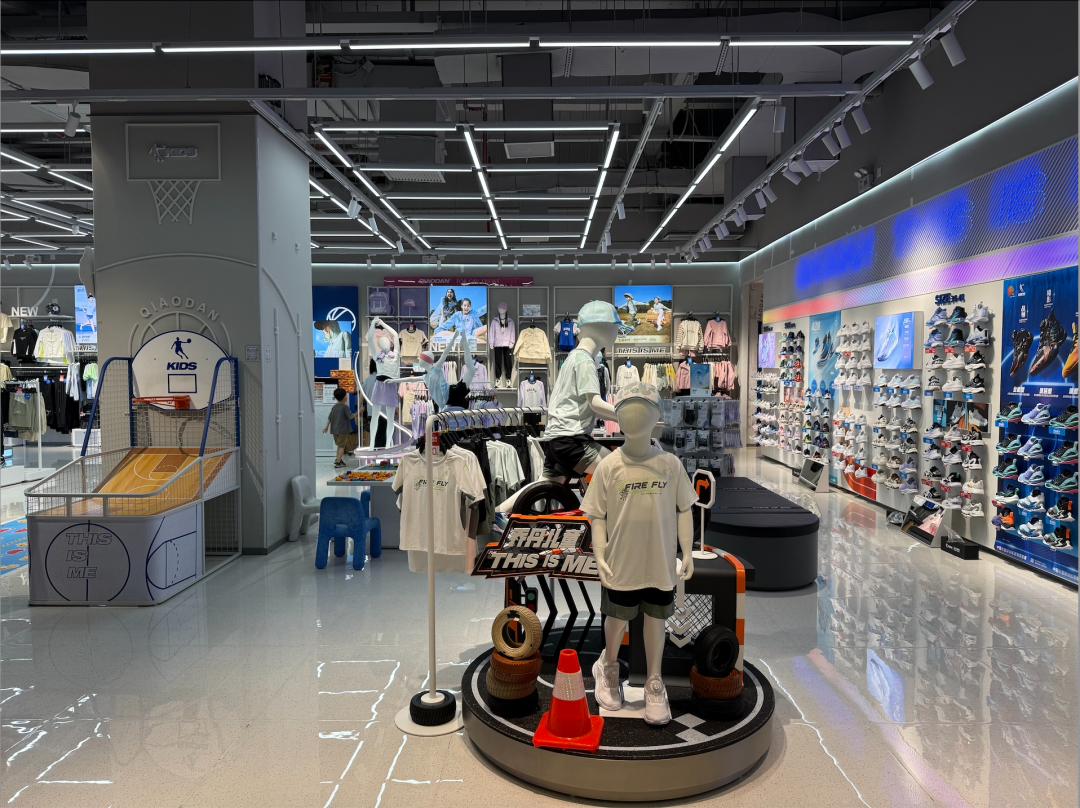
Group 1 - The core viewpoint of the articles emphasizes the implementation of consumption-boosting initiatives in China, focusing on the establishment of flagship stores and the introduction of international and local brands to stimulate economic growth [1][2][3] - The "first store economy" is highlighted as a new consumption model that integrates urban renewal and consumption upgrades, with significant contributions to local economies [3][5] - Beijing has seen a surge in the opening of first stores, with 400 new stores established in the first five months of the year, and a total of 2,372 first stores expected by the end of 2024 [3][2] Group 2 - Shanghai is attracting international sports brands to set up their first stores, enhancing consumer experience through innovative service offerings like professional fitness assessments [5][6] - The city has implemented supportive policies to streamline the process for first stores, including financial incentives for high-level stores, resulting in 173 new stores in the first quarter of 2025 [6][7] - Chongqing is focusing on linking first stores with the night economy, targeting young consumers and introducing over 140 new stores by mid-2025 [7][8] Group 3 - The articles discuss the importance of creating new consumption scenarios and fostering a complete ecosystem for brand development, emphasizing the need for policies that support long-term operations of first stores [8] - The integration of diverse brands and innovative retail concepts is seen as a way to attract consumers and enhance the vibrancy of commercial districts [2][4] - The overall trend indicates a growing competition among cities to attract first stores, which is viewed as a vital component of economic revitalization [1][3]
从尝鲜到长线 首店经济持续升温
Ren Min Ri Bao· 2025-07-30 23:48
Core Viewpoint - The Chinese government is implementing a special action plan to boost consumption by encouraging both international and domestic brands to open their first stores in various cities, thereby stimulating economic growth and enhancing consumer choice [1][2][3]. Group 1: Policy Initiatives - The Central Political Bureau of the Communist Party of China has proposed to deepen the implementation of consumption-boosting actions, focusing on expanding both goods and service consumption [1]. - The "Special Action Plan for Boosting Consumption" encourages the establishment of first stores and flagship stores for high-quality domestic and international brands [1][3]. - Beijing's new consumption plan aims to attract 2,372 first stores by the end of 2024, with nearly 400 new stores opened in the first five months of this year [3]. Group 2: Market Trends - International brands are increasingly establishing their first stores in Beijing, with notable examples including the Swedish outdoor brand "Firestick" and the French brand "Bollingen" [2]. - The first store economy is seen as a new and vibrant consumption model, with brands like Nike and Adidas setting up their China headquarters in Shanghai to better understand local consumers [5][6]. - In Chongqing, the introduction of first stores is linked to the city's night economy, with a focus on attracting young consumers through innovative retail experiences [7][8]. Group 3: Economic Impact - The presence of first stores significantly boosts foot traffic and overall consumption in shopping malls, with some stores attracting over 10,000 visitors during holidays [3]. - Shanghai has seen a rise in sports brands opening their first stores, contributing to the development of new retail formats and enhancing the city's shopping experience [4][5]. - Chongqing has hosted over 120 events related to first store launches in the past three years, indicating a strong commitment to fostering a vibrant retail environment [7].
X @TechCrunch
TechCrunch· 2025-07-30 15:18
Skechers is making kids' shoes with a hidden AirTag compartment | TechCrunch https://t.co/7NvJCEhEUS ...