S&P Global(SPGI)

Search documents
S&P Global(SPGI) - 2025 FY - Earnings Call Transcript
2025-05-29 16:00
Financial Data and Key Metrics Changes - The company has experienced a stable revenue environment, with most revenues being recurring and insulated from short-term volatility [12][13] - The guidance for the ratings business reflects expected ups and downs due to market volatility, with a flat year-over-year build in issuance anticipated [23][25] Business Line Data and Key Metrics Changes - The mobility division is being spun off, which had shown 8.4% growth last year with a 39% margin, indicating strong performance [15][17] - Private credit revenues have grown strongly, with a reported 21% growth in enterprise private markets revenues in the current year [28] Market Data and Key Metrics Changes - The global debt markets are experiencing volatility, but the company has a solid foundation for understanding investor behavior, which informs their guidance [22][23] - The company anticipates a flat M&A environment, with pent-up demand expected to manifest in future years [25] Company Strategy and Development Direction - The company is focusing on integrating data teams and applying generative AI to enhance capabilities across divisions, aiming for accelerated growth [6][10] - The strategic growth themes include private markets and generative AI, with more details expected at the upcoming Investor Day [11] Management's Comments on Operating Environment and Future Outlook - Management has noted reasonable stability in customer behavior and robust pipelines across divisions, indicating a positive outlook despite macro volatility [12][13] - The company is committed to a disciplined approach to capital allocation, maintaining an 85% guideline for capital return to shareholders [72][73] Other Important Information - The mobility business is viewed as better suited to operate as a standalone entity, with limited synergies expected post-spin [18][20] - The integration of generative AI is seen as a significant opportunity for operational efficiency and margin improvement across the organization [61][63] Q&A Session Summary Question: What is the vision for S&P Global over the next three to five years? - The company aims to leverage its comprehensive market coverage and capabilities in benchmarks, analytics, and data to deliver value and accelerate growth [9][10] Question: Are there any areas of the business experiencing revenue pressures? - Most revenues are recurring and stable, with no major changes in customer behavior observed so far [12][13] Question: What is the rationale behind the mobility spin-off? - The mobility division serves a distinct customer base and is expected to perform better as an independent entity, allowing for greater focus and growth opportunities [17][20] Question: How is the company addressing the impact of AI on its market intelligence platform? - The company is integrating generative AI across the organization, focusing on enhancing capabilities and operational efficiencies [46][55] Question: What are the expectations for margin improvement in the market intelligence business? - The company anticipates margin improvements driven by generative AI integration and disciplined execution [63][64]

经济韧性获国际认可!穆迪调升香港评级展望
Wind万得· 2025-05-28 22:44
Core Viewpoint - The recent credit rating reports from S&P and Moody's reflect a stable outlook for Hong Kong's economy, highlighting its robust fiscal position and improving economic prospects. Group 1: Fiscal Resilience - As of March 2025, Hong Kong's fiscal reserves reached HKD 758 billion, equivalent to approximately 22 months of government expenditure, with total government debt to GDP ratio maintained at a low 4.5% [3][4] - The official foreign exchange reserves stood at USD 425 billion by April 2025, providing a solid backing for the linked exchange rate system, which enhances Hong Kong's unique advantage amid global financial volatility [3] Group 2: Economic Recovery - In Q1 2025, Hong Kong's GDP grew by 3.1% year-on-year, surpassing market expectations of 2.8%, driven by a recovery in tourism, a 12.5% increase in service exports, a 4.3% rise in private consumption, and a 5.7% growth in fixed asset investment [5][7] - The government forecasts an annual economic growth of 3.0%-4.0% for 2025, reflecting increased confidence in the economic outlook [7] Group 3: Financial Market Stability - The banking system's capital adequacy ratio remains high at 21.3%, significantly above international regulatory requirements, indicating a stable financial environment [9] - Hong Kong's new stock fundraising exceeded HKD 76 billion, a more than sevenfold increase compared to the same period last year, while the bond market reached a historic high of over HKD 4 trillion [9] - Offshore RMB deposits grew by 8% in the first four months of 2025, reaching HKD 1.25 trillion, reinforcing Hong Kong's position as the largest offshore RMB business hub globally [9] Group 4: Analyst Insights - Analysts from JPMorgan and Goldman Sachs noted that Moody's outlook adjustment aligns with expectations, indicating Hong Kong's resilience in maintaining financial stability amid global monetary policy divergence [10][11] - The Hong Kong government emphasized that the rating agencies' decisions reflect the region's ability to navigate global economic uncertainties, supported by ongoing high-level opening-up policies and advancements in technology and green transformation [11]



S&P CORELOGIC CASE-SHILLER INDEX RECORDS 3.4% ANNUAL GAIN IN MARCH 2025
Prnewswire· 2025-05-27 14:49
Core Insights - The S&P CoreLogic Case-Shiller Indices reported a 3.4% annual gain in U.S. home prices for March 2025, a decrease from 4.0% in February 2025 [1][5][10] - The 10-City Composite Index showed a 4.8% annual increase, down from 5.2%, while the 20-City Composite Index recorded a 4.1% increase, down from 4.5% [2][5] - New York led the 20 cities with an 8% annual gain, followed by Chicago at 6.5% and Cleveland at 5.9%, while Tampa experienced a decline of 2.2% [2][6] Year-over-Year Trends - The U.S. National Home Price NSA Index reported a 3.4% annual return for March, down from 4% in February [2] - The 10-City Composite Index increased by 4.8% year-over-year, while the 20-City Composite Index rose by 4.1% [5] - The majority of the annual appreciation was front-loaded, with only 0.9% of the increase occurring in the last six months [5] Month-over-Month Trends - Month-over-month, the U.S. National Index saw a 0.8% increase, the 10-City Composite Index rose by 1.2%, and the 20-City Composite Index increased by 1.1% [3][7] - After seasonal adjustment, the U.S. National Index decreased by 0.3%, while the 10-City Composite Index saw a slight increase of 0.01% and the 20-City Composite Index decreased by 0.1% [3][7] Market Analysis - Home price growth is decelerating annually, despite strong monthly gains, indicating a shift towards a broader seasonal recovery [4][10] - Limited supply and steady demand are driving prices higher, although affordability challenges persist [4][9] - The reluctance of existing homeowners to sell due to low mortgage rates and limited new construction activity has kept inventory levels tight, supporting home prices [8][9] Regional Price Trends - New York reported the highest annual gain at 8%, while Dallas had a minimal increase of 0.2%, and Tampa was the only city to post a year-over-year decline at -2.2% [6][9] - Eighteen out of twenty metro areas experienced positive monthly price gains before seasonal adjustment, with Cleveland, Seattle, and New York leading the increases [7][9] Affordability and Market Environment - Affordability remains constrained, with mortgage rates in the mid-6% range, keeping monthly payment burdens high relative to incomes [8] - The combination of persistent supply shortages and high borrowing costs continues to impact buyer demand [9][10]

每日机构分析:5月22日
Xin Hua Cai Jing· 2025-05-22 09:57
新加坡瀚亚投资:美国经济不确定性推动资金流向新兴市场 瑞讯银行:美国国债收益率受财政政策与全球资本行为主导 SMBC日兴证券:日本7月参议院选举结果或影响超长债收益率 汉堡商业银行:法国制造业温和回升德国服务业衰退拖累经济 【机构分析】 新加坡瀚亚投资公司称,美国经济不确定性将促使对新兴市场国家进行多元化投资,多元化投资有助于 分散风险并可能提供更丰富的回报。 (文章来源:新华财经) 瑞讯银行策略师指出,美国国债收益率的未来走势将主要受美国的财政选择以及全球投资者的行为影 响。地缘政治关系的恶化、对美元兴趣的减少以及对美国国债作为避险资产信心的下降等,这些都可能 削弱市场对美国国债的信心。 市场分析称,如果美国实施一项削弱美元价值的计划,可能会导致违约风险增加;这样的行动可能导致 巨大的市场波动,对全球经济造成冲击。如果美元大幅贬值,其幅度和速度可能超过1985年广场协议后 的贬值情况(当时美元在九个月内贬值了25%,三年内几乎贬值了一半);当前美国的债务规模远超以 往,政策制定者还在计划进一步增加债务,这使得美元贬值的影响更加复杂。 SMBC日兴证券策略师指出,日本7月即将举行的参议院选举可能是影响超长期限 ...
The U.S. Government's Credit Rating Just Got Downgraded for the Third Time Since 2011. History Says the Stock Market Will Do This Next.
The Motley Fool· 2025-05-22 08:40
Core Viewpoint - Moody's downgraded the U.S. government's credit rating from "Aaa" to "Aa1," marking it as the last major credit rating agency to do so, following S&P Global and Fitch [1][2] Group 1: Credit Rating Downgrade - The downgrade reflects concerns over growing fiscal deficits and elevated total debt, with the U.S. running over a $1.8 trillion deficit in fiscal year 2024 and having over $36 trillion in total debt [3][4] - Moody's indicated that the U.S. fiscal performance is likely to deteriorate compared to its past and other highly rated sovereigns, with expectations of larger deficits as entitlement spending rises [3][4] Group 2: Future Projections - Fiscal deficits could reach 9% of GDP by 2035, up from the current 6.4%, while total debt is projected to rise to approximately 134% of GDP, surpassing levels seen during World War II [4] - Annual interest payments on the debt, which accounted for 18% of revenue in 2024, are expected to increase to 30% by 2035 [4] Group 3: Legislative Impact - House Republicans' proposal to make temporary tax cuts permanent could add an estimated $4 trillion to the fiscal deficit over the next decade, excluding interest payments [6] Group 4: Market Reactions - Historical responses of the S&P 500 to previous credit downgrades show initial sell-offs followed by recoveries, indicating that the market may not react severely to the downgrade [7][10] - The muted market response to the recent downgrade may be attributed to prior warnings from Moody's and the established understanding of the U.S. debt situation [11]

【环球财经】5月Judo Bank速览澳大利亚综合PMI小幅下降
Xin Hua Cai Jing· 2025-05-22 06:23
Core Insights - The S&P Global Flash Australia PMI Composite Output Index decreased from 51 in April to 50.6 in May 2025, indicating a slowdown in the growth of Australia's private sector business activity [1][2] - Despite a recovery in exports, the overall growth rate of new business also declined, reflecting a mixed outlook for the private economy [1] - Business confidence among private enterprises weakened in May, although hiring continued at a steady pace, suggesting a cautious but optimistic short-term outlook [1] Summary by Category Economic Activity - The private sector in Australia continued to grow in May, but the pace of growth slowed due to a decline in both manufacturing output and service sector activity [1] - The manufacturing PMI output index fell from 51 in April to 50.6 in May, while the services PMI activity index dropped from 51 to 50.5, marking a six-month low [2] Business Confidence - Business confidence in the private sector showed signs of weakening, yet companies maintained a steady hiring pace, indicating a level of optimism about short-term prospects [1] - The report suggests that the upcoming Australian elections may have contributed to the slowdown in new order growth, with expectations for a rebound in the coming months [1]
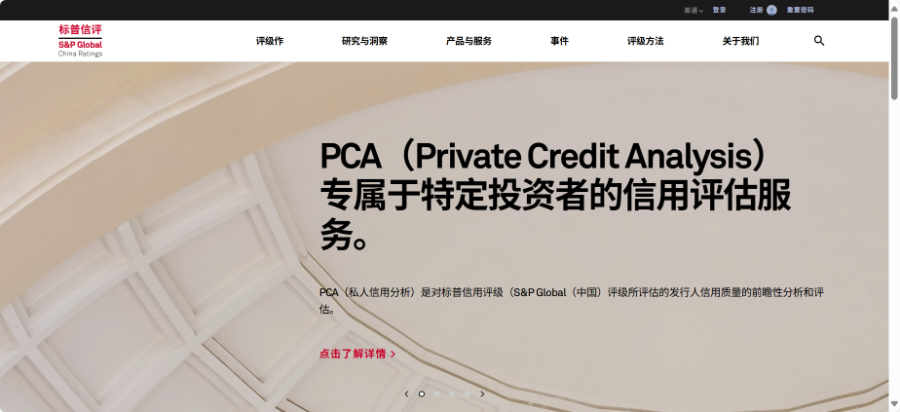
独家丨信评巨头转型进行时:标普中国高管变阵,非评级业务负责人出任首席执行官
2 1 Shi Ji Jing Ji Bao Dao· 2025-05-21 11:45
首家获批在我国境内展业的外资信用评级机构发生高管变更。 5月20日,标普信用评级(中国)有限公司(下称"标普信评"或"标普中国")发布公告,因业务发展需要,公司董事、高级管理 人员、法定代表人将于近日发生变更。 自2025年7月1日起,原标普信评首席执行官、总经理及法定代表人黄直升任公司董事长,原职务由郭振伟接任,郭振伟同时出 任标普信评董事。 原公司董事长Lynn Elizabeth Maxwell(琳恩·伊丽莎白·麦克斯韦)女士卸任董事长一职,但将继续担任标普信评董事。原公司董 事Dennis Martin OSullivan(丹尼斯·奥沙利文)先生卸任董事一职。 21世纪经济报道记者了解到,新出任标普信评CEO的郭振伟,是标普旗下市场财智业务——标普财智在中国的负责人,标普财 智旗下Capital IQ数据库目前是继彭博金融终端后,全球市场占有率第二的头部金融数据终端。 事实上,虽然信用评级业务(Ratings)依然是标普全球的核心业务之一,但其市场财智业务(Market intelligence)的收入从 2022年开始就超过信用评级带来的营收。 在资深信评从业人士看来,如今标普信评在中国的业务转向进 ...
MSCI: Possible Beneficiary Of Outflows From The U.S.
Seeking Alpha· 2025-05-19 09:27
Group 1 - The imposition of tariffs has led to a significant reevaluation of asset allocation strategies among money managers, regardless of whether the tariffs are higher or lower than market expectations [1] Group 2 - The investment strategy focuses on acquiring companies with ideal qualitative attributes at attractive prices based on fundamentals, with a long-term holding approach [2] - The portfolio management aims to avoid underperforming stocks while maximizing exposure to high-potential winners, often resulting in a 'Hold' rating for strong companies if their growth opportunities do not meet the threshold or if downside risks are deemed too high [2]


一财社论:美国主权信用降级,全球市场需直面灰犀牛风险
Di Yi Cai Jing· 2025-05-18 12:28
Core Viewpoint - The downgrade of the U.S. sovereign credit rating by major credit rating agencies signals that U.S. government debt may no longer be considered a risk-free asset [2][3]. Group 1: Credit Rating Downgrade - Moody's downgraded the U.S. sovereign credit rating from Aaa to Aa1, with a stable outlook, following similar actions by S&P Global Ratings and Fitch Ratings [2][3]. - The downgrades are closely linked to the unsustainable nature of U.S. government debt, with the debt-to-GDP ratio projected to rise from 6.4% in 2024 to 9% by 2035 [2][3]. - Mandatory spending, including interest payments, is expected to account for 78% of total government spending by 2035, up from 73% in 2024 [2]. Group 2: Market Implications - The current downgrade is unlikely to trigger immediate panic in the markets, unlike the 2011 downgrade, due to relaxed conditions for eligible collateral [3]. - However, the downgrade increases risk exposure in the market, as the sustainability of U.S. fiscal policy remains a concern [3][4]. - If U.S. debt is no longer viewed as a safe asset, it could lead to a steep rise in U.S. Treasury yields, increasing the risk premium for global financial markets [4]. Group 3: Global Economic Impact - The downgrade could hinder global economic growth and raise liquidity costs for emerging economies, increasing their risk pressures [4]. - The loss of the highest credit rating for U.S. debt may destabilize the global financial market, which relies on U.S. Treasuries as a stability anchor [4][5]. - The need for bipartisan cooperation in U.S. fiscal policy is emphasized to restore the sovereign credit rating to its highest level [4][5]. Group 4: Investor Considerations - Investors holding significant dollar-denominated assets are advised to conduct risk assessments and adjust their asset allocations accordingly [5]. - The downgrade serves as a warning for the U.S. government to address its fiscal responsibilities and move towards a sustainable fiscal path [5].
7 No-Brainer Dividend Growth Stocks to Buy Right Now
The Motley Fool· 2025-05-18 12:15
Core Insights - Dividend growth investing provides a valuable opportunity for compounding wealth through businesses that reward shareholders with dividends, particularly those with five-year dividend growth rates above 6% and payout ratios under 75% [1][2] Group 1: Characteristics of Elite Dividend Growth Stocks - Companies that grow dividends faster than 6% annually while maintaining conservative payout ratios benefit from accelerating earnings power and disciplined capital allocation [2] - These companies often possess competitive advantages such as wide economic moats, pricing power, network effects, and regulatory barriers that protect them from competitors [2] Group 2: Featured Dividend Growth Stocks - **American Express (AXP)**: Offers a 1.09% dividend yield with a 20.4% payout ratio and a 10.8% annualized dividend growth rate over the past 10 years, trading at 19.8 times forward earnings, slightly below the S&P 500 [5][6] - **Visa (V)**: Provides a 0.65% dividend yield supported by a 22.3% payout ratio and a 17.4% annual dividend growth rate, trading at 31.5 times forward earnings, reflecting its premium valuation due to consistent growth and scale advantages [8][9] - **Costco (COST)**: Delivers a 0.51% dividend yield with a 27% payout ratio and a 10.1% annual dividend growth rate, trading at 48.7 times forward earnings, earning its premium through operational execution and market share gains [10][11] - **Target (TGT)**: Offers a 4.5% dividend yield backed by a 50.1% payout ratio and an 8% annual dividend growth rate, trading at 10.5 times forward earnings, representing compelling value in the retail sector [12][13] - **S&P Global (SPGI)**: Provides a 0.73% dividend yield with a 29% payout ratio and an 11.9% annual dividend growth rate, trading at 30.8 times forward earnings, justified by its market-leading positions in financial intelligence [14][15] - **Nvidia (NVDA)**: Offers a minimal 0.03% dividend yield with a 1.16% payout ratio and a 16.7% annual dividend growth rate, trading at 31.4 times forward earnings, reflecting its dominant position in AI and computing [16][17] - **ASML (ASML)**: Delivers a 1.12% dividend yield supported by a 28.5% payout ratio and a remarkable 24.7% annual dividend growth rate, trading at 28 times forward earnings, due to its technological monopoly in semiconductor equipment [18][19]