Walmart(WMT)

Search documents
Walmart Earnings: Bull Put Spread Trade
Yahoo Finance· 2025-11-06 12:00
Group 1 - Walmart operates a vast network of discount department stores, supercenters, and e-commerce platforms, offering a wide range of products at everyday low prices [1] - The company runs Sam's Club and has expanded its digital footprint through online shopping and delivery services, leveraging its scale and supply chain efficiency [2] - Walmart has consistently exceeded expectations in its earnings announcements, maintaining a strong performance [2] Group 2 - Implied volatility for Walmart stock is currently high at 28.68%, indicating a favorable environment for option selling ahead of the earnings announcement on November 20th [3] - A bull put spread strategy is recommended for those with a bullish outlook, involving selling a naked put and buying a further out-of-the-money put to limit risk [4] - Bull put spreads provide defined-risk strategies, allowing traders to know their maximum potential loss upfront and benefit from time decay as expiration approaches [5] Group 3 - Bull put spreads are expected to benefit from a drop in implied volatility following the earnings announcement, which typically occurs [6]

山姆商品图改版成“精修照”,全赖有“阿里味儿”的新高管?
Sou Hu Cai Jing· 2025-11-06 02:33
Core Viewpoint - The recent appointment of Liu Peng, a former Alibaba executive, as the new president of Sam's Club China has sparked significant backlash from members due to changes in the app's product display, which many perceive as adopting an "Alibaba flavor" [1][19][27] Group 1: Leadership Changes - Liu Peng is the first Chinese national to hold the position of president for Sam's Club China, reporting directly to Walmart China's CEO [1][19] - His appointment coincided with a controversial redesign of the Sam's Club app, leading to member dissatisfaction [1][19] Group 2: App Redesign and Member Reactions - The app's product images have been altered to include more promotional content and stylized presentations, moving away from the previous simple white-background images [3][5][10] - Members expressed confusion and frustration over the new design, which they feel complicates the shopping experience and increases selection time [5][10][13] - The redesign has been criticized for resembling tactics commonly used by e-commerce platforms, leading to concerns about transparency and product information [10][18][19] Group 3: Business Strategy and Market Position - Sam's Club is undergoing a digital transformation, with a focus on enhancing member experience and operational efficiency, as indicated by Liu Peng's background in e-commerce [19][21] - Walmart China reported a significant increase in net sales, with Sam's Club's transaction volume growing at a double-digit rate, highlighting the importance of maintaining member satisfaction [18][19] - The company aims to balance its traditional membership model with evolving digital strategies to retain its core customer base [19][27]

当山姆会员抵制阿里高管,他们在抵制什么?
Sou Hu Cai Jing· 2025-11-06 01:45
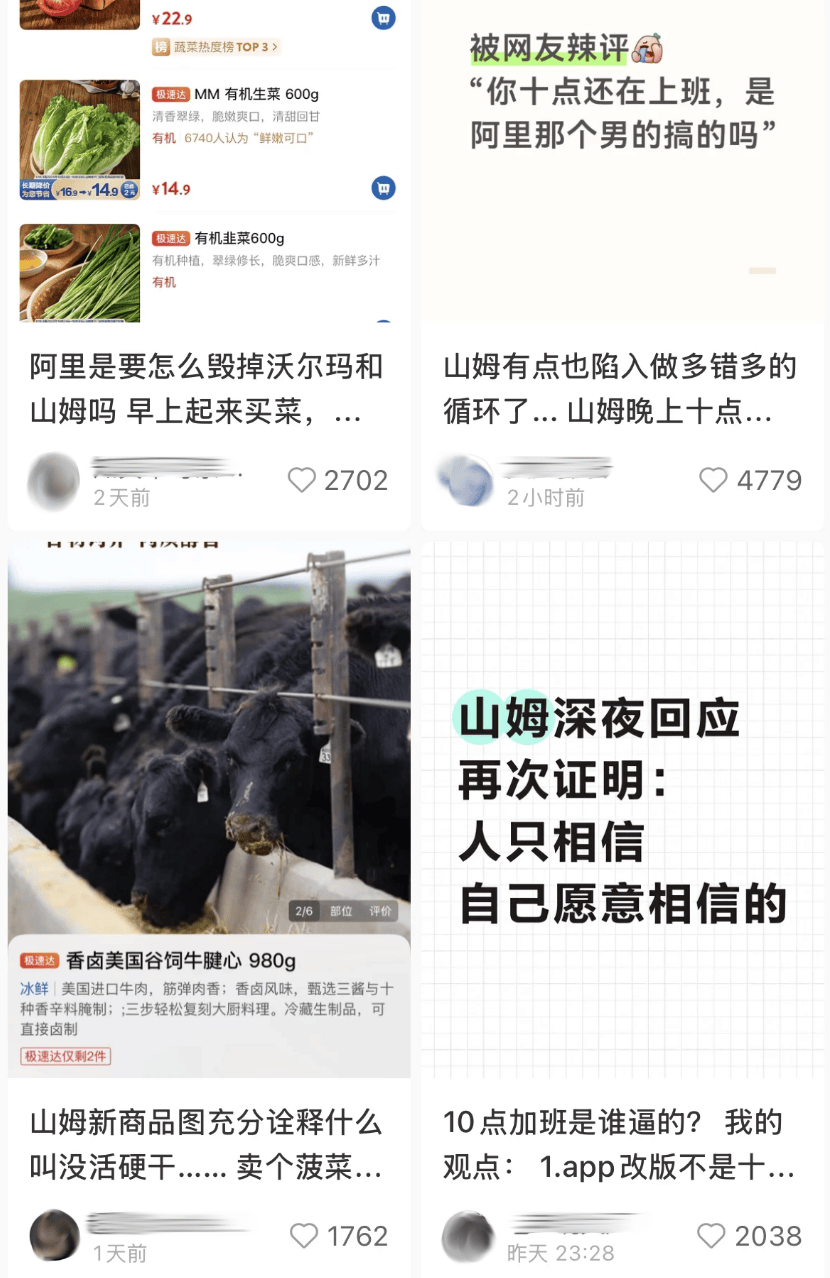
Core Insights - The article discusses the competitive dynamics between Hema and Sam's Club, highlighting Hema's aggressive pricing strategy in 2023 and the subsequent challenges faced by Hema as it attempts to pivot towards profitability by 2025 [2][3] - The resistance from Sam's Club members towards the new leadership under former Alibaba executive Liu Peng reflects deeper concerns about the potential shift in supply chain strategies and the perceived value of membership [9][10] Pricing Strategy - In 2023, Hema launched a pricing campaign called "Move the Mountain Price," undercutting Sam's Club on popular items, such as a durian cake priced at 99 yuan compared to Sam's 128 yuan, and beef brisket at 79.9 yuan compared to Sam's 99.8 yuan [2] - This aggressive pricing strategy indicates Hema's willingness to invest heavily to capture market share from Sam's Club [2] Supply Chain Concerns - Sam's Club members are expressing skepticism about the transition to a new supply chain under Liu Peng, questioning the quality and value of products they receive compared to previous offerings [4][9] - A specific example highlighted is the difference in product sizes, where a pack of wet wipes purchased from an e-commerce platform was found to be half the size of the same product sold at Sam's Club, raising concerns about transparency and value [4] Cultural and Psychological Factors - The article suggests that the resistance from Sam's Club members is rooted in a broader cultural context, where the growth culture associated with Alibaba is being questioned as it reaches its limits [10][12] - The narrative around former Alibaba employees and their perceived quirks has gained traction on social media, reflecting a collective skepticism towards the new management and operational strategies [6][9] Market Dynamics - The article posits that the competitive landscape is influenced by a shift in consumer expectations, where members desire quality and service over mere efficiency and scale [12] - The resistance from Sam's Club members can be seen as a reaction to the changing nature of business practices, where the focus is shifting from growth to maintaining quality of life and service [12]


Omdia:预计2029年CastOS北美出货量将达1500万台 成为电视操作系统主导者
Zhi Tong Cai Jing· 2025-11-06 01:32
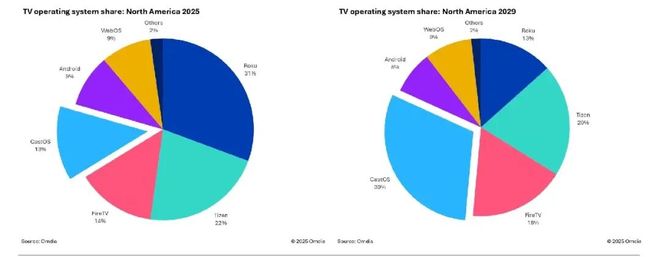
Group 1 - Omdia's report predicts that CastOS shipments in North America will grow from 6.5 million units in 2025 to 15 million units by 2029, potentially surpassing Roku, Tizen, and FireTV after 2025 [1] - Walmart's decision to switch its Onn. TV brand's operating system from Roku to CastOS is expected to accelerate this growth, allowing Walmart to leverage its own platform for direct advertising to consumers, thereby increasing e-commerce revenue [1] - Matthew Rubin, Omdia's chief analyst, notes that Walmart's integration of the TV platform will provide significant assets for advertising revenue and sales growth, enhancing its competitive position against Amazon [1] Group 2 - Globally, the Android platform is expected to maintain a leading position, with market share slightly decreasing from 42% in 2025 to 39% in 2029, though this includes various Android-based platforms [3] - Tizen is projected to remain the second-largest TV operating system, with its share declining from 17% in 2025 to 16% in 2029 [3] - Vidaa and Amazon's Fire TV are expected to be the fastest-growing operating systems, with Vidaa's market share increasing from 6% in 2025 to nearly 8% by 2029, and Fire TV's share rising from 4% to just over 5% [3] Group 3 - Outside of China, the Android platform, including a significant portion of Google TV, will hold a market share of 32% in 2025, remaining the dominant TV operating platform [5] - The competitive operating system market, particularly in Europe, is expected to have expansion opportunities, with retailers and platform providers closely monitoring developments in North America [5]


Omdia:CastOS出货量将突破1500万台,有望主导北美电视操作系统市场
Canalys· 2025-11-06 01:03
Core Insights - Walmart's acquisition of Vizio and the launch of its own operating system on the Onn. TV brand will propel CastOS to become the largest TV operating system by shipment volume in North America [2] - CastOS shipments are projected to grow from 6.5 million units in 2025 to 15 million units by 2029, surpassing competitors like Roku, Tizen, and FireTV [2] - The shift from Roku to CastOS for Walmart's Onn. brand will significantly increase its advertising capabilities and e-commerce revenue [2][3] Market Dynamics - Omdia's chief analyst Matthew Rubin noted that Walmart's integration of TV platforms will provide significant assets for revenue growth and enhance competition with Amazon [3] - Amazon's recent partnership with Roku for advertising could lead to a decline in Roku's shipment volumes as Walmart's Onn. brand takes market share [3] Competitive Landscape - Globally, the Android platform is expected to maintain a leading position, with its market share slightly decreasing from 42% in 2025 to 39% in 2029 [5] - Tizen is projected to remain the second-largest TV operating system, with a slight decline in market share from 17% in 2025 to 16% in 2029 [5] - The fastest-growing TV operating systems besides CastOS are expected to be Vidaa, increasing from 6% in 2025 to nearly 8% in 2029, and Amazon's Fire TV, rising from 4% in 2025 to just over 5% by 2029 [7] Regional Insights - Outside of China, the Android platform, including a significant share of Google TV, is expected to hold a 32% market share in 2025, indicating its dominance in the TV operating platform market [9] - The competitive landscape in Europe remains dynamic, with opportunities for expansion as retailers and platform providers observe North American trends [9]

Amazon, Target and Walmart Raised Prices in Response to Tariffs
PYMNTS.com· 2025-11-05 23:36
Price Increases - Amazon has raised prices by 12.8% this year, while Target and Walmart have increased prices by 5.5% and 5.3% respectively [2] - The price increases for all three retailers are attributed to the impact of new U.S. tariffs, with Amazon's increases occurring before the tariffs were imposed, possibly due to price normalization after holiday discounts [3] Marketplace Dynamics - Amazon earns a higher percentage of its revenue from third-party sales compared to Target and Walmart, making its marketplace sellers, often small businesses, more vulnerable to tariff-related cost increases [4] - Third-party sellers lack the scale, inventory flexibility, and private-label leverage that larger retailers like Walmart and Target possess to offset costs [4] Broader Industry Trends - A report indicated that 90% of goods firms and over 70% of services firms among mid-market companies have raised prices in response to tariffs and macroeconomic pressures [5] - Some companies are absorbing most of the tariff costs due to concerns about losing market share to competitors who do not raise prices, as well as the temporary nature of the tariffs [6] - Goldman Sachs economists estimated that consumers will ultimately bear more than 50% of the total cost of U.S. tariffs, with consumers having shouldered about 22% of the cost as of mid-year [7]


中产会员猛踹山姆“那条好腿”
3 6 Ke· 2025-11-05 23:34
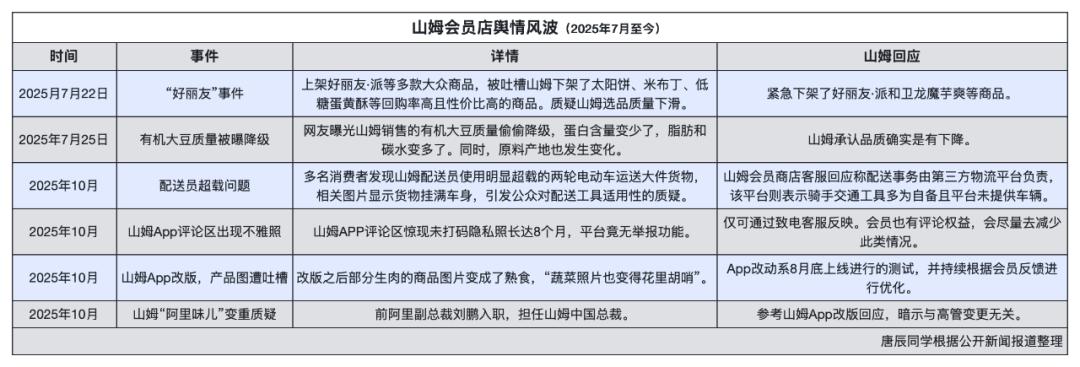
Core Viewpoint - The recent public relations crisis faced by Sam's Club reflects a growing disconnect between the brand and its middle-class members, leading to a decline in trust and membership satisfaction [1][14][18] Summary by Relevant Sections Recent Events - From July to October 2025, Sam's Club experienced multiple controversies, including the "Holly Friend" incident, quality degradation of organic soybeans, delivery issues, and negative feedback regarding the app's user experience [2][3][6] - The "Holly Friend" incident involved the introduction of popular products while removing high-repurchase items, leading to public outcry about product quality [2][6] - The company acknowledged a decline in product quality and faced criticism for delivery practices involving overloaded vehicles [2][4] Management and Strategy - The appointment of former Alibaba executive Liu Peng as president raised concerns about the brand's direction, with accusations of adopting a more aggressive e-commerce strategy [3][5][10] - Sam's Club's response emphasized its commitment to addressing member feedback and improving the app experience, distancing the app changes from the management transition [4][14] Member Trust and Identity - The core issue lies in the erosion of trust among Sam's Club's middle-class members, who expect high-quality products and services in exchange for their membership fees [14][17] - Membership fees serve as a "trust tax," creating a sense of ownership and expectation among members regarding product quality and service [11][12] - The brand's rapid expansion has put pressure on its supply chain, leading to concerns about maintaining quality and operational efficiency [15][17] Market Position and Competition - Despite the controversies, Sam's Club continues to expand, with plans to open additional stores, although membership growth has slowed significantly from 40% to 16% [14][18] - The brand's unique selling proposition relies on a combination of product selection, supply chain management, and member trust, which are critical for maintaining its competitive edge [17][18]
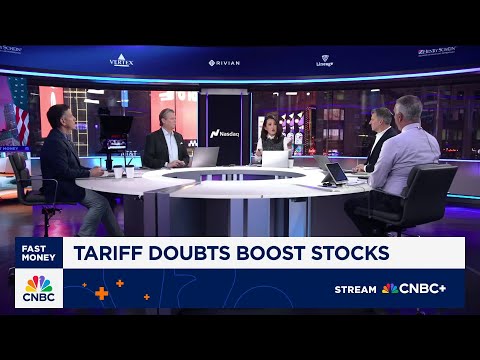
'Fast Money' traders talk a diverging consumer picture
CNBC Television· 2025-11-05 22:47
cylinders. We'll get more reads on the consumer in coming weeks. Rough Lauren, Tapestry, Target, and Walmart.All still to come this month. So, what is the real read on the consumer. Guy, what's your take.>> Exactly. That that there's two different economies right now. The people that are doing well that are trading down but are still a bit have the ability to spend and then on the lower end, people are strapped.And I think that's been going on for quite some time. And we see it in the performances of these ...
X @Forbes
Forbes· 2025-11-05 20:54
Marketing & Consumer Behavior - Digital fatigue is increasing, suggesting a shift in consumer preferences [1] - Walmart's catalog experiment demonstrates the effectiveness of paper in driving purchase intent [1] - Brain scans indicate that paper triggers purchase intent more effectively than digital media [1]
Retailers are raising prices to meet tariffs. Amazon is hiking more than others
CNBC· 2025-11-05 17:35
Core Insights - The article discusses the impact of tariffs imposed by the Trump administration on U.S. retailers, highlighting that Amazon has increased prices more significantly than competitors like Walmart and Target during a period of persistent inflation [1][2][3]. Price Increases - Amazon's prices have risen by an average of 12.8% as of the end of September 2023, compared to a 5.5% increase at Target and a 5.3% increase at Walmart [3]. - The sharpest price increase for Amazon occurred between January and February, with a rise of 3.7%, which was ahead of the majority of the tariffs announced in April [5][6]. Category-Specific Price Changes - Across various categories, Amazon's price increases were notably higher than those of Target and Walmart. For instance, apparel prices at Amazon rose by 14.2%, while indoor and outdoor home goods prices increased by 15.3% [9]. - Overall, apparel prices increased by 11.5% on average across the three retailers, with Amazon leading in price hikes for specific categories [8][9]. Third-Party Seller Impact - Third-party sellers on Amazon are more exposed to tariff-driven cost increases, lacking the scale and inventory flexibility that larger retailers possess, leading them to pass higher costs onto consumers [11][12]. Economic Implications - The pricing trends observed at Amazon are expected to significantly impact the holiday season and the broader economy in Q4 2023, as Amazon is viewed as a bellwether for U.S. commodity goods pricing [13]. - Amazon's online store sales grew by 10% in Q3 2023, indicating that consumers are not deterred by the price increases [14]. Retailer Responses - Amazon's leadership emphasizes their commitment to competitive pricing, with CEO Andy Jassy stating the company aims to meet or beat prices of major competitors [15]. - Target has indicated that it would raise prices only as a last resort, while Walmart has permanently lowered prices on 2,000 items since February [16][17]. Inflation Context - The Federal Reserve estimates that tariffs contribute significantly to inflation, with core personal consumption expenditures price index being affected by these tariffs [19]. - The consumer price index showed a 3% year-over-year increase for September, with specific categories experiencing varying price changes [20].