
Walmart(WMT)

Search documents
美股“失落阵营”消费股迎财报“大考” 美国家庭“压力山大”是病根
Zhi Tong Cai Jing· 2025-11-05 13:36
Core Insights - The consumer sector is lagging behind the overall stock market performance, with significant declines in major consumer companies' stock prices, highlighting the challenges faced by American households [1][2][3] Group 1: Consumer Sector Performance - Major consumer companies like Lululemon Athletica, Chipotle, and Deckers Outdoor have seen stock declines exceeding 45% this year [1] - Essential consumer goods companies such as Kraft Heinz, Hormel Foods, and Target have also experienced stock declines of at least 27% [1] - Excluding Amazon and Tesla from the S&P 500 consumer discretionary index shows that the index has remained flat in 2025, indicating the struggles of non-essential consumer companies [1] Group 2: Economic Challenges - The poor performance of consumer stocks reflects multiple pressures on American households, including layoffs, high tariffs on goods, and elevated mortgage rates affecting the real estate market [2] - Upcoming earnings reports from companies like McDonald's, DoorDash, and Wynn Resorts are anticipated to provide insights into the consumer sector's current dynamics [2] Group 3: Market Dynamics - The ongoing AI investment trend is overshadowing the difficulties faced by consumer stocks, with the S&P 500 index nearing historical highs and a 15% increase this year [3] - The market is exhibiting a "barbell" structure, where a few AI-related companies perform well while most stocks are dragged down by labor market concerns and household spending pressures [3][4] - Only 5% of stocks in the S&P 500 consumer staples sector have outperformed the market in the past six months, marking one of the lowest ratios in 50 years [4] Group 4: Employment and Layoffs - The focus has shifted from official labor market data to corporate layoff announcements due to the U.S. government shutdown, with significant layoffs announced by companies like UPS and Amazon [5][6] - Some analysts suggest that the current wave of layoffs could be beneficial for the stock market, potentially leading to a "no-employment boom" scenario that may prompt the Federal Reserve to adopt a more accommodative policy [6]


620亿美元软件巨头CEO:不要回味昨日的成功
财富FORTUNE· 2025-11-05 13:29
Core Insights - The article emphasizes the importance of not dwelling on past successes, as highlighted by Workday's CEO, Carl Eschenbach, who believes that yesterday's success can be the most dangerous [1][2] - Eschenbach's leadership has led to significant growth for Workday, with total revenue reaching $2.35 billion, a 12.6% increase compared to the second quarter of the 2025 fiscal year [3] Group 1: Leadership Philosophy - Eschenbach focuses on future-driven values such as drive, resilience, and integrity rather than past achievements [2] - He encourages learning from past experiences while prioritizing the creation of success for employees, colleagues, and customers [2] Group 2: Industry Examples - Jeff Bezos, former CEO of Amazon, instilled a culture of vigilance among employees, emphasizing the importance of focusing on current operations rather than resting on laurels [4][5] - Doug McMillon, CEO of Walmart, shares a similar mindset, advocating for a focus on the future while also valuing the present [5]


撤掉刘鹏,山姆中国就会变好?
3 6 Ke· 2025-11-05 12:40
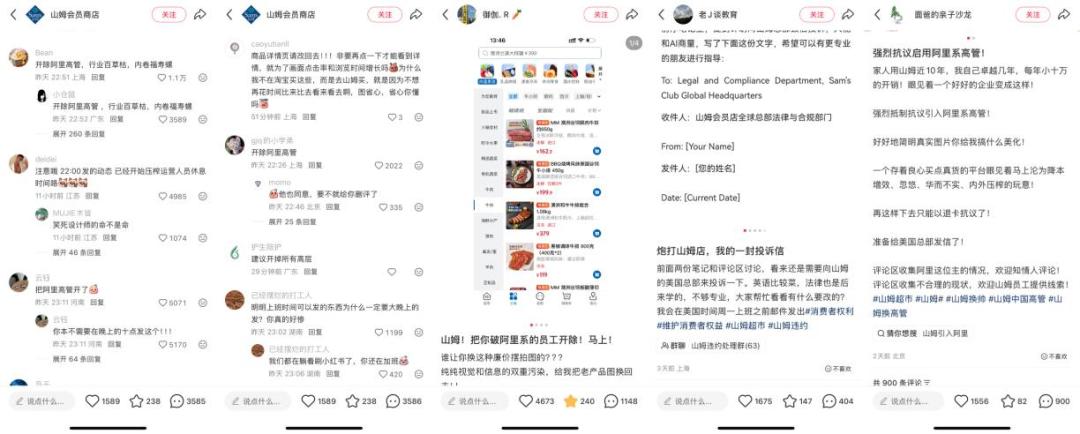
Core Viewpoint - The appointment of Liu Peng as CEO of Sam's Club has sparked significant backlash from consumers, reflecting long-standing dissatisfaction with the brand's recent changes and product quality issues [1][6][15]. Group 1: Leadership and Background - Liu Peng has a strong background in retail, having held various senior positions at Alibaba and other companies, indicating his capability [3]. - Despite his qualifications, consumer dissatisfaction emerged quickly after his appointment, particularly following changes to the Sam's Club app that altered product presentation [5][11]. Group 2: Consumer Backlash - The redesign of the Sam's Club app, which shifted from simple product images to more stylized photos, ignited consumer anger, leading to widespread calls for Liu's resignation [5][11]. - The backlash is not solely directed at Liu but is a culmination of ongoing consumer grievances regarding product quality and selection at Sam's Club [6][12]. Group 3: Financial Performance and Expansion - In 2024, Sam's Club achieved over 100 billion yuan in revenue from its members, accounting for two-thirds of Walmart China's total revenue, marking it as the first foreign retail enterprise in China to surpass this milestone [6]. - The company has been rapidly expanding, planning to open 6-7 new stores annually starting in 2024, with a target of 8-10 stores per year by 2025 [6][12]. Group 4: Product Quality Issues - Recent product controversies, such as the "low-sugar" version of a popular snack that did not meet advertised standards, have contributed to consumer dissatisfaction [7]. - There have been multiple reports of declining product quality, including issues with Sam's own brand products, raising concerns about quality control amid rapid expansion [10][13]. Group 5: Trust and Consumer Expectations - The ongoing issues have led to a significant erosion of consumer trust, particularly in light of past food safety scandals in China, which have made consumers more sensitive to product quality [12][15]. - Consumers expect a commitment to quality and safety from Sam's Club, and any perceived decline in these standards threatens the brand's foundational promise [15][16].
山姆为什么又让中产破防了?
3 6 Ke· 2025-11-05 12:23
Core Viewpoint - The recent controversies surrounding Sam's Club, including issues with product images and management changes, highlight a growing disconnect between the company's expansion strategy and the expectations of its middle-class consumer base [8][9][20]. Group 1: Company Strategy - Sam's Club is pursuing an aggressive expansion strategy in China, having increased its store count from 30 to 59 in just five years, indicating a doubling of its presence [12]. - The company aims to penetrate lower-tier cities, aligning with the rise of the middle class in these areas, which is a common trend among other consumer brands like KFC and Starbucks [13][18]. - The shift towards local, mass-market brands is a strategic necessity for Sam's Club to support its expansion, despite potentially alienating its existing customer base [27][28]. Group 2: Consumer Expectations - The middle-class consumers who have supported Sam's Club expect a certain level of exclusivity and high-quality products, which may be compromised by the company's shift towards more mainstream offerings [28][29]. - There is a growing fear among middle-class consumers about maintaining their social status, which makes them particularly sensitive to changes in brands they associate with their identity, such as Sam's Club [23][24]. - The expansion strategy may lead to dissatisfaction among existing members, as the brand's value proposition shifts from high-end, niche products to more common offerings [29][30]. Group 3: Market Dynamics - The competitive landscape in China is intensifying, with various international brands expanding aggressively, leaving Sam's Club with little choice but to adapt its strategy [12][13]. - The company's management is aware of the potential backlash from its core consumer base but must balance this with the need to satisfy shareholders and improve financial performance [26][32]. - The tension between maintaining brand integrity and pursuing growth reflects broader challenges faced by multinational corporations operating in rapidly evolving markets like China [31][32].
吐槽山姆“AI味”商品图,消费者在乎的不只是美观
Xin Jing Bao· 2025-11-05 10:19
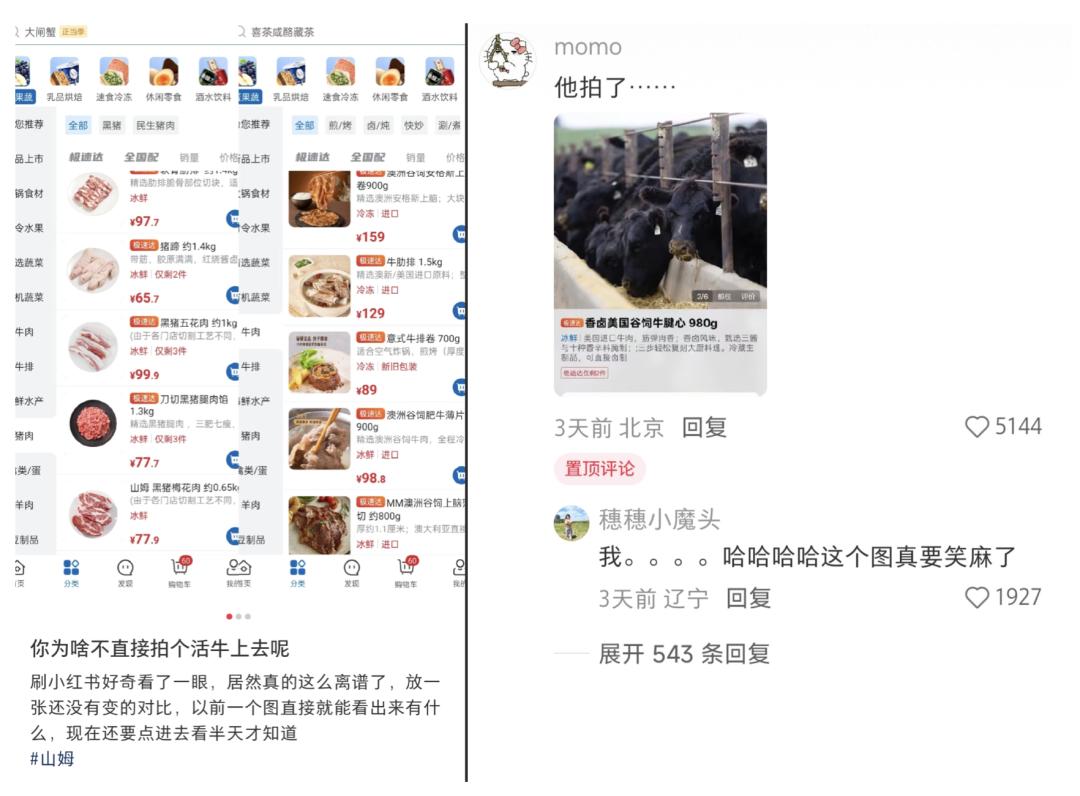
Core Viewpoint - The recent controversy surrounding the Sam's Club app highlights consumer concerns over the authenticity of product images, particularly regarding the use of AI-generated or overly retouched images, which may undermine the brand's commitment to quality and transparency [2][3][4] Group 1: Consumer Concerns - Many consumers have expressed dissatisfaction with the recent update of the Sam's Club app, which replaced real product images with overly beautified versions [2] - The shift in image style raises questions about whether the brand is straying from its original commitment to quality and authenticity [2][3] - Consumers value the "see what you get" shopping experience, which is crucial for maintaining trust in the brand [2] Group 2: Regulatory and Ethical Implications - The use of AI-generated images without proper disclosure may violate the recently enacted "Artificial Intelligence Generated Synthetic Content Identification Measures," which mandates clear labeling of AI-generated content [3][4] - The incident underscores the need for clearer regulations regarding the commercial use of AI in product representation, including explicit labeling requirements [4] - Brands can utilize AI technology effectively, but they must adhere to the principles of authenticity and transparency to maintain consumer trust [4] Group 3: Brand Strategy and Market Position - Sam's Club's unique selling proposition has been its focus on quality over flashy marketing tactics, which differentiates it from competitors [2] - The recent image change could set a concerning precedent for the brand's future commitment to quality, potentially leading to a more generic marketing approach [2][4] - Ultimately, the foundation of brand premium lies in quality and integrity, and any technological enhancements should not compromise these values [4]
因为来了个阿里前高管,山姆被喷上热搜了?
创业邦· 2025-11-05 10:11
Core Viewpoint - The recent app redesign of Sam's Club has sparked significant backlash from users, indicating a disconnect between the company's changes and customer expectations [6][10][12]. User Experience and Feedback - The app's visual update has made it more aesthetically pleasing but less user-friendly, leading to frustration among long-time users who find it harder to access essential product information [8][10]. - Users have expressed concerns that Sam's Club is losing its identity as a membership-based store that offers high-quality, value-for-money products [12][14]. Product Availability and Pricing - There have been complaints about the removal of frequently purchased items and the introduction of products that are perceived as lower quality, which undermines the store's reputation as a professional buyer [14][16]. - Price increases on certain products have been noted, with some items becoming more expensive than similar offerings on e-commerce platforms, raising questions about the value proposition for members [16][18]. Supply Chain and Expansion Challenges - The rapid expansion of Sam's Club has put pressure on its supply chain capabilities, leading to potential compromises in product quality as suppliers may cut corners to maintain profitability [26][31]. - The company has shifted its strategy from slow, focused growth in major cities to a more aggressive expansion into lower-tier cities, which presents both opportunities and challenges in maintaining product quality and customer satisfaction [27][29][31]. Management and Strategic Direction - The appointment of a new president from Alibaba has led to speculation about the direction of Sam's Club, with concerns that it may adopt practices similar to those of Alibaba's Hema [10][31]. - The company faces the challenge of balancing the maintenance of existing customer experiences while attracting new members, which is increasingly scrutinized in the digital age [31].

中新健康丨被指“货不对板”?山姆回应
Zhong Guo Xin Wen Wang· 2025-11-05 03:51
Group 1 - The core issue revolves around the recent update of the Sam's Club app, which has faced backlash from members due to overly beautified images, hidden ingredient lists, and a complicated user interface, leading to discussions about membership cancellations [1] - Members have reported discrepancies between the images and actual products, particularly in fresh produce and meat sections, where AI-enhanced images and cooked food pictures were used instead of raw items [1] - Key information such as supplier details has been obscured, and there are inconsistencies in product descriptions, with some items labeled as "domestic" while images indicate they are "imported" [1] Group 2 - As a membership-based supermarket under Walmart, Sam's Club has been rapidly expanding in China, with nearly 60 stores in over 30 cities as of October 27, and plans to open about five more by the end of the year [2] - Membership numbers have been increasing, with stable renewal rates and activity levels, while e-commerce business accounts for over 50% of sales [2] - The company faces challenges in maintaining product quality and service experience amid its rapid expansion, as evidenced by previous controversies regarding product selections and quality control [2]
这一届中产 忍不了山姆的“AI滤镜”
Feng Huang Wang· 2025-11-05 02:34
Core Viewpoint - The recent update of the Sam's Club app has sparked significant user backlash, revealing deeper issues related to user trust and experience rather than being a mere product update failure [1][3]. Group 1: User Experience Issues - The app update led to a decline in user experience, particularly in product display, where images of items like fruits and meats were overly beautified by AI, creating a noticeable gap between the images and actual products [5][6]. - Some raw meat products were misrepresented with images of cooked dishes, which misled consumers and undermined their trust in product quality [7]. - Users expressed frustration over the app's complicated navigation, with essential product details now requiring multiple steps to access, contrasting sharply with previous streamlined experiences [10][11]. - The hiding of critical information, such as ingredient lists, has further fueled user dissatisfaction, especially given past controversies surrounding ingredient transparency [12][13]. Group 2: Impact on Brand Trust and Business Strategy - As a membership-based warehouse club, Sam's Club faces heightened expectations regarding product quality and service, which have been challenged by recent management changes and strategic shifts [15][16]. - The new management's focus on rapid expansion and efficiency has led to a significant increase in sales, with 2024 revenue surpassing 100 billion yuan and a 30.1% year-on-year growth in Q2 2025 [16]. - However, the push for standardization and efficiency has raised concerns about the erosion of the trust-based model that has been central to Sam's Club's appeal, as customers report declines in product quality and a loss of regional product diversity [17][18]. - The recent app update has acted as a catalyst for existing frustrations, leading to calls for accountability from the new management team [19]. Group 3: Long-term Implications - The brand's identity has shifted from a trusted source of quality products to one that may be perceived as prioritizing scale over trust, potentially jeopardizing customer loyalty and the value of membership fees [20][21]. - Trust, once established, is fragile and can be lost quickly through customer disappointment, making it crucial for Sam's Club to address these issues to maintain its customer base [21][22].
英伟达、特斯拉大跌
Xin Lang Cai Jing· 2025-11-05 00:47
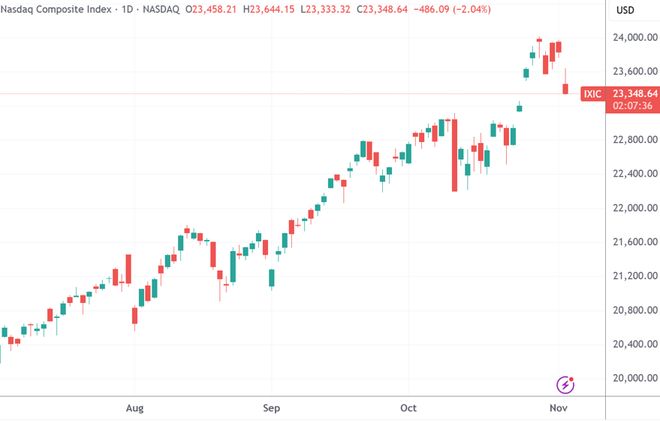
Market Overview - The S&P 500 index fell by 1.17% to 6771.55 points, the Nasdaq Composite dropped by 2.04% to 23348.64 points, and the Dow Jones Industrial Average decreased by 0.53% to 47085.24 points, indicating a market adjustment amid concerns over high valuations [1] Company Performance - Palantir, a leading AI application stock, saw its shares decline by 7.94% despite reporting earnings that exceeded expectations and raising its performance guidance. The stock has quadrupled in value over the past year, becoming a symbol of the "AI bubble" [2] - Nvidia's stock fell by 3.96%, while other major tech stocks like Apple and Microsoft experienced mixed results, with Apple rising by 0.37% and Microsoft dropping by 0.52% [7] Investor Sentiment - Investor confidence was further shaken by Michael Burry's disclosure of purchasing put options on Palantir and Nvidia, which raised concerns among retail investors [5] - The retail investor preference index compiled by Goldman Sachs dropped by 3.6%, approximately three times the decline of the S&P 500 index, reflecting a challenging day for day traders [5] Market Predictions - BTIG's chief market technician, Jonathan Krinsky, indicated that the S&P 500 has not tested the 50-day moving average since April, currently around 6654 points, and suggested potential declines to the 6400-6500 point range due to extreme market divergences [5] - Goldman Sachs and Morgan Stanley executives expressed concerns about a potential market pullback of 10% to 20% over the next 12 to 24 months, with Morgan Stanley's CEO suggesting that a 10%-15% correction would be welcome if not driven by macroeconomic factors [5] Broader Market Trends - Similar to the U.S. stock market, commodities, including oil and gold, experienced declines, with Bitcoin dropping nearly 6% and Ethereum falling over 10% in the cryptocurrency market [6] - The Nasdaq China Golden Dragon Index fell by 2.05%, with notable declines in Chinese stocks such as Alibaba down 2.02% and JD.com down 2.93% [8]


Walmart CEO: ‘Every Job’ Will Change Because of AI
Yahoo Finance· 2025-11-04 17:57
Walmart’s 2.1 million global employees will need to brace for technology-led change. Axios reported that Doug McMillon, the superstore chain’s CEO, expressed his opinion that AI will influence the way every job inside the company evolves over time in remarks at a Harvard Business Review event this week. More from Sourcing Journal “Every job we’ve got is going to change in some way—whether it’s getting the shopping carts off the parking lot, or the way our technologists work or certainly the way leadership ...