
Walmart(WMT)

Search documents
Amazon, Target and Walmart Raised Prices in Response to Tariffs
PYMNTS.com· 2025-11-05 23:36
Price Increases - Amazon has raised prices by 12.8% this year, while Target and Walmart have increased prices by 5.5% and 5.3% respectively [2] - The price increases for all three retailers are attributed to the impact of new U.S. tariffs, with Amazon's increases occurring before the tariffs were imposed, possibly due to price normalization after holiday discounts [3] Marketplace Dynamics - Amazon earns a higher percentage of its revenue from third-party sales compared to Target and Walmart, making its marketplace sellers, often small businesses, more vulnerable to tariff-related cost increases [4] - Third-party sellers lack the scale, inventory flexibility, and private-label leverage that larger retailers like Walmart and Target possess to offset costs [4] Broader Industry Trends - A report indicated that 90% of goods firms and over 70% of services firms among mid-market companies have raised prices in response to tariffs and macroeconomic pressures [5] - Some companies are absorbing most of the tariff costs due to concerns about losing market share to competitors who do not raise prices, as well as the temporary nature of the tariffs [6] - Goldman Sachs economists estimated that consumers will ultimately bear more than 50% of the total cost of U.S. tariffs, with consumers having shouldered about 22% of the cost as of mid-year [7]


中产会员猛踹山姆“那条好腿”
3 6 Ke· 2025-11-05 23:34
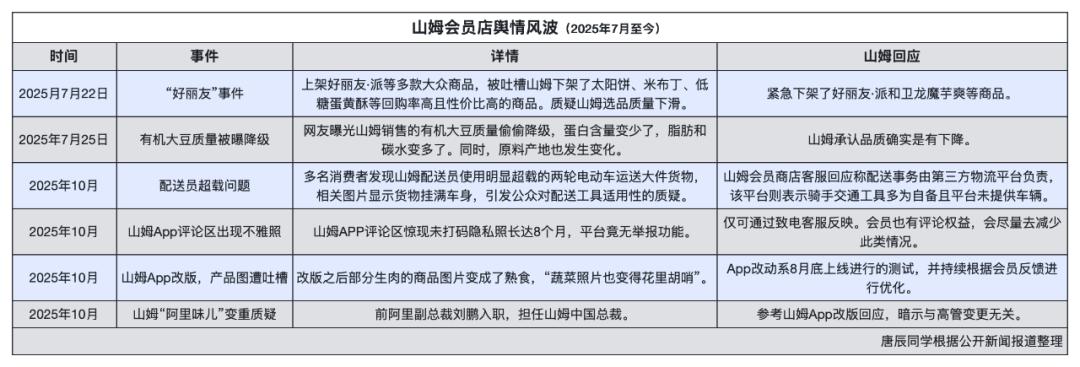
Core Viewpoint - The recent public relations crisis faced by Sam's Club reflects a growing disconnect between the brand and its middle-class members, leading to a decline in trust and membership satisfaction [1][14][18] Summary by Relevant Sections Recent Events - From July to October 2025, Sam's Club experienced multiple controversies, including the "Holly Friend" incident, quality degradation of organic soybeans, delivery issues, and negative feedback regarding the app's user experience [2][3][6] - The "Holly Friend" incident involved the introduction of popular products while removing high-repurchase items, leading to public outcry about product quality [2][6] - The company acknowledged a decline in product quality and faced criticism for delivery practices involving overloaded vehicles [2][4] Management and Strategy - The appointment of former Alibaba executive Liu Peng as president raised concerns about the brand's direction, with accusations of adopting a more aggressive e-commerce strategy [3][5][10] - Sam's Club's response emphasized its commitment to addressing member feedback and improving the app experience, distancing the app changes from the management transition [4][14] Member Trust and Identity - The core issue lies in the erosion of trust among Sam's Club's middle-class members, who expect high-quality products and services in exchange for their membership fees [14][17] - Membership fees serve as a "trust tax," creating a sense of ownership and expectation among members regarding product quality and service [11][12] - The brand's rapid expansion has put pressure on its supply chain, leading to concerns about maintaining quality and operational efficiency [15][17] Market Position and Competition - Despite the controversies, Sam's Club continues to expand, with plans to open additional stores, although membership growth has slowed significantly from 40% to 16% [14][18] - The brand's unique selling proposition relies on a combination of product selection, supply chain management, and member trust, which are critical for maintaining its competitive edge [17][18]
'Fast Money' traders talk a diverging consumer picture
CNBC Television· 2025-11-05 22:47
cylinders. We'll get more reads on the consumer in coming weeks. Rough Lauren, Tapestry, Target, and Walmart.All still to come this month. So, what is the real read on the consumer. Guy, what's your take.>> Exactly. That that there's two different economies right now. The people that are doing well that are trading down but are still a bit have the ability to spend and then on the lower end, people are strapped.And I think that's been going on for quite some time. And we see it in the performances of these ...
X @Forbes
Forbes· 2025-11-05 20:54
Marketing & Consumer Behavior - Digital fatigue is increasing, suggesting a shift in consumer preferences [1] - Walmart's catalog experiment demonstrates the effectiveness of paper in driving purchase intent [1] - Brain scans indicate that paper triggers purchase intent more effectively than digital media [1]
Retailers are raising prices to meet tariffs. Amazon is hiking more than others
CNBC· 2025-11-05 17:35
Core Insights - The article discusses the impact of tariffs imposed by the Trump administration on U.S. retailers, highlighting that Amazon has increased prices more significantly than competitors like Walmart and Target during a period of persistent inflation [1][2][3]. Price Increases - Amazon's prices have risen by an average of 12.8% as of the end of September 2023, compared to a 5.5% increase at Target and a 5.3% increase at Walmart [3]. - The sharpest price increase for Amazon occurred between January and February, with a rise of 3.7%, which was ahead of the majority of the tariffs announced in April [5][6]. Category-Specific Price Changes - Across various categories, Amazon's price increases were notably higher than those of Target and Walmart. For instance, apparel prices at Amazon rose by 14.2%, while indoor and outdoor home goods prices increased by 15.3% [9]. - Overall, apparel prices increased by 11.5% on average across the three retailers, with Amazon leading in price hikes for specific categories [8][9]. Third-Party Seller Impact - Third-party sellers on Amazon are more exposed to tariff-driven cost increases, lacking the scale and inventory flexibility that larger retailers possess, leading them to pass higher costs onto consumers [11][12]. Economic Implications - The pricing trends observed at Amazon are expected to significantly impact the holiday season and the broader economy in Q4 2023, as Amazon is viewed as a bellwether for U.S. commodity goods pricing [13]. - Amazon's online store sales grew by 10% in Q3 2023, indicating that consumers are not deterred by the price increases [14]. Retailer Responses - Amazon's leadership emphasizes their commitment to competitive pricing, with CEO Andy Jassy stating the company aims to meet or beat prices of major competitors [15]. - Target has indicated that it would raise prices only as a last resort, while Walmart has permanently lowered prices on 2,000 items since February [16][17]. Inflation Context - The Federal Reserve estimates that tariffs contribute significantly to inflation, with core personal consumption expenditures price index being affected by these tariffs [19]. - The consumer price index showed a 3% year-over-year increase for September, with specific categories experiencing varying price changes [20].
美股“失落阵营”消费股迎财报“大考” 美国家庭“压力山大”是病根
Zhi Tong Cai Jing· 2025-11-05 13:36
Core Insights - The consumer sector is lagging behind the overall stock market performance, with significant declines in major consumer companies' stock prices, highlighting the challenges faced by American households [1][2][3] Group 1: Consumer Sector Performance - Major consumer companies like Lululemon Athletica, Chipotle, and Deckers Outdoor have seen stock declines exceeding 45% this year [1] - Essential consumer goods companies such as Kraft Heinz, Hormel Foods, and Target have also experienced stock declines of at least 27% [1] - Excluding Amazon and Tesla from the S&P 500 consumer discretionary index shows that the index has remained flat in 2025, indicating the struggles of non-essential consumer companies [1] Group 2: Economic Challenges - The poor performance of consumer stocks reflects multiple pressures on American households, including layoffs, high tariffs on goods, and elevated mortgage rates affecting the real estate market [2] - Upcoming earnings reports from companies like McDonald's, DoorDash, and Wynn Resorts are anticipated to provide insights into the consumer sector's current dynamics [2] Group 3: Market Dynamics - The ongoing AI investment trend is overshadowing the difficulties faced by consumer stocks, with the S&P 500 index nearing historical highs and a 15% increase this year [3] - The market is exhibiting a "barbell" structure, where a few AI-related companies perform well while most stocks are dragged down by labor market concerns and household spending pressures [3][4] - Only 5% of stocks in the S&P 500 consumer staples sector have outperformed the market in the past six months, marking one of the lowest ratios in 50 years [4] Group 4: Employment and Layoffs - The focus has shifted from official labor market data to corporate layoff announcements due to the U.S. government shutdown, with significant layoffs announced by companies like UPS and Amazon [5][6] - Some analysts suggest that the current wave of layoffs could be beneficial for the stock market, potentially leading to a "no-employment boom" scenario that may prompt the Federal Reserve to adopt a more accommodative policy [6]


620亿美元软件巨头CEO:不要回味昨日的成功
财富FORTUNE· 2025-11-05 13:29
Core Insights - The article emphasizes the importance of not dwelling on past successes, as highlighted by Workday's CEO, Carl Eschenbach, who believes that yesterday's success can be the most dangerous [1][2] - Eschenbach's leadership has led to significant growth for Workday, with total revenue reaching $2.35 billion, a 12.6% increase compared to the second quarter of the 2025 fiscal year [3] Group 1: Leadership Philosophy - Eschenbach focuses on future-driven values such as drive, resilience, and integrity rather than past achievements [2] - He encourages learning from past experiences while prioritizing the creation of success for employees, colleagues, and customers [2] Group 2: Industry Examples - Jeff Bezos, former CEO of Amazon, instilled a culture of vigilance among employees, emphasizing the importance of focusing on current operations rather than resting on laurels [4][5] - Doug McMillon, CEO of Walmart, shares a similar mindset, advocating for a focus on the future while also valuing the present [5]


撤掉刘鹏,山姆中国就会变好?
3 6 Ke· 2025-11-05 12:40
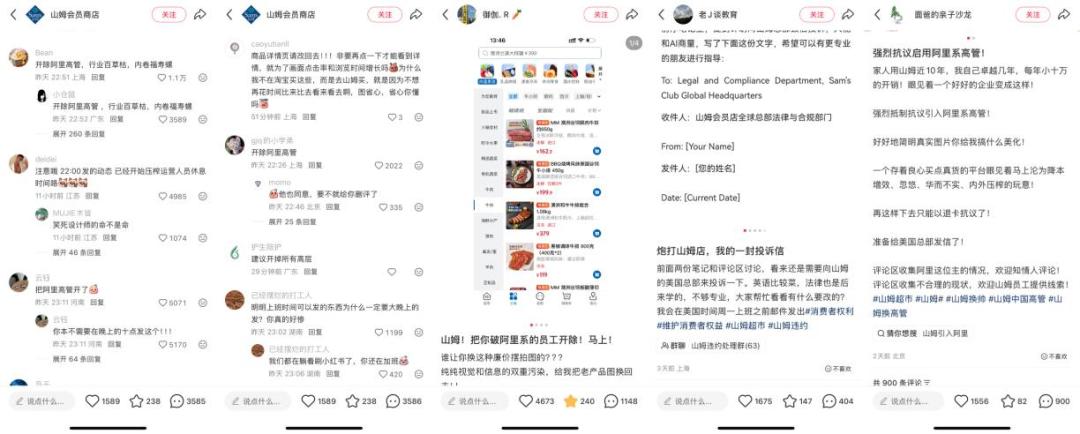
Core Viewpoint - The appointment of Liu Peng as CEO of Sam's Club has sparked significant backlash from consumers, reflecting long-standing dissatisfaction with the brand's recent changes and product quality issues [1][6][15]. Group 1: Leadership and Background - Liu Peng has a strong background in retail, having held various senior positions at Alibaba and other companies, indicating his capability [3]. - Despite his qualifications, consumer dissatisfaction emerged quickly after his appointment, particularly following changes to the Sam's Club app that altered product presentation [5][11]. Group 2: Consumer Backlash - The redesign of the Sam's Club app, which shifted from simple product images to more stylized photos, ignited consumer anger, leading to widespread calls for Liu's resignation [5][11]. - The backlash is not solely directed at Liu but is a culmination of ongoing consumer grievances regarding product quality and selection at Sam's Club [6][12]. Group 3: Financial Performance and Expansion - In 2024, Sam's Club achieved over 100 billion yuan in revenue from its members, accounting for two-thirds of Walmart China's total revenue, marking it as the first foreign retail enterprise in China to surpass this milestone [6]. - The company has been rapidly expanding, planning to open 6-7 new stores annually starting in 2024, with a target of 8-10 stores per year by 2025 [6][12]. Group 4: Product Quality Issues - Recent product controversies, such as the "low-sugar" version of a popular snack that did not meet advertised standards, have contributed to consumer dissatisfaction [7]. - There have been multiple reports of declining product quality, including issues with Sam's own brand products, raising concerns about quality control amid rapid expansion [10][13]. Group 5: Trust and Consumer Expectations - The ongoing issues have led to a significant erosion of consumer trust, particularly in light of past food safety scandals in China, which have made consumers more sensitive to product quality [12][15]. - Consumers expect a commitment to quality and safety from Sam's Club, and any perceived decline in these standards threatens the brand's foundational promise [15][16].
山姆为什么又让中产破防了?
3 6 Ke· 2025-11-05 12:23
Core Viewpoint - The recent controversies surrounding Sam's Club, including issues with product images and management changes, highlight a growing disconnect between the company's expansion strategy and the expectations of its middle-class consumer base [8][9][20]. Group 1: Company Strategy - Sam's Club is pursuing an aggressive expansion strategy in China, having increased its store count from 30 to 59 in just five years, indicating a doubling of its presence [12]. - The company aims to penetrate lower-tier cities, aligning with the rise of the middle class in these areas, which is a common trend among other consumer brands like KFC and Starbucks [13][18]. - The shift towards local, mass-market brands is a strategic necessity for Sam's Club to support its expansion, despite potentially alienating its existing customer base [27][28]. Group 2: Consumer Expectations - The middle-class consumers who have supported Sam's Club expect a certain level of exclusivity and high-quality products, which may be compromised by the company's shift towards more mainstream offerings [28][29]. - There is a growing fear among middle-class consumers about maintaining their social status, which makes them particularly sensitive to changes in brands they associate with their identity, such as Sam's Club [23][24]. - The expansion strategy may lead to dissatisfaction among existing members, as the brand's value proposition shifts from high-end, niche products to more common offerings [29][30]. Group 3: Market Dynamics - The competitive landscape in China is intensifying, with various international brands expanding aggressively, leaving Sam's Club with little choice but to adapt its strategy [12][13]. - The company's management is aware of the potential backlash from its core consumer base but must balance this with the need to satisfy shareholders and improve financial performance [26][32]. - The tension between maintaining brand integrity and pursuing growth reflects broader challenges faced by multinational corporations operating in rapidly evolving markets like China [31][32].
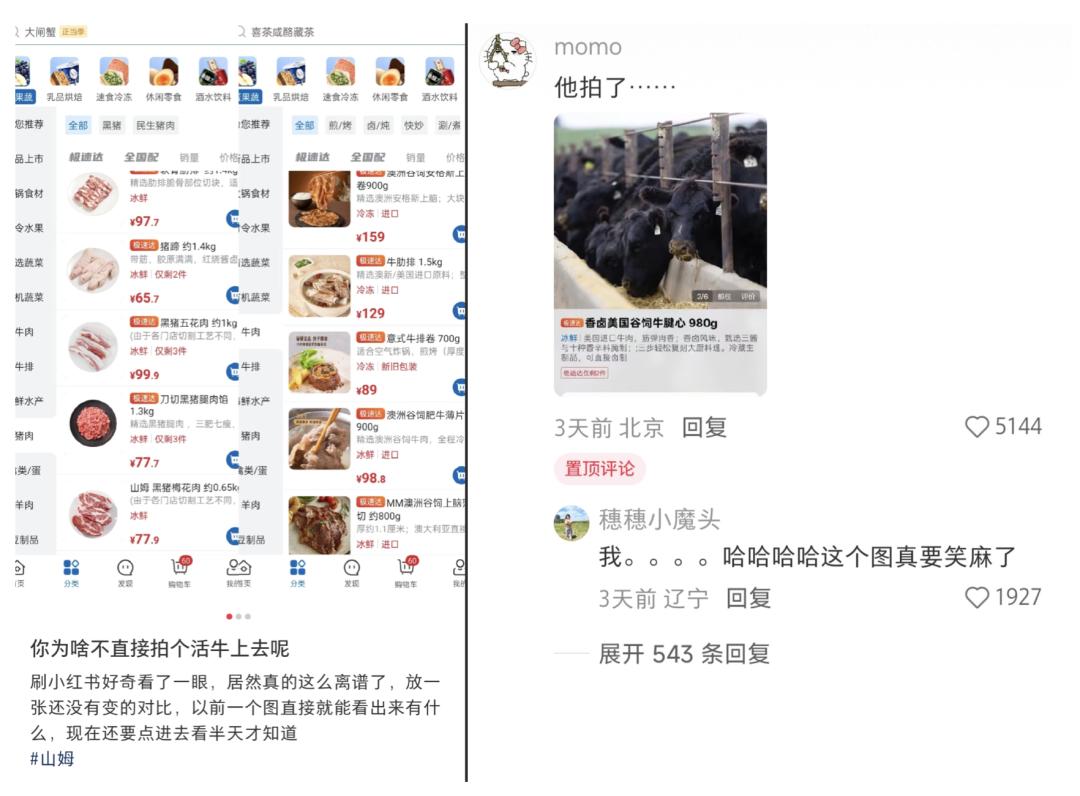
吐槽山姆“AI味”商品图,消费者在乎的不只是美观
Xin Jing Bao· 2025-11-05 10:19
Core Viewpoint - The recent controversy surrounding the Sam's Club app highlights consumer concerns over the authenticity of product images, particularly regarding the use of AI-generated or overly retouched images, which may undermine the brand's commitment to quality and transparency [2][3][4] Group 1: Consumer Concerns - Many consumers have expressed dissatisfaction with the recent update of the Sam's Club app, which replaced real product images with overly beautified versions [2] - The shift in image style raises questions about whether the brand is straying from its original commitment to quality and authenticity [2][3] - Consumers value the "see what you get" shopping experience, which is crucial for maintaining trust in the brand [2] Group 2: Regulatory and Ethical Implications - The use of AI-generated images without proper disclosure may violate the recently enacted "Artificial Intelligence Generated Synthetic Content Identification Measures," which mandates clear labeling of AI-generated content [3][4] - The incident underscores the need for clearer regulations regarding the commercial use of AI in product representation, including explicit labeling requirements [4] - Brands can utilize AI technology effectively, but they must adhere to the principles of authenticity and transparency to maintain consumer trust [4] Group 3: Brand Strategy and Market Position - Sam's Club's unique selling proposition has been its focus on quality over flashy marketing tactics, which differentiates it from competitors [2] - The recent image change could set a concerning precedent for the brand's future commitment to quality, potentially leading to a more generic marketing approach [2][4] - Ultimately, the foundation of brand premium lies in quality and integrity, and any technological enhancements should not compromise these values [4]