Yum!(YUM)

Search documents
KFC® Reclaims Sundays with Weekly Digital Deals Designed for Comfort, Not Guilt
Prnewswire· 2026-01-14 17:48
That flexibility matters, especially as many Americans rethink rigid food rules at the start of the year. New data shows that of those who set New Year's food goals, 58%* say they feel guilty when they break them. At the same time, Sundays are already seen as a release: 28% say they are more likely to bend a food goal because Sundays are good for relaxing or indulging, while 27% say they treat Sunday as a "cheat day" or reward. Rather than fighting those cravings, "Sundays by KFC" embraces them, offering a ...



Here's What to Expect From Yum! Brands’ Next Earnings Report
Yahoo Finance· 2026-01-13 12:45
Company Overview - Yum! Brands, Inc. has a market cap of $43.6 billion and operates well-known quick-service brands such as KFC, Pizza Hut, Taco Bell, and The Habit Burger Grill, primarily through a franchise model in over 150 countries and territories [1] Earnings Forecast - Analysts predict Yum! Brands will report an adjusted EPS of $1.78 for Q4 2025, reflecting a 10.6% increase from $1.61 in the same quarter last year [2] - For fiscal 2025, the adjusted EPS is forecasted to be $6.10, an 11.3% rise from $5.48 in fiscal 2024, with an anticipated growth of 8% year over year to $6.59 in fiscal 2026 [3] Stock Performance - Yum! Brands shares have increased by 27.3% over the past 52 weeks, outperforming the S&P 500 Index's return of 19.7% and the Consumer Discretionary Select Sector SPDR Fund's increase of 12.8% during the same period [4] Dividend Declaration - On November 20, Yum! Brands declared a quarterly cash dividend of $0.71 per share, payable on December 12, 2025, to shareholders of record as of December 2, 2025, with shares rising 2.5% in the next trading session [5] Analyst Ratings - The consensus view on Yum! Brands stock is cautiously optimistic, with a "Moderate Buy" rating from 28 analysts, including 11 recommending "Strong Buy" and 17 indicating "Hold." The average price target is $164.58, suggesting a potential upside of 4.9% from current levels [6]
Restaurant winners and losers in 2025
Yahoo Finance· 2026-01-12 08:47
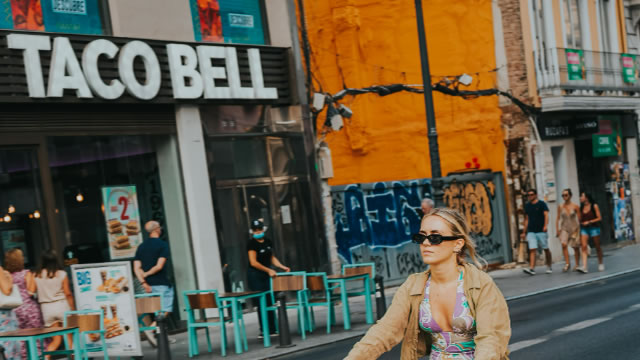
分组1 - McDonald's successfully avoided losing market share among low-income consumers by cutting prices on core menu combos and reviving the Extra Value Meal, driven by menu innovation [1][8] - The brand reversed a negative trend from an E. coli outbreak and consumer pullback in Q1 2025, achieving gains in Q2 and Q3, with competitors like Applebee's adopting similar value-focused strategies [2] - Chili's emerged as the same-store sales leader in 2025, posting over 20% comps growth in the first three quarters, primarily driven by traffic growth [5] 分组2 - Taco Bell outperformed the QSR sector with same-store sales growth of 9%, 4%, and 7% in the first three quarters of 2025, leveraging a strategy that combined value, novelty, and premium options [9][11] - Starbucks showed signs of recovery in Q1 fiscal 2026, with its holiday launch being the biggest sales day ever in North America, despite facing labor unrest [14][15] - Sweetgreen faced significant challenges in 2025, with a 7.6% same-store sales drop in Q2 and an 11.7% traffic decline in Q3, leading to operational adjustments and leadership changes [23][27] 分组3 - Jack in the Box struggled in 2025, experiencing a 7.4% same-store sales decline in its fiscal fourth quarter, attributed to a lack of value perception among consumers [18][19] - Pizza Hut continued to face negative same-store sales growth, with a 6% decline in Q3 2025, prompting Yum's CEO to consider selling the brand [28][30] - Fat Brands ended 2025 with significant financial distress, defaulting on debt obligations and reporting a 5.5% decline in systemwide sales [31][32]



肯德基也加入,连锁餐企为何都扎堆在地铁站内开店?
3 6 Ke· 2026-01-09 03:55
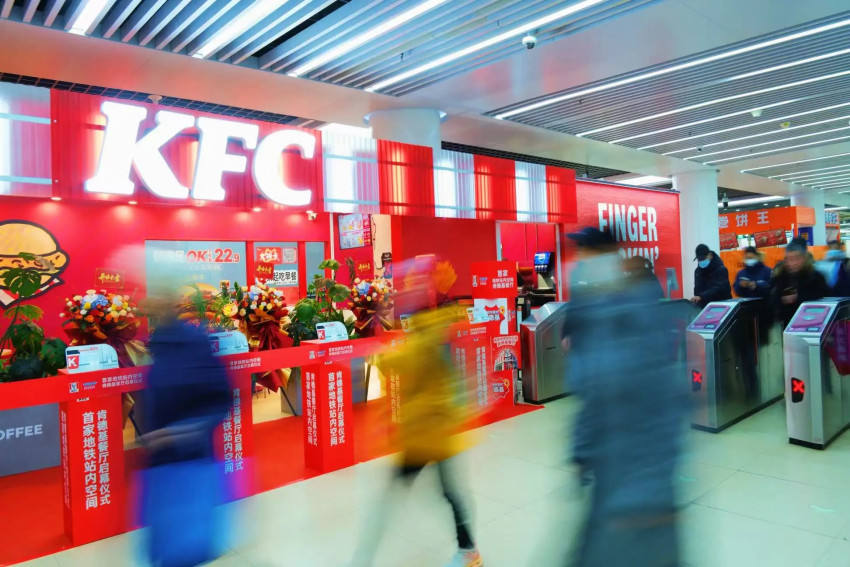
Core Insights - KFC has opened its first subway space store in Tianjin, targeting commuters and local residents, indicating a shift in restaurant location strategy towards public transport hubs [1][3] - The trend of opening stores in subway and bus stations is gaining momentum among various chain restaurant brands, moving away from traditional locations like airports and train stations [6][7] Group 1: KFC's Subway Store Launch - KFC's new store is located at the Tianjin Tumor Hospital Station, a transfer point for subway lines 5 and 6, designed to attract high foot traffic from commuters and travelers [1] - The store offers a full range of services throughout the day, including coffee, burgers, and snacks, catering to diverse dining needs [3] - KFC plans to expand this "rail + dining" model to other subway stations in Tianjin, indicating a strategic focus on high-traffic areas [3] Group 2: Industry Trends - Other brands like Luckin Coffee and McDonald's are also expanding into subway stations, with Luckin planning to open 200 stores in collaboration with Tianjin's transit authority [6][7] - The operational costs at subway and bus stations are lower compared to airports, making them attractive for restaurant brands seeking to optimize expenses while capturing stable commuter traffic [7] - The current trend reflects a broader strategy among chain restaurants to tap into the underutilized market potential of public transport hubs, which are seen as a blue ocean market with significant growth opportunities [7]
Cautiously Optimistic Analyst Sentiment on Yum! Brands (YUM) Amid Leadership Changes
Yahoo Finance· 2026-01-08 17:17
Core Viewpoint - Yum! Brands, Inc. (NYSE:YUM) is considered one of the best restaurant stocks to buy currently, with a cautiously optimistic analyst sentiment surrounding the stock amid leadership changes and strategic actions aimed at unlocking shareholder value [1][2]. Analyst Sentiment - As of January 6, 2026, approximately 41% of analysts hold a positive outlook on Yum! Brands, with a median price target of $164.00, indicating an upside potential of 9.10% [2]. - Oppenheimer analyst Brian Bittner downgraded the stock to Perform from Outperform, citing fair valuation after strong performance in 2025 [3]. - Stifel reiterated a "Hold" rating with a price target of $160.00, suggesting that a potential divestment of Pizza Hut could mitigate underperformance risks and enhance growth visibility, albeit at the cost of lower absolute earnings [5]. Leadership and Strategic Decisions - New leadership initiated a formal review of strategic options for Pizza Hut, Yum! Brands' most challenged brand, to maximize shareholder value. Goldman Sachs and Barclays have been appointed as financial advisors for this review, although no timeline has been set for its completion [4]. Company Overview - Yum! Brands, Inc. operates a vast franchise network that includes KFC, Taco Bell, Pizza Hut, and The Habit Burger Grill, spanning over 155 countries globally [6].
华尔街顶级分析师最新评级:惠而浦获上调
Xin Lang Cai Jing· 2026-01-07 16:52
Core Viewpoint - The article summarizes significant analyst rating changes that could impact market trends, highlighting upgrades, downgrades, and new coverage ratings for various companies [1][6]. Upgrades - Barclays upgraded Whirlpool (W) from "Neutral" to "Overweight," raising the target price from $104 to $123, citing accelerated market share growth expected in 2025 and continuation into 2026 [5]. - Oppenheimer upgraded McDonald's (MCD) from "Market Perform" to "Outperform," setting a target price of $355, with a more optimistic outlook for the restaurant sector in 2026 despite a poor performance in 2025 [5]. - Barclays upgraded Lowe's (LOW) from "Neutral" to "Overweight," increasing the target price from $259 to $285, based on an expected improvement in non-essential goods demand due to upcoming tax policy changes [5]. - Piper Sandler upgraded Hershey (HSY) from "Neutral" to "Overweight," raising the target price from $193 to $213, noting lower cocoa costs and the removal of cocoa tariffs, which provide flexibility for reinvestment and growth [5]. - Bank of America upgraded Regeneron Pharmaceuticals (REGN) from "Underperform" to "Buy," significantly raising the target price from $627 to $860, as previous concerns regarding Eylea SD have been addressed [5]. Downgrades - Jefferies downgraded First Solar (FSLR) from "Buy" to "Hold," lowering the target price from $269 to $260 due to limited visibility on orders and emerging strategic issues [10]. - Oppenheimer downgraded Yum Brands (YUM) from "Outperform" to "Market Perform," with no target price set, as the stock's risk-reward profile has become balanced after a 13% increase in 2025 [10]. - Montreal Bank Capital Markets downgraded Union Pacific Railroad (UNP) from "Outperform" to "Market Perform," reducing the target price from $270 to $255, citing high uncertainty regarding regulatory outcomes and weak freight demand [10]. - Piper Sandler downgraded Deckers Outdoor (DECK) from "Neutral" to "Underweight," lowering the target price from $100 to $85, as the company has increased discount promotions on its core brands [10]. - Wells Fargo downgraded Humana (HUM) from "Overweight" to "Neutral," setting a target price of $290, due to uncertainties regarding profit margin targets for 2026 [10]. New Coverage - Argus Research initiated coverage on grocery delivery platform Instacart (CART) with a "Buy" rating and a target price of $52, highlighting revenue growth and recent profitability achievements [11]. - Citigroup initiated coverage on Natera (NTRA) with a "Buy" rating and a target price of $300, citing significant growth potential [11]. - Link Consulting initiated coverage on Galecto (GLTO) with an "Outperform" rating and a target price of $46, noting its acquisition of Damola Therapeutics to advance its oncology pipeline [11]. - Wolfe Research initiated coverage on Apogee Therapeutics (APGE) with a "Market Perform" rating, without a target price, predicting mixed catalysts for the stock in 2026 [11]. - Mizuho Securities initiated coverage on Palvella Therapeutics (PVLA) with an "Outperform" rating and a target price of $205, based on positive clinical trial data for its drug Qtorin [11].





PIZZA HUT TEAMS UP WITH TOM BRADY TO KICK OFF "PIZZA BEFORE THE HUT" CAMPAIGN AND CELEBRATES PIZZA HUT'S BIGGEST PIZZA FOR THE BIGGEST GAMES, NOW $10
Prnewswire· 2026-01-07 11:00
Core Idea - Pizza Hut has launched a new campaign called "Pizza Before the Hut," featuring Tom Brady, which rewards cities if their quarterbacks say "pizza" before "hut" during nationally televised games [1][3][4]. Group 1: Campaign Details - The campaign offers a free Big New Yorker pizza party to any city whose quarterback successfully incorporates "pizza" before "hut" in a live game [3][4]. - The promotion coincides with the introduction of Pizza Hut's new $10 deal for the 16" Big New Yorker pizza, which includes 6 extra-large slices [1][6]. Group 2: Marketing Strategy - The campaign is supported by a national advertisement featuring Tom Brady, who humorously transitions from a quarterback to a Pizza Hut delivery driver [5][6]. - The marketing initiative aims to leverage the cultural significance of the word "hut" in football while promoting the new pizza offering [6]. Group 3: Product Information - The Big New Yorker pizza is priced at $10 for a limited time and features a New York-style crust with various topping options [6][7]. - Pizza Hut has a strong digital presence, with over half of its transactions coming from digital orders, highlighting its commitment to innovation in the food industry [8][9].


KFC® Is Giving Your January Food Choices a Glow-Up with a Comfort-First Value Lineup
Prnewswire· 2026-01-06 15:45
Core Insights - KFC is launching a new lineup of $5 Bowls and promoting $10 Tuesdays to provide affordable meal options during January, a month when many Americans feel the pressure of rising food costs and New Year's resolutions [1][2][3][4] Product Offerings - The new $5 Bowls include five options: Matty's Cheesy Nuggy Gravy Bowl, Mac & Cheese Bowl, Mashed Potato Bowl, Spicy Mac & Cheese Bowl, and Spicy Mashed Potato Bowl, all designed to deliver comfort and value [5][6][7] - The collaboration with chef Matty Matheson aims to enhance the flavor profile of the offerings, particularly with the Cheesy Nuggy Gravy Bowl, which features fries, brown gravy, crispy chicken nuggets, and cheese curds [5][6] Market Context - Research indicates that 31% of Americans have negative feelings about lunch costs, and 22% find it unaffordable to buy lunch regularly, highlighting the need for budget-friendly meal options [3][4] - The second week of January, known as "Quitters Day," sees many consumers abandoning their New Year's resolutions, making KFC's $10 Tuesdays a practical solution for those seeking comfort food without the burden of meal prep [8][10][11] Consumer Behavior - A significant portion of Americans (31%) express annoyance at paying over $15 for a weekday lunch, and 65% of those who dislike meal prepping find it a chore, indicating a demand for convenient and satisfying meal solutions [4][10][9] - The introduction of the Bowl-o-Tie, a playful nod to KFC's heritage, aims to engage consumers further and enhance the brand's appeal [12] Brand Strategy - KFC's strategy for January focuses on providing warmth, joy, and real savings, aligning with consumer desires for comfort and affordability during a challenging month [13]

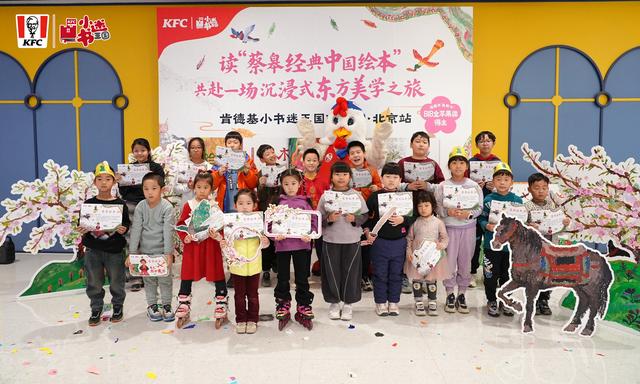
读“蔡皋经典中国绘本” ,共赴一场沉浸式东方美学之旅
Bei Jing Ri Bao Ke Hu Duan· 2026-01-03 04:45
Core Viewpoint - The event "Reading 'Cai Gao's Classic Chinese Picture Books' for an Immersive Journey into Eastern Aesthetics" organized by KFC Little Book Lovers Kingdom highlights the cultural significance and aesthetic value of Cai Gao's picture books, engaging young readers in a unique literary experience [1][3]. Group 1: Event Overview - The event was designed to immerse attendees in the world of Cai Gao's picture books, creating an environment that reflects Eastern aesthetics [1]. - Renowned documentary director and producer Hai Hong led the young readers through the cultural and aesthetic nuances of the picture books [1]. Group 2: Artistic Interpretation - Hai Hong described Cai Gao's picture books as a bridge connecting classical themes with modern perspectives, emphasizing that tradition is a flowing river rather than a rigid doctrine [3]. - The stories encapsulate ideals such as the "ideal character of the Peach Blossom Spring," the "spirit of Mulan," and the "vitality of folk wisdom," which are woven into a narrative accessible to contemporary readers, especially children [3]. Group 3: Featured Works - The limited edition series "Cai Gao's Classic Chinese Picture Books," exclusively launched by KFC Little Book Lovers Kingdom, includes four representative works: "The Story of Peach Blossom Spring," "Mulan," "The Hundred Bird Robe," and "Invisible Leaves," each reflecting deep interpretations of traditional culture [7]. - "The Story of Peach Blossom Spring" is adapted from Tao Yuanming's essay, illustrating an idyllic land with rich textures and relatable imagery [9]. - "Mulan" showcases the heroism and love of the titular character through bold compositions and vibrant colors, while "Invisible Leaves" imparts lessons on independent thinking and discernment [9]. - "The Hundred Bird Robe," a Miao folk story, celebrates the triumph of wisdom over evil and the spirit of love for life [9].
Shares of KFC and Pizza Hut Indian operator Devyani jump on merger with rival franchisee Sapphire
CNBC· 2026-01-02 06:10
Core Viewpoint - The merger between Devyani International and Sapphire Foods India aims to consolidate operations for Yum! Brands' franchises in India, enhancing growth potential and operational efficiencies [2][3][4]. Group 1: Merger Details - Devyani International plans to merge with Sapphire Foods India, with a transaction value reported at $934 million [2]. - Under the merger terms, Devyani will issue 117 shares for every 100 shares of Sapphire [3]. - The merger is expected to be completed within 12 to 15 months, pending regulatory and shareholder approvals [3]. Group 2: Market Impact - Following the announcement, shares of Devyani International rose by 5.3%, while shares of Sapphire Foods India fell by 6.4% [1][3]. - The merger is anticipated to accelerate KFC's expansion in India and revitalize Pizza Hut, which currently lags behind Domino's [3]. Group 3: Financial Projections - Devyani International expects annual synergies of approximately 2.1 billion to 2.2 billion rupees (around $23 million to $25 million) starting from the second full year post-merger [5]. Group 4: Strategic Importance - Yum! Brands views India as a high-priority market with significant growth potential, indicating that the merger will create greater value for shareholders through improved supply chain operations [4]. - India ranks third in the concentration of Yum! Brand stores globally, following the U.S. and China [7].