丸美生物

Search documents
自然堂不分红,61岁辽阳首富郑春颖身家110亿
Sou Hu Cai Jing· 2025-12-26 11:22
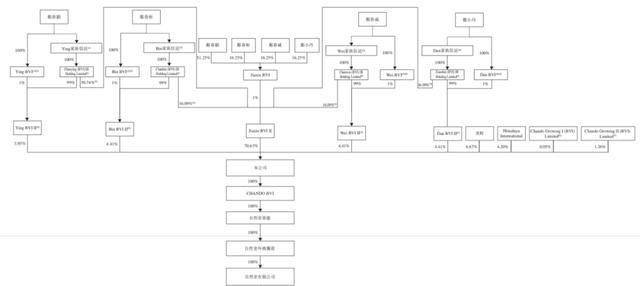
Core Viewpoint - The article discusses the journey of the Chinese cosmetics brand, Chando, founded by Zheng Chunying and his siblings, highlighting its growth, IPO preparations, and strategic investments from major players like L'Oréal and Himalaya International. Group 1: Company Background and Ownership - Chando was established in 2001 and has grown to become the second-largest domestic cosmetics brand in China, following Proya [1][12] - The Zheng siblings collectively control 87.82% of the voting rights in Chando, with Zheng Chunying holding 55% of the shares [2][12] - Zheng Chunying is recognized as the wealthiest individual in Liaoyang, with a net worth of 11 billion RMB, ranking 2448th on the 2025 Hurun Global Rich List [2] Group 2: IPO and Strategic Investments - Prior to its IPO filing, Chando raised over 700 million RMB by bringing in strategic investors, including L'Oréal and Himalaya International, which provided both capital and technical support [4][5] - The post-investment valuation of Chando is approximately 6.826 billion RMB [4] Group 3: Financial Performance - Chando's revenue has shown consistent growth, with total revenues of 42.92 billion RMB in 2022, 44.42 billion RMB in 2023, and 46.01 billion RMB in 2024 [16] - The skincare segment contributes approximately 90% of Chando's total revenue, with the main brand Chando generating 94.6% to 95.9% of total income during the reporting periods [12][14] - Despite revenue growth, net profit has fluctuated, with a significant drop of 37.09% in 2024 to 1.9 billion RMB [16] Group 4: Marketing and Sales Strategy - Chando has invested heavily in marketing, with total marketing expenses reaching 6.534 billion RMB over three and a half years, accounting for over 50% of total revenue during the reporting periods [17][18] - The company has shifted its sales strategy towards online channels, increasing online revenue from 59.7% in 2022 to 68.8% in 2025 [20][21] Group 5: Operational Insights - Chando operates three factories in China, maintaining a high capacity utilization rate of 95.7% and 82.5% for its Shanghai and Linzhi factories, respectively [23] - The company has not declared any dividends since its inception and has a cash-to-short-debt ratio of 10.53, indicating a strong liquidity position [25][26]

化妆品板块12月26日跌0.13%,青松股份领跌,主力资金净流出8046.54万元
Zheng Xing Xing Ye Ri Bao· 2025-12-26 09:14
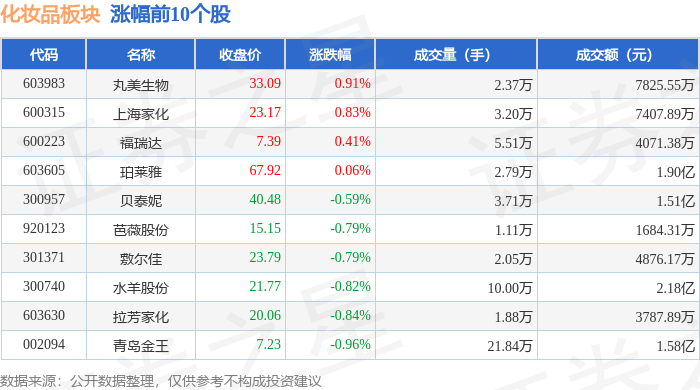
Market Overview - The cosmetics sector experienced a slight decline of 0.13% on December 26, with Qingsong Co. leading the drop [1] - The Shanghai Composite Index closed at 3963.68, up 0.1%, while the Shenzhen Component Index closed at 13603.89, up 0.54% [1] Individual Stock Performance - Marubi Biotechnology (603983) closed at 33.09, up 0.91% with a trading volume of 23,700 shares and a turnover of 78.26 million yuan [1] - Shanghai Jahwa (600315) closed at 23.17, up 0.83% with a trading volume of 32,000 shares and a turnover of 74.08 million yuan [1] - Furuida (600223) closed at 7.39, up 0.41% with a trading volume of 55,100 shares and a turnover of 40.71 million yuan [1] - Proya Cosmetics (603605) closed at 67.92, up 0.06% with a trading volume of 27,900 shares and a turnover of 20.06 million yuan [1] - Betaini (300957) closed at 40.48, down 0.59% with a trading volume of 37,100 shares and a turnover of 151 million yuan [1] - Other notable declines include Qingsong Co. (300132) down 1.57% and Jinsong New Materials (300849) down 1.55% [2] Capital Flow Analysis - The cosmetics sector saw a net outflow of 80.47 million yuan from institutional investors, while retail investors contributed a net inflow of 70.02 million yuan [2] - The overall capital flow indicates a mixed sentiment, with institutional investors withdrawing funds while retail investors increased their positions [2] Detailed Capital Flow for Selected Stocks - Furuida (600223) had a net inflow of 7.77 million yuan from institutional investors, but a net outflow of 4.35 million yuan from retail investors [3] - Huaye Fragrance (300886) saw a net inflow of 3.30 million yuan from institutional investors, while retail investors had a net outflow of 1.01 million yuan [3] - Marubi Biotechnology (603983) experienced a net inflow of 1.22 million yuan from institutional investors, with retail investors also seeing a net outflow [3] - Qingsong Co. (300132) had a significant net outflow of 1.57 million yuan from institutional investors [3]



“科兴”分家30年:疫苗王者陨落美股,干扰素老兵转战医美
Guan Cha Zhe Wang· 2025-12-25 08:34
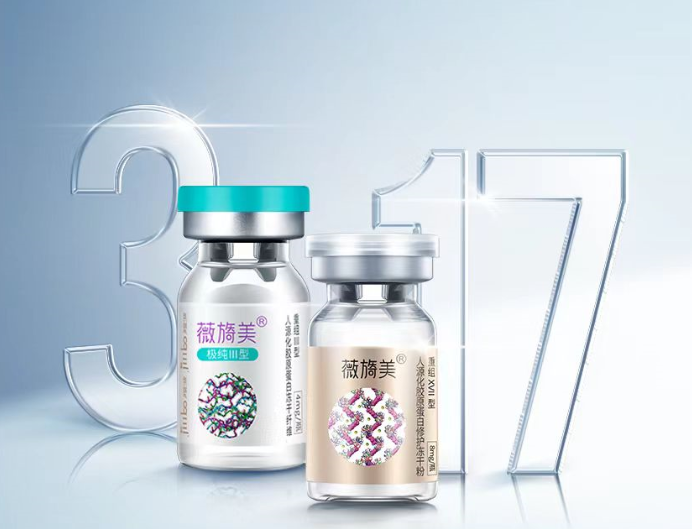
Group 1: Core Insights - Kexing Pharmaceutical is entering the rapidly growing recombinant collagen market, with a clinical trial for its type III humanized collagen product officially launched [1][2] - The recombinant collagen market in China is projected to reach 108.3 billion yuan by 2027, with a compound annual growth rate of 44.93% [1][2] - Kexing Pharmaceutical's revenue has stagnated around 1.2 billion yuan for several years, making this strategic shift a necessary move for growth [1][6] Group 2: Industry Trends - The recombinant collagen is becoming a new favorite in the medical aesthetics sector, with its market share expected to grow significantly, while hyaluronic acid's market share is declining [2][4] - Currently, only Jinbo Biotech has received approval for two type III medical devices in this space, indicating a competitive landscape that is likely to change as more companies enter [2][4] Group 3: Company Challenges - Kexing Pharmaceutical faces challenges in cash flow, with net cash flow being negative from 2022 to mid-2025, and cash reserves decreasing from 784 million yuan to 446 million yuan [4][11] - The company is also under pressure from increasing competition, with several firms, including major beauty brands, entering the recombinant collagen market [4][11] Group 4: Historical Context - Kexing Pharmaceutical and Kexing Biology share a common origin, having been established from the same foundational institutions, but have diverged significantly in their paths over the past 30 years [7][8] - Kexing Biology has faced governance issues and financial struggles, while Kexing Pharmaceutical has been criticized for its stagnant revenue and reliance on legacy products [8][11]

丸美生物(603983) - 广东丸美生物技术股份有限公司2025年第三次临时股东会会议资料
2025-12-25 08:00
广东丸美生物技术股份有限公司 2025 年第三次临时股东会会议资料 广东丸美生物技术股份有限公司 2025 年第三次临时股东会 会议资料 广东丸美生物技术股份有限公司 2025 年第三次临时股东会会议资料 广东丸美生物技术股份有限公司 2025 年 12 月 30 日 1 2025 年第三次临时股东会会议须知 各位股东及股东代表: 为维护投资者的合法权益,确保广东丸美生物技术股份有限公司(以下简称"公 司")2025 年第三次临时股东会的顺利召开,依据中国证券监督管理委员会《上市 公司股东会规则》等有关规定,制定会议须知如下: 一、公司根据《公司法》《证券法》《上市公司股东会规则》和《公司章程》的规 定,认真做好召开股东会的各项工作。 六、股东发言由会议主持人指名后进行,每位股东发言应先报告所持股份数和持 股人名称,简明扼要地阐述观点和建议,发言时间一般不超过 5 分钟,主持人可安 排公司董事或高级管理人员等回答股东提问。 七、股东发言应围绕本次会议议题进行,股东提问内容与本次股东会议题无关或 涉及公司商业秘密的,公司有权不予回应。 八、为提高会议议事效率,在就股东的问题回答结束后,即进行表决。现场会议 表决 ...

丸美生物递表港交所,拟“A+H”募资加码研发与渠道
Jiang Nan Shi Bao· 2025-12-25 06:44
Core Viewpoint - Marubi Biotechnology (丸美生物) is planning to issue H-shares to raise funds aimed at enhancing its core strategies, including strengthening its omni-channel sales system, improving brand value, incubating new brands, enhancing R&D capabilities, optimizing the supply chain, and supplementing working capital, with the goal of improving overall competitiveness [1][2] Group 1: Company Strategy and Market Position - The company has been focused on the anti-aging skincare industry for over 20 years, leveraging synthetic biology technology and core breakthroughs in research and development, particularly in recombinant collagen products [1] - According to a Frost & Sullivan report, Marubi is the third largest beauty company in China in the recombinant collagen skincare segment, based on retail sales projected for 2024 [1] - Marubi has established an integrated R&D platform that encompasses synthetic biology, protein engineering, green chemistry, natural plant extraction, and bio-fermentation, continuously launching new ingredients and products to support business growth [1] Group 2: Fundraising and Use of Proceeds - The company has developed over 80 proprietary ingredients, including recombinant double collagen and super molecular cotton flower extract, with more than 30 achieving large-scale production as of September 30, 2025 [2] - The funds raised from the H-share issuance will be used to build a comprehensive omni-channel sales system, enhance brand value through diversified marketing activities, expand the R&D team, upgrade R&D facilities, improve supply chain capabilities, and support working capital [2] - The issuance will not change the company's control, with Dr. Sun Huaqing and Wang Xiaopu remaining the actual controllers [2] Group 3: Competitive Advantage and Future Outlook - Marubi's brand has ranked first in China's domestic eye care market for four consecutive years, while its "Lianhuo" brand ranks third among domestic foundation brands [3] - The anti-aging skincare segment is the fastest-growing sub-sector in China's skincare industry, and the company aims to leverage this growth opportunity through continued investment in core technology R&D [3] - As of September 30, 2025, the company has applied for 651 patents globally, with 265 authorized invention patents, positioning its R&D strength among the top in domestic beauty enterprises [3] - The H-share issuance is viewed as a strategic decision for long-term development, enhancing capital strength and core competitiveness, and laying a solid foundation for sustainable growth and shareholder value creation [3]
化妆品板块12月24日涨0.73%,嘉亨家化领涨,主力资金净流出5233.32万元
Zheng Xing Xing Ye Ri Bao· 2025-12-24 09:17
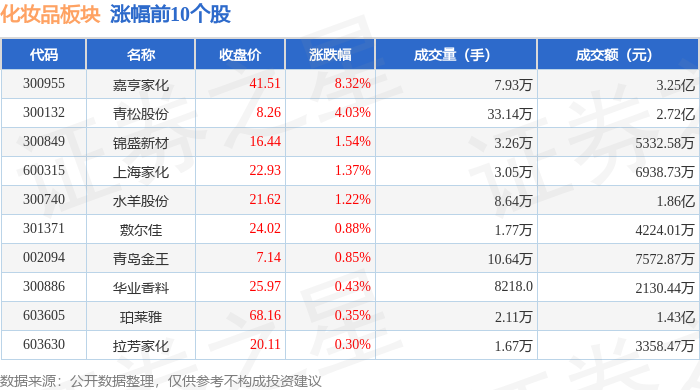
证券之星消息,12月24日化妆品板块较上一交易日上涨0.73%,嘉亨家化领涨。当日上证指数报收于 3940.95,上涨0.53%。深证成指报收于13486.42,上涨0.88%。化妆品板块个股涨跌见下表: | 代码 | 名称 | 收盘价 | 涨跌幅 | 成交量(手) | 成交额(元) | | | --- | --- | --- | --- | --- | --- | --- | | 300955 | 嘉亨家化 | 41.51 | 8.32% | 7.93万 | | 3.25 乙 | | 300132 | 青松股份 | 8.26 | 4.03% | 33.14万 | | 2.72亿 | | 300849 | 锦盛新材 | 16.44 | 1.54% | 3.26万 | 5332.58万 | | | 600315 | 上海家化 | 22.93 | 1.37% | - 3.05万 | 6938.73万 | | | 300740 | 水羊股份 | 21.62 | 1.22% | 8.64万 | | 1.86亿 | | 301371 | 敷尔佳 | 24.02 | 0.88% | 1.77万 | 4224.01万 | ...

商社美护行业周报:海南自贸港正式封关,服务零售增速环比提速-20251224
Guoyuan Securities· 2025-12-24 08:16
Investment Rating - The industry maintains a "Recommended" rating, focusing on new consumption sectors such as beauty care, IP derivatives, and gold jewelry [5][28]. Core Insights - The market performance for the week of December 15-20, 2025, showed significant gains in the retail, social services, and beauty care sectors, outperforming the overall market with increases of +6.66%, +2.66%, and +2.87% respectively [2][14]. - The total retail sales of consumer goods from January to November 2025 reached 45.61 trillion yuan, a year-on-year increase of 4%. In November alone, retail sales totaled 4.39 trillion yuan, growing by 1.3% year-on-year, which was below market expectations [3][22]. - The service consumption growth rate outpaced that of goods retail, with service retail sales increasing by 5.4% year-on-year from January to November 2025 [3][22]. Summary by Sections Market Performance - The beauty care, retail, and social services sectors ranked first, fourth, and third among 31 primary industries, respectively, during the week [2][14]. - Specific sub-sectors such as general retail, hotel and catering, and professional chains saw notable increases of +9.67%, +8.40%, and +5.06% [15]. Key Industry Data and News - The retail sales of consumer goods in November 2025 showed a modest increase, with categories like communication equipment and jewelry performing well, while automotive and home appliances faced challenges due to high base effects and subsidy reductions [3][22]. - The Ministry of Commerce initiated a two-year pilot program for new consumption models in 50 cities, aiming to stimulate consumption through various innovative approaches [3][22]. Investment Recommendations - The report suggests focusing on companies in the beauty care and new consumption sectors, recommending specific stocks such as Shangmei Co., Juzhi Biotechnology, and Marubi Biotechnology [5][28].


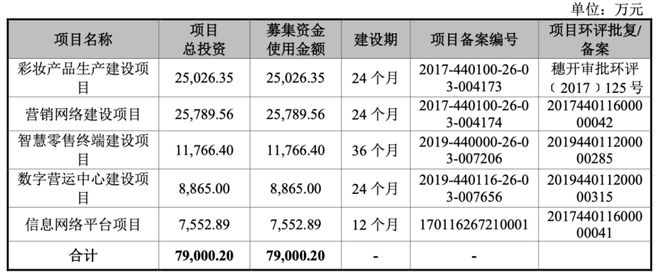
丸美生物IPO:砸44亿营销,孙怀庆妻子隐退儿子上位
Xin Lang Cai Jing· 2025-12-24 07:57
Core Viewpoint - Marubi Biological, known as the "first stock of eye cream" in A-shares, is preparing for a dual listing on the Hong Kong Stock Exchange while undergoing a power transition within the controlling family [2][3]. Group 1: Company Background and Control - Marubi Biological was founded by Sun Huaqing in 2002, focusing on eye care products and has maintained its position as the leading domestic eye care brand from 2021 to 2024 [1][19]. - The controlling shareholders, Sun Huaqing and Wang Xiaopu, hold a combined 80.8% of the company [3][10]. - The company underwent a significant dividend distribution before its IPO, benefiting the controlling family [4][30]. Group 2: IPO and Financial Adjustments - Marubi Biological submitted its IPO application to the Hong Kong Stock Exchange, aiming for an "A+H" dual listing [2]. - The company has faced challenges with its fundraising projects since its A-share listing, with all initial investment projects experiencing delays [5][7]. - Specific projects, such as the cosmetic smart manufacturing factory, have seen multiple delays and budget increases, indicating potential issues in project management [8][9]. Group 3: Financial Performance - Marubi Biological's revenue from 2022 to 2024 showed a compound annual growth rate (CAGR) of 31%, with net profits growing at a CAGR of 43% during the same period [22]. - The company reported a revenue of 24.5 billion yuan in the first nine months of 2025, a 25.5% year-on-year increase, but net profit growth slowed to only 2.86% [23]. - The gross profit margin has been steadily increasing, reaching 74.8% in 2025 [24]. Group 4: Marketing and Sales Strategy - The company has heavily invested in marketing, with total marketing expenses amounting to 4.464 billion yuan from 2022 to 2024, leading to a rising sales expense ratio [25]. - Online sales channels accounted for 87.6% of revenue in the first nine months of 2025, while offline channels have been declining [27]. Group 5: Regulatory Issues and Governance - Marubi Biological received a warning letter from the Guangdong Regulatory Bureau for financial accounting irregularities and improper management of raised funds [15][16]. - The company has committed to rectifying these issues and improving governance practices following the regulatory scrutiny [18].
丝芙兰降身段引入平价“网红”美妆
Bei Jing Shang Bao· 2025-12-23 16:03
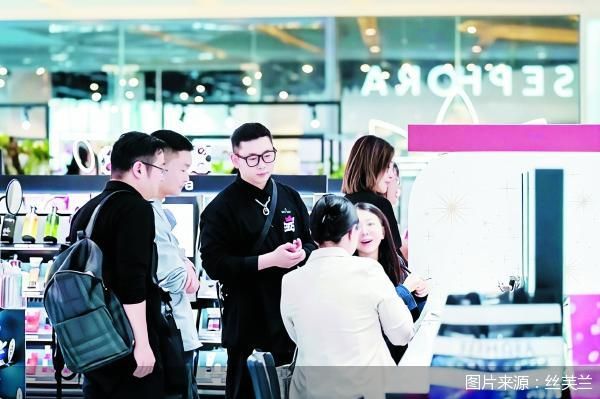
Core Viewpoint - Sephora is undergoing a transformation by collaborating with several affordable makeup brands to diversify its offerings and address declining sales in the Chinese market, which has led to losses [1][5][10]. Group 1: Brand Collaborations - Sephora has partnered with popular affordable brands such as BABI, Lianhuo, and Sanzitang, which are characterized by their low prices and strong sales performance [1][3]. - Lianhuo, launched by Marubi in 2017, reported significant revenue growth, with 2023 revenue expected to exceed 1 billion yuan, reflecting a 125.14% year-on-year increase [3]. - BABI's products, priced around 50 yuan, achieved a total sales of 600 million yuan by the end of 2023, with a year-on-year growth of over 70% [3]. Group 2: Market Position and Challenges - Sephora, traditionally known for its high-end positioning and exclusive partnerships with luxury brands, is now blurring the lines between high-end and affordable makeup, which may dilute its unique market identity [4][10]. - The Chinese market for high-end cosmetics has been contracting, with a reported 8% decrease in consumption from 2021 to 2023, impacting major brands like L'Oréal and Estée Lauder [10][11]. Group 3: Financial Performance - Sephora's financial performance in China has been under pressure, with combined revenues of 3.444 billion yuan in the first half of the year, a 12.3% decline year-on-year, and a net loss of 120 million yuan [8]. - The company has faced cumulative losses exceeding 1 billion yuan since 2022, indicating a troubling trend in its financial health [8]. Group 4: Consumer Sentiment - Long-time Sephora customers express dissatisfaction with the brand's shift towards affordable products, feeling that it undermines the premium shopping experience they once enjoyed [7]. - A survey indicated that a significant portion of Sephora's customer base has lost interest, with many stating they have not visited the store in years [7]. Group 5: Industry Trends - The retail landscape for cosmetics is shifting towards online channels, with live-streaming sales becoming the dominant shopping method, which poses challenges for traditional brick-and-mortar stores like Sephora [9]. - The emergence of new beauty retail brands focusing on high cost-performance ratios has intensified competition in the market, further complicating Sephora's position [10][12].
引入平价彩妆,丝芙兰的自救
Bei Jing Shang Bao· 2025-12-23 12:56
Core Viewpoint - Sephora is undergoing a transformation by collaborating with affordable makeup brands to diversify its offerings and address declining sales in the Chinese market, which has led to losses [2][5][6]. Group 1: Brand Collaborations - Sephora has partnered with several affordable makeup brands, including BABI, Lianhuo from Marubi, and Sanzitang, which are characterized by their low prices and strong sales performance [2][3]. - Lianhuo, launched in 2017, reported significant revenue growth, with 2023 revenue reaching 643 million yuan, a 125.14% increase year-on-year, and is projected to exceed 1 billion yuan in 2025 [3]. - BABI's products, priced around 50 yuan, have also seen impressive sales, with total sales reaching 600 million yuan by the end of 2023, and a projected GMV of 750 million yuan in 2025, reflecting over 70% growth [3]. Group 2: Market Position and Challenges - Sephora, traditionally known for its high-end positioning and exclusive partnerships with luxury brands, is now blurring the lines between high-end and affordable makeup, which may dilute its unique market identity [4][5]. - The high-end makeup market in China has been experiencing a slowdown, with a reported 8% contraction in consumer spending from 2021 to 2023, impacting major brands like L'Oréal and Estée Lauder [12]. - The shift towards affordable brands is seen as a response to the rapid growth of budget makeup brands and the changing dynamics of consumer preferences, particularly among younger demographics [6][11]. Group 3: Consumer Sentiment and Performance - Consumer feedback indicates dissatisfaction with Sephora's shift towards affordable brands, with long-time members feeling that the brand is lowering its standards and losing its premium shopping experience [8]. - Financial reports show that Sephora China has been facing consistent losses, with a combined net loss of 1.2 billion yuan in the first half of 2025, following a trend of declining revenues [9]. - The competitive landscape has intensified with the rise of new beauty retail brands that focus on high cost-performance ratios, further challenging Sephora's traditional business model [10][11].