宇树科技

Search documents
从格斗擂台到现实应用:机器人“打”与“挨打”背后的技术锤炼
Zhong Guo Xin Wen Wang· 2026-01-24 05:24
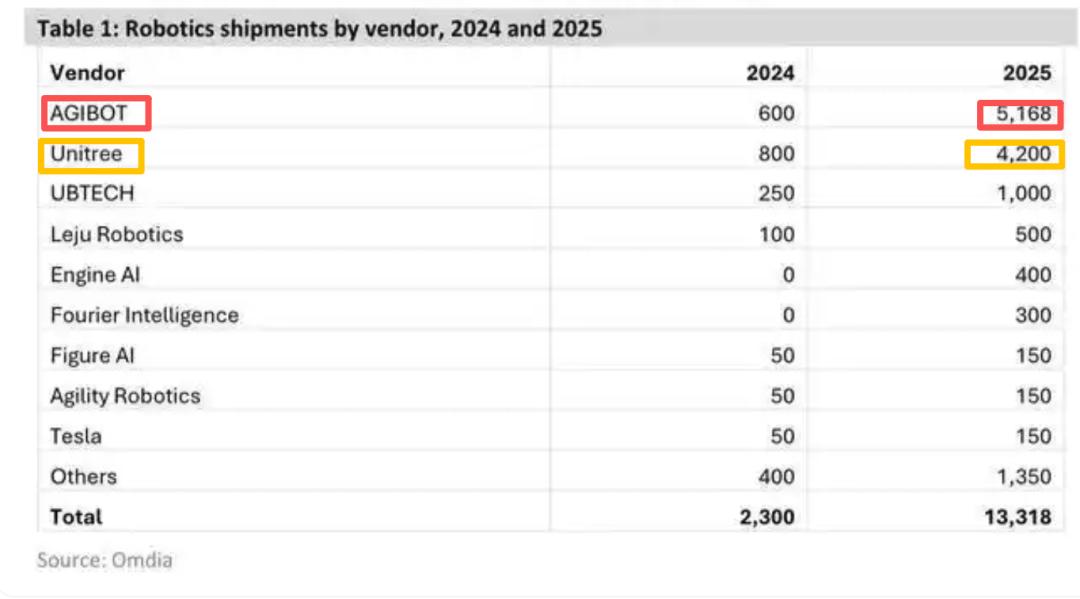
中新网北京1月24日电(记者 吴家驹)2025年,中国在人形机器人领域的发展引人注目。与此同时,互联网上也出现了不少"机器人打架"视频。这不禁让人好 奇:机器人为何要学"打架"?又为何要学"挨打"?这背后,并非仅仅为了搏击与对抗,而是一场关于技术极限与实用落地的深度锤炼。 从擂台到展台:格斗成为技术"试炼场" 2026年国际消费电子展(CES),机器人格斗擂台吸引大量观众围观。 中新社记者 张朔 摄 众擎机器人一脚踹倒公司CEO赵同阳。图自众擎机器人视频号 "学挨打":为了在真实世界里站稳脚跟 机器人之间的激烈对抗已从想象走进现实。2025年5月,全球首场人形机器人格斗赛在杭州开打。此后,从世界人形机器人运动会、世界人工智能大会、世 界机器人大会,到2026年国际消费电子展(CES),机器人格斗擂台屡次成为现场焦点,吸引大量观众围观。 机器人为什么要"打架"? 众擎机器人相关负责人表示,训练人形机器人的格斗能力,本质是通过高动态交互场景对核心技术进行极限验证与迭代。在他看来,格斗是人形机器人综合 性能的"试炼场"。格斗过程中,机器人需在毫秒级时间内完成环境感知、动作预判、姿态调整等复杂操作,这对动态平衡算法、 ...


机器人出货量为何打上了“马赛克”
Xin Lang Cai Jing· 2026-01-24 04:14
来源:第四波 研究员|王宏 22日晚间,一则《关于宇树2025年销量数据的澄清》迅速成为行业热点。宇树表示,过去一个月,网上 流传着很多不实信息,公司2025年人形机器人实际出货量超5500台,2025年本体量产下线超6500台。 次日,多家媒体称,国际数据公司(IDC)当天发布的《全球人形机器人市场分析》显示,2025年全球 人形机器人出货量达约1.8万台。中国厂商在本轮增长中占据主导地位,其中智元(AGIBOT)以全尺 寸机型1300台的出货量"位居全球第一"。 | 厂商 | 出货量(千台) | | | --- | --- | --- | | 智元机器人(AGIBOT) | | 5.2 | | 于哪里店(日本IFess) | | 4.7 | | 大量的重人(Lein Rober) | | 1.2 | | RICHE (Resuer Robotton) | | 1.1 | | 配置用力(Neath Robertics) | | 1.0 | | 图片图书 (Galleat) | | 0.8 | | 图必是 (t)Historia ) | | 0.6 | | 《春明盛人 (Roginest)) | | 0.5 ...
专家预判26年人形机器人进入死亡淘汰赛谁能穿越行业出清?
机器人大讲堂· 2026-01-24 04:03
2025年的人形机器人赛道,热度达到了前所未有的高度。春晚舞台上的灵动舞姿、机器人马拉松的速度角 逐、四位数价格的亲民产品亮相,让曾经停留在实验室的人形机器人加速走进公众视野。 资本的狂热更是推波助澜,据新战略移动机器人产业研究所统计, 2025年行业融资事件高达190起,总规模 突破270亿元人民币,中国境内的人形机器人企业数量已超100家,仿佛一场产业爆发近在眼前。 然而,喧嚣之下,行业 当中也出现了明显的分化迹象, 经过近三年 的产业飞速发展,人形机器人企业已出现 明显的分化现象,头部 手握亿元级订单筹备上市,尾部企业却深陷 "融资停滞、无产品落地"的困境。 无独有偶,在 2026年初,瑞银证券、智源研究院等机构纷纷发出预警,认为行业将迎来关键的 "出清期",缺 乏核心竞争力的企业将加速被市场淘汰。而深耕该领域二十余年的清华大学自动化系教授赵明国,在1月接受 媒体采访时也给出了精准预判:"2026 年也许会是应用场景的筛选年,人形机器人淘汰赛即将来临,只有深 扎场景、倾听市场的反馈才能活下去。" ▍ 2026年人形机器人产业将呈现更明显的马太效应 中国人形机器人行业的 "百团大战",正加速进入终局前的分 ...
通讯|看达沃斯小镇如何变身“机器人城市”
Xin Hua She· 2026-01-23 15:21
Group 1 - The event "Robot City Davos" showcased humanoid robots from Chinese companies, attracting significant attention during the World Economic Forum 2026 annual meeting [1] - The robots demonstrated various skills such as walking, running, and dancing, illustrating the global trend of applying artificial intelligence and robotics technology beyond laboratory settings [1] - Companies like Yushu Technology, Zhiyuan Robotics, and others are leading in the development and production of high-performance general-purpose humanoid robots and robotic arms [2] Group 2 - Davos is positioning itself as a "science city" with multiple universities and research institutions, aiming to create a neutral platform for global technological cooperation [2] - The city government is actively supporting startups in the robotics sector and plans to upgrade Davos to a "robot city" by July, where robots will assist in various tasks [2] - The inaugural Davos Technology Summit will take place in July, focusing on humanoid robots and providing a platform for showcasing innovations from Chinese startups to Europe [3]
量产元年之后 中国人形机器人走向“价值战”
Xin Jing Bao· 2026-01-23 14:36
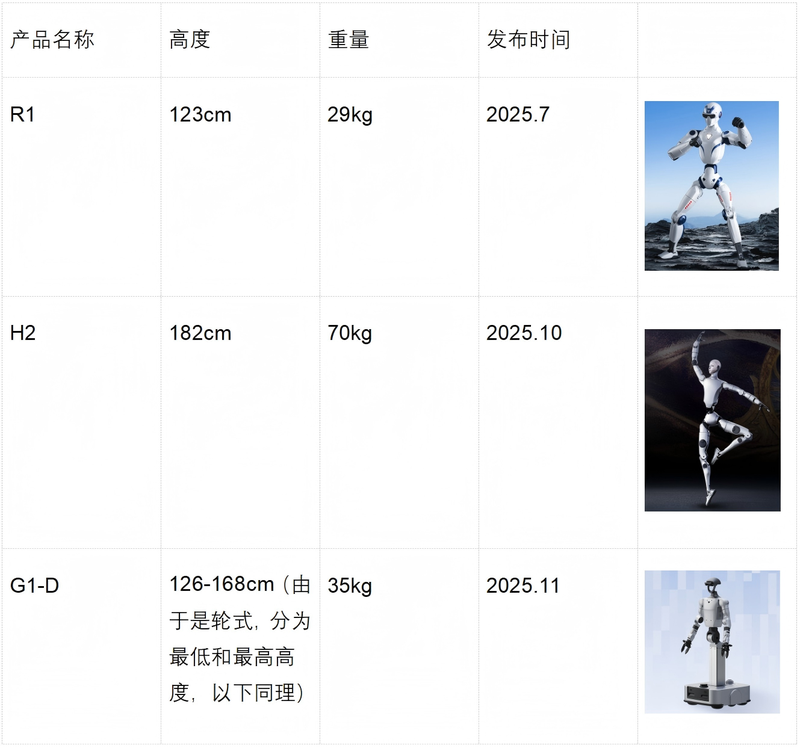
Core Insights - The humanoid robot industry in China is experiencing significant growth, with expectations of over 140 companies and more than 330 products by 2025, marking it as the "year of mass production" [1] - The industry is transitioning from mere technological showcases to practical applications in various sectors, including industrial manufacturing, commercial services, and home companionship [1] - Despite the growth, challenges remain, including the need for breakthroughs in key technologies, stability in mass production, and issues with cost control and scene adaptation [1] Industry Overview - The humanoid robot market is projected to see a price drop for consumer-grade models, with products entering the 10,000 yuan range, focusing on education, companionship, and development [2] - Notable products include the "Xiao Bu Mi" priced at 9,998 yuan, and the Unitree R1 starting at 29,900 yuan, showcasing features like voice and image integration [2] - Industrial flagship models, such as the Walker S2 from UBTECH, are demonstrating advanced capabilities in sectors like automotive manufacturing and smart logistics [3] Technological Advancements - The competition in the humanoid robot sector is shifting towards the integration of AI capabilities, with a focus on end-to-end embodied large models and world models for enhanced task execution [4] - The introduction of models like WALL-A, which combines VLA and world models, is improving robots' ability to operate in unstructured environments [5] - Data and model limitations remain a significant challenge, with high costs associated with data collection for training [5] Production and Market Dynamics - 2025 is seen as a pivotal year for mass production, with companies like Zhiyuan Robotics and UBTECH planning to significantly increase their output [6] - The industrial sector is becoming a primary battleground, with substantial orders reported, such as nearly 1.4 billion yuan in orders for humanoid robots from UBTECH [7] - The market is expected to undergo consolidation by 2026, with only a fraction of the current companies likely to survive, similar to trends observed in the electric vehicle industry [9][10] Future Outlook - The Chinese government is committed to promoting technological innovation in humanoid robots, focusing on enhancing core technologies and ensuring product safety [9] - The industry is anticipated to face challenges in balancing speed and potential market bubbles, with a need for sustainable business models [8] - The year 2026 will be critical for assessing the commercial viability of humanoid robots, with a focus on real-world applications and profitability [10]
量产元年之后,中国人形机器人走向“价值战”
Bei Ke Cai Jing· 2026-01-23 14:07
Core Insights - The humanoid robot industry in China is experiencing significant growth, with expectations of over 140 domestic manufacturers and more than 330 humanoid robot products by 2025, marking it as the "year of mass production" [1][2] - The focus is shifting from mere technological showcases to practical applications in various sectors, including industrial manufacturing, commercial services, and home companionship [2] - Key challenges remain, including the need for breakthroughs in core technologies, stability in mass production, and issues related to cost control and scene adaptation [2] Industry Developments - The price of consumer-grade humanoid robots has dropped to the ten-thousand yuan range, with products like "Xiao Bu Mi" priced at 9,998 yuan, aimed at entertainment and education [3] - Industrial flagship models, such as UBTECH's Walker S2, are showcasing advanced capabilities and are being deployed in sectors like automotive manufacturing and smart logistics [4] - The competition is increasingly centered around AI capabilities, with a focus on integrating large models for visual, language, and action processing [5][6] Market Dynamics - The humanoid robot market is projected to see significant production increases, with companies like Zhiyuan Robotics and UBTECH planning to ramp up their output to tens of thousands of units by 2026 [8][9] - Industrial applications are becoming the primary battleground, with major players securing substantial orders, such as UBTECH's nearly 1.4 billion yuan in orders for 2025 [9] - The industry is expected to undergo consolidation, with only a fraction of the current companies likely to survive the competitive landscape by 2026 [10][12] Technological Challenges - Despite advancements, the industry faces bottlenecks related to data and model capabilities, which are critical for the development of humanoid robots [7][8] - The integration of world models into robotic systems is seen as a key area for enhancing decision-making and task execution capabilities [6] Future Outlook - The Chinese government is committed to promoting technological innovation in humanoid robotics, focusing on enhancing core technologies and ensuring product safety [11] - The market is anticipated to shift towards value-driven investments, with a focus on revenue structures and commercial viability as companies prepare for potential IPOs [12]
固态电池又“量产”了?这可能是一个芬兰公司的拙劣骗局
3 6 Ke· 2026-01-23 12:37
Core Viewpoint - Donut Lab claims to have developed the world's first mass-produced all-solid-state battery, boasting impressive specifications, but faces skepticism from industry experts regarding the feasibility of its claims [1][2][5]. Group 1: Battery Specifications and Industry Reactions - The solid-state battery features an energy density of 400Wh/kg, a charging time of 5 minutes, and a cycle life of up to 100,000 times, which has attracted significant attention but also controversy [2][5]. - Experts from Finnish universities and industry leaders, such as Yang Hongxin from Honeycomb Energy, have expressed doubts, labeling the company as a fraud if the specifications are accurate [3][5]. - Current solid-state batteries typically have a cycle life ranging from 1,000 to 4,000 times, while mainstream lithium-ion batteries exceed 2,000 cycles, making Donut Lab's claims appear highly ambitious [8][9]. Group 2: Manufacturing and Material Concerns - Donut Lab has not disclosed the core materials or manufacturing processes of its battery, stating it does not contain rare earth elements or lithium, which raises questions about the battery's technological advancements [11][12]. - The emphasis on not using rare earth elements is seen as lacking significance, as these materials are not commonly used in current battery technologies [12]. - The claim of not using lithium is particularly controversial, as lithium is essential for high-performance solid-state batteries, leading to skepticism about the battery's viability [12][13][14]. Group 3: Market Application and Commercial Viability - Donut Lab plans to integrate its solid-state battery into a production electric motorcycle named Verge, set for delivery in Q1 2026, which is viewed as a questionable market strategy given the motorcycle market's smaller scale compared to the automotive market [21][23]. - The commercial logic of deploying such advanced technology in a less lucrative market raises concerns about the company's motives, suggesting either a strong hidden profitability or potential deception [23][28]. - There is speculation that solid-state batteries may first find applications in robotics and eVTOL (electric vertical takeoff and landing) industries, where the demand for high energy density is greater than in traditional electric vehicles [24][28].
IDC报告:智元人形机器人整体和全尺寸出货量全球第一
Zhong Guo Zheng Quan Bao· 2026-01-23 12:21
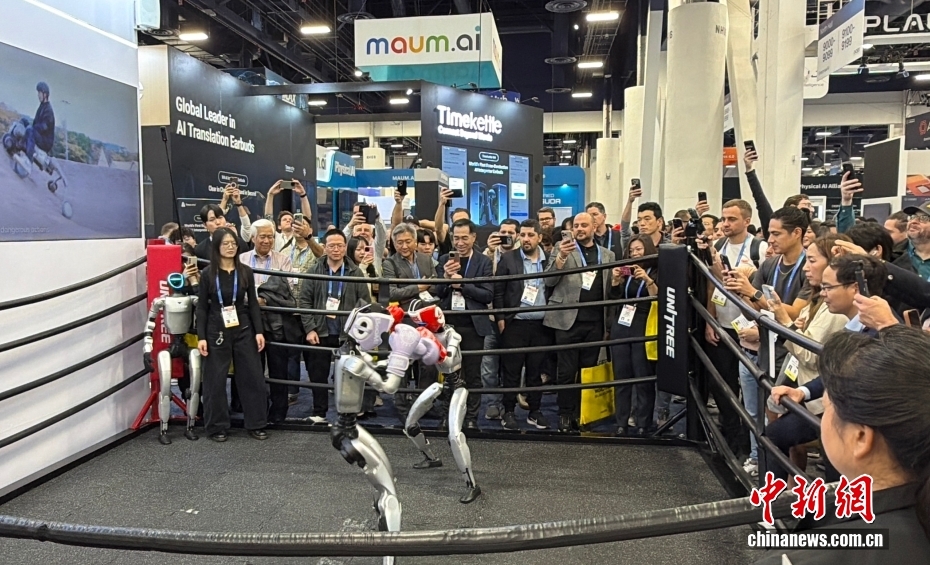
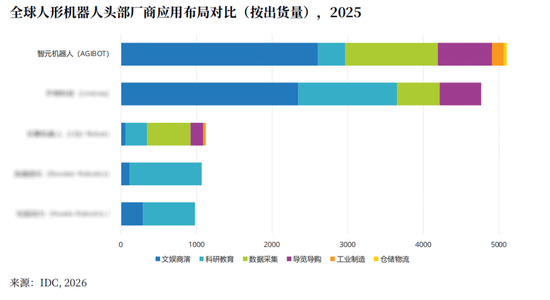
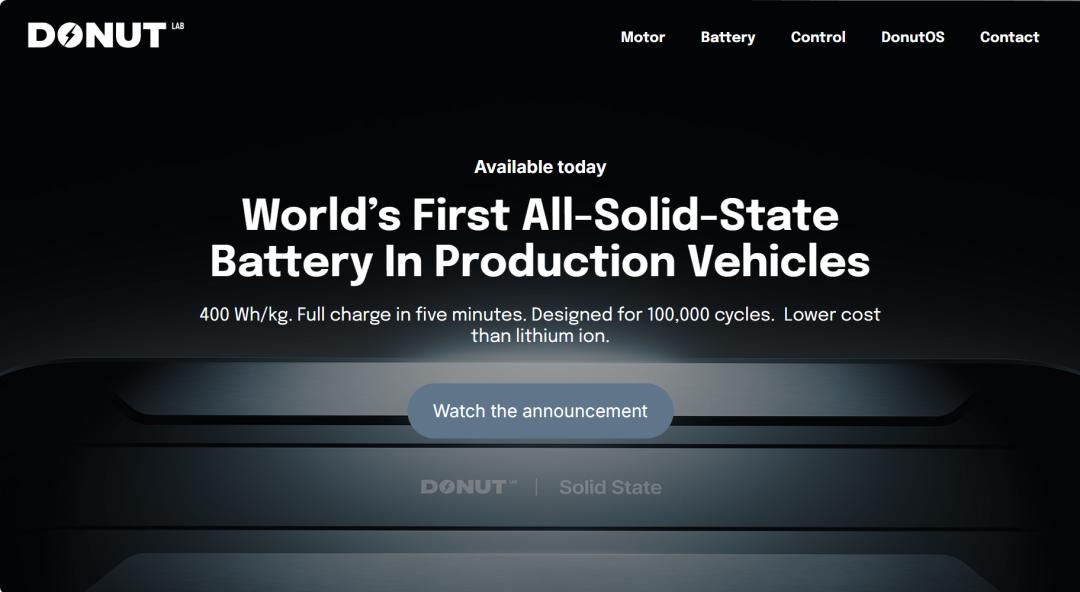
1月23日,知名市场研究机构IDC发布的《全球人形机器人市场分析》报告提到,2025年人形机器人市场迎来爆发式增长,中国厂商整体在引领行业的规 模化商用进程。 其中,智元(AGIBOT)一举斩获 "五大主流场景出货量第一""全球整体出货量第一"与"全尺寸细分领域出货量第一"三重桂冠,以显著优势引领产业规模 化商用。 报告提到,目前,人形机器人市场的应用场景呈现出多元化发展的趋势,需求主要来自文娱商演、科研教育、数据采集、导览导购、工业智造与仓储物流 六大场景,其中智元在五个场景出货量均位列第一。 IDC表示,智元不仅有多元的应用场景布局,既注重交互展示,也兼顾服务型应用;同时引入机器人租赁RaaS(Robot-as-a-Service)创新模式,降低用户 使用门槛,加快人形机器人在多场景中落地普及,推动商业模式由单一硬件交付向"产品+平台+服务"演进。 全球出货量荣登榜首 规模化交付实力凸显 根据IDC数据,2025年,全球人形机器人出货量约1.8万台,同比增长约508%,中国厂商占主导,智元以5200台的出货量稳居全球榜首,市场份额显著领 先。这一数据标志着智元不仅完成了从技术研发到产品量产的关键跨越,更在 ...
近亿元A轮融资落地,四家上市公司为何联手押注这家杭州“机器狗”企业?
Sou Hu Cai Jing· 2026-01-23 12:13
近期,杭州四足机器人企业具微科技宣布完成近亿元A轮融资。本轮融资由正强股份(301119)领投, 壹连科技(301631)、见素资本(淮安豪恩见素产业投资基金,豪恩汽电301488)、鲁信创投 (600783)跟投(排名不分先后)。本轮融资将用于产品研发生产、团队建设,以及应用场景拓展与生 态构建等方面。 ▍产业资本协同入局 在机器人赛道融资频发的当下,具微科技这轮近亿元融资的特殊之处,与单纯的财务投资不同,本轮融 资呈现出明显的产业协同特征。四家投资方均来自先进制造或投资领域,其背景与机器人产业链关键环 节紧密相关。 公开资料显示,领投方正强股份主营业务为汽车关节与传动系统,其制造能力可能为机器人的运动部件 提供生产支持。豪恩汽电专注于智能驾驶感知系统,其技术或涉及环境感知与导航。壹连科技在新能源 电连接组件领域有所积累,可能涉及机器人电源管理与电气连接。鲁信创投则为国有专业创投机构,通 常在企业战略与资源对接方面发挥作用。 业内分析师指出,多家具备产业背景的上市公司联合投资一家初创公司,通常意味着后者在技术路径或 产品化方面获得了产业链关键环节的认可。"这可以被视为一种风险共担与生态共建的信号。" ▍从算 ...

宇树不想当第二,人形机器人暗流涌动
3 6 Ke· 2026-01-23 12:12
意料之中,机器人又要上春晚了。 1月17日,央视总台官宣,2026年春节联欢晚会,将是"科技+艺术"的再度进阶。明确机器人将再度登台。 去年,机器人只是在人群里扭秧歌,今年可能要秀一把踢腿和高难度后空翻。 早在一个月前,关于机器人上春晚的消息就传开了,36氪在报道中提及,为了争夺春晚赞助席位,智元机器人报价6000万,被宇树抬到1个亿。 智元否认参与竞价,宇树没有做出公开回应。 从各种路透消息来看,今年在主会场登台的人形机器人,似乎还是来自宇树。 一个急于撇清,一个讳莫如深,这场罗生门的背后,是两家国内头部具身智能企业对话语权的争夺。 明争暗斗的火药味还在持续弥漫 1月8日,国际机构Omdia发布2025年全球人形机器人出货量榜单,数据显示,智元以5168台登顶,宇树以 4200 台屈居第二。 | Table 1: Robotics shipments by vendor, 2024 and 2025 | | | | --- | --- | --- | | Vendor | 2024 | 2025 | | AGIBOT | 600 | 5,168 | | Unitree | 800 | 4,200 | | U ...