
中国电力

Search documents
不赚钱就停电?俄企断供中国电力,普京淡定抛出神预言定大局
Sou Hu Cai Jing· 2026-01-18 07:37
Core Viewpoint - The recent suspension of electricity exports from Russia to China has been interpreted by Western media as a sign of cooling relations between the two countries, but Russian President Putin's calm response suggests a deeper strategic consideration beyond mere trade disputes [3][5][15]. Group 1: Trade Dynamics - The suspension of electricity exports is a result of ongoing negotiations regarding pricing, with Russia's Inter RAO seeking a price increase of approximately 7% to balance operational costs [8][11]. - China has calculated that accepting the proposed price increase would negate the cost advantages of importing electricity from Russia, leading to a potential shift towards domestic power generation solutions [11]. - Electricity trade constitutes a minor portion of the over $200 billion annual trade volume between China and Russia, indicating that the overall energy cooperation is diversified and not solely reliant on electricity [13]. Group 2: Geopolitical Context - Putin's remarks during a meeting with new ambassadors from 30 countries highlighted a vision for a more equitable multipolar world order, suggesting that global dynamics are shifting beyond simple trade relationships [3][5]. - The focus of global power dynamics is transitioning from individual trade disputes to the broader contest for influence over the new international order, as evidenced by Canada's Prime Minister's visit to China to discuss cooperation [7]. - The Western media's portrayal of the electricity trade issue reflects a misunderstanding of the deeper strategic ties between China and Russia, as they continue to collaborate on various fronts despite minor trade disagreements [15][17]. Group 3: Economic Strategies - China is actively reducing its reliance on the US dollar by decreasing its holdings of US Treasury bonds and increasing its gold reserves, which supports the construction of a multipolar order [20]. - Russia is adapting to Western sanctions by deepening cooperation with emerging market countries and promoting the use of local currencies in trade, further diminishing dependence on Western markets [20]. - The strategic partnership between China and Russia remains robust, with ongoing collaboration in energy, military, and diplomatic areas, despite temporary disruptions in specific trade sectors [20].



赚不到钱就停供?俄企断供中国电力,普京淡定抛出神预言定调大局
Sou Hu Cai Jing· 2026-01-18 05:42
Core Viewpoint - The recent news about Russia suspending electricity exports to China has been exaggerated by Western media, suggesting a rift in Sino-Russian cooperation, while President Putin remains calm, indicating a deeper strategic understanding of the situation [1][3]. Group 1: Trade Dynamics - The electricity trade between China and Russia began in 1992 and has been mutually beneficial, with China relying on Russian electricity due to geographical advantages [4]. - The Russian Inter RAO company announced a price increase of 7% for electricity exports to China, which led to a failure in reaching a consensus on pricing, resulting in the suspension of exports [4]. - Electricity trade constitutes a negligible portion of the overall Sino-Russian trade, which exceeded $200 billion in 2024, with energy cooperation being the cornerstone, accounting for 40% of the total [6]. Group 2: Strategic Implications - Putin's calm response to the electricity trade issue reflects a profound understanding of the overall Sino-Russian relationship, which is not significantly affected by individual trade disputes [3][6]. - The focus of Sino-Russian cooperation has shifted from single trade areas to broader issues such as global governance, energy security, and financial collaboration, indicating a long-term strategic partnership [9]. - Both countries adhere to the principle of separating commercial issues from political ones, ensuring that trade disputes are resolved through equal negotiations, which demonstrates the maturity and stability of their bilateral cooperation [10].
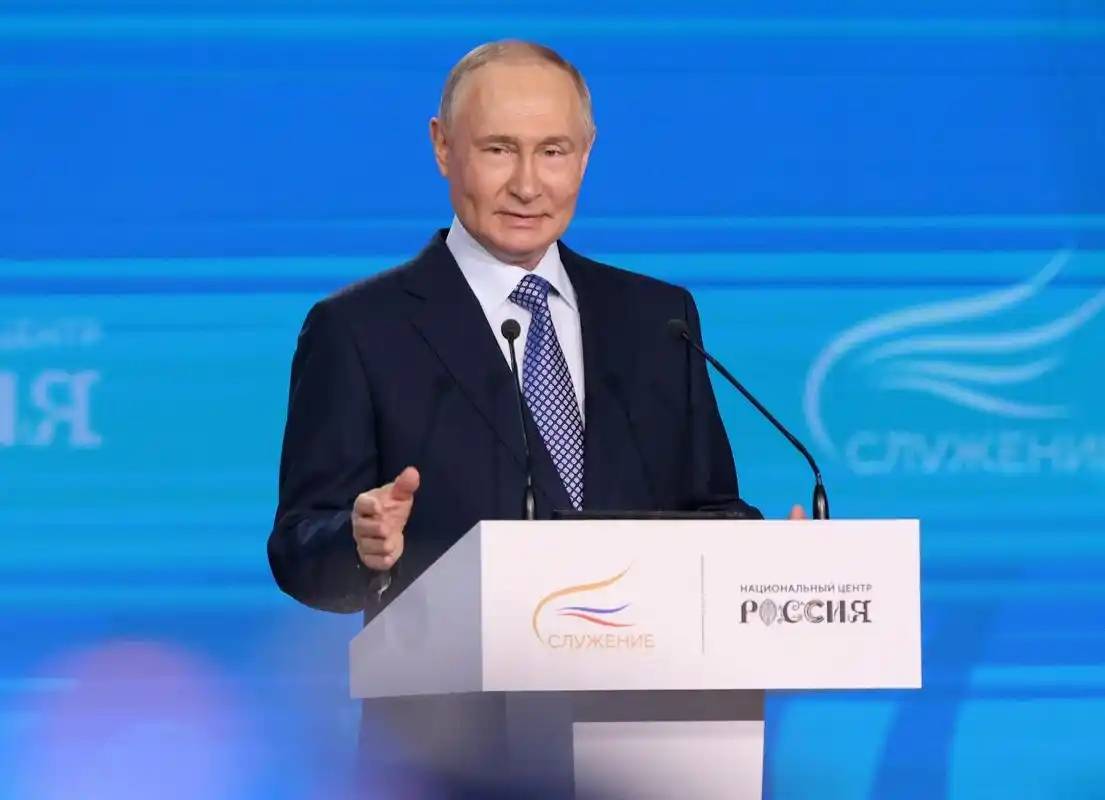
不赚钱就停电?俄企断供中国电力,普京淡定抛出“神预言”定大局
Sou Hu Cai Jing· 2026-01-17 11:19
Core Viewpoint - The recent suspension of electricity exports from Russia to China has been exaggerated by Western media, suggesting a cooling of Sino-Russian strategic cooperation, while Russian President Putin remains calm and composed, indicating a deeper understanding of global trade dynamics and the ongoing shift towards a multipolar world order [1][3][5] Group 1: Trade Dynamics - The suspension of electricity exports is a rational business negotiation based on mutual interests rather than a political disagreement [9][10] - The electricity trade constitutes a minor portion of the over $200 billion annual trade between China and Russia, with other energy sectors like natural gas and oil being more significant [17][19] - The Russian Inter RAO company has faced profit compression due to rising operational costs and has proposed a price increase of approximately 7% to maintain sustainable operations [13][15] Group 2: Strategic Cooperation - Both countries have established a diversified energy cooperation framework, which is not reliant on a single commodity, ensuring the resilience of their overall trade relationship [17][30] - The ongoing geopolitical shifts have led to a focus on the reconfiguration of global order, with emerging powers like China and Russia playing crucial roles in promoting a more balanced and equitable international governance system [26][28] - Despite short-term disagreements in electricity trade, the strategic collaboration in core areas such as energy, military, and diplomacy remains strong [30]

国家电网“十五五”投资额或超4万亿元,电网需求迎景气周期(附概念股)
Zhi Tong Cai Jing· 2026-01-16 00:56
"十五五"期间,围绕做强电网平台、构建新型电力系统,国家电网将初步建成主配微协同的新型电网平 台,进一步巩固"西电东送、北电南供"能源输送网络。加快特高压直流外送通道建设,推动跨区跨省输 电能力较"十四五"末提升超过30%。夯实数智基础设施,实施"人工智能+"专项行动,强化电网数字赋 能。 智通财经获悉,国家电网"十五五"投资计划出炉:"十五五"期间,国家电网公司固定资产投资预计达到 4万亿元,较"十四五"投资增长40%,以扩大有效投资带动新型电力系统产业链供应链高质量发展。国 金证券认为,展望2026年,电网行业仍将呈现明显结构性分化,高景气赛道指向国内主网输变电与电力 设备出海两大核心方向,同时关注配网侧和网外侧的拐点向上机会。 全球电网建设需求提升,尤其是在欧美等电网基础设施相对薄弱的区域,电网老化带来电网系统承压。 美国公用事业公司、欧洲部分电网运营商均积极加大电网投资力度,国内在持续加大电网投资和设备企 业出海布局。 华西证券发布研报称,在全球AIDC快速发展&电网建设投资持续增长的驱动下,电力设备需求迎来景 气周期。该行认为,掌握优质渠道资源、技术实力领先、积极布局相关产能的企业有望充分受益,持续 ...
港股概念追踪 | 国家电网“十五五”投资额或超4万亿元 电网需求迎景气周期(附概念股)
Zhi Tong Cai Jing· 2026-01-15 23:41
智通财经APP获悉,国家电网"十五五"投资计划出炉:"十五五"期间,国家电网公司固定资产投资预计 达到4万亿元,较"十四五"投资增长40%,以扩大有效投资带动新型电力系统产业链供应链高质量发 展。国金证券认为,展望2026年,电网行业仍将呈现明显结构性分化,高景气赛道指向国内主网输变电 与电力设备出海两大核心方向,同时关注配网侧和网外侧的拐点向上机会。 "十五五"期间,围绕做强电网平台、构建新型电力系统,国家电网将初步建成主配微协同的新型电网平 台,进一步巩固"西电东送、北电南供"能源输送网络。加快特高压直流外送通道建设,推动跨区跨省输 电能力较"十四五"末提升超过30%。夯实数智基础设施,实施"人工智能+"专项行动,强化电网数字赋 能。 随着对大规模供应电力的需求攀升,多个部门已出台政策加大电网投资力度。 2025年12月29日,国家电网公司党组书记、董事长张智刚强调,要充分发挥电网基础支撑和投资拉动作 用,以更大的力度、更实的举措助力扩内需、稳增长;加大电网投资力度,坚持电力发展适度超前,紧 密对接国家重大战略,衔接"两新""两重"建设,更加有效带动社会投资和产业链供应链发展。 2025年12月31日,国 ...
国家电网“十五五”投资额或超4万亿元 电网需求迎景气周期(附概念股)
Zhi Tong Cai Jing· 2026-01-15 23:35
国家电网"十五五"投资计划出炉:"十五五"期间,国家电网公司固定资产投资预计达到4万亿元,较"十 四五"投资增长40%,以扩大有效投资带动新型电力系统产业链供应链高质量发展。国金证券认为,展 望2026年,电网行业仍将呈现明显结构性分化,高景气赛道指向国内主网输变电与电力设备出海两大核 心方向,同时关注配网侧和网外侧的拐点向上机会。 "十五五"期间,围绕做强电网平台、构建新型电力系统,国家电网将初步建成主配微协同的新型电网平 台,进一步巩固"西电东送、北电南供"能源输送网络。加快特高压直流外送通道建设,推动跨区跨省输 电能力较"十四五"末提升超过30%。夯实数智基础设施,实施"人工智能+"专项行动,强化电网数字赋 能。 随着对大规模供应电力的需求攀升,多个部门已出台政策加大电网投资力度。 2025年12月29日,国家电网公司党组书记、董事长张智刚强调,要充分发挥电网基础支撑和投资拉动作 用,以更大的力度、更实的举措助力扩内需、稳增长;加大电网投资力度,坚持电力发展适度超前,紧 密对接国家重大战略,衔接"两新""两重"建设,更加有效带动社会投资和产业链供应链发展。 在高增长情景中,标普全球预计,2026年,全球 ...
熊猫债市场2025年回顾与2026年展望:熊猫债发行量维持高位,外资发行占比创六年新高
Lian He Zi Xin· 2026-01-15 11:36
1. Report Industry Investment Rating - Not provided in the content 2. Core Viewpoints of the Report - In 2025, the issuance scale of panda bonds exceeded 160 billion yuan, ranking second in history. Benefiting from factors such as the cost - advantage of domestic financing, continuous introduction of policy optimization, and the improvement of RMB internationalization, it is expected that panda bonds will remain popular in 2026, and the issuance volume may stay at a historically high level [1][34] 3. Summary According to the Directory 3.1 2025 Panda Bond Issuance Overview - **Issuance Scale and Quantity**: In 2025, 44 entities issued 114 panda bonds with a total scale of 163.66 billion yuan. The number of issuers remained the same as last year, the number of issuance periods increased by 4.5% year - on - year, and the scale decreased by 16.0% year - on - year but was still at a high historical level [3] - **Reasons for High - level Issuance**: Firstly, the domestic financing cost has an advantage, and the panda bond market is still attractive to overseas issuers. Although the interest rate spread has narrowed due to the continuous interest rate cuts by European and American central banks, the domestic financing cost is still low. Secondly, policies for optimizing panda bond systems were continuously introduced, providing institutional convenience. Thirdly, the internationalization of the RMB continued to improve, and the exchange rate strengthened, increasing the attractiveness of RMB assets [5][8][11] 3.2 Characteristics and New Trends of the 2025 Panda Bond Market - **Low - interest Environment and Cost Reduction**: The domestic market maintained a low - interest environment. The issuance of panda bonds was concentrated in the medium - and long - term, and the average issuance cost hit a new low. The issuance volume of panda bonds reached a peak from June to July, and there was a significant correlation between the monthly issuance scale and the domestic interest rate trend [13][14] - **Optimized Issuer Structure**: The issuer structure of panda bonds was more optimized. The proportion of panda bond issuers with foreign backgrounds reached a new high since 2019, and the sources of issuers were more diversified. The registration locations of issuers showed a decentralized trend [15] - **Diversified Industry Distribution**: The industry distribution of panda bond issuers was relatively diversified. Financial institutions ranked first in the issuance scale, and the scale of panda bonds issued by the daily consumption industry decreased significantly. There were new issuances of sovereign panda bonds [19][20] - **Reduction in Rated Bond Quantity**: The number of panda bonds issued with ratings decreased. The credit ratings of bonds were mainly concentrated in the AAA level, and the proportion of unrated panda bonds increased [21] - **Change in Sustainable Development - themed Bonds**: The issuance scale of sustainable development - themed panda bonds continued to decline. Green panda bonds accounted for the highest proportion, and product innovation was more active, with new science - and technology innovation panda bonds issued [24][25] 3.3 Outlook for the 2026 Panda Bond Market - **Low Financing Cost**: It is expected that the financing cost of panda bonds will remain low in 2026. The PBOC will continue to implement a moderately loose monetary policy, and the Fed's monetary policy may continue to be loose, but there are significant differences in the interest rate cut rhythm. The relative financing cost advantage of the RMB still exists, but the inversion of the Sino - US interest rate spread may continue to narrow [27][29] - **Continuous Improvement of External Conditions**: RMB internationalization is expected to continue to advance, and relevant panda bond regulations are expected to be continuously improved. The PBOC welcomes more overseas entities to issue panda bonds, which will provide a good external environment for the panda bond market [30][31] - **High Refinancing Demand**: In 2026, the panda bond market will face a peak of maturity and repayment. The high refinancing demand will support the issuance of panda bonds [32] - **Diversified Expansion of Issuers**: Driven by the Belt and Road Initiative and multilateral mechanisms, the panda bond market will see opportunities for the expansion of diversified issuers in 2026 [33] - **Overall Forecast**: In 2026, panda bonds are expected to remain popular, and the issuance volume may stay at a historically high level [34]
国家电投中国电力渔光互补光伏发电项目全容量并网
Xin Hua Wang· 2026-01-14 08:13
Core Viewpoint - The project by China Power Smart Energy in Yiyang, Hunan Province, has successfully achieved full-capacity grid connection for its 190 MW fish-solar complementary photovoltaic power generation project, showcasing efficient land resource utilization and significant environmental benefits [1] Group 1: Project Overview - The project is located in Qianshanhong Town, Datong Lake District, Yiyang City, with a total installed capacity of 190 MW [1] - It includes the construction of a new 220 kV booster station and a 220 kV transmission line [1] - The project commenced construction in October 2024 and has been completed three months ahead of schedule [1] Group 2: Management and Challenges - The management approach emphasizes thorough planning, strict control, precise collaboration, and seizing critical timelines [1] - The project faced challenges such as delays in equipment supply due to a rush for installation, persistent rainy weather affecting cable trench excavation, and complex land acquisition negotiations [1] Group 3: Economic and Environmental Impact - The project is expected to generate an average annual electricity output of approximately 25.228 million kWh, with an equivalent annual utilization of about 1,013 hours [1] - It will save around 80,000 tons of standard coal annually and reduce emissions of carbon dioxide by approximately 190,000 tons, sulfur dioxide by about 1,546 tons, and nitrogen oxides by around 878 tons [1]
交付即正义!高盛:高龄的美国电网,正为中国电力产业链提供历史性机遇
Hua Er Jie Jian Wen· 2026-01-14 07:22
Core Insights - The core contradiction in AI infrastructure construction is shifting from merely pursuing GPU quantities to competing for power supply speed, with "Time-to-Power" becoming the most severe bottleneck in AI development [1] - Chinese power solution providers with rapid delivery capabilities and large-scale production advantages are experiencing a historic revaluation opportunity [1] Group 1: Power Supply Challenges - The average lifespan of power grids in the US and EU has reached 35 to 40 years, and the infrastructure is increasingly fragile due to the explosive energy demands of AI data centers (AIDC) [1] - Current domestic power equipment capacity in the US can only meet about 40% of local demand, with interconnection waiting times extending to nearly five years [1] - Goldman Sachs predicts that the power supply shortage in the US will persist until 2030, with a projected 175% increase in electricity consumption by data centers by 2030 [2][3] Group 2: Market Dynamics and Growth - The overall addressable market for AI data center power products is expected to expand at a compound annual growth rate (CAGR) of approximately 39% from 2025 to 2030 [3] - The growth is driven by continuous capacity construction, increasing power density, and a shift from AC to DC architecture, with 800V DC distribution becoming the standard for many AI data center projects [4] Group 3: Competitive Advantages of Chinese Suppliers - Chinese suppliers are gaining a decisive competitive advantage not only through lower costs but also through shorter delivery cycles, which have become a primary decision factor for data center operators [5] - Companies like Siyi Electric and Yinglite are positioned to benefit from the supply shortages in the US market, with Siyi Electric's revenue from the US expected to grow from 26% in 2026 to 28% in 2028 [5][6] Group 4: Product Prioritization - Goldman Sachs has provided a clear preference ranking for Chinese power supply-related product categories: gas turbine blades > power transformers > electrical components > uninterruptible power supplies/power racks > liquid cooling systems > server power [6][7] - Gas turbine blades rank highest due to high material science and manufacturing barriers, while power transformers follow due to labor-intensive manufacturing and lengthy certification processes [7]


交付即正义!高盛:高龄的美国电网,正为中国电力供应商提供历史性机遇
Hua Er Jie Jian Wen· 2026-01-14 06:03
Core Insights - The core contradiction in AI infrastructure construction is shifting from merely pursuing GPU quantities to competing for power supply speed, with "Time-to-Power" becoming the most severe bottleneck in AI development [1] - Chinese power solution providers, capable of rapid delivery and large-scale production, are experiencing a historic revaluation opportunity due to this shift [1] Group 1: Power Supply Challenges - The average lifespan of power grids in the US and EU has reached 35 to 40 years, and the infrastructure is increasingly fragile in the face of explosive energy demands from AI data centers [1] - Currently, US domestic power equipment capacity meets only about 40% of local demand, with interconnection waiting times extending to nearly five years [1] - Goldman Sachs projects that by 2030, electricity consumption in US data centers will increase by approximately 175% compared to 2023, contributing about 120 basis points to overall electricity demand [3] Group 2: Market Dynamics - The structural shortage in power supply is reshaping the pricing power within the supply chain, with qualified Chinese suppliers gaining a competitive edge through shorter delivery times rather than just lower costs [1][8] - Chinese suppliers can command significant price premiums in overseas markets, ranging from 10% to 80% compared to domestic sales, providing high visibility for profits [9] Group 3: Product Growth and Opportunities - The overall addressable market for AI data center power products is expected to expand at a compound annual growth rate (CAGR) of approximately 39% from 2025 to 2030, driven by capacity construction, increasing power density, and a shift from AC to DC architecture [5] - The 800V DC distribution architecture is becoming the standard for most AI data center projects, with potential energy savings of 5-15% compared to traditional AC structures [5] Group 4: Key Product Preferences - Goldman Sachs ranks the preference for power supply-related products as follows: gas turbine blades > power transformers > electrical components > uninterruptible power supply systems > liquid cooling systems > server power [11] - Gas turbine blades are prioritized due to high material science and manufacturing barriers, while power transformers follow due to labor-intensive manufacturing and lengthy certification processes [11] Group 5: Company Performance and Projections - Companies like Siyi Electric and Ingeteam are expected to benefit from the supply shortages in gas turbine blades and power transformers, with Siyi Electric's US market revenue projected to increase from 26% in 2026 to 28% in 2028 [8][10] - Goldman Sachs estimates that the average sales CAGR for Chinese companies in the US market will reach 23% from 2025 to 2030, with overseas AI data center market contributions expected to average 23% by 2030 [10]