国泰海通

Search documents
再融资新规红利释放,投行谁将受益?
Xin Lang Cai Jing· 2026-02-15 05:57
Core Viewpoint - The introduction of new refinancing regulations by the Shanghai, Shenzhen, and Beijing stock exchanges is seen as a positive development for the investment banking sector, providing opportunities for both large and small brokerage firms to adapt and capitalize on the changes [1][2][8]. Group 1: Market Response and Opportunities - The new refinancing regulations are expected to enhance the efficiency of refinancing processes, addressing previous concerns raised by market participants [2][10]. - In the first week following the announcement of the new regulations (February 10-12), at least 10 listed companies in the three exchanges issued new refinancing proposals, indicating a quick market response [2][11]. - The refinancing market in January saw a significant increase, with a total of 130 billion yuan raised, marking a 56% year-on-year growth and a 234% month-on-month increase [3][11]. Group 2: Impact on Brokerage Firms - Analysts believe that leading brokerage firms with strong pricing and underwriting capabilities will benefit the most from the new regulations, while smaller firms will need to find differentiated strategies to compete [4][12]. - The top five brokerage firms accounted for 54% of the underwriting volume in 2025, with CITIC Securities leading by underwriting 36 companies [4][12]. - Smaller brokerage firms are focusing on the Beijing Stock Exchange's refinancing market, which is seen as a key area for growth due to the concentration of small and medium-sized enterprises [5][13][14]. Group 3: Challenges and Requirements - The new regulations emphasize "supporting the strong and limiting the weak," which raises the bar for brokerage firms in terms of their capabilities, particularly in pricing for unprofitable technology companies [7][16]. - There is a limited number of firms with experience in pricing for unprofitable companies, highlighting a potential challenge for many in the industry [7][16]. - The ability to effectively integrate technology and finance is becoming increasingly important, requiring firms to enhance their understanding of industries and technologies [7][16].



再融资新规红利释放,投行谁将受益?
券商中国· 2026-02-15 05:56
Core Viewpoint - The introduction of new refinancing regulations by the Shanghai, Shenzhen, and Beijing stock exchanges is expected to improve the investment banking business, creating opportunities for both large and small brokerages [1][2]. Group 1: Policy Changes and Market Reactions - The new refinancing regulations aim to enhance the efficiency of refinancing approvals, responding to market demands and facilitating the rapid development of new economies [2]. - The first week following the policy announcement saw at least 10 listed companies in the three exchanges release new refinancing plans, indicating a positive market response [2][3]. - The refinancing market had already shown significant growth prior to the new regulations, with A-share refinancing in January reaching 130 billion, a year-on-year increase of 56% and a month-on-month increase of 234% [3]. Group 2: Impact on Investment Banking Landscape - The new regulations are expected to benefit leading brokerages with strong pricing and underwriting capabilities, while smaller firms may need to find differentiated development paths [4][5]. - The top five brokerages accounted for 54% of the underwriting cases in 2025, indicating a concentration of market power among leading firms [5]. - Smaller brokerages are focusing on the Beijing Stock Exchange's refinancing market, which presents opportunities for growth due to the concentration of small and medium enterprises [6][5]. Group 3: Challenges and Requirements for Brokerages - The new refinancing rules emphasize "supporting the strong and limiting the weak," raising the capability requirements for investment banks [7]. - There is a limited number of brokerages experienced in pricing for unprofitable companies, highlighting a gap in expertise that needs to be addressed [8]. - The ability to integrate industry knowledge and resources is becoming increasingly important for brokerages, especially in the context of financing technology innovation [8].


国泰海通:美国转向“再通胀” 关注全球流动性“潮汐”下大类资产联动
智通财经网· 2026-02-14 23:32
Core Viewpoint - The transition from "K-shaped divergence" to "reflation" in the U.S. indicates a shift in global liquidity expectations from easing to tightening, impacting various asset classes and market dynamics [1][5]. Group 1: K-shaped Divergence - The structure of the U.S. balance sheet shows a healthy private sector, particularly post-COVID-19 QE, leading to a significant accumulation of net assets among high-net-worth individuals, primarily in real estate and equities [1]. - The current mortgage rate for high-net-worth individuals stands at 4.2%, while the new 30-year loan rate is at 6.1%, highlighting the disparity in borrowing costs [1]. - The "high-net-worth group" can leverage cash-out refinancing to support consumer spending and stock market liquidity, while the "new borrowing group" faces challenges in asset acquisition due to economic uncertainties [2]. Group 2: Transition to Reflation - The recent upward movement of the lower end of the K-shaped divergence suggests that high-net-worth individuals are stabilizing the economy and asset price expectations, creating favorable conditions for the new borrowing group [3]. - The housing sector, which is seen as a source of inflation, is experiencing a recovery, indicating a potential shift towards reflation in the U.S. economy [3]. Group 3: Inflation Expectations - Demand-driven inflation expectations exhibit a self-reinforcing mechanism, which can lower real interest rates and compress credit spreads, leading to a situation where actual mortgage rates are at their lowest in three years [4]. - The current dynamics explain why long-term U.S. Treasury yields are rising while the housing sector is recovering against the trend [4]. Group 4: Global Liquidity Dynamics - The shift from "K-shaped divergence" to "reflation" is mirrored in global liquidity trends, with Bitcoin serving as a barometer for these changes, affecting tech-heavy indices and prompting style shifts within A-shares [5]. - The anticipated policy combination of "rate cuts + balance sheet reduction" suggests a non-typical reflation trade, resembling stagflation in some aspects, with a focus on the interconnectedness of major asset classes under changing liquidity conditions [5].
2026年度投资策略——莫愁千里路,自有到来风
Sou Hu Cai Jing· 2026-02-14 10:55
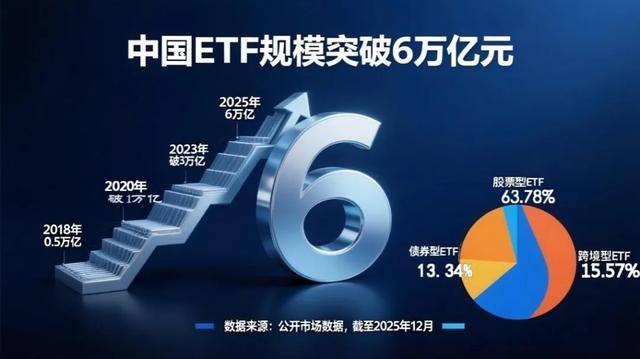
Group 1: 2025 Capital Market Review - The A-share market experienced a significant bull market in 2025, with the Shanghai Composite Index rising over 18% and surpassing the 4000-point mark, achieving multiple historical records [2] - The total trading volume of A-shares exceeded 400 trillion yuan for the first time, and the total market capitalization reached 100 trillion yuan, with margin trading balances returning to over 2 trillion yuan after ten years [2] - The total scale of ETFs in China reached 6.02 trillion yuan by the end of 2025, marking a growth of over 60% from the beginning of the year [2] Group 2: Fund Flows and Dividends - In 2025, there was a notable shift in deposits, with a slight increase of 0.62 trillion yuan in household deposits, while non-bank deposits surged by 4.11 trillion yuan, indicating a significant flow of funds from banks to the stock market [3] - The total cash dividends from A-share companies reached a record high of 2.64 trillion yuan, with 3,766 companies implementing cash dividends [3] - Over 1,300 companies announced stock repurchase plans, with a total repurchase amount exceeding 150 billion yuan [3] Group 3: Policy and Market Dynamics - In May 2025, the central bank and financial regulators introduced a series of policies to support the capital market, including interest rate cuts and measures to enhance market confidence [5] - The introduction of new listing standards for the Sci-Tech Innovation Board aimed to support companies in emerging sectors such as artificial intelligence and commercial aerospace [5] - The central government emphasized the importance of a stable capital market in its economic work meetings, indicating a commitment to enhancing the role of the capital market in economic growth [6][9] Group 4: 2026 Economic Outlook - The central economic work meeting outlined a focus on stabilizing growth and enhancing quality in 2026, with an emphasis on domestic demand and innovation-driven development [6] - A more proactive fiscal policy is expected in 2026, with plans for significant investments in consumer goods and equipment upgrades [7] - The monetary policy is anticipated to remain moderately accommodative, with expectations of 1-2 interest rate cuts throughout the year [7] Group 5: Investment Strategies for 2026 - The A-share market is expected to benefit from policy support, with a slow bull market likely to continue, emphasizing the importance of direction over index levels [18] - Three main investment themes for 2026 include the technology revolution, "anti-involution" strategies to reduce excessive competition, and safe-haven investments in the financial sector [19] - The focus on emerging industries such as AI, new energy, and advanced manufacturing is expected to create substantial investment opportunities [19]
又一券商获批!这个新赛道,中小券商积极布局
券商中国· 2026-02-14 10:48
Core Viewpoint - The approval of Western Securities to conduct market-making business for stocks listed on the Beijing Stock Exchange (BSE) indicates an expansion of the market-making capabilities among brokerages, with a notable divide in participation enthusiasm between small and large brokerages [2][4][7]. Group 1: Approval Process - On February 13, Western Securities announced that the China Securities Regulatory Commission (CSRC) had approved its qualification for market-making in listed securities, specifically for BSE stocks [2][4]. - The application process for this qualification was lengthy, starting with a submission to the CSRC in January 2023, and receiving formal approval only in February 2026 [4]. - Following the approval, Western Securities must undertake several steps, including amending its company charter and completing business registration within specified timeframes [4][5]. Group 2: Market Participation - The number of brokerages qualified for market-making on the BSE has increased, with 21 firms currently engaged in this business [8]. - Among the top ten market makers, six are small brokerages, indicating a more active participation compared to larger firms, which show lower engagement levels [2][8]. - The top three brokerages by the number of market-making stocks are Guojin Securities (62 stocks), CITIC Securities (59 stocks), and Guotou Securities (53 stocks), while some large brokerages like CICC and Huatai Securities have only a handful of stocks [9]. Group 3: Industry Insights - The disparity in engagement levels among brokerages is attributed to the BSE providing opportunities for smaller firms to develop niche businesses, while larger firms view the qualification more as a strategic reserve rather than a primary profit source [9]. - Challenges in the market-making business include insufficient liquidity on the BSE, which complicates profitability for market makers, as well as significant market volatility and a lack of hedging tools [9]. - A recent survey indicated that 34% of brokerages do not plan to participate in the BSE market, while 28% are still considering their options, and only 35% have begun to engage in a limited capacity [9].


增资、发债、新设、担保......开年中金、广发、华泰等多家券商为出海筹措“弹药”
Xin Lang Cai Jing· 2026-02-14 10:35
Core Viewpoint - Chinese securities firms are increasingly expanding their overseas operations, with multiple major and mid-sized firms announcing initiatives for international capital operations at the beginning of the year [1][2]. Group 1: Recent Developments - On February 13, major firms including CITIC Securities, CICC, and Zhongtai Securities announced guarantees for their overseas subsidiaries [2]. - GF Securities reported a change in registered capital from 7.606 billion RMB to 7.825 billion RMB due to a completed H-share placement, with funds aimed at enhancing overseas subsidiary capital [2]. - GF Securities plans to list its zero-interest convertible bonds on the Vienna MTF [3]. Group 2: Industry Trends - GF Securities is not the first to pursue overseas financing; Huatai Securities recently issued 10 billion HKD in zero-interest convertible bonds for international business support [5]. - Since 2025, over ten securities firms have made significant strides in international business, with firms like Western Securities and Dongwu Securities establishing wholly-owned subsidiaries in Hong Kong [6]. - The push into overseas markets represents a shift for Chinese securities firms from local intermediaries to global traders, driven by the need for risk hedging and capital flow [6]. Group 3: Performance Metrics - As of mid-2025, 13 out of 16 comparable A-share listed securities firms reported over 10% year-on-year growth in overseas business revenue [7]. - Notable revenue figures include CITIC Securities at 6.912 billion RMB (up 13.57%), CICC at 4.024 billion RMB (up 75.66%), and Haitong Securities at 2.459 billion RMB (up 76.21%) [8]. Group 4: Future Outlook - Experts predict that a significant number of quality domestic enterprises will connect with global markets through Hong Kong, creating opportunities for IPOs and cross-border capital services [9]. - The competitive edge in overseas business will increasingly focus on cross-border derivatives and FICC (Fixed Income, Currency, and Commodity) operations [10]. - Chinese securities firms are expanding beyond Hong Kong to Southeast Asia and the Middle East, establishing a comprehensive international business landscape [10]. Group 5: Strategic Considerations - The future growth potential for Chinese securities firms lies in cross-border wealth management, offshore RMB-related businesses, and investment banking in emerging markets [11]. - Firms are advised to build a composite team that understands both international rules and Chinese industries, while also enhancing cross-cultural integration [12].




国泰海通:债券仍是压舱石 权益配置显著提升
智通财经网· 2026-02-14 08:48
Core Viewpoint - The report from Guotai Haitong indicates a positive outlook for insurance company profitability driven by both internal and external factors, with expectations of improved earnings due to stable long-term interest rates and a moderate rise in equity markets [1] Group 1: Insurance Fund Utilization - As of the end of 2025, the insurance industry's fund utilization balance is projected to reach 38.5 trillion yuan, reflecting a 15.7% increase from the beginning of the year; life insurance accounts for 34.7 trillion yuan (up 15.7%), while property insurance is at 2.4 trillion yuan (up 8.8%) [3] - The growth in premium income, expected to rise by 7.1% year-on-year in 2025, is attributed to strong demand for insurance savings, contributing to stable cash flow [3] Group 2: Asset Allocation Trends - By the end of Q4 2025, the insurance sector's allocation to "stocks and funds" is expected to total 5.70 trillion yuan, an increase of 1.60 trillion yuan from the start of the year, representing 15.4% of total assets, up 2.6 percentage points [4] - Stock assets are projected to reach 3.73 trillion yuan, increasing by 1.31 trillion yuan, while fund assets are expected to be 1.97 trillion yuan, up 0.29 trillion yuan; the stock allocation is 10.1%, up 2.5 percentage points [4] - The bond asset allocation is anticipated to be 50.4%, a rise of 0.9 percentage points, indicating that bonds remain a key component of insurance asset allocation [4] - Bank deposits are expected to account for 8.2% of total assets, down 0.9 percentage points, reflecting a continued decline in deposit ratios due to low interest rates [4] - Other assets, primarily non-standard assets, are projected to decrease to 18.4% of total assets, down 2.7 percentage points, as a result of maturing non-standard assets and a scarcity of new quality non-standard assets [4]
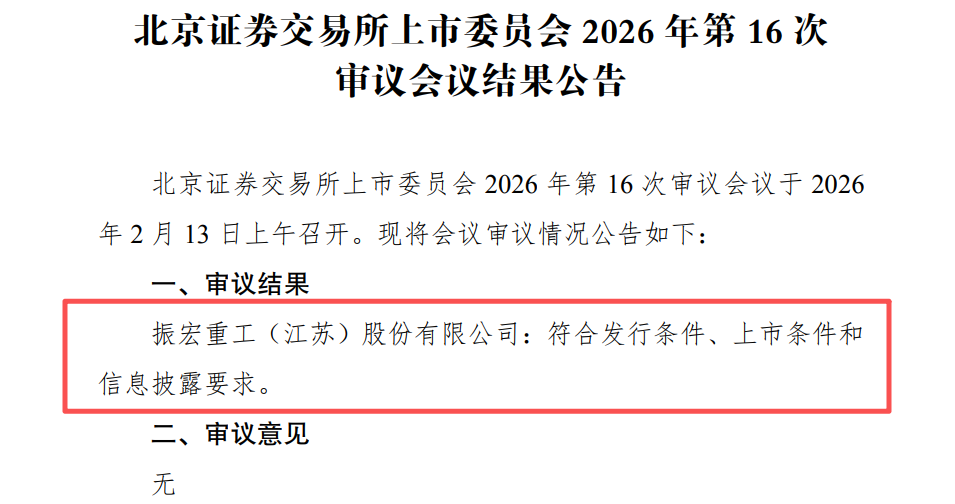
振宏股份过会:今年IPO过关第21家 国泰海通过4单
Zhong Guo Jing Ji Wang· 2026-02-14 07:29
Core Viewpoint - Zhenhong Heavy Industry (Jiangsu) Co., Ltd. has been approved for IPO by the Beijing Stock Exchange, marking it as the 21st company to pass the review in 2026, with 15 from the Beijing Stock Exchange and 6 from the Shanghai and Shenzhen Stock Exchanges combined [1] Company Overview - Zhenhong Heavy Industry specializes in the research, production, and sales of forged wind power main shafts and other large metal forgings, serving various sectors including wind power, chemical, machinery, shipping, and nuclear power [1] - The company is classified as a high-tech enterprise [1] IPO Details - The company plans to issue no more than 22,913,043 shares (excluding the over-allotment option) and aims to raise approximately 450.975 million yuan for a project to expand its annual production capacity of high-quality forgings to 50,000 tons and to supplement working capital [2] Shareholding Structure - As of the signing date of the prospectus, Zhao Zhenghong directly holds 59.19% of the company's shares and indirectly holds 0.13% through Jisheng New Energy, totaling 59.31% ownership, and serves as the chairman and actual controller of the company [1] Review Meeting Insights - No specific opinions were raised during the review meeting [3] - Key inquiries included the sustainability of performance growth, the impact of raw material price fluctuations on product competitiveness and gross margins, and the reasons for negative operating cash flow in multiple periods [3]
振宏股份,赶上了北交所春节前IPO的末班车
Xin Lang Cai Jing· 2026-02-14 04:05
Core Viewpoint - The company, Zhenhong Heavy Industry (Jiangsu) Co., Ltd., is set to raise 451 million yuan through its IPO, which will be invested in a project to expand its annual production capacity of high-quality forgings to 50,000 tons and to supplement working capital [1][5]. Company Overview - Zhenhong Heavy Industry specializes in the research, production, and sales of forged wind power main shafts and other large metal forgings, serving various sectors including wind power, chemical, machinery, shipping, and nuclear power [3]. - The company has accumulated extensive technical and process experience over the years, enabling it to produce large, high-end, and large-scale forgings, thus providing customized forgings with stable quality and good performance [3]. Financial Performance - The company reported revenues of 827.18 million yuan, 1.025 billion yuan, 1.136 billion yuan, and 633.35 million yuan for the years 2022, 2023, 2024, and the first half of 2025, respectively [4]. - Net profits for the same periods were 62.84 million yuan, 80.94 million yuan, 103.57 million yuan, and 59.29 million yuan [4]. - The total assets as of June 30, 2025, were approximately 1.25 billion yuan, with total equity of about 631.16 million yuan [5]. IPO Details - The IPO will involve the public issuance of no more than 22.91 million shares (excluding the over-allotment option) or up to 26.35 million shares (if the over-allotment option is fully exercised) [5]. - The funds raised will be allocated to the 50,000-ton high-quality forging expansion project and to supplement working capital [5][6]. Project Investment Breakdown - The high-quality forging expansion project has a total investment budget of 41.51 million yuan, with 37.10 million yuan expected to be funded from the IPO proceeds [6]. - An additional 8 million yuan will be allocated to supplement working capital [6].
港股“大模型第一股”冲A 国泰海通“加盟”辅导
2 1 Shi Ji Jing Ji Bao Dao· 2026-02-14 03:58
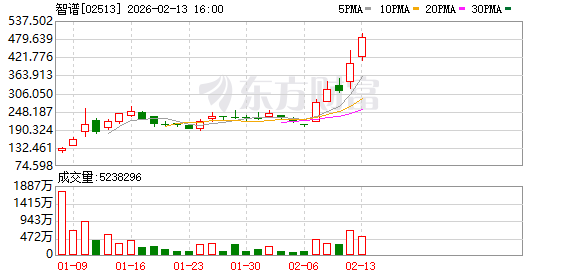
Core Viewpoint - The stock price of Zhiyuan Technology, known as the "first stock of large models" in Hong Kong, surged over 138.68% within five trading days, indicating strong market interest and momentum for AI-related companies [2][3] Group 1: IPO Developments - Zhiyuan Technology has updated its A-share IPO guidance report, adding Guotai Junan Securities as a new advisor alongside CICC, enhancing its advisory team [3][5] - The company previously withdrew its IPO guidance submitted in April 2025 and is now aiming for a listing on the Shanghai Stock Exchange's Sci-Tech Innovation Board [5][6] - The rapid re-initiation of A-share IPO guidance reflects Zhiyuan's commitment to establishing a dual capital platform ("A+H") [7] Group 2: Competitive Landscape - The competition among leading securities firms for IPO services in the AI sector is intensifying, with a focus on both speed and quality of submissions [3][12] - Guotai Junan Securities has a strong track record, having participated in 19 IPO projects on the Sci-Tech Innovation Board over the past three years, making it the top firm in terms of project count [8] - In contrast, CICC has been involved in 12 projects during the same period, highlighting the competitive dynamics between these top-tier firms [9] Group 3: Market Trends - The current environment allows unprofitable "hard tech" companies, including AI firms, to pursue IPOs, but the complexity of their technologies and business models leads to more rigorous scrutiny during the application process [14] - The collaboration between CICC and Guotai Junan Securities in past projects, such as the successful IPO of SMIC, showcases their established partnership in the hard tech sector [11][10]