
新石器

Search documents
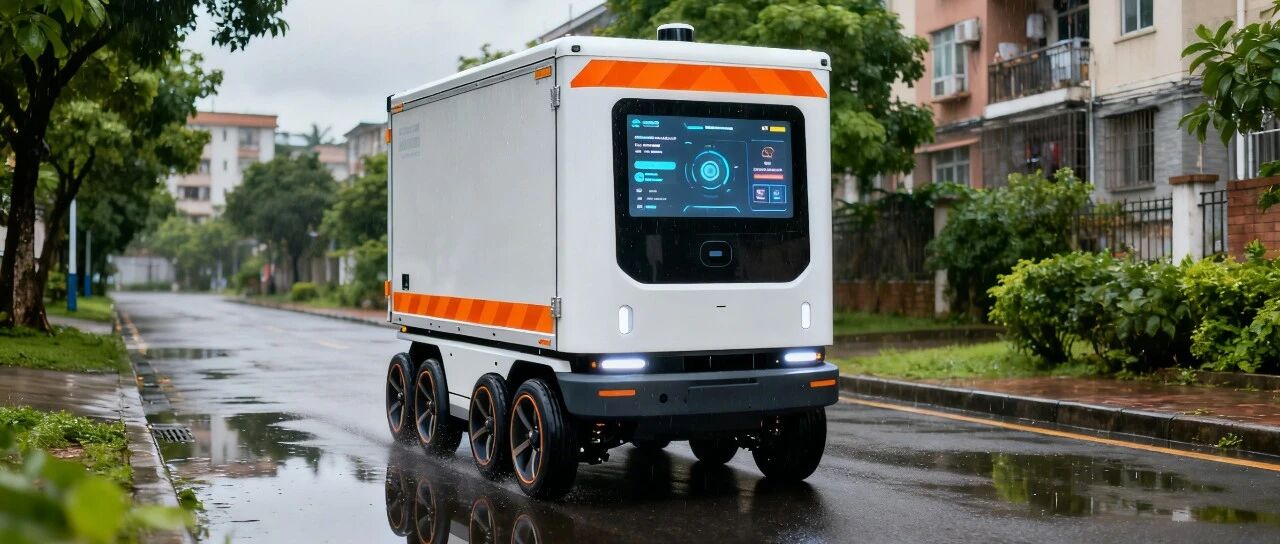
无人配送产业爆发,但还抢不了快递员饭碗
首席商业评论· 2025-11-19 03:34
Core Insights - The article highlights the rapid growth and commercialization of unmanned logistics delivery, predicting 2025 as a pivotal year with significant deliveries expected [2][4][11] - The industry is experiencing unprecedented activity, with major logistics companies accelerating the deployment of unmanned delivery services and securing substantial financing despite a challenging capital environment [4][12][19] Group 1: Industry Overview - Unmanned delivery is defined as an intelligent logistics system that automates the transportation of goods from warehouses to consumers [5] - As of September 2025, over 1,900 out of 3,600 districts in China support unmanned vehicles, indicating a 53% coverage rate [7] - Major cities like Beijing, Shanghai, and Shenzhen are leading the adoption of unmanned vehicles due to supportive policies and financial incentives [8][10] Group 2: Market Dynamics - The market for urban unmanned delivery is projected to reach 12.8 billion yuan by 2025 and surge to 97.7 billion yuan by 2030 [4] - The collective entry of logistics giants into the unmanned delivery space is a significant factor driving industry growth, with companies like Zhongtong and Shentong planning to deploy thousands of unmanned vehicles [12][14] - The industry is characterized by a competitive landscape, with startups like New Stone and Nine Senses capturing approximately 80% of the market share [20] Group 3: Technological and Policy Factors - Government policies have played a crucial role in facilitating the growth of unmanned delivery, with over 200 cities opening road rights for unmanned vehicles [11] - Technological advancements and declining hardware costs have made unmanned delivery vehicles more accessible, with prices dropping from 200,000-300,000 yuan to around 50,000 yuan [11][12] - The integration of unmanned delivery vehicles into existing logistics frameworks is seen as a solution to address core pain points in the logistics industry, such as high personnel costs and low vehicle utilization rates [15][17] Group 4: Challenges and Future Outlook - Despite the rapid growth, the industry faces challenges in finding a sustainable profit model, with many companies still struggling to achieve profitability [29] - The competition is shifting from hardware capabilities to operational efficiency, emphasizing the importance of managing large fleets effectively [36][38] - The article suggests that the future of unmanned delivery will likely see a consolidation of power among a few dominant players, potentially leading to a monopolized infrastructure [25][27]


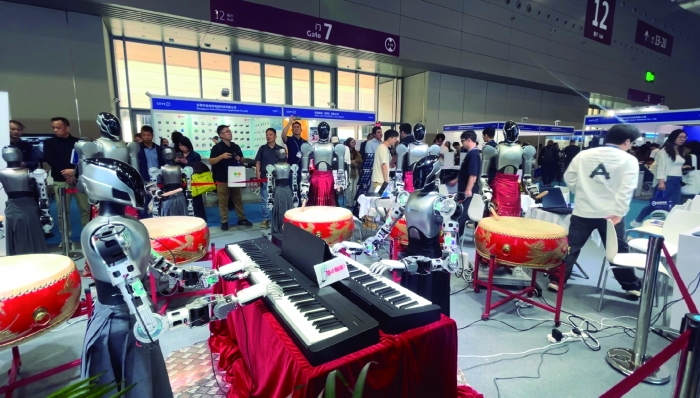
上市公司“闪耀”高交会 展品变迁折射产业发展新趋势
Shang Hai Zheng Quan Bao· 2025-11-14 18:39
Core Viewpoint - The 27th China International High-tech Achievements Fair (High-Tech Fair) showcases the evolution of technology and innovation, highlighting the significant role of listed companies in presenting cutting-edge products and technologies [3][4]. Group 1: Event Overview - The 27th High-Tech Fair opened in Shenzhen on November 14, themed "Technology Empowers Industry, Integration Creates the Future" [3]. - The fair has evolved since its inception in 1999, reflecting the global digital transformation and the development of a complete ecosystem in the storage industry, which now includes chips, devices, software, and services [4]. Group 2: Company Participation and Innovations - Notable listed companies such as BGI and Lattice Semiconductor showcased significant products at the fair, with a special focus on artificial intelligence, cloud computing, chip design, storage technology, server architecture, and industry application software [4]. - The Shenzhen Computer Industry Association has organized participation for nine consecutive years, noting a shift from showcasing complete machines to higher-value components like mainframes, storage, and chips, with AI elements increasingly integrated into exhibits [4]. Group 3: Evolution of Smart Devices - The fair's history mirrors the evolution of smart terminal products, transitioning from digital technology in 1999 to intelligent systems today, with robots and AI hardware becoming prominent [5]. - Exhibits included advanced products like a dexterous robotic hand capable of mimicking human movements, highlighting applications in industrial automation [5]. Group 4: Featured Technologies - The "Aimas" robot from Lingyi Intelligent Manufacturing, designed for human-like interaction, attracted significant attention, showcasing high accuracy in sound pickup [6]. - Other robots from Lingyi, such as Linglong and Panshi, are tailored for precision handling and high-load tasks, demonstrating versatility in various applications [6]. - The launch of the world's first high-precision mid-to-long-range digital lidar, Fairy, by Suteng Juchuang, enhances robots' environmental perception capabilities [6][7].
英搏尔:2025年上半年公司已成功获得上海易咖、尚元智行等重点客户的项目定点
Zheng Quan Ri Bao Wang· 2025-11-13 11:11
Core Viewpoint - The company is leveraging its deep integration technology advantages in the field of new energy vehicle power systems to actively expand into the autonomous logistics vehicle market [1] Group 1: Market Development - The company has successfully secured project designations from key clients such as Shanghai Yika and Shangyuan Zhixing by the first half of 2025 [1] - The company is advancing projects with leading clients including New Stone Technology, Jiushi, and Foton Linghang, demonstrating significant success in customer expansion [1]

2025年中国无人物流车行业调研简报-20251111
Tou Bao Yan Jiu Yuan· 2025-11-11 12:36
Investment Rating - The report does not explicitly state an investment rating for the unmanned logistics vehicle industry Core Insights - The unmanned logistics vehicle is defined as an intelligent transport tool based on autonomous driving technology, primarily used in logistics scenarios for express delivery, with applications expanding to industrial parks, airports, and medical centers [3][5] - The primary application scenario for unmanned logistics vehicles is the delivery service from express points to community stations, which helps logistics companies reduce costs and improve efficiency [5][8] - As of 2024, the scale of unmanned logistics vehicles in China has exceeded 6,000 units, with urban end delivery being the fastest-growing core scenario [18] - The price of unmanned logistics vehicles has significantly decreased from millions to tens of thousands due to technological breakthroughs, scale production, and market competition [25] Summary by Sections Application Scenarios - Unmanned logistics vehicles are mainly used for short-distance transportation (5-20 km) between express points and community stations, replacing traditional delivery vehicles and reducing labor costs [5][8] - The urban delivery market is the fastest to adopt unmanned logistics vehicles, with cities like Shenzhen achieving daily transport volumes of 80,000 packages and a cost reduction of 1.32 yuan per package [18] Market Segmentation - The market application distribution of unmanned logistics vehicles includes 70% in urban delivery, 15% in rural delivery, and 10% in cold chain logistics [12][13] - The cold chain logistics demand is projected to reach 365 million tons, with a year-on-year growth of 4.3%, driven by fresh e-commerce and medical delivery scenarios [18] Cost Dynamics - The price of unmanned logistics vehicles is expected to continue decreasing due to advancements in technology, particularly in the localization of key components like LiDAR and batteries [25] - The operational costs of unmanned logistics vehicles are significantly lower than traditional fuel vehicles, with reduced labor and energy consumption [25] Policy Impact - China's supportive policies have transitioned the unmanned logistics vehicle industry from pilot exploration to large-scale implementation, with sales increasing eightfold in the past three years [31] - In contrast, the U.S. and EU face limitations due to regional policies and high adaptation costs, affecting market promotion [31] Competitive Landscape - The market is characterized by a "head-led, scenario-segmented, ecosystem-coordinated, and standard-unified" competitive structure, with major suppliers categorized into three types: autonomous driving technology firms, delivery scenario-focused companies, and automotive background firms [38] - The competition is shifting from a focus on technology to ecosystem collaboration, with logistics giants and tech companies forming alliances [38]
独家丨轻舟智航已组建无人物流车业务,在苏州、金华等地运营
雷峰网· 2025-11-11 10:06
Core Insights - The article discusses the expansion of Qizhou Zhihang into the unmanned logistics delivery sector, marking a significant shift in its business model from passenger vehicles to logistics, creating a dual commercial layout of "mobility + logistics" [2][6]. Group 1: Business Development - Qizhou Zhihang has begun internal preparations for its unmanned logistics delivery business, with operations already initiated in cities like Suzhou and Jinhua [2][3]. - The company is actively recruiting for L4 logistics positions, indicating a strategic focus on enhancing its capabilities in this area [3]. Group 2: Market Trends - The year 2025 is projected to be a pivotal year for unmanned delivery vehicles, with multiple companies achieving over 100 million yuan in financing since the beginning of the year [5]. - As of mid-2025, 103 cities in China have opened road rights for unmanned delivery vehicles, covering over 80% of major logistics hub cities, which is crucial for the commercial viability of these vehicles [5]. Group 3: Partnerships and Collaborations - A key partner for Qizhou Zhihang in the unmanned logistics vehicle sector is Chery Automobile, which, along with Luxshare Precision, invested 100 million USD in Qizhou Zhihang [6]. - The collaboration has led to the development of the Chery iBar, which features the Falcon 900 intelligent driving system, capable of autonomous driving in urban and park scenarios [6]. Group 4: Technological Advancements - Qizhou Zhihang's experience in intelligent driving and L4 autonomous driving is expected to accelerate the commercialization of L4 technology in the logistics sector [7].

早报(11.11) | 股神谢幕献礼!巴菲特捐13亿美元;美联储或12月再降息;美参议院就结束“停摆”达成一致;中美同步暂停造船业反制
Ge Long Hui· 2025-11-11 00:27
Group 1 - Berkshire Hathaway announced that Warren Buffett will convert 1,800 shares of Class A stock into 2.7 million shares of Class B stock, donating them to four family charitable foundations, valued at over $1.3 billion [2] - The Federal Reserve's view on the U.S. economy has become more dovish since September, with expectations of at least a 25 basis point rate cut in December [2] - The U.S. Trade Representative's office announced a one-year suspension of the 301 investigation measures against China's maritime, logistics, and shipbuilding industries, with China responding by suspending countermeasures against five U.S. subsidiaries of Hanwha [2] Group 2 - Major U.S. stock indices rose, with the Nasdaq up 2.27%, S&P 500 up 1.54%, and Dow Jones up 0.81% [3][4] - Notable tech stocks saw significant gains, including Nvidia up over 5% and Google up over 4% [3][4] - The Nasdaq Golden Dragon China Index rose 2.25%, with mixed performance among Chinese concept stocks, including a surge of over 16% for Xpeng Motors [3][4] Group 3 - Gold prices surged, with spot gold rising 2.86% to $4,115.79 per ounce, and WTI crude oil futures up 0.50% to $59.92 per barrel [5][6] - The U.S. dollar index increased slightly by 0.05% [6] Group 4 - Apollo Global Management announced its acquisition of Spanish football club Atletico Madrid, with a transaction valuation of €2.2 billion, marking the first deal from its $5 billion sports fund established in September [9] - Microsoft has developed a tool to convert AI models written in Nvidia's CUDA to be compatible with AMD's ROCm platform, potentially disrupting Nvidia's AI ecosystem [11] Group 5 - TSMC reported a 16.9% year-on-year increase in October sales, reaching NT$367.47 billion (approximately RMB 84.48 billion), driven by strong demand for AI chips [12] - China Mobile participated in a $600 million Series D financing round for New Stone, focusing on autonomous vehicle development [14] Group 6 - The State Council of China issued 13 measures to promote private investment, encouraging private capital participation in key projects like railways and nuclear power [21] - Global central bank gold reserves surpassed U.S. Treasury holdings for the first time since 1996, driven by a decline in the dollar's reserve share [22]

深圳无人车线路里程环比增近四成 无人车配送月“值”破千万
Shen Zhen Shang Bao· 2025-11-11 00:10
Core Insights - Shenzhen's autonomous vehicle industry is experiencing significant growth, with a nearly 40% increase in operational route mileage in October, and commercial value from deliveries surpassing 10 million yuan [1][2] Group 1: Operational Developments - In October, the number of operational autonomous vehicles in Shenzhen increased to 851, with 53 new vehicles added [1] - The logistics autonomous vehicles reached an operational scale of 484 units, marking a 12% increase month-over-month [1] - A total of 224 new operational routes were added, with a mileage increase of 1,330 kilometers, representing a 1,100% and 240% increase respectively [1] - Cumulatively, Shenzhen has opened 1,478 routes with a total mileage of 4,911 kilometers, reflecting a 37% increase in total open mileage [1] Group 2: Delivery Performance - The average daily operational time for autonomous delivery vehicles was 8.2 hours, with a monthly operational mileage of 160,000 kilometers [2] - The number of autonomous delivery orders exceeded 1.29 million, showing a 26% month-over-month growth, including 1.1 million express deliveries and 190,000 fresh food deliveries [2] - The commercial value generated from these deliveries was approximately 11.12 million yuan, a 28% increase, with cost savings of 1.2 million yuan [2] Group 3: Competitive Landscape - Major players in the market include Meituan, which led in fresh food delivery with 187,000 orders, and SF Express, which dominated express delivery with 681,000 orders [2] - Other competitors like JD and Yunda completed 139,000 and 98,000 orders respectively, while other express companies averaged around 50,000 orders [2] - New entrants are rapidly joining the industry, indicating a dynamic competitive environment [2] Group 4: Technological Advancements - New Stone Technology announced the commercial delivery of its self-developed L4 level map-free autonomous driving technology, which reduces reliance on high-precision maps [2] - This innovation is expected to lower operational costs and enhance vehicle adaptability in complex environments, facilitating a shift from "map-dependent" to "self-perception" in the industry [2]
中国移动参与新石器无人车6亿美元D轮融资
Feng Huang Wang· 2025-11-10 12:14
Group 1 - China Mobile participated in the Series D financing of New Stone Technology, which raised over $600 million, led by UAE's Leishi Capital and supported by several other investment firms [1] - The Beijing Zhongyi Digital New Economy Industry Fund, a subsidiary of China Mobile, highlighted the economic advantages of autonomous driving in urban logistics, addressing issues like rising labor costs and safety concerns [1] - New Stone Technology is recognized for being a pioneer in the large-scale deployment of L4 autonomous vehicles, establishing significant advantages in scene understanding, road rights acquisition, data accumulation, and vehicle mass production [1] Group 2 - During the Global Partner Conference in Guangzhou, China Mobile announced three key collaborative research directions with New Stone Technology, focusing on 5G IoT integration, high-precision positioning, and edge cloud computing for real-time data transmission [2] - The collaboration aims to enhance the safety and reliability of autonomous vehicles in complex urban environments through improved communication and positioning capabilities [2] - Continuous cooperation will be established around self-built computing power hosting and mobile cloud services, particularly in key cities for integrated vehicle-road-cloud projects [2]

消息称中国移动已参与新石器无人车 D 轮融资
Sou Hu Cai Jing· 2025-11-10 04:59
Group 1 - China Mobile's Beijing Zhongyi Digital New Economy Industry Fund has participated in the D round financing of New Stone Technology, marking a significant investment in the autonomous vehicle sector [1] - New Stone Technology completed over $600 million in D round financing, making it the largest private equity financing in China's autonomous driving sector to date and one of the largest in the private equity space this year [1] - Since its establishment in 2018, New Stone Technology has become the largest supplier of unmanned vehicles for major companies like SF Express, JD.com, and China Post, capturing over 90% of their orders [1] Group 2 - New Stone Technology has delivered over 10,000 L4 autonomous vehicles, becoming the first company globally to achieve this milestone [2] - The company has also broken the record for monthly deliveries, surpassing 2,000 vehicles in a single month [2] - New Stone Technology has deployed over 1,200 vehicles in Qingdao, contributing to the city becoming the one with the highest number of unmanned vehicles globally [2] - The company has expanded its vehicle deployment to over 300 cities, making it the autonomous driving company with the widest city coverage [2] - Cumulatively, New Stone Technology's L4 autonomous vehicles have surpassed 50 million kilometers in driving distance [2]

中国移动已参与新石器无人车D轮融资
Ge Long Hui A P P· 2025-11-10 04:44
Core Viewpoint - China Mobile's Beijing Zhongyi Digital New Economy Industry Fund has participated in the Series D financing of New Stone Technology, indicating a strategic investment in the autonomous vehicle sector [1] Group 1: Investment and Financing - The investment by China Mobile's fund in New Stone Technology highlights the growing interest in the autonomous vehicle market [1] - New Stone Technology attended a special event organized by China Mobile, showcasing its role as a participant in the financing round [1] Group 2: Collaboration and Development - Discussions between China Mobile and New Stone Technology focused on product joint expansion, product development, and mutual utilization [1] - Initial agreements were reached on areas such as AI and autonomous driving technology integration, agency cooperation plans, and customized urban logistics unmanned vehicle product development [1]