SK On

Search documents
Westwater Resources Announces Strategic Update
Businesswire· 2025-11-07 22:00
Core Insights - Westwater Resources has secured $55 million in capital funding since mid-2025, primarily through its at-the-market program and convertible note offerings, with a current cash balance of approximately $53 million as of November 5, 2025 [5][6]. - The company is focused on optimizing the Kellyton Plant to meet existing offtake commitments after Stellantis unexpectedly terminated its Binding Offtake Agreement, which has paused debt syndication efforts [2][3][4]. Capital and Financing - Westwater raised approximately $55 million since June 30, 2025, with most funds coming from the ATM program before increasing its size to $75 million on October 17, 2025 [5][6]. - The additional liquidity will support the optimization of Phase I of the Kellyton Plant, equipment purchases, permitting activities at the Coosa Graphite Deposit, and evaluation of potential government funding [7]. Offtake Agreements - The company maintains offtake agreements with SK On and Hiller Carbon, while Stellantis has indicated a willingness to reconsider a new arrangement based on current market conditions [4]. - Westwater is actively exploring additional offtake opportunities with prospective customers and providing samples as part of its engagement efforts [4]. Strategic Developments - The optimization of the Kellyton Plant aims to adjust processing capacity to align with existing offtake agreements and available financing, which is expected to lower initial capacity and reduce total capital requirements [3]. - The evaluation for optimizing Phase I of the Kellyton Plant is expected to be completed by the end of the year, with an update planned for early 2026 [3]. Government Engagement - Westwater has filed an application with the U.S. Export-Import Bank related to the Kellyton Plant, which is currently undergoing due diligence, although this process has been delayed due to a recent U.S. government shutdown [8]. - The company is also engaging advisors to secure other sources of government funding [8]. Industry Position - Westwater Resources is positioned as one of the most advanced U.S.-based natural graphite developers, benefiting from early market mover advantages in the critical minerals sector [6][7]. - The company is navigating the challenges of developing the domestic battery materials sector, which is still in its infancy [9].
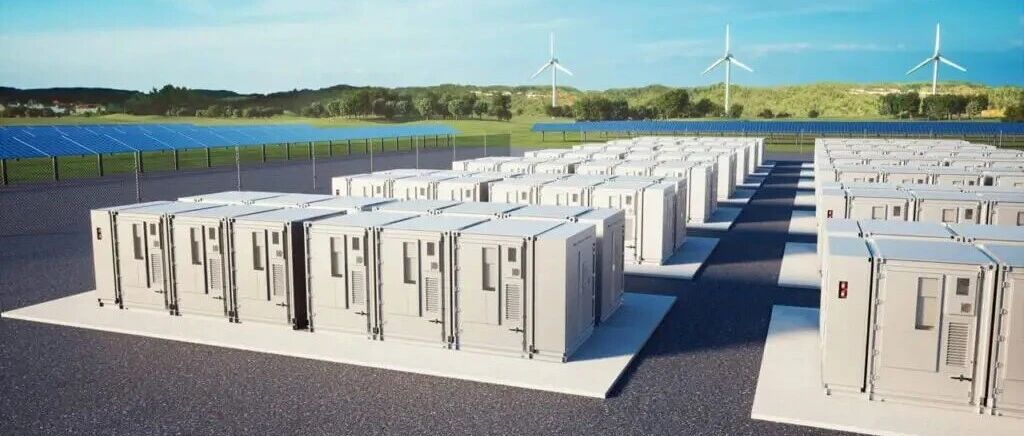
韩国电池巨头加码北美储能市场!
中关村储能产业技术联盟· 2025-11-06 07:33
Core Viewpoint - South Korean battery companies are shifting production lines from electric vehicle batteries to energy storage batteries, particularly in the North American market, driven by changes in demand and new policies [5][6]. Group 1: Strategic Adjustments by Companies - Major South Korean battery manufacturers, including LG Energy Solution, Samsung SDI, and SK On, are all adopting similar strategies to enhance their presence in the North American energy storage market [5][6]. - LG Energy Solution and Stellantis have established NextStar Energy in Canada, which will expand its production lines to include energy storage batteries, enhancing its product matrix [2][3]. Group 2: Production Capacity and Technology - NextStar Energy's factory in Windsor, Ontario, is set to begin commercial production of battery units for energy storage projects in November, with a new lithium iron phosphate (LFP) production line added to meet market demand [3][4]. - The LFP production line will operate alongside the existing nickel-cobalt-manganese (NMC) production line, allowing NextStar Energy to cater to both energy storage and electric vehicle battery needs [3]. Group 3: Workforce and Training - NextStar Energy has hired over 1,000 employees, most of whom have undergone specialized training through a dual-track system that includes direct training and a program developed with Battery Boost [4]. Group 4: Market Trends and Future Plans - The U.S. market is experiencing rapid growth in energy storage due to new policies, while demand for electric vehicles has slowed, prompting companies to adjust their production capacities [5]. - LG Energy Solution aims to achieve an annual production capacity of 30 GWh for energy storage systems in Michigan by the end of 2026 [8]. - Samsung SDI plans to reach a similar annual production capacity of 30 GWh in the U.S. by the end of 2026 and will introduce two 20-foot containerized energy storage solutions [8]. - SK On has signed agreements to supply LFP materials and energy storage systems in North America, further solidifying its market position [8].

谁在追逐欧洲电池产业的新浪潮
Di Yi Cai Jing· 2025-11-06 05:39
Core Insights - European economies like the UK and Germany are either restarting or planning to restart subsidies for electric vehicles (EVs) early next year, indicating a renewed focus on the EV market [1][5] - Local battery manufacturers in Europe, such as Northvolt and ACC, have faced significant challenges, including production inefficiencies and quality issues, leading to Northvolt's potential bankruptcy and ACC's halted investment plans [2][3] - The disparity in battery production capabilities between Chinese and European companies is evident, with Chinese firms demonstrating a more effective approach to scaling production and market penetration [8][13] Group 1: Market Dynamics - The European EV market is experiencing a turnaround, with a 34% year-on-year increase in sales in September 2025, reaching 307,000 units [5] - Subsidy policies in Europe are increasingly tied to local production requirements, such as the French policy mandating that vehicles be assembled in the EU and batteries manufactured in the European Economic Area [5] - Investment in the European battery sector is expected to rebound, with Richard Grtner suggesting that the worst is over for the industry [5][12] Group 2: Company Challenges - Northvolt, once a highly anticipated battery manufacturer in Europe, has encountered severe issues with product delivery and quality, leading to its potential bankruptcy proceedings in 2024 [2][3] - ACC, a joint venture involving Stellantis, Mercedes-Benz, and TotalEnergies, has also suspended its investment plans in Germany and Italy, reflecting broader struggles within the European battery sector [2][3] - The challenges faced by these companies highlight a lack of understanding of battery technology and production processes among European manufacturers [3][4] Group 3: Competitive Landscape - Chinese battery companies are rapidly expanding their presence in Europe, with significant investments and new factories being established, such as Guoxuan High-Tech's €1.2 billion plant in Slovakia [9][14] - CATL, the largest battery manufacturer globally, is also making substantial investments in Europe, including a €7.34 billion factory in Hungary with a planned capacity of 100 GWh [11] - The competitive landscape is shifting, with Richard Grtner estimating that Chinese battery factories could capture up to 80% of the European market share, leaving the remainder for American, Korean, and Japanese firms [13][14] Group 4: Strategic Adjustments - Chinese companies are adapting their strategies in Europe, often opting for joint ventures to navigate local regulations and market dynamics, as seen with CATL's partnership with Stellantis in Spain [14][15] - The approach of Chinese firms contrasts with their previous preference for wholly-owned operations, indicating a shift towards collaboration and local partnerships to enhance market access [14][15] - The evolving global economic landscape necessitates that Chinese battery manufacturers remain flexible and responsive to international conditions and local policies [15]




Solid Power(SLDP) - 2025 Q3 - Earnings Call Transcript
2025-11-04 22:30
Financial Data and Key Metrics Changes - In Q3 2025, the company generated revenue of $4.6 million, a decrease from $7.5 million in Q2 2025, bringing year-to-date revenue to $18.1 million, an increase of $2.4 million compared to the same period in 2024 [7][9] - Operating expenses for Q3 were $29 million, down $4.4 million from $33.4 million in Q2 2025, primarily due to labor-focused activities under the SK On agreement [8][9] - Year-to-date operating loss was $74.3 million, with a net loss of $66.4 million or $0.37 per share [9] Business Line Data and Key Metrics Changes - Revenue for Q3 was primarily driven by agreements with SK On and government contracts [7] - The company is progressing on its electrolyte development roadmap and site acceptance testing for the SK On pilot line, which is on track for completion by the end of the year [5][9] Market Data and Key Metrics Changes - Total liquidity increased to $300.4 million as of September 30, 2025, driven by proceeds from the at-the-market offering program and cash from government contracts [9] Company Strategy and Development Direction - The company announced a strategic collaboration with Samsung SDI and BMW to develop solid-state battery cells for next-generation evaluation vehicles, indicating confidence in its technology [4][5] - The company is focused on identifying long-term customers and driving innovation in solid-state battery technology [5] Management's Comments on Operating Environment and Future Outlook - Management expressed optimism about the potential of all solid-state battery technology and highlighted progress towards strategic objectives [11] - The expected cash investment for 2025 has been revised to $85-$95 million, reflecting a focus on fiscal discipline and operational efficiencies [10] Other Important Information - Capital expenditures for the quarter totaled $0.6 million, mainly for the construction of the continuous electrolyte production pilot line [9] Q&A Session Summary - The Q&A session was briefly mentioned, but no specific questions or answers were provided in the transcript [12]

150亿元!30GWh储能电池大单将落地
起点锂电· 2025-11-04 10:26
Core Viewpoint - Korean battery companies are accelerating their entry into the global energy storage battery market through the development of lithium iron phosphate (LFP) battery technology, with Samsung SDI in discussions with Tesla for battery supply agreements [3][4]. Group 1: Market Developments - Samsung SDI is reportedly set to supply approximately 10 GWh of energy storage system batteries annually to Tesla for at least the next three years, totaling around 30 GWh and potentially exceeding 3 trillion KRW (approximately 150 million RMB) in procurement value [4]. - The global energy storage lithium battery shipment reached 315.8 GWh in the first half of the year, marking a 98% year-on-year increase, with leading companies including CATL, EVE Energy, and BYD [4][6]. Group 2: Competitive Landscape - The top ten companies in energy storage battery shipments do not include the three major Korean battery firms: LG Energy Solution, Samsung SDI, and SK On [5]. - The shift towards lithium iron phosphate batteries is driven by safety concerns and higher costs associated with ternary lithium batteries, positioning Korean companies as significant competitors to Chinese firms in the energy storage sector [7]. Group 3: Strategic Initiatives - Korean battery companies are making progress in LFP battery production, with Samsung SDI planning to achieve mass production by 2026 and establishing production capacity in Indiana, USA [8]. - LG Energy Solution has signed a $4.3 billion (approximately 303 million RMB) supply agreement with Tesla for LFP batteries, with production set to begin in Michigan [8]. - SK On is converting part of its Georgia factory's EV battery production lines to LFP energy storage systems, aiming for mass production by the second half of 2026 [9]. Group 4: Market Trends - The demand for electric vehicles in Europe and the US is currently weak, prompting the three major Korean battery companies to focus on energy storage as a primary strategy for business restructuring and improving operational capabilities [10].

LG新能源利润连续三季度增长!
起点锂电· 2025-11-04 10:26
Core Viewpoint - The article discusses the recent performance and strategic shifts of LG Energy Solution, highlighting its reliance on government subsidies and the growth of its energy storage business, particularly in lithium iron phosphate batteries, as key factors for its financial recovery and future prospects [5][8][10]. Group 1: LG Energy Solution's Financial Performance - In Q3, LG Energy Solution reported revenue of approximately 5.7 trillion KRW, a 2.4% increase quarter-on-quarter, with an operating profit of 601.3 billion KRW, reflecting a 22.2% increase [5]. - The company's performance in the first three quarters of the year shows a trend of increasing operating profit, with Q1 at 375 billion KRW, Q2 at 492.2 billion KRW, and Q3 at 601.3 billion KRW, indicating a recovery trajectory [5][6]. - The operating profit in Q3 included 365.5 billion KRW from U.S. policy subsidies, suggesting that the company's profitability is significantly supported by external financial assistance [8][9]. Group 2: Energy Storage Business Growth - LG Energy Solution has secured approximately 120 GWh of battery orders for energy storage systems, indicating a strong demand and potential for growth in this sector [6][10]. - The company has made strategic decisions to focus on lithium iron phosphate batteries, which are more stable and cost-effective for large-scale energy storage applications, positioning itself advantageously in the North American market [10][12]. - A notable achievement includes a significant order for lithium iron phosphate batteries worth approximately 30.6 billion KRW from Tesla, highlighting the company's growing influence in the energy storage market [10][12]. Group 3: Strategic Adjustments and Market Position - LG Energy Solution's shift towards lithium iron phosphate batteries is a strategic response to market demands, as these batteries present lower risks and costs compared to traditional lithium-ion batteries [12]. - The company's partnerships and orders in the energy storage sector reflect a deepening integration with the North American market, which is experiencing rapid energy transition [12]. - The competitive landscape is evolving, with LG Energy Solution emerging as a strong contender against other Korean battery manufacturers like Samsung SDI and SK On, which are currently facing challenges [6][12].
理想MEGA惊魂爆燃后,三元锂电池天塌了?
36氪· 2025-11-04 09:48
Core Viewpoint - The incident involving the Li Auto MEGA has reignited concerns about battery safety in the electric vehicle industry, particularly regarding the use of ternary lithium batteries versus lithium iron phosphate batteries [4][7][9]. Group 1: Incident Overview - The Li Auto MEGA, priced over 500,000 yuan and marketed for family safety, caught fire within 10 seconds without a severe collision, raising alarms in the new energy sector [4][5]. - Following the incident, Li Auto acknowledged a defect in the coolant of the MEGA 2024 model, which could lead to thermal runaway in extreme conditions [7][9]. Group 2: Battery Safety Debate - The MEGA incident has shifted focus from vehicle design issues to battery safety, with ternary lithium batteries, known for their high performance, now under scrutiny for their thermal stability [9][12]. - Research indicates that ternary lithium batteries can begin to decompose at around 200°C, leading to rapid thermal runaway, while lithium iron phosphate batteries require much higher temperatures (500-800°C) to decompose, making them inherently safer [12][13]. Group 3: Market Dynamics and Battery Choices - The shift in market dynamics since 2016 has favored ternary lithium batteries due to their higher energy density, which has made them the preferred choice for high-end electric vehicles [19][21]. - However, the rising costs of ternary lithium batteries and the increasing market share of lithium iron phosphate batteries, which have surpassed 70% in recent months, indicate a significant change in consumer preferences [21][28]. Group 4: Future of Battery Technologies - The future of battery technology may see a coexistence of both battery types, as high-end vehicles continue to demand the performance benefits of ternary lithium batteries, while cost-effective models may increasingly adopt lithium iron phosphate batteries [34][41]. - Innovations in battery technology, such as solid-state batteries, are expected to leverage the advantages of ternary lithium materials while addressing safety concerns, indicating a potential evolution in the industry [39][41].

谁在追逐欧洲电池产业的新浪潮 | 海斌访谈
Di Yi Cai Jing· 2025-11-04 08:49
Core Insights - European economies like the UK and Germany are either restarting or planning to restart subsidies for electric vehicles (EVs) in early 2024, indicating a renewed focus on the EV market [6][7] - Local battery manufacturers in Europe, such as Northvolt and ACC, have faced significant challenges, including quality issues and investment halts, while Chinese and American companies are increasingly entering the European market [3][4][11] - The competitive landscape in the European battery market is shifting, with expectations that Chinese companies could capture up to 80% of the market share, while local firms struggle to keep pace [20][21] Industry Developments - Northvolt, once a leading battery manufacturer in Europe, is facing bankruptcy due to severe product delivery and quality issues, leading to a potential acquisition by the American startup Lyten [3][10] - ACC, a joint venture involving Stellantis, Mercedes-Benz, and TotalEnergies, has suspended its investment plans in Germany and Italy, highlighting the difficulties faced by European battery firms [3][4] - The European battery market is witnessing a resurgence, with a 34% year-on-year increase in EV sales in September 2025, driven by renewed subsidies and local production requirements [6][7] Investment Trends - Significant investments are flowing into the European battery sector from both Chinese and American companies, indicating a strategic shift in the competitive landscape [8][19] - Companies like CATL and Envision are expanding their production capabilities in Europe, with CATL's factory in Hungary set to have a capacity of 100GWh and an investment of €7.34 billion [16][22] - Gotion High-Tech has launched a €1.2 billion battery super factory in Slovakia, with an initial capacity of 20GWh, targeting orders from Skoda, a Volkswagen subsidiary [15][22] Competitive Landscape - The competition among battery manufacturers is intensifying, with a focus on who can effectively build and operate battery factories [19] - Chinese battery manufacturers are adapting their strategies in Europe, often opting for joint ventures to align with local regulations and market conditions [21][22] - The market share of South Korean companies like LG Energy Solution and SK On has decreased, while Chinese firms are gaining ground, with CATL and others becoming dominant players [19][20]

一位VC回家接班,要IPO了
投资界· 2025-11-04 08:02
Core Viewpoint - Zhongwei New Materials Co., Ltd. is preparing for a dual listing in Hong Kong, led by the second generation of the founder, Deng Jing, who aims to expand the company's global footprint in the new energy sector [7][11]. Company Background - Zhongwei New Materials was founded by Deng Weiming in 2014 after a transition from traditional energy to the new energy sector, specifically focusing on lithium battery precursor materials [10]. - The company has grown significantly since its IPO on the ChiNext board in 2020, reaching a market value of approximately 400 billion RMB, making it one of the largest companies in Guizhou province [7][10]. Business Operations - Zhongwei specializes in the research, production, and sales of battery cathode materials and precursors, serving major clients like Tesla, LG Chem, and CATL [12]. - The company has achieved a market share of 21.8% in the global precursor market for battery active materials as of 2024 [14]. Financial Performance - Revenue projections for 2022 to 2024 are 30.34 billion RMB, 34.27 billion RMB, and 40.22 billion RMB, respectively, with a compound annual growth rate (CAGR) of 15.1% [12]. - Despite revenue growth, the company faces challenges with high interest expenses, leading to a situation where revenue increases do not translate into profit growth [14]. Market Expansion - Zhongwei has made significant investments in overseas markets, including nickel mining projects in Indonesia and other countries, aiming for vertical integration from raw material extraction to recycling [10][15]. - Approximately 40% of the company's revenue comes from international markets, with this percentage increasing annually [14]. Leadership Transition - Deng Jing, born in 1994, has taken a prominent role in the company, reflecting a broader trend of second-generation leaders stepping into management positions in family-owned businesses in China [17]. - The transition of leadership to younger generations is becoming common as many family businesses reach a critical juncture for succession [17][18].

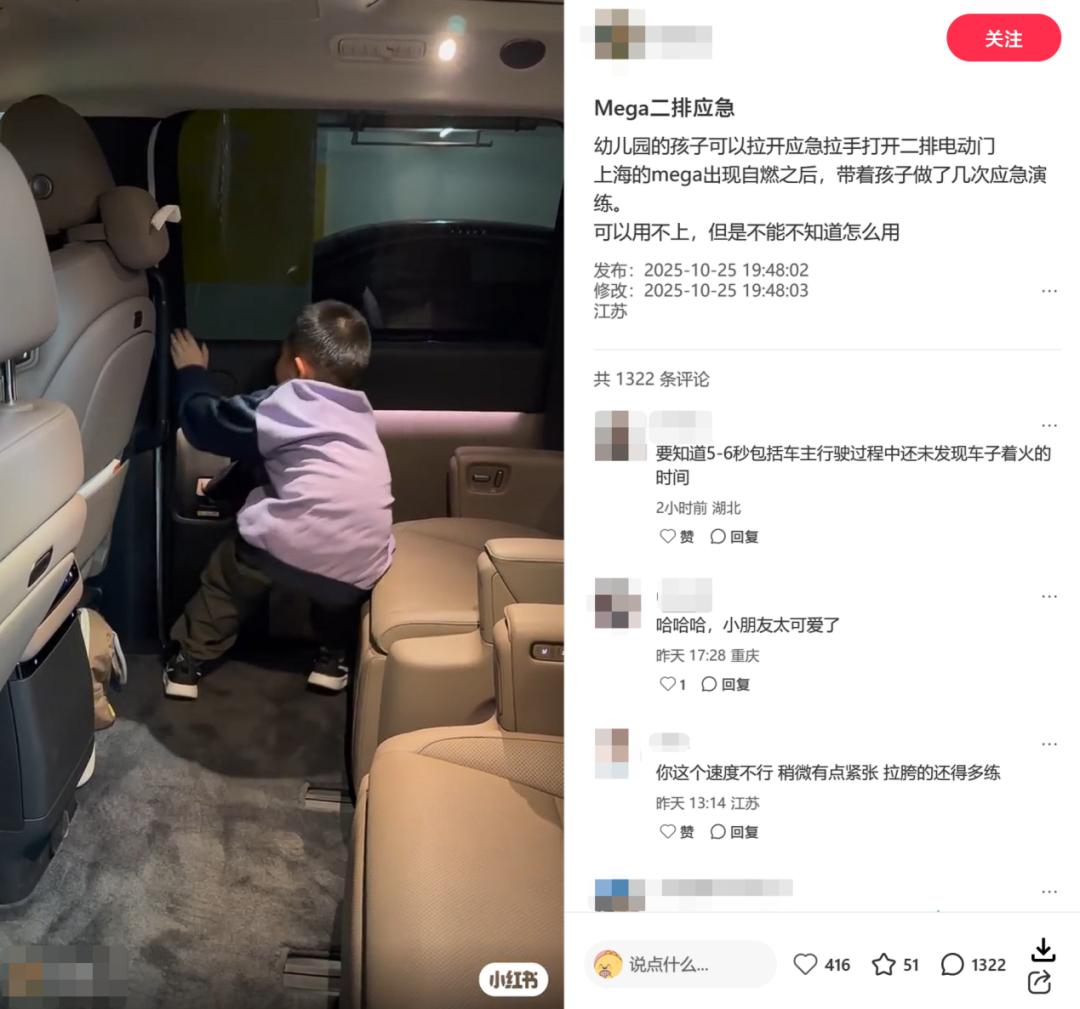
理想MEGA惊魂爆燃后,三元锂电池天塌了?
3 6 Ke· 2025-11-03 06:06
Core Viewpoint - The incident involving the Ideal MEGA electric vehicle, which caught fire within 10 seconds, has sparked significant discussions about battery safety in the electric vehicle industry, particularly regarding the risks associated with high-performance lithium-ion batteries [1][2]. Group 1: Incident and Immediate Reactions - The Ideal MEGA fire incident has led to widespread concern among middle-class parents who purchased the vehicle, prompting discussions on "electric vehicle escape" for children [1]. - Following the incident, Ideal officially apologized and acknowledged a defect in the coolant of the MEGA 2024 model, which could lead to thermal runaway of the battery under extreme conditions [2]. Group 2: Battery Technology Debate - The incident has reignited the long-standing debate between the safety of lithium iron phosphate (LFP) batteries and the performance of ternary lithium batteries, with the former being seen as safer but less powerful [2][5]. - Ideal's MEGA uses the Kirin ternary lithium battery, which was previously marketed as having superior safety features, including a low failure rate and advanced battery management systems [3][5]. Group 3: Battery Characteristics and Safety - Ternary lithium batteries have lower thermal stability, with decomposition reactions potentially starting at around 200°C, while LFP batteries require much higher temperatures (500-800°C) to decompose, making LFP inherently safer [5]. - Experimental data shows that ternary lithium cells can reach peak temperatures of 400-600°C within 10 seconds during short-circuit tests, whereas LFP cells take about 2 minutes to reach 300°C, highlighting a critical safety difference [5]. Group 4: Market Dynamics and Battery Choices - The shift in the market dynamics began in 2016 when subsidies for electric vehicles were linked to battery energy density, favoring ternary lithium batteries, which led to a significant market share increase for them [8][10]. - However, by 2021, LFP batteries began to regain market share, surpassing 70% in 2023, driven by cost-effectiveness and the growing demand for affordable electric vehicles [10][11]. Group 5: Future of Battery Technologies - The future of battery technology may not be a straightforward choice between LFP and ternary lithium, as both have distinct advantages and are likely to coexist based on market demands [24]. - Ternary lithium batteries are seen as a key pathway to next-generation solid-state batteries, which promise improved safety and energy density, while also being suitable for high-performance applications like flying cars and robotics [22][24].