
香港交易所

Search documents
陈茂波:香港有能力建立有活力并与国际联系的AI生态系统
Zhi Tong Cai Jing· 2025-11-05 03:20
陈茂波说,金融服务是创新活动重要驱动力,香港需要做好准备改革的思维,应对经济基本面转变的机 遇。他指出,全球创投资金投放到AI的规模超过1900亿美元,反映AI带来结构性转变,成为金融、物 流等行业的驱动力。有不少AI人才来自内地,面对地缘政治紧张,越来越多科研人才利用香港作为学 术研究及应用的基地,利用大湾区的工业能力应用和试验。 他说,香港有能力建立有活力并与国际联系的AI生态系统,香港特区政府正透过直接投资AI项目和初 创企业,引导私人资本投向相关领域,并促进顶尖人才在香港加强合作和发展,相信面对不断变化的环 球经济形势,香港可以继续联系资本、创新应用和投资者,加上有利的商业和创新政策,继续为环球投 资者带来不少机遇。 香港财政司司长陈茂波在国际金融领袖投资峰会上表示,香港正持续改革上市制度,新经济行业总市值 占比过去8年已经翻倍,升至35%,相信受惠中国内地经济发展及科技创新,香港、上海和深圳交易所 市值仍然有增长空间。 ...
香港交易所(00388) - 2025 Q3 - 电话会议演示
2025-11-05 01:30
Financial Performance Highlights - HKEX achieved record nine-month revenue and other income of HK$21.9 billion, a 37% year-over-year increase[8] - Profit attributable to shareholders for YTD Q3 2025 reached HK$13.4 billion, up 45% year-over-year[10] - Core business revenue increased by 41% year-over-year to HK$20.4 billion for YTD Q3 2025[15] - EBITDA for YTD Q3 2025 was HK$17.2 billion, a 48% increase year-over-year[15] - Q3 2025 revenue and other income reached HK$7.8 billion, up 45% year-over-year and 8% quarter-over-quarter[11] Business Segment Performance - Cash market revenue accounted for 51% of the total group revenue[12] - Derivatives market revenue accounted for 24% of the total group revenue[12] - Average Daily Turnover (ADT) in the cash market increased by 126% year-over-year[12] - Northbound Stock Connect ADT increased by 67% year-over-year[12] - Southbound Stock Connect ADT increased by 229% year-over-year[12] Strategic Initiatives and Developments - The company is focusing on building on its China strength and enhancing market vibrancy[8] - OTC Clear accepted China Government & Policy Bank Bonds as collateral in March 2025[13] - LME-approved first warehouse facilities in HK went live in July 2025[13] - A subsidiary in Dubai (CPAL) was set up to act as commodities pricing administrator in October 2025[13]

智通ADR统计 | 11月5日





Xin Lang Cai Jing· 2025-11-04 22:50
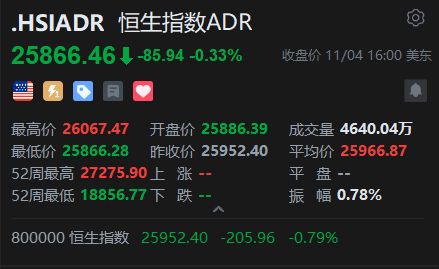
Market Overview - The US stock market indices collectively declined on Tuesday, with the Hang Seng Index ADR falling to 25,866.46 points, down by 85.94 points or 0.33% compared to the Hong Kong close [1]. Company Performance - Major blue-chip stocks mostly experienced declines, with HSBC Holdings closing at HKD 108.602, up by 0.56% compared to the Hong Kong close, while Tencent Holdings closed at HKD 623.88, down by 0.81% [3]. - Tencent Holdings saw a decrease of HKD 5.12 or 0.81% in its ADR price, closing at HKD 623.88 [4]. - Alibaba Group's ADR fell by HKD 4.20 or 2.57%, closing at HKD 159.00 [4]. - Xiaomi Group's ADR dropped by HKD 1.30 or 2.91%, closing at HKD 43.42 [4]. - AIA Group's ADR decreased by HKD 0.30 or 0.38%, closing at HKD 79.62 [4]. - NetEase's ADR fell by HKD 3.40 or 1.54%, closing at HKD 216.80 [4]. - Ctrip Group's ADR declined by HKD 4.50 or 0.81%, closing at HKD 548.50 [4]. - BYD's ADR decreased by HKD 2.00 or 2.02%, closing at HKD 97.10 [4]. - The Hong Kong Stock Exchange's ADR fell by HKD 3.20 or 0.75%, closing at HKD 425.60 [4].

11月3日【輪證短評】小鵬汽車、金沙中國、港交所、工商銀行
Ge Long Hui· 2025-11-04 20:31
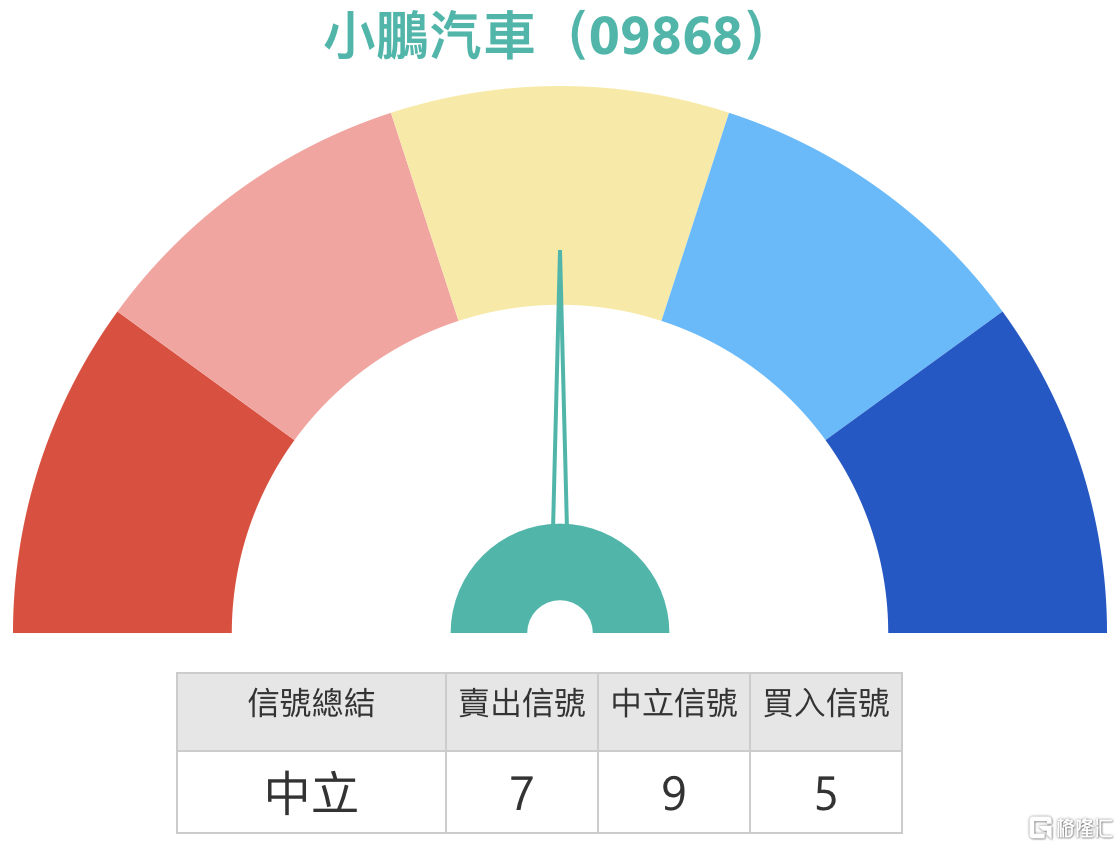
Group 1 - The core viewpoint of the article discusses the performance and investment opportunities related to various stocks, particularly focusing on options and warrants associated with these stocks [3][4][10] - The first stock analyzed is XPeng Motors (09868), which has shown a price increase, closing at 92 HKD, with potential resistance levels at 95.1 HKD and 99.7 HKD [3][4] - The article highlights four warrant products with exercise prices between 60 HKD and 61 HKD, noting their leverage ratios ranging from 3.3x to 3.5x, making them suitable for investors [4][5] Group 2 - The second stock discussed is Sands China (01928), which experienced a decline, closing at 19.95 HKD, but with increased trading volume, prompting interest in call options [10][11] - There is limited choice for January expiration products, leading to a recommendation for looking at April expiration products, which offer various types of options with leverage around 4x [11][12] - The article emphasizes the importance of comparing product terms, as even slight differences in leverage and implied volatility can significantly impact investment decisions [12][13] Group 3 - The third stock is Hong Kong Exchanges and Clearing (00388), which saw a price increase to 428.8 HKD, with a suggested support level at 417 HKD [16][17] - The article recommends selecting bull certificates with a redemption price below 412 HKD for safety, as they are less likely to be triggered compared to those closer to the current price [17][18] - It notes that the premium differences among these products can be significant, urging investors to carefully evaluate product terms [18] Group 4 - The fourth stock analyzed is Industrial and Commercial Bank of China (01398), which has shown a price increase to 6.17 HKD, with a resistance level at 6.2 HKD [21][22] - There are three put options available for January expiration, all being out-of-the-money, with exercise prices around 5.22 HKD [22][23] - The article stresses that while there are options available, none have a clear advantage, and investors should consider the bid-ask spread and the ability of these put options to respond to declines in the underlying stock [23]

11月3日【港股Podcast】恆指、小米集團、中海油、蔚來、快手、港交所
Ge Long Hui· 2025-11-04 19:51
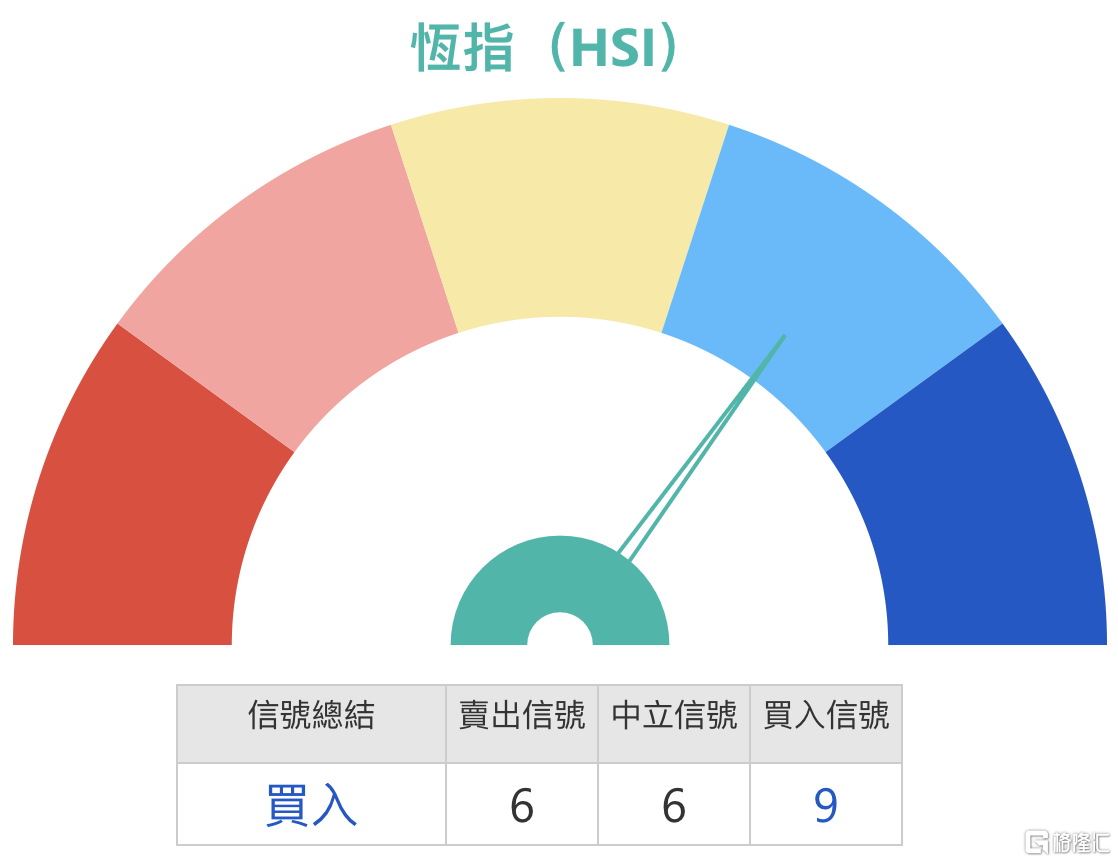
Group 1 - The Hang Seng Index (HSI) closed at 26,158 points, near the middle line of the Bollinger Bands at 26,163 points, indicating a potential for slight upward movement if trading volume increases [1][2] - Investors are divided, with bullish investors targeting levels between 26,300 and 26,500, while bearish investors see strong resistance at 26,200, predicting a potential drop of 300 points [1][2] - Current resistance is estimated at around 26,600 points, with a possibility of reaching 26,679 points if the index breaks through this level [2] Group 2 - Xiaomi's stock price rose slightly to 44.72 HKD, with a first resistance level at 48.1 HKD, and a potential upward movement towards 53.8 HKD if this level is breached [9][10] - Technical signals for Xiaomi show 11 buy signals and 6 sell signals, indicating a slightly positive short-term outlook [9][10] - The support level for Xiaomi is around 42.6 HKD, and if it falls below this, it could drop to 40 HKD [9][10] Group 3 - CNOOC's stock price closed at 20.46 HKD, close to the upper Bollinger Band, with a support level at 19.7 HKD [14] - If CNOOC's stock price drops below 19.7 HKD, it may further decline to 19.2 HKD [14] Group 4 - NIO's stock price increased to 56.9 HKD, with a resistance level at 59.9 HKD, and a potential rise to 63.2 HKD if this level is surpassed [18] - Investors are advised to choose options with a strike price about 10% out of the money and longer expiration dates for better safety [18] Group 5 - Kuaishou's stock price closed at 73.45 HKD, with a resistance level at 78.2 HKD, and a potential rise to 85.7 HKD if this level is broken [25][26] - Technical signals indicate 10 buy signals and 5 sell signals, suggesting a slightly positive short-term outlook [25][26] Group 6 - Hong Kong Exchanges and Clearing (HKEX) closed at 428.8 HKD, with a resistance level at 439 HKD, and a potential rise to 449 HKD if this level is breached [32] - Technical signals show 9 buy signals and 5 sell signals, indicating a slight preference for buying [32]

智通港股投资日志|11月5日
智通财经网· 2025-11-04 16:03
Group 1 - The article provides an overview of the upcoming events for Hong Kong-listed companies on November 5, 2025, including new stock activities and performance announcements [1][3] - Companies mentioned include 乐舒适 (in the process of IPO), 赛力斯 (listing date), and others such as 亚洲富思, 人和科技, 中国金石, 中原银行, 艾硕控股, 讯飞医疗科技, 圣马丁国际, 正乾金融控股, and 交银国际 [3]
金融工程定期:港股量化:10月港股市场表现不佳,11月增配中字头
KAIYUAN SECURITIES· 2025-11-04 14:16
- The report introduces the "Hong Kong Multi-Factor Model," which includes four categories of factors: technical, capital, fundamental, and analyst expectations. These factors are applied to Hong Kong Stock Connect constituent stocks and have demonstrated excellent performance in group analysis[36][41] - The "Hong Kong Stock Connect Preferred 20 Portfolio" is constructed monthly by selecting the top 20 stocks with the highest scores based on the multi-factor model. The portfolio is equally weighted, and the benchmark index is the Hong Kong Composite Index (HKD) (930930.CSI)[38] - The construction process of the "Hong Kong Stock Connect Preferred 20 Portfolio" involves evaluating stocks using the multi-factor model, ranking them based on their scores, and selecting the top 20 stocks for equal-weighted allocation[38] - The report evaluates the "Hong Kong Stock Connect Preferred 20 Portfolio" positively, noting its strong historical performance with an annualized excess return of 12.9% and an excess return volatility ratio of 1.0 over the period from January 2015 to October 2025[38][40] - The October 2025 performance of the "Hong Kong Stock Connect Preferred 20 Portfolio" showed a return of -3.8%, compared to the benchmark index return of -3.6%, resulting in an excess return of -0.1%[38] - The historical performance metrics of the "Hong Kong Stock Connect Preferred 20 Portfolio" include an annualized excess return of 12.9%, annualized excess volatility of 13.5%, excess return volatility ratio of 1.0, and maximum drawdown of 18.2% over the period from January 2015 to October 2025[39][40]
季报期关注绩优个股,看好后续非银业绩弹性空间
Changjiang Securities· 2025-11-04 13:44
Investment Rating - The report maintains a "Positive" investment rating for the investment banking and brokerage industry [8] Core Insights - A total of 46 listed brokerages reported their Q3 earnings, achieving revenue and net profit attributable to shareholders of 435.65 billion and 178.95 billion yuan respectively for the first three quarters of 2025, representing year-on-year growth of 17.7% and 62.2% [2][4] - The market trading activity remains high, and it is expected that the performance of brokerages will continue to grow significantly, presenting investment opportunities [4] - The insurance sector has seen a substantial upward adjustment in profit growth expectations for the first three quarters, with notable investment returns alleviating short-term concerns [4] - The report indicates a gradual improvement in overall cost-effectiveness for investments, supported by the logic of deposit migration, increased equity allocation, and improved new policy costs [4] Summary by Sections Earnings Performance - The report highlights the strong earnings performance of brokerages, with significant revenue and profit growth in Q3 2025 [2][4] - Specific recommendations include Jiangsu Jinzu, China Ping An, and China Pacific Insurance based on their stable profit growth and dividend rates [4] Market Trends - The non-bank financial index decreased by 0.5% this week, with a year-to-date increase of 7.6%, indicating a relatively weak performance compared to the broader market [5] - The average daily trading volume in the market increased to 232.53 billion yuan, up 29.38% from the previous period, reflecting a recovery in market activity [5][42] Regulatory Developments - Recent regulatory updates include the issuance of the "Qualified Foreign Investor System Optimization Work Plan" by the CSRC, aimed at enhancing the attractiveness of the domestic market to foreign investors [6][64] Company Announcements - Notable company earnings include New China Life Insurance reporting revenue and net profit of 137.25 billion and 32.86 billion yuan respectively, with year-on-year growth of 28.3% and 58.9% [6] - Other companies such as Guotai Junan and CICC also reported significant increases in revenue and net profit for the same period [6]



2025Q3公募基金持仓点评:非银港股配置比例环比显著提升,被动持仓占比仍高于主动
Changjiang Securities· 2025-11-04 13:13
Investment Rating - The report maintains a "Positive" investment rating for the investment banking and brokerage industry [9] Core Insights - The allocation of public funds to the non-bank sector in Hong Kong has significantly increased, with passive fund holdings surpassing those of active funds [2][12] - The insurance sector's allocation in Hong Kong has risen, with major holdings in China Pacific Insurance (H) and Ping An Insurance (H) [12] - The brokerage sector's allocation has also increased, focusing on leading institutions [12] - The multi-financial sector remains under-allocated, with holdings concentrated in the Hong Kong Stock Exchange [12] Summary by Sections Public Fund Holdings - In Q3 2025, the market value of non-bank sector holdings by active and passive funds was 153.66 billion and 2,061.14 billion respectively, with changes of -0.7% and +18.8% [12] - In Hong Kong, the market value for the non-bank sector was 113.85 billion and 496.35 billion, with increases of +34.5% and +234.6% [12] Insurance Sector - The allocation for passive funds in the insurance sector has increased, with holdings in Ping An (94.4%) and China Pacific (3.6%) [12] - Compared to the CSI 300, the insurance sector is under-allocated by 3.57 percentage points for active funds and 0.83 percentage points for passive funds [12] Brokerage Sector - The allocation for the brokerage sector has increased, with active fund holdings concentrated in CITIC Securities (22.8%) and Huatai Securities (16.0%) [12] - In Hong Kong, the market value for the brokerage sector was 0.07 billion and 1.50 billion, with changes of +0.01 percentage points and +0.95 percentage points [12] Multi-Financial Sector - The multi-financial sector's holdings are concentrated in the Hong Kong Stock Exchange, with a market value of 0.31 billion and 0.41 billion for active and passive funds respectively [12] - The sector remains under-allocated compared to the Hang Seng Index by 3.69 percentage points for active funds and 3.58 percentage points for passive funds [12] Overall Market Outlook - Since the beginning of 2025, the capital market has been recovering, and the brokerage sector's performance is expected to be resilient [12] - The insurance sector is anticipated to recover due to favorable policies and economic trends, indicating potential growth in the industry [12]
港股4日跌0.79% 收报25952.4点
Xin Hua Wang· 2025-11-04 10:11
Core Viewpoint - The Hong Kong stock market experienced a decline on November 4, with the Hang Seng Index falling by 205.96 points, or 0.79%, closing at 25,952.4 points. The total turnover for the day was 239.986 billion HKD [1]. Group 1: Index Performance - The Hang Seng Index decreased by 205.96 points, closing at 25,952.4 points, representing a decline of 0.79% [1]. - The National Enterprises Index fell by 85.52 points, closing at 9,173.21 points, with a drop of 0.92% [1]. - The Hang Seng Technology Index dropped by 104.19 points, closing at 5,818.29 points, reflecting a decrease of 1.76% [1]. Group 2: Blue Chip Stocks - Tencent Holdings increased by 0.16%, closing at 629 HKD [1]. - Hong Kong Exchanges and Clearing decreased by 0.75%, closing at 425.6 HKD [1]. - China Mobile rose by 0.58%, closing at 86.7 HKD [1]. - HSBC Holdings fell by 0.28%, closing at 108 HKD [1]. Group 3: Local Hong Kong Stocks - Cheung Kong Holdings increased by 1.02%, closing at 39.5 HKD [1]. - Sun Hung Kai Properties rose by 1.76%, closing at 98.25 HKD [1]. - Henderson Land Development increased by 0.65%, closing at 27.84 HKD [1]. Group 4: Chinese Financial Stocks - Bank of China rose by 0.22%, closing at 4.52 HKD [1]. - China Construction Bank increased by 1.39%, closing at 8.05 HKD [1]. - Industrial and Commercial Bank of China rose by 1.13%, closing at 6.24 HKD [1]. - Ping An Insurance increased by 0.44%, closing at 56.8 HKD [1]. - China Life Insurance rose by 0.49%, closing at 24.7 HKD [1]. Group 5: Oil and Petrochemical Stocks - China Petroleum & Chemical Corporation increased by 0.48%, closing at 4.23 HKD [1]. - China National Petroleum Corporation rose by 0.48%, closing at 8.33 HKD [1]. - CNOOC Limited decreased by 0.29%, closing at 20.4 HKD [1].