石药集团

Search documents
内幕交易金额近亿元,新诺威原董事长被罚500万,公司回应
2 1 Shi Ji Jing Ji Bao Dao· 2025-11-03 12:33
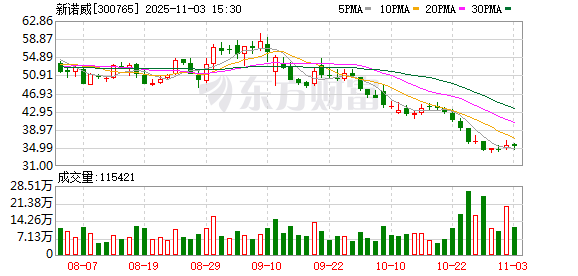
Core Viewpoint - The case involving Shiyao Group's executive director Pan Weidong highlights serious violations of insider trading regulations, leading to a significant penalty from the China Securities Regulatory Commission (CSRC) and intertwining with the failed major asset restructuring of Xin Nuo Wei [2][3]. Group 1: Insider Trading Case - Pan Weidong was fined 5 million yuan for insider trading involving nearly 100 million yuan, revealing misconduct by senior executives using undisclosed information for profit [2]. - The CSRC found that Pan Weidong purchased 2.74258 million shares of Shiyao Innovation (Xin Nuo Wei) for approximately 99.99 million yuan during the sensitive period of insider information [2]. - The investigation revealed that Pan Weidong was aware of the insider information no later than December 5, 2023, prior to the public announcement of the restructuring [2]. Group 2: Restructuring and Financial Impact - Xin Nuo Wei's proposed 7.6 billion yuan cash and 68.4 billion yuan stock acquisition of Shiyao Baike was terminated after 15 months due to changes in the pharmaceutical industry and capital market conditions [4]. - The failure of the restructuring has intensified operational pressures on Xin Nuo Wei, with a reported revenue of 1.593 billion yuan for the first three quarters of 2025, a year-on-year increase of 7.71%, but a net profit loss of 24 million yuan, a significant decline of 117.26% [4]. - Following the news of the insider trading case, Xin Nuo Wei's stock price experienced volatility, closing at 35.18 yuan per share with a total market capitalization of 49.4 billion yuan [4].

内幕交易金额近亿元,原董事长被罚500万,新诺威回应
2 1 Shi Ji Jing Ji Bao Dao· 2025-11-03 12:29
Core Viewpoint - The announcement reveals that the former chairman of New Nuo Wei, Pan Weidong, engaged in insider trading involving nearly 100 million yuan, leading to a fine of 5 million yuan from the China Securities Regulatory Commission (CSRC) [1] Group 1: Company Actions - Shiyao Group's subsidiary, New Nuo Wei, plans to acquire another subsidiary, Shiyao Group Baike (Shandong) Biopharmaceutical Co., Ltd., and raise supporting funds [1] - The major shareholder of New Nuo Wei, Enbi Pu Pharmaceutical Co., Ltd., intends to increase its stake in New Nuo Wei by up to 100 million yuan within six months [1] Group 2: Regulatory Actions - The CSRC determined that the acquisition transaction was insider information prior to its public announcement, and Pan Weidong was aware of this information before December 5, 2023 [1] - Pan Weidong purchased 2.74258 million shares of New Nuo Wei using Enbi Pu's securities account during the sensitive period, amounting to approximately 99.9888 million yuan [1] - The CSRC ordered Pan Weidong to legally handle the illegally held securities and imposed a fine of 5 million yuan [1] Group 3: Company Response - New Nuo Wei's securities department confirmed that Pan Weidong's resignation as chairman on September 23, 2024, was unrelated to the insider trading investigation [1] - The company did not issue any announcements regarding the resignation as the relevant personnel are no longer affiliated with the company [1]
抗流感药需求激增:市场“厮杀”升级,谁能抢占C位?
2 1 Shi Ji Jing Ji Bao Dao· 2025-11-03 12:07
Core Viewpoint - The article discusses the increasing risk of influenza transmission in China due to the overlap of the flu season and the peak travel period for outbound tourism, highlighting the importance of antiviral treatments and vaccination for public health [1][3][4]. Group 1: Influenza Overview - Influenza is an acute respiratory infectious disease caused by influenza viruses, with seasonal outbreaks primarily from October to February in the Northern Hemisphere [1]. - The flu season coincides with a peak in outbound tourism from China, which is expected to exceed 155 million trips by 2025, increasing the risk of global flu transmission [3]. Group 2: Antiviral Treatments - The current antiviral medications available in China include neuraminidase inhibitors, RNA polymerase inhibitors, and hemagglutinin inhibitors, with oseltamivir and baloxavir marboxil being the preferred treatments [1][6]. - The importance of initiating antiviral treatment within 48 hours of symptom onset is emphasized, as it significantly improves treatment outcomes [5][6]. Group 3: Market Dynamics - Following the expiration of Roche's oseltamivir patent in 2016, there has been a surge in generic versions, leading to intense market competition, with nearly 140 related drug approvals in China [2][7]. - Baloxavir marboxil, a second-generation flu treatment, has gained market traction since its approval in 2021, with sales expected to exceed 1.5 billion yuan by 2024 [8][9]. Group 4: Market Growth Potential - The Chinese antiviral drug market for influenza was valued at 10.74 billion yuan in 2023, showing a year-on-year growth of 197.51% [9]. - Projections indicate a compound annual growth rate of 20.2% from 2024 to 2028, with the market potentially reaching 26.9 billion yuan by 2028 [9].
创新药盘点系列报告(23):MNC药企在心血管领域密集布局,聚焦PCSK9及Lp(a)两大靶点
Guoxin Securities· 2025-11-03 11:59
Investment Rating - The report maintains an "Outperform" rating for the industry [1] Core Insights - ASCVD (Atherosclerotic Cardiovascular Disease) is a leading cause of death globally, with significant mortality rates in both the US and China. In 2022, approximately 370,000 deaths from coronary heart disease and 160,000 from stroke were reported in the US, while China saw around 1.96 million deaths from ischemic heart disease and 2.3 million from stroke in 2021 [2][5][26] - The report highlights the increasing focus of multinational pharmaceutical companies (MNCs) on cardiovascular treatments, particularly targeting PCSK9 and Lp(a). The global market for PCSK9 is projected to reach between $11 billion and $19 billion, while the Lp(a) inhibitor market is expected to reach $3 billion to $7 billion [2][3] - Upcoming Phase 3 clinical trials for cardiovascular endpoints are anticipated to yield significant data in the coming years, with several studies scheduled for completion between 2025 and 2029 [2][3] Summary by Sections ASCVD Disease Burden - ASCVD encompasses a range of conditions including coronary artery disease, cerebrovascular disease, and peripheral artery disease. It is associated with significant mortality and morbidity, with controllable risk factors such as dyslipidemia, diabetes, hypertension, and smoking [5][6] LDL-C: Unmet Needs Post-Statin Therapy - Despite the widespread use of statins, a substantial proportion of patients do not achieve target LDL-C levels, indicating a significant unmet need in the market for additional therapies [26] Lp(a): An Independent Risk Factor - Lp(a) is identified as an emerging risk factor for ASCVD, independent of LDL-C levels. Its levels are primarily genetically determined and show a skewed distribution in the population, with a notable percentage of individuals having elevated levels that correlate with increased cardiovascular risk [35][40] Investment Recommendations - The report identifies key companies involved in the development of Lp(a) inhibitors, including Hengrui Medicine and CSPC Pharmaceutical Group, which have entered into licensing agreements with major pharmaceutical companies for their respective Lp(a) small molecule inhibitors [2][3]



创新药,卷土重来?高弹性港股通创新药ETF(520880)放量上探3.37%强势领跑!基金经理重申“高胜率区间”
Xin Lang Ji Jin· 2025-11-03 11:37
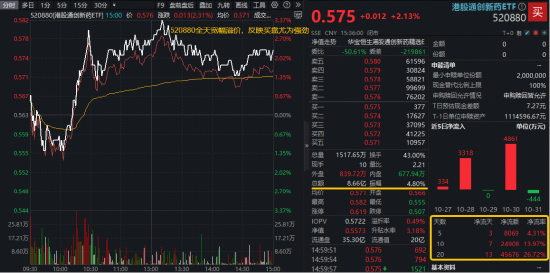
Core Viewpoint - The innovative drug sector is experiencing a significant rebound, with the Hong Kong Stock Connect Innovative Drug ETF (520880) showing strong performance and increased trading volume, indicating robust investor interest [1][2]. Group 1: Market Performance - The Hong Kong Stock Connect Innovative Drug ETF (520880) saw a V-shaped reversal, rising by 3% in the morning and peaking at 3.37% in the afternoon, ultimately closing up by 2.13%, outperforming all other pharmaceutical ETFs in the market [1]. - The ETF recorded a trading volume of 8.66 billion yuan, the highest since September 12, and has seen two consecutive days of increased volume [1]. - Out of the 37 innovative drug companies covered by the ETF, 33 stocks closed in the green, with notable gains from companies like First Signal Pharmaceuticals (+7.36%) and Innovent Biologics (+4.32%) [1]. Group 2: Policy and Industry Developments - The introduction of a "commercial insurance innovative drug catalog" mechanism in the 2025 national medical insurance negotiations is expected to benefit the sector, along with the anticipated breakthrough in pricing negotiations for CAR-T therapies [1]. - At the ESMO 2025 conference, domestic innovative drug companies had 35 research projects selected for oral presentations, setting a new record [1]. - A significant collaboration was announced between Innovent Biologics and Takeda, with a total scale of up to 11.4 billion USD, highlighting the growing partnerships in the industry [1]. Group 3: Future Outlook - The fund manager of the Hong Kong Stock Connect Innovative Drug ETF (520880) emphasized that the innovative drug market could see another surge, suggesting that the current period may represent a high-probability zone for medium to long-term investments in innovative drugs [2]. - The market is expected to transition from a funding-driven phase to a fundamental-driven phase, with a focus on quality factors, potentially favoring leading companies [2]. - The ETF is designed to track the Hang Seng Hong Kong Stock Connect Innovative Drug Select Index, which exclusively includes innovative drug development companies, with over 70% of its holdings in large-cap leaders [2].
2025的医药板块,创新药与传统药企“冰火两重天”
3 6 Ke· 2025-11-03 11:08
Core Insights - The pharmaceutical sector in 2025 is characterized by a stark contrast between innovative drug companies thriving in a capital-rich environment and traditional pharmaceutical firms struggling with declining revenues and profits [1][8]. Innovative Drug Sector - The A-share innovative drug sector experienced unprecedented growth in 2025, with external licensing transactions totaling nearly $66 billion in the first half, surpassing the entire 2024 figure of $51.9 billion, and reaching over $100 billion by September, a 170% year-on-year increase [2][4]. - Stock prices of innovative drug companies surged, with notable examples like Hengrui Medicine's share price rising from 65 yuan to 98 yuan, a 50.77% increase, and its market capitalization exceeding 500 billion yuan [4][5]. - The performance of innovative drug companies was robust, with Hengrui Medicine reporting a 15.88% increase in revenue to 15.76 billion yuan and a 29.67% rise in net profit to 4.45 billion yuan in the first half of 2025 [5]. - The integration of advanced technologies such as AI and big data into drug development has significantly enhanced efficiency and reduced costs, exemplified by Jingtai Technology's AI-driven experimental platform [6][7]. - The continuous influx of capital into the innovative drug sector has provided substantial financial support, with cumulative financing exceeding 1 trillion yuan from 2019 to 2025 [7]. Traditional Pharmaceutical Sector - In stark contrast, traditional pharmaceutical companies faced a challenging environment in 2025, with overall industry revenue declining by 3.06% and net profit dropping by 12.50% in the first half of the year [8]. - The chemical pharmaceutical sector saw a revenue decrease of 3.22% to 271.4 billion yuan, while the traditional Chinese medicine sector also reported a decline in revenue of over 5% [8]. - The vaccine sector experienced significant pressure, with revenues and net profits declining by 58% and 128.6%, respectively, due to intensified competition and reduced demand [8][9]. - The ongoing centralized procurement policies have severely impacted traditional pharmaceutical companies, leading to significant price reductions and profit margin compression [9][10]. - Many traditional firms are recognizing the need to transition to innovative drug development, but face substantial challenges including high R&D costs, lengthy development timelines, and the risk of clinical trial failures [10][11]. Market Dynamics and Future Outlook - The aging population and rising prevalence of chronic diseases are driving demand for innovative drugs, with elderly patients increasingly favoring targeted therapies over traditional treatments [12][13]. - Innovative drug companies are investing heavily in R&D, with Hengrui Medicine allocating 3.56 billion yuan in the first half of 2025, representing 22.56% of its revenue [14]. - Despite the current success of innovative drugs, challenges such as high R&D risks, intense market competition, and potential valuation bubbles pose significant threats to the sustainability of this growth [15].
石药集团(01093) - 截至2025年10月31日止月份之股份发行人的证券变动月报表
2025-11-03 10:07
股份發行人及根據《上市規則》第十九B章上市的香港預託證券發行人的證券變動月報表 | 截至月份: | 2025年10月31日 | 狀態: 新提交 | | --- | --- | --- | | 致:香港交易及結算所有限公司 | | | | 公司名稱: | 石藥集團有限公司 | | | 呈交日期: | 2025年11月3日 | | | I. 法定/註冊股本變動 不適用 | | | FF301 第 1 頁 共 10 頁 v 1.1.1 FF301 II. 已發行股份及/或庫存股份變動 | 1. 股份分類 | 普通股 | 股份類別 | 不適用 | | 於香港聯交所上市 (註1) | 是 | | | --- | --- | --- | --- | --- | --- | --- | --- | | 證券代號 (如上市) | 01093 | 說明 | | | | | | | | | 已發行股份(不包括庫存股份)數目 | | 庫存股份數目 | | 已發行股份總數 | | | 上月底結存 | | | 11,522,451,732 | | 0 | | 11,522,451,732 | | 增加 / 減少 (-) | | | 0 ...
石药集团高管涉内幕交易被罚500万!
Xin Lang Cai Jing· 2025-11-03 07:52
Core Points - The China Securities Regulatory Commission (CSRC) issued an administrative penalty decision against Mr. Pan Weidong, an executive director of CSPC Pharmaceutical Group Limited, imposing a fine of 5 million yuan for insider trading [1][4]. Group 1: Key Events - On December 8, 2023, CSPC's indirect non-wholly owned subsidiary, CSPC Innovation Pharmaceutical Co., Ltd., announced that its largest shareholder, CSPC Enbipu Pharmaceutical Co., Ltd., plans to increase its stake in CSPC Innovation by up to 100 million yuan within six months [3]. - On January 10, 2024, CSPC Innovation announced a trading suspension to acquire another wholly-owned subsidiary of CSPC, CSPC Baike (Shandong) Biopharmaceutical Co., Ltd., with the restructuring led by Pan Weidong [3]. - The CSRC confirmed that the restructuring transaction was insider information prior to its public disclosure, and Pan Weidong was aware of this information no later than December 5, 2023. He purchased 2.74258 million shares of CSPC Innovation for approximately 99.9888 million yuan between December 8 and December 20, 2023 [3]. Group 2: Penalty Results and Future Arrangements - The CSRC determined that Pan Weidong's actions violated relevant provisions of the Securities Law of the People's Republic of China, resulting in a penalty of 5 million yuan and a directive to handle illegally held securities [4]. - As of the announcement date, CSPC, through Enbipu and another wholly-owned subsidiary, held a total of 1.0486 billion shares of CSPC Innovation, accounting for approximately 74.66% of its total share capital, with the involved increase representing about 0.23% of CSPC Innovation's total share capital [4]. - CSPC stated that its business operations remain normal and that the penalty is not expected to negatively impact overall business operations. Additionally, CSPC Innovation announced on April 28, 2025, that the aforementioned restructuring transaction has been terminated and was not completed [4].
涉内幕交易近亿元股票,石药集团执行董事潘卫东被罚500万元
Sou Hu Cai Jing· 2025-11-03 07:20
Core Viewpoint - The announcement reveals that Pan Weidong, an executive director of CSPC Pharmaceutical Group, has been penalized by the China Securities Regulatory Commission (CSRC) for insider trading related to a proposed acquisition of a subsidiary, which was later terminated due to market conditions [1][2]. Group 1: Regulatory Actions - Pan Weidong received an administrative penalty decision from the CSRC for insider trading, having purchased shares of CSPC Innovation before the public announcement of a significant acquisition [1]. - The CSRC found that Pan Weidong was aware of insider information by December 5, 2023, and subsequently bought 2,742,580 shares for approximately RMB 99.99 million between December 8 and December 20, 2023 [1]. - A fine of RMB 5 million was imposed on Pan Weidong, who also exhibited non-cooperation during the investigation [1]. Group 2: Transaction Details - The acquisition announcement was made on January 10, 2024, but the transaction was ultimately terminated on April 28, 2025, due to considerations of the pharmaceutical industry and capital market conditions [2]. - CSPC Pharmaceutical Group holds approximately 74.66% of CSPC Innovation's total share capital, including recent share purchases [2]. Group 3: Financial Performance - CSPC Innovation reported a revenue of RMB 1.59 billion for the first three quarters of the year, reflecting a year-on-year increase of 7.7% [3]. - The company recorded a net loss attributable to shareholders of RMB 24.05 million, which is a 117.3% improvement compared to the previous year [3]. - The adjusted net loss was RMB 64.82 million, showing a 147.4% decrease year-on-year [3].
政策面、基本面、估值共振,创新药迎来是“黄金赛道”
Sou Hu Cai Jing· 2025-11-03 06:53
Core Viewpoint - The investment safety margin for innovative drugs has increased significantly after a round of adjustments, and the upcoming national medical insurance negotiations in the fourth quarter are expected to catalyze further value in innovative drug investments [2][3]. Group 1: Market Performance - The innovative drug sector experienced a rebound on October 31, with multiple indices rising over 3%, including a 3.71% increase in the Guozheng Hong Kong Stock Connect Innovative Drug Index [3]. - Year-to-date performance shows that several innovative drug indices have increased by over 80%, with some reaching double their values at peak [4]. - Despite a significant adjustment since mid-September, where major indices fell over 10% and some over 20%, the fundamental and policy aspects suggest a potential for continued growth [4][6]. Group 2: Fundamental Drivers - The aging population in China is a fundamental driver for the pharmaceutical sector, with projections indicating that by the end of 2024, there will be 310 million individuals aged 60 and above, accounting for 22% of the total population [5]. - Continuous R&D investment and accelerated expansion into overseas markets are identified as core engines for profit growth among innovative drug companies [5][6]. - As of October 31, 52 out of 80 innovative drug companies reported a year-on-year increase in net profit for the first three quarters, indicating a shift towards sustainable profitability [6]. Group 3: Policy Environment - The "14th Five-Year Plan" emphasizes the acceleration of health initiatives, supporting the development of innovative drugs and medical devices, which lays a solid foundation for the sector's growth over the next five years [6]. - The introduction of the "Commercial Insurance Innovative Drug Directory" in the 2025 national medical insurance negotiations is expected to broaden market opportunities for innovative drugs [6]. Group 4: Investment Opportunities - For ordinary investors, the complexity of investing in innovative drugs suggests that utilizing ETFs may be a more accessible approach [7]. - The Southern Hong Kong Stock Connect Innovative Drug ETF (159297) is highlighted as a noteworthy option, closely tracking the Guozheng Hong Kong Stock Connect Innovative Drug Index, which has been refined to exclude CXO companies, enhancing its focus on pure innovative drug firms [7][8]. - Historical performance data shows that the Guozheng Hong Kong Stock Connect Innovative Drug Index has delivered strong returns over various time frames, making it an attractive investment vehicle [8]. Group 5: Valuation Metrics - As of October 31, the TTM P/E ratio for the Guozheng Hong Kong Stock Connect Innovative Drug Index was 41.09, indicating a relatively low valuation compared to historical levels [9]. - The macroeconomic environment appears stable, with ongoing potential catalysts in the innovative drug sector, including recent breakthroughs at international conferences and favorable domestic policy developments [9].