邮储银行

Search documents
银行业十五五展望系列专题(上篇):回眸十四五,监管引导和主动求变下的银行经营理念重构
Shenwan Hongyuan Securities· 2025-12-31 14:14
Investment Rating - The report indicates a positive outlook for the banking industry, suggesting a return to a price-to-book (PB) ratio of 1x during the "15th Five-Year Plan" period, focusing on stable profitability and high-quality development [3][4]. Core Insights - The banking sector is transitioning from a focus on scale to quality, with an emphasis on risk management and structural optimization. The "15th Five-Year Plan" includes the goal of building a strong financial nation, highlighting the importance of high-quality development [3][16]. - The report identifies key changes in the banking industry during the "14th Five-Year Plan," including a shift in credit structure, a focus on profitability, and the need for banks to balance risk and efficiency [2][4]. - Regulatory support is expected to stabilize net interest margins, which have reached record lows, with a projected recovery in the coming years [5][19]. Summary by Sections 1. From Quantity to Quality - The banking industry has evolved through three five-year plans, with a shift from rapid expansion to a focus on quality and risk management. The current phase emphasizes high-quality development and financial support for key sectors [2][10]. 2. Developments During the "14th Five-Year Plan" 2.1 ROE: Resilience of State-Owned Banks and Advantages of City Commercial Banks - The return on equity (ROE) for listed banks has remained around 10%, with city commercial banks showing a slight advantage due to higher leverage and better provisioning [19][20]. 2.2 Credit: Moving Away from Scale to Balance Capital and Efficiency - Banks are prioritizing structural transformation over sheer volume, focusing on supporting key sectors and optimizing credit distribution [4][12]. 2.3 Interest Margin: Recovery from Continuous Decline - The report anticipates a stabilization of net interest margins, which have been under pressure, with regulatory measures aimed at supporting banks [5][19]. 2.4 Risk: Provisioning to Support Stability - The banking sector is expected to manage risks more effectively, with a focus on maintaining adequate provisions to support profitability during challenging economic conditions [4][19]. 2.5 Financial Markets: An Alternative Revenue Stream - The report highlights the increasing importance of financial market activities as a means to smooth revenue amid declining interest income, with banks diversifying their investment strategies [4][19]. 3. Investment Analysis Opinion - The report suggests a dual strategy of focusing on leading banks and undervalued city commercial banks, anticipating a recovery in valuations for state-owned banks that have been lagging [3][4].


邮储银行滨州市分行:8亿银团赋能沾化300MW渔光互补项目
Qi Lu Wan Bao· 2025-12-31 14:03
Group 1 - The project involves a 300MW fish-solar complementary photovoltaic power generation base in Shandong Province, utilizing saline-alkali land for dual purposes: energy generation and shrimp farming [1] - The project is developed by Jinhui New Energy, which employs a multi-faceted approach including "fishing, solar, storage, and transmission" to maximize land use [1] - The project faced significant financing challenges due to its large scale and tight timeline, necessitating financial support from Postal Savings Bank [1] Group 2 - Postal Savings Bank initiated a green credit approval process to expedite financing for the project, completing the necessary approvals in just two weeks [2] - The bank successfully led a syndicate to secure 800 million yuan in funding, providing crucial financial support to the project [2] - As of August, Postal Savings Bank's green loan balance reached 4.331 billion yuan, with a year-on-year growth rate of 20.14%, significantly outpacing other loan growth rates [2]

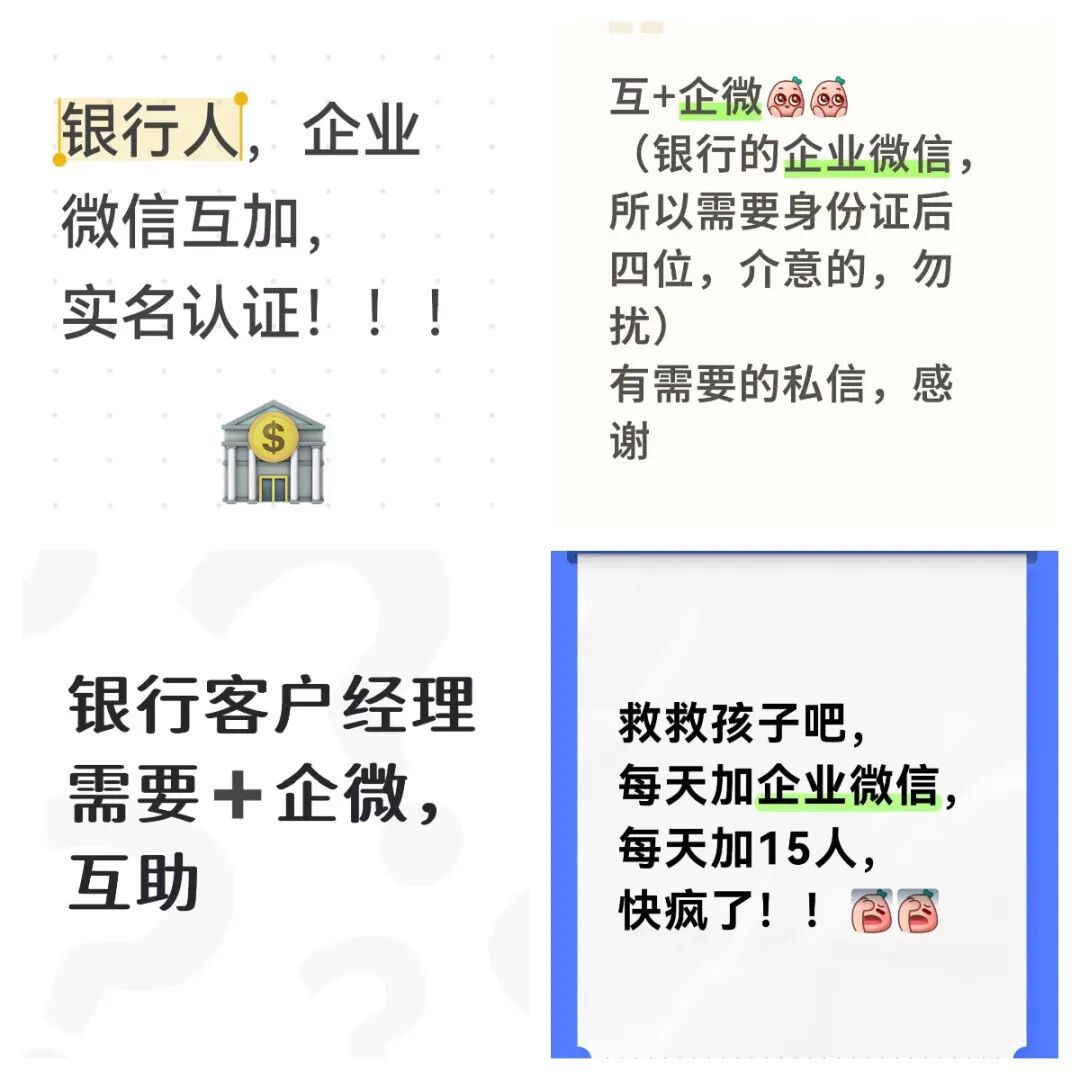
“每天要加十几个,完不成扣钱或加班”!银行员工为企业微信考核伤脑筋,有人去电商买量,还有同行发帖求“互加”
Mei Ri Jing Ji Xin Wen· 2025-12-31 13:40
Core Viewpoint - Banks are increasingly implementing performance assessments based on the addition of clients on enterprise WeChat, reflecting the pressure on retail banking amid declining revenues and profits in the sector [1][17]. Group 1: Performance Assessment and Pressure - Many banks have set specific targets for adding clients on enterprise WeChat, with some requiring customer managers to add up to 100 clients per month, leading to significant pressure on employees [4][6]. - Employees are sharing their enterprise WeChat QR codes on social media to meet these targets, often incentivized by monetary rewards or penalties for failing to meet the requirements [2][5]. - The assessment mechanisms include strict monitoring and penalties, such as deductions from salaries for not meeting the required number of added clients [6][9]. Group 2: Rationale Behind Enterprise WeChat Adoption - The push for enterprise WeChat is partly to prevent "client privatization," ensuring that client relationships remain with the bank rather than individual employees [9][10]. - Banks view enterprise WeChat as a tool for unified client management, allowing for better data collection and analysis of customer behavior and preferences [9][10]. - The financial industry is facing rising customer acquisition costs, making effective client engagement through platforms like enterprise WeChat increasingly important [10][17]. Group 3: Challenges and Misconceptions - There are significant challenges in the implementation of enterprise WeChat, including the perception that the current assessment system is flawed and does not effectively utilize the platform's potential [13][16]. - Many employees express concerns about the quality of interactions with clients, often resorting to generic content that fails to engage customers meaningfully [15][16]. - The focus on quantitative metrics, such as the number of added clients, often overshadows the need for qualitative interactions that drive actual business results [16][17]. Group 4: Retail Banking Performance - Retail banking is experiencing a downturn, with many banks reporting declines in retail revenue and profits compared to the previous year [17][18]. - Specific banks, such as Ping An Bank and Zhejiang Commercial Bank, have seen significant drops in retail revenue, with some experiencing double-digit declines [18]. - Despite some banks reporting growth in retail profits, this is often due to low comparative bases from the previous year, indicating underlying challenges in the retail banking sector [19][20]. Group 5: Success Stories and Future Outlook - Some banks have successfully leveraged enterprise WeChat to enhance customer engagement, with notable increases in client activity and retention rates [20][21]. - For instance, the Industrial and Commercial Bank of China reported significant growth in the number of clients added through enterprise WeChat, leading to improved customer engagement metrics [20][22]. - The ongoing digital transformation in banking emphasizes the need for effective use of platforms like enterprise WeChat to drive profitability and customer satisfaction [10][17].




银行员工为企业微信考核伤脑筋,有人去电商买量,还有同行发帖求“互加”
Mei Ri Jing Ji Xin Wen· 2025-12-31 13:36
Core Viewpoint - Banks are increasingly focusing on the assessment of adding clients via enterprise WeChat as a key performance indicator (KPI) amid challenges in retail banking, leading to a surge in social media posts where employees seek mutual additions to meet their targets [1][22]. Group 1: KPI and Assessment Mechanisms - Many banks have set specific targets for adding enterprise WeChat contacts, with requirements such as 50 contacts per month for some employees, and penalties for not meeting these targets [5][8]. - The assessment includes financial penalties, such as a deduction of 300 yuan for failing to meet monthly targets, and some banks have implemented a ranking system with monetary rewards for top performers [8][12]. - The pressure to meet these KPIs has led to a culture of mutual assistance among bank employees, with many posting their WeChat QR codes on social media to gain more contacts [2][3]. Group 2: Challenges and Pain Points - Employees express frustration over the pressure to add contacts, often feeling compelled to work overtime to meet their targets [17]. - The current assessment system is criticized for focusing solely on frontline employees, neglecting the role of middle management in effectively utilizing enterprise WeChat [18][20]. - There is a concern that the quality of interactions is suffering, as many employees are merely adding contacts to fulfill their quotas rather than engaging meaningfully with clients [19]. Group 3: Industry Context and Performance - The retail banking sector is experiencing significant pressure, with many banks reporting declines in retail revenue and profits compared to the previous year [22][24]. - For instance, several banks, including Postal Savings Bank and Agricultural Bank, have seen retail revenue drop by over 6% year-on-year [23]. - In response to these challenges, banks are leveraging enterprise WeChat as a tool for deeper customer engagement, aiming to enhance client interaction and operational efficiency [25][26].
存钱送电动车还垫钱?2025银行揽储卷疯了,背后藏着国际资本暗战
Sou Hu Cai Jing· 2025-12-31 12:52
Core Viewpoint - The banking sector in China is experiencing intense competition for deposits, with various strategies employed by different types of banks to attract customers, leading to potential risks and unsustainable practices in the long term [1][10]. Group 1: Deposit Strategies - State-owned banks leverage their strong financial backing, with some increasing large deposit rates by 5% without offering incentives [3]. - Joint-stock banks are targeting middle-class consumers with promotional offers, such as airport lounge access for large deposits [5]. - City and rural commercial banks are engaging in aggressive tactics, including offering physical goods like cooking oil for deposits [5][7]. Group 2: Risks and Consequences - Some bank employees are resorting to personal funds to incentivize clients, indicating a desperate attempt to meet performance targets [7]. - There are reports of unethical practices, such as using public funds for gifts, which can lead to significant financial losses for the banks involved [8]. - The intense competition for deposits is causing banks to face rising costs, with some reporting a 20% drop in profits in the first three quarters of the year [16]. Group 3: External Influences - Foreign investment in RMB assets has reached 10.42 trillion, the highest in 43 months, driven by stable interest rates and currency [10][12]. - The influx of foreign capital is crucial for banks to maintain lending capabilities, supporting domestic enterprises in global markets [14]. Group 4: Regulatory Response - The central bank has increased the emphasis on the stability of funding costs in its assessments, indicating a shift towards more sustainable banking practices [21]. - Banks are beginning to adapt by promoting products with social or environmental benefits, such as "green deposits" for renewable energy projects [21]. Group 5: Future Outlook - The banking sector must transition from aggressive deposit acquisition to sustainable practices that focus on effective management of resources [23]. - Consumers are advised to prioritize the safety of their deposits over promotional offers, emphasizing the importance of deposit insurance [24].
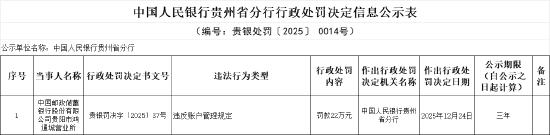
邮储银行贵阳市鸿通城营业所被罚22万元:违反账户管理规定
Xin Lang Cai Jing· 2025-12-31 12:50
Core Viewpoint - China Postal Savings Bank's Guiyang Hongtongcheng branch was fined 220,000 yuan for violating account management regulations as per the announcement from the People's Bank of China Guizhou branch [1][2]. Group 1 - The fine imposed on China Postal Savings Bank's Guiyang branch amounts to 220,000 yuan [1][2]. - The violation pertains to account management regulations [1][2]. - The administrative penalty was announced on December 24, 2025 [2].
向新、向智、向全球:2025中国快递业的突围与重塑 | 刻度2025
Sou Hu Cai Jing· 2025-12-31 12:46
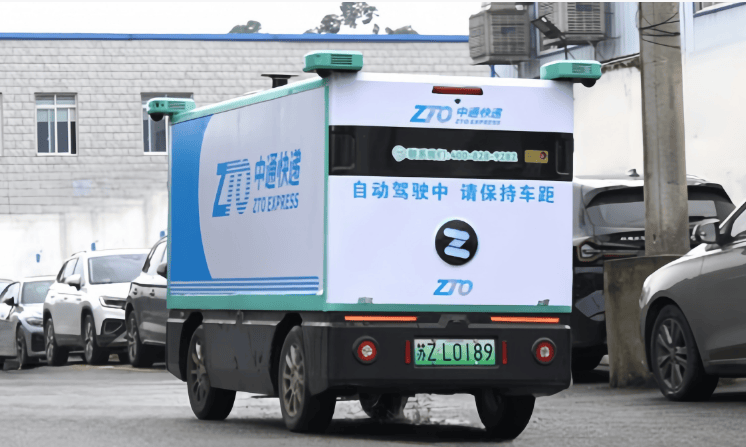
Core Insights - The Chinese express delivery industry has shown resilience, with express business volume exceeding 180 billion pieces and revenue reaching 1.355 trillion yuan in 2025, marking a year-on-year growth of 14.9% and 7.1% respectively [1] - The industry is undergoing a structural transformation, shifting focus from quantity to quality, characterized by smart, green, and globalized operations [1] Group 1: Industry Growth and Transformation - In 2025, the express delivery business volume reached 1.807 billion pieces, reflecting a robust growth rate of 14.9% [1] - The revenue from express delivery services also increased to 1.355 trillion yuan, indicating a growth of 7.1% [1] - The industry is transitioning from a focus on speed and volume to an emphasis on quality and efficiency, driven by technological advancements [1] Group 2: Technological Advancements - Unmanned delivery vehicles have become commonplace, with Zhongtong deploying a fleet of 3,000 vehicles across over 260 cities, delivering more than 8 million packages daily [2] - AI technologies are being integrated across the entire logistics chain, enhancing efficiency and reducing costs for major companies like Yunda, SF Express, and JD Logistics [5][9] - JD Logistics' Super Brain 2.0 system utilizes deep learning and optimization techniques to improve decision-making and operational efficiency [9] Group 3: Global Expansion Strategies - Chinese express giants are shifting their focus to overseas markets as domestic growth slows, with strategies evolving from serving Chinese cross-border e-commerce to building local supply chain networks [10][11] - Companies like Jitu Express and Cainiao are expanding their presence in Southeast Asia and Europe, with significant increases in package volume and service offerings [11] Group 4: Rural and Green Development - The "Express into Village" initiative has achieved 100% coverage in rural logistics networks, significantly increasing the volume of packages delivered to rural areas [13] - The revised express delivery regulations emphasize green packaging and sustainable practices, pushing companies to adopt eco-friendly solutions [14] - The integration of express services with rural e-commerce is enhancing economic activity in rural areas, with significant increases in agricultural product shipments [13] Group 5: Future Challenges and Opportunities - The industry faces challenges in balancing automation with job stability, localizing services in international markets, and ensuring sustainable business practices during the green transition [15] - The transformation of the express delivery sector is not just about package delivery but also about enhancing connectivity, efficiency, and the future economic landscape [15]
【财闻联播】关于《股票上市规则》,深交所发布!首批国产四价HPV疫苗上市!
券商中国· 2025-12-31 12:29
Macro Dynamics - The Ministry of Commerce announced safeguard measures for imported beef, stating that an investigation was initiated on December 27, 2024, due to domestic industry requests. The measures include country-specific quotas and additional tariffs for three years, with annual quota increases to support the domestic industry [2] Financial Institutions - Major state-owned banks, including ICBC, ABC, CCB, BOC, and Postal Savings Bank, announced that starting January 1, 2026, interest will be paid on the balances of real-name digital RMB wallets at the same rate as current deposits. The announcement emphasizes the distinction between real-name and anonymous wallets, with specific interest rules applying only to real-name wallets [9] Market Data - The A-share market closed on December 31, 2025, with the Shanghai Composite Index rising 0.09% for a total annual increase of 18.41%, marking a ten-year high. The Shenzhen Component Index increased by 29.87% over the year, while the ChiNext Index saw a significant rise of 49.57% [11] - The Hong Kong stock market also reported strong performance, with the Hang Seng Index increasing by 27.77% for the year, the best annual performance since 2017. The Hang Seng Tech Index rose by 23.45%, marking its best annual performance since 2020 [12] Company Dynamics - The first domestically produced quadrivalent HPV vaccine has been launched, developed by China National Pharmaceutical Group. The vaccine covers four HPV types and has shown 100% efficacy in preventing certain precancerous lesions in clinical trials, providing a cost-effective option for women aged 18 to 45 [14] - Tianqi Materials announced an expected net profit increase of 127.31% to 230.63% for 2025, driven by rising demand in the new energy vehicle and energy storage markets, along with improved production efficiency [15] - Platinum Technology is under investigation by the China Securities Regulatory Commission for suspected violations of information disclosure laws, but the company stated that its operations remain normal [16] - Changan Ford announced a recall of 38,473 units of the Ford Focus due to compliance with regulations regarding defective automotive products [17]



六大行集体官宣,事关数字人民币
Zhong Guo Zheng Quan Bao· 2025-12-31 12:28
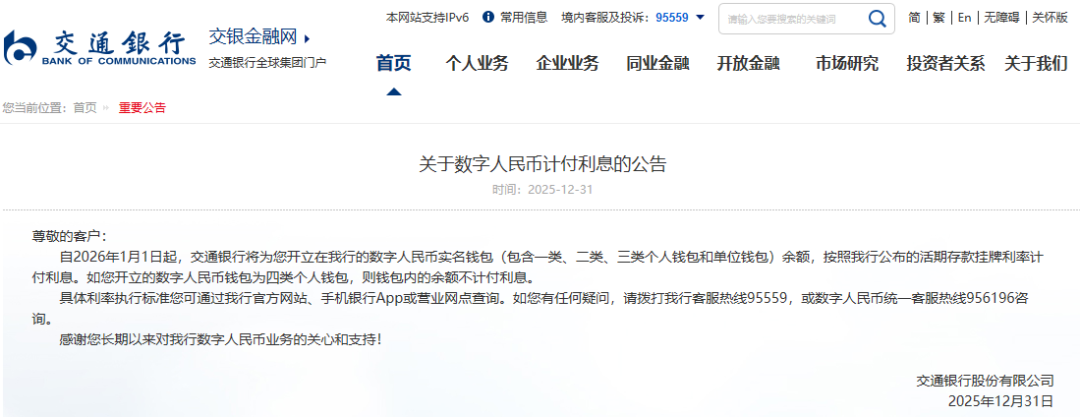
Core Viewpoint - The announcement by six major banks in China regarding interest payments on digital RMB wallet balances marks a significant transition from "digital cash (M0)" to "digital deposit currency," indicating a shift in the nature of liabilities from the central bank to commercial banks [1][2] Group 1: Announcement Details - Starting from January 1, 2026, the six major banks will pay interest on the balances of real-name digital RMB wallets at the rate of the current deposit interest rate [1] - The current deposit interest rate for the Bank of Communications is set at 0.05% [1] - Balances in type four personal wallets will not earn interest, and specific interest rate standards can be checked through the bank's official website, mobile banking app, or physical branches [1] Group 2: Implications and Effects - This move enhances user willingness to hold digital RMB, promoting its adoption and dissemination [2] - It incorporates banking institutions into the reserve requirement framework, improving monetary statistics and macroeconomic regulation [2] - Establishing this mechanism is a crucial step towards the maturity of digital RMB, maintaining a dual-layer operational structure while achieving functional upgrades [2]

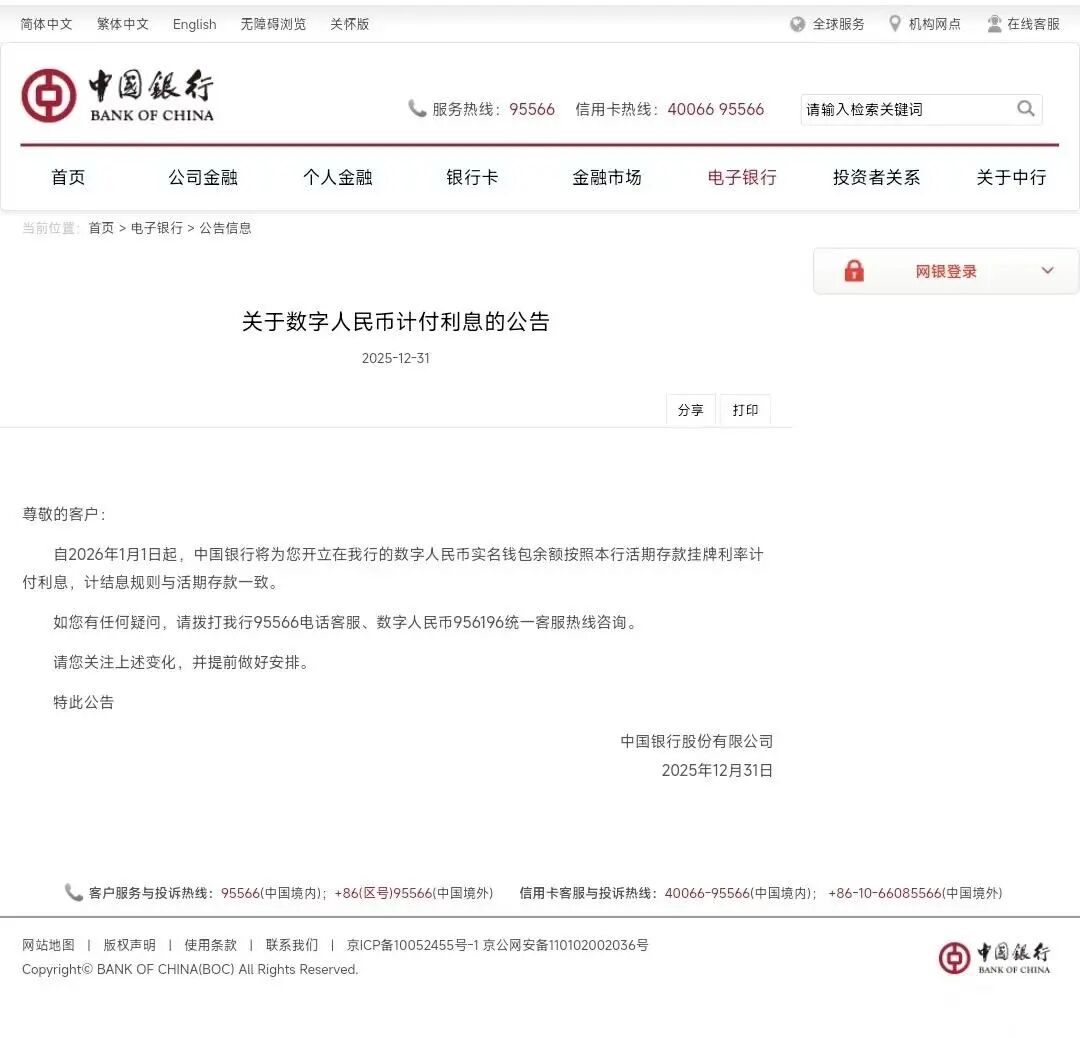
中行、工行、农行、建行、交行、邮储银行集体官宣:这笔钱要计利息!
Mei Ri Jing Ji Xin Wen· 2025-12-31 12:20
Core Viewpoint - Starting from January 1, 2026, six major state-owned banks in China will begin to pay interest on the balances of digital RMB real-name wallets at the same rate as their current deposit rates, following the same interest calculation rules as regular savings accounts [1][10]. Group 1: Announcement Details - The six banks involved are the Bank of China, Industrial and Commercial Bank of China, Agricultural Bank of China, China Construction Bank, Bank of Communications, and Postal Savings Bank [1]. - The current interest rate for regular savings accounts is noted to be 0.05% [10]. - Interest will be calculated quarterly, with the interest credited to accounts on the 21st of each quarter's last month [10]. Group 2: Wallet Types and Interest Eligibility - Digital RMB wallets are categorized into four types: Type 1, Type 2, and Type 3 are real-name wallets eligible for interest, while Type 4 is an anonymous wallet that does not earn interest [10][12]. - Type 1 wallets require in-person verification and must be linked to a domestic bank account, while Type 2 and Type 3 wallets can be opened remotely with varying identification requirements [12][13][14]. - The new definition of digital RMB indicates a shift from being classified as M0 (cash) to being recognized as a form of deposit currency, allowing for interest accrual [11][12].