OpenAI

Search documents
SoftBank posts $1.6 billion profit in third quarter
Reuters· 2026-02-12 06:35
Financial Performance - SoftBank Group reported a net profit of 248.6 billion yen ($1.62 billion) for the October-December quarter, a significant recovery from a net loss of 369 billion yen in the same period the previous year [1][1][1] - This marks SoftBank's fourth consecutive quarter of profitability, indicating a positive trend in its financial performance [1][1][1] Investment Strategy - The company's earnings have been bolstered by the rising valuation of its investment in OpenAI, where SoftBank has increased its stake to around 11% with over $30 billion invested [1][1][1] - To finance its investments, SoftBank has engaged in asset sales, bond issuance, and loans backed by its other holdings, including chip designer Arm [1][1][1] Market Position and Competition - OpenAI, once seen as the leading player in large language models, is facing rising operational costs and intensified competition from companies like Alphabet [1][1][1] - Investor concerns have been raised regarding SoftBank's ability to continue funding OpenAI, especially as OpenAI does not currently generate a profit [1][1][1]


xAI 关键人物跑路,马斯克 AI 野心遭重创
投中网· 2026-02-12 06:31
Core Viewpoint - The article discusses the recent departures of key personnel from xAI, highlighting the potential impact on the company's future in the competitive AI landscape, particularly in the area of AI reasoning capabilities. Group 1: Key Departures - Tony Wu, a co-founder of xAI and responsible for AI reasoning, announced his departure, marking the second co-founder to leave within a year, raising concerns about the company's stability and future innovation [6][9]. - The loss of Wu is particularly critical as reasoning capabilities are seen as a bridge between current AI models and true general artificial intelligence [8]. Group 2: Management Style Concerns - The article suggests that the management style of Elon Musk, characterized by extreme pressure and a lack of creative freedom, may be a significant factor in the high turnover of talent at xAI [10]. - Musk's approach, which emphasizes rapid execution, may not align with the needs of AI research, which often requires time for reflection and experimentation [10]. Group 3: Industry Context - The talent exodus at xAI reflects a broader trend in the AI industry, where top talent is in high demand and can command salaries exceeding $500,000, along with substantial equity [12]. - Companies like OpenAI and Anthropic, which are led by researchers and offer a more conducive environment for innovation, are seen as more attractive to AI professionals compared to xAI's CEO-driven model [12][13].
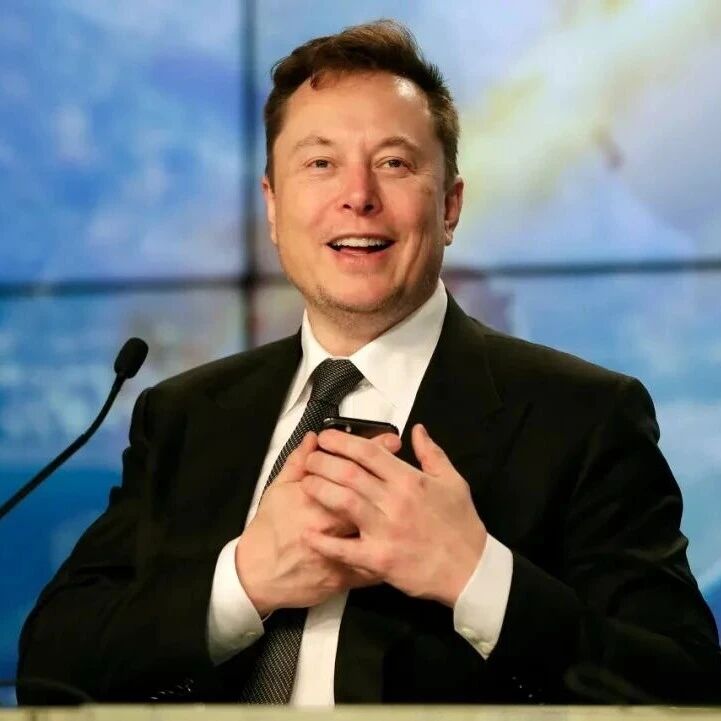
xAI创始成员走了一半,马斯克回应
第一财经· 2026-02-12 06:08
Core Insights - The article discusses the significant restructuring of xAI following its merger with SpaceX, highlighting the departure of several key management members, including co-founder Tony Wu, which raises concerns about the company's future prospects [3][4]. Group 1: Company Restructuring - Elon Musk announced a major personnel restructuring at xAI, with half of the founding team having left the company, including notable figures like Tony Wu, Christian Szegedy, and Igor Babuschkin [3][4]. - Musk stated that the restructuring is necessary for improving organizational efficiency as the company has reached a certain scale, indicating that some individuals may be better suited for the early stages of the company rather than its later stages [4]. Group 2: Competitive Landscape - xAI is preparing for a significant IPO with an estimated valuation exceeding $1 trillion, but the recent departures have led to skepticism regarding its future [4]. - The company is facing intense competition from established players like OpenAI, Anthropic, and Google, with xAI's chatbot Grok.com only capturing about 3.4% of the generative AI chatbot traffic, compared to ChatGPT's 64.5% and Google's Gemini's 21.5% [5]. Group 3: Future Plans and Recruitment - xAI aims to compete in various fields, including large language models, image and video generation systems, and coding tools, with plans to recruit top AI researchers [4][5]. - The company boasts a training cluster equivalent to 1 million NVIDIA H100 GPUs, which is a significant advantage in attracting talent [5]. - Musk anticipates that the Grok Code programming model will reach a leading global standard within the next two to three months, suggesting that AI may soon be able to generate binary data directly without human coding efforts [5].

X @The Economist
The Economist· 2026-02-12 05:40
Four of OpenAI’s six big deal announcements this year were followed by a total combined net gain of $1.7trn among the 49 big companies in Bloomberg’s broad AI index plus Intel, Samsung and SoftBank. However, the gains for most concealed losses for some https://t.co/Zou1AOL3wi ...
xAI创始成员走了一半,马斯克回应
Di Yi Cai Jing· 2026-02-12 05:27
Core Viewpoint - The restructuring of xAI is aimed at enhancing organizational efficiency as the company has reached a certain scale, with several key management departures raising concerns about its future prospects [1][2]. Group 1: Company Restructuring - xAI has undergone significant personnel restructuring following its merger with SpaceX, with half of the founding team remaining after multiple resignations, including co-founder Tony Wu [1][2]. - Elon Musk stated that the restructuring is necessary for the company to operate more efficiently at its current scale, indicating that some individuals are better suited for early-stage operations rather than later stages [1][2]. Group 2: Future Plans and Competition - xAI plans to compete in various fields, including large language models, image and video generation systems, and coding tools, as part of its ambition to become a comprehensive AI company [2]. - The company is actively recruiting top talent to enhance its capabilities, emphasizing the challenging work environment and its ambitious goals [2]. - xAI boasts a training cluster equivalent to 1 million NVIDIA H100 GPUs, which is a significant advantage in attracting researchers [2]. Group 3: Market Position - xAI's chatbot website, Grok.com, has seen steady traffic growth but ranks third globally in the generative AI chatbot market, capturing approximately 3.4% of the traffic, compared to ChatGPT's 64.5% and Google's Gemini at 21.5% [3].
DeepAgent与DeepSearch双双霸榜!答案指向openJiuwen这一新兴开源项目
机器之心· 2026-02-12 05:16
Core Insights - The article highlights the emergence of advanced AI agents, particularly focusing on Clawdbot and its evolution into OpenClaw, reflecting a global desire for more sophisticated and reliable AI systems [1] - The year 2025 is referred to as the "Year of AI Agents," with numerous agents being developed and evaluated against rigorous benchmarks like GAIA and BrowseComp-Plus [1][2] - DeepAgent and DeepSearch, built on the openJiuwen platform, have achieved top rankings in the GAIA and BrowseComp-Plus benchmarks, respectively, showcasing their advanced capabilities [2][25] GAIA Benchmark Insights - DeepAgent achieved a score of 91.69%, surpassing competitors like NVIDIA's Nemotron, indicating its strong performance in general agent capabilities [4][13] - GAIA evaluates agents on 12 core abilities, including long-term task planning and multi-modal understanding, with a scoring system that emphasizes real-world task difficulty [8][10] - The average success rate for human participants in GAIA is around 92%, while leading AI models like GPT-4 perform significantly lower, highlighting the challenge faced by AI agents [9] DeepAgent's Capabilities - DeepAgent's design allows it to dynamically adjust plans based on real-time feedback, ensuring task completion even in changing environments [17] - It features a multi-layered context engine that maintains consistency and traceability in reasoning, crucial for complex tasks [19][21] - The agent's ability to execute tasks, such as analyzing YouTube cooking videos and purchasing ingredients, demonstrates its practical application in real-world scenarios [15] BrowseComp-Plus Benchmark Insights - DeepSearch achieved an accuracy of 80%, leading the BrowseComp-Plus ranking, which assesses deep search and web browsing capabilities [26][29] - The BrowseComp-Plus benchmark focuses on multi-hop retrieval and cross-source information integration, emphasizing the agent's ability to extract relevant information from vast datasets [29][30] - The scoring mechanism is designed to ensure fairness and reproducibility, using a fixed human-validated corpus to avoid biases from real-time web dynamics [30] DeepSearch's Capabilities - DeepSearch employs a multi-branch reasoning approach, allowing it to explore various potential solutions simultaneously, enhancing search efficiency [35] - It features an intelligent action exploration system that balances the depth of search with the diversity of paths taken, addressing the challenges of noise and misinformation [37][39] - The system's design mimics human expert reasoning, enabling it to adaptively prioritize search actions based on real-time evaluations [39][40] openJiuwen Platform Insights - Both DeepAgent and DeepSearch leverage the openJiuwen platform, which provides a comprehensive framework for developing high-precision, controllable AI agents [41][42] - The platform supports multi-agent collaboration and self-evolution, allowing for continuous improvement and adaptability in task execution [43] - openJiuwen has been commercialized in various sectors, including finance and manufacturing, indicating its broad applicability and potential for industry transformation [43] Conclusion - The article concludes that the AI agent landscape is at a pivotal point, distinguishing between basic language-interactive agents and advanced systems capable of planning, resource scheduling, and self-repair [46] - The success of DeepAgent and DeepSearch underscores the importance of robust architectural design in achieving high performance in stringent evaluations [46][48]

20cm速递|AI变革深化,巨头持续加码,创业板人工智能ETF国泰(159388)涨超2.5%
Mei Ri Jing Ji Xin Wen· 2026-02-12 04:48
Group 1 - The core viewpoint highlights the continuous upgrades in large models, with Anthropic launching Claude Opus 4.6, which features an "AI agent team" capability and can handle a context window of millions of tokens, leading the industry in financial analysis tests [1] - OpenAI has released its strongest programming model, GPT-5.3-Codex, which has performed excellently in multiple benchmark tests [1] - North American tech giants such as Alphabet, Meta, Amazon, and Microsoft have reported strong earnings, with significant capital expenditure plans set to increase by 2026 [1] Group 2 - Domestic tech companies in China, including Tencent, Alibaba, ByteDance, and Baidu, are entering an AI competition ahead of the Spring Festival, investing resources to promote AI applications [1] - The Guotai Artificial Intelligence ETF (159388) tracks the entrepreneurial board AI index (970070), which has a daily price fluctuation limit of 20%, focusing on AI-related companies listed on the entrepreneurial board [1] - The index includes component stocks from sectors such as software development, information technology services, and smart hardware, aiming to reflect the overall performance of companies engaged in AI technology research and application [1]






大模型行业点评:模型百花齐放,迭代日新月异
ZHESHANG SECURITIES· 2026-02-12 04:16
Investment Rating - The industry investment rating is "Positive" (maintained) [6] Core Insights - Domestic large models have been intensively released around the Spring Festival, initiating an AI arms race. Notable releases include DeepSeek's new model with a context processing capability of 1 million tokens, GLM-5 which ranks first globally in programming and agent testing, and ByteDance's Seedance 2.0 aimed at revolutionizing video creation [1][2] - The usability of agents is increasing, with large models transitioning from chat to collaboration. Claude Opus 4.5 can autonomously program for 5 hours, and AI coding agents are expected to double their task handling time every 4 months starting from 2024-2025, compared to a 7-month doubling period from 2019-2024 [2] - The demand for inference is expected to rise due to large-scale applications, with significant increases in token consumption for agent execution compared to dialogue scenarios. The cost of generating a 5-second 720P video is approximately 4 RMB, with Seedance costing about 2.3 RMB, indicating a substantial cost advantage over manual production [3] Summary by Sections Model Updates - MiniMax's M2.5 model is set to launch soon, currently in internal testing for the MiniMax Agent product. Other updates include GLM-5 from Zhizhu, which has achieved state-of-the-art capabilities in coding and agent functions, and DeepSeek's new model with a context window increased to 1 million tokens [7] Related Companies - Key companies mentioned include MiniMax, Zhizhu, Yunsai Zhilian, UCloud, Capital Online, Qingyun Technology, Wangsu Technology, and Nanxing Co. [4]

马斯克,危矣
投资界· 2026-02-12 03:50
作者/ 梦晨 来源/ 量子位 (ID:QbitAI) 12人联创还剩一半。 2 4小时内,马斯克的xAI连失两位华人联合创始人。 xAI联合创始人吴宇怀(To n y Wu)和Jimmy Ba先后在社交平台上宣布离职。 而就在一个月前,另一位华人联合创始人杨格(Gr e g Ya n g)刚刚因病退出。 三 位 华 人 核 心 科 学 家 , 一 个 月 内 全 部 离 开 。 算 上 此 前 已 出 走 的 三 人 , xAI 成 立 不 到 三 年,最初1 2人创始团队已走6人。 同时,一些后加入的核心成员,也纷纷宣布离职。 马斯克的AI团队,发生了什么? 一月三别: 从因病退出到师徒接连告别 这一波离职潮最先离开的是杨格。 2 0 2 6 年 1 月 , 这 位 Gr o k 核 心 架 构 师 宣 布 , 自 己 被 诊 断 出 患 有 莱 姆 病 ( Lyme d is e a s e),不得不退出日常工作,转为公司的非正式顾问。 杨格拥有哈佛大学数学系学位,师从著名数学家丘成桐,曾是微软研究院的研究员。 他在声明中解释自己可能早已感染此病,但在xAI创立期间的" 长期高强度工作" 和" 把 自己逼 ...
迪士尼维权后,谷歌 Gemini停止生成迪士尼角色内容
Huan Qiu Wang Zi Xun· 2026-02-12 03:31
Group 1 - Google's AI products, including Gemini and Nano Banana, have started to refuse generating content related to Disney characters due to copyright infringement claims from Disney [1][4] - This change occurred approximately two months after Disney sent a cease-and-desist letter to Google in December, which detailed large-scale copyright violations by Google's AI tools [4][5] - Disney's letter included specific demands such as stopping the infringement and ceasing the use of Disney IP for AI model training, highlighting previous concerns that had not been adequately addressed by Google [4][5] Group 2 - Google's spokesperson stated that the company maintains a mutually beneficial relationship with Disney and will continue communication regarding the issue [5] - Google utilizes publicly available data from the open web to train its AI and has implemented copyright control mechanisms like Google-extended and YouTube Content ID to manage content rights [5] - Concurrently, Disney has entered into a $1 billion agreement with OpenAI to license its characters for OpenAI's generative video application, Sora [5]