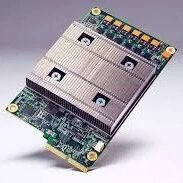
英伟达GB300

Search documents
如何看待算力增长撬动液冷需求跃升
2026-03-24 01:27
Summary of Conference Call Records Industry Overview - The conference call discusses the liquid cooling technology industry, driven by the explosive growth in computing power and the increasing power density of data center cabinets. The shift from optional to essential cooling solutions is highlighted due to rising chip power consumption, exemplified by NVIDIA's GB300 product, which has doubled its power consumption to 1,400W, leading cabinet power densities to rise from 10kW to 50-100kW [2][3]. Key Points and Arguments - **Market Growth Projections**: - The market for cold plate liquid cooling is expected to grow from $3.8 billion in 2025 to $16 billion by 2033 [1]. - The market for immersion liquid cooling is projected to increase from $2.2 billion in 2025 to $11.3 billion by 2033 [1][4]. - **Liquid Cooling Technology Classification**: - Liquid cooling can be classified into contact and non-contact types. Contact types include single-phase immersion, two-phase immersion, and spray cooling, while non-contact primarily refers to cold plates. Single-phase cold plates dominate data center applications, accounting for over 90% [3][4]. - **Policy Influence**: - Strict regulations on data center energy efficiency are driving the liquid cooling industry. By the end of 2025, the average Power Usage Effectiveness (PUE) for data centers must be below 1.5, with specific clusters required to achieve a PUE of 1.1 [5]. - **Value Chain Distribution**: - In the liquid cooling system, the value distribution is concentrated, with liquid cooling plates accounting for approximately 40% of the total system value, CDU (Cooling Distribution Unit) at about 30%, and other components like quick connectors and manifolds making up around 15% [6][7]. Market Dynamics and Supply Chain Changes - The supply chain is shifting from a closed model dominated by Taiwanese suppliers to a more open structure, allowing mainland Chinese manufacturers to enter the second and third-tier supply chains. This change is driven by the customization needs of large cloud service providers like Google [8]. - Mergers and acquisitions are becoming more common in the industry, as seen with companies like AAC Technologies acquiring YD Digital Technology to enhance their liquid cooling product offerings [8]. Company Performance Insights - Micron Technology reported a significant performance increase, with a 75% quarter-over-quarter revenue growth and a 196% year-over-year increase. This growth was primarily driven by a substantial rise in product prices rather than an increase in shipment volumes, with DRAM prices rising by 65% and NAND prices by 75%-80% [8][9]. - The storage industry is recovering mainly due to price increases, with expectations that by the end of 2026, data centers will account for over 50% of the bit demand in the DRAM and NAND markets, driven by strong demand for AI servers [9].
GTC前瞻-液冷环节有哪些值得期待
2026-03-12 09:08
Summary of Conference Call Notes Company and Industry Overview - The conference call discusses the upcoming launch of NVIDIA's LPU (Logic Processing Unit) cabinet, which is positioned in the inference market, competing against Google's TPU v6e. The LPU is expected to begin small-scale supply in Q1-Q2 of 2027, utilizing an ASIC architecture and SDRAM for cost-effectiveness [1][2][3]. Key Points and Arguments LPU Cabinet Specifications - The LPU cabinet will feature a total of 9 computing units, with 8 dedicated to inference calculations and 1 as a redundancy. Each unit will house several LPU inference chips, which will not use HBM but will instead utilize SDRAM [2]. - The liquid cooling system for each computing unit is projected to have a value of $1,000 to $1,200, which is higher than the existing Rubin and GB300 systems due to enhanced specifications [5]. Liquid Cooling Technology - The LPU will adopt a "light liquid cooling" solution, which is simpler than previous models, with an increase in the number of components like liquid cooling plates and quick connectors. The cooling system's design will be less complex due to the lower power consumption of the LPU chips [2][3]. - The introduction of microchannel technology in Rubin's cooling system has led to an increase in the number of quick connectors, enhancing cooling efficiency [11][12]. Market Positioning and Supply Chain Strategy - The LPU is strategically positioned to compete with Google's TPU, with a focus on cost reduction. NVIDIA plans to increase the share of domestic suppliers in components like cooling plates and quick connectors to 20%-30% [8]. - The supply chain for LPU will likely follow the existing supplier framework used for the GB300 series, minimizing the need for re-certification of established suppliers [8]. Production and Shipping Expectations - Rubin's production is set to begin in July 2026, with an expected shipment of approximately 9,500 units in the latter half of 2026. The primary focus for NVIDIA in 2026 will remain on the GB300 series, with an anticipated shipment of around 55,000 units [9][10]. Competitive Landscape - The high-end Rubin and GB series are currently dominated by Taiwanese and Western suppliers, while domestic manufacturers are making inroads in the cooling plate segment. However, the CDU segment still requires breakthroughs for domestic suppliers [1][11]. Other Important Insights - The CDU (Cooling Distribution Unit) segment is expected to see a decrease in demand due to the lower overall power consumption of the LPU cabinet compared to training GPUs like Rubin [6]. - The introduction of two-phase cooling plates is anticipated to enhance cooling efficiency significantly, with a value increase of 50%-60% compared to single-phase plates [17]. - The upcoming GTC conference will focus on advancements in liquid cooling technology for both Rubin and LPU, highlighting the importance of these products in NVIDIA's portfolio [20]. This summary encapsulates the critical aspects of the conference call, providing insights into NVIDIA's strategic direction, product specifications, and market positioning within the liquid cooling and inference computing landscape.

美国拟将AI芯片出口管制扩展至全球,英伟达、AMD出口均需获许可
Sou Hu Cai Jing· 2026-03-05 23:10
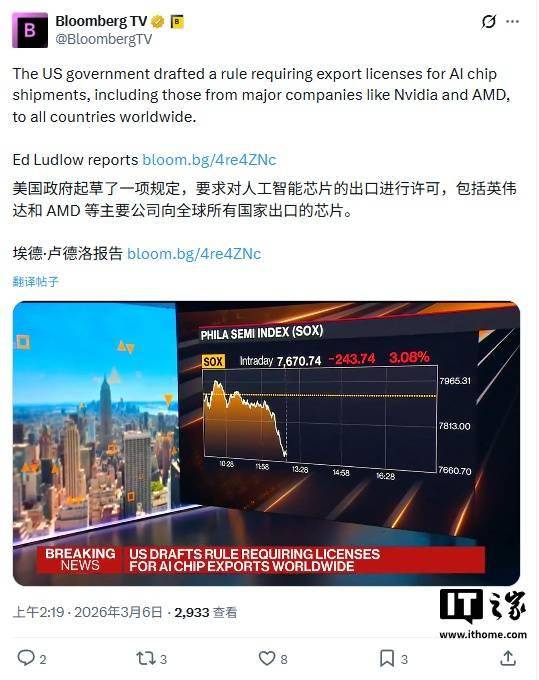
Core Viewpoint - The U.S. government is planning to implement comprehensive regulations on AI chip exports, expanding current restrictions from approximately 40 countries to a global scale, which may require companies like NVIDIA and AMD to obtain prior approval for exports [1][3]. Group 1: Regulatory Changes - The new regulations will fundamentally change the U.S. role in AI chip export controls, shifting from specific country restrictions to acting as a global gatekeeper for the AI industry [3]. - Companies and governments will need approval from the U.S. Department of Commerce's Bureau of Industry and Security (BIS) to procure key accelerators used for training and running AI models [3]. Group 2: Approval Process - The approval process will vary based on the scale of procurement, with smaller deployments (up to 1,000 NVIDIA GB300 chips) subject to simplified review and potential exemptions [3][6]. - Medium-sized clusters (over 1,000 chips) will require pre-approval before applying for export licenses and may face additional conditions, such as disclosing business models or allowing U.S. government inspections [6]. - Large-scale deployments (over 200,000 chips) will necessitate government intervention, with exports only approved for allies making strict security commitments and engaging in "reciprocal investment" in the U.S. AI sector [6]. Group 3: Global Impact - The new regulations introduce significant uncertainty for countries like France and India, which are planning to build large-scale data centers, as they may feel uncomfortable placing their tech futures under U.S. control [4]. - The framework is not yet finalized, and the draft may undergo substantial changes based on feedback from federal officials, which could delay or disrupt project planning if bureaucratic delays occur [4].


电子行业周报:谷歌/亚马逊26年CAPEX指引超预期,AI硬件需求强劲-20260208
SINOLINK SECURITIES· 2026-02-08 11:11
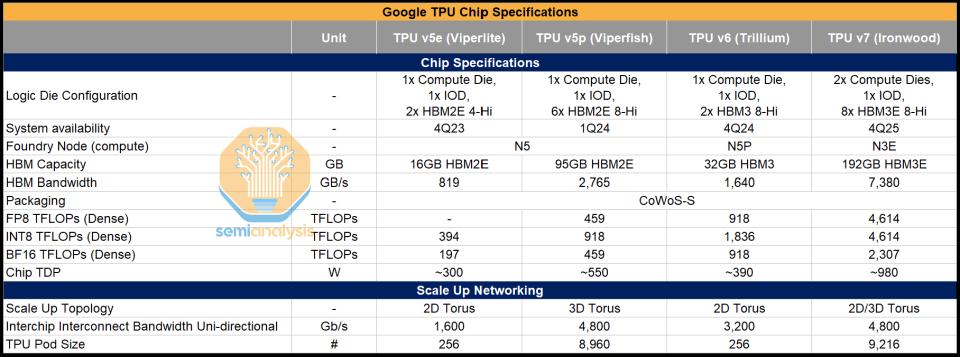
Investment Rating - The industry is rated positively, with expectations of significant growth in capital expenditures from major companies like Amazon and Google, indicating a bullish outlook for the sector [1][26]. Core Insights - Amazon raised its 2026 capital expenditure forecast to $200 billion, a more than 50% increase from $131 billion in 2025, driven by strong demand signals in AI hardware and cloud services [1]. - Google's parent company, Alphabet, expects its 2026 capital expenditure to be between $175 billion and $185 billion, nearly double its 2025 spending, reflecting robust growth in its cloud business [1]. - The demand for AI infrastructure is expected to lead to a significant increase in ASIC (Application-Specific Integrated Circuit) numbers from major tech companies, with a projected explosive growth in 2026-2027 [1][4]. - The semiconductor and PCB (Printed Circuit Board) sectors are anticipated to benefit from the strong demand for AI, with many companies in these areas experiencing high order volumes and expansion plans [4][26]. Summary by Sections Section 1: AI and Cloud Infrastructure - Amazon's AWS cloud division saw a 24% year-over-year growth, with a backlog of $244 billion, indicating strong enterprise investment in AI and cloud services [1]. - Google's cloud revenue reached $17.7 billion in Q4, a 48% increase year-over-year, driven by strong demand for enterprise-level AI products [1]. Section 2: Semiconductor and PCB Industry - The PCB industry is maintaining high demand due to the growth in automotive and industrial applications, with expectations of price increases for copper-clad laminates [6]. - AI-driven demand is expected to boost PCB prices and volumes, with companies actively expanding production to meet this demand [4][26]. Section 3: Consumer Electronics - The consumer electronics sector is seeing a continuous expansion of AI applications, particularly in the Apple supply chain, with innovations in foldable devices and AI glasses [5]. - The demand for AI-enabled devices is expected to drive significant growth in the market, with various manufacturers exploring new product categories [5]. Section 4: Semiconductor Equipment and Materials - The semiconductor equipment sector is experiencing a robust upward trend, with significant capital expenditures expected to support the growth of advanced manufacturing processes [23][25]. - The materials sector is also poised for improvement, with a focus on domestic production capabilities in response to international supply chain challenges [25][34]. Section 5: Company-Specific Insights - Companies like North Huachuang and Zhongwei are positioned to benefit from the increasing demand for semiconductor equipment and materials, with strong growth prospects in their respective markets [28][30]. - Three Ring Group is focusing on high-capacity MLCC (Multi-Layer Ceramic Capacitor) products, which are expected to see increased demand due to AI applications [33].


国盛证券:从预期到兑现 液冷迈向第二发展阶段
智通财经网· 2025-12-22 06:11
Core Insights - The liquid cooling industry is transitioning from a "first development stage" focused on concepts and expectations to a "second development stage" characterized by order confirmations, capacity realization, and performance delivery [1][4] Group 1: Industry Transition - The liquid cooling system is moving towards performance realization, with high-power cabinets (100kW+) becoming the new norm, and the GB300 series AI servers expected to start mass production by the end of 2025 [2][4] - The market focus is shifting from discussions about liquid cooling concepts to actual performance metrics and market space evaluations, marking the end of the expectation-driven phase [1][2] Group 2: Competitive Landscape - The competitive landscape is evolving from individual component competition to a comprehensive thermal management system that spans servers, cabinets, and data center equipment, increasing customer reliance on solution providers [3][4] - Industry leaders are expected to benefit from their comprehensive solutions, large-scale delivery capabilities, and established relationships with major clients, reinforcing a "stronger gets stronger" dynamic in the market [3][4] Group 3: Market Opportunities - The liquid cooling market is being systematically re-evaluated as the application boundaries expand from GPU servers to switches and ASIC devices, indicating a significant growth potential [2][4] - Companies with full-stack solution capabilities and certifications from leading clients are positioned to capture the upcoming industry benefits, particularly those with extensive global delivery experience [4]



20cm速递|关注创业板人工智能ETF国泰(159388)投资机会,通信业增长与AI算力需求引关注
Mei Ri Jing Ji Xin Wen· 2025-12-10 06:44
Core Viewpoint - The communication industry in 2026 will focus on three main areas: computing power, operator dividends, and satellite internet capabilities, driven by ongoing global AI demand and investment growth [1] Group 1: Industry Trends - The global AI sector remains highly prosperous, with continuous application development and increased investment expected [1] - Hardware solutions like Nvidia's GB300 supernode are accelerating shipments, and ASIC deliveries are anticipated to increase significantly [1] - The penetration rate of domestic supernodes is rapidly rising, which will boost demand in various segments such as switching networks, optical modules, liquid cooling, power supplies, and copper connections [1] Group 2: Market Opportunities - The optical module industry is set to benefit from the rollout of 800G/1.6T technologies and increased silicon photonics penetration [1] - Telecom operators are experiencing accelerated growth in innovative business segments, with satellite and computing power services providing new revenue streams [1] - The rapid development of domestic commercial aerospace and low-orbit satellite networks is expected to lead to increased orders for related companies [1] Group 3: AI and Satellite Internet - The long-term trend for AI computing power demand is confirmed, although short-term purchasing has slowed due to a phase of adjustment, with recovery expected as application demand increases [1] - The satellite internet sector shows optimistic long-term market potential and favorable capital expenditure outlook [1] Group 4: Investment Products - The Guotai AI ETF (159388) tracks the ChiNext AI Index (970070), which has a daily fluctuation of up to 20%, focusing on companies involved in AI technology development and application [1] - This index selects stocks from the ChiNext market that reflect the overall performance of companies in intelligent computing and machine learning, emphasizing high-growth and innovative enterprises [1]

谷歌TPU助力OpenAI砍价三成,英伟达的“王座”要易主了?
3 6 Ke· 2025-12-02 08:19
Core Insights - Google is shifting its TPU strategy from primarily serving its own AI models to actively selling chips to third parties, directly competing with Nvidia [1][2] - Anthropic has become one of the first significant customers for Google's TPU, involving a deal for approximately 1 million TPUs, which includes both direct hardware purchases and rentals through Google Cloud Platform (GCP) [1][2][3] - The competitive landscape is changing, with OpenAI negotiating a 30% price discount in discussions with Nvidia by considering alternatives like TPUs [1] Group 1: Partnership with Anthropic - Google has mobilized its resources to provide TPUs to external customers, marking a significant step in its strategy to become a differentiated cloud service provider [2] - The partnership with Anthropic aligns with its goal to reduce reliance on Nvidia, with Google having made early investments in Anthropic while limiting its voting rights [2] - Anthropic will deploy TPUs in its own facilities and also rent additional TPUs through GCP, allowing Google to compete directly with Nvidia [3] Group 2: Financial Implications - The deal with Anthropic includes a direct sale of approximately $10 billion worth of TPU systems, with 400,000 TPUv7 chips, making Anthropic a key customer for Broadcom [3] - Anthropic's rental of an additional 600,000 TPUv7 chips through GCP is expected to generate about $42 billion in contract value, significantly contributing to GCP's order backlog [3] Group 3: Technical Advancements - TPUv7 "Ironwood" is nearing parity with Nvidia's Blackwell architecture in theoretical performance and memory bandwidth, with a competitive edge in pricing [5][12] - The total cost of ownership for each TPU is approximately 44% lower than Nvidia's GB200, and even with a premium for external customers, the cost remains 30%-50% lower than Nvidia systems [6][8] - Google is working to eliminate software compatibility barriers by developing native support for frameworks like PyTorch, aiming to make TPUs a viable alternative without requiring developers to overhaul their toolchains [10][12] Group 4: Competitive Landscape - Nvidia is preparing a counterattack with its next-generation "Vera Rubin" chip, which may reshape the competitive landscape [13] - Google plans to develop TPUv8 in two versions, but analysts note that the designs are conservative and may face delays [13] - The success of Nvidia's upcoming chips could challenge Google's current pricing advantages, emphasizing the need for Nvidia to execute its technology roadmap effectively [13]
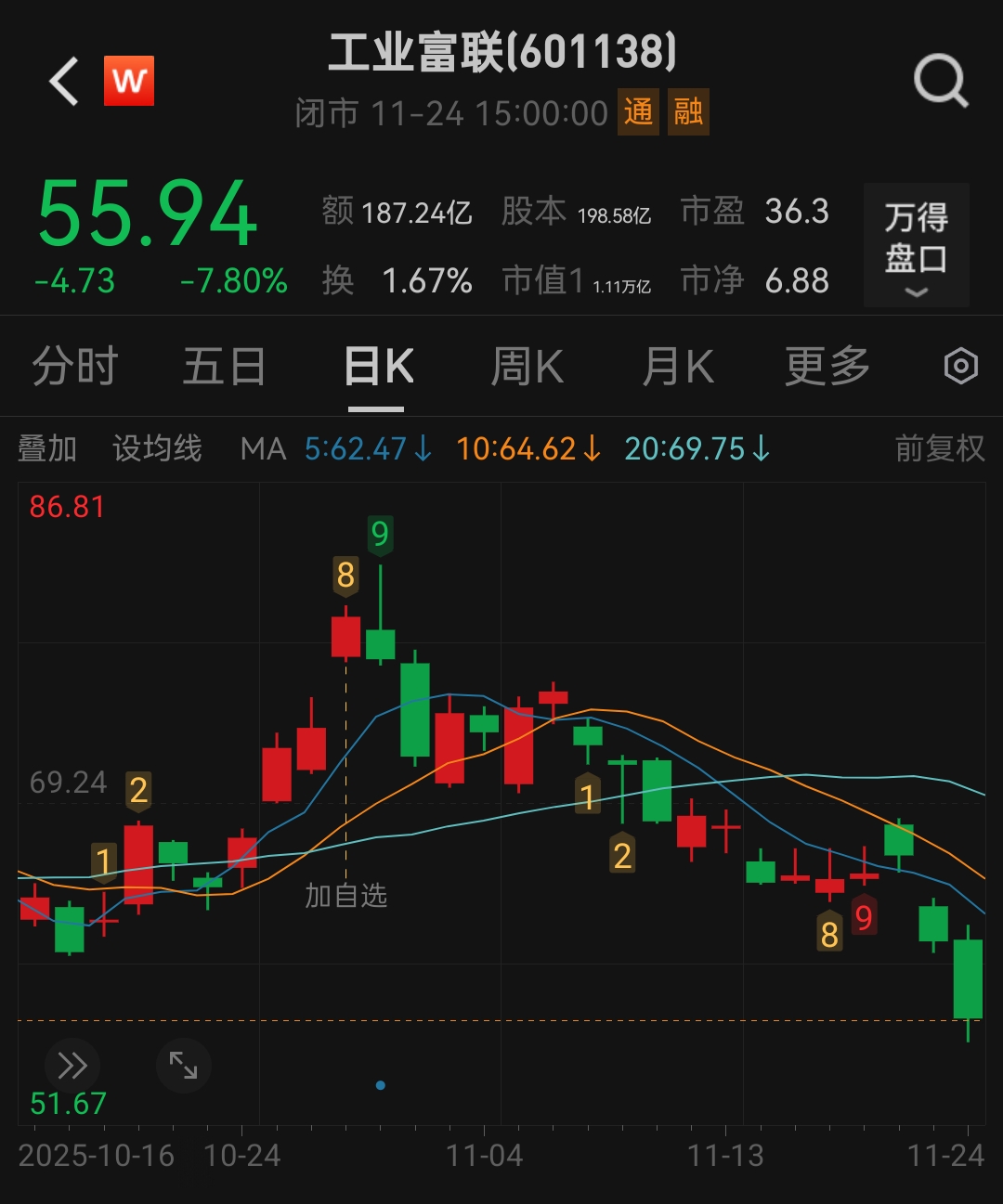
工业富联发布澄清公告:并未下调第四季度利润目标
Zheng Quan Ri Bao· 2025-11-24 16:43
Core Viewpoint - Recent rumors regarding Foxconn Industrial Internet Co., Ltd. (referred to as "the company") suggest a downward revision of AI server cabinet shipment volumes and profits, leading to a 7.8% drop in stock price on November 24. However, the company has denied these claims, affirming that its fourth-quarter performance remains on track and customer demand is strong [2][3]. Group 1: Company Performance - For Q3 2025, the company reported revenue of 243.172 billion yuan, a year-on-year increase of 42.81%, and a net profit attributable to shareholders of 10.373 billion yuan, up 62.04%, both reaching historical highs for a single quarter [3]. - In the first three quarters, the company achieved revenue of 603.931 billion yuan and a net profit of 22.487 billion yuan, nearing last year's total figures [3]. - The growth is primarily driven by the expansion of the AI server market, large-scale delivery of AI cabinet products for data centers, and explosive growth in cloud service provider business, with GPU AI server revenue increasing over 300% year-on-year in the first three quarters [3]. Group 2: Product Development and Market Position - The company reported smooth shipments of its GB200 product, with the GB300 achieving mass production in Q3, showing improvements in yield and testing efficiency [3]. - The company anticipates that declining unit costs and improved yields will positively impact gross margins in Q4, maintaining confidence in delivery efficiency as manufacturing processes are optimized [3]. - A representative from the company emphasized that short-term stock price fluctuations do not alter the fundamental performance, urging investors to view market rumors rationally [3].

工业富联紧急回应“业绩下调”传闻,不到一个月股价跌三成
Di Yi Cai Jing· 2025-11-24 10:58
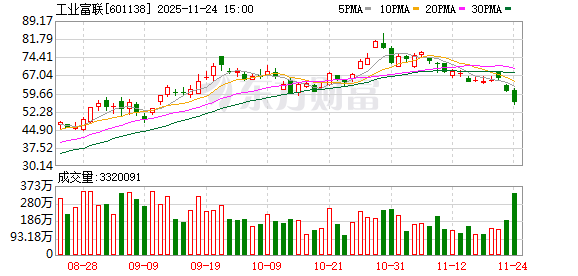
Core Viewpoint - The stock price of Industrial Fulian has been declining, influenced by the fluctuations in Nvidia's AI chip demand and ongoing discussions about the "AI bubble" [1][5] Group 1: Stock Performance - Industrial Fulian's stock price has dropped 30.77% from October 30 to November 24, resulting in a market value loss of over 400 billion yuan [1] - As of November 24, Industrial Fulian's stock closed down 7.8% [1] Group 2: Earnings and Market Reactions - There are rumors regarding Industrial Fulian lowering its fourth-quarter performance targets and cabinet shipment expectations, which have raised investor concerns [3] - Industrial Fulian clarified that its fourth-quarter operations, including shipments of Nvidia's GB200 and GB300 products, are proceeding as planned, with strong customer demand [3][4] - Both Industrial Fulian and Nvidia reported quarterly earnings exceeding market expectations, with Nvidia achieving revenue of $57 billion and net profit of $31.9 billion for the third quarter of fiscal 2026, marking year-on-year increases of 62% and 65% respectively [4] - Industrial Fulian's third-quarter revenue reached 243.172 billion yuan, a year-on-year increase of 42.81%, and net profit was 10.373 billion yuan, up 62.04% [4] Group 3: Institutional Actions - Some institutions have reduced their holdings in Nvidia, with Bridgewater significantly cutting its stake by nearly two-thirds in the third quarter [4] - Thiel Macro Fund sold approximately 537,000 shares of Nvidia, representing nearly 40% of its investment portfolio [4] Group 4: Competitive Landscape - Nvidia's partnership with OpenAI is under scrutiny, especially as Google has made significant advancements in AI with its Gemini 3 model, potentially impacting OpenAI's economic position [5] - Google's progress in AI may alter the competitive landscape, as it has developed chips that reduce reliance on Nvidia's GPUs [5] - As a core supplier to Nvidia, Industrial Fulian's server shipments will be closely tied to Nvidia's AI chip demand, with Morgan Stanley estimating that 28% of Nvidia's HGX/DGX servers in 2024 will come from Hon Hai and its subsidiary Industrial Fulian [5]
英伟达最强对手,来了
半导体行业观察· 2025-11-07 01:00
Core Insights - Google’s TPU v7 accelerators demonstrate significant performance improvements, with Ironwood being the most powerful TPU to date, achieving 10 times the performance of TPU v5p and 4 times that of TPU v6e [4][11] - The TPU v7 offers competitive performance against Nvidia's Blackwell GPUs, with Ironwood providing 4.6 petaFLOPS of dense FP8 performance, slightly surpassing Nvidia's B200 [3][4] - Google’s unique scaling approach allows for the connection of up to 9216 TPU chips, enabling massive computational capabilities and high bandwidth memory sharing [7][8] Performance Comparison - Ironwood TPU has a performance of 4.6 petaFLOPS, compared to Nvidia's B200 at 4.5 petaFLOPS and the more powerful GB200 and GB300 at 5 petaFLOPS [3] - Each Ironwood module can connect up to 9216 chips with a total bidirectional bandwidth of 9.6 Tbps, allowing for efficient data sharing [7][8] Architectural Innovations - Google employs a unique 3D toroidal topology for chip interconnects, which reduces latency compared to traditional high-performance packet switches used by competitors [8][9] - The optical circuit switching (OCS) technology enhances fault tolerance and allows for dynamic reconfiguration in case of component failures [9][10] Processor Development - In addition to TPU, Google is deploying its first general-purpose processor, Axion, based on the Armv9 architecture, aimed at improving performance and energy efficiency [11][12] - Axion is designed to handle various tasks such as data ingestion and application logic, complementing the TPU's role in AI model execution [12] Software Integration - Google emphasizes the importance of software tools in maximizing hardware performance, integrating Ironwood and Axion into an AI supercomputing system [14] - The introduction of intelligent scheduling and load balancing through software enhancements aims to optimize TPU utilization and reduce operational costs [14][15] Competitive Landscape - Google’s advancements in TPU technology are attracting attention from major model builders, including Anthropic, which plans to utilize a significant number of TPUs for its next-generation models [16][17] - The competition between Google and Nvidia is intensifying, with both companies focusing on enhancing their hardware capabilities and software ecosystems to maintain market leadership [17]