
招商银行

Search documents
股份制银行板块1月21日跌1.78%,中信银行领跌,主力资金净流出1.38亿元
Zheng Xing Xing Ye Ri Bao· 2026-01-21 08:54
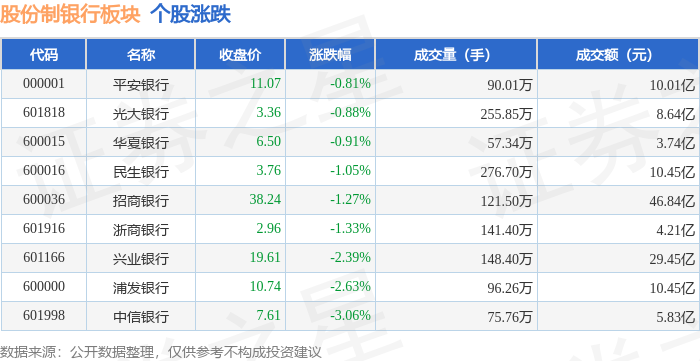
证券之星消息,1月21日股份制银行板块较上一交易日下跌1.78%,中信银行领跌。当日上证指数报收于 4116.94,上涨0.08%。深证成指报收于14255.12,上涨0.7%。股份制银行板块个股涨跌见下表: | 代码 | 名称 | 收盘价 | 涨跌幅 | 成交量(手) | 成交额(元) | | --- | --- | --- | --- | --- | --- | | 000001 | 平安银行 | 11.07 | -0.81% | 90.01万 | 10.01亿 | | 601818 | 光大银行 | 3.36 | -0.88% | 255.85万 | 8.64亿 | | 600015 | 华夏银行 | 6.50 | -0.91% | 57.34万 | 3.74亿 | | 600016 | 民生银行 | 3.76 | -1.05% | 276.70万 | 10.45 Z | | 600036 | 招商银行 | 38.24 | -1.27% | 121.50万 | 46.84亿 | | 601916 | 浙商银行 | 2.96 | -1.33% | 141.40万 | 4.21亿 | | 601166 | ...






涉3.5亿元委托贷款逾期案件,中山证券卷入诉讼纠纷
Nan Fang Du Shi Bao· 2026-01-21 08:21
深陷业绩经营困境的中山证券,又有了新麻烦。 此前,1月16日晚,在最新的2025年未经审计的财报中,中山证券表现不佳,营业收入同比下降 29.17%,净利润同比下降88.06%。 2026年1月20日,锦龙股份发布公告,披露其控股子公司中山证券收到吉林省长春市中级人民法院应诉 通知,因一起侵权责任纠纷被光大长春分行列为被告,诉讼请求金额合计为4.89亿元。 据悉,该纠纷起源于2014年的一笔3.5亿元委托贷款业务。2014年5月,招商银行股份有限公司无锡分行 (简称"招商无锡分行")委托中山证券设立定向资产管理计划,指令其投资平安银行股份有限公司深圳 分行(简称"平安深圳分行")作为受托人的委托贷款,资金投向柳河聚鑫源米业有限公司(简称"柳河 米业"),投资期限为一年。 锦龙股份在公告中强调,该投资系由招商无锡分行决策,投资安全及任何风险收益均由招商无锡分行负 责。中山证券根据相关约定,代表资产管理计划及其委托人通知平安深圳分行将委托贷款资金3.5亿元 转入借款人柳河米业账户。 投资期限届满后,该笔委托贷款未能按约收回。光大长春分行在诉讼中主张,其下属汽车厂支行员工张 磊与柳河米业实控人刘孝义冒用该行名义,于 ...
尾盘异动!A股,三大信号“闪现”
券商中国· 2026-01-21 08:20
Core Viewpoint - The A-share market is experiencing significant fluctuations, particularly in the trading volume of broad-based ETFs, indicating potential shifts in market sentiment and investor behavior [1][2]. Group 1: Market Performance - The A-share market showed a relatively strong performance today, with the Shanghai Composite Index rising by 0.08%, the Shenzhen Component Index increasing by 0.7%, and the ChiNext Index up by 0.54% [2]. - The trading volume for major ETFs surged, with the Shanghai 50 ETF (510050) reaching a transaction volume of 16.9 billion yuan, and the Huatai-PB Shenzhen 300 ETF (510300) hitting 23.2 billion yuan [2]. - Over 3,000 stocks in the Shanghai and Shenzhen markets closed in the green, contributing to a total trading volume exceeding 2.62 trillion yuan [2]. Group 2: Market Signals - The A50 index is at risk of a seven-day decline, which would indicate a bearish trend diverging from the average stock price in the A-share market [1][2]. - Large-cap stocks, including major banks and companies like ICBC, Agricultural Bank of China, and Kweichow Moutai, are showing a bearish arrangement, suggesting a potential risk in the market [2]. Group 3: Market Outlook - Analysts suggest that the market is currently in a consolidation phase, with a need for reduced trading volumes and financing balances to stabilize [3]. - As of January 20, the total financing balance in the two markets was approximately 26.83 billion yuan, reflecting a decrease of 1.38 billion yuan from the previous trading day [3]. - The prevailing market sentiment is leaning towards a "slow bull" trend, with expectations for a spring market rally once global risk factors, particularly geopolitical tensions, are resolved [3][4].

智通AH统计|1月21日
智通财经网· 2026-01-21 08:18
Core Viewpoint - The report highlights the current premium rates of AH shares, with Northeast Electric, Zhejiang Shibao, and Junda Co. leading in premium rates, while CATL, Hengrui Medicine, and China Merchants Bank are at the bottom of the list [1][2]. Premium Rate Rankings - Northeast Electric (00042) has a premium rate of 815.25%, followed by Zhejiang Shibao (01057) at 378.67% and Junda Co. (02865) at 342.63% [2]. - The lowest premium rates are recorded for CATL (03750) at -13.79%, Hengrui Medicine (01276) at -2.52%, and China Merchants Bank (03968) at -2.22% [1][2]. Deviation Values - Junda Co. (02865) has the highest deviation value at 104.89%, followed by Goldwind Technology (02208) at 23.62% and Guanghetong (00638) at 20.17% [1][2]. - The lowest deviation values are for Northeast Electric (00042) at -35.64%, Chenming Paper (01812) at -16.87%, and China Life (02628) at -15.34% [1][4]. Additional Insights - The report includes a detailed table of the top ten and bottom ten AH stocks based on premium rates and deviation values, providing a comprehensive overview of the current market situation [2][3][4].

尾焰划破夜空 金融机构为何爱上“发卫星”
2 1 Shi Ji Jing Ji Bao Dao· 2026-01-21 08:05
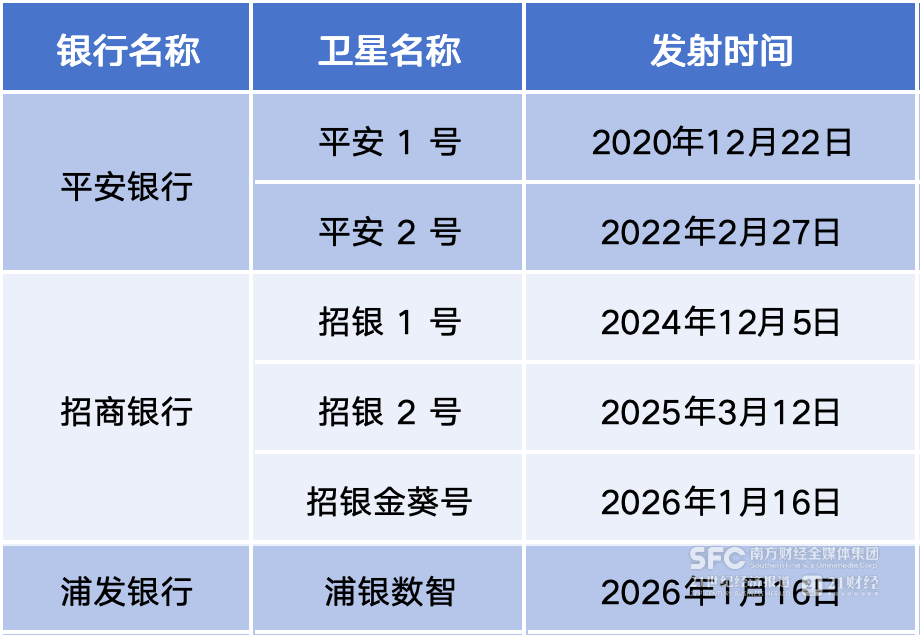
Core Viewpoint - The recent successful launch of satellites by major banks in China, including China Merchants Bank and Shanghai Pudong Development Bank, signifies a strategic shift towards utilizing satellite technology for enhancing financial services and risk management in the banking sector [1][2][3]. Group 1: Satellite Launches and Their Purpose - China Merchants Bank and Shanghai Pudong Development Bank have joined Ping An Bank in launching satellites, indicating a trend among banks to leverage space technology for business needs [2][4]. - The satellites are part of the "Tianqi Constellation," which aims to provide global coverage and enhance communication capabilities, thereby improving data transmission and supporting more devices [4][5]. - The "Zhaoyin Jinkui" satellite launched by China Merchants Bank is designed to enhance the density of the satellite constellation and reduce revisit intervals, which will significantly improve global communication capabilities [4][5]. Group 2: Business and Risk Management Enhancements - Banks are utilizing remote sensing satellite technology for precise monitoring of collateral and project progress, which enhances post-loan management efficiency and reduces credit risk [3][7]. - The integration of satellite technology into financial risk control systems allows banks to monitor real-time data from various sectors, addressing information asymmetry in lending [7][8]. - For instance, China Merchants Bank has implemented a high-precision construction monitoring system for mortgage projects, achieving over 95% accuracy in monitoring construction progress [8]. Group 3: Applications in Supply Chain and Disaster Recovery - Satellite technology is crucial for expanding supply chain finance by providing timely and effective data transmission, especially in remote areas where traditional communication may fail [9][10]. - In extreme scenarios, such as natural disasters, satellite communication ensures business continuity for banks by maintaining service availability when ground networks are disrupted [11][12]. - The banks' involvement in satellite launches also aligns with national strategies, enabling them to support the commercial space industry while enhancing their service offerings [12][13]. Group 4: Broader Industry Implications - The trend of banks launching satellites is not limited to a few institutions; it is gradually permeating various banking operations, enhancing risk management capabilities across sectors like agriculture and logistics [13][14]. - The adoption of satellite remote sensing technology is becoming a standard practice in the banking industry, reflecting a shift towards innovative financial services that integrate advanced technologies [14].

航天长峰:子公司长峰科技募集资金专用账户资金286.05万元解除冻结
2 1 Shi Ji Jing Ji Bao Dao· 2026-01-21 07:44
Core Viewpoint - The announcement indicates that Changfeng Technology, a subsidiary of Aerospace Changfeng, has had its frozen fundraising account released, allowing for normal operations to resume [1] Group 1: Financial Impact - The total amount released from the frozen fundraising account is 2.8605 million yuan [1] - The resolution of the related contractual dispute has been completed, and the funds are now available for use [1] Group 2: Operational Implications - The lifting of the fund freeze has not caused significant impact on the company's normal operations, production, or investment projects [1]

数智新工具|商业航天热潮涌起,银行也来发卫星
Qi Lu Wan Bao· 2026-01-21 07:21
数智新工具|商业航天热潮涌起,银行也来发卫星 移动端评论 热门评论我要评论 微信扫码 近期商业航天热潮涌起,银行参与积极性也被调动起来。据智通财经,近期浦发、招商等多家银行卫星 成功发射,引发市场关注。据了解,此次多家银行发射卫星将主要用于完善自身风控能力。有银行业相 关人士表示,银行通过卫星遥感技术,可实现对贷款项目进展、抵押物状态等的远程实时监控,能有效 弥补传统人工巡检在时效性与覆盖范围上的不足。值得一提的是,随着浦发银行的新加入,目前已有3 家股份行成功发射了卫星。 数智新工具|商业航天热潮涌起,银行也来发卫星 大众报业·齐鲁壹点12:48 暂无评论 鲁ICP备15022957号-13 鲁公网安备 37010202002220号 鲁新网备案号201000101 电信增值业务许可证: 鲁B2-20120085 齐鲁晚报·齐鲁壹点 版权所有(C) All Rights Reserved 联系电话:0531-82625462邮箱: 1790179766@qq.com ...

银行信用卡分中心关停潮持续
第一财经· 2026-01-21 07:05
Core Viewpoint - The article highlights a significant trend in the banking industry where credit card centers are being closed, indicating a shift from aggressive expansion to refined management in credit card operations [3][5][11]. Group 1: Closure of Credit Card Centers - The closure of credit card centers continues, with Guangzhou Bank's Zhongshan center being the latest to cease operations, marking the second closure this year [3][5]. - Since 2025, over 60 credit card centers across the country have been shut down, including those of major banks like Postal Savings Bank and China Everbright Bank [6][8]. - The trend is not limited to city commercial banks; state-owned banks like Bank of Communications have also closed over 50 local centers since 2025, indicating a broader industry shift [5][6]. Group 2: Industry Transformation - The contraction of local credit card centers is seen as a necessary outcome of industry transformation, driven by the rise of mobile internet and the saturation of the market [8][9]. - Banks are expected to integrate management functions of closed centers into local branches, focusing on customer service and account management to reduce operational costs [8][9]. - The credit card business is transitioning to a phase centered on refined operations rather than mere expansion, with private domain operations becoming a key strategy for banks to engage existing customers [8][9]. Group 3: Digital and Ecological Development - The future of credit card operations is expected to focus on digital transformation and ecological development, moving away from a model based solely on market size [11][12]. - Digital tools and AI technology are being utilized to enhance customer engagement and operational efficiency, allowing banks to implement personalized marketing and risk management [11][12]. - The integration of credit card services with wealth management and other financial services aims to create a comprehensive service system that enhances customer loyalty and business value [11][12].

黄金涨疯了,想租银行保险箱要排队5-6年
Sou Hu Cai Jing· 2026-01-21 06:42
Group 1 - The core point of the articles highlights a significant surge in gold prices leading to an unprecedented demand for bank safe deposit boxes, creating a supply-demand imbalance in the market [1][2][3] - As of January 21, spot gold prices exceeded $4,850 per ounce, marking a new high with a daily increase of 1.82%, while domestic gold jewelry prices remained above 1,440 yuan per gram [1] - The demand for safe deposit boxes has surged, with reports indicating that over 8,000 boxes at the Shenzhen branch of China Merchants Bank are fully rented, resulting in a waiting list of 500-600 people, with an estimated wait time of 5-6 years for new customers [2][3] Group 2 - The rental market for safe deposit boxes is experiencing structural tension, with many banks in major cities like Shenzhen and Guangzhou reporting all box types fully rented and long waiting lists for new customers [2][3] - The increase in demand for safe deposit boxes is closely linked to the rising prices of gold and silver, with silver prices increasing by 147.79% and gold prices by 64.56% since 2025 [3][4] - The shift in consumer behavior is evident, as investment demand for gold has surpassed jewelry consumption for the first time, with gold bar and coin consumption reaching 352.116 tons, a year-on-year increase of 24.55% [3][4] Group 3 - The supply side of the safe deposit box market is constrained, as banks view this service as low-profit and high-cost, leading to a reduction in the number of available boxes [6][7] - Many banks have been reducing their branch networks and box sizes, with some even discontinuing the service altogether, exacerbating the supply shortage [6][7] - The high renewal rates and slow turnover of rented boxes further intensify the supply-demand imbalance, as customers can renew indefinitely as long as they pay the rent [6][7] Group 4 - There is a notable divergence between physical demand for gold and financial investment behaviors, with central banks increasing their gold reserves while short-term speculative investments are decreasing [8] - The global central banks' strategic demand for gold is becoming a core support for prices, with Poland planning to increase its gold holdings by 150 tons and China continuing to add to its reserves [8] - This shift indicates a transition in the gold market from being driven by speculative investments to a focus on strategic asset allocation by central banks [8]
去年深圳8家银行密集“换将”,新行长们的角色之变
Nan Fang Du Shi Bao· 2026-01-21 06:19
Core Insights - Shenzhen's "14th Five-Year Plan" aims to establish a global "Industrial Financial Center," raising expectations for local financial institutions, particularly banks [1] - The recent leadership changes in at least eight commercial banks in Shenzhen reflect a strategic shift towards enhancing the role of these institutions in the financial ecosystem [1] Leadership Changes - The appointment of Xiong Tao as the head of the Industrial and Commercial Bank of China (ICBC) Shenzhen branch marks a significant leadership transition, emphasizing his experience in corporate banking and technology finance [2][3] - Ma Mingjun, previously the head of the Tianjin branch of the Bank of China, has been appointed to lead the Shenzhen branch, indicating a strategic focus on the Guangdong-Hong Kong-Macao Greater Bay Area [3] - Wang Xinghai has taken over as the head of the Shenzhen branch of China Merchants Bank, showcasing the bank's commitment to internal talent development and stability [4][6] - Zhang Chaohui's appointment as the head of Ping An Bank's Shenzhen branch highlights the importance of this branch within the bank's overall strategy [5][6] Focus on Technology Finance - Several new leaders in Shenzhen's banking sector are emphasizing technology finance, with initiatives aimed at supporting key sectors such as semiconductors and advanced manufacturing [8][9] - The establishment of specialized financial products for technology enterprises is a priority for banks like Shanghai Pudong Development Bank, which aims to support the entire lifecycle of tech companies [9] - Chen Dapeng, head of Minsheng Bank's Shenzhen branch, aims to tailor financial services to the unique needs of the innovation-driven economy in Shenzhen [10][11] Strategic Importance of Shenzhen - Shenzhen's banking sector is positioned as a critical area for talent development and strategic implementation, serving as a testing ground for financial innovations [12][13] - The city is recognized as a key player in China's financial landscape, with total banking assets reaching 14.25 trillion yuan, ranking third among major cities [14] - The "14th Five-Year Plan" emphasizes the need for banks to transition from traditional financing to integrated services, including venture capital and cross-border finance [15]