吉利汽车

Search documents
1月21日港股回购一览



Zheng Quan Shi Bao Wang· 2026-01-22 02:09
Group 1 - On January 21, 42 Hong Kong-listed companies conducted share buybacks, totaling 29.73 million shares and an amount of HKD 512 million [1] - Xiaomi Group-W had the highest buyback amount of HKD 248 million, repurchasing 7 million shares [1] - Other notable buybacks included Pop Mart with HKD 96.49 million and Sunny Optical Technology with HKD 61.39 million [1] Group 2 - The highest buyback price for Xiaomi was HKD 35.480, while the lowest was HKD 35.220, with a cumulative buyback amount of HKD 20.49 billion for the year [1] - Pop Mart's buyback ranged from HKD 194.900 to HKD 191.100, with a cumulative buyback amount of HKD 348 million for the year [1] - Sunny Optical Technology's buyback prices were between HKD 63.950 and HKD 62.300, with a cumulative buyback amount of HKD 686 million for the year [1]
甲醇技术路线重构商用车绿色发展版图,加速进入主流市场
Xin Hua Cai Jing· 2026-01-22 01:45
Core Viewpoint - The methanol-based alcohol-hydrogen electric technology is accelerating its entry into the mainstream commercial vehicle market, providing a competitive alternative to pure electric and hydrogen fuel cell technologies, and is expected to create a new trillion-level renewable energy sector [1][4]. Group 1: Market Overview - China is the largest commercial vehicle market globally, with rapid development expected in electric, hydrogen fuel cell, and methanol technologies, driven by supportive policies and both domestic and export demand [2]. - By 2025, domestic sales of commercial vehicles are projected to reach 3.237 million units, with 871,000 units being new energy commercial vehicles, resulting in a penetration rate of 26.9% [2]. - The current penetration rate of new energy in commercial vehicles is low compared to passenger vehicles, which have surpassed 50% [2]. Group 2: Challenges and Opportunities - The slow development of new energy in commercial vehicles is attributed to the limitations of existing technologies, which do not meet the specific needs of commercial vehicle usage [3]. - The commercial vehicle sector is a significant energy consumer, accounting for over half of vehicle fuel consumption and 56% of CO2 emissions from all vehicles [2]. Group 3: Technological Advantages - The alcohol-hydrogen electric vehicle technology, which utilizes methanol as a liquid hydrogen substitute, has shown practical and economic advantages, making it suitable for various operational conditions [4][5]. - Compared to pure electric vehicles, alcohol-hydrogen electric vehicles offer stronger endurance, less impact from weather conditions, and lower infrastructure costs [5]. - The latest generation of methanol-powered systems has achieved a thermal efficiency of 50.3%, with comprehensive energy costs reduced by 32%-52% compared to diesel vehicles [5]. Group 4: Infrastructure and Policy Support - The existing oil and gas pipeline network can be utilized for low-cost transportation of liquid methanol, and converting existing gas stations to methanol refueling stations is significantly cheaper than building new hydrogen stations [6]. - The Chinese government has introduced over 70 policy documents to support the promotion of methanol vehicles, indicating strong institutional backing for the industry [8][9]. Group 5: Global Trends and Future Outlook - European car manufacturers are increasingly developing methanol as a vehicle fuel, with models expected to enter the market post-2035 [7]. - The global methanol industry is expanding, with 414 ships confirmed to adopt methanol fuel by the end of 2025, indicating a growing acceptance of methanol in various transportation sectors [7]. - The integration of green hydrogen, ammonia, and methanol is becoming a key pathway for clean energy consumption and industrial innovation [10].
港股开盘:恒指涨0.62%、科指涨0.85%,科网股、芯片股走高,创新药概念股活跃,黄金股回调
Jin Rong Jie· 2026-01-22 01:30
Market Overview - The Hong Kong stock market opened higher on January 22, with the Hang Seng Index rising by 0.62% to 26,750.51 points, the Hang Seng Tech Index increasing by 0.85% to 5,795 points, and the National Enterprises Index up by 0.55% to 9,173.54 points [1] - Major tech stocks mostly rose, with Alibaba up 1.72%, Tencent Holdings up 0.33%, JD Group up 0.98%, and Xiaomi Group up 0.9% [1] - Chip stocks opened high, with Zhaoyi Innovation rising over 7% [1] - The innovative drug concept was active, with WuXi Biologics rising over 1% [1] - Gold stocks generally fell, with Shandong Gold down over 2% [1] - Longqi Technology's IPO on the Hong Kong stock market saw a nearly 13% increase on its first day [1] Company News - Shanghai Electric (02727.HK) expects a net profit of RMB 1.1 billion to RMB 1.32 billion for 2025, an increase of approximately 47% to 76% year-on-year [2] - Kingdee International (00268.HK) anticipates total revenue of approximately RMB 6.95 billion to RMB 7.05 billion for 2025, a year-on-year growth of about 11.1% to 12.7% [2] - Beijing Machinery Electric (00187.HK) expects a net loss of RMB 46 million to RMB 55.2 million for 2025, primarily due to intensified international trade frictions affecting its gas storage and transportation export business [2] - Chow Tai Fook (01929.HK) reported a retail value growth of 17.8% for the three months ending December 31, 2025, with mainland China retail value increasing by 16.9% [2] - Zai Lab (09911.HK) anticipates a cumulative download of approximately 970 million for its social business by 2025, a year-on-year increase of about 5.9% [2] Strategic Developments - Ruiri Medical Technology (01696.HK) signed a letter of intent for cooperation with Stryker Medical to establish localized production in China [3] - Cathay Pacific (00293.HK) and Hong Kong Express expect to carry over 36 million passengers in 2025, a year-on-year increase of 27% [4] - Shenyang Public Development (00747.HK) has initiated edge computing infrastructure and service business [5] - Flat Glass Group (06865.HK) plans to absorb and merge with Zhongda Quartz Development [6] Share Buybacks - Xiaomi Group (01810.HK) repurchased 7 million shares for HKD 248 million at prices between HKD 35.22 and HKD 35.48 [7] - Pop Mart (09992.HK) repurchased 500,000 shares for HKD 96.49 million at prices between HKD 191.1 and HKD 194.9 [8] - Sunny Optical Technology (02382.HK) repurchased 970,000 shares for HKD 61.39 million at prices between HKD 62.30 and HKD 63.95 [9] - Geely Automobile (00175.HK) repurchased 2.376 million shares for HKD 39.62 million at prices between HKD 16.62 and HKD 16.81 [10] Financial Instruments - Huaneng International Power (00902.HK) completed the issuance of RMB 2 billion medium-term notes [11] - CICC (03908.HK) plans to issue up to RMB 5 billion in bonds for technology innovation companies [12] Institutional Insights - Dongwu Securities noted that despite a general reduction in the Fed's interest rate cut expectations in overseas markets, domestic investors remain optimistic [13] - Orient Securities highlighted that recent U.S. measures against Venezuela and Greenland have increased geopolitical risks, supporting gold prices [14] - Zheshang Securities suggested that the humanoid robot sector has formed an ecological closed loop, recommending attention to component suppliers and undervalued transformation targets [14] - CITIC Securities indicated that new policies from the National Medical Insurance Administration will accelerate the promotion of surgical robots in China [14]

智通港股沽空统计|1月22日
智通财经网· 2026-01-22 00:24
Group 1 - The top short-selling stocks include Sun Hung Kai Properties (80016), China Resources Beer (80291), and AIA Group (81299), all with a short-selling ratio of 100.00% [1][2] - The highest short-selling amounts are recorded for Xiaomi Group (01810) at 1.128 billion, Baidu Group (09888) at 1.106 billion, and Alibaba Group (09988) at 995 million [1][2] - The highest deviation values are for Ping An Insurance (82318) at 58.81%, JD Group (89618) at 38.75%, and Sun Hung Kai Properties (80016) at 35.83% [1][2] Group 2 - The top short-selling ratio rankings show Sun Hung Kai Properties (80016) with a short-selling amount of 196,700 and a ratio of 100.00%, followed by China Resources Beer (80291) with 11,500 and 100.00% [2] - The top short-selling amounts list Xiaomi Group (01810) with 1.128 billion, Baidu Group (09888) with 1.106 billion, and Alibaba Group (09988) with 995 million [2] - The top deviation values list Ping An Insurance (82318) with a short-selling amount of 3.2371 million and a ratio of 92.98%, followed by JD Group (89618) with 320,900 and 98.46% [2]




开年价格战重现:汽车公司从最难的第一季度开始更难的一年
Xin Lang Ke Ji· 2026-01-22 00:03
Core Viewpoint - The automotive industry in China is facing a significant shift in 2026, with predictions of a price war initiated earlier than expected, influenced by changes in subsidy policies and market dynamics [2][3]. Group 1: Market Predictions - The China Passenger Car Association (CPCA) forecasts that domestic car sales in Q1 2026 may remain flat year-on-year but could drop by 25% compared to Q4 2025, with overall annual sales expected to show zero or minimal growth [2]. - Morgan Stanley predicts a substantial decline in Q1 2026 sales by 30%-35% due to reduced purchase tax subsidies, with an annual decrease of 5% anticipated, potentially reaching 7% without considering export sales [2]. - UBS shares a similar outlook, projecting a 2% decline in annual car sales, with export growth slowing from 28% in 2025 to 15% [3]. Group 2: Policy Changes - The National Development and Reform Commission and the Ministry of Finance have yet to announce the continuation of "two new" subsidies for 2026, with significant changes expected in the subsidy structure for new energy vehicles (NEVs) [3]. - The new policy will halve the purchase tax for NEVs, increasing costs for consumers, while the subsidy for new cars will be more detailed and based on vehicle price, with a maximum of 20,000 yuan [3]. Group 3: Industry Sentiment - Industry executives express cautious optimism regarding their companies' growth, with many expecting double-digit growth driven by overseas market expansion, despite a general conservative outlook on overall market growth [7]. - The total sales target for nine major automakers in 2026 is set at 18.339 million units, surpassing the actual sales of 3.86 million units in 2025 [7]. - New energy vehicle manufacturers have aggressive growth targets, with some aiming for increases of 70%-121%, while traditional automakers maintain more conservative targets [9]. Group 4: Price War Dynamics - A price war has already begun, with companies like BMW and Tesla implementing significant price cuts and financing options to stimulate demand ahead of the anticipated subsidy changes [10][13]. - Over 20 automakers have introduced purchase tax guarantees to attract customers, but initial sales data for January 2026 indicate a decline in demand compared to previous months [10][11]. - The adjustment of subsidy policies has raised the entry barriers for consumers, particularly affecting lower-priced vehicles, which may suppress demand in that segment [11]. Group 5: Competitive Landscape - The competition in the high-end market is expected to intensify, with new energy vehicles priced above 300,000 yuan becoming more competitive due to favorable subsidy policies [13]. - Companies like NIO, Xiaomi, and Xpeng are preparing to launch multiple new models in 2026, indicating a strategic focus on high-end segments [13].

让非遗焕发新生让产业迸发活力
Xin Lang Cai Jing· 2026-01-21 23:41
Group 1: Community and Cultural Activities - The community emphasizes the need for diverse cultural activities for the elderly, such as calligraphy, opera appreciation, and handicraft skills, along with the involvement of more cultural volunteers and professional instructors to enhance activity quality [1] - There is a call for stronger grassroots transmission of intangible cultural heritage, particularly in paper art, to engage more young people and integrate traditional skills into schools and communities [2] Group 2: Financial Services - The financial sector highlights the importance of supportive policies for microfinance services, aiming for more precise and comprehensive guidance to bolster the development of microfinance in Huzhou [3] Group 3: Manufacturing and Industry - The manufacturing sector seeks targeted support policies for the digital transformation of traditional industries, focusing on high-end talent cultivation, smart research and development, and industry chain collaboration [4] Group 4: Agriculture and Rural Development - The tea industry, particularly white tea, is identified as a key economic driver for rural areas, with a request for more attention to the development of rural specialty industries and improvements in transportation and logistics to enhance the tea industry's vitality [5] Group 5: Health and Wellness Industry - The travel and wellness industry calls for more recommendations from representatives to improve service standards and encourage social participation in creating unique travel and wellness products [6]
吉利银河V900上市
Mei Ri Shang Bao· 2026-01-21 23:26
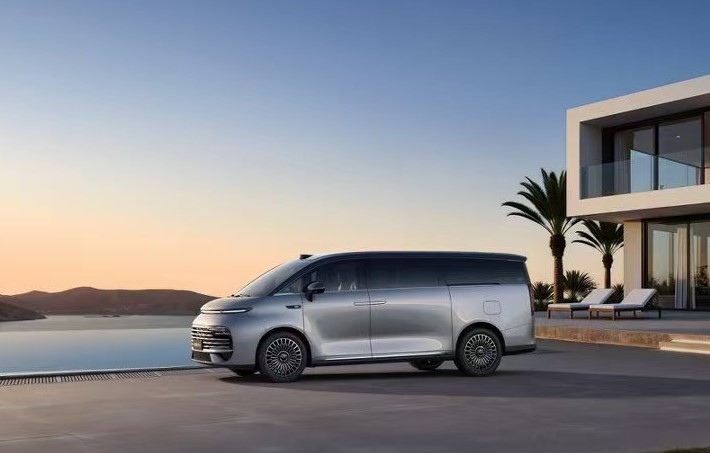
商报讯(记者郭雨昕)1月20日,吉利银河豪华V系列首发之作,"AI全场景家庭旗舰MPV"——吉利银河 V900上市,共推出3个车型,限时指导价26.98万-32.98万元。 银河V900拥有91.8%得房率,全球最高,车内有效长度达到3.97米,同级最长。在行业尺寸最紧凑的"超 级AI增程系统"加持下,采用"叠竖"布局的银河V900为前舱省下150mm纵向空间,得以全球首创3个 1000+空间。 新车全系标配智能双电机四驱系统,可输出340kW峰值功率与523N.m峰值扭矩,零百成绩6.5秒,其AI 数字底盘,搭载了主动魔毯预瞄、空气悬挂、CCD连续可变阻尼减振器及CST2.0全速域舒适制动系 统,能做到极致舒适,兼顾运动。据悉,银河V900底盘调校由路特斯团队完成,因为吉利银河发现, MPV车主多为高净值群体,具有多年豪车驾驶经验,非常关注整车驾控感受,银河V900要弱化MPV常 有的"司机感",满足驾驶位的操控乐趣。 行业领先的银河Flyme Auto2新一代AI智能座舱,操作丝滑不卡顿,在行业最强的AI大模型加持下,超 拟人情感智能体Eva具备情感识别与记忆能力,可主动理解驾乘需求,让关怀无微不至。千里 ...
吉利银河V900上市,空间、定价是大杀器
Nan Fang Du Shi Bao· 2026-01-21 21:26
作为吉利银河豪华V系列首发之作, "AI全场景家庭旗舰MPV"吉利银河V900已正式上市。新车共推出3 款车型,上市限时指导价 26.98万-32.98万元。吉利银河V900主打"众口皆可调"理念,让每位驾乘人员 都不需要妥协。 该车拥有91.8%得房率,车内有效长度达到3.97米。在行业尺寸最紧凑的 "超级AI增程系统" 加持下,采 用"叠竖"布局的银河V900为前舱省下150mm纵向空间,实现了超1000mm的二排纵向空间,以及无需调 整前排座位,可同时享有超1000mm的三排纵向空间,200mm的二排中央通道也是同级最宽。在此基础 上,银河V900的后备箱空间同样达到1100L,可容纳15个20寸行李箱。 银河V900提供了11层云感SPA座椅,Nappa真皮、一二排通风、 加热、按摩均配齐,三排可通风、加 热,可电动调节靠背。在远途出行或家庭露营时,27扬声器Flyme Sound无界之声系统配合后排娱乐巨 幕,可以打造沉浸式移动影音厅;-6℃~50℃的超宽温域冷暖箱,可以让车上成员享受到冰镇饮品及温 热汤食。 银河V900全系标配智能双电机四驱系统,可输出340kW峰值功率与523N·m 峰值扭矩, ...
智能驾驶再添“新军”!埃泰克主板上市申请过会
Shang Hai Zheng Quan Bao· 2026-01-21 13:46
Core Viewpoint - The Shanghai Stock Exchange has approved the IPO application of Wuhu Aiteke Automotive Electronics Co., Ltd., marking a new entrant in the automotive electronics sector [1] Company Overview - Aiteke has been focused on the research, production, and sales of automotive electronic intelligent solutions since its establishment in 2002, developing a product matrix covering four functional domains: body domain, intelligent cockpit domain, power domain, and intelligent driving domain [3] - The company has achieved a market share of 25.5% in the body control unit sector for domestic brand passenger cars in 2024, ranking first for three consecutive years, and has also secured the top position in the market for remote physical keys with a share of 13.83% [3] Financial Performance - Aiteke's revenue has shown steady growth, with reported revenues of 2.174 billion yuan, 3.003 billion yuan, and 3.467 billion yuan for the years 2022, 2023, and 2024 respectively, and net profits of 77.44 million yuan, 171 million yuan, and 202 million yuan [4] - For the first half of 2025, the company achieved a revenue of 1.522 billion yuan and a net profit of 85.61 million yuan, indicating strong operational and profitability capabilities [4] IPO Details - Aiteke plans to issue up to 44.7727 million shares in its IPO, raising 1.5 billion yuan for projects including the annual production of 5 million automotive electronic units and the expansion of its production base [4] - The company's largest customer, Chery Automobile, has increased its revenue contribution from 27.6% in 2022 to 50.26% in the first half of 2025, raising concerns during the IPO review regarding customer dependency and revenue stability [5] Industry Trends - The automotive industry in China is increasingly focusing on intelligent driving, with multiple companies accelerating their capital market activities since 2026 [6] - Companies like Daoyuan Technology and Zhenju Technology are also entering the market, focusing on high-precision positioning and electric control solutions for new energy vehicles [6][7]

中国车企在欧销量暴涨127%
第一财经· 2026-01-21 12:59
2026.01. 21 上汽名爵是销量排名最高的中国汽车品牌,2025年销售了30.7万辆汽车,同比增长26%,是唯一一 家销量排名跻身前20的中国汽车品牌(第16名);其次是比亚迪(18.7万辆,含腾势),同比增长 276%,排名由2024年的31位上升至2025年的22位;奇瑞旗下Jaecoo、Omoda品牌以及吉利旗 下的极星也在中国汽车品牌中位列前五。而奇瑞旗下所有品牌2025年在欧洲的销量共计达12.0万 辆,大幅高于2024年1.7万辆。吉利(极星、极氪和领克)销量达6.8万辆,同比增长58%。 从全年销量看来,大众集团在欧洲市场销量排名第一,占据了27%的市场份额;其次是Stellantis (14%)和雷诺(10%);这三家车企销量占据半壁江山。 近两年来,中国车企在欧洲市场销量快速增长。2024年10月,欧盟成员国投票通过,在现有10%的 税收基础上,对中国制造的电动汽车征收最高35.3%反补贴税,为期五年,中国电动汽车制造商进 入欧洲市场将面临最高45.3%的超高关税。 本文字数:1368,阅读时长大约3分钟 作者 | 第一财经 武子晔 在欧盟对中国纯电动车加征关税的2025年,中国车企在 ...