中信银行

Search documents
白金信用卡权益大缩水:贵宾厅限次、酒店减量……
Mei Ri Jing Ji Xin Wen· 2025-12-11 13:51
Core Insights - The high-end credit card benefits are being significantly reduced by multiple banks, leading to a decline in the perceived value of these cards [1][3][4] - The profitability of high-end credit cards is under scrutiny, as banks struggle to balance the high costs of benefits with low revenue from transaction fees [4][5][6] - Banks are shifting their strategies from aggressive customer acquisition to maintaining existing high-value clients, focusing on overall customer value rather than just credit card profitability [8][10] Summary by Sections Benefit Reductions - High-end credit card benefits such as unlimited airport lounge access and hotel stays are being cut back, with some banks reducing annual hotel stays from two nights to one [1][2] - Changes include limiting airport lounge access to a maximum of six visits per year and increasing the points required for redeeming benefits [3] Profitability Challenges - High-end credit cards are not profitable for banks due to high costs associated with benefits and low transaction fee revenue, which averages around 0.3% in China [4][5] - The cost of services like airport transfers can range from 200 to 300 yuan, further straining profitability [4] Strategic Shifts - Banks are focusing on high-end credit cards as a means to identify and engage high-value customers, integrating these products into broader wealth management strategies [8][9] - The industry is moving towards a model that prioritizes maintaining existing customers over acquiring new ones, especially as the market becomes saturated [10]
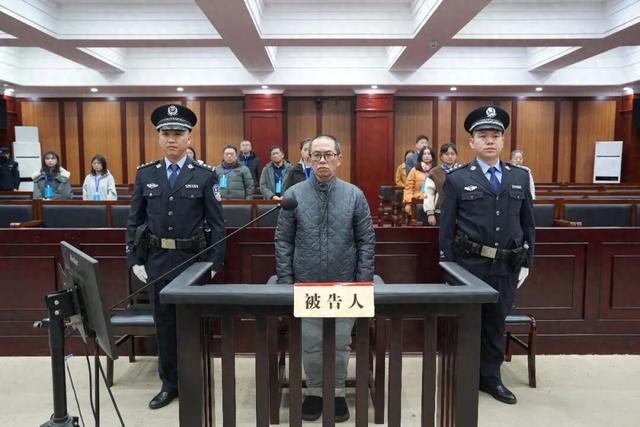
中信银行资产管理业务中心原副总裁罗金辉一审被判12年9个月
Bei Jing Shang Bao· 2025-12-11 11:18
Core Viewpoint - The case of Luo Jinhui, former vice president of the Asset Management Business Center of CITIC Bank, highlights significant corruption within the banking sector, resulting in a prison sentence and substantial fines for the accused [1] Summary by Relevant Sections Legal Proceedings - The Intermediate People's Court of Liupanshui City, Guizhou Province, sentenced Luo Jinhui to 12 years and 9 months in prison for bribery, along with a fine of 2 million RMB [1] - The court ordered the confiscation of Luo's illicit gains, totaling over 44.37 million RMB, which he received from 2014 to 2020 while holding various senior positions in major banks [1] Corruption Details - Luo utilized his positions at Industrial and Commercial Bank of China, Bank of Communications, and CITIC Bank to facilitate financing and stock transactions for enterprises and individuals, receiving substantial bribes in return [1] - The court deemed the amount of bribery particularly large, warranting severe punishment [1] Mitigating Factors - Luo confessed to his crimes and provided information on additional bribery activities not previously known to the authorities, which contributed to a lighter sentence [1] - All illicit funds and assets were returned, further influencing the court's decision to impose a reduced penalty [1]



中信银行资产管理业务中心原副总裁罗金辉受贿案一审宣判
Xin Lang Cai Jing· 2025-12-11 11:01
Core Viewpoint - The case of Luo Jinhui, former vice president of the Asset Management Business Center of CITIC Bank, highlights significant corruption within the banking sector, resulting in a prison sentence and fines for the accused [1][7]. Group 1: Case Details - Luo Jinhui was sentenced to 12 years and 9 months in prison and fined 2 million RMB for accepting bribes totaling over 44.37 million RMB from 2014 to 2020 [1][5][9]. - The court found that Luo utilized his positions at various banks to facilitate financing and stock transactions for companies and individuals, leading to his illegal gains [3][9]. Group 2: Court Ruling - The court deemed Luo's actions as constituting a particularly large amount of bribery, warranting legal punishment [5][11]. - Factors such as Luo's confession, cooperation with authorities, and full restitution of illicit gains were considered for a lighter sentence [5][11]. - Luo expressed acceptance of the verdict and did not appeal the decision [6][11].

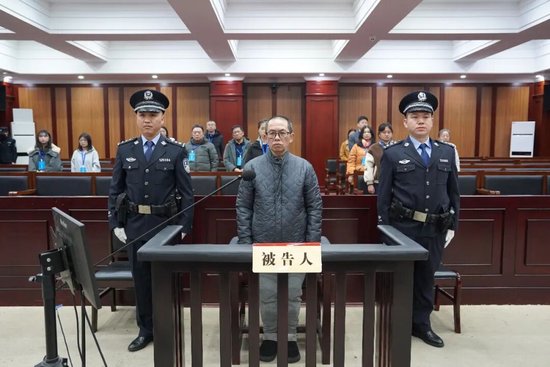
中信银行股份有限公司资产管理业务中心原副总裁罗金辉受贿案一审宣判
Huan Qiu Wang· 2025-12-11 09:36
Core Points - The case involves Luo Jinhui, former Vice President of the Asset Management Business Center at CITIC Bank, who was sentenced to 12 years and 9 months in prison for bribery, along with a fine of 2 million RMB [1][3] - The court found that from 2014 to 2020, Luo utilized his positions at various banks to facilitate financing and stock transactions for companies and individuals, receiving bribes totaling over 44.37 million RMB [1][3] Summary by Sections - **Bribery Conviction**: Luo Jinhui was convicted of bribery with a particularly large amount involved, leading to a significant prison sentence and financial penalties [3] - **Details of the Offense**: The investigation revealed that Luo exploited his roles at China Industrial Bank, Bank of Communications, and CITIC Bank to provide illegal assistance in financial transactions, accumulating substantial illicit gains [1][3] - **Court's Ruling**: The court acknowledged Luo's confession and cooperation during the investigation, which contributed to a lighter sentence despite the severity of the crime [3]
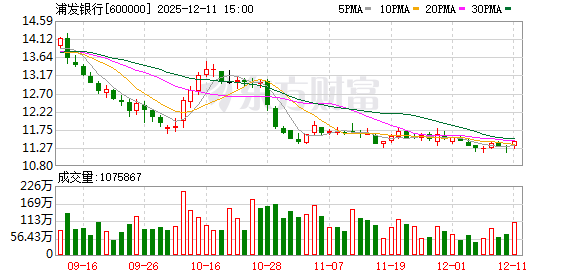
银行行业资金流入榜:浦发银行、交通银行等净流入资金居前
Zheng Quan Shi Bao Wang· 2025-12-11 09:27
Core Viewpoint - The banking sector showed resilience with a slight increase of 0.17% on December 11, despite a broader market decline, indicating potential strength in this industry amidst overall market challenges [2][3]. Market Performance - The Shanghai Composite Index fell by 0.70% on the same day, with only one sector, banking, experiencing an increase [2]. - The banking sector was the top performer among industries, while the comprehensive and communication sectors faced significant declines of 4.31% and 3.14%, respectively [2]. Capital Flow - There was a net outflow of 744.67 billion yuan from the two markets, with only the banking sector seeing a net inflow of 67.49 million yuan [2]. - The electronic industry faced the largest net outflow of 13.586 billion yuan, followed by the communication sector with 11.340 billion yuan [2]. Individual Stock Performance - Within the banking sector, 42 stocks were tracked, with 21 stocks rising and 20 stocks falling [3]. - The top three banks by net inflow were: - Shanghai Pudong Development Bank with a net inflow of 119 million yuan [4]. - Bank of Communications with 80.991 million yuan [4]. - Nanjing Bank with 67.811 million yuan [4]. - The banks with the highest net outflows included: - China Merchants Bank with a net outflow of 303 million yuan [6]. - Minsheng Bank with 45.949 million yuan [6]. - Hangzhou Bank with 40.973 million yuan [6]. Detailed Capital Flow in Banking Sector - The following banks had notable capital flows: - Shanghai Pudong Development Bank: +1.42% with a turnover rate of 0.32% and a capital flow of 118.58 million yuan [4]. - Bank of Communications: +0.68% with a turnover rate of 0.45% and a capital flow of 80.99 million yuan [4]. - Agricultural Bank of China: +1.41% with a turnover rate of 0.09% and a capital flow of 49.85 million yuan [5].




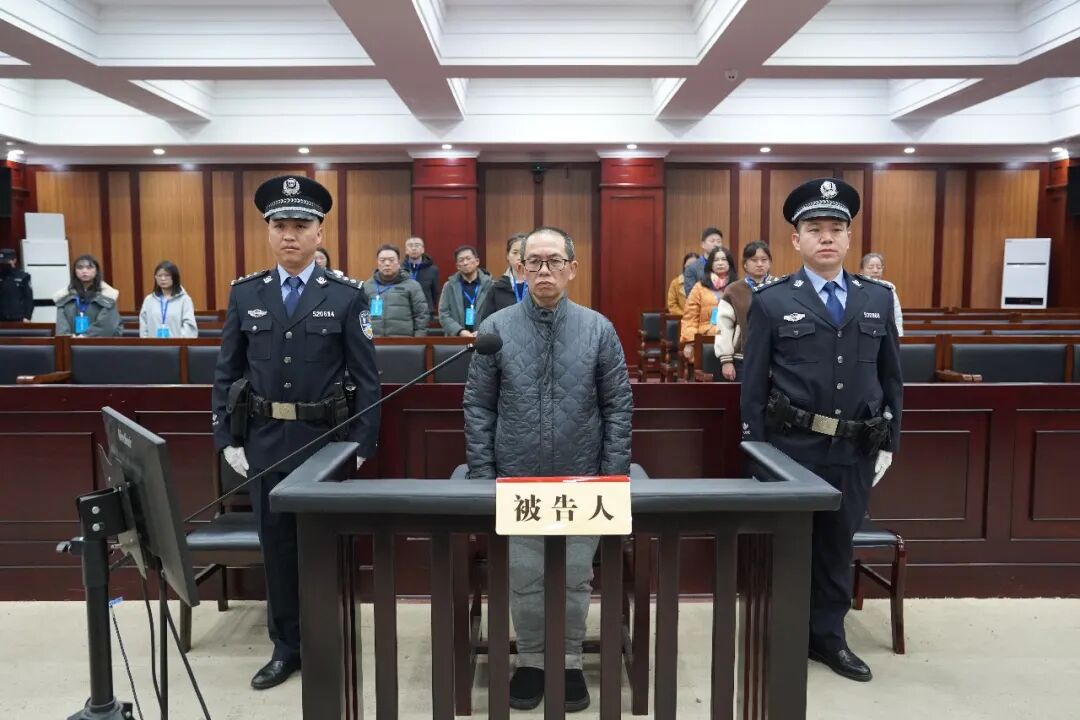
中信银行资产管理业务中心原副总裁罗金辉一审被判十二年九个月
Bei Jing Ri Bao Ke Hu Duan· 2025-12-11 09:25
Core Points - The case involves the sentencing of Luo Jinhui, former Vice President of the Asset Management Business Center of CITIC Bank, for bribery, receiving a prison sentence of 12 years and 9 months along with a fine of 2 million RMB [1] - Luo Jinhui was found guilty of accepting bribes totaling over 44.37 million RMB from 2014 to 2020 while holding senior positions in various banks, including China Industrial Bank and Bank of Communications [3] - The court acknowledged Luo's confession and cooperation during the investigation, which contributed to a lighter sentence despite the significant amount of bribery [5] Company Summary - Luo Jinhui held key positions in major banks, including CITIC Bank, where he utilized his authority to facilitate financing and stock transactions for enterprises and individuals [3] - The court's decision reflects the legal consequences of corruption within the banking sector, emphasizing the importance of integrity in financial institutions [5] - The case highlights the potential risks associated with senior management positions in banks, where the misuse of power can lead to significant legal repercussions [3][5]
践行数字金融 中信银行郑州分行创新驱动服务升级
Huan Qiu Wang· 2025-12-11 09:00
Core Viewpoint - The successful launch of the direct connection service for housing fund contributors by CITIC Bank's Zhengzhou branch significantly enhances customer experience through a fully online process for loan applications, approvals, and disbursements [1] Group 1: Service Innovation - CITIC Bank Zhengzhou branch has implemented a fully online process for the housing fund loan service, allowing for "instant application, instant approval, and instant disbursement" [1] - The previous offline model for housing fund loans was time-consuming and inefficient, leading to poor customer experience [1] Group 2: Operational Improvements - A professional guidance team was established to support the implementation of the new service, providing precise support throughout the entire process, from business design to risk control [1] - The bank actively communicated with the housing fund service center in Huai County to create an efficient coordination mechanism and optimize data transmission channels [1] Group 3: Strategic Goals - The launch of the direct connection service is a key initiative for CITIC Bank in promoting digital finance and inclusive finance [1] - The bank aims to deepen technological applications and innovate products and business models to provide better and more convenient financial services to local customers [1] - CITIC Bank is committed to contributing to the high-quality development of the local economy and society [1]
银行净息差专题报告:负债管理能力成为业绩分化的关键
GUOTAI HAITONG SECURITIES· 2025-12-11 08:03
Investment Rating - The report assigns an "Overweight" rating for the banking sector [7]. Core Insights - The report emphasizes the significant improvement in the cost of liabilities for banks in 2025, with a notable decrease of 28 basis points (bp) in the first half of the year, compared to only 4 bp in the same period last year. This improvement is primarily driven by reductions in deposit and interbank liabilities costs, contributing 19 bp and 7 bp respectively [3][11]. - The net interest margin (NIM) is expected to decline by approximately 5 bp in 2026, with the downward pressure on margins continuing to ease marginally, suggesting that some banks may stabilize their NIMs [2][10]. Summary by Sections 1. Liability Cost Improvement in 2025 - The first half of 2025 saw a significant reduction in the cost of interest-bearing liabilities, with the cost rate dropping to 1.70%, a decrease of 28 bp from 2024. This was supported by improvements in both deposit and interbank liability costs [11]. 2. Liability Side: Deposit Maturity and Repricing Benefits 1) **Term Structure**: The proportion of long-term deposits entering the repricing cycle has increased, with the share of deposits with a remaining maturity of 1-5 years declining by 1.5 percentage points (pct) to 22.6% by the end of Q2 2025. Some banks, such as those in Ningbo and Chongqing, experienced declines exceeding 10 pct [4]. 2) **Price Factors**: Regulatory focus on maintaining reasonable NIM levels has increased, with expectations of further interest rate cuts. The maximum reduction for three-year deposits could exceed 100 bp, indicating substantial room for cost improvement [5]. 3. Asset Side: Yield Pressure Expected to be Better than 2025 1) **Loans**: The repricing pressure on loans is expected to ease, with the five-year Loan Prime Rate (LPR) declining by only 10 bp in 2025, significantly less than the 50 bp drop the previous year [6]. 2) **Debt Replacement**: The shift from high-interest to low-interest debt is anticipated to have a limited impact on net interest margins, estimated to drag down margins by about 4 bp [6]. 3) **Bond Maturity**: The widening gap between new bond issuance rates and existing bond yields is expected to exert downward pressure on investment yields, with an estimated drag of 6 bp on margins from the reallocation of bonds maturing within one year [6]. 4. NIM Projections - The report forecasts a 5 bp decline in NIM for 2026, with the downward trend continuing to converge. The asset yield is expected to decrease by 17 bp, while the cost of liabilities is projected to improve by 13 bp, with deposit costs improving by 17 bp [7][10].



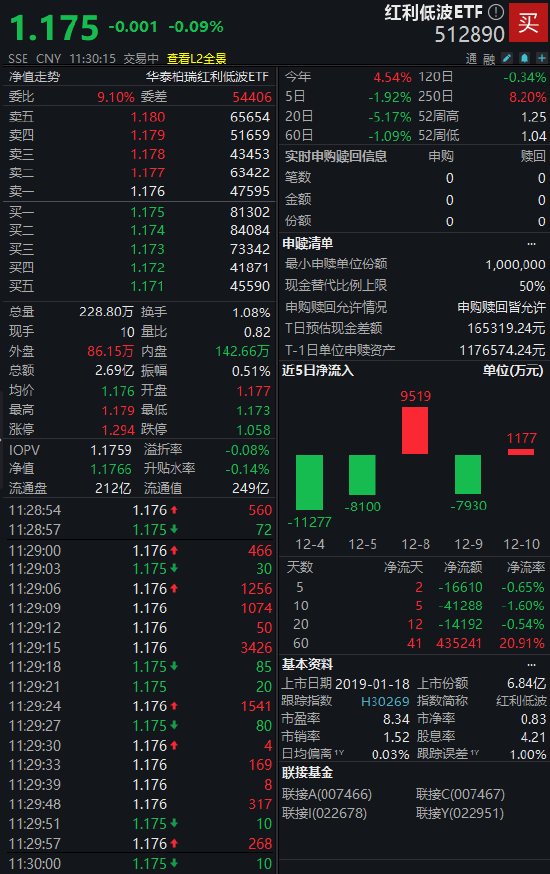
红利低波ETF(512890)年内规模增长超百亿元,机构继续看好银行板块配置价值
Xin Lang Cai Jing· 2025-12-11 04:05
Core Viewpoint - The news highlights the performance and growth of the Hongli Low Volatility ETF (512890), which has shown significant increases in both share volume and total assets in 2025, indicating strong investor interest and market positioning. Group 1: ETF Performance - As of December 10, 2025, the Hongli Low Volatility ETF (512890) has a total share count of 21.163 billion and total assets of 24.901 billion yuan, reflecting a year-to-date increase of 72.59% in shares and 81.10% in assets compared to the previous year [3][7]. - The ETF's price slightly decreased by 0.09% to 1.175 yuan, with a trading volume of 2.69 billion yuan, making it the leading ETF in its category [1][5]. Group 2: Top Holdings - The latest report lists the top ten holdings of the Hongli Low Volatility ETF, which include major companies such as COFCO Sugar, Nanjing Bank, and Agricultural Bank of China, with significant weightings in the portfolio [3][9]. Group 3: Market Context - The banking sector's average dividend yield is currently at 3.94%, which is 2.08% higher than the ten-year government bond yield, reinforcing the attractiveness of bank stocks as high-dividend investments [4][9]. - The report emphasizes the importance of dividend value in the banking sector, suggesting that ongoing shareholder and executive buybacks will help stabilize market expectations and attract long-term capital [4][9].
年末将至!银行密集挂牌,零售类不良资产“出清潮”来袭
Bei Jing Shang Bao· 2025-12-11 03:58
Core Viewpoint - A wave of retail non-performing asset (NPA) disposals is occurring among various banks in China, driven by the need to optimize year-end financial statements, reduce non-performing loan ratios, and release capital space, while also addressing risks accumulated from rapid retail business expansion over the past few years [1][5][9] Group 1: Asset Disposal Trends - The pace of retail NPA disposals has accelerated as year-end approaches, with multiple banks, including state-owned and regional banks, participating in the process [3][4] - Ping An Bank has announced multiple personal loan transfer projects, with one involving 308 loans totaling approximately 52.98 million yuan, and others focusing on credit card overdrafts with total amounts reaching 83.8 million yuan and 63.9 million yuan respectively [4][5] - The average overdue days for these assets are significantly high, exceeding 800 days for some, indicating a severe deterioration in asset quality [4][6] Group 2: Challenges in Asset Recovery - Retail NPAs are characterized by small amounts, dispersion, and lack of collateral, leading to high due diligence costs and uncertain recovery rates for buyers [1][7] - Many of these assets have aged significantly, with recovery rates dropping sharply for loans overdue by more than five years, often falling below 4% [7][8] - The complexity of legal issues and the low willingness of debtors to repay further complicate the pricing and recovery of these assets [8][9] Group 3: Future Outlook and Strategic Adjustments - The current wave of disposals is expected to continue into the first half of 2026, with a potential increase in the scale of disposals, particularly among smaller regional banks facing greater pressure [9][10] - Banks are increasingly utilizing financial technology to enhance risk management and monitoring of retail clients, aiming to build a comprehensive risk management system [10] - A strategic shift towards prioritizing risk control over mere growth is necessary for banks to balance expansion with effective risk management [10]