
海螺水泥

Search documents
14户央企领导职务任免


Zhong Guo Ji Jin Bao· 2026-02-13 09:29
Core Viewpoint - The State-owned Assets Supervision and Administration Commission (SASAC) announced personnel changes in 14 central enterprises, involving 11 leadership appointments and removals. Group 1: Leadership Appointments - Pei Mingshan appointed as Deputy Secretary of the Party Committee and Director of China Railway Construction Group, nominated as General Manager candidate [1] - Hou Xiao appointed as Deputy Secretary of the Party Committee and Director of China National New Group, nominated as General Manager candidate [2] - Dong Baoliang appointed as Deputy Secretary of the Party Committee and Director of China Railway Signal and Communication Group, nominated as General Manager candidate [3] - Zheng Weili appointed as Member of the Standing Committee of the Party Committee of China Coal Technology and Engineering Group, nominated as Chief Accountant candidate [4] - Zhang Deyong appointed as Member of the Standing Committee of the Party Committee of China Electrical Equipment Group, nominated as Chief Accountant candidate [5] - Qu Xiaoli appointed as Member of the Standing Committee of the Party Committee of China CRRC Group, removed from the same position at China National Building Material Group [6] Group 2: Leadership Removals - Hu Naimin removed from the Standing Committee of the Party Committee of China Energy Conservation and Environmental Protection Group, retired [7] - Ma Shizhi removed from the Standing Committee of the Party Committee of China Coal Energy Group, retired [8] - Wu Xiangong removed from the Standing Committee of the Party Committee of China Chemical Engineering Group, retired [9] - Wang Shiqi removed from the Deputy Secretary and Standing Committee of the Party Committee of China Railway Engineering Group, retired [10] - Sun Lixia removed from the Standing Committee and Discipline Inspection Secretary of China Poly Group, retired [11]
杉杉股份重整迎来终局 安徽国资72亿元入主 “海螺系”或将带来业务协同及现金支撑
Xin Lang Cai Jing· 2026-02-13 08:08
Core Viewpoint - The restructuring of Shanshan Co., Ltd. has made significant progress with the signing of a restructuring investment agreement involving Anhui Wanwei Group and Ningbo Financial Asset Management Co., Ltd. [1][2] Group 1: Restructuring Details - If the restructuring is successful, the controlling shareholder of Shanshan Co., Ltd. will change to Wanwei Group, with the actual controller being the Anhui State-owned Assets Supervision and Administration Commission [2][6] - Wanwei Group plans to invest up to 71.56 billion yuan to acquire 21.88% of Shanshan Co., Ltd.'s voting rights through a combination of direct acquisition and immediate funding [5] - The direct acquisition will involve Wanwei Group purchasing 13.50% of Shanshan Co., Ltd.'s shares at approximately 16.42 yuan per share, totaling around 49.87 billion yuan [5] Group 2: Financial Background and Challenges - Shanshan Co., Ltd. has faced significant financial difficulties, with total liabilities reaching 33.55 billion yuan and a liquidity crisis exacerbated by internal conflicts following the death of its founder [4] - The company has been under court-ordered restructuring since early 2023, with multiple rounds of investment recruitment leading to the selection of Wanwei Group as the final investor [4][7] Group 3: Market Reaction and Future Prospects - Following the announcement of the restructuring agreement, Shanshan Co., Ltd.'s stock price experienced a surge, reaching a cumulative increase of 5.90% by February 13 [3] - The partnership with Wanwei Group, backed by strong financial capabilities and business synergies, is expected to provide stability and growth opportunities for Shanshan Co., Ltd. moving forward [8][9] - Shanshan Co., Ltd. anticipates a turnaround in profitability, projecting a net profit of 400 million to 600 million yuan for the fiscal year 2025, driven by growth in its core businesses [9]

机构资金抢筹布局!标的指数展现高Beta弹性,建材ETF(159745)布局行业核心标的
Xin Lang Cai Jing· 2026-02-13 07:07
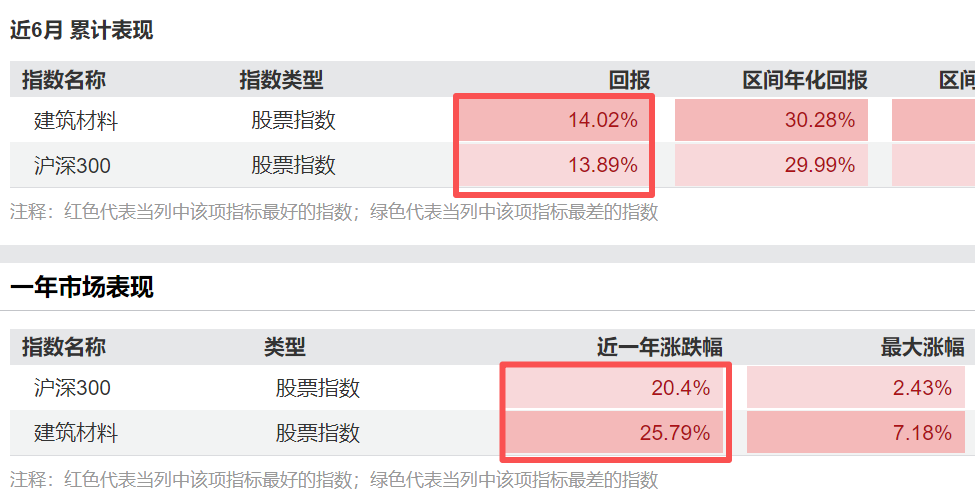
Core Viewpoint - The building materials sector is experiencing a strategic configuration window for upward resonance in both prosperity and valuation, driven by the deepening "anti-involution" policies, alleviation of cost pressures, and recovery expectations in the real estate chain [1] Policy and Industry Dynamics - The "Building Materials Industry Stabilization Growth Work Plan (2025-2026)" aims to regulate low-price disorderly competition and promote the orderly exit of backward production capacity [1] - The cement industry is transitioning from "capacity replacement" to "actual capacity and registered capacity unification," with actual clinker capacity expected to decrease from 2.1 billion tons to 1.6 billion tons, leading to a 10-15 percentage point increase in capacity utilization [1] - By April 2025, approximately 31.65 million tons of capacity had exited the national cement industry, with a net exit of 12.2 million tons, and capacity clearance is expected to accelerate by 2026 [1] Demand Recovery - A January 2026 article in "Qiushi" magazine emphasized the need to "improve and stabilize real estate market expectations," with multiple cities relaxing purchase restrictions, resulting in a 16% month-on-month and 33% year-on-year increase in second-hand housing transaction area [1] - Although new housing development is slowing, the demand for renovation, secondary decoration, and old housing transformation is increasing, prompting building material companies to shift from B-end real estate procurement to C-end retail, which offers stable cash flow and high gross margins [1] Performance of Building Materials Index - The CSI All Share Building Materials Index (931009) has shown significant advantages over mainstream broad-based indices like the CSI 300 in terms of industry exposure, cyclical elasticity, valuation cost-effectiveness, and policy sensitivity, especially as the market approaches a cyclical turning point [2] - The building materials index has outperformed the CSI 300 in both the last six months and the past year, benefiting from high beta elasticity during the economic recovery cycle [2] - The building materials index is highly sensitive to industrial policies, with actual clinker capacity reduced from 2.1 billion tons to 1.6 billion tons, while the CSI 300 lacks sufficient cyclical stock representation to reflect this supply-side change [2] Valuation and Dividend Yield - The current price-to-book ratio of the CSI All Share Building Materials Index is only 1.15%, below the 25th percentile of the past decade, with some leading cement companies' price-to-book ratios falling below 0.8, indicating that market valuations may have overly reflected pessimistic expectations [4] - The building materials index has a dividend yield exceeding 4%, significantly higher than the CSI 300's approximately 3%, with leading companies expected to continue increasing their dividend payout ratios as the "stable price and profit" framework takes shape [6] Fund Flows and Market Sentiment - Institutional consensus on left-side allocation to the building materials sector is evidenced by a gradual increase in the proportion of active equity funds held in the building materials industry since Q2 2025 [6] - Following late January 2026, there has been a noticeable increase in net inflows into the CSI All Share Building Materials Index, with the fund size tracking this index rising from 1.426 billion at the end of 2025 to 3.151 billion within two months [6] - This transition from active institutional allocation to passive market fund resonance indicates a systemic improvement in the liquidity environment for the sector [6] ETF and Investment Opportunities - The Building Materials ETF (159745) tracks the CSI All Share Building Materials Index, covering leading companies across the entire building materials industry chain, providing an efficient tool for investors to gain exposure to the sector [8] - The top ten holdings in the ETF include leading companies in various segments, reflecting a high concentration in the industry [10] - The building materials sector is positioned as a core cyclical investment, supported by demand recovery, supply optimization, and profit restoration, making it attractive for investors looking to capitalize on low valuations and high dividends [10]

风险偏好高低切换下,房地产链迎价值机遇,建材ETF(159745)近1周新增规模居同类产品第一
Xin Lang Cai Jing· 2026-02-13 05:12
Group 1 - The core index of the construction materials sector, the CSI All Construction Materials Index, fell by 2.05% as of February 13, 2026, with mixed performance among constituent stocks [1] - The top-performing stocks included Hainan Ruize, which rose by 1.39%, while Jinjing Technology led the decline with a drop of 5.36% [1] - The Construction Materials ETF (159745) decreased by 1.77%, with a latest price of 0.72 yuan, but showed a cumulative increase of 8.24% over the past month [1] Group 2 - The Construction Materials ETF recorded a turnover rate of 2.51% and a transaction volume of 56.7866 million yuan, with an average daily transaction of 183 million yuan over the past week, ranking first among comparable funds [1] - The ETF's scale increased by 12.2 million yuan over the past week, placing it in the top third of comparable funds [1] - The latest net outflow of funds from the ETF was 20.7035 million yuan, but there were net inflows on three out of the last five trading days, totaling 213 million yuan [1] Group 3 - Leverage funds are actively positioning in the market, with the latest margin buying amounting to 3.1003 million yuan and a margin balance of 33.6321 million yuan [1] - According to a report by Guojin Securities, global assets have entered a "Risk-off" mode due to various risk events, leading to a shift from growth to value stocks in the equity market [1] - The report highlights that sectors like industrials, materials, and real estate are gaining favor due to their characteristics that are difficult to replace with AI [1] Group 4 - Zhongyin Securities forecasts two potential turning points in the year: a "policy turning point" around the end of Q1 and a "fundamental turning point" around Q4, focusing on the improvement of demand and narrowing declines in second-hand housing prices [2] - The Construction Materials ETF has seen a net value increase of 28.68% over the past two years, ranking first among comparable funds [2] - The ETF's highest single-month return since inception was 24.25%, with an average monthly return of 6.65% during rising months [2] Group 5 - As of February 6, 2026, the Construction Materials ETF had a Sharpe ratio of 1.29, indicating a favorable risk-adjusted return [3] - The maximum drawdown for the ETF this year was 5.48%, with a relative benchmark drawdown of 0.24%, and it recovered the fastest among comparable funds [3] Group 6 - The management fee for the Construction Materials ETF is 0.50%, and the custody fee is 0.10%, with a tracking error of 0.065% over the past six months, the highest among comparable funds [4] - The ETF closely tracks the CSI All Construction Materials Index, which reflects the overall performance of listed companies in the construction materials sector [4] Group 7 - As of January 30, 2026, the top ten weighted stocks in the CSI All Construction Materials Index accounted for 61.6% of the index, including companies like Conch Cement and Dongfang Yuhong [5]


成本改善叠加渠道红利!借道建材ETF(159745) 把握板块盈利修复双主线
Sou Hu Cai Jing· 2026-02-13 03:55
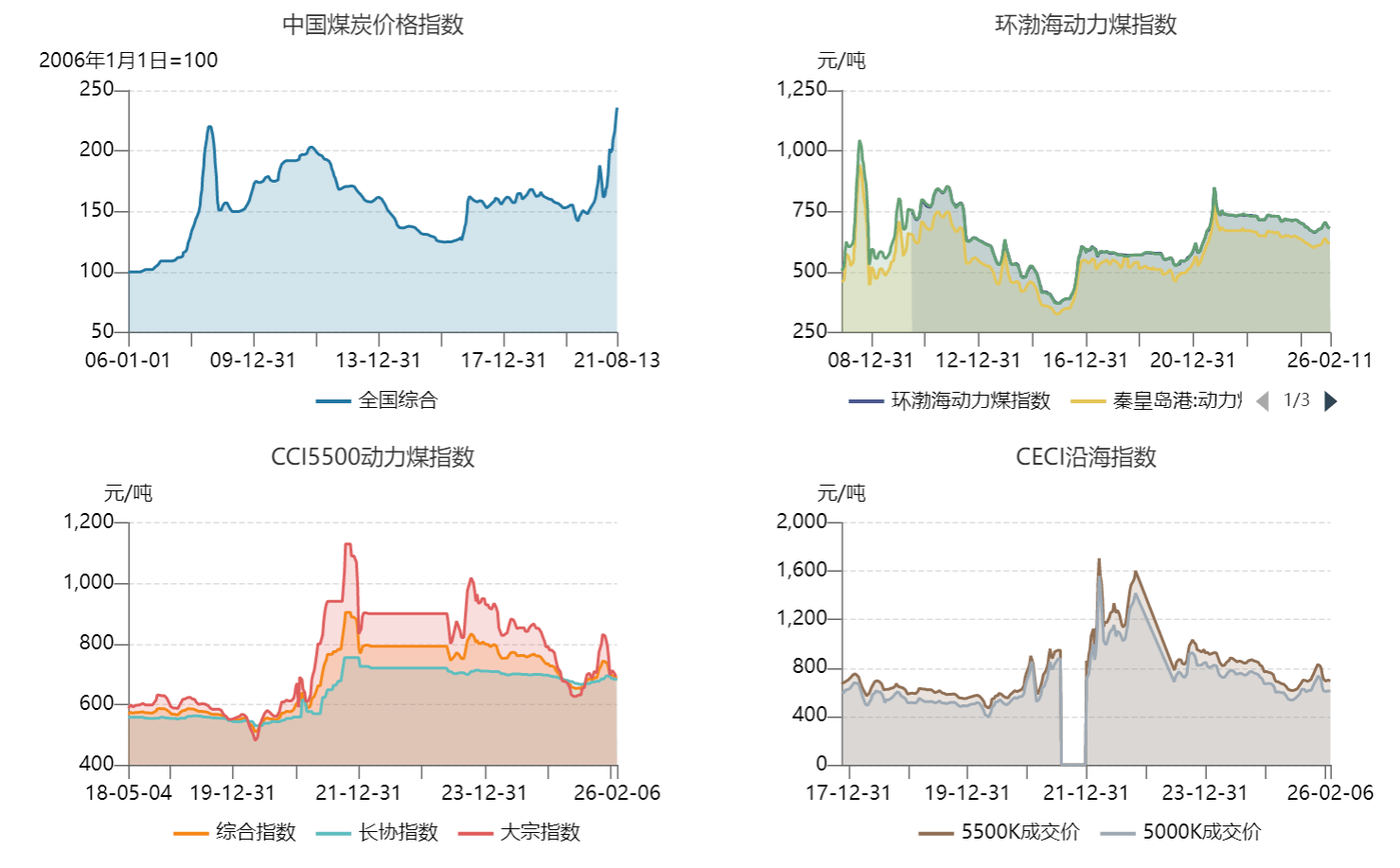
Core Viewpoint - The construction materials industry is experiencing profit improvement driven by two main paths: cost-side improvements leading to profit elasticity release and a revaluation of channel value in the C-end retail transformation [1][2]. Group 1: Cost-side Improvement - The construction materials industry, being resource-intensive, has over 60% of its production costs attributed to energy and raw materials, making it sensitive to price fluctuations of commodities like coal, natural gas, soda ash, and PVC [2]. - Following the high volatility of global energy prices in 2022-2023, current coal supply policies have stabilized price levels, and international natural gas prices have significantly decreased from historical peaks, providing relief on the cost side for construction material companies [2][4]. - The recent decline in coal prices indicates a potential weakening in market demand, which could further impact profit margins positively [4]. Group 2: C-end Retail Transformation - The real estate sector is transitioning into a stock update era, fundamentally changing the demand structure, with a shift from new housing development to renovation and upgrading of existing properties [4][5]. - This shift compels construction material companies to move from a reliance on B-end bulk procurement to a dual-channel strategy that includes both B and C-end operations, enhancing cash flow quality and brand premium capabilities [4][5]. - C-end retail offers advantages such as stable cash flow, higher profit margins, and strong customer loyalty compared to B-end business, which is characterized by longer payment terms and slower receivables [4][5]. Group 3: Market Sentiment and Investment Trends - Institutional investors are increasingly aligning their portfolios with the construction materials sector, as evidenced by a rising proportion of active equity funds in the industry since Q2 2025, indicating a clear left-side layout for the industry cycle [6][10]. - By late January 2026, there was a significant increase in net inflows for construction materials ETFs, marking a transition from active institutional allocation to passive market resonance, suggesting an improvement in liquidity conditions [7][10]. - The construction materials ETF (159745) tracks the CSI Construction Materials Index, which includes leading companies across the entire industry chain, reflecting the overall performance of the sector [10][12].


海螺水泥:公司将持续抓好生产经营,实施精准有效投资
Zheng Quan Ri Bao· 2026-02-12 12:16
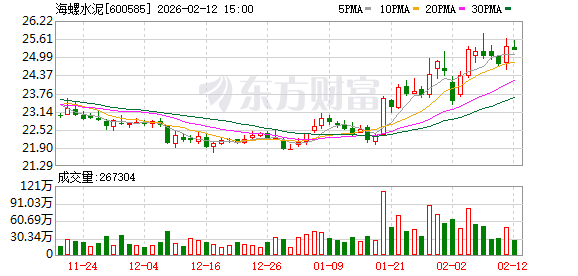
证券日报网讯 2月12日,海螺水泥在互动平台回答投资者提问时表示,公司将持续抓好生产经营,实施 精准有效投资,强化创新驱动,推进低碳绿色循环发展,积极推动市值管理,回应市场关切,持续为广 大股东创造价值。 (文章来源:证券日报) ...
港股晨报-20260212
国投证券(香港)· 2026-02-12 11:46
Group 1: Market Overview - The Hong Kong stock market continued its rebound with all three major indices closing higher, with the Hang Seng Index up 0.31%, the Hang Seng China Enterprises Index up 0.28%, and the Hang Seng Tech Index up 0.9% [2] - Market activity has slowed significantly ahead of the Chinese New Year, with trading volume dropping to 217.2 billion HKD, and the short-selling ratio on the main board at 17.95% [2] - Southbound capital remained stable, with a net buy of 4.82 billion HKD, with Tencent Holdings, Meituan, and Pop Mart being the most actively bought stocks [2] Group 2: Sector Performance - The resources and cyclical sectors led the market, driven by a rebound in gold prices, with companies like Zijin Mining, Lingbao Gold, and Shandong Gold seeing significant gains [3] - The building materials and cement sector performed well, with companies like China National Building Material and Conch Cement recording considerable increases, supported by improved industry profitability expectations [3] - The automotive supply chain remained active, particularly with Tesla-related stocks, as the market anticipates advancements in autonomous driving and robotics [4] Group 3: Company Analysis - LeShuShi (2698.HK) - LeShuShi is a multinational hygiene products company focused on emerging markets, with a broad sales network across over 30 countries in Africa, Latin America, and Central Asia [7] - The company has established eight factories in Africa, making it the largest local manufacturer in the hygiene products sector, which enhances its supply chain efficiency [8] - Future growth for LeShuShi is expected to come from external factors like demographic growth in emerging markets and internal factors such as localized production and extensive sales channels [8] - The report gives a "Buy" rating with a target price of 38 HKD, forecasting revenues of 541 million USD, 627 million USD, and 711 million USD for 2025, 2026, and 2027 respectively, with net profits of 106 million USD, 129 million USD, and 147 million USD [8]
海螺水泥:公司已建立财务共享中心
Zheng Quan Ri Bao Zhi Sheng· 2026-02-12 10:13
Group 1 - The company has established a financial shared service center that covers core business scenarios and coordinates operational entities, enhancing financial collaboration across various business segments [1] - This initiative supports the company's high-quality development by continuously empowering its business units [1]
浙商大佬离世三年,百亿“帝国”得救了
Xin Lang Cai Jing· 2026-02-12 08:37
Core Viewpoint - The restructuring of Suning Group has attracted significant interest from various investors, with Anhui State-owned Assets Management Group emerging as the leading investor, indicating a potential shift in the company's future direction and stability [3][32][50]. Group 1: Restructuring Details - On February 8, Suning Co., Ltd. announced the selection of investors for its restructuring, leading to a stock price surge and a market capitalization exceeding 35.5 billion [29][32]. - The restructuring consortium includes state-owned Anhui Group, Conch Group, and local asset management company Ningbo Financial Asset Management Co., Ltd., which has excited investors [5][31]. - The new investment amount exceeds 7.1 billion, significantly higher than the previous offer of less than 3.3 billion from a private investor [6][32]. Group 2: Financial Background - As of last year, Suning Group's total confirmed debt reached approximately 33.55 billion, with claims totaling 42.08 billion [8][34]. - Suning Co. is projected to incur losses in 2024, with its stock price hitting a ten-year low and a market value below 20 billion [9][34]. - The company has a total debt of 21.968 billion, with short-term loans of 5.293 billion and long-term loans of 6.528 billion, while cash reserves stand at only 3.15 billion [21][46]. Group 3: Market Position and Future Prospects - Suning Co. focuses on two key sectors: negative materials for lithium batteries and polarizers for display screens, holding a 33% share in the global market for large-screen TV and monitor polarizers [17][42]. - The company is recognized as a leader in the production of artificial graphite negative materials, serving major battery manufacturers like CATL and BYD [17][42]. - If the restructuring is successful, it is expected that Suning Co. could achieve a net profit of 400 to 600 million by 2025, with total profits from its negative materials and polarizer businesses projected to reach 900 to 1.1 billion [24][49]. Group 4: Strategic Implications of the Restructuring - The acquisition by Anhui Group is seen as a strategic move to enhance the local industrial chain, particularly in the electric vehicle sector, where there is a lack of influential players in core battery materials [43][45]. - The integration of Suning Co. into the regional industrial development strategy could significantly enhance its future value and market position [45][20]. - The successful restructuring could lead to a more stable and competitive ecosystem in the new energy vehicle industry, aligning with Anhui's broader economic growth strategy [20][45].
水泥供给侧改革进行时,资金高切低布局!建材ETF(159745)近5个交易日净流入3.29亿元
Xin Lang Cai Jing· 2026-02-12 07:31
Group 1 - The core viewpoint of the news highlights the performance of the construction materials sector, particularly the decline of the CSI All Share Construction Materials Index and the mixed performance of its constituent stocks [1] - The construction materials ETF (159745) has seen a recent decline of 0.94%, with a current price of 0.74 yuan, while it has accumulated a 2.91% increase over the past two weeks [1] - The liquidity of the construction materials ETF is strong, with a turnover rate of 5.31% and a transaction volume of 1.23 billion yuan, indicating robust trading activity [1] - The construction materials ETF has reached a new high in scale at 2.328 billion yuan, ranking in the top third among comparable funds [1] - The net inflow of funds into the construction materials ETF is 61.784 million yuan, with significant inflows observed over the past five trading days [1] - Leverage funds have been actively buying into the construction materials ETF, with a net purchase of 17.9644 million yuan on the highest single day [1] Group 2 - The report from Huayuan Securities indicates that major project lists for 2026 are being disclosed, with high investment intensity maintained across various provinces, reflecting a focus on stabilizing investment and promoting development [2] - Infrastructure projects continue to dominate the investment landscape, with significant allocations in transportation, municipal, water conservancy, and energy sectors [2] - The construction materials ETF has shown a net value increase of 29.76% over the past two years, outperforming comparable funds [2] - The ETF has recorded a maximum monthly return of 24.25% since its inception, with an average monthly return of 6.65% during rising months [2] Group 3 - The construction materials ETF has a Sharpe ratio of 1.29 over the past year, indicating a favorable risk-adjusted return [3] - The maximum drawdown for the ETF this year is 5.48%, with a recovery time of just 2 days, the fastest among comparable funds [3] Group 4 - The management fee for the construction materials ETF is 0.50%, and the custody fee is 0.10%, which are competitive rates [4] - The ETF closely tracks the CSI All Share Construction Materials Index, which reflects the overall performance of listed companies in the construction materials sector [4] - The top ten weighted stocks in the CSI All Share Construction Materials Index account for 61.6% of the index, indicating a concentration in key players such as Conch Cement and Oriental Yuhong [4]