腾讯云

Search documents
2025年第一季度,中国云基础设施市场加速增长,阿里云稳居第一,华为云与腾讯云加速AI布局
Canalys· 2025-07-11 01:52
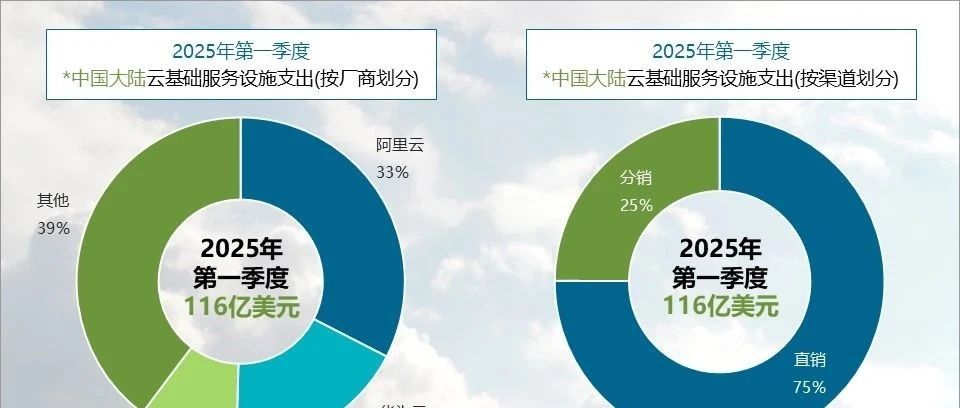
Core Insights - The article highlights the significant growth in cloud infrastructure spending in mainland China, reaching $11.6 billion in Q1 2025, a 16% year-on-year increase, driven primarily by AI-related demand [1] - Major cloud vendors are increasing investments in AI infrastructure and model development to capitalize on this growth opportunity [1] - The article emphasizes the importance of partnerships and ecosystem collaboration in accelerating AI commercialization, with partner-driven cloud service revenue accounting for 25% of the overall market in Q1 2025 [1] Cloud Infrastructure Market Overview - In Q1 2025, Alibaba Cloud held a 33% market share in mainland China's cloud service market, followed by Huawei Cloud at 18% and Tencent Cloud at 10% [1] - The demand for AI capabilities is reshaping cloud computing applications, with organizations migrating AI workloads to the cloud and integrating AI into their data systems and business processes [1][2] - The ongoing iteration of AI large models is pushing AI capabilities towards more practical applications, prompting cloud vendors to explore various strategic paths [1] Vendor Strategies and Developments - Alibaba Cloud has fully open-sourced its Qwen 3 model and launched a series of initiatives to expand its global presence, including establishing an AI capability center in Singapore and a new data center in Malaysia [1][2] - Huawei Cloud has introduced several AI technology updates, including the latest version of its foundational model suite "Pangu 5.5" and an enterprise-level intelligent agent development platform "ModelArts Versatile" [2] - Tencent Cloud has faced temporary GPU supply constraints but has upgraded its models and launched the "Tencent Cloud Intelligent Agent Development Platform" to support rapid development and deployment of intelligent applications [2] AI Ecosystem and Collaboration - The article notes that the importance of ecosystem partners is increasing as AI productization accelerates, with both model open-sourcing and intelligent agent deployment driving the integration of AI capabilities with business value [1] - The collaboration among cloud vendors and partners is becoming a core driver of AI commercialization, with expectations for the partner-driven revenue share to continue rising [1]

云鼎科技20250709
2025-07-11 01:13
Summary of Yunding Technology Conference Call Company Overview - **Company**: Yunding Technology - **Industry**: Smart Energy, Artificial Intelligence, Chemical Industry, Power Industry Key Points and Arguments Strategic Focus and Market Expansion - Yunding Technology aims to enhance market competitiveness through integrated marketing, establishing a marketing center, and forming a sales team of over 100 people, focusing on the artificial intelligence sector and collaborating with major companies like Huawei and Tencent Cloud to build a marketing network [2][4] - The company is concentrating on the smart energy industry, leveraging new productivity and AI opportunities, and expanding into chemical and power sectors, particularly making progress in large models for the chemical industry [2][4] Financial Performance - In 2024, Yunding Technology achieved a revenue of 1.351 billion yuan and a net profit of 92.74 million yuan. In Q1 2025, the revenue was 309 million yuan with a net profit of 31.46 million yuan. The performance in 2025 has been affected by declining coal prices and project acceptance issues [4][12] Product Development and Innovation - The company is continuously optimizing its smart mining products, upgrading artificial positioning systems, and advancing ecological cooperation and domestic research and development, with discussions with Huawei for product development and certification [2][5][6] - Yunding Technology has developed over 160 application scenarios in the coal mining sector, despite the impact of coal prices on customer investment willingness [2][12] Marketing and Sales Strategy - In 2025, Yunding Technology established a marketing center to unify marketing resources and has seen success in new markets such as Ningxia, Guizhou, and Yunnan. The company is now directly engaging with major mining groups rather than individual coal mines [7][8] Economic Management and Cost Control - The company is focusing on cost reduction, improving cash flow, and exploring policy incentives to enhance operational efficiency. It aims for both organic growth and external acquisitions, with plans to amend company bylaws to address long-term non-dividend issues [6][16] Industry Insights and Competitive Landscape - The chemical industry is experiencing a push for information technology improvements, particularly in safety monitoring, supported by government funding. However, competition is fierce in safety-related information technology, while areas requiring higher technical expertise, such as process optimization, face less competition [9][11] Collaboration and Partnerships - Yunding Technology is closely collaborating with Huawei on industrial large model development, with a focus on the chemical industry. They have signed agreements for joint product development and are exploring the creation of an underground slicing network [3][14] International Expansion - The company is expanding its overseas business through partnerships with state-owned enterprises, participating in "Belt and Road" projects, and has completed a significant intelligent construction project in Inner Mongolia [15] Human Resources and Cash Flow Management - Yunding Technology plans to increase its workforce from 1,200 at the end of 2024 to over 1,300 by the end of 2025, primarily in marketing and new energy sectors. The company has improved its accounts receivable collection, with a recovery rate of approximately 60%-70% [16][17] Future Communication Plans - Yunding Technology will arrange opportunities for in-depth communication with investors following the release of its semi-annual report [18]

AI与真人讲师搭配干活,尝试解决教育行业“不可能三角”难题
Di Yi Cai Jing· 2025-07-08 11:53
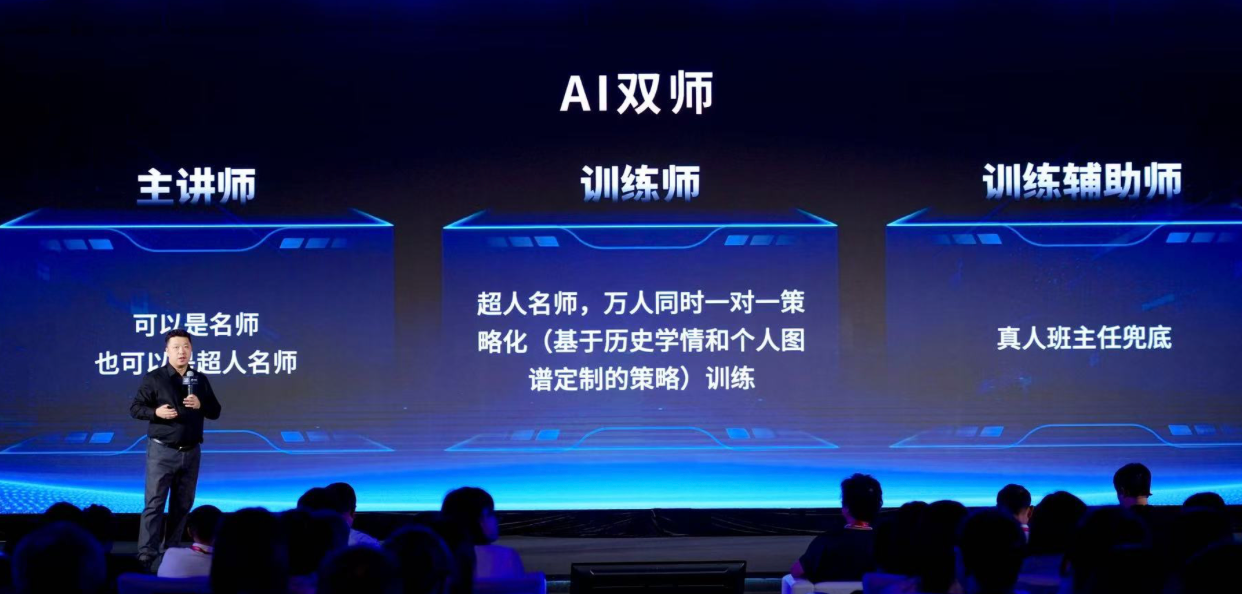
Group 1 - The core issue in the education sector is the "impossible triangle" dilemma, where it is challenging to achieve high quality, large scale, and personalization simultaneously. AI technology is attempting to address this problem [2][3] - Dou Shen Education's latest AI product, "Super Ability Training Ground," utilizes a dual-teacher model combining AI instructors and human teachers to enhance teaching efficiency. The AI instructor is primarily responsible for attracting new customers, while the dual-teacher model focuses on customer retention [2] - The collaboration between Dou Shen Education and Tencent Cloud involves integrating large models and real-time communication technology to facilitate seamless switching between different teaching formats [2] Group 2 - The development of AI technology is gradually resolving the "impossible triangle" in education, as it reduces the marginal cost of personalized learning. The ability to switch between group and individual lessons is a significant advancement [3] - The education sector is viewed as a crucial area for AI implementation, with estimates suggesting that the AI education market could reach hundreds of billions or even trillions. However, previous technological limitations and macroeconomic factors have slowed the industry's growth [3] - The evolution of AI in education has progressed from digitizing educational resources to using data-driven small models, and is now moving towards deep personalization through large models and multimodal educational agents [3] Group 3 - Recent developments in the education sector include the launch of AI educational products by various companies, indicating a shift from hardware-based solutions to software services in the commercialization of AI in education [4]

广州跑出超级隐形冠军:搞算力中心,年入21亿
3 6 Ke· 2025-07-07 12:16
Core Insights - The article highlights the transformation of Feng Kang from a banking professional to a prominent figure in the data center industry, specifically focusing on his company, Aofei Data, which has become a significant player in the IDC (Internet Data Center) sector in China [1][3]. Company Overview - Aofei Data, founded in 2014 by Feng Kang, is headquartered in Guangzhou and specializes in data center services, particularly in AI computing power centers, which are a major growth area for the company [1][7]. - The company holds approximately 15% market share in South China, 8% in the Beijing-Tianjin-Hebei region, and around 5% in the Yangtze River Delta region, serving over 300 clients [1]. Business Model - Aofei Data operates as a "power real estate developer" in the IDC space, focusing on building and maintaining data centers, while renting out physical space to cloud service providers like Alibaba Cloud and Tencent Cloud [7]. - The company has transitioned from a service provider to a heavy asset operator, with fixed asset value reaching 7.54 billion and ongoing construction projects valued at 1.07 billion by March 2025 [7]. Financial Performance - In 2024, Aofei Data reported revenues of 2.165 billion, marking a year-on-year growth of 62.18%, with a net profit of 124 million [8]. Competitive Landscape - Aofei Data faces significant competition from state-owned enterprises and major internet companies that are increasingly building their own data centers, which pressures the margins of third-party IDC providers [11][12]. - The company's gross margin improved by 1.3 percentage points to 28.8% in 2024, but it remains lower than that of some state-owned competitors [11]. Challenges - The IDC industry is capital-intensive and has long cycles, leading to high debt levels; Aofei Data's debt ratio reached 72.7% by Q1 2025, significantly above the industry average of 50%-60% [11]. - The company also faces regional supply-demand imbalances, leading to price wars, particularly in areas with rapid data center supply growth [13].
智能体不断进化,协作风险升高:五大安全问题扫描
2 1 Shi Ji Jing Ji Bao Dao· 2025-07-03 00:36
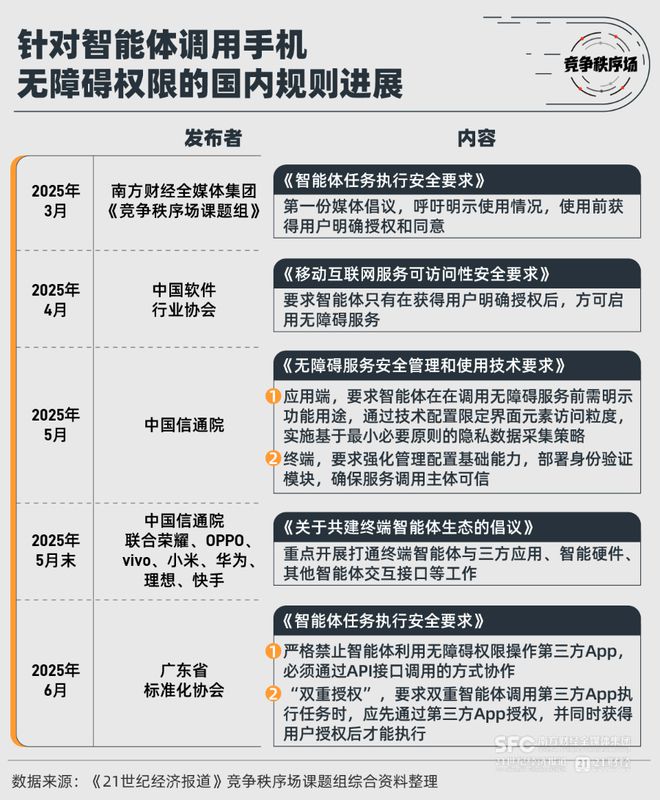
Core Insights - The year 2025 is anticipated to be the "Year of Intelligent Agents," marking a paradigm shift in AI development from conversational generation to automated execution, positioning intelligent agents as key commercial anchors and the next generation of human-computer interaction [1] Group 1: Development and Risks of Intelligent Agents - As intelligent agents approach practical application, the associated risks become more tangible, with concerns about overreach, boundary violations, and potential loss of control [2] - A consensus exists within the industry that the controllability and trustworthiness of intelligent agents are critical metrics, with safety and compliance issues widely recognized as significant [2] - Risks associated with intelligent agents are categorized into internal and external security threats, with internal risks stemming from vulnerabilities in core components and external risks arising from interactions with external protocols and environments [2] Group 2: AI Hallucinations and Decision Errors - Over 70% of respondents in a safety awareness survey expressed concerns about AI hallucinations and erroneous decision-making, highlighting the prevalence of factual inaccuracies in AI-generated content [2] - In high-risk sectors like healthcare and finance, AI hallucinations could lead to severe consequences, exemplified by a hypothetical 3% misdiagnosis rate in a medical diagnostic agent potentially resulting in hundreds of thousands of misdiagnoses among millions of users [2] Group 3: Practical Applications and Challenges - Many enterprises have found that intelligent agents currently struggle to reliably address hallucination issues, leading some to abandon AI solutions due to inconsistent performance [3] - A notable case involved Air Canada's AI customer service, which provided incorrect refund information, resulting in the company being held legally accountable for the AI's erroneous decision [3] Group 4: Technical Frameworks and Regulations - Intelligent agents utilize various technical bridges to connect with the external world, employing two primary technical routes: an "intent framework" based on API cooperation and a "visual route" that bypasses interface authorization barriers [4] - Recent evaluations have highlighted chaotic usage of accessibility permissions by mobile intelligent agents, raising significant security concerns [5] Group 5: Regulatory Developments - A series of standards and initiatives have emerged in 2024 aimed at enhancing the management of accessibility permissions for intelligent agents, emphasizing user consent and risk disclosure [6] - The standards, while not mandatory, reflect a growing recognition of the need for safety in the deployment of intelligent agents [6] Group 6: Security Risks and Injection Attacks - Prompt injection attacks represent a core security risk for all intelligent agents, where attackers manipulate input prompts to induce the AI to produce desired outputs [7][8] - The emergence of indirect prompt injection risks, particularly with the rise of MCP (Multi-Channel Protocol) tools, poses new challenges as attackers can embed malicious instructions in external data sources [8][9] Group 7: MCP Services and Security Challenges - The MCP service Fetch has been identified as a significant entry point for indirect prompt injection attacks, raising concerns about the security of external content accessed by intelligent agents [10] - The lack of standardized security certifications for MCP services complicates the assessment of their safety, with many platforms lacking rigorous review processes [11] Group 8: Future of Intelligent Agent Collaboration - The development of multi-agent collaboration mechanisms is seen as crucial for the practical deployment of AI, with various companies exploring the potential for intelligent agents to work together on tasks [12][13] - The establishment of the IIFAA Agent Security Link aims to provide a secure framework for collaboration among intelligent agents, addressing issues of permissions, data, and privacy [14]
氪星晚报|德迈仕:尚未直接与小米汽车合作;国脉科技发布居家养老场景AI智能体;腾讯云与微盟启动“私域安全护航计划”
3 6 Ke· 2025-06-30 11:26
Group 1: Company Updates - Shanghai Airport has clarified that power banks not included in the recall batch, with clear information and no exterior damage, can be temporarily stored for 7 days [1] - Nissan is seeking to delay payments to suppliers to free up cash, as the company aims to cut costs by 500 billion yen (approximately 3.4 billion USD) and plans to lay off about 15% of its workforce [1] - Demais has stated that it has not directly collaborated with Xiaomi Auto, although its products are used in Xiaomi's vehicles [1] - China Railway Construction has established a new energy development company in Changsha with a registered capital of 5 million RMB, focusing on solar and wind power services [9] Group 2: Market Trends and Innovations - Petal Ads showcased its innovative marketing strategies at the Retail Summit 2025 in Italy, aiming to help European brands penetrate the high-end Chinese market [2] - AVIC Shenyang Aircraft Corporation announced that its new district construction project is expected to achieve production line connectivity and trial operation by the end of this year [3] - Tencent Cloud and Weimob launched a "Private Domain Security Escort Plan" to support clients in private domain operations and marketing [4] - Kangaroo Outbound Technology introduced an innovative "Tourist Scenic Area Co-branded Card" solution to facilitate payments across various scenic spots [12] Group 3: Financial Developments - New World Development has signed a new refinancing agreement with banks to restructure approximately 88.2 billion HKD of existing unsecured financial debt [8] Group 4: Product Launches - DJI has launched its new flagship civil transport drone, the DJI FlyCart 100, designed for various applications including emergency and logistics [11] - Haiguang DCU has initiated deep technical cooperation on the Wenxin 4.5 series models, which include a mix of large and dense parameter models [10]

青云科技: 中国国际金融股份有限公司关于北京青云科技集团股份有限公司2024年年度报告的信息披露监管问询函回复的核查意见
Zheng Quan Zhi Xing· 2025-06-26 16:39
Core Viewpoint - The company has been experiencing continuous losses since its establishment, primarily due to significant capital expenditures on cloud service infrastructure and high depreciation costs, which have not been offset by sufficient gross profit contributions [15][23][24]. Financial Performance - In 2024, the company reported operating revenue of 27,206.62 million yuan, a decrease of 18.95% compared to the previous year [1][15]. - The net profit attributable to shareholders was -9,575.77 million yuan, representing a reduction in losses by 43.72% year-on-year [1][15]. - As of the end of the first quarter of 2025, the company's net asset scale was 6,411.97 million yuan, continuing a downward trend since its listing [1]. Business Structure and Revenue - The company's main business includes cloud products and cloud services, with cloud products accounting for 53.48% of total revenue in 2024, an increase of 21.58 percentage points since 2021 [4][6]. - The sales revenue from cloud products decreased by 56.12% compared to 2021, primarily due to a strategic focus on high-margin software products and a reduction in low-margin hardware sales [6][15]. - The cloud service revenue showed a slight decline of 2.11% in 2024, but the gross margin improved due to the introduction of AI computing services [8][19]. Customer and Supplier Stability - The top five customers have remained stable since 2021, with significant contributions from long-term partnerships [17]. - The company has adjusted its supplier relationships to meet the demands of new AI computing services, indicating a responsive supply chain [10][17]. Market Position and Competition - The company ranks among the top six in the hyper-converged software market with a market share of 6.4% in 2024, reflecting its competitive positioning [18]. - Despite facing intense competition from larger players like Alibaba Cloud and Tencent Cloud, the company has established a solid reputation in sectors such as finance, energy, and education [18][22]. Strategic Adjustments - The company has implemented strategic adjustments to focus on high-margin business areas, optimize organizational structure, and reduce costs [24][25]. - Measures include enhancing the integration of proprietary software and core products, as well as streamlining personnel to improve efficiency [24][25]. Future Outlook - The company aims to improve its operational stability and reduce the risk of negative net assets, which could trigger delisting conditions [25][26]. - Continued investment in cloud computing product development is planned, although challenges remain in achieving profitability in the short term [23][24].


中国智谷“模”力升级
Jiang Nan Shi Bao· 2025-06-25 14:30
Core Viewpoint - The 2025 Nanjing Artificial Intelligence Industry Development Matching Event emphasizes the integration of artificial intelligence technology with traditional manufacturing, aiming to drive digital transformation and innovation in the industry [1][2]. Group 1: Event Overview - The event was held in Nanjing Economic and Technological Development Zone, focusing on the theme "Intelligent Empowerment, Boundless Manufacturing" [1]. - It featured the unveiling of national and provincial key laboratories, the signing of a partnership to establish an artificial intelligence college, and the launch of a public service platform for large model innovation [1][4]. Group 2: Key Participants and Contributions - Notable attendees included Chinese Academy of Engineering Academician Ni Guangnan, Nanjing Vice Mayor Jiang Min, and representatives from various universities and research institutions [2]. - Ni Guangnan highlighted the importance of building an AI industry ecosystem in Nanjing, focusing on data resources, industrial systems, and market space [2]. Group 3: Industry Insights - Wei Liang from the China Academy of Information and Communications Technology emphasized the concept of "bidirectional empowerment" between AI technology and manufacturing [3]. - Yang Bo from the Jiangsu Provincial Data Bureau noted Nanjing's role as a leader in AI development and the importance of a stable policy environment for innovation [3]. Group 4: Achievements and Future Plans - The Nanjing Intelligent Valley has attracted over 400 AI companies, with core output exceeding 10 billion [4]. - Four projects with a total investment of 2 billion were signed, aimed at enhancing talent and industry concentration in the AI sector [6]. Group 5: Product Launches and Innovations - The event saw the launch of various AI applications and products across multiple sectors, including transportation, healthcare, finance, and security [5]. - A collaborative initiative to create a "Trusted AI Intelligent Agent Testing Bed 1.0" was announced, aimed at optimizing AI capabilities [5].
中国金融科技竞争力百强企业报告(2025)
Sou Hu Cai Jing· 2025-06-22 00:40
Group 1: Overview of Financial Technology Development - The digital transformation of the banking sector focuses on serving the real economy and enhancing digital capabilities through intelligent operations and decision support, with small and medium banks relying on third-party collaborations [2][12] - In 2024, the Chinese financial technology market is projected to reach CNY 394.96 billion, growing at a rate of 9.7%, with banking technology accounting for 73% of the market [2][17] - Major cities like Beijing, Shanghai, and Shenzhen lead in the number of financial technology companies, with Guangdong, Shanghai, and Beijing having the highest counts as of April 2025 [2][19] Group 2: Trends in Financial Technology - The global artificial intelligence market is expected to reach CNY 17 billion in 2024, with China's generative AI market at CNY 4.59 billion, indicating a shift towards AI-driven applications in finance [3][40] - The blockchain market in China is projected to grow to CNY 3.994 billion in 2024, driven by the application of central bank digital currencies in cross-border payments [3][46] - The cloud computing market in China is anticipated to exceed CNY 837.8 billion in 2024, with financial cloud services growing rapidly as institutions accelerate their digital transformation [3][51] Group 3: Evaluation of Financial Technology Competitiveness - The evaluation of the top 100 financial technology companies includes criteria such as technological innovation and investment value, with a significant number of companies already expanding internationally [4][4] - The top 100 companies are categorized into comprehensive service and technology platforms, vertical innovation, and frontier technology applications, with Beijing housing the majority [4][4] Group 4: Case Studies - Notable examples include Boyan Technology and Mashang Consumer Finance, showcasing their service systems and technological applications in the financial technology sector [5][5]

“山西嫡长子”无疑了!抖音、京东在大同或再谋合作项目
Sou Hu Cai Jing· 2025-06-20 17:19
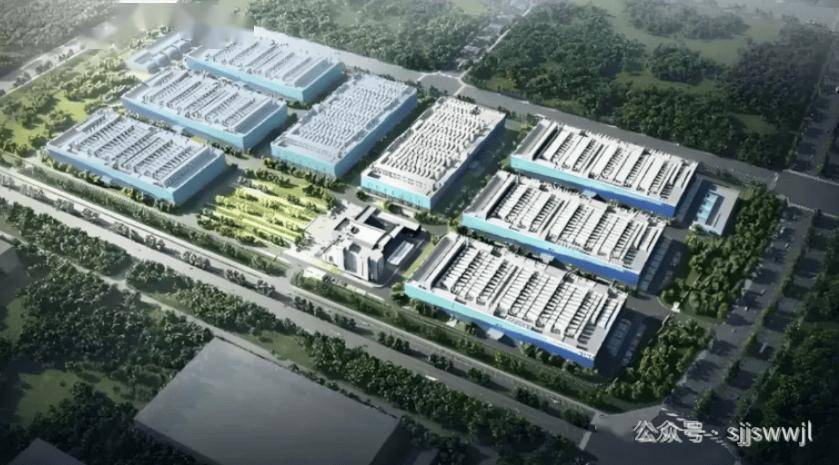
Group 1: Development of Datong as a Computing Power City - Datong aims to transform from a coal and electricity supplier to a computing power and service provider, driven by the "East Data West Computing" initiative [1] - The city has established partnerships with major companies like Douyin Group and JD Group to accelerate its development as a computing power city [1][2] - Douyin Group has invested significantly in the Taihang Computing Power Center project, increasing its investment from 160 million to 2.36 billion yuan, marking a 1375% increase [2] Group 2: Key Projects and Investments - The Taihang Computing Power Center project consists of two phases, with the first phase involving an investment of approximately 2.8 billion yuan and the second phase projected at 4.5 billion yuan [3] - JD Group has also made substantial investments in Datong, with a total investment of 2.5 billion yuan for the first phase of its intelligent computing data center project [8] - By the end of 2024, Datong's planned investment in data centers is expected to reach 76 billion yuan, with over 24.3 billion yuan already invested [11] Group 3: Strategic Collaborations and Future Plans - Datong's government has engaged in discussions with JD Group to enhance cooperation in smart city development and computing power projects [6][9] - The establishment of the Shanxi Datong University Digital Economy Research Institute aims to foster collaboration between academia, industry, and government, supporting the city's digital economy initiatives [13] - Datong is focusing on green energy initiatives, including pilot projects for green electricity supply to attract more computing power projects [11]