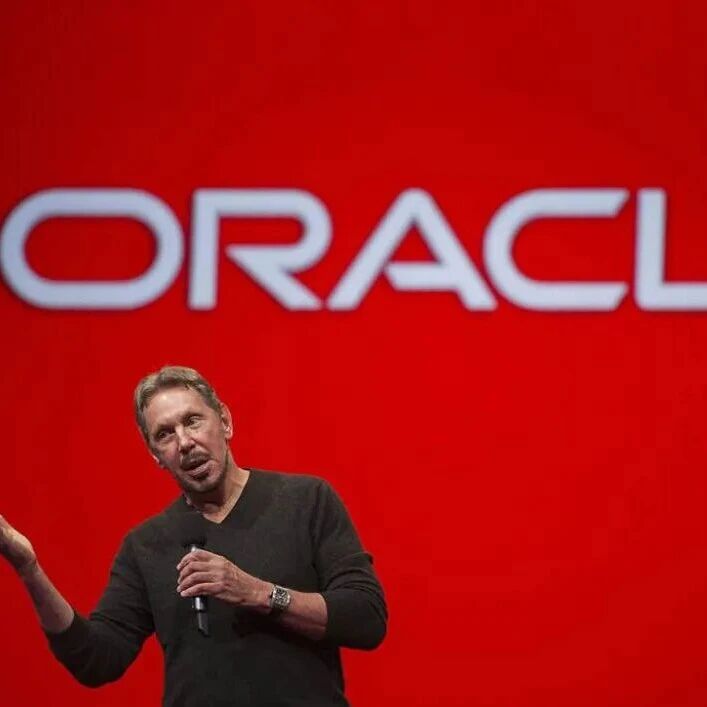
Blue Owl Capital

Search documents
Fluence Energy (FLNC) Nosedives 12.86% on AI Selloff
Yahoo Finance· 2025-12-18 13:15
Group 1 - Fluence Energy Inc. (NASDAQ:FLNC) experienced a significant decline of 12.86% on Wednesday, closing at $18.57, marking its fourth consecutive day of losses as investors sold off AI-linked stocks due to concerns over heavy spending in the industry [1][3] - The drop in Fluence's stock price was influenced by Blue Owl Capital's withdrawal of $10 billion in support for Oracle Corp.'s data center, raising worries about financial institutions' apprehensions regarding the scale of borrowings in the industry [2][3] - Oracle confirmed that Blue Owl's funding support was withdrawn due to concerns over its $108 billion debt, which has increased significantly from the previous year as Oracle aggressively expanded in AI, although the construction of the data center remains on track [3] Group 2 - Fluence Energy is recognized as an energy storage solutions provider and had recently gained positive attention from seven investment firms, including UBS, Citigroup, and Goldman Sachs, which provided bullish coverage and higher price targets [4] - Despite the potential of Fluence as an investment, there is a belief that some AI stocks may offer greater returns with limited downside risk, suggesting a competitive landscape for investment opportunities [5]

Bloom Energy (BE) Gets Beaten, Falls 12% Amid AI Selloff
Yahoo Finance· 2025-12-18 13:15
We recently published 10 Big Names Investors Are Dumping. Bloom Energy Corp. (NYSE:BE) is one of the worst performers on Wednesday. Bloom Energy extended its losing streak to a fourth straight day on Wednesday, shedding 12.14 percent to finish at $76.97 apiece as investors trimmed their positions in AI-linked stocks amid growing concerns about the industry. Bloom Energy Corp. (NYSE:BE) took a hit from heavy AI selling, having been riding the wave since early this year, triggered by Blue Owl Capital’s pul ...

把握回调加仓机会?高“光”159363获资金爆买!机构称AI算力供不应求,光模块“卖铲人”逻辑持续强化
Xin Lang Cai Jing· 2025-12-18 11:44
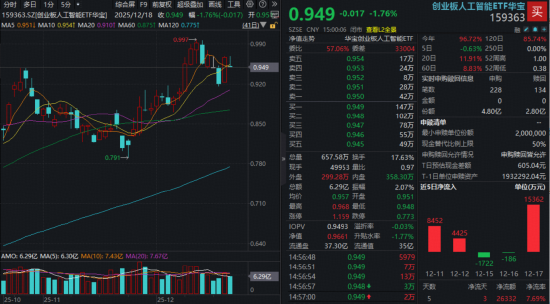
Core Viewpoint - The AI industry chain experienced a slight pullback after a surge, with mixed performance in optical module CPOs, while the A-share AI sector faced concerns over an "AI bubble" influenced by overseas market dynamics [3][9]. Market Performance - On December 18, the A-share AI sector saw a decline, with the ChiNext AI index dropping by 1.74%. Notable gainers included Changxin Bochuang, Liante Technology, and Jinxin Nuo, each rising over 2%, while Xinyi Sheng fell by 4.62% and Zhongji Xuchuang dropped over 3% [1][7]. - The largest and most liquid ChiNext AI ETF (159363) failed to turn positive in the morning and fell by 1.76% in the afternoon, with a trading volume of 629 million yuan. Despite this, there was a net inflow of funds, with a single-day net subscription of 200 million units, and a cumulative increase of over 260 million yuan in the previous five days [1][7]. Investment Opportunities - Institutions believe that the investment in AI computing power remains in a high growth phase, with a supply-demand imbalance in various segments of the AI computing chain. West Securities recommends focusing on opportunities arising from this supply-demand tension [3][9]. - Looking ahead to 2026, the evolution of large model capabilities and continuous penetration of applications are expected to sustain high investment in computing power. The discussion around CAPEX and short-term returns is prevalent, indicating ongoing high demand in the AI computing chain [3][10]. Sector Analysis - Industrial analysis suggests that the optical module and supporting supply chain may experience a divergence in expectations. The introduction of 1.6T optical modules is anticipated to drive significant demand in the coming year, with leading companies expected to maintain high growth [10]. - The ChiNext AI index has doubled in cumulative growth this year, significantly outperforming other AI-themed indices, indicating strong investment potential in the optical module-centric computing chain [10]. ETF Insights - The ChiNext AI ETF (159363) is the first ETF tracking the ChiNext AI index, with a current scale exceeding 3.6 billion yuan and an average daily trading volume of over 600 million yuan in the past month, ranking first among seven ETFs tracking the index [10].

美股AI多空拉锯战,空头首战告捷
Hu Xiu· 2025-12-18 10:30
Core Viewpoint - The recent significant decline in the US AI sector stocks, including major players like Oracle, Nvidia, and AMD, indicates a fundamental shift in valuation logic, moving from growth expectations to a focus on return on investment (ROI) [1][11]. Group 1: Market Reaction - The AI sector experienced a collective drop, with Nvidia down 3.81%, AMD down 5.29%, and Oracle down 5.40%, resulting in the loss of hundreds of billions in market value [1][6]. - The catalyst for this decline was the termination of a $10 billion financing deal by Blue Owl Capital with Oracle, raising concerns about Oracle's debt levels and spending [2][3]. Group 2: Systemic Risk - The exit of Blue Owl Capital signifies a crack in the funding chain for AI infrastructure, leading to fears of systemic risk across the industry [4][5]. - The market's reaction suggests that if a major player like Oracle, which has over $500 billion in orders, cannot secure funding for significant projects, it raises alarms about the entire AI infrastructure sector [4]. Group 3: Diverging Institutional Views - Analysts from KeyBanc and Stifel have lowered Oracle's target price due to concerns over its financial health and ability to fulfill its substantial order backlog [7]. - In contrast, Morgan Stanley's Joseph Moore remains bullish on Nvidia, raising its target price, arguing that the market is overreacting to competitive threats [9]. Group 4: Valuation and ROI Focus - The focus of investment has shifted from capital expenditure to ROI, with firms like Wellington Management emphasizing the need for sustainable returns to justify AI investments [11]. - Current estimates suggest that the AI industry must generate approximately $600 billion in annual revenue to validate the significant investments being made, while actual revenue projections for 2025 are much lower, around $150 billion to $200 billion [12][13]. Group 5: Impact on A-shares - The decline in US AI stocks has also affected related A-share companies, with significant drops observed in stocks like Zhongji Xuchuang and Xinyi Sheng [14].


CNBC Daily Open: Oracle's debt seems to be affecting data center funding
CNBC· 2025-12-18 07:38
Core Viewpoint - Investor apprehension surrounding Oracle has led to a significant decline in its stock price, which has fallen nearly 50% from its all-time high on September 10, and is now affecting its projects [1] Group 1: Oracle's Financial and Project Concerns - Asset management firm Blue Owl Capital has reportedly withdrawn from Oracle's $10 billion data center project due to unfavorable debt terms, raising concerns about Oracle's high level of debt [1] - There are worries that Oracle could delay the completion of data centers for OpenAI, although the cloud company has denied these reports [2] Group 2: Market Impact - Oracle's shares fell 5.4% on Wednesday, contributing to month-to-date losses exceeding 11%, which also negatively impacted related companies such as Broadcom, Nvidia, and Advanced Micro Devices [2] - Major U.S. indexes experienced declines, with the S&P 500 retreating 1.16%, the Dow Jones Industrial Average dropping 0.47%, and the Nasdaq Composite losing 1.81%, marking its worst day in nearly a month [3] Group 3: AI Market Outlook - Despite the recent pullback in artificial intelligence stocks, Bank of America suggests that the AI trade may still have potential for growth into 2026, with a caution that rising shares do not preclude the formation of a bubble [3] - Analysts at Bank of America believe that the current market progression supports the thesis of a larger AI bubble continuing to build, although identifying the exact moment before a potential bubble burst remains challenging [4]
科技股集体承压 阿里巴巴-W、华虹半导体跌逾1%
Zhi Tong Cai Jing· 2025-12-18 03:05
中金称,甲骨文股价下跌表明,单纯依靠讲资本开支故事的阶段或已过去,投资者现在需要看到真实的 回报,而不是永无止境的投入。浦银国际认为,流动性因素及美国AI板块回调令港股市场情绪承压。 在缺乏新催化剂的情况下,短期港股市场情绪或将进入震荡修复期,投资者无需盲目悲观,但或未到全 面抄底的时机。 消息面上,隔夜美股科技股集体下跌,甲骨文跌超5%,股价回落至178美元附近,至此甲骨文几乎抹去 年内大部分涨幅。据报道,甲骨文密歇根数据中心合作伙伴Blue Owl Capital,因担忧其债务与AI支出 问题,拒绝为其价值100亿美元的数据中心项目注资,相关谈判已陷入僵局。对此,甲骨文证实Blue Owl退出,但称项目的股权交易最终谈判进展按计划进行,整体推进符合预期。 科技股今早集体承压,截至发稿,阿里巴巴-W(09988)跌1.3%,报144.1港元;华虹半导体(01347)跌 1.32%,报67.3港元;腾讯(00700)跌0.41%,报602.5港元。 ...


港股异动 | 科技股集体承压 阿里巴巴-W(09988)、华虹半导体(01347)跌逾1%
智通财经网· 2025-12-18 03:05
消息面上,隔夜美股科技股集体下跌,甲骨文跌超5%,股价回落至178美元附近,至此甲骨文几乎抹去 年内大部分涨幅。 据报道,甲骨文密歇根数据中心合作伙伴Blue Owl Capital,因担忧其债务与AI支出 问题,拒绝为其价值100亿美元的数据中心项目注资,相关谈判已陷入僵局。对此,甲骨文证实Blue Owl退出,但称项目的股权交易最终谈判进展按计划进行,整体推进符合预期。 智通财经APP获悉,科技股今早集体承压,截至发稿,阿里巴巴-W(09988)跌1.3%,报144.1港元;华虹 半导体(01347)跌1.32%,报67.3港元;腾讯(00700)跌0.41%,报602.5港元。 中金称,甲骨文股价下跌表明,单纯依靠讲资本开支故事的阶段或已过去,投资者现在需要看到真实的 回报,而不是永无止境的投入。浦银国际认为,流动性因素及美国AI板块回调令港股市场情绪承压。 在缺乏新催化剂的情况下,短期港股市场情绪或将进入震荡修复期,投资者无需盲目悲观,但或未到全 面抄底的时机。 ...
CNBC Daily Open: Concerns over Oracle's debt spill over into its projects
CNBC· 2025-12-18 01:25
Core Viewpoint - Investor apprehension surrounding Oracle has led to a significant decline in its stock price, which has fallen nearly 50% from its all-time high on September 10, and is now affecting its projects [1] Group 1: Stock Performance and Market Impact - Oracle's shares fell 5.4% on Wednesday, contributing to month-to-date losses exceeding 11% [2] - The decline in Oracle's stock has negatively impacted related companies, including Broadcom, Nvidia, and Advanced Micro Devices [2] - Major U.S. indexes also experienced declines, with the S&P 500 retreating 1.16%, the Dow Jones Industrial Average dropping 0.47%, and the Nasdaq Composite losing 1.81% [3] Group 2: Project Concerns and Investor Sentiment - Blue Owl Capital withdrew from Oracle's $10 billion data center project due to unfavorable debt terms, raising concerns about Oracle's high level of debt [1] - There are worries that Oracle may delay the completion of data centers for OpenAI, although the cloud company has denied these reports [2] - Analysts at Bank of America suggest that despite recent pullbacks in AI stocks, the AI trade may still have potential until 2026, while cautioning that rising shares do not preclude the formation of a bubble [3][4]

There's a cost to being reckless, until someone stops the spin, buyer beware, says Jim Cramer
Youtube· 2025-12-18 00:47
Core Viewpoint - The article discusses the potential risks and concerns surrounding recent investment deals in the AI sector, particularly focusing on OpenAI and its relationship with Amazon, suggesting that these deals may resemble problematic financial practices from the dot-com era [5][19]. Investment Deals - OpenAI is reportedly in talks to raise at least $10 billion from Amazon, which would be used to purchase Amazon's AI chips, raising questions about the sustainability of OpenAI's financial health given its stretched balance sheet [7][8]. - The nature of the deal is compared to "lazy Susan deals," where funds are cycled back to the investor in a way that may not reflect genuine financial health [19][24]. Market Reactions - The Dow dropped 228 points, the S&P fell 1.16%, and the NASDAQ declined 1.81%, indicating a negative market sentiment towards tech stocks, particularly those involved in AI [6]. - Oracle's stock has significantly declined, falling over 5% to around $178, down from an all-time high of $345, as concerns about its relationship with OpenAI grow [16]. Financial Discipline - Blue Owl Capital has refused to back a $10 billion deal for an Oracle data center, highlighting a trend towards more disciplined investment strategies in the face of inflated valuations and risky deals [12][13]. - The article emphasizes the need for financial discipline in the industry, suggesting that companies should avoid reckless spending and focus on sustainable growth [22]. Valuation Concerns - There is skepticism about OpenAI's $500 billion valuation, with indications that the AI market may be becoming commoditized and that OpenAI lacks a competitive moat around its flagship product, ChatGPT [11][20]. - The article suggests that the AI industry may need to reassess the value of companies like OpenAI if financial discipline is exercised across the board [21].


甲骨文重燃AI担忧压垮美股!百亿美元数据中心融资受阻,Blue Owl退出,公司称交易仍按计划进行
美股IPO· 2025-12-17 22:52
Core Viewpoint - Oracle's ambitious AI infrastructure expansion faces significant setbacks as its major data center partner, Blue Owl Capital, withdraws from a $10 billion project, raising concerns about funding and execution risks [3][12][20]. Group 1: Project Details - Blue Owl was in discussions to invest in a planned 1 GW data center in Saline Township, Michigan, intended to support OpenAI [3][12]. - The project was expected to provide substantial computing power as part of a $300 billion agreement between Oracle and OpenAI [13][21]. - The withdrawal of Blue Owl leaves the project's funding uncertain, with Blackstone negotiating as a potential financial partner but no agreements signed yet [3][12]. Group 2: Financial Implications - Oracle's net debt, including lease obligations, has risen to approximately $105 billion, up from nearly $78 billion a year ago, with projections suggesting it could reach around $290 billion by 2028 [12][20]. - The tightening of financing terms and rising debt levels have led lenders to impose stricter conditions, making the project less financially attractive for Blue Owl [12][20]. - Oracle's stock has dropped over 40% from its September peak, with a recent decline of 5.4% following the news of Blue Owl's exit [4][8]. Group 3: Market Reactions - The news of Blue Owl's withdrawal has negatively impacted Oracle's stock and the broader tech sector, highlighting potential risks in the AI infrastructure funding chain [4][20]. - Oracle's five-year credit default swap (CDS) reached 155.27 basis points, the highest since January 2009, indicating increased market concerns about its financial stability [11][12]. Group 4: Execution Risks - Concerns about project delays due to execution risks were a factor in Blue Owl's decision to withdraw, as the project has faced challenges since its initiation [13][14]. - Local government issues, including initial re-zoning refusals, have complicated the project's timeline, raising further investor apprehensions [13][14]. Group 5: Future Outlook - The withdrawal of Blue Owl raises questions about the sustainability of the AI investment cycle, particularly if private credit markets begin to withdraw support for such projects [20]. - Oracle is currently in talks with multiple U.S. banks to secure $38 billion in debt financing to address the funding gap created by Blue Owl's exit [21].