
投资回报率(ROI)

Search documents
地瓜机器人完成1.2亿美元融资,字节、美团等产业巨头入局
Nan Fang Du Shi Bao· 2026-03-16 06:04
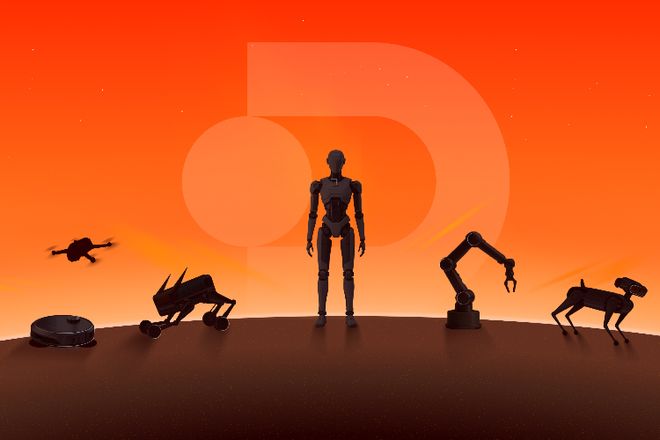
Group 1 - The core point of the article is that Digua Robotics has successfully completed a $120 million Series B1 financing round, bringing its total funding to $220 million since its establishment in early 2024 [2] - The financing round was backed by major investors including ByteDance, Didi, Meituan Longzhu, and several strategic and financial institutions [2] - The funds will primarily be used to support the development of full-stack hardware and software technology, as well as to strengthen the underlying technology for embodied intelligence [2] Group 2 - Digua Robotics has experienced a significant year-on-year shipment growth of 180% [3] - The company has developed a computing power matrix of 5-560 TOPS, which has aided various products in achieving generational leaps [3] - Despite the growth, the CEO of Digua Robotics remains cautious about the large-scale deployment of robots, emphasizing that simply increasing computing power is not sufficient without addressing power consumption issues [3]


“若GPU管够,增速早超40%!”微软电话会回应市场担忧:我们缺产能,不缺订单
华尔街见闻· 2026-01-29 09:29
Core Viewpoint - Microsoft reported strong Q2 FY2026 earnings with revenue of $81.3 billion and EPS of $4.14, exceeding Wall Street expectations, yet the stock price fell over 6% post-announcement due to concerns over high capital expenditures and slower growth in cloud services [2][3]. Group 1: Financial Performance - Microsoft’s capital expenditures surged approximately 66% year-over-year to a record $37.5 billion, raising investor concerns about the return on investment (ROI) in relation to Azure's revenue growth of 39% [3][5]. - The company emphasized that the current growth limitation is not demand but supply, indicating a tight supply-demand relationship in the market [3][6]. Group 2: Strategic Insights - CFO Amy Hood stated that if all newly launched GPUs were allocated to Azure, growth rates would exceed 40%, highlighting a resource allocation challenge between external customer demands and internal AI product needs [5][6]. - CEO Satya Nadella stressed the importance of customer lifetime value (LTV) over short-term growth in individual business units, advocating for a balanced approach to resource allocation [7][8]. Group 3: AI and Product Development - Microsoft reported a 160% year-over-year increase in paid seats for Microsoft 365 Copilot, reaching 15 million users, and a tenfold increase in daily active users, countering concerns about declining AI tool usage [9][10]. - GitHub Copilot also saw a 75% increase in paid subscribers, indicating strong growth in AI productivity tools across both consumer and business sectors [11]. Group 4: Cost Management and Infrastructure - Microsoft introduced its self-developed Maya 200 accelerator, claiming a 30% reduction in total cost of ownership (TCO) compared to existing hardware, as part of its strategy to control AI infrastructure costs [12][13]. - The company highlighted the critical role of data storage and management in AI, with Microsoft Fabric achieving an annual revenue run rate exceeding $2 billion and a 60% year-over-year growth [15]. Group 5: Market Outlook - Microsoft expressed strong confidence in long-term AI demand, framing the current landscape as a "arms race" for computing power, where efficiency in deployment will determine market leaders [16][17].


上海多媒体展厅设计费收费标准
Sou Hu Cai Jing· 2025-12-18 18:04
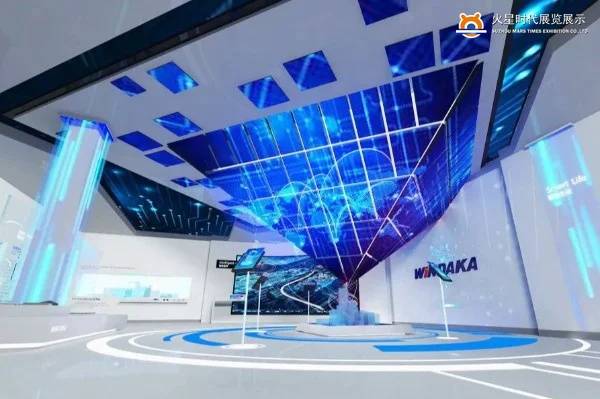
Core Insights - The focus of the article is on the commercial value and return on investment (ROI) that professional multimedia exhibition design can bring to enterprises, rather than just the basic pricing per square meter [1][12] - The complexity of design costs in the multimedia exhibition sector has increased significantly, moving away from traditional area-based pricing to a model that considers creative value and technical complexity [1][12] Design Cost Components - **Creative and Planning Depth**: This aspect determines the "soul" of the exhibition. A well-crafted design integrates the company's culture, products, and vision into a compelling narrative, which requires deep exploration of the brand's core [1][5] - **Multimedia and Digital Application Complexity**: The cost increases with the sophistication of multimedia applications, from basic touch screens to advanced technologies like holography and immersive VR/AR experiences [2][5] - **Team Qualifications and Experience**: A seasoned design team with cross-industry experience can minimize risks related to design failures, project delays, and budget overruns, thus justifying higher design fees [2][5] Pricing Tiers - **Basic Tier**: Focuses on layout and simple multimedia applications, with design fees constituting about 5% - 8% of total investment [5] - **Standard Tier**: Integrates brand storytelling with space design and multimedia, with design fees around 8% - 12% of total investment [5] - **High-End/Immersive Tier**: Utilizes cutting-edge technologies for a fully customized experience, with design fees potentially exceeding 10% - 15% of total investment [5] Project Phases - **Concept Planning and Design**: Involves brand research, narrative development, and initial design concepts, crucial for establishing competitive advantage [6] - **Detailed Design**: Includes technical drawings and material specifications to ensure accurate implementation [6] - **Multimedia Interaction Design**: Focuses on the interactive elements and user interface, which are essential for engaging visitors [6] Case Study - A technology company faced challenges in effectively showcasing its advanced manufacturing processes. The design team proposed a narrative-driven approach that utilized digital sand tables and immersive AR walls, significantly enhancing visitor engagement [8][9] - Post-implementation, visitor dwell time increased by 2.5 times, and project conversion rates improved by nearly 40%, demonstrating the high ROI of professional design investment [9] Common Concerns - **Budget Allocation**: Companies should prioritize creative planning and core interactive design over peripheral multimedia hardware to ensure quality brand representation [11] - **Quality Assurance**: Selecting a design-build service provider can enhance project reliability and reduce the risk of discrepancies between design and execution [11] - **Maintenance Costs**: Long-term operational costs should be factored in, with professional firms typically offering maintenance support as part of their service [11] Strategic Considerations - Companies should be cautious of low-cost design packages, as they may indicate subpar creativity or technical capabilities. Professional design should be viewed as a strategic investment in brand equity [12][13] - Decision-makers should evaluate design firms based on their ability to integrate various disciplines and their track record of successful local projects [13]
美股AI多空拉锯战,空头首战告捷
Hu Xiu· 2025-12-18 10:30
Core Viewpoint - The recent significant decline in the US AI sector stocks, including major players like Oracle, Nvidia, and AMD, indicates a fundamental shift in valuation logic, moving from growth expectations to a focus on return on investment (ROI) [1][11]. Group 1: Market Reaction - The AI sector experienced a collective drop, with Nvidia down 3.81%, AMD down 5.29%, and Oracle down 5.40%, resulting in the loss of hundreds of billions in market value [1][6]. - The catalyst for this decline was the termination of a $10 billion financing deal by Blue Owl Capital with Oracle, raising concerns about Oracle's debt levels and spending [2][3]. Group 2: Systemic Risk - The exit of Blue Owl Capital signifies a crack in the funding chain for AI infrastructure, leading to fears of systemic risk across the industry [4][5]. - The market's reaction suggests that if a major player like Oracle, which has over $500 billion in orders, cannot secure funding for significant projects, it raises alarms about the entire AI infrastructure sector [4]. Group 3: Diverging Institutional Views - Analysts from KeyBanc and Stifel have lowered Oracle's target price due to concerns over its financial health and ability to fulfill its substantial order backlog [7]. - In contrast, Morgan Stanley's Joseph Moore remains bullish on Nvidia, raising its target price, arguing that the market is overreacting to competitive threats [9]. Group 4: Valuation and ROI Focus - The focus of investment has shifted from capital expenditure to ROI, with firms like Wellington Management emphasizing the need for sustainable returns to justify AI investments [11]. - Current estimates suggest that the AI industry must generate approximately $600 billion in annual revenue to validate the significant investments being made, while actual revenue projections for 2025 are much lower, around $150 billion to $200 billion [12][13]. Group 5: Impact on A-shares - The decline in US AI stocks has also affected related A-share companies, with significant drops observed in stocks like Zhongji Xuchuang and Xinyi Sheng [14].


大摩:人形机器人“短期过热、长期低估”,商业化落地成关键胜负手
美股IPO· 2025-12-01 10:38
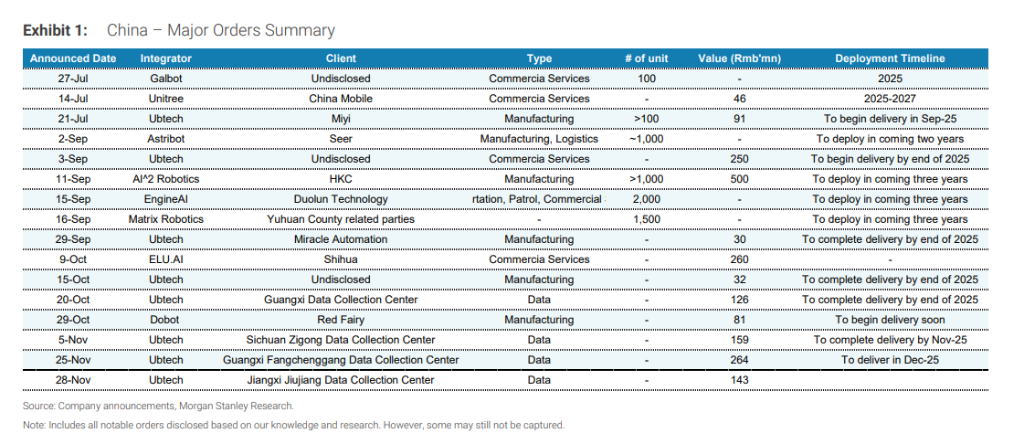
Core Insights - Morgan Stanley highlights the humanoid robot market as "overheated in the short term but undervalued in the long term," indicating a significant disparity between current market excitement and future potential [4][21] - The report predicts that by 2050, the global market size for humanoid robots could reach $5 trillion, far exceeding the current automotive industry [8][21] Short-term Overheating - The Chinese market is expected to show remarkable growth, with announced orders exceeding 2 billion RMB (approximately $300 million) by the second half of 2025, primarily from industrial, commercial services, and data center sectors [6][21] - However, many of these orders may not be fulfilled, as they include "framework orders" with low execution certainty, leading to a cautious outlook on recent growth [6][21] - Companies are setting aggressive shipment targets, with some expecting to deliver 100,000 units by 2026, but Morgan Stanley maintains a conservative estimate based on "limited working capacity" [6][21] Long-term Undervaluation - The long-term market potential for humanoid robots is significantly underestimated, with a projected global stock of 1 billion units by 2050 and a revenue market size nearing $5 trillion [8][12] - This potential is compared to the total revenue of the top 20 global automotive manufacturers, which is about $2.5 trillion in 2024, suggesting that the humanoid robot market could be twice that size [8][12] - The report anticipates that by 2050, commercial applications will dominate the market with approximately 935 million units, while household applications will account for around 84 million units [11][12] Commercialization as a Key Factor - The success of the humanoid robot industry hinges on effective commercialization, with a consensus emerging that return on investment (ROI) will be the critical metric for evaluating success [5][13] - Current industry players are moving away from merely showcasing technological advancements to demonstrating real value creation in practical scenarios [13] - Positive commercialization examples include Figure AI's robot contributing to the production of 30,000 cars at BMW's Spartanburg plant and Booster Robotics delivering over 700 humanoid robots to more than 200 clients globally [14][15] Policy and Capital Support in China - The development of the humanoid robot market in China is strongly supported by policies and capital, with approximately 187 billion RMB allocated to various funds aimed at industry development [18][20] - The Chinese government has introduced numerous supportive policies since 2023, including the establishment of a standardization committee for humanoid robots [18][19] - This "policy + capital" dual-drive model provides China with a unique advantage in the global humanoid robot competition, signaling a shift from technological exploration to commercial promotion [19][21]

大摩:人形机器人“短期过热、长期低估”,商业化落地成关键胜负手
Hua Er Jie Jian Wen· 2025-12-01 06:47
Core Insights - The humanoid robot industry is at a crossroads, characterized by short-term hype and long-term potential being underestimated [1] - Morgan Stanley's report highlights that while order data appears strong, delivery uncertainties pose risks, and the true value of the industry will be tested through commercialization [1][2] Short-term Overheating: Reality Check Amid Order Surge - The Chinese market is expected to show remarkable growth by the second half of 2025, with announced orders exceeding 2 billion RMB (approximately 300 million USD) primarily from industrial, commercial services, and data center sectors [2] - However, many of these orders may not be fulfilled this year, with some being "framework orders" that have low execution certainty [2] Long-term Underestimation: A Grand Narrative of a $5 Trillion Market - Morgan Stanley predicts that by 2050, the global humanoid robot market could reach a staggering 5 trillion USD, significantly surpassing the current automotive industry [4] - The report estimates that by 2050, the global humanoid robot stock will reach 1 billion units, with a cumulative deployment of approximately 237 million units by 2036 and 1.34 billion units by 2040 [5] Price Dynamics and Market Penetration - The initial price of humanoid robots in high-income countries is projected to be 200,000 USD, decreasing to around 50,000 USD by 2040, while prices in other markets are expected to drop from 50,000 USD to approximately 1,500 USD by 2050 [7] - The report emphasizes that as technology matures and costs decline, humanoid robots will first gain traction in commercial applications before entering households [7] Commercialization: From "Showcasing Technology" to "Calculating ROI" - The key to the industry's success lies in commercialization, with a shift from merely demonstrating advanced technology to proving value in real-world applications through ROI [8] - Software is identified as a critical differentiator, while the hardware supply chain has achieved over 90% domestic production, laying a foundation for commercialization [8] China's Ambition in Humanoid Robotics - The development of the humanoid robot market in China is strongly supported by policies and capital, with various funds totaling approximately 187 billion RMB established to support the industry [9][11] - The dual drive of "policy + capital" provides China with a unique advantage in the global humanoid robot competition, indicating a shift from technological exploration to commercialization [9] Notable Developments and Companies - Figure AI's Figure 02 robot has participated in the production of 30,000 cars at BMW's Spartanburg plant, installing over 90,000 components [10] - Booster Robotics has delivered over 700 humanoid robots to more than 200 clients across 20 countries since its establishment in August 2023 [10] - Ubtech anticipates its industrial humanoid robot production capacity will reach 5,000 units by 2026 [10]
英伟达独强难支,AI股何去何从?
Jin Shi Shu Ju· 2025-11-24 03:26
Core Insights - The initial positive reaction to Nvidia's earnings report did not alleviate investor concerns about the AI stock bubble, leading to significant market volatility [1] - The market is currently divided into two camps: skeptics who warn of bubble risks and optimists who see potential for long-term growth [2] Group 1: Skeptics' Concerns - Skeptics are worried that the market valuations are reaching unreasonable levels as investors chase a few AI-related stocks [3] - There are concerns about the sustainability of the massive capital investments made by companies to remain competitive, especially as they begin to incur debt [3] - The cyclical nature of these financing arrangements could pose systemic risks, where the weakness of one company could drag down the entire AI-related sector [3] Group 2: Optimists' Perspective - Optimists view the recent pullback in AI stocks as a healthy correction, indicating that greater growth is on the horizon [4] - Major tech companies like Microsoft, Amazon, Meta Platforms, and Alphabet are expected to continue investing heavily in AI, with a projected 34% increase in capital expenditures to $440 billion over the next 12 months [4] - There is a belief that the AI investment cycle is just beginning, supported by strong industry demand and a favorable regulatory environment [4] Group 3: Nvidia's Role and Market Reactions - Nvidia's performance was anticipated due to prior disclosures from its major clients, which account for over 40% of its sales [5] - Despite Nvidia's strong earnings, other semiconductor stocks have faced significant declines, with the chip-related stock index dropping 11% in November, marking the worst monthly performance since 2022 [5] - Concerns about the sustainability of AI spending have led to sharp declines in stocks of companies like AMD and ARM, with losses exceeding 20% [5] Group 4: Investment Return Concerns - Investors are increasingly questioning the return on investment (ROI) for AI-related expenditures, which is critical for future growth and profitability [6] - The need for clarity on ROI is seen as essential for reviving interest in AI investments, with expectations that it may take one or two more quarters to see relevant evidence [6] - Nvidia's earnings report may have temporarily alleviated immediate concerns about AI investment sustainability, but doubts about large spending companies remain [6] Group 5: Market Volatility and Consensus - The divergence in investor perspectives contributes to ongoing volatility in the AI market, with macroeconomic uncertainties and differing views on the AI revolution's development stage [8] - The collapse of the cryptocurrency market is also seen as a factor contributing to the observed volatility [8]
月入过万都难,00后主播逃离直播间
3 6 Ke· 2025-09-29 12:12
Core Insights - The live-streaming e-commerce industry is entering a downturn phase, marked by the departure of key influencers and a decline in overall engagement and revenue [1][2][9] Group 1: Industry Trends - The departure of prominent streamers like Dong Dong and Xin Ba indicates a significant shift in the industry landscape, revealing the struggles faced by both top and emerging talent [1][2] - The live-streaming sector has seen a decline in viewer engagement and revenue, with the ROI for live-streaming events dropping from 1:4.2 to as low as 1:3.5 [7][8] - The overall market for live-streaming e-commerce is projected to exceed 5 trillion yuan in 2024, but the growth rate of penetration has slowed significantly from nearly 100% to single-digit percentages [10] Group 2: Financial Implications - Many streamers have experienced a salary reduction of 30% to 40%, with average monthly incomes for over 80% of professional streamers now below 8,000 yuan [8][9] - The competitive landscape has intensified, leading to a decrease in compensation for new entrants, with initial hourly wages for streamers dropping significantly [6][8] - The financial strain is evident as many streamers are forced to downgrade their living conditions and lifestyle due to reduced earnings [8][11] Group 3: Career Transitions - Streamers like Yao Yangyang and Ren Qing have transitioned to new careers outside of live-streaming, reflecting a broader trend of professionals leaving the industry due to its unsustainable nature [12][14] - The shift in focus from live-streaming to other business ventures, such as selling fruits online, indicates a search for more stable and fulfilling career paths [12][14] - The industry is witnessing a high turnover rate, with many professionals opting for alternative careers that offer a better work-life balance and less pressure [15]

面试不是考试,是表演,新晋OpenAI员工:重磅揭秘顶级AI岗通关密码
3 6 Ke· 2025-09-15 07:58
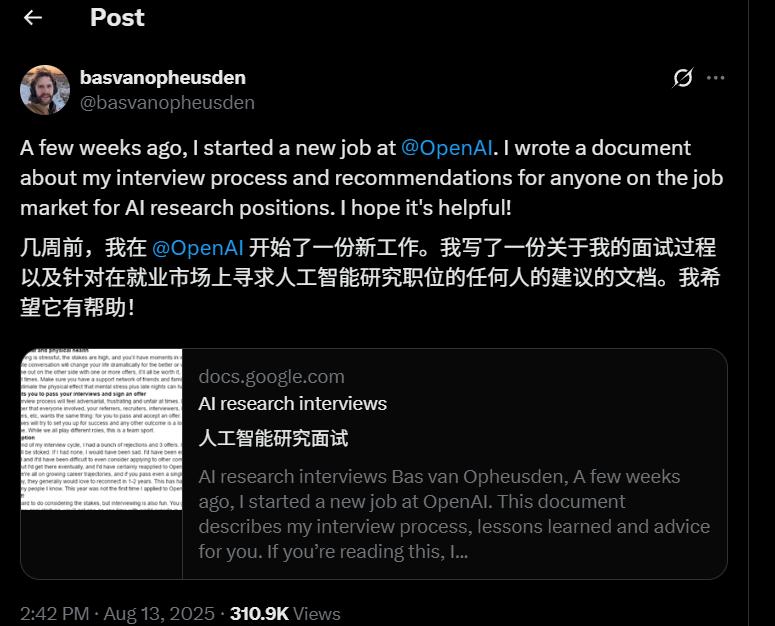
Core Insights - The article emphasizes the importance of preparation for job interviews, particularly in the AI research field, highlighting that thorough preparation can yield the highest return on investment (ROI) in one's life [4] - It discusses the interview process as a performance, where candidates must not only demonstrate technical skills but also showcase leadership qualities and personal stories [1][18] Group 1: Interview Preparation - Candidates should invest around 100 hours practicing coding on platforms like LeetCode and an equal amount of time reading relevant papers and engaging in discussions with peers [5] - Familiarity with the interview process is crucial, starting with an informal call from HR to explain the recruitment process and the interviewer's background [8] - A well-prepared environment for video interviews, including good lighting and equipment, is essential for a smooth interview experience [10][12] Group 2: Behavioral and Technical Aspects - Candidates should prepare personal stories that reflect their experiences, including both successes and failures, to demonstrate their understanding of organizational missions and alignment with company strategies [20][23] - The STAR-I model (Situation, Task, Action, Result - Impact) is recommended for structuring responses, particularly for failure stories that show growth and learning [25][26] - Technical interviews will often include coding challenges, where candidates must demonstrate good coding practices and problem-solving skills [33][36] Group 3: Post-Interview Considerations - After receiving an offer, candidates should be aware of the negotiation dynamics, as companies may test their interest and willingness to negotiate [37] - It is advised to consider factors beyond salary, such as team culture and company mission, when evaluating job offers [37] - Candidates can request follow-up conversations with interviewers to gain further insights, even if they did not receive an offer [37]
蔚来李斌:每个项目的ROI想算都能算清楚,不想算清楚一定是浑水摸鱼
Xin Lang Ke Ji· 2025-08-22 02:49
Core Insights - NIO's founder Li Bin acknowledged that the 60 billion RMB investment in R&D may not be entirely efficient, as the true value of projects can only be assessed post-launch [1] - The R&D budget is allocated to foundational technologies, core components, and specific vehicle models, which includes software applications and advanced driver-assistance systems [1] - The company emphasizes the importance of setting return targets and evaluating return periods based on different types of R&D, advocating for long-term ROI assessments [1] R&D Investment Breakdown - The 60 billion RMB investment is primarily focused on three areas: foundational technologies, core components like chips and batteries, and vehicle model development [1] - Li Bin highlighted that the investment not only benefits NIO but also has a positive impact on the entire industry, including talent cultivation [1] Project Management and ROI - Since the second half of last year, NIO has implemented ROI closed-loop management for every project to identify those that create real value for users and generate profits for the company [1] - The company will not reduce R&D return targets or scope but aims to improve efficiency to achieve better product development outcomes with less financial input [1]
