KKR

Search documents
Abacus Global Management Launches Asset-Based Finance Strategy
Globenewswire· 2026-01-06 21:05
Core Viewpoint - Abacus Global Management has launched a new asset-based finance strategy targeting the $20 trillion-plus asset-based finance market, leveraging its proprietary insurance analytics and institutional origination expertise [1][10]. Company Overview - Abacus Global Management, Inc. is a leader in the alternative asset management industry, focusing on longevity-based assets and personalized financial planning [19]. Leadership Team - The new strategy will be led by Monty Cook and Elena Plesco, who bring a combined four decades of experience in asset-based finance and specialty credit [4][5][6]. Investment Strategy - The ABF strategy will focus on asset-backed investments, aiming for net risk-adjusted returns of 11–13% with a target investment duration of three to five years [9][10]. - Key investment areas include consumer credit, equipment finance, receivables, small business loans, and insurance-related assets [8][9]. Strategic Rationale - The launch of the ABF strategy aligns with Abacus's goal of building a diversified alternative asset management platform, responding to increasing institutional demand for predictable cash flows and low correlation to traditional markets [10][11]. Unique Capabilities - Abacus combines institutional-quality origination and structuring expertise with proprietary insurance analytics, providing a competitive edge in sourcing and pricing [2][14]. - The strategy emphasizes downside protection, targeting approximately 65% of investments in holdings with investment grade-like characteristics [14].

OneStream Enters into Definitive Agreement to be Acquired by Hg for $6.4 Billion
Prnewswire· 2026-01-06 18:47
Core Viewpoint - OneStream, a leading enterprise finance management platform, has entered into a definitive agreement to be acquired by Hg for approximately $6.4 billion, with shareholders receiving $24.00 per share in cash, representing a 31% premium over the closing share price on January 5, 2026 [1][2] Transaction Details - The transaction values OneStream at approximately $6.4 billion in equity value and is expected to close in the first half of 2026, subject to regulatory approvals [1][4] - OneStream shareholders will receive $24.00 per share, which is a 31% premium to the closing share price on January 5, 2026, and a 27% premium to its volume-weighted average share price over the preceding 30 trading days [2] - Hg will become the majority voting shareholder, with General Atlantic and Tidemark as significant minority investors [1][2] Company Strategy and Vision - The acquisition is seen as a pivotal moment for OneStream, positioning it to advance its AI-first go-to-market strategy and expand its finance AI capabilities [3] - OneStream aims to be the operating system for modern finance, unifying financial and operational data while embedding AI for improved decision-making [8][9] - The partnership with Hg, General Atlantic, and Tidemark is expected to accelerate OneStream's growth and innovation in the finance sector [3][12] Leadership and Operations - Tom Shea will continue as CEO, and the current leadership team will remain in place, with OneStream maintaining its headquarters in Birmingham, Michigan [5] - The transaction has been unanimously approved by OneStream's Board of Directors, and no further approval from stockholders is required [4][5] Financial Advisors - J.P. Morgan Securities LLC and Centerview Partners LLC are acting as financial advisors to OneStream, while Goldman Sachs & Co. LLC is the exclusive financial advisor to Hg [7]

Hg Capital to buy OneStream in $6.4 billion take private deal; shares jump 28%
Yahoo Finance· 2026-01-06 17:51
Company Overview - OneStream is a financial software maker based in Birmingham, Michigan, providing products that assist executives in reporting financial statements to regulators and investors [3] - The company serves notable clients including Toyota, UPS, News Corp, and General Dynamics [3] - OneStream offers AI-driven financial forecasting tools and competes with major enterprise software providers such as Oracle, SAP, and Workday [3] Acquisition Details - Hg Capital has agreed to acquire OneStream in an all-cash deal valued at $6.4 billion, with shareholders receiving $24 per share, reflecting a 31% premium over OneStream's closing price on the previous Monday [1] - The stock price of OneStream increased by over 28% in afternoon trading following the announcement of the acquisition [1] - The deal is expected to close in the first half of 2026, with J.P. Morgan Securities acting as the financial adviser to OneStream [5] Market Context - OneStream went public in July 2024 under the majority ownership of KKR, but has faced challenges in maintaining its valuation due to a weaker macroeconomic environment affecting investor interest in growth-focused tech stocks [4] - The company's initial public offering (IPO) was priced at $26, giving it a valuation of nearly $6 billion, while its market capitalization was approximately $4.48 billion as of the previous Monday [4] - Global mergers and acquisitions activity has shown a steady rebound in 2025, despite uncertainties related to U.S. tariff policies and geopolitical conflicts [2]
2025年零售圈十大收购事件发布
Tai Mei Ti A P P· 2026-01-06 13:14
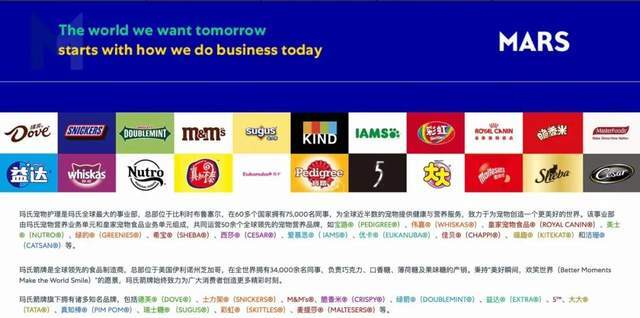
Core Insights - The retail industry experienced a significant wave of mergers and acquisitions in 2025, indicating a major capital reshuffle within the sector [1][27] - Major companies are either divesting non-core assets to focus on their main businesses or acquiring new brands to expand their portfolios [1][27] - Private equity firms are playing a crucial role in driving brand transformation and expansion in the retail sector [1][27] Group 1: Major Mergers and Acquisitions - Alibaba divested its stake in Suning and Intime Retail, marking a strategic shift to optimize resource allocation [3][26] - Mars, Incorporated completed the acquisition of Kellanova for approximately $35.9 billion, creating a global snack empire [5][7] - KKR acquired an 85% stake in Vista International, which is linked to the domestic beverage brand Da Yao, enhancing its control over the Chinese soda market [9][10] Group 2: Strategic Adjustments and Performance - After KKR's acquisition, Gao Xin Retail reported a revenue of 71.55 billion yuan, with a net profit of 386 million yuan, marking a turnaround from previous losses [4] - The acquisition of Kellanova by Mars is one of the largest in the packaged food sector in the last decade, highlighting the trend of consolidation among food giants [7][8] - CPE Yuanfeng's acquisition of Burger King China aims to accelerate local expansion with a commitment to invest $350 million [16][17] Group 3: Industry Trends and Future Outlook - The retail sector is shifting from scale expansion to lean operations, focusing on supply chain and brand value [2][27] - The relationship between brands and capital is evolving from mere financial support to active operational involvement, indicating a search for sustainable growth [27] - The ongoing mergers and acquisitions signal a re-evaluation of the value of physical retail, with supply chain and product strength becoming central to competition [27]


KKR, Warburg Pincus Among Suitors for Southeast Asia School Operator
WSJ· 2026-01-06 06:47
Group 1 - Private-equity firms KKR and Warburg Pincus are among the bidders for TPG's Southeast Asia school business [1] - The potential valuation of the school business could reach up to $2 billion [1]


KKR Acquires Cheongna Logistics Center
Businesswire· 2025-12-30 02:09
Core Insights - KKR and Kreate Asset Management have completed the acquisition of Cheongna Logistics Center, marking the largest single asset logistics transaction in Korea to date [1][2] Company Overview - KKR is a leading global investment firm that focuses on alternative asset management and capital markets solutions, aiming to generate attractive investment returns through a disciplined investment approach [6] - Kreate Asset Management, established in 2024 by KKR, specializes in commercial real estate in Korea, including logistics centers, offices, hospitality, and rental housing assets [7] Industry Context - The Cheongna Logistics Center is a modern logistics facility covering 4.6 million square feet, strategically located with strong connectivity to major transportation hubs in the Greater Seoul metropolitan area [2] - The demand for high-specification warehouses is increasing in Korea's e-commerce-driven economy, highlighting the critical role of modern logistics facilities [2] Operational Strategy - Following the acquisition, Kreate will manage and operate the Cheongna Logistics Center, while KKR will focus on value creation strategies to maintain the asset's high quality [3] - KKR's investment in Cheongna Logistics Center is part of its broader Asia real estate strategy, which includes other significant investments in logistics and commercial properties in Korea [4]

2025年九大标志性交易:泡沫、蟑螂与367%的暴涨
Jin Rong Jie· 2025-12-29 06:26
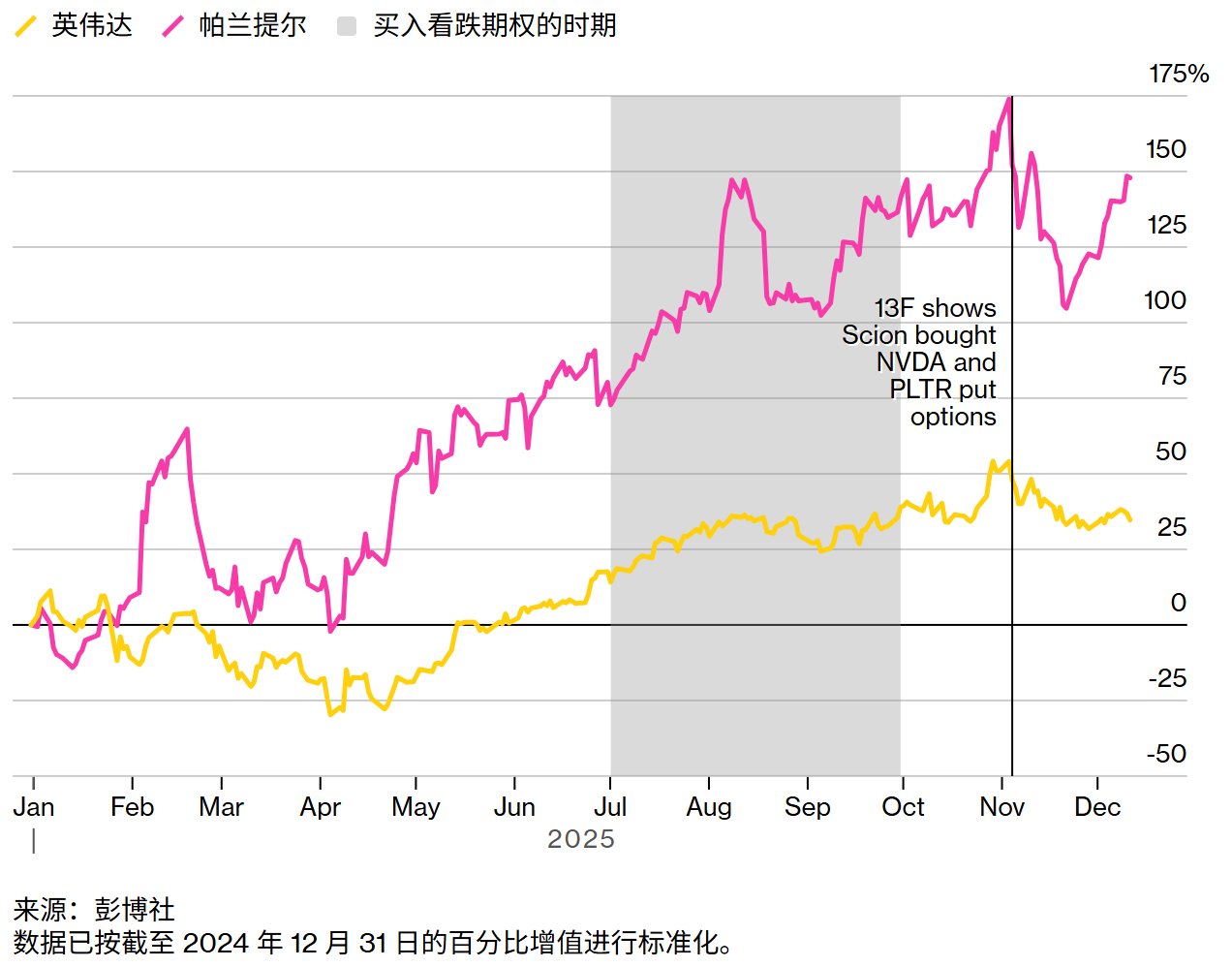
Group 1: Market Trends and Dynamics - The year has been marked by high-stakes bets and rapid reversals, with significant volatility across various markets, including record highs in gold prices and fluctuations in mortgage giants [1] - Investors have heavily bet on changing political landscapes, inflated balance sheets, and fragile market narratives, leading to substantial stock market gains and crowded yield trades [1] - The geopolitical shift has significantly benefited European defense stocks, with companies like Rheinmetall AG and Leonardo SpA seeing stock price increases of approximately 150% and over 90% respectively [4][5] Group 2: AI and Technology Investments - Scion Asset Management disclosed protective put options on Nvidia and Palantir, raising concerns about the high valuations and spending plans of major AI players [2][3] - Nvidia's stock price fell significantly after the disclosure, reflecting the market's sensitivity to potential overvaluation in the AI sector [2] Group 3: Defense Sector Changes - The defense sector, previously avoided by asset managers due to ESG concerns, has seen a paradigm shift, with funds now focusing on defense-related investments [5] - A basket of European defense stocks has risen over 70% in 2025, indicating a strong market interest in this sector [5] Group 4: Currency and Alternative Assets - Concerns over heavy debt burdens in major economies have led investors to favor alternative assets like gold and cryptocurrencies, while showing reduced enthusiasm for government bonds and the dollar [6][7] - The narrative of "currency debasement" gained traction, particularly during periods of political instability, leading to record highs in both gold and Bitcoin [6][7] Group 5: South Korean Market Performance - The South Korean stock market has surged over 70% in 2025, driven by political efforts to boost the capital market and the global AI trend [8] - Despite the market's strong performance, local retail investors have been net sellers, indicating a lack of confidence in the domestic market [8] Group 6: Japanese Bond Market - The Japanese bond market has shifted from being a "widowmaker" trade to a favorable environment for short sellers, with benchmark yields rising significantly [10][11] - The 10-year Japanese government bond yield surpassed 2%, marking a significant change in the market dynamics [10] Group 7: Credit Market Developments - The credit market has seen substantial returns from strategic actions taken by funds like Pimco and King Street Capital Management, particularly in distressed situations [12] - A series of smaller but concerning events in the credit market have raised alarms about industry practices and borrower capabilities [17][18] Group 8: Fannie Mae and Freddie Mac - Fannie Mae and Freddie Mac have experienced a significant stock price increase of 367% from January to September 2025, driven by optimism regarding potential privatization [14][15] - The market remains speculative about the timing and feasibility of an IPO for these companies, despite the excitement surrounding their potential release from government control [14][15] Group 9: Turkish Lira and Emerging Markets - The Turkish lira has depreciated approximately 17% in 2025, highlighting the risks associated with high-yield investments in emerging markets amid political turmoil [16]


从加密狂潮到做空日债:复盘2025年令市场“心跳停止”的十一大押注
智通财经网· 2025-12-29 03:44
Group 1: Cryptocurrency and Political Influence - The year 2025 saw a surge in speculative trading linked to Donald Trump's brand, particularly in the cryptocurrency sector, with significant investments in assets associated with him [1][2] - Trump's family launched various tokens, including a meme coin and Melania Trump's own token, which experienced dramatic price declines by the end of the year, with some down nearly 99% [2][3] - Despite political momentum, these assets could not escape the fundamental volatility of the cryptocurrency market, highlighting the risks of speculative trading [1][3] Group 2: AI Stocks and Short Selling - Scion Asset Management disclosed protective put options on Nvidia and Palantir, signaling skepticism about their high valuations amid a market driven by AI hype [1][4] - The put options had strikingly low strike prices compared to the stocks' closing prices, indicating a bearish outlook from a well-known investor, Michael Burry [3][4] - This move reflects underlying doubts about the sustainability of AI-driven market gains, suggesting potential for significant market corrections [3][4] Group 3: European Defense Stocks - European defense stocks surged due to geopolitical shifts, with companies like Rheinmetall and Leonardo seeing year-to-date gains of approximately 150% and over 90%, respectively [6][8] - Investment managers, previously hesitant to engage with defense stocks, have now revised their strategies to include these assets, indicating a paradigm shift in investment focus [6][10] - The demand for defense-related investments has extended into the credit market, with new financial instruments being created to support military spending [6][10] Group 4: Gold and Inflation Hedge - The narrative of "devaluation trading" emerged as investors sought refuge in gold and cryptocurrencies amid concerns over national debts and inflation, leading to record highs for both assets [10][11] - This trend reflects a complex interplay between macroeconomic fears and the demand for safe-haven assets, with gold reaching unprecedented levels [10][11] - The market dynamics suggest that while fears of devaluation persist, strong demand for secure assets can coexist with broader economic uncertainties [10][11] Group 5: South Korean Stock Market - The South Korean stock market experienced a remarkable rise, with the Kospi index climbing over 70% in 2025, driven by government policies aimed at revitalizing the capital market [12][14] - Despite the impressive performance, local retail investors remained skeptical, opting to invest heavily in U.S. stocks instead, indicating a disconnect between foreign and domestic investor sentiment [12][18] - The government's ambitious target of reaching a Kospi index of 5000 has gained traction among major financial institutions, suggesting potential for continued growth [12][14] Group 6: Japanese Bonds - The Japanese bond market, once considered a "widowmaker," transformed into a profitable short-selling opportunity as yields surged, driven by government spending and interest rate hikes [22][25] - The Bloomberg Japan bond index recorded significant losses, marking it as the worst-performing major bond market globally [22][25] - Investor sentiment remains bearish, with expectations of further rate increases and ongoing fiscal challenges contributing to a negative outlook for Japanese bonds [22][25] Group 7: Credit Market Dynamics - The credit market in 2025 revealed vulnerabilities as several previously reliable borrowers faced significant financial distress, leading to a series of defaults and restructurings [30][31] - Notable cases included companies like Saxo Global and New Fortress Energy, which saw their bond values plummet, raising concerns about the overall health of the credit market [30][31] - The fragmentation of debt holders and the lack of transparency in borrowing practices have heightened risks for investors, prompting warnings from industry leaders [30][31]

华尔街银行家发起“复仇之战”,另类资管巨头黄金时代落幕?
智通财经网· 2025-12-29 02:57
Core Viewpoint - The traditional banking sector is experiencing a resurgence, with major U.S. banks outperforming alternative asset management firms, as regulatory changes and market conditions shift in their favor [1][4]. Group 1: Performance of Major Banks - The average stock price of the six largest U.S. banks has increased by over 45% this year, marking the strongest performance in a generation [1]. - Major banks are expanding their loan portfolios at the fastest rate since the financial crisis, aided by a reduction in regulatory pressures [5][8]. - Morgan Stanley, JPMorgan Chase, and other top banks are significantly increasing their lending activities, narrowing the gap with private credit competitors [9][10]. Group 2: Regulatory Environment - The second Trump administration is rolling back post-financial crisis regulations, which had previously restricted banks, allowing them to compete more effectively against non-bank lenders [4][5]. - Recent regulatory changes have provided banks with more flexibility in issuing leveraged loans and dealing with cryptocurrencies, enhancing their competitive position [5][10]. - The Consumer Financial Protection Bureau (CFPB) has seen significant cuts, further easing regulatory burdens on banks [5]. Group 3: Competition with Alternative Asset Managers - Alternative asset management firms like Blackstone and Apollo have seen substantial growth in their credit assets, with Blackstone's credit and insurance assets exceeding $432 billion, a 67% increase since the end of 2021 [4]. - Despite their growth, banks are regaining their footing in the lending market, with a collective increase in loan amounts that challenges the dominance of private equity firms [9][10]. - The competitive landscape is shifting, as banks are now actively countering the recruitment of their top talent by private equity firms, indicating a reversal in fortunes [11].

「大窑」最后也没坚持住…
Sou Hu Cai Jing· 2025-12-29 01:39
Core Viewpoint - The recent leadership change at Dayao, with founder Wang Qingdong stepping down and Dai Cheng taking over, signals a significant shift towards capitalizing the company, likely involving a deal with KKR, a major US private equity firm [1][3][4]. Company Dynamics - Wang Qingdong, the founder, previously stated a firm refusal to accept foreign investment, emphasizing Dayao's independence [3]. - KKR is reported to have acquired 85% of the shares in Yuanjing International, which is likely the overseas holding entity for Dayao, indicating a strategic move towards international investment [4]. - Dai Cheng, who has a background in international private equity, is expected to play a crucial role in the company's management, although his exact relationship with Dayao remains somewhat unclear [5]. Financial Performance - Dayao's sales for 2023 reached 3.2 billion yuan, significantly outperforming competitors like Beibingyang and Bingfeng, with projections to exceed 5 billion yuan in 2024 [9]. - The company boasts a high profit margin, with a gross profit of over 3 yuan per bottle, which is notably higher than international brands like Coca-Cola [9]. Market Position and Strategy - Dayao's sales are primarily driven by the food and beverage sector, with 70%-80% of sales coming from barbecue stalls, hot pot restaurants, and street vendors, creating a strong customer loyalty with an 80% repurchase rate [9]. - Despite its stronghold in northern markets, Dayao faces challenges in expanding into southern markets, indicating a need for strategic adjustments to support nationwide growth [9][11]. - The entry of external capital and management expertise is seen as a necessary step to address the company's limitations in market expansion and operational management [11].