重庆银行

Search documents
江苏银行2025年内股价已上涨21%表现强劲 董监高累计增持2427万传递信心
Chang Jiang Shang Bao· 2025-07-13 23:06
Core Viewpoint - Since 2025, multiple listed banks have seen significant shareholder increases, indicating confidence in future development and investment value in the banking sector [1][5]. Group 1: Shareholder Increases - Jiangsu Bank disclosed that its executives and senior management increased their holdings by 2.1648 million shares, amounting to 24.2782 million yuan, exceeding the lower limit of the planned increase by 121.39% [1][2]. - A total of 12 banks, including Suzhou Bank, Chengdu Bank, Postal Savings Bank, and Everbright Bank, have had significant shareholders implement or announce increase plans since 2025 [1][2]. - The increase in holdings is seen as a positive signal from shareholders regarding the banks' future value and strategic planning [5]. Group 2: Stock Performance - As of July 11, 2025, 42 listed banks have experienced varying degrees of stock price increases, with Jiangsu Bank showing a year-to-date increase of approximately 21.4% [1][5]. - Among the 42 banks, 6 have seen stock price increases exceeding 30%, while 18 banks have increases over 20% [5]. - The banking sector has become one of the hottest segments in the A-share market this year, with a low price-to-book ratio indicating potential for valuation improvement [5]. Group 3: Dividend and Financial Performance - As of July 11, 2025, ten banks have a dividend yield exceeding 5%, with Jiangsu Bank's yield at 4.37% [6]. - Jiangsu Bank announced a cash dividend of 0.2144 yuan per share, totaling 3.935 billion yuan, based on a total share capital of 18.351 billion shares [6]. - For the fiscal year 2024, Jiangsu Bank reported operating income of 80.82 billion yuan, a year-on-year increase of 8.78%, and a net profit of 31.843 billion yuan, up 10.76% [7].

金融半年观|14家城商行高管:80后登场,倾向市场选贤
Nan Fang Du Shi Bao· 2025-07-12 04:19
Group 1 - In the first half of 2025, 14 city commercial banks experienced executive changes, with a total of 26 executives being replaced, indicating a trend of frequent leadership turnover in the industry [2][3] - The age distribution of the new executives shows that those born in the 1970s make up approximately 63%, while those born in the 1980s account for about 14%, reflecting a trend towards a younger leadership team [3][4] - The selection methods for new executives have diversified, with market-based recruitment becoming an important channel for attracting talent, alongside traditional internal promotions and cross-institution transfers [7][8] Group 2 - The youngest new executive is Peng Jing'en, appointed as Chief Risk Officer of Changsha Bank at the age of 42, highlighting the trend of younger leaders in city commercial banks [3][4] - Analysts believe that younger executives are more open to new ideas and can drive digital transformation and business innovation, although they may face challenges in resource coordination [5][6] - The trend of market-based recruitment has been observed in several city commercial banks, such as Dalian Bank and Zhengzhou Bank, which have publicly selected executives from outside the organization [7][8] Group 3 - City commercial banks are facing challenges in a competitive environment, with pressures from larger state-owned banks and innovative private financial institutions, prompting a need for leadership adjustments to seek new growth drivers [9] - The unique role of city commercial banks in supporting local economies and their need to transition from homogeneous competition to distinctive strategies is emphasized [9][10] - The integration of technology and innovation is crucial for the future development of city commercial banks, with a focus on enhancing service models and risk management capabilities [10][11]


我市开展政银企投融资对接活动 助力工业企业破解融资难题
Sou Hu Cai Jing· 2025-07-11 13:48
Core Insights - The event titled "'Chain' Connecting Supply and Demand 'Benefiting' Enterprise Collaboration" was organized by the Yinchuan Municipal Industry and Information Technology Bureau to address financing challenges faced by industrial enterprises [1][3] - A total of 15 financial institutions and over 20 industrial enterprises participated, utilizing a model of "government platform, enterprise performance" to facilitate effective communication and collaboration [1][3] Group 1 - The event provided a platform for banks and enterprises to understand each other's needs, showcasing the enterprises' production operations, technological advantages, and unique products through "8-minute precise roadshows" [3] - Financial institutions, including Ningxia Bank and Minsheng Bank, presented specialized financial products and services, such as "Ningke Loan" and "Digital Transformation Loan," which received positive feedback from enterprises [3] - A tracking mechanism called "three ones" was established, including an enterprise demand list, a bank service plan, and a follow-up supervision system to ensure the outcomes of the financing matches [3][4] Group 2 - The Yinchuan Municipal Industry and Information Technology Bureau plans to enhance the regularized interaction mechanism between government, banks, and enterprises, aiming to create a comprehensive service system that combines financing and intelligence [4] - The initiative seeks to channel financial resources towards high-quality industrial projects, transforming policy benefits into new momentum for the high-quality development of industrial enterprises [4]


重庆银行收盘下跌1.86%,滚动市盈率7.39倍,总市值384.29亿元
Jin Rong Jie· 2025-07-11 10:21
Group 1 - The core viewpoint of the articles highlights the performance and recognition of Chongqing Bank, including its stock performance, financial metrics, and various awards received in recent months [1][2][3] Group 2 - As of July 11, Chongqing Bank's stock closed at 11.06 yuan, down 1.86%, with a rolling PE ratio of 7.39 times and a total market capitalization of 38.429 billion yuan [1] - The average PE ratio for the banking industry is 7.56 times, with a median of 6.86 times, placing Chongqing Bank at the 28th position in the industry ranking [1] - As of the first quarter of 2025, 29 institutions held shares in Chongqing Bank, including 24 funds, with a total holding of 1,203.0827 million shares valued at 11.682 billion yuan [1] Group 3 - Chongqing Bank's main business includes banking and related financial services, with key products in corporate banking, inclusive finance, personal banking, financial markets, investment banking, and trade finance [2] - The bank has received multiple awards in 2024, including recognition for mobile internet application service capabilities, good behavior certification, and various accolades in wealth management and cybersecurity [2] - The latest financial results for the first quarter of 2025 show an operating income of 3.581 billion yuan, a year-on-year increase of 5.30%, and a net profit of 1.624 billion yuan, also up by 5.33% year-on-year [3]
【脱水研报】与优秀区域性银行同行—变革深化与长期资金双轮驱动
申万宏源研究· 2025-07-11 07:25
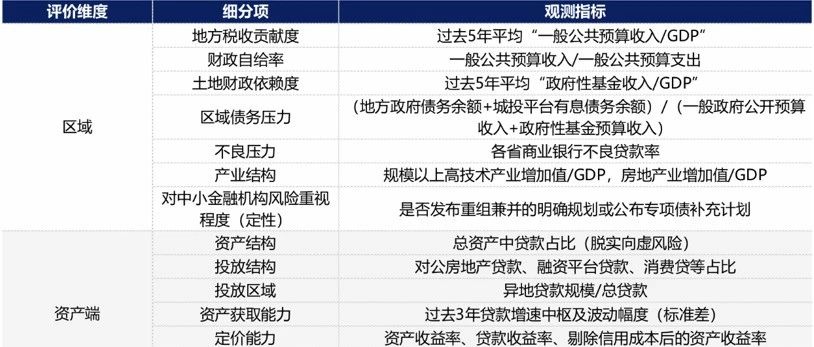
Core Viewpoint - The article discusses the supply-side reform of small and medium-sized banks, highlighting the coexistence of risks and opportunities, and emphasizes the importance of regional banks that leverage local advantages to compete with national banks in the evolving financial landscape [1][5]. Summary by Relevant Sections Supply-Side Reform of Small and Medium-Sized Banks - The operational characteristics of small and medium-sized banks are a result of the resonance between regional environments and business strategies. Identifying the survivors and outstanding performers among these banks requires a focus on regional clientele and the strategic arrangement of their assets and liabilities [1][5]. Investment Strategy for the Banking Sector - The banking sector is expected to undergo a long-term revaluation driven by several factors: 1) Continuous allocation of long-term funds by insurance and state-owned entities 2) Dissipation of systemic risk concerns 3) Underestimation of the stability of Return on Equity (ROE) [6][7]. - Current A-share listed banks maintain a dividend yield of over 4%, with a premium of more than 2 percentage points over the ten-year government bond yield, indicating a historical high. As the valuation of the banking sector recovers, although dividend yields may decline, the stability of profit growth ensures predictable and sustainable dividends, making bank stocks a scarce high-dividend asset in a low-interest-rate environment [7][11]. Valuation Metrics - The banking sector's ROE has remained stable at around 10%, significantly higher than the 6.7% of non-financial enterprises in the A-share market. Regulatory perspectives emphasize the necessity of reasonable profit growth to maintain financial system stability, suggesting that ROE is likely to remain in the 9%-10% range [11][12]. Investment Focus - Investment should concentrate on: 1) High-quality regional banks with no burdens and high provisions, which are expected to demonstrate growth and should not trade below book value [13]. 2) Banks with stable profit expectations, strong potential funding drivers, and relatively high index weightings, which are mispriced in terms of valuation and ROE expectations [13]. Historical Performance and Recommendations - The company has been a pioneer in researching and tracking regional banks since 2021, successfully recommending stocks like Suzhou Bank and Chongqing Bank, which have shown significant appreciation in value [14].
银行“杀疯了”!这些主题基金大赚特赚!基金、牛股名单火线揭晓!
私募排排网· 2025-07-11 03:18
Core Viewpoint - The banking sector in A-shares has experienced significant growth, with a year-to-date increase exceeding 20%, outperforming major market indices like the CSI 300 and Shanghai Composite Index [3][4]. Group 1: Reasons for the Surge in Banking Stocks - The improvement in asset quality and stable profitability of banks has been highlighted as a key factor for the surge, with core earnings and net interest income showing signs of recovery [4][6]. - The influx of insurance capital into banking stocks is considered a major driver, as the decline in 10-year government bond yields has created an asset shortage, making bank stocks attractive due to their stability and dividend characteristics [4][5]. - The increase in public fund allocation to banking stocks, with the proportion rising from 3.72% to 4.00%, indicates a renewed interest in the investment value of banking stocks [5][6]. Group 2: Valuation and Performance Metrics - The banking sector's low valuation is also a contributing factor, with a static price-to-book (PB) ratio of 0.67, suggesting a significant safety margin compared to other industries [6][11]. - The average return of the top 20 banking stocks has reached 27.62%, with six stocks showing gains over 30% year-to-date, indicating strong performance across the sector [9][12]. - The dividend yield for several banks, such as Chongqing Bank and Changsha Bank, exceeds 6%, while some banks have yields below 3%, raising concerns about the perceived safety margin [10][11]. Group 3: Performance of Banking-Themed Funds - The banking-themed funds have also performed well, with the top 20 funds showing a minimum return of 19.08% year-to-date, and seven funds exceeding 20% [13][14]. - Notably, two funds managed by Liu Chongjie have achieved returns of 26.63% and 23.30%, benefiting from high dividend themes and the unique valuation dynamics of Hong Kong bank stocks [13][15].



触发可转债强赎条款 缓解资本补充压力
Jin Rong Shi Bao· 2025-07-11 01:41
Core Viewpoint - The recent strong performance of bank stocks has led to multiple convertible bonds triggering mandatory redemption clauses, which can alleviate repayment pressure and enhance core tier 1 capital for banks [1][2][3]. Group 1: Mandatory Redemption of Convertible Bonds - Qilu Bank has decided to exercise its early redemption rights for its convertible bonds due to a significant increase in its stock price, which has risen nearly 70% since the beginning of 2024 [1]. - Other banks, such as Hangzhou Bank and Nanjing Bank, have also seen their convertible bonds trigger mandatory redemption clauses due to their stock prices exceeding the required thresholds for consecutive trading days [2]. - The mandatory redemption of convertible bonds is becoming a trend among banks, with several already completing this process in 2024 [2][3]. Group 2: Impact on Capital Structure - The triggering of mandatory redemption clauses is expected to facilitate the conversion of bonds into equity, thereby effectively supplementing banks' core tier 1 capital [1][4]. - The unique property of convertible bonds allows banks to optimize their capital structure, making them an increasingly important option for capital supplementation [4][5]. - The redemption process sends a positive signal to the market regarding the financial health and stability of banks, potentially attracting more investors [5]. Group 3: Market Dynamics and Future Outlook - The banking sector has shown strong performance in the secondary market, with the Shenwan Primary Bank Industry Index rising over 17.77% year-to-date, ranking second among 31 primary industry indices [3]. - A decrease in the issuance of new convertible bonds has led to a rapid decline in the market's existing convertible bond scale, creating favorable conditions for mandatory redemptions [3]. - Analysts predict that the ongoing trend of mandatory redemptions will further highlight the supply-demand imbalance in the convertible bond market, providing support for their valuations [3].
可转债队伍密集减员 “固收+”新出路在哪?
2 1 Shi Ji Jing Ji Bao Dao· 2025-07-10 12:12
Core Viewpoint - The convertible bond market is experiencing a significant reduction in supply, leading to increased scarcity and heightened interest from investors, particularly in bank convertible bonds [1][2][3]. Group 1: Market Dynamics - Since July, there has been a concentrated redemption and conversion of bank convertible bonds, resulting in a shrinking asset pool. As of July 10, the total market for convertible bonds has decreased to 668.08 billion yuan, down 65.54 billion yuan from the beginning of the year [1]. - The current market is undergoing a period of intensive adjustment, with 456 convertible bonds entering redemption and conversion phases, representing 95.36% of the total market size [1]. - The convertible bond market has shown strong upward momentum this year, with the Wind convertible bond index rising by 18.17% year-to-date as of July 10 [2]. Group 2: Performance of Bank Convertible Bonds - Bank convertible bonds are particularly attractive due to the strong credit quality of the issuing banks and the performance of bank stocks, which have seen significant increases due to institutional investments [2][3]. - Several bank convertible bonds have successfully triggered mandatory redemption and conversion, achieving high conversion rates, such as Chengdu Bank and Suzhou Bank with rates of 99.94% and 99.93% respectively [3]. Group 3: Investor Sentiment and Strategy - There is a growing concern among investors regarding the high valuation of convertible bonds, with some analysts suggesting that entering the market at this stage may not be wise [2][4]. - Despite the high valuations, there remains a demand for convertible bonds, particularly from institutional investors seeking to enhance their fixed-income portfolios [5][6]. - Investment strategies are shifting, with a preference for large-cap convertible bonds linked to major stocks, especially in sectors like banking, photovoltaic, and agriculture [6].


银行股“牛市”:转债触发强赎潮,有股东错失增持良机
券商中国· 2025-07-09 14:10
Core Viewpoint - The banking sector has shown strong performance in 2023, with a cumulative increase of 20.54% in the banking index and nearly 20 bank stocks reaching new highs this year [1] Group 1: Convertible Bonds - There has been a notable surge in the redemption of bank convertible bonds, with two bonds officially delisted from the capital market this month [2] - Nanjing Bank's convertible bond is set to be redeemed and delisted on July 18, following a period where its closing price exceeded the conversion price threshold [3] - Hangzhou Bank's convertible bond completed its market-based conversion and delisting, strengthening its core tier one capital [4] - Several bank convertible bonds have completed conversion and delisting this year, with conversion rates for Chengyin and Suhang bonds reaching 99.94% and 99.93% respectively [5] - Qilu Bank's convertible bond is also approaching delisting, having triggered redemption clauses due to its stock price exceeding the conversion price threshold [5] Group 2: Shareholder Actions - Chengdu Bank's controlling shareholders have not executed their planned share buyback, as the stock price has consistently exceeded the buyback price limit [6][7] - The buyback plan was announced on April 9, with a price cap set at 17.59 yuan per share, but the stock price surpassed this limit shortly after the announcement [8][9] - Chengdu Bank indicated that the controlling shareholders will continue to monitor stock price fluctuations and market trends to determine the timing of their buyback [10]

上半年超两千次调研创纪录,机构怎么看银行股投资价值?
Di Yi Cai Jing· 2025-07-09 10:40
Core Insights - A-share listed banks, particularly city commercial banks and rural commercial banks, have become popular among institutional investors due to their strong performance and resilience in the current economic environment [1][2][3] Group 1: Institutional Research Trends - In the first half of the year, 25 banks received institutional research, totaling 2365 instances, marking a historical high [2] - City and rural commercial banks are the main focus of this research, with notable interest in Ningbo Bank and Changshu Bank, which attracted significant foreign institutional participation [2][4] - The research highlights a regional focus, with banks in the Yangtze River Delta and Chengdu-Chongqing economic circles receiving the most attention [2][4] Group 2: Key Areas of Focus - Institutional investors are particularly interested in credit allocation, asset quality, and dividend policies of banks [1][6] - Ningbo Bank reported an average net interest margin of 1.475%, outperforming state-owned banks, which averaged 1.33% [3] - The focus on dividend policies is evident, with banks like Chongqing Bank maintaining high cash dividend levels for over a decade [6] Group 3: Asset Quality and Future Outlook - Banks express confidence in maintaining stable asset quality, with expectations of better performance in net interest margins compared to the previous year [7] - Analysts predict continued interest in bank stocks due to their high dividend yields and stable earnings, despite potential downward pressure on interest margins [7]