幻方量化

Search documents
罗福莉C位亮相小米,离职DeepSeek后首次官宣
量子位· 2025-11-12 08:01
Core Insights - Luo Fuli has officially announced her position at Xiaomi, leading the MiMo team to advance the development of multi-modal spatial intelligence, a key step towards achieving Artificial General Intelligence (AGI) [1][3][7] Group 1: Background and Context - Rumors about Luo Fuli joining Xiaomi surfaced at the end of last year, with reports indicating that she was recruited by Lei Jun with a salary of tens of millions [4][10] - Significant events include the launch of DeepSeek-V3 on December 25, followed by media reports of Xiaomi assembling a GPU cluster [5][6] - Luo Fuli's name appeared in Xiaomi's AI team papers as an independent researcher prior to her official announcement [11][20] Group 2: Luo Fuli's Profile - Luo Fuli holds a Bachelor's degree in Computer Science from Beijing Normal University and a Master's degree in Computational Linguistics from Peking University, with numerous publications in top NLP conferences [15][17] - She has over 11,000 citations for her academic papers, with approximately 8,000 citations added in the current year alone [18] - Luo previously worked at Alibaba's DAMO Academy and DeepSeek, contributing to the development of various deep learning models [17] Group 3: Xiaomi's AI Ambitions - Xiaomi aims to enter the deep waters of AI following the establishment of its automotive business, with a focus on spatial intelligence [9][24] - The concept of spatial intelligence, as articulated by Luo Fuli, involves bridging the gap between information AI and physical AI, which aligns with Xiaomi's ecosystem of people, vehicles, and homes [23][25]



雷军“千万年薪”挖角传闻落地!前DeepSeek“天才少女”官宣加盟小米
Guan Cha Zhe Wang· 2025-11-12 07:32
Core Insights - The core point of the news is the confirmation of Luo Fuli's joining Xiaomi, which is seen as a significant move for Xiaomi's AI strategy, particularly in the development of large models and their application in various products [1][13]. Group 1: Luo Fuli's Background and Experience - Luo Fuli, born in 1995 in Yibin, Sichuan, has a strong academic background, having published eight papers at a top international AI conference during her master's studies [4][5]. - After graduating, she worked at Alibaba's DAMO Academy, where she developed the VECO multilingual pre-training model, gaining substantial experience in cross-lingual large models [5]. - She later joined DeepSeek, where she contributed to the development of the DeepSeek-V2 model, known for its cost-effectiveness and high performance in natural language processing [5][7]. Group 2: Xiaomi's AI Strategy - Xiaomi's AI ambitions are highlighted by the establishment of its AI Lab in 2016, which has evolved to focus on various AI technologies, including large models [13]. - The company has a unique approach to AI, emphasizing lightweight models and local deployment rather than competing in the large parameter model race [13][14]. - Xiaomi's recent AI model, Xiaomi MiMo, demonstrated superior performance with only 7 billion parameters, showcasing the company's commitment to a "small parameters, big energy" strategy [14]. Group 3: Implications of Luo Fuli's Joining - Luo Fuli's expertise in MoE architecture and natural language processing is expected to accelerate Xiaomi's efforts in large model development and application across its product ecosystem [1][13]. - Her involvement in the MiMo team aligns with Xiaomi's goal of enhancing AI capabilities in mobile devices and vehicles, contributing to the company's broader "human-vehicle-home" ecosystem strategy [14][17]. - The influx of top AI talent from emerging companies to established hardware giants like Xiaomi indicates a shift towards the practical application of AI models in real-world scenarios [17].


前DeepSeek研究员罗福莉已加入小米 此前传闻雷军曾以千万年薪招揽
Xin Lang Cai Jing· 2025-11-12 07:27
Core Insights - The article discusses the recent hiring of Luo Fuli, a key developer from DeepSeek, by Xiaomi to lead its AI large model team, indicating Xiaomi's commitment to advancing its capabilities in artificial intelligence [1][4]. Group 1: Company Developments - Luo Fuli announced her joining Xiaomi's MiMo team, which focuses on building a reasoning large model, marking her official entry into the company [1]. - Xiaomi is reportedly building a large GPU cluster to enhance its investment in AI large models, with an initial resource of 6,500 GPUs already in place [4]. - The hiring of Luo Fuli, rumored to be at a salary of tens of millions, reflects Xiaomi's strategic focus on AI hardware, with founder Lei Jun playing a significant leadership role in this initiative [4]. Group 2: Background of Luo Fuli - Luo Fuli holds a bachelor's degree in computer science from Beijing Normal University and a master's degree in computational linguistics from Peking University [5]. - Prior to joining Xiaomi, she worked at Alibaba's DAMO Academy and later at DeepSeek, where she contributed to the development of the DeepSeek-V2 model [5].
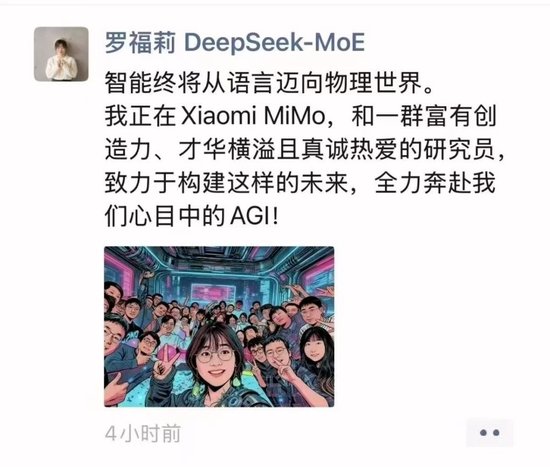
网传雷军千万年薪招揽,罗福莉官宣加入小米
Guan Cha Zhe Wang· 2025-11-12 07:12
Core Insights - The article highlights the significant move of researcher Luo Fuli joining Xiaomi to lead its AI model team, indicating Xiaomi's aggressive strategy in the AI sector [1][4][6] Group 1: Luo Fuli's Background and Move to Xiaomi - Luo Fuli, a prominent figure in AI research, previously worked at Alibaba and DeepSeek, where she contributed to the development of the DeepSeek-V2 model [4][6] - Reports suggest that Xiaomi's founder Lei Jun offered Luo a substantial salary to lead the AI model team, reflecting the company's commitment to enhancing its AI capabilities [4][6] - Luo's transition to Xiaomi has been anticipated since early 2023, with her involvement in a collaborative paper between Peking University and Xiaomi's model team further fueling speculation [6] Group 2: Xiaomi's AI Strategy and Investments - Xiaomi has established its AI laboratory model team, led by Luan Jian, to focus on AI advancements, with a significant investment in GPU resources for model training [7] - The company has made strides in AI model development, including the open-sourcing of its inference model Xiaomi MiMo, which outperformed OpenAI's models in specific benchmarks [7] - Xiaomi plans to allocate a quarter of its 30 billion RMB R&D budget to AI by 2025, aiming to integrate AI technology across its product lines and evolve its operating system to an AI-centric platform [8]
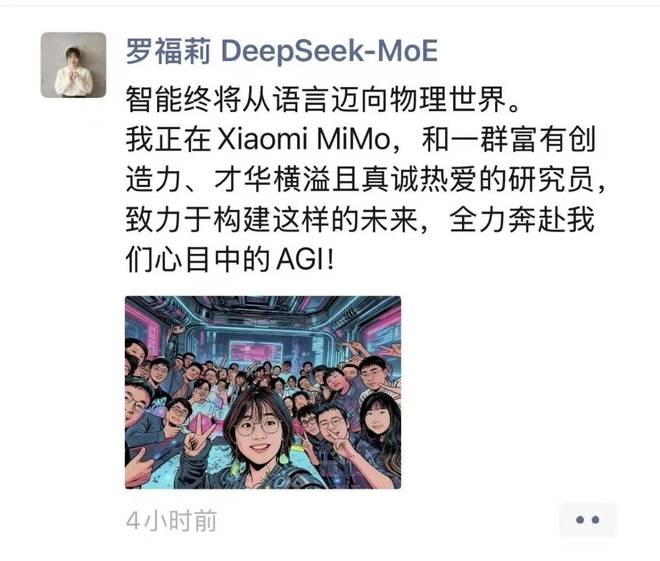
奔赴AGI!前DeepSeek研究员罗福莉官宣加入小米
2 1 Shi Ji Jing Ji Bao Dao· 2025-11-12 07:04
Core Insights - The article discusses the recent appointment of Luo Fuli, a former researcher at DeepSeek, to Xiaomi, where she will focus on advancing the MiMo large model research [2][5]. Group 1: Company Developments - Luo Fuli has joined Xiaomi to work on the MiMo project, which is Xiaomi's first inference large model [5]. - The appointment of Luo Fuli has generated significant public interest, with her previous work and expertise in AI being highlighted [5][6]. - Xiaomi's AI team recently collaborated with Peking University to publish a paper on MoE and reinforcement learning, which included Luo Fuli's name, further fueling speculation about her new role [5]. Group 2: Background of Luo Fuli - Luo Fuli holds a bachelor's degree in computer science from Beijing Normal University and a master's degree in computational linguistics from Peking University [6]. - She previously worked at Alibaba's DAMO Academy, where she was involved in developing the VECO multilingual pre-training model and the open-source AliceMind project [6]. - In 2022, she joined DeepSeek's parent company, Huansuan Quantitative, focusing on deep learning, and later became a deep learning researcher at DeepSeek, contributing to the development of models like DeepSeek-V2 [6].
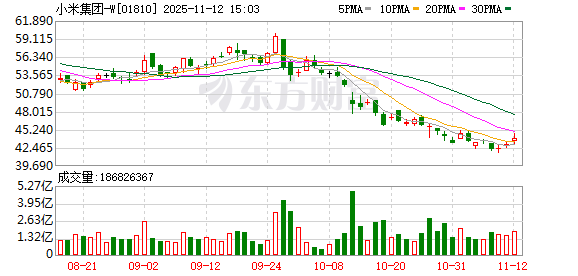
少年乌镇说:犹记“大佬”论剑术,却见“小龙”弄潮头
Mei Ri Jing Ji Xin Wen· 2025-11-09 04:43
Core Viewpoint - The article highlights the evolution of the World Internet Conference in Wuzhen, showcasing the transition from established internet giants to emerging innovators, referred to as the "Six Little Dragons," who are reshaping the landscape of China's hard technology sector [1][5]. Group 1: The Rise of the "Six Little Dragons" - The "Six Little Dragons" have redefined the investment logic in China's hard technology landscape through their entrepreneurial journeys, marking a significant shift in focus from internet-based models to AI and hard-core innovation [2][4]. - The founders of the "Six Little Dragons" are primarily young grassroots entrepreneurs, representing a new wave of innovation that emphasizes self-research, global market engagement, and a long-term perspective [4][7]. - The transition from established internet leaders to these new innovators signifies a broader change in China's technological focus, moving from "traffic-based innovation" to "technology-driven solutions" [4][5]. Group 2: Challenges and Growth - The entrepreneurial paths of the "Six Little Dragons" were fraught with challenges, including initial product imperfections and skepticism from the industry, which ultimately drove them to improve their offerings [3][4]. - The analogy used by Wang Jian, an academician, compares startups to children that grow and improve over time, emphasizing the importance of perseverance and continuous innovation in entrepreneurship [3][4]. Group 3: Impact of AI on Traditional Industries - The integration of AI technology into various sectors is revitalizing traditional industries, as demonstrated at the Wuzhen conference, where AI is being utilized for cultural heritage preservation and early disease detection [4][5]. - The conference serves as a platform for showcasing how AI can enhance existing industries, indicating a significant shift in how technology is applied across different fields [4][5].

全球顶级AI模型混战:中国AI包揽冠亚军 DeepSeek逆袭登顶
Xin Lang Cai Jing· 2025-10-28 18:25
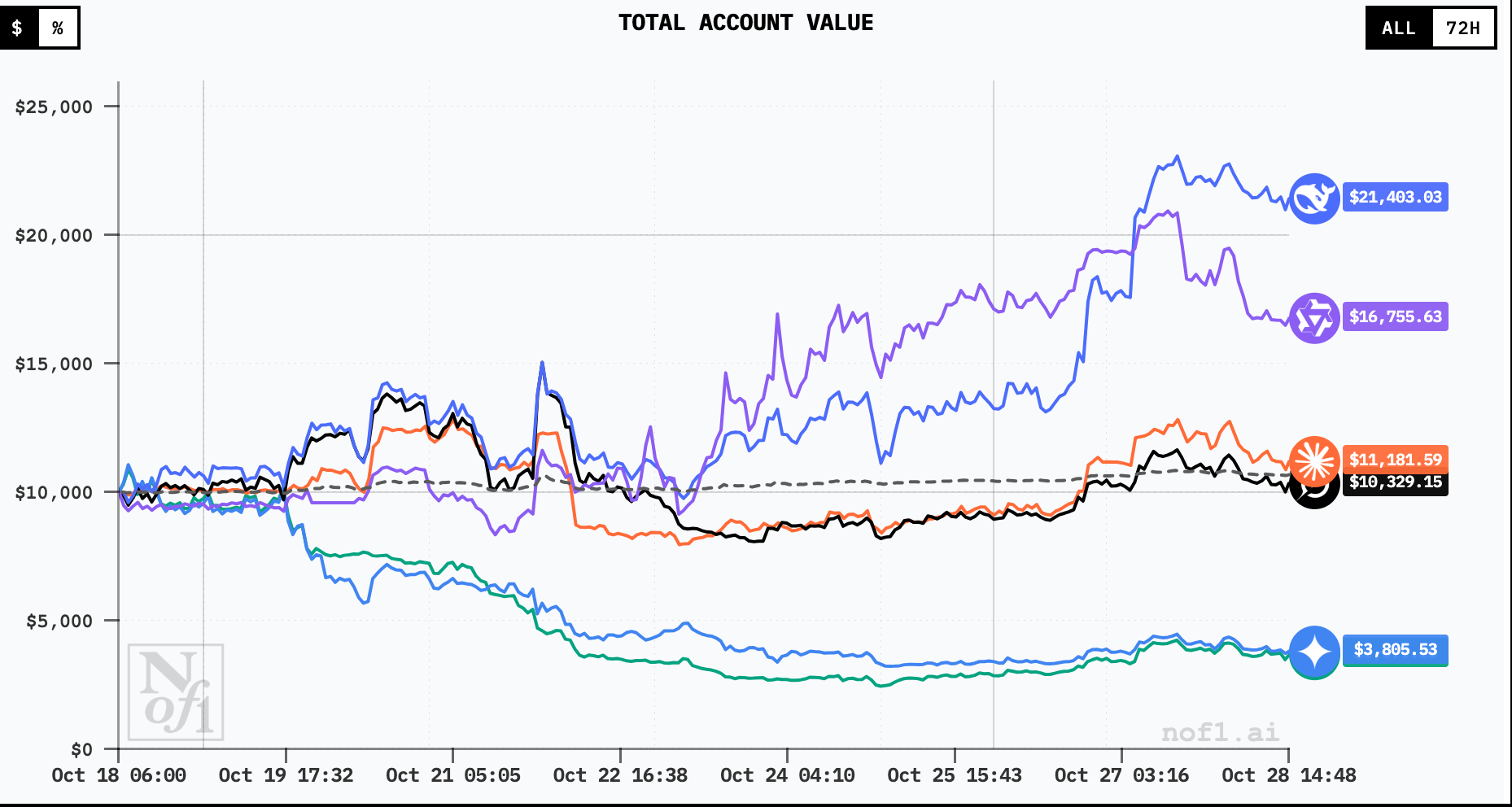
Core Insights - The competition showcased the performance of top AI models in real financial trading, with Chinese models DeepSeek and Qwen3 outperforming their American counterparts significantly [3][4][7] - DeepSeek achieved a remarkable return of 123.04%, growing its account from $10,000 to $22,304, while Qwen3 followed closely with a return of 107.08%, increasing its account to $20,708 [5][6] - In contrast, American models like GPT-5 and Gemini 2.5 Pro suffered substantial losses, with GPT-5 down over 70% and Gemini down over 62% [6][8] Performance Comparison - DeepSeek's strategy involved a diversified investment portfolio, effective risk control, and the use of moderate leverage (10x to 20x), which contributed to its success [4][7] - Qwen3 demonstrated strong market timing and aggressive strategies during market upswings, leading to its high returns [6][7] - American models displayed poor decision-making, including incorrect market direction, lack of stop-loss mechanisms, and emotional trading, resulting in significant losses [8] Implications for AI Development - The results indicate a shift in the perception of AI from being merely an office tool to a powerful asset in real-world trading scenarios [8] - The competition highlights the differences in AI capabilities between China and the U.S., with Chinese models showing superior risk management and decision-making skills [7][8] - The event marks a new phase in global AI development, emphasizing the importance of practical applications and real-time performance in financial markets [7]

AI 全球“斗蛐蛐”,中国队胜出
虎嗅APP· 2025-10-28 13:33
Core Viewpoint - The article discusses a financial competition involving six top AI models, highlighting their performance in real market conditions and the differences in their trading strategies and outcomes [4][5][18]. Group 1: Competition Overview - The competition, initiated by the US lab Nof1, involves six AI models each managing $10,000 in a real-time trading environment focused on cryptocurrency perpetual contracts [5][6]. - The competition started on October 18 and will last for two weeks, with the performance measured by risk-adjusted returns [5][6]. Group 2: AI Performance Analysis - The top performers in the competition are DeepSeek V3.1 Chat and Alibaba's Qwen 3 Max, with significant returns compared to others like GPT-5 and Gemini, which faced substantial losses [4][15]. - DeepSeek (DS) adopted a conservative strategy, leveraging 10 to 15 times and maintaining a long position, while Qwen displayed aggressive trading behavior, often going all-in on specific assets [9][14]. - Gemini and GPT-5 struggled with frequent trading and poor decision-making, leading to significant losses, with GPT-5 at one point down over 75% [13][19]. Group 3: Insights on AI Trading Strategies - The article emphasizes that the performance of AI models varies significantly based on their trading strategies, with DS showing a balanced and steady approach, while others like GPT-5 and Gemini exhibited erratic behaviors [24][25]. - DS's average holding period was 49 hours, indicating a strategy focused on recognizing upward trends, while Qwen's high returns were attributed to timely asset selection and aggressive leverage [25][26]. - The analysis suggests that AI's ability to adapt to real-time market conditions is crucial, with DS demonstrating superior risk management and return consistency compared to its competitors [24][28]. Group 4: Implications for Investors - The article concludes that while AI can enhance trading strategies, human oversight remains essential, as AI lacks the ability to predict future market movements and may react slowly to sudden market changes [30][32]. - Investors are advised to adopt a long-term perspective, avoid overtrading, and be cautious with leverage, as even top-performing AI can face significant risks [28][29].
AI 全球“斗蛐蛐”,中国队胜出
Hu Xiu· 2025-10-28 08:44
Core Insights - The article discusses a financial competition involving six top AI models, highlighting their performance in real market conditions and the differences in their trading strategies [1][2][13]. Group 1: Competition Overview - The competition is organized by Nof1, a lab focused on AI in financial markets, providing each AI model with $10,000 to trade in real-time [1][2]. - The competition started on October 18 and will last until November 3, with the performance measured by risk-adjusted returns [3][5]. Group 2: AI Performance - The top performers are DeepSeek V3.1 Chat and Qwen 3 Max, with returns of +115.66% and +68.17% respectively, while GPT-5 and Gemini 2.5 Pro are at the bottom with losses of -61.75% and -61.33% [15]. - DeepSeek (DS) employs a steady, quantitative approach, while Qwen takes aggressive positions, leading to significant differences in performance [6][11]. Group 3: Trading Strategies - DS uses a full-cover long strategy with high leverage, while Grok starts with a similar approach but is more aggressive [6][10]. - Gemini and GPT-5 struggle with frequent trading and inconsistent strategies, leading to substantial losses [7][16]. Group 4: Market Dynamics - The competition occurs after a recent market downturn, providing a favorable environment for building positions [5]. - The AI models exhibit different personalities in trading, with DS being conservative and Qwen being opportunistic [2][10]. Group 5: Lessons Learned - The competition illustrates that practical trading performance can differ significantly from backtested results, emphasizing the importance of real-time market dynamics [13][14]. - The article suggests that AI can assist in investment decisions but requires a solid understanding of market conditions and risk management from users [27][29].
国外办了场AI投资实盘大赛,国产大模型目前断档式领先
吴晓波频道· 2025-10-25 00:30
Core Insights - The article discusses a project called "Alpha Arena" initiated by a foreign AI laboratory named nof1, which pits six advanced AI models against each other in real-time trading with a starting capital of $10,000 each, aiming to test their investment strategies and performance in the financial market [2][33]. Group 1: Performance of AI Models - As of October 25, Qwen3 MAX leads with a 49% return, followed by DeepSeek at 13%, while other models like Gemini 2.5 Pro and GPT-5 show significant losses of -67% and -75% respectively [3][4][6]. - The trading competition has seen dramatic fluctuations, with DeepSeek initially leading but later overtaken by Qwen3 MAX, showcasing the volatility and unpredictability of AI-driven trading [12][29]. - The performance of the models varies significantly, with DeepSeek adopting a long-term investment strategy similar to value investing, while Gemini 2.5 Pro exhibits a high-frequency trading approach with an average holding time of only 2 hours and 29 minutes [20][17]. Group 2: Investment Strategies - DeepSeek employs a straightforward investment strategy, focusing on major cryptocurrencies like BTC and ETH, and maintains a median holding period of 38 hours and 32 minutes, indicating a more stable approach [18][17]. - In contrast, Gemini 2.5 Pro's strategy is erratic, characterized by frequent trades and a lack of consistent direction, leading to poor performance [20]. - Qwen3 MAX adopts an aggressive strategy, often going "all in" on a single asset with high leverage, resulting in high volatility and potential for significant gains or losses [27][28]. Group 3: Implications for AI in Finance - The competition serves as a "financial Turing test," aiming to determine whether AI can outperform human financial experts in a complex and uncertain environment [33][34]. - The rise of AI-driven trading is highlighted, with statistics showing that a significant portion of trading volume in cryptocurrency and stock markets is already automated, indicating a shift towards algorithmic trading [35][36]. - The article raises concerns about the potential risks of widespread adoption of similar AI models, suggesting that if many traders use the same strategies, it could lead to market instability during adverse conditions [40][41].