
GE HealthCare Technologies Inc.

Search documents
BioPark从“规划蓝图”变为“投资热土”
Xin Jing Bao· 2025-10-27 11:04
Core Insights - The 2025 International Biopharmaceutical Industry Innovation Forum highlighted the establishment of multiple key projects in Beijing Economic-Technological Development Area (also known as Beijing E-Town), marking it as a significant hub for the biopharmaceutical industry in China [1][4] - Major international and domestic pharmaceutical companies are investing in the BioPark, with Johnson & Johnson planning to build Asia's first innovation center and GE Healthcare establishing the second-largest medical equipment R&D center globally [1][2] Group 1: Key Projects and Developments - The BioPark will host several first-of-their-kind projects, including a medical device training center and a digital innovation center by Johnson & Johnson, and a medical imaging equipment innovation incubator by GE Healthcare [1][2] - The National AI Application Pilot Base for the medical field will be the largest in the country, focusing on biopharmaceutical manufacturing and providing various common service capabilities [2] - The establishment of the National Medical Products Administration's review center in the Beijing-Tianjin-Hebei region aims to enhance innovation efficiency for local pharmaceutical companies [2] Group 2: Ecosystem and Support Mechanisms - The "seven-in-one" industrial ecosystem in Beijing E-Town integrates various elements such as industry, policy, research, hospitals, finance, and services to drive development [3] - A new 2.0 version of the pharmaceutical health industry support policy was released, focusing on innovative drugs and high-end medical equipment, providing comprehensive support for enterprises [3] - A total of 50 billion yuan has been allocated for a biotechnology and health industry fund, alongside other funds to support high-quality development in the biopharmaceutical sector [3] Group 3: Future Outlook - With over 5,000 biopharmaceutical companies, Beijing E-Town is set to enhance its global innovation capabilities, aiming for a pharmaceutical health industry output value exceeding 120 billion yuan by 2027 [4] - The rapid establishment of key projects, such as AstraZeneca's $2.5 billion investment in a global strategic R&D center, exemplifies the "E-Town speed" in project execution [3]
This Company Has Been Around Since 1892, and Its Stock is Up 80% This Year
Yahoo Finance· 2025-10-27 09:20
Core Insights - General Electric (GE) has a long history of innovation and has recently experienced a resurgence in its stock performance after a significant decline during the Great Recession [1][3][4] Company Overview - GE was founded in 1892 by Thomas Edison and has been a pioneer in various fields including hydroelectric power, aviation, and healthcare [2] - The company underwent a major restructuring in 2021, splitting into three publicly traded entities: GE Aerospace, GE Vernova, and GE HealthCare Technologies [4] Performance Analysis - GE Aerospace has shown the strongest performance among the three entities, with a stock increase of 727% over the past five years, while GE Vernova increased by 417% and GE HealthCare only by about 20% [5] - GE Aerospace reported a market capitalization of approximately $321 billion and revenue exceeding $35 billion last year, with expectations to rise by 16% to nearly $41 billion this year [6] Recent Financial Results - In the third quarter, GE Aerospace reported adjusted revenue growth of 26% to $11.3 billion and earnings growth of 44% to $1.66 per share, surpassing Wall Street expectations [8] - New orders increased by 5% to $10.3 billion, with defense revenue experiencing a significant jump of 26% [8]

Trade Truce Hope: How US-China Talks Could Boost Healthcare ETFs
ZACKS· 2025-10-24 16:36
Core Insights - The upcoming bilateral meeting between U.S. President Donald Trump and Chinese President Xi Jinping on Oct. 30 at the APEC Summit has raised hopes for a potential de-escalation in the U.S.-China trade war, which could significantly impact the healthcare sector and related ETFs [1][11]. Healthcare Sector Impact - The healthcare sector is heavily reliant on global supply chains, particularly from China, making it vulnerable to trade disruptions and tariff increases that raise input costs for medical devices and pharmaceuticals [3][5]. - Approximately 30% of Active Pharmaceutical Ingredients (APIs) used in the U.S. healthcare system are sourced from China, with over 90% of generic sterile injectable drugs depending on APIs from either India or China [6]. - Nearly 99% of medical gloves and about 60% of syringes used in the U.S. are imported from China, highlighting the sector's dependence on Chinese manufacturing [7][8]. Financial Implications for Companies - Major pharmaceutical and medical device companies, such as Johnson & Johnson and GE HealthCare, have expressed concerns about the financial impact of U.S. tariffs, with JNJ anticipating $400 million in tariff-related costs and GE HealthCare expecting about $500 million in total tariff impact for the year [9][10]. - A reduction in tariffs resulting from the U.S.-China trade talks could lower supply-chain costs and alleviate uncertainty, which would be beneficial for healthcare ETFs [11]. ETFs to Watch - **Health Care Select Sector SPDR Fund (XLV)**: This fund has $36.93 billion in assets under management and charges 8 basis points in fees. Its top holdings include Eli Lilly (12.30%), Johnson & Johnson (8.74%), and AbbVie (7.60%) [13][14]. - **iShares U.S. Healthcare ETF (IYH)**: With net assets of $2.93 billion and a fee of 38 basis points, its top holdings are Eli Lilly (11.94%), Johnson & Johnson (8.41%), and AbbVie (7.34%) [15]. - **Vanguard Health Care ETF (VHT)**: This fund has net assets worth $15.3 billion and charges 9 basis points in fees. Its top holdings include Eli Lilly (10.33%), AbbVie (5.76%), and United Healthcare (4.94%) [16].


200+政产学研领袖齐聚,2025进博会上海会议活动将启幕
Guo Ji Jin Rong Bao· 2025-10-24 14:37
Core Points - The 2025 China International Import Expo (CIIE) Shanghai Conference will be held from November 6 to 9, 2025, featuring high standards, internationalization, and professionalism [1] - The core theme of the event is "Breaking the Deadlock and Resilient Growth," with a "1+2+X" conference system, including one main investment promotion conference and two sub-forums [1] - The event will host over 100 side events focusing on six major topics, including "Open China and Shanghai Practices" and "AI Empowering Industrial Development" [1][2] Group 1 - The "Open China and Shanghai Practices" topic will explore innovative paths for institutional openness through various subtopics, showcasing China's continuous integration and innovation in international fields [1][2] - The "Enterprises Going Global and Comprehensive Overseas Services" topic aims to assist companies in overcoming structural challenges in globalization, transitioning from "going out" to "going in" [2] - The "Building a Consumption Innovation Ecosystem" topic will address issues like tax-free economy and digital empowerment to enhance consumer experience and combat challenges in physical commerce [2] Group 2 - The event will feature high-profile guests, including representatives from international organizations and Nobel laureates, with an expected attendance of over 200 leaders from various sectors [2] - The conference duration has been extended to four days, increasing the proportion of small meetings with fewer than 50 participants to over 40%, facilitating deeper discussions [3] - Several important reports and platforms will be launched during the conference, including the "Blue Book on Resilience Strategies for Digital Product Exports" and the establishment of a digital industry standard innovation alliance [3]
小型特色会议比例翻倍,今年进博会上海会议活动全面升级
Di Yi Cai Jing· 2025-10-24 09:39
Core Theme - The theme "Breaking the Deadlock and Resilient Growth" aims to address the complexities and uncertainties in the current global economic and trade environment [1][3] Event Structure - The 2025 Shanghai Conference will upgrade the previous year's format, featuring a "1+2+X" meeting system, which includes one main investment promotion conference, two sub-forums, and over 100 side events [1][2] - The event will focus on six major topics: "Open China and Shanghai Practices," "Enterprises Going Global and Comprehensive Overseas Services," "Finding Trade Drivers," "ESG and Sustainable Development," "Building a Consumption Innovation Ecosystem," and "AI Empowering Industrial Development" [1][3] Guest Participation - The event will attract over 200 high-level guests, including representatives from international organizations, ambassadors, and leaders from Fortune 500 companies, as well as Nobel laureates and renowned scholars [2] Interaction and Experience - The conference duration will extend to four days, with an increase in high-quality meetings of fewer than 50 participants from approximately 20% to over 40% to facilitate deeper exchanges [2] - A more precise and intelligent service system will be implemented, with the release of several important reports and the establishment of functional platforms during the conference [2] Focus Areas - The topic "Open China and Shanghai Practices" will explore innovative paths for institutional openness, showcasing China's continuous integration and innovation in various international fields [4] - The "Enterprises Going Global and Comprehensive Overseas Services" topic will address structural challenges in globalization, aiming to create a sustainable "going global ecosystem" [4] - The "Finding Trade Drivers" topic will investigate ways to accelerate trade dynamics reconstruction and stimulate innovation potential [4]
健信超导科创板IPO过会,全球最大超导磁体独立供应商
Zhong Guo Jing Ying Bao· 2025-10-22 03:36
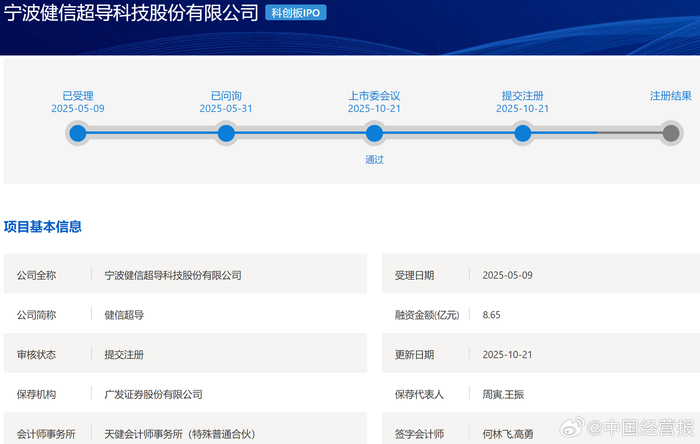
Core Viewpoint - Ningbo Jianxin Superconductor Technology Co., Ltd. has successfully passed the IPO review for the Sci-Tech Innovation Board, positioning itself as the world's largest independent supplier of superconducting magnets for MRI equipment [1][2] Group 1: Company Overview - Jianxin Superconductor's IPO application was approved on October 21, with its review status updated to "submitted for registration" [1] - The company ranks fifth globally and second domestically in terms of market share for superconducting magnets used in MRI equipment, based on installed capacity [1] Group 2: Market Position and Technology - The company has closed a 20-year technology gap with international giants in the field of zero-evaporation superconducting technology, enhancing product performance and cost competitiveness through design and process innovation [2] - Jianxin Superconductor is one of the earliest manufacturers in China to scale up the production of high-field superconducting magnets, breaking the long-standing monopoly of European and Japanese manufacturers since 2015 [2] Group 3: Financial Performance - The company's revenue for the years 2022 to 2024 and the first half of 2025 is as follows: - 2022: 35.89 million yuan - 2023: 45.06 million yuan - 2024: 42.55 million yuan - 2025 (first half): 25.21 million yuan [2] - Net profit figures for the same periods are: - 2022: 3.46 million yuan - 2023: 4.87 million yuan - 2024: 5.58 million yuan - 2025 (first half): 3.19 million yuan [2] Group 4: Partnerships and Industry Impact - The company has established close partnerships with well-known MRI equipment manufacturers, including Fujifilm, GE Healthcare, and United Imaging Healthcare, contributing to the domestic MRI industry's core component supply [2]
AI接下来将在哪个领域掀起革命?
3 6 Ke· 2025-10-22 02:04
Group 1 - Reid Hoffman, co-founder of LinkedIn, highlights a "blind spot" in Silicon Valley's obsession with software, suggesting that overlooked areas may be the starting point for the next AI revolution [1] - Hoffman emphasizes that the belief that "everything should be done with software" has become a limitation, potentially causing innovators to miss new opportunities [1] - He identifies biology as a complex and regulated field where the next generation of AI companies may emerge, focusing on enhancing human living standards [1] Group 2 - In the healthcare sector, AI is rapidly advancing, with Cathie Wood of Ark Investment noting that a true AI revolution is occurring in hospitals and laboratories [2] - Wood suggests that combining AI with advancements in gene sequencing and CRISPR technology could lead to a medical transformation [2] - Major tech companies are competing to establish a presence in the healthcare AI space, with Microsoft integrating AI into its cloud solutions for hospital operations [3] - NVIDIA is also making strides in healthcare, focusing on medical imaging as a key entry point and forming partnerships to enhance its AI platform [3]
健信超导科创板IPO通过上市委会议 2024年全球超导磁体厂商位列第五
智通财经网· 2025-10-21 12:53
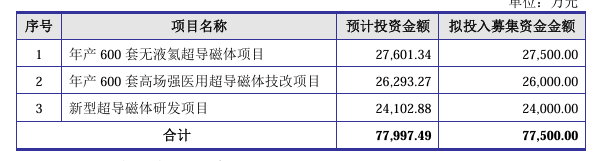
Core Viewpoint - Ningbo Jianxin Superconducting Technology Co., Ltd. has successfully passed the listing committee meeting of the Shanghai Stock Exchange's Sci-Tech Innovation Board, aiming to raise 865 million yuan for its operations [1] Company Overview - Jianxin Superconducting is primarily engaged in the research, production, and sales of core components for medical magnetic resonance imaging (MRI) equipment, including superconducting magnets, permanent magnets, and gradient coils [1] - The company ranks fifth among global superconducting magnet manufacturers in 2024, with a market share of approximately 4.2% [1] Product Portfolio - The company has developed a diverse product matrix in the superconducting field, including 1.5T zero-evaporation superconducting magnets, 1.5T helium-free superconducting magnets, 3.0T zero-evaporation superconducting magnets, and open zero-evaporation superconducting magnets, making it the leading independent supplier of superconducting magnets in the global MRI industry [1] - In the permanent magnet sector, Jianxin Superconducting is the largest supplier of MRI equipment permanent magnets globally, leveraging high-performance magnetic materials and efficient magnetic circuit design [1][2] Strategic Partnerships - The company has established close partnerships with renowned MRI equipment manufacturers such as Fujifilm, GE Healthcare, and others, facilitating innovation in the overseas supply chain model for MRI equipment [2] - Over 50% of the MRI equipment corresponding to the company's products is sold to Japan, Europe, and other emerging markets, promoting the global adoption of MRI technology [2] Fundraising and Investment Plans - The funds raised will be invested in projects including the annual production of 600 sets of helium-free superconducting magnets, a technical transformation project for high-field medical superconducting magnets, and the research and development of new superconducting magnets [2][3] - The total expected investment for these projects is approximately 779.97 million yuan, with the funds raised covering a significant portion of these costs [3] Financial Performance - The company's main business revenue for the years 2022, 2023, 2024, and the first half of 2025 is projected to be 332 million yuan, 422 million yuan, 401 million yuan, and 238 million yuan, respectively [3] - A slight decline in revenue is anticipated for 2024 compared to 2023, attributed to decreased income from permanent magnets due to falling raw material prices and slower growth in superconducting product revenue due to market pressures [3][4]
下一场AI革命始于何处?硅谷大佬押注生物科技
智通财经网· 2025-10-21 06:53
Group 1 - Reid Hoffman, co-founder of LinkedIn, suggests that Silicon Valley's obsession with software has created a blind spot, potentially marking the beginning of the next AI revolution, particularly in the biotech sector [1] - Hoffman emphasizes that the next generation of iconic AI companies may emerge in areas deemed "too complex, slow, or heavily regulated" by most investors [1] - He reflects on the intersection of the "atomic world" and the "bit world," questioning what can genuinely enhance human quality of life [1] Group 2 - Hoffman does not believe AI can independently design drugs but sees AI tools as capable of guiding scientists toward the most promising experimental directions [2] - He states that even a 1% accuracy in predictions is sufficient, as it allows for the verification of the remaining 99% [2] - The momentum for AI in healthcare is growing, with notable figures like Cathie Wood highlighting that a true AI revolution is occurring in hospitals and laboratories [2] Group 3 - Major tech companies are competing in the healthcare AI space, with Microsoft integrating AI into its cloud solutions to automate hospital operations [2] - Microsoft claims its breakthrough medical AI system has a diagnostic accuracy rate significantly higher than that of human doctors [2] - NVIDIA is also accelerating its efforts in the medical field, focusing on medical imaging as a primary entry point [3] Group 4 - NVIDIA has established multiple collaborations in biotech, including a recent partnership with GE Healthcare to enhance its high-performance AI platform [3]


强生拆分业务 骨科行业迎来新巨头
Bei Jing Shang Bao· 2025-10-19 15:40
Core Viewpoint - Johnson & Johnson announced plans to spin off its orthopedic business into a new independent company named DePuy Synthes within the next 18 to 24 months, aiming to enhance competitiveness and focus on core operations in response to market changes [1][2] Group 1: Company Strategy - The spin-off is part of a broader trend among major medical companies to restructure and focus on high-growth, high-margin areas such as oncology, immunology, neuroscience, surgical care, vision care, and cardiovascular sectors [2] - Johnson & Johnson has been exploring the restructuring of its orthopedic business for two years, with the reorganization expected to be completed by the end of 2025 [1][2] Group 2: Market Position and Financials - The orthopedic business generates nearly $10 billion in annual revenue, accounting for about 10% of Johnson & Johnson's total revenue [1] - Medtronic and Johnson & Johnson Medical Technology both reported annual revenues exceeding $30 billion, while Chinese companies Mindray and MicroPort had revenues of $5 billion and $1 billion, respectively [3] - Johnson & Johnson's orthopedic segment is currently the largest in the market, with a significant share in trauma care, but it lags behind competitors like Stryker in joint replacement surgeries [4] Group 3: Competitive Landscape - The orthopedic market is dominated by four major companies: Stryker, Johnson & Johnson, Zimmer Biomet, and Smith & Nephew, with Stryker leading in knee and hip replacement markets [4] - Analysts estimate that Johnson & Johnson holds approximately 17% of the global knee surgery market and about 25% of the hip surgery market, while Stryker's annual revenue exceeds $20 billion [4][3] - The establishment of DePuy Synthes is expected to create a formidable competitor in the orthopedic sector, potentially becoming the largest and most comprehensive orthopedic company globally [3][5]
