韧性增长

Search documents
独家访谈|麦肯锡全球资深董事合伙人叶海:“韧性增长”取代“高速增长”,未来十年企业要做对三件事
麦肯锡· 2026-01-20 02:01
Core Insights - The article discusses the shift in growth logic for Chinese companies, emphasizing the transition from external growth drivers to internal organizational restructuring and capability enhancement for sustainable growth in a changing market environment [2][3]. Group 1: Changes in Growth Logic - The underlying logic of growth for Chinese enterprises remains centered on consumer needs and internal capabilities, but the external environment has fundamentally changed, leading to market slowdown and increased competition [3]. - Companies must shift from broad growth strategies to more precise, differentiated, and value-driven growth approaches, focusing on specific market segments to create economic value [3]. Group 2: Resilient Growth Concept - "Resilient growth" is defined as a combination of growth and resilience, emphasizing efficiency and cost optimization as prerequisites for growth [4][5]. - Companies need to establish agile iteration capabilities to respond quickly to market changes and consumer feedback, moving away from long-cycle perfect innovations [4][5]. Group 3: Innovation Strategies - The article introduces "thematic innovation," which contrasts with past point-based innovation, advocating for a systematic approach to innovation based on consumer needs, competitive landscape, and technological trends [6]. - Companies must develop a complete rapid iteration system to support thematic innovation, moving beyond reliance on singular breakthrough products [6][7]. Group 4: Organizational Structure - The concept of "big system, small knife" is proposed, where a robust organizational structure ensures control while allowing for agile, independent business units to respond quickly to market demands [8]. - Traditional matrix organizations face challenges in fast-paced markets, necessitating a shift to a structure that promotes rapid decision-making and accountability [8]. Group 5: Brand Building and Channel Transformation - Successful brand building in China requires understanding consumer psychology and addressing contradictions in consumer preferences, such as the desire for quality and cultural identity [9][10]. - The focus of brand strategy is shifting from mere promotion to enhancing consumer experience throughout the purchasing journey, necessitating organizational changes to integrate marketing, sales, and product development [10]. Group 6: Consumer Experience - Companies must prioritize consumer experience as the highest dimension of business, ensuring that all organizational actions align with enhancing the consumer journey from awareness to loyalty [11]. - The CEO should oversee the consumer experience strategy, ensuring it is integrated across departments and aligned with organizational goals [11]. Group 7: AI Utilization - The article notes that only 6% of companies have successfully created value through generative AI, highlighting the potential for AI to assist in decision-making and operational efficiency [12]. - The integration of generative AI with automation and hardware can significantly enhance productivity and reduce costs in manufacturing and logistics [12]. Group 8: Leadership Evolution - Future leaders in Chinese enterprises need to blend the structured approach of professional managers with the visionary traits of entrepreneurial leaders to navigate the complexities of the current market [13]. - Building a team of leaders with a general manager mindset is essential for fostering resilience and adaptability within organizations [13]. Group 9: Strategic Implementation - Effective strategy implementation requires breaking down broad strategies into quantifiable goals and ensuring clear communication across all organizational levels [14]. - The role of a strategic interpreter is crucial for translating high-level visions into actionable plans that resonate with all employees [14].


宜家转向:关闭7家门店 未来两年计划开超十家小型门店
2 1 Shi Ji Jing Ji Bao Dao· 2026-01-07 05:20
Core Viewpoint - IKEA is shifting its strategy in China by closing seven physical stores while focusing on optimizing costs, enhancing efficiency, and reallocating resources to better serve customers and adapt to market changes [1][2] Group 1: Store Closures and Openings - IKEA will cease operations at seven locations, including stores in Shanghai, Guangzhou, Tianjin, Nantong, Xuzhou, Ningbo, and Harbin, starting February 2, 2026 [1] - Despite the closures, IKEA will maintain 34 physical customer touchpoints in China and plans to open over ten small-format stores in key markets like Beijing and Shenzhen within the next two years [1][2] Group 2: Strategic Focus and Growth - The company emphasizes that true growth is about building resilience to adapt to economic cycles, focusing on optimizing its business mix and operational structure [2] - IKEA's future expansion will prioritize smaller touchpoints and strategic markets rather than entering new cities, aiming to enhance customer service and brand interaction [3] Group 3: Recent Developments and Collaborations - IKEA has been actively adjusting its store formats, including the closure of the Shanghai Jing'an store, while learning from these experiences to improve customer service [3][4] - A strategic partnership with Gaohua Capital will lead to the establishment of a real estate fund, with IKEA planning to open a new store in Wuxi [3]
新年启程 智见未来:2025麦肯锡中国十大热门微信文章
麦肯锡· 2025-12-31 02:36
Core Insights - The central theme of the articles revolves around the concept of resilient growth in a continuously changing environment, emphasizing that such growth stems from proactive shaping of the future rather than passive responses to disruption [2] - Leaders must balance between embracing change and maintaining focus on strategic goals, demonstrating agility in adapting to new work methods and technologies while retaining strong conviction in their objectives [2] Group 1: Key Articles - "Embracing China's M&A Wave" discusses strategic positioning in the context of increasing mergers and acquisitions in China [2] - "2025 Outlook for China's Automotive Market" highlights the countdown to a competitive elimination phase in the automotive sector [7] - "McKinsey's 2025 Technology Trends Outlook" provides forward-looking assessments of technological advancements expected to shape various industries [9] Group 2: Consumer Insights - "Mid-Year Review: Five Surprises in China's Consumer Market" identifies unexpected trends and shifts in consumer behavior [4] - "Cautiously Optimistic: Recovery in China's Consumer Market" reflects on the gradual recovery of consumer spending and market dynamics [5] - "New Normal in China's Consumption" explores the evolving landscape of consumer habits and preferences in the post-pandemic era [7] Group 3: AI and Insurance Insights - "McKinsey Global AI Survey: Current State of Enterprise AI Deployment (Part 1)" examines the status and challenges of AI implementation in businesses [11] - "McKinsey's 2025 Global Insurance Report: Beyond Traditional Life Insurance for Growth and Impact" discusses strategies for insurance companies to innovate and expand their influence beyond conventional offerings [12]

年终字述|关键字:韧 韧性闯关奔赴星海 投资于人赢得未来
Sou Hu Cai Jing· 2025-12-31 01:21
Group 1 - The core viewpoint of the articles reflects on the significant changes and challenges faced in 2025, highlighting the transition towards a new economic model focused on human development and domestic demand [2][4][5] - The year witnessed a shift from the concept of "intelligent agents" to practical applications, indicating advancements in technology and the emergence of new industries [2] - China's economy demonstrated resilience amidst external uncertainties, with macro policies aimed at expanding domestic demand and optimizing supply [2][4] Group 2 - The "15th Five-Year Plan" emphasizes the importance of investing in human capital, directing more resources towards education, healthcare, and social security to enhance overall societal well-being [4][5] - The government has introduced various policies aimed at improving living standards, such as the implementation of a childcare subsidy system and plans to increase urban and rural residents' income [5] - The focus on human investment is expected to boost consumer confidence and drive high-quality economic growth, aligning with global standards of human development [4][5]
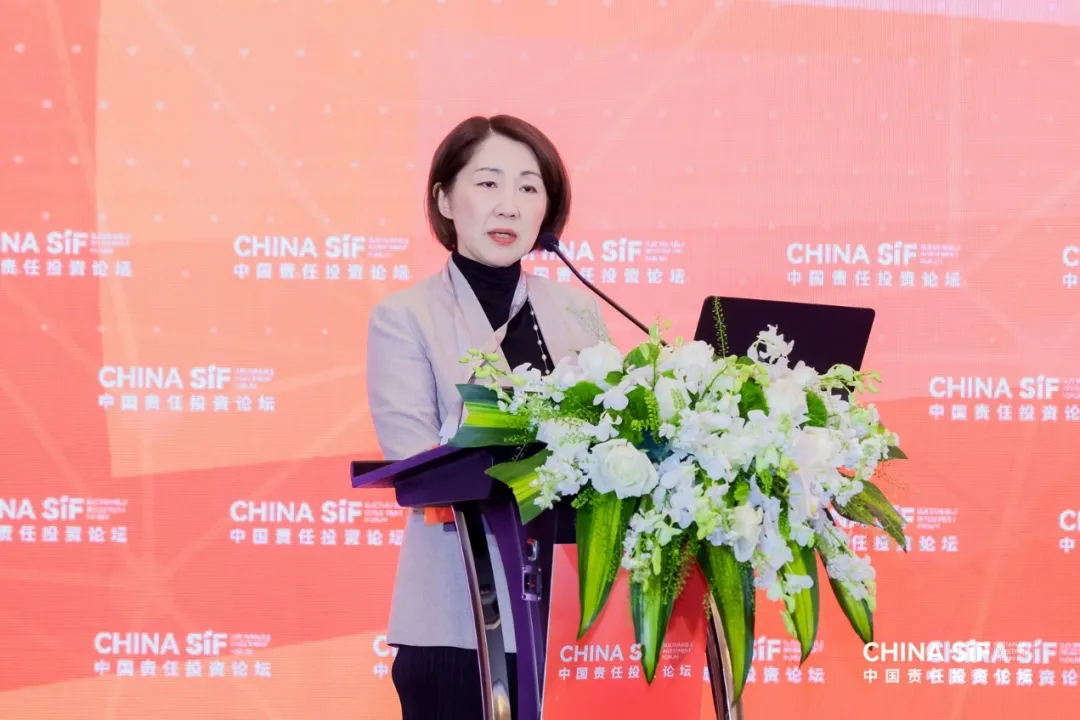
China SIF|钱谷美幸:从气候风险到韧性增长的战略转型
Xin Lang Cai Jing· 2025-12-11 09:42
Core Insights - The 13th China Responsible Investment Forum highlighted the shift of sustainable development from merely an environmental issue to a core financial, economic, and investment topic [1][21] - Climate and nature-related impacts are increasingly recognized as financial risks, necessitating a focus on adaptation and resilience as key investment themes [5][25] Group 1: Emerging Investment Frontiers - New markets are emerging in digitalization and AI monitoring, with companies like Pachama and OroraTech utilizing satellite data and AI to quantify forest carbon storage and land degradation in real-time [6][27] - Digital monitoring has become an investment theme itself, providing credible measurements and enhancing market confidence as data accumulates [7][27] Group 2: Natural and Ecosystem Markets - Financing for nature and biodiversity is becoming a new asset class, with growing investor interest in biodiversity-linked tools, ecological restoration projects, and natural capital valuation [8][29] - COP30 emphasized the rising global focus on ecosystem restoration and natural financing, particularly in Asia, where China is positioned to develop these markets more rapidly than other regions [9][29] Group 3: Infrastructure and Resilience Financing - Adaptive and resilient infrastructure represents a significant future capital demand, including water systems, resilient urban infrastructure, and disaster-resistant supply chains [10][30] - Early examples of resilience financing at the sovereign and industry levels, such as the Caribbean Disaster Risk Insurance Facility, demonstrate how parametric insurance can provide liquidity post-climate disasters [10][28] Group 4: Health Resilience as a New Financial Market - The integration of climate, nature, and health is emerging as a significant trend, with capital flowing into health security and resilience [11][29] - Initiatives like pandemic funds are financing early warning systems and health monitoring infrastructure in emerging economies, marking the emergence of a new asset class in health resilience [11][29] Group 5: Implications for Finance and Business - The financial industry must support capital allocation for adaptation, resilience building, natural financing, and health security solutions [12][30] - Asia's unique advantages, including policy frameworks and financial platforms, position it to scale investments more rapidly than other regions, with China's progress in transforming financial and market infrastructure drawing attention at COP30 [12][30] Group 6: New Strategic Directions - The shift in investment logic is moving from managing climate risks to designing for resilient growth, integrating climate, nature, health, and digital innovation to create value [13][31] - The current challenge lies in fostering collaboration across public and private sectors, financial and corporate realms, and international borders to build the next phase of sustainable and resilient growth [14][32]
进博会上海会议活动11月6日至9日举行
Jie Fang Ri Bao· 2025-10-25 00:25
Core Insights - The 2025 China International Import Expo (CIIE) Shanghai Conference will be held from November 6 to 9 at the Hongqiao Greenland Hotel, aiming to create a high-level interactive platform for global exhibitors, investors, and experts [1] Group 1: Conference Structure - The core theme of the conference is "Breaking the Deadlock and Resilient Growth," featuring a "1+2+X" conference system, which includes one main "Invest in China: Shanghai City Investment Promotion Conference," two sub-forums of the Hongqiao International Economic Forum, and over 100 side events [1] - The two sub-forums will focus on high-level institutional openness in Pudong and enhancing the capabilities of the Hongqiao International Open Hub [1] Group 2: Key Topics - The six major thematic areas of the conference include "Open China and Shanghai Practices," "Enterprises Going Global and Comprehensive Overseas Services," "Finding Trade Drivers," "ESG and Sustainable Development," "Building a Consumer Innovation Ecosystem," and "AI Empowering Industrial Development" [1] Group 3: Outcomes and Initiatives - Multiple outcomes will be released during the conference, including the "Blue Book on Resilient Response Strategies for Chinese Digital Products Going Global," the "2025 Global Consumer Green Consumption Research Report," and the "Guidelines for Chinese Enterprises Going Global" [1] - The conference will also unveil the establishment of functional platforms such as the Digital Industry Standard Innovation Alliance and the Green Trade Certification Service Station, along with the launch of various science and technology innovation and industrial cooperation projects [1]
小型特色会议比例翻倍,今年进博会上海会议活动全面升级
Di Yi Cai Jing· 2025-10-24 09:39
Core Theme - The theme "Breaking the Deadlock and Resilient Growth" aims to address the complexities and uncertainties in the current global economic and trade environment [1][3] Event Structure - The 2025 Shanghai Conference will upgrade the previous year's format, featuring a "1+2+X" meeting system, which includes one main investment promotion conference, two sub-forums, and over 100 side events [1][2] - The event will focus on six major topics: "Open China and Shanghai Practices," "Enterprises Going Global and Comprehensive Overseas Services," "Finding Trade Drivers," "ESG and Sustainable Development," "Building a Consumption Innovation Ecosystem," and "AI Empowering Industrial Development" [1][3] Guest Participation - The event will attract over 200 high-level guests, including representatives from international organizations, ambassadors, and leaders from Fortune 500 companies, as well as Nobel laureates and renowned scholars [2] Interaction and Experience - The conference duration will extend to four days, with an increase in high-quality meetings of fewer than 50 participants from approximately 20% to over 40% to facilitate deeper exchanges [2] - A more precise and intelligent service system will be implemented, with the release of several important reports and the establishment of functional platforms during the conference [2] Focus Areas - The topic "Open China and Shanghai Practices" will explore innovative paths for institutional openness, showcasing China's continuous integration and innovation in various international fields [4] - The "Enterprises Going Global and Comprehensive Overseas Services" topic will address structural challenges in globalization, aiming to create a sustainable "going global ecosystem" [4] - The "Finding Trade Drivers" topic will investigate ways to accelerate trade dynamics reconstruction and stimulate innovation potential [4]
新希望、锅圈、劲霸男装、芭薇,8月齐聚上海消费大课
创业家· 2025-07-15 10:21
Core Viewpoint - The article emphasizes the importance of learning from Japan's consumer market strategies during economic downturns, highlighting the need for innovation and efficiency in the face of challenges in the Chinese consumer market. Group 1: Event Overview - The event will take place from August 7 to August 9 in Shanghai, featuring renowned experts from Japan and successful entrepreneurs from over 100 consumer companies [1][11]. - The course aims to provide a deep dive into the methodologies of Japanese consumer giants, focusing on efficiency revolution, demand reconstruction, and capital breakthroughs [5][24]. Group 2: Japanese Market Insights - Japan's experience during economic downturns shows that brands can thrive; for instance, Sally's store count increased by 23%, and profits rose by 105.8% during challenging times [24][27]. - The article notes that 68% of new consumer brands in China are facing growth bottlenecks, with financing in the consumer sector returning to 2016 levels [26][24]. Group 3: Course Content - The course will cover three main areas: efficiency revolution, demand reconstruction, and capital breakthroughs, with insights from industry leaders [27][29]. - Specific methodologies include a "three-cut method" for cost reduction without compromising quality and a focus on creating emotional value in products to stimulate demand in a low-desire society [29][32]. Group 4: Target Audience - The event is particularly aimed at founders and CEOs of consumer enterprises looking to break through growth ceilings and optimize cost structures [36].

新希望、锅圈、劲霸男装、芭薇,8月齐聚上海消费大课
创业家· 2025-07-09 10:01
Core Insights - The article emphasizes the importance of learning from Japan's consumer market experiences, particularly during economic downturns, to identify growth opportunities in the Chinese market [8][24][27] - It highlights a three-day immersive course aimed at entrepreneurs and industry leaders to explore strategies for resilience and growth in the current economic climate [5][17][24] Group 1: Course Overview - The course will feature over 100 successful consumer entrepreneurs, including industry disruptors and founders of listed companies, providing a rich networking opportunity [10][11] - It aims to dissect the methodologies of Japanese consumer giants, focusing on efficiency, demand reconstruction, and capital strategies [5][24][27] Group 2: Economic Context - The Chinese consumer market is facing significant challenges, with financing in the sector reverting to 2016 levels and 68% of new consumer brands hitting growth bottlenecks [26][24] - In contrast, Japanese companies like Sally's have shown resilience, with a 23% increase in store numbers and a 105.8% profit increase during economic downturns [24][27] Group 3: Learning from Japan - The course will cover key lessons from Japan's "lost 30 years," demonstrating how brands can thrive in low-growth environments [8][24] - Specific strategies include "subtracting management" to reduce costs without compromising quality and understanding consumer insights for product development [29][31][32] Group 4: Target Audience - The course is designed for consumer company founders/CEOs looking to break through growth ceilings and for supply chain and brand operators aiming to optimize cost structures [36]



“日本消费研究第一人”三浦展、萨莉亚前社长、明治食品“爆款教父”,8月齐聚上海
创业家· 2025-06-19 09:57
Core Viewpoint - The article emphasizes the importance of learning from Japan's consumer market strategies during economic downturns, highlighting the potential for resilience and growth in the face of challenges [11][12][13]. Group 1: Event Overview - The event will take place from August 7 to August 9 in Shanghai, featuring renowned experts from Japan and China to discuss consumer market strategies [8][9]. - The course aims to provide insights into efficiency revolution, demand reconstruction, and capital strategies, drawing lessons from Japan's economic experiences [12][14]. Group 2: Japanese Market Insights - Japanese companies have shown resilience during economic downturns, with notable examples such as: - Salvia's store count increasing by 23% and profit rising by 105.8% [12]. - Meiji Foods achieving 28 years of continuous growth through a "product matrix" strategy [12]. - Uniqlo and Muji expanding their market share during economic recessions [12]. - The article suggests that understanding current market and user characteristics is crucial for strategic management [6][12]. Group 3: Learning Objectives - The course will cover: - Efficiency revolution techniques from Salvia, focusing on cost reduction without compromising quality [14][16]. - Demand reconstruction insights from consumer behavior expert Miura, addressing the "lonely society" and new growth opportunities [14][18]. - Capital strategies for navigating financing and mergers in the current market landscape [14][20]. Group 4: Target Audience - The event is aimed at founders and CEOs of consumer enterprises seeking to overcome growth ceilings and optimize cost structures [21][22].