大疆

Search documents
智元机器人首次披露合伙人名单,背后的掌舵人们有多少华为系?
机器人圈· 2025-09-28 09:31
Company Overview - Zhiyuan Robotics recently disclosed its latest partner team, with key figures including founder and CEO Deng Taihua, co-founder and CTO Peng Zhihui, and several other senior executives with extensive backgrounds in technology and AI [1][2] Leadership Background - Deng Taihua has over 20 years of experience at Huawei, where he led the development of the Kunpeng and Ascend AI computing ecosystems [1] - Peng Zhihui joined Huawei in 2020, focusing on Ascend AI chips and algorithms, and officially left to establish Zhiyuan Robotics in 2023 [1] - Jiang Qingsong has over 20 years of ICT experience and is responsible for building the marketing and service system at Zhiyuan Robotics [1][2] Team Composition - The team includes notable members such as Yao Maoqing, who has experience at Waymo and NIO, and Wang Chuang, who was part of the founding team at DJI [2] - Luo Jianlan, the Chief Scientist, has a background at GoogleX and Google DeepMind, contributing to significant advancements in robotic learning systems [2] Industry Insights - The robotics industry is seeing a mix of traditional giants and new AI entrants, with a reported revenue of 582.1 billion and a profit of 30.1 billion from 75 listed robotics companies in the first half of 2025 [3] - The industry is experiencing a shake-up, with increasing competition and innovation, particularly in humanoid robotics and AI integration [4]


公司问答丨影石创新:公司(无人机)相关产品正在有序推进中
Ge Long Hui· 2025-09-28 08:25
Core Viewpoint - Investors are expressing interest in the timely release of the company's drone products, indicating a competitive pressure from established players like DJI [1] Company Progress - The company, YingShi Innovation, has responded to investor inquiries by stating that the development and launch of its related products are progressing in an orderly manner [1]

为什么自动驾驶中的强化学习,没有很好的落地?
自动驾驶之心· 2025-09-28 03:50
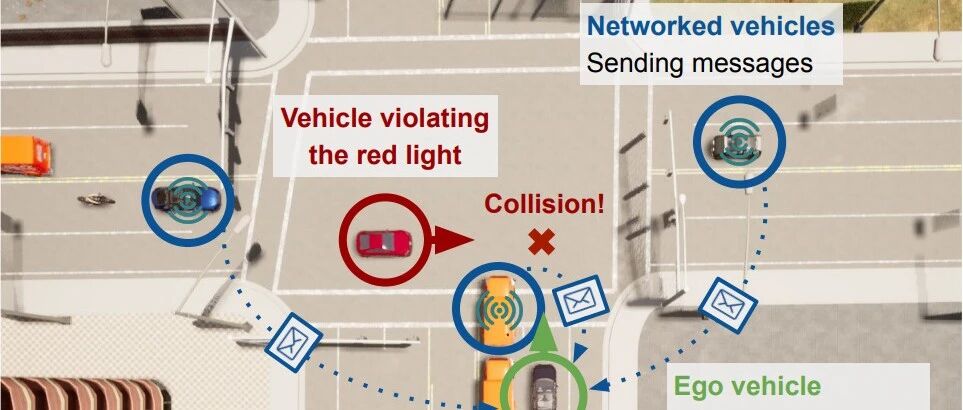
Core Viewpoint - The article discusses the challenges of implementing reinforcement learning (RL) in the field of autonomous driving, particularly focusing on the issue of reward hacking and the balance between safety and efficiency [2][3]. Group 1: Challenges in Reinforcement Learning for Autonomous Driving - Reinforcement learning faces a significant issue known as reward hacking, where increasing safety requirements can lead to decreased efficiency, and vice versa [2]. - Designing a balanced reward system that can enhance overall performance in RL models is complex, as achieving equilibrium among multiple rewards is challenging [2]. - The application of RL in autonomous driving is complicated by the need to adhere to various driving rules during the driving process, unlike in embodied intelligence where the focus is primarily on local motion [2]. Group 2: Need for a Suitable Framework - A crucial factor for the successful implementation of RL in autonomous driving is the development of a robust architecture that can effectively integrate with RL [3]. - Existing models in autonomous driving are unlikely to be directly applicable to RL without significant modifications [3]. Group 3: Community and Resources - The "Autonomous Driving Knowledge Planet" community aims to provide a comprehensive platform for technical exchange and learning in the field of autonomous driving, with over 4,000 members [6][10]. - The community offers a variety of resources, including learning routes, technical discussions, and access to industry experts, to assist both beginners and advanced practitioners in the field [6][10].
网坛明星与足球少年,何以“共享”一座城
2 1 Shi Ji Jing Ji Bao Dao· 2025-09-28 02:53
Group 1: Event Significance - The 2025 Billie Jean King Cup will be held in Shenzhen, marking the first time the finals will take place in Asia, reflecting China's growing prominence in tennis [3][4] - Shenzhen's sports infrastructure, including high-standard venues, supports the hosting of international events, enhancing its reputation as a global sports city [4][5] - The event is expected to attract a younger audience to tennis, leveraging Shenzhen's youthful demographic [4] Group 2: Economic Impact - The Billie Jean King Cup is anticipated to boost local tourism and commerce, with increased hotel occupancy rates and foot traffic in surrounding areas during the event [5] - Shenzhen's sports industry generated a total output of 190.94 billion yuan in 2023, with the Nanshan District contributing 44.42 billion yuan, accounting for approximately 23% of the city's total [12] - The collaboration with Franklin Templeton as the exclusive investment management partner highlights the financial sector's interest in the growing sports market in China [5] Group 3: Community Engagement - The integration of high-level sports events with grassroots initiatives, such as the Shenzhen middle and primary school football finals, promotes sports culture and community involvement [1][8] - Various local sports events, including the "羽超" badminton competition, engage businesses and foster networking opportunities among different sectors [6][8] - The establishment of the X9 Alliance among universities promotes sports participation and collaboration, enhancing the educational and athletic environment [7][8] Group 4: Technological Advancements - The introduction of AI technologies in sports training, such as the Acemate tennis robot, signifies a shift towards data-driven training methods [10][11] - Shenzhen's sports tech companies are innovating in areas like wearable technology and smart sports equipment, contributing to the city's reputation as an innovation hub [11][12] - The upcoming events will feature advanced technologies, including humanoid robots and smart devices, enhancing the spectator experience [12]
智元机器人首次披露合伙人名单,背后的掌舵人们有多少华为系?
AI前线· 2025-09-27 13:06
Core Viewpoint - The article highlights the recent announcement of the partner team at Zhiyuan Robotics, showcasing the backgrounds and expertise of key members, which positions the company strongly in the AI and robotics industry [2][3]. Group 1: Company Leadership - Deng Taihua is the founder, chairman, and CEO of Zhiyuan Robotics, with over 20 years of experience at Huawei, where he led the development of the Kunpeng and Ascend AI computing ecosystems [2]. - Peng Zhihui, also known as "Zhi Hui Jun," is the co-founder, president, and CTO, who joined Huawei in 2020 and focused on Ascend AI chips and algorithms before establishing Zhiyuan Robotics in 2023 [2]. - Jiang Qingsong serves as a partner and senior vice president, responsible for marketing and service systems, with over 20 years of experience in the ICT sector, including roles at Huawei and Alibaba Cloud [2][3]. Group 2: Key Team Members - Yao Maoqing, partner and senior vice president, has a background in autonomous driving at Waymo and NIO, focusing on AI technology development and software R&D at Zhiyuan Robotics [3]. - Wang Chuang, partner and senior vice president, was part of the founding team at DJI's LiDAR product line and later served as CTO at Maher Innovation [3]. - Luo Jianlan, partner and chief scientist, has experience at GoogleX and Google DeepMind, contributing to significant advancements in robotic reinforcement learning [3].

每经智库、城市进化论在数贸会上发布《城市低空经济“链接力”指数(浙江2025)》
Mei Ri Jing Ji Xin Wen· 2025-09-27 10:00
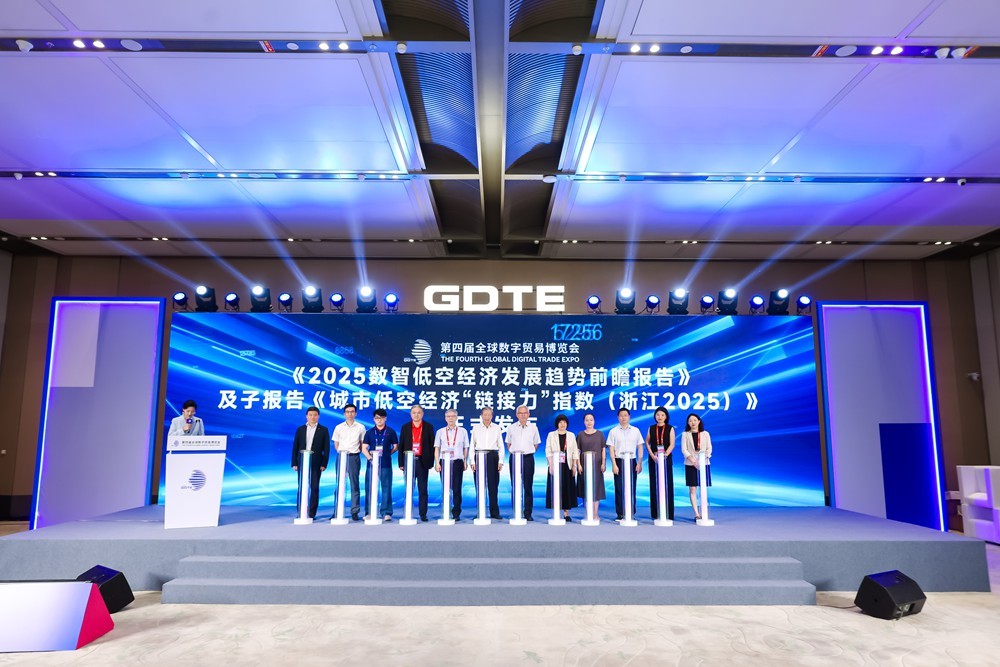
每经记者|刘艳美 每经编辑|杨欢 这几天,一场科技盛宴正在杭州上演。 9月25日起,为期五天的第四届全球数字贸易博览会(以下简称"数贸会")正式拉开帷幕。 作为我国唯一以数字贸易为主题的国家级、国际性、专业型展会,本届数贸会的一大亮点,就是围绕数字贸易核心优势,不仅注重改造提升传统产业,也注 重培育壮大新兴产业,布局建设未来产业。 在15.5万平方米的展会现场,超1800家参展商携前沿技术、创新产品和重磅首秀亮相。其中,低空经济作为新质生产力的典型代表和战略性新兴产业,在此 次数贸会上备受关注。 9月27日,第四届数贸会"低空经济新兴技术与产业发展对接会"举行。会上,由每日经济新闻·每经智库、城市进化论与火石创造联合编写的《城市低空经 济"链接力"指数(浙江2025)》报告正式发布。 报告从企业聚集度、创新聚集度、资本活跃度、环境友好度和AI低空融合度等五大维度,对浙江各市低空经济发展水平进行了系统性评估,为城市找准"坐 标"、协同发展提供参照。 在对接会圆桌对话环节,每经智库总裁、城市进化论主编江然还与德国不来梅州经济促进局亚洲部部长Matthias Hempen,浙科投资董事长、浙江省创业投 资协会副会长 ...
大疆、影石新品国庆档前“激战”线下门店,影像赛道竞争外溢至产业链丨一线
Xin Lang Cai Jing· 2025-09-27 00:52
Core Insights - DJI has strategically launched the Osmo Nano camera, directly competing with Insta360's GO Ultra, with a price difference of less than 1,000 yuan, interpreted as a counterattack ahead of the National Day holiday [1][2] - The competition between domestic imaging manufacturers has evolved from a single product rivalry to a mutual encroachment into each other's core markets, impacting both the capital market and supply chain [1][3] Product Launch and Market Response - The release of Osmo Nano on September 23 is timed to coincide with the peak travel season and government subsidy policies, making it a hot topic among consumers [2] - Consumers are actively comparing the two products in stores, with many expressing concerns about the long-term usability of the cameras, indicating a potential challenge for manufacturers in maintaining customer engagement [2][5] Competitive Dynamics - The competition has shifted from traditional categories to direct product comparisons, with Insta360's recent entry into the drone market through the Antigravity A1, which aims to differentiate itself through software and scene-based innovations [3][4] - DJI's recent product launches, including the Osmo 360 and Osmo Nano, are seen as a response to Insta360's advancements, indicating a strategic clash between hardware and software-focused approaches [4] Market Trends and Implications - The demand for consumer-grade imaging products is rapidly increasing, driven by trends in short videos and travel documentation, making it a critical battleground for manufacturers [5] - The competitive actions of both companies have led to positive reactions in the capital market, with stock prices of related suppliers experiencing significant increases [5][6] Supply Chain Impact - Companies supplying components to both DJI and Insta360, such as Lianchuang Electronics and Hongjing Optoelectronics, have seen their stock prices rise significantly, reflecting the benefits of the competitive landscape [5][6] - However, challenges remain, particularly regarding the high "dust-collecting" rate of wearable cameras and drones, which may lead to longer repurchase cycles and necessitate the development of subscription services and software ecosystems to enhance product value [6]
从“传统航道”转向数智赋能全新赛道 中马缔造经贸合作新动能
2 1 Shi Ji Jing Ji Bao Dao· 2025-09-26 15:58
Core Insights - The 22nd China-ASEAN Expo concluded with over 3,260 participating companies from 60 countries, achieving more than 700 results, including over 500 signed economic and trade projects [1][3] - Malaysia, as the rotating chair of ASEAN, showcased a delegation of over 70 institutions, emphasizing its role in deepening trade relations with China, particularly in high-tech sectors [1][5] Group 1: Economic and Trade Achievements - The expo resulted in over 700 outcomes, including more than 500 signed economic projects across various fields [1] - Malaysia's participation has been consistent for 22 years, viewing the expo as a vital trade platform for entering the Chinese market [3][5] - The bilateral trade volume between China and Malaysia is projected to reach $212 billion in 2024, marking a nearly thousand-fold increase since diplomatic relations were established [5] Group 2: AI and Technological Innovations - Over 50% of the exhibited products at the expo were AI or AI-enabled, with a dedicated AI pavilion showcasing around 1,200 items [2][7] - The AI pavilion generated a trade volume exceeding 140 million RMB, indicating a strong market interest in AI technologies [7] - Malaysia's participation included showcasing green energy AI applications, reflecting a commitment to technological collaboration with China [2][8] Group 3: Collaborative Opportunities - There is a growing trend of collaboration between Chinese and Malaysian companies, particularly in high-value sectors such as food processing and high-end manufacturing [6][11] - The establishment of the China-Malaysia AI Innovation Cooperation Center aims to facilitate joint projects and enhance AI capabilities [10][11] - Future cooperation is expected to focus on green energy, digital economy, and logistics, enhancing supply chain efficiency [6][11]
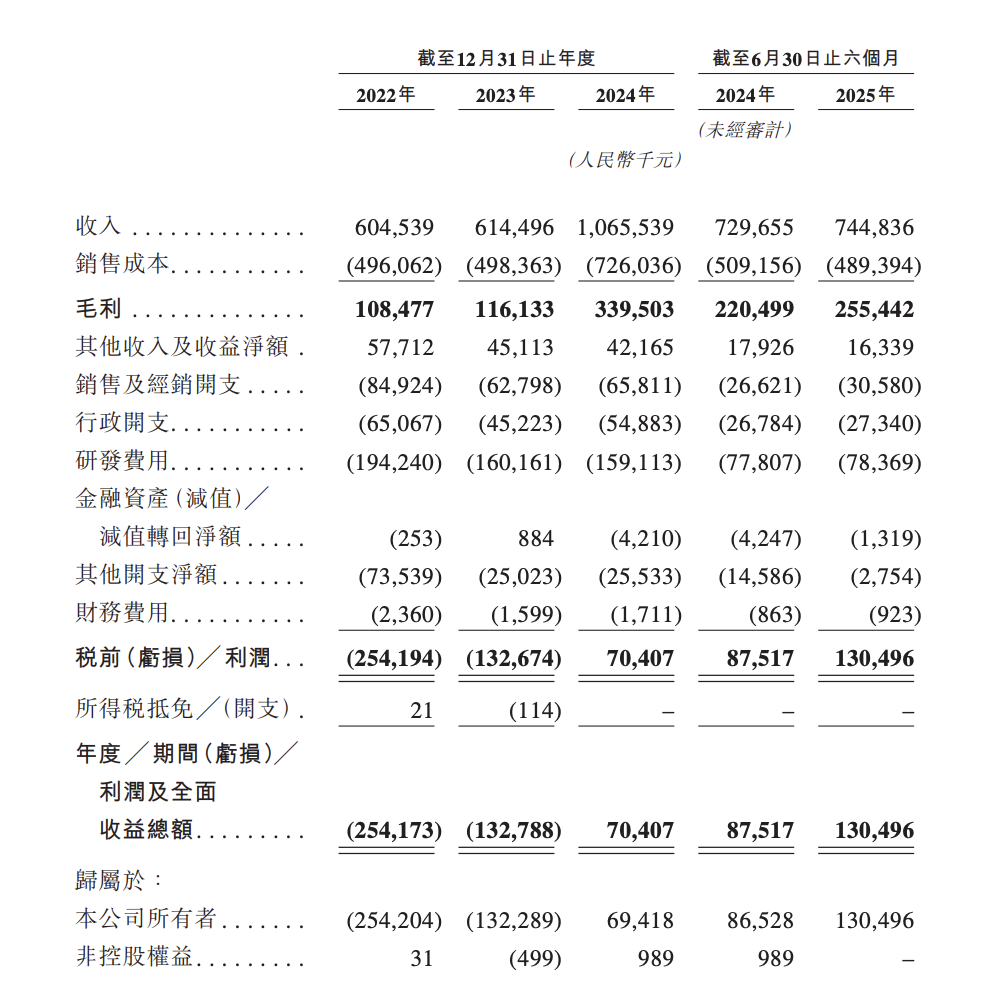
年入10亿、无人机独角兽冲刺港股,能否跨过两座大山?
第一财经· 2025-09-26 15:13
2025.09. 26 本文字数:1878,阅读时长大约3分钟 作者 | 第一财经 刘晓洁 根据此前的招股书,极飞2018年至2020年的营收分别约为3.2亿元、3.6亿元、5.3亿元,彼时净亏损 分别为671.7万元、3970.3万元、6084.6万元。而2022年至2024年,极飞的营收来到从6亿元增至 10.66亿元,2022和2023年的亏损分别为2.5亿元、1.3亿元,2024年扭亏后净利润为7041万元。 | | | 截至12月31日止年度 | | 截至6月30日止六個月 | | | --- | --- | --- | --- | --- | --- | | | 2022年 | 2023年 | 2024年 | 2024年 | 2025年 | | | | | | (未經審計) | | | | | | (人民幣千元) | | | | 收入 | 604.539 | 614,496 | 1,065,539 | 729.655 | 744.836 | | 銷售成本 | (496,062) | (498.363) | (726,036) | (509,156) | (489,394) | | 毛利 | 108 ...
年入10亿、无人机独角兽冲刺港股,能否跨过两座大山?
Di Yi Cai Jing· 2025-09-26 14:09
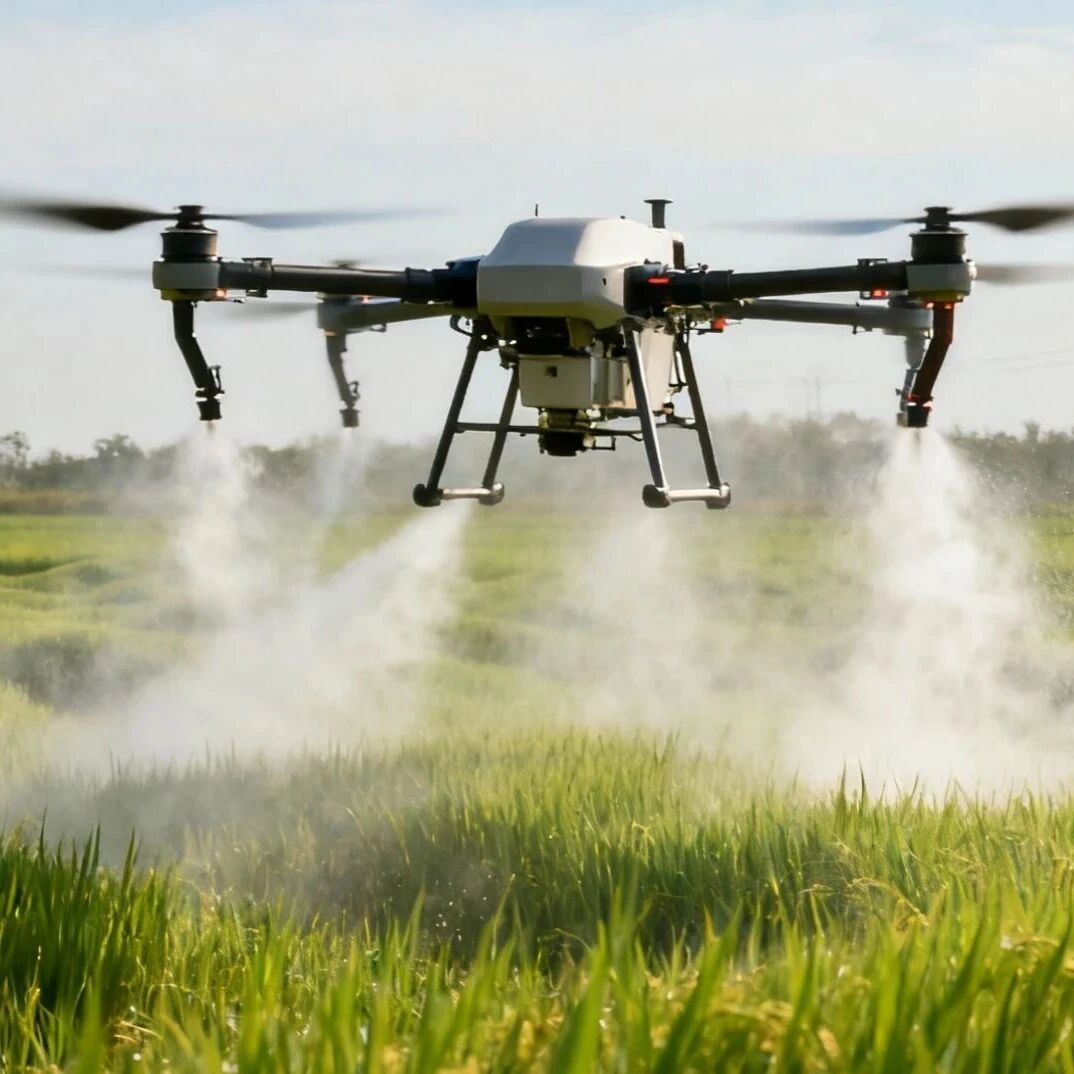
Core Viewpoint - The company XAG Technology is attempting its second IPO after withdrawing its application in 2021, facing challenges such as competition from industry giants and uncertainties in international trade [1][6]. Group 1: Company Overview - XAG Technology ranks second in the global agricultural drone market, holding nearly 80% of the market share alongside DJI [1][6]. - The company aims to achieve revenue exceeding 1 billion RMB in 2024, with a projected net profit of 70.41 million RMB [1]. - XAG's main business focuses on agricultural drones, with plans to expand into autonomous vehicles and other agricultural robotics [1]. Group 2: Financial Performance - XAG's revenue from 2018 to 2020 was approximately 320 million RMB, 360 million RMB, and 530 million RMB, with net losses of 6.72 million RMB, 39.70 million RMB, and 60.85 million RMB respectively [1]. - For 2022 to 2024, revenue is expected to grow from 600 million RMB to 1.066 billion RMB, with losses of 250 million RMB and 130 million RMB in 2022 and 2023, respectively, before turning profitable in 2024 [2][3]. - In the first half of 2025, XAG reported revenue of 745 million RMB, a 2% increase year-on-year, and a profit of 130 million RMB, up 49.1% [2]. Group 3: Market Dynamics - The global agricultural robotics market is projected to grow from 8.9 billion RMB in 2024 to 74.9 billion RMB by 2029, with a compound annual growth rate of 53.3% [3]. - XAG's revenue from agricultural drones is expected to account for 87.8% of total revenue in 2024 [3]. - XAG's market share in the global and Chinese agricultural drone markets is projected to be 17.1% and 20.8% respectively in 2024, while DJI holds over 50% market share [6]. Group 4: Competitive Landscape - XAG faces significant competition from established players with greater resources and brand recognition, which could impact its business if it fails to compete effectively [6][7]. - The company's overseas revenue is expected to grow from 150 million RMB in 2022 to 370 million RMB in 2024, constituting 34.8% of total revenue [6]. - International trade policies and tariffs pose potential challenges for XAG's expansion into overseas markets, with U.S. tariffs on Chinese imports remaining a concern [6].