三星电子

Search documents
存储芯片商不在美国建厂,将面临100%关税!
Sou Hu Cai Jing· 2026-01-18 03:42
去年,韩国和美国已经达成了一项贸易协议,同意对大多数韩国商品征收 15% 的关税,但尚未最终确 定对半导体征收关税的计划。不过,当时韩国政府得到了一个原则性的承诺,即不会受到比其竞争对手 中国台湾更不利的待遇。 因此,上述美国针对中国台湾企业的半导体豁免条款,可并不完全适用于韩国厂商。针对韩国厂商的豁 免的标准可能会比中国台湾更为宽松。 "任何想制造存储芯片的厂商(想要进入美国市场)都有两个选择:要么支付 100% 的关税,要么在美 国建厂制造。"卢特尼克说道。 虽然卢特尼克没有点名任何具体公司,但外界认为这主要是针对韩国和中国台湾,因为它们是全球最主 要的半导体地,特别是韩国的三星电子和SK海力士这两个全球最大的存储芯片厂商。 去年 8 月,美国特朗普政府曾宣布将考虑对所有进入美国的半导体征收 100% 的关税,但后来决定推迟 全面实施关税,并与相关国家和地区进行关税谈判,希望通过关税换投资的策略,推动半导体厂商赴美 国投资建厂,从而帮助美国减少对进口半导体的依赖。 1月16日消息,美国政府正式宣布将中国台湾对美出口税率降至15%,相比之前的约20%税率进一步降 低。但是,中国台湾半导体与科技企业需要至少对 ...


美国威胁韩国:存储芯片100%关税
半导体行业观察· 2026-01-18 03:32
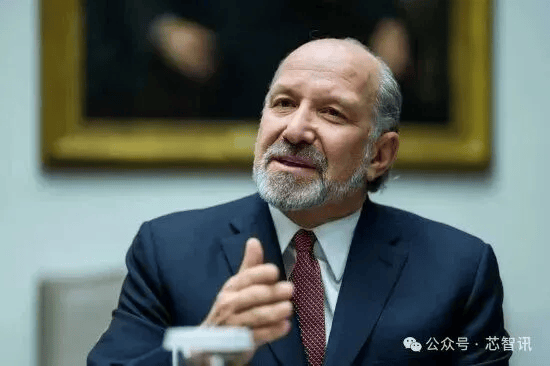
美国商务部长霍华德・卢特尼克(Howard Lutnick)表示,随着特朗普政府加大对额外外国投资的 呼吁,未在美国投资的韩国存储芯片制造商和中国台湾企业可能面临高达 100% 的关税,除非它们承 诺增加在美国本土的产量。 在纽约州锡拉丘兹郊外举行的美光科技公司(Micron Technology Inc.)新工厂破土动工仪式后,卢 特尼克表示,根据与中国台湾的贸易协定中阐明的潜在征税规定,也可能影响到韩国的芯片制造商。 "所有想要生产存储芯片的人都有两个选择:要么支付 100% 的关税,要么在美国建厂," 卢特尼克 周五在回答记者提问时说,他没有点名任何特定的公司。"这就是产业政策。" 卢特尼克的言论呼应了周四签署中国台湾贸易协议后的一项警告,该协议给予承诺在美国制造业投资 的公司基于配额的关税减免。"如果他们不在美国建厂," 卢特尼克告诉 CNBC,"关税很可能是 100%。" 目前,唐纳德・特朗普暂时推迟了对大多数外国制造的半导体征收关税,而是要求卢特尼克和美国贸 易代表杰米森・格里尔(Jamieson Greer)与贸易伙伴谈判,以减少美国对芯片进口的依赖。白宫本 周早些时候表示,特朗普可能会 "在不 ...

“比金条涨得还快”,内存条价格暴涨,多品牌手机、电脑涨价
Mei Ri Jing Ji Xin Wen· 2026-01-18 01:55
Core Insights - The price of storage chips, particularly memory and flash memory, has surged dramatically since the second half of 2025, with prices for memory modules doubling or more, significantly outpacing gold prices [1] - The current market for storage has entered a "super bull market" phase, surpassing historical highs seen in 2018, driven primarily by the explosive demand from AI applications [1][8] Price Trends - Since September 2025, DDR5 memory prices have increased by over 300%, while DDR4 memory prices have risen by more than 150% [1] - In January 2026, a 2TB hard drive's price rose from approximately 1000 yuan to 1500 yuan, and a specific memory module increased from 3000 yuan to 4500 yuan, reflecting a 50% price hike [2] - The price of a specific 256GB DDR5 server memory module has seen multiple increases within ten days, rising from 38,999 yuan to 47,999 yuan, equivalent to the price of a new iPhone 17 Pro [2] Supply Chain and Procurement - The volatility in prices has led to tighter trading conditions in the supply chain, with manufacturers advising clients to procure supplies as soon as possible [3] - The demand for memory from AI servers is 8-10 times greater than that of regular servers, consuming 53% of global monthly memory production capacity [1][7] Impact on Consumer Electronics - The rising costs of storage components are affecting the pricing and availability of consumer electronics, with major brands like Lenovo, Dell, and HP increasing laptop prices by 500 to 1500 yuan [4] - Many smartphones are seeing a reduction in memory specifications, effectively increasing prices without changing the listed price [5] Future Outlook - Analysts predict that the current cycle of rising storage prices, driven by demand mismatches and technological shifts, may continue until late 2026 or even into 2027 [8] - Forecasts indicate that the average selling price (ASP) of server DRAM could rise by 144% year-on-year, with significant profit increases expected for major companies like Samsung and SK Hynix [8][10] - Micron Technology has reported stronger-than-expected financial results and is anticipated to benefit significantly from the ongoing supply shortages in storage chips [10]
内存条价格翻倍暴涨,“比金条涨得还快”,多品牌手机、电脑涨价
Mei Ri Jing Ji Xin Wen· 2026-01-17 14:53
Core Viewpoint - The storage chip prices have surged dramatically since the second half of 2025, with memory and flash prices more than doubling, driven primarily by the explosive demand from AI applications [1][7]. Group 1: Price Increases - DDR5 memory prices have increased by over 300% since September 2025, while DDR4 memory prices have risen by more than 150% [1]. - A 2TB hard drive's price rose from approximately 1000 yuan to 1500 yuan, and a 32*2 memory module increased from 3000 yuan to 4500 yuan, reflecting a 50% price hike [3]. - The overall cost of a computer has increased by 25% in just one month due to rising storage component prices [4]. Group 2: Market Dynamics - AI servers consume 53% of the global monthly memory production, with their memory demand being 8-10 times that of regular servers, leading to a significant squeeze on consumer-grade memory supply [1][11]. - Major cloud service providers are placing large purchase orders, indicating a "super bull market" in the storage sector, surpassing the historical highs of 2018 [1][12]. Group 3: Impact on Consumer Electronics - The price increases in storage components are affecting the pricing strategies of consumer electronics, with major brands like Lenovo, Dell, and HP raising laptop prices by 500-1500 yuan [5]. - Smartphone manufacturers are also adjusting their product offerings, with many reducing the base memory specifications, effectively increasing prices without changing the listed price [6]. Group 4: Future Outlook - Analysts predict that the current cycle of storage price increases may continue until the end of 2026 or even into 2027, driven by demand mismatches and technological shifts [11]. - Forecasts suggest that the average selling price of server DRAM could rise by 144% year-on-year, with significant profit increases expected for companies like Samsung and SK Hynix [11].
“一天一个价”!内存条价格翻倍暴涨,“比金条涨得还快”,多品牌手机、电脑涨价,分析:今年可能涨得更凶!什么原因?
Mei Ri Jing Ji Xin Wen· 2026-01-17 14:02
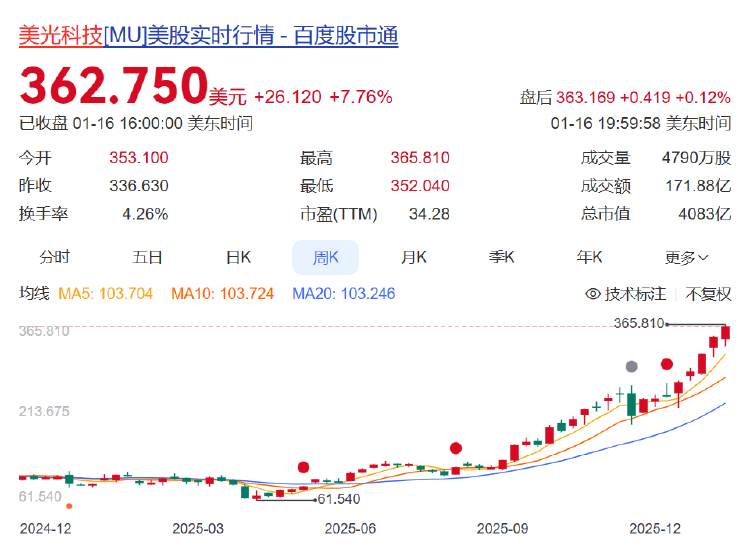
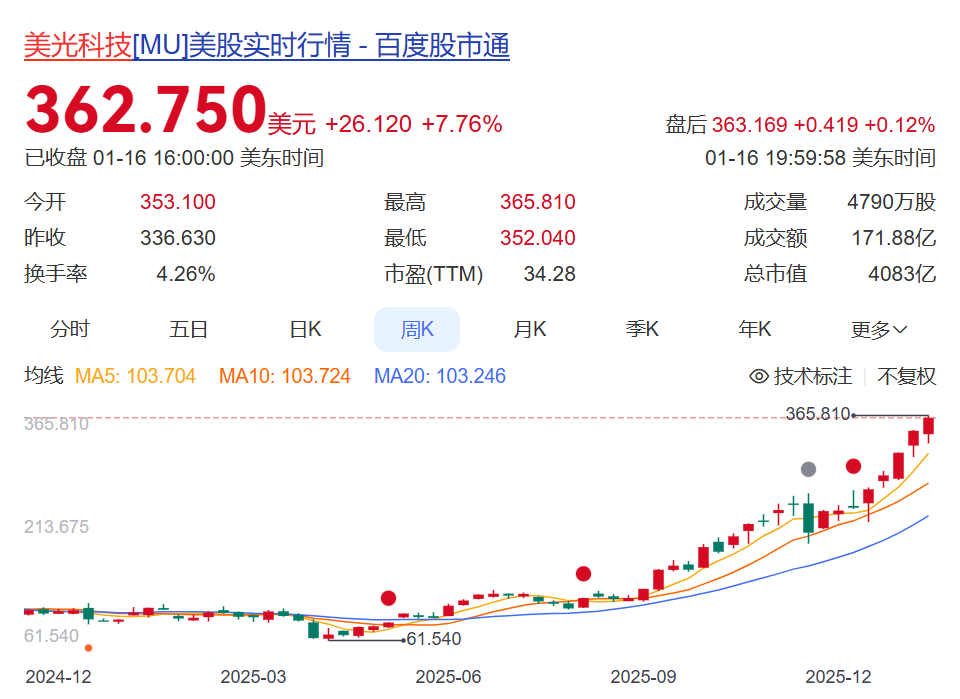
Core Insights - The price of storage chips, including memory and flash storage, has surged dramatically since the second half of 2025, with prices more than doubling, and memory prices increasing at a rate surpassing that of gold [1][2]. Group 1: Price Increases - DDR5 memory prices have risen over 300% since September 2025, while DDR4 memory prices have increased by more than 150% [2]. - A 2TB hard drive from Kioxia has seen its price rise from approximately 1000 yuan to 1500 yuan, and a 32*2 memory module from Jinbaida has increased from 3000 yuan to 4500 yuan, reflecting a price increase of around 50% [4]. - The overall cost of assembling a computer has increased by 25% in just one month due to rising storage component prices [5]. Group 2: Demand Drivers - AI servers require 8-10 times more memory than standard servers, consuming 53% of the global monthly memory production capacity, which has led to a significant squeeze on consumer-grade memory supply [3][9]. - The demand for high-capacity, high-performance enterprise SSDs is increasing exponentially due to architectural changes in AI platforms, which have shifted the bottleneck from computational power to storage capacity [9]. Group 3: Market Impact - The storage market is currently in a "super bull market" phase, surpassing historical highs seen in 2018 [3]. - Major cloud service providers are placing large purchase orders, indicating strong demand and further driving prices up [3]. - Consumer electronics manufacturers are adjusting their pricing strategies, with major brands like Lenovo, Dell, and HP increasing prices by 500-1500 yuan for laptops, and smartphones seeing price hikes of 100-600 yuan [6]. Group 4: Future Outlook - Analysts predict that the upward trend in storage prices may continue into 2026, driven by demand mismatches and ongoing supply constraints [9]. - Forecasts suggest that the average selling price (ASP) of server DRAM could rise by 144% year-on-year, with significant profit increases expected for companies like Samsung and SK Hynix [9]. - Micron Technology's stock has surged from just over $100 to over $360, reflecting a threefold increase in market value since last year [10].

机构路演:存储行业正转向“高利润、稳价格、弱周期”的运营模式
智通财经网· 2026-01-17 13:17
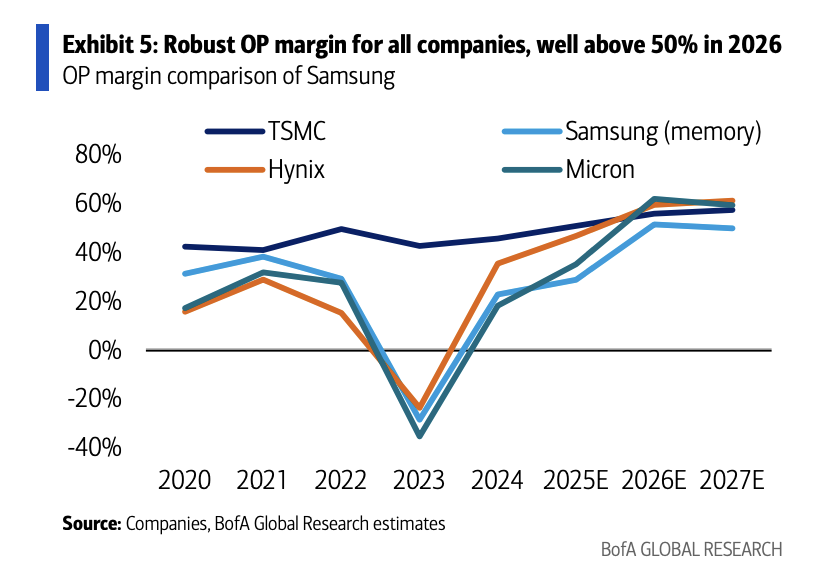
Core Viewpoint - The global memory chip industry is transitioning towards a "foundry-like" business model characterized by reduced cyclicality, stable prices, and increasing profit margins, supported by various factors including significant price increases in DRAM and NAND markets [1][2]. Group 1: Market Dynamics - DRAM and NAND spot prices have seen substantial increases, with DDR4 prices rising over 2000% month-on-month as of early 2026 [1]. - The memory chip industry is expected to maintain a high prosperity level, forming a "super cycle" focused on profit margins, despite potential slowdowns in average selling price (ASP) increases after Q2 2026 [2]. - The DRAM spot market is experiencing extreme tightness, with DDR4 and DDR5 prices showing weekly increases of approximately 10%, continuing a trend of 100%-200% cumulative increases since Q4 2025 [6][9]. Group 2: Competitive Landscape - TSMC's optimistic growth guidance, projecting a 30% compound annual growth rate (CAGR) through 2026 and maintaining over 20% annual growth through 2029, positively impacts SK Hynix, which holds over 60% of the global HBM supply [3][5]. - The competitive landscape is shifting, with TSMC's technological advancements in 2nm processes and CoWoS packaging limiting Samsung's ability to catch up, as evidenced by Samsung's ongoing losses in its foundry business compared to TSMC's profit margins exceeding 50% [5]. Group 3: Investment Sentiment - Investor sentiment is divided, with some optimistic about AI-driven long-term growth in the memory sector, while others express caution over high valuations and sustainability of momentum [1][2]. - There are concerns regarding the historical high price-to-book ratios after 2-3 years of industry growth, alongside rising capital expenditures from leading firms like Samsung [1][2]. Group 4: Future Outlook - The NAND market may face new supply-demand balance pressures by the end of 2026 due to capacity releases and transitions to advanced processes [2]. - Korean semiconductor export data reflects ongoing high industry prosperity, with a 46% year-on-year increase in semiconductor exports in early January 2026, maintaining a historical high level [10].
突发!100%关税威胁!
Zhong Guo Ji Jin Bao· 2026-01-17 12:41
Group 1 - The U.S. Secretary of Commerce, Howard Lutnick, warned South Korean and Taiwanese semiconductor manufacturers that they may face a 100% tariff on semiconductors if they do not invest in U.S. production [1] - The U.S. government is pushing for foreign investment in semiconductor manufacturing, with a focus on reducing reliance on imported chips [1][3] - A trade agreement with Taiwan allows companies to import up to 2.5 times their existing capacity tax-free while committing to invest at least $250 billion in the U.S. [3] Group 2 - Micron Technology is competing in the high bandwidth memory (HBM) chip market against Samsung and SK Hynix, which are critical components for data center processors driving the AI boom [2] - Samsung plans to invest over $40 billion in the U.S. by 2024, including $17 billion for an advanced packaging facility in Texas [4] - SK Hynix announced plans to invest nearly $4 billion in Indiana for an advanced packaging project as part of a broader $15 billion investment in production and R&D in the U.S. [4]
突发!100%关税威胁!
中国基金报· 2026-01-17 12:38
Group 1 - The U.S. Secretary of Commerce, Howard Lutnick, warned semiconductor manufacturers, particularly from South Korea and Taiwan, that they may face a 100% tariff on semiconductors if they do not invest in U.S. production [2] - The U.S. government is pushing for foreign investment in semiconductor manufacturing as part of its industrial policy, emphasizing that companies must either pay high tariffs or establish factories in the U.S. [2][4] - A recent trade agreement allows Taiwanese companies to import components tax-free up to 2.5 times their existing capacity while committing to invest at least $250 billion in the U.S. [4] Group 2 - Micron Technology is competing in the high bandwidth memory (HBM) chip market against South Korea's Samsung and SK Hynix, with increasing demand driven by AI data centers [3] - Samsung plans to invest over $40 billion in the U.S. by 2024, including $17 billion for an advanced packaging facility in Texas [5] - SK Hynix announced plans to invest nearly $4 billion in Indiana for advanced packaging projects as part of a broader $15 billion investment in the U.S. [5] - Micron has committed to invest up to $200 billion in the U.S., with $150 billion allocated for domestic manufacturing and $50 billion for research and development [5]

AI算力与存储需求野蛮扩张! 半导体设备迎接超级周期,上演新一轮牛市
智通财经网· 2026-01-17 07:26
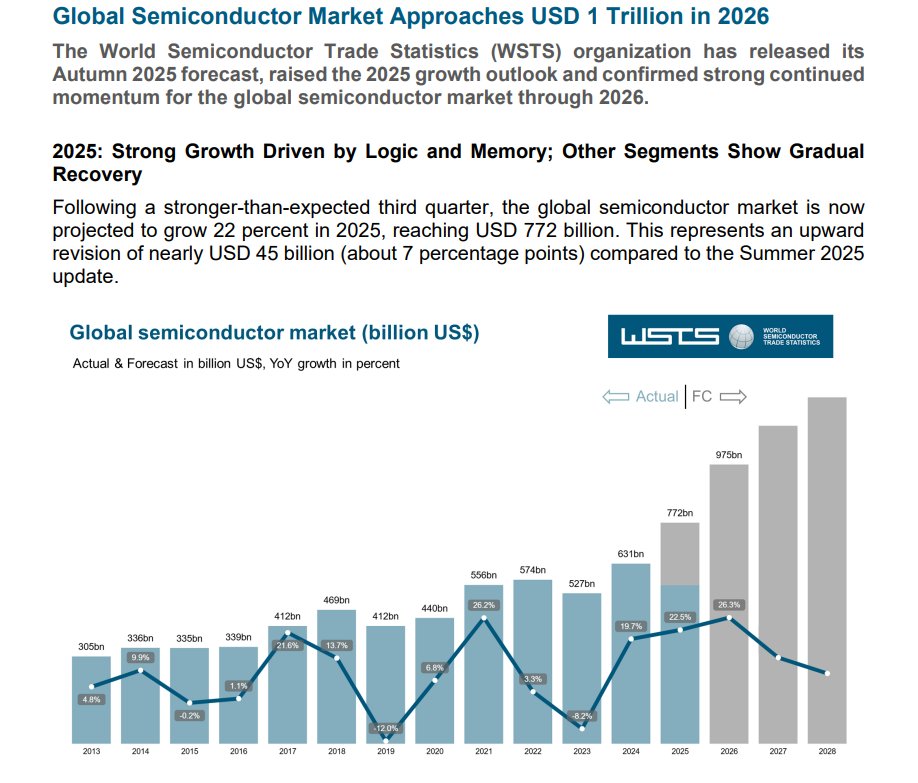
Core Insights - The global semiconductor industry is expected to experience a stronger demand in the coming year, driven by the AI computing infrastructure wave and a "super cycle" in memory chips, benefiting semiconductor equipment manufacturers significantly [1][2] - Major investment firms like Citigroup and KeyBanc Capital Markets predict a "Phase 2 bull market" for semiconductor equipment, with a focus on leading companies such as ASML, Lam Research, and Applied Materials [1][2] Semiconductor Industry Outlook - The semiconductor equipment sector is identified as a major beneficiary of the surging demand for AI chips and DRAM/NAND storage chips, with expectations of a robust growth trajectory leading into 2026 [1][2] - The global semiconductor market is projected to grow by 22.5% in 2025, reaching a total value of $772.2 billion, and further expanding to $975.5 billion in 2026, indicating a year-on-year increase of 26% [5] AI Infrastructure Investment - The AI infrastructure investment wave is still in its early stages, with estimates suggesting a total investment of $3 trillion to $4 trillion by 2030, driven by the demand for AI computing hardware [3][4] - Companies like TSMC are experiencing significant growth, with a projected revenue increase of nearly 30% in 2026, largely due to the demand for AI-related chips and advanced packaging technologies [9][10] Key Players and Strategies - KeyBanc has raised target prices for semiconductor equipment companies, including AEI Industries, Applied Materials, and MKS Instruments, reflecting a bullish outlook on their growth potential [12][14][16] - Applied Materials is expected to benefit from its diverse product offerings and strong position in advanced packaging and DRAM markets, with a target price increase from $285 to $380 [14] - MKS Instruments is anticipated to see accelerated revenue growth due to its strong cash flow and leading position in power products for NAND etching tools [16][17]
拿下台湾后,美国对韩国芯片施压
半导体行业观察· 2026-01-17 02:57
公众号记得加星标⭐️,第一时间看推送不会错过。 还有人担心,随着美台半导体联盟通过此次谈判进一步巩固,韩国半导体企业在晶圆代工领域正努力 追赶台积电,但从长远来看,韩国半导体企业在从美国大型科技公司获得订单方面可能会处于劣势。 半导体是韩国对美国的第二大出口商品,仅次于汽车(出口额达133.7亿美元)。韩国产业通商资源 部前一天召开了两次由部长金正宽主持的紧急会议,会上表示将与美国商务部和业界保持密切沟通, 为谈判做好准备。 也有人认为,现在评估韩国企业在美国投资的利弊还为时尚早,因为需要考虑诸多因素,包括美国高 昂的劳动力成本和物流供应链费用。在当前半导体行业蓬勃发展、存储器短缺导致产品滞销的情况 下,一些人认为美国政府很难要求韩国企业承担额外的关税。一位半导体行业人士表示:"虽然计算 很复杂,但很明显,美国正在发出信号,施压韩国加大对半导体行业的投资。" 参考链接 随着中国台湾通过台积电在美国投资建设大型半导体工厂,结束了与美国的关税谈判,韩国政府和半 导体行业的紧张局势日益加剧。韩国政府还面临着与美国政府的另一场博弈,美国政府正试图利用半 导体关税吸引更多投资。三星电子和SK海力士等半导体公司担心,特朗 ...