特变电工

Search documents
电力设备行业10月22日资金流向日报
Zheng Quan Shi Bao Wang· 2025-10-22 09:35
688353 华盛锂电 -4.75 5.83 2662.20 电力设备行业资金流出榜 沪指10月22日下跌0.07%,申万所属行业中,今日上涨的有9个,涨幅居前的行业为石油石化、银行, 涨幅分别为1.58%、0.97%。跌幅居前的行业为有色金属、电力设备,跌幅分别为1.36%、1.29%。电力 设备行业位居今日跌幅榜第二。 资金面上看,两市主力资金全天净流出442.31亿元,今日有4个行业主力资金净流入,石油石化行业主 力资金净流入规模居首,该行业今日上涨1.58%,全天净流入资金5.58亿元,其次是家用电器行业,日 涨幅为0.82%,净流入资金为4.79亿元。 主力资金净流出的行业有27个,电子行业主力资金净流出规模居首,全天净流出资金80.21亿元,其次 是电力设备行业,净流出资金为62.84亿元,净流出资金较多的还有非银金融、有色金属、计算机等行 业。 电力设备行业今日下跌1.29%,全天主力资金净流出62.84亿元,该行业所属的个股共363只,今日上涨 的有106只,涨停的有2只;下跌的有251只。以资金流向数据进行统计,该行业资金净流入的个股有122 只,其中,净流入资金超亿元的有6只,净流入资金居 ...
黄金概念下跌1.98% 主力资金净流出61股
Zheng Quan Shi Bao Wang· 2025-10-22 09:29
Core Viewpoint - The gold concept sector experienced a decline of 1.98%, ranking among the top losers in the market, with significant outflows of capital from major stocks in this sector [1][2]. Market Performance - The top-performing concept sectors included combustible ice with a gain of 4.06%, while the gold concept was among the worst performers with a decline of 1.98% [2]. - Notable gainers in the gold concept sector included HeBai Group, FuDa Alloy, and CITIC Metal, which saw increases of 4.14%, 3.44%, and 2.22% respectively [1][4]. Capital Flow - The gold concept sector faced a net outflow of 3.096 billion yuan, with 61 stocks experiencing capital outflows, and 8 stocks seeing outflows exceeding 100 million yuan [2]. - The stock with the highest net outflow was TBEA, with a net outflow of 770 million yuan, followed by Zhongjin Gold and Zijin Mining with outflows of 327 million yuan and 287 million yuan respectively [2][4]. Stock Performance - The gold concept stocks with the largest declines included Hunan Silver, which fell by 7.71%, and ManKaLong, which dropped by 7.46% [3][4]. - Other notable decliners included TBEA (-4.43%), Zhongjin Gold (-2.47%), and Zijin Mining (-2.00%) [2][3].





2025北京国际风能大会直击!这些细节值得关注
Zhong Guo Dian Li Bao· 2025-10-22 07:52
Core Insights - The 2025 Beijing International Wind Energy Conference has set ambitious targets for China's wind power capacity, aiming for an annual increase of no less than 120 million kilowatts during the 14th Five-Year Plan, with cumulative installed capacity reaching 1.3 billion kilowatts by 2030 and 5 billion kilowatts by 2060 [1] Group 1: Offshore Wind Power Development - Offshore wind power is recognized as a crucial component in global energy transition, with China's offshore wind energy resources capable of exceeding 2.7 billion kilowatts within 300 kilometers offshore [1] - Challenges in offshore wind development include conflicts over sea usage, the need for improved resource utilization efficiency, high development and operational costs, and the exploration of new wind utilization models [1] - The development of deep-sea wind power faces significant challenges, particularly when water depth exceeds 50 meters and distance from shore exceeds 70 kilometers [1] Group 2: Technological Innovations - Goldwind Technology and Three Gorges Group have successfully installed a floating wind turbine in Beihai, Guangxi, which allows for the development of deep-sea wind resources, reducing project development area and costs [2] - China CRRC showcased a 20-megawatt floating offshore wind turbine, which can generate approximately 3,500 hours of full-load operation annually, saving about 25,000 tons of coal per year [2] - The introduction of a 26-megawatt fixed offshore wind turbine by China CRRC is noted as one of the largest in the world, capable of generating up to 100 million kilowatt-hours of clean energy annually, meeting the annual electricity needs of 55,000 households [2] Group 3: AI and Smart Technologies - Goldwind's new wind turbine products utilize intelligent control modes to optimize electricity generation based on price fluctuations, potentially extending the turbine's lifespan by five years [3] - China CRRC is leveraging artificial intelligence to enhance the efficiency and reliability of its wind turbine products, including cost reduction and lifecycle management through predictive maintenance [3] - The wind power industry is urged to adopt digital and intelligent technologies to drive continuous innovation in renewable energy technology [2][3]



特高压板块大幅调整,神马电力触及跌停
Xin Lang Cai Jing· 2025-10-22 06:48
Group 1 - The ultra-high voltage sector has experienced significant adjustments, with Shenneng Power hitting the daily limit down [1] - Other companies such as Dongfang Tower, Jingwei Huitai, Baiyun Electric, Guodian Nanzi, Pinggao Electric, and Tebian Electric also saw declines [1]

AI算力催生电力需求暴增,电网设备ETF(159326)迎发展新机遇
Mei Ri Jing Ji Xin Wen· 2025-10-22 06:46
Group 1 - The A-share market experienced a collective pullback on October 22, with the previously strong-performing power grid equipment sector undergoing a significant decline, as evidenced by the 2.16% drop in the Power Grid Equipment ETF (159326) by 14:31, despite some stocks like Hailianxun and Dongcai Technology rising against the trend [1] - The Power Grid Equipment ETF has attracted substantial capital, accumulating a total of 256 million yuan since October, reaching a latest scale of 381 million yuan, making it the largest power grid equipment-themed ETF in the market [1] - The rapid development of AI technology is driving an explosive increase in global data center electricity demand, necessitating upgrades to power grid infrastructure, while the aging of existing grid systems and the acceleration of renewable energy integration are creating urgent demands for grid renovation [1] Group 2 - The Power Grid Equipment ETF (159326) is the only ETF tracking the CSI Power Grid Equipment Theme Index, with a strong representation in sectors such as transmission and transformation equipment, grid automation equipment, and distribution equipment, where ultra-high voltage equipment accounts for 63% of the index, the highest in the market [2] - The top ten holdings of the ETF include industry leaders such as Guodian NARI, TBEA, and Sifang Electric, indicating a strong focus on key players in the power grid equipment sector [2]


BC 组件发电能力优势持续验证,光伏既有“反内卷”也有新技术,光伏ETF基金(516180)今日回调蓄势日内反弹明显
Xin Lang Cai Jing· 2025-10-22 02:29
Group 1 - The core viewpoint of the articles highlights the competitive advantages of BC solar cell technology over TOPCon technology, particularly in terms of energy generation efficiency and aesthetic appeal [1] - A recent performance analysis by Empower Engenharia indicates that Hi-MO 9 components based on second-generation BC technology have a lifecycle energy generation advantage of over 3.5% compared to TOPCon products [1] - The National Photovoltaic Quality Inspection Center's report shows that from January 4 to June 30, 2025, Hi-MO 9 components achieved a 1.94% energy generation gain per watt compared to TOPCon components [1] Group 2 - The solar industry is expected to enter a "de-involution" phase, with significant attention on the upcoming Fourth Plenary Session from October 20-23, which may address "de-involution" as a key component of the 14th Five-Year Plan [2] - The third-quarter earnings reports of listed companies are anticipated to show significant improvement, particularly in the silicon material segment, following price increases since July [2] - The current market environment shows that the photovoltaic industry index has a low valuation advantage, with a year-to-date increase of 25.6% and a price-to-book ratio at the historical 49th percentile [2] Group 3 - As of September 30, 2025, the top ten weighted stocks in the CSI Photovoltaic Industry Index account for 58.02% of the index, including companies like Sungrow Power Supply, LONGi Green Energy, and Trina Solar [3]
AI电源行业专家交流
2025-10-21 15:00
Summary of SST System Industry Conference Call Industry Overview - The conference focused on the SST (Solid State Transformer) system industry, discussing its cost structure, market trends, and competitive landscape in both domestic and overseas markets [1][2][3]. Key Points and Arguments Cost Structure of SST Systems - The cost composition of SST systems includes rectifier modules (40%-50%), high-frequency transformers (approximately 25%), control and distribution (15%), energy storage (11%), and structural cooling (8%) [1][2]. - Current single watt cost of SST systems is around 5 RMB, with total system costs reaching 8-10 million RMB. By 2028, costs are expected to drop to below 1 RMB per watt, with total system costs around 2 million RMB, but large-scale application is anticipated only by 2030 [1][4]. Price Trends and Market Dynamics - There is a significant price disparity between domestic and overseas SST systems, particularly in North America, where prices are expected to remain around 4-5 RMB per watt until 2027-2028, with limited reduction [5]. - Domestic market competition is intense, with expectations that prices could fall below 1 RMB per watt by 2030 [5]. Technical Standards and Design Differences - North America tends to adopt higher input voltage SST systems (35 kV or 20 kV), which enhances renewable energy integration efficiency but also increases costs. Differences in design standards between North America and China contribute to cost variations [6][8]. - Domestic companies can enter the SST supply chain by exporting components like high-frequency transformers and rectifier modules, capturing growth opportunities despite slower rack power increases compared to North America [9]. Market Opportunities and Challenges - Companies like Jinpan and Sungrow, which have comprehensive system integration capabilities, are better positioned to enter the SST supply chain [3][16]. - The domestic market's ability to reduce SST product prices significantly is attributed to lower value differences compared to overseas products, reflecting market maturity and demand [23]. Future Prospects - The SMT (Solid State Transformer) AC-DC hybrid system market is expected to grow faster than the data center market due to lower energy continuity and stability requirements, making it more cost-sensitive [24]. - The demand for silicon carbide (SiC) in charging stations and data centers is increasing, but the complex production process may lead to supply constraints and price increases [26]. Additional Important Insights - The integration capabilities of domestic companies lag behind those of leading overseas firms like Delta, Schneider, and Eaton, which have dedicated departments for each segment of the SST system [22]. - The competitive landscape in the HVDC (High Voltage Direct Current) sector shows that traditional power distribution companies in China have advantages, but emerging electronic companies are rapidly advancing [18]. This summary encapsulates the critical insights from the SST system industry conference call, highlighting the cost structures, market dynamics, technical standards, and future prospects within the industry.
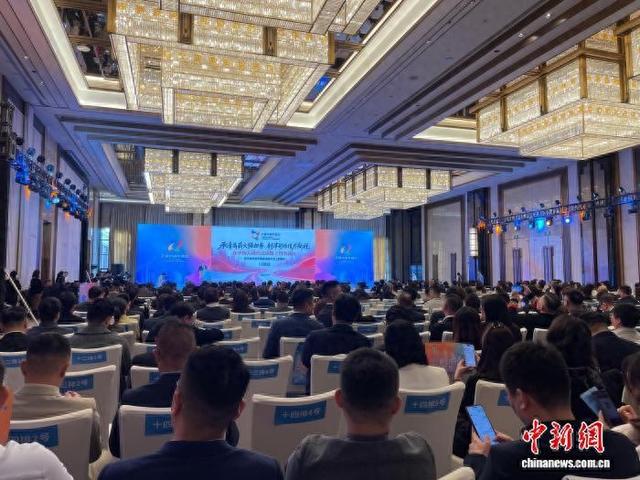
特变电工新能源亮相北京国际风能大会暨展览会 | CWP2025,见证突破
中国能源报· 2025-10-21 08:51
Core Viewpoint - The article highlights the significant advancements and innovative solutions presented by TBEA New Energy at the Beijing International Wind Energy Conference, emphasizing their commitment to green energy and technological innovation in the renewable energy sector [3][28]. Product Innovations - TBEA New Energy launched the upgraded TSVG 6.0 product, which features comprehensive iterations in functionality and performance based on the latest domestic and international market demands and grid connection standards [4]. - The new flexible DC transmission technology developed by TBEA is a revolutionary advancement in power transmission, enhancing the voltage level from ±500 kV to ±800 kV and increasing the transmission capacity from 1 million kW to 5 million kW, achieving industry-leading performance metrics [9]. - The modular inverter with a capacity of 4800 kW utilizes a modular architecture with six 800 kW power modules, allowing for fault decoupling between modules, thus minimizing power generation loss during equipment failures [16]. Reliability and Efficiency - The upgraded products feature a 50% improvement in fault tolerance through restructured control protection hardware and software logic, ensuring continuous operation even during module failures [6]. - The energy storage system employs a groundbreaking "mass group control technology," effectively addressing voltage fluctuations, frequency instability, and coordination issues within the new power system [11][12]. - The energy storage system's modular design enhances deployment efficiency, saving 14% in land use, reducing commissioning time by 50%, and cutting installation time by 80% [14]. Smart Solutions for Various Applications - TBEA introduced a 4-12 kW household hybrid inverter designed for residential applications, featuring high compatibility, high yield, and high reliability, catering to diverse household energy needs [19][21]. - The commercial intelligent solar storage solutions, including the TS150KTL and TS50K-TC11 inverters, are tailored for commercial photovoltaic scenarios, focusing on grid compatibility, efficiency, and reliability [26][27]. Commitment to Green Energy - TBEA collaborates with institutions like State Grid, Tsinghua University, and Shandong University to enhance distributed photovoltaic grid connection control and improve power supply quality, contributing to national energy projects [27]. - The company aims to provide innovative solutions across all energy scenarios, from generation to storage, supporting the global energy transition with solid technological advancements [28].

特变电工(600089.SH):为海外数据中心客户提供变压器、开关柜、GIS等产品
Ge Long Hui· 2025-10-21 07:57
Core Viewpoint - The company provides transformers, switchgear, and GIS products to overseas data center clients [1] Group 1 - The company is actively engaged in supplying essential electrical equipment for data centers [1]
津门青商“接力棒”:勾勒天津产业升级与代际传承新图景
Zhong Guo Xin Wen Wang· 2025-10-21 07:44
Group 1 - The transition of leadership in the Tianjin Youth Chamber of Commerce symbolizes the rise of a new generation of entrepreneurs, reflecting the ongoing industrial upgrade and generational inheritance in Tianjin's private economy [1][5] - Under the leadership of former president Yan Kaijng, the chamber grew from 38 to over 200 members and received multiple honors, showcasing the successful development of local private enterprises like Tianjin Tianshi [2][5] - The new president Zhang Hongzhong represents a different model focused on strategic investments, having invested nearly 17 billion yuan in Tianjin since 2018, aligning with the city's development strategies [4][5] Group 2 - The leadership change highlights the diverse paths of industrial development in Tianjin, with Tianshi representing the traditional biomedicine sector's evolution, while TBEA exemplifies the growth of high-end equipment manufacturing [5][6] - The new leadership aims to empower industries and connect globally, with plans to establish a platform for industry-academia-research collaboration and a cooperative mechanism for large and small enterprises [4][5] - The Tianjin government expresses hope that young entrepreneurs will become the main force in the city's development, emphasizing strategic planning and transformative capabilities [5][6]