吉利汽车

Search documents
A股市场出现调整 多只大牛股现巨额卖单!
Zheng Quan Shi Bao Wang· 2026-01-15 05:21
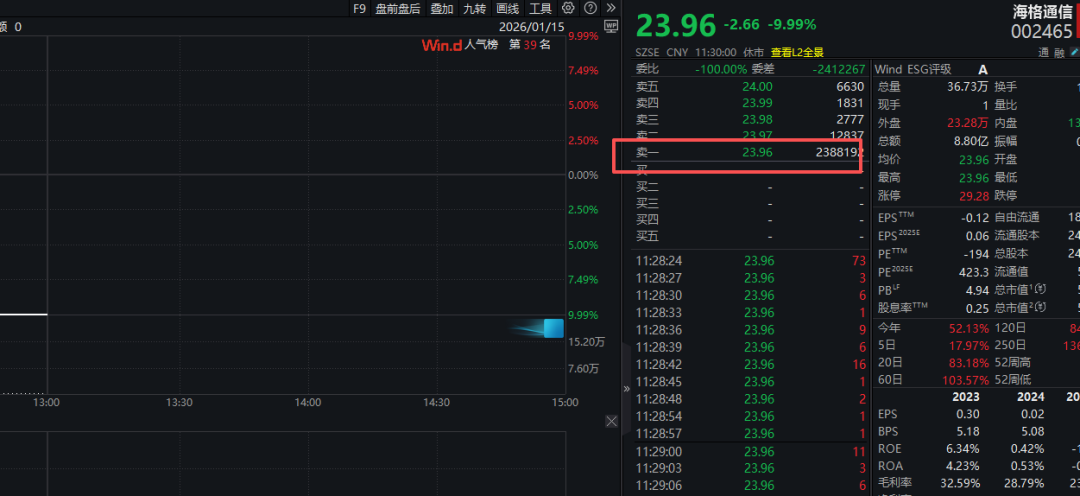
Market Overview - The A-share market experienced a decline this morning, with major indices falling to varying degrees. The Shanghai Composite Index briefly dropped below the 4100-point mark, closing down 0.6%, the Shenzhen Component down 0.44%, the ChiNext Index down 1.02%, and the Sci-Tech Innovation Board Index down 2.02% [4][19]. Sector Performance - The non-ferrous metals sector led the market, with gains exceeding 3%. Stocks such as Zinc Industry Co., Sichuan Gold, and Luoping Zinc Electric reached their daily limit up [4][19]. - Multiple metal futures prices continued to rise, with the main contract for tin futures increasing over 9% and nickel futures rising over 7% [5][20]. Notable Stocks - Several recently popular stocks, including Haige Communication, Yanshan Technology, and Goldwind Technology, saw significant sell orders exceeding 1 billion yuan at their sell one positions [2][24]. - Haige Communication, a recent star stock, had a sell order of nearly 240 million shares, valued at over 5.7 billion yuan, and recently announced a projected net loss for 2025 due to industry adjustments and increased investment in innovative businesses [10][27]. - Yanshan Technology also faced heavy selling, with about 400 million shares on the sell one position, valued at approximately 4.8 billion yuan. The company announced that its brain-machine interface and brain-like intelligence business is still in the early stages and has not yet generated revenue [12][29]. - Goldwind Technology had a sell order of around 130 million shares, valued at about 3.9 billion yuan, and has seen its stock price double in the past month [14][29]. New Listings - A new stock, Zhixin Co., debuted today with a maximum intraday increase of 265.63%. The company specializes in the development, processing, production, and sales of automotive stamping parts and related molds, serving major automotive manufacturers [8][23]. Trading Activity - The trading volume for these popular stocks has been notably high, often exceeding 10 billion yuan in daily turnover, indicating larger scale buy and sell orders compared to other stocks [16][31].



福特CEO:我开小米汽车是为了…
Guan Cha Zhe Wang· 2026-01-15 04:04
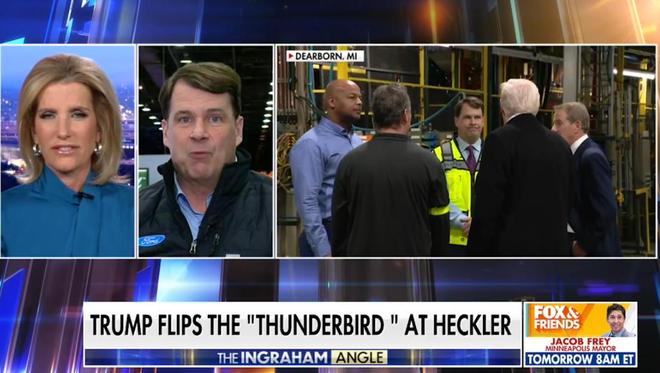
Core Viewpoint - Ford's CEO Jim Farley emphasizes the need to reduce reliance on Chinese components to mitigate supply chain risks and address competitive challenges posed by Chinese automakers [1][3][4] Group 1: Supply Chain and Competition - Ford plans to gradually decrease its dependence on Chinese parts, highlighting the importance of maintaining price advantages for popular models like the F-150 [1] - The company has learned from past experiences, such as the COVID-19 pandemic and recent rare earth supply issues, that global supply chains, including those involving China, can be vulnerable [1][3] - Farley acknowledges the competitive threat from Chinese automakers, particularly in the electric vehicle sector, and stresses the need for a fair competitive environment [3][5] Group 2: National Security and Government Subsidies - Farley raises concerns about national security regarding Chinese vehicles, noting their advanced technology and surveillance capabilities [3][4] - He criticizes the government subsidies that Chinese automakers receive, which can provide them with a price advantage of $4,000 to $5,000 [4][5] - The need for a data policy to ensure data remains within the U.S. cloud and the development of in-car entertainment systems is highlighted as essential for maintaining competitive integrity [4] Group 3: Industry Response and Political Context - The American automotive industry, represented by major manufacturers like Ford and General Motors, warns of the significant threat posed by Chinese automakers and urges the government to prevent their entry into the U.S. market [7] - Former President Trump's remarks support the idea of foreign automakers, including Chinese companies, establishing factories in the U.S., which raises concerns among domestic manufacturers [7] - The "Automotive Innovation Alliance," comprising major U.S. automakers, has expressed fears about the future of the industry if Chinese manufacturers gain a foothold in the U.S. [7]


新能源车ETF(159806)涨超2.5%,行业智能化进程加速
Mei Ri Jing Ji Xin Wen· 2026-01-15 04:02
Group 1 - The Shanghai Municipal Government has issued a three-year action plan (2026-2028) to support the transformation and upgrading of advanced manufacturing, focusing on the development of smart connected new energy vehicles [1] - Geely Auto Group has obtained a full L3 autonomous driving road test license in Hangzhou, while BAIC Blue Valley's L3 vehicles are officially on the road and plan to gradually open to individuals [1] - From 2024 to 2025, China is expected to achieve 18.3 million vehicle trade-ins, with nearly 60% being new energy vehicles, and the annual growth rate of scrapped vehicle recovery is projected to reach 45.8% [1] Group 2 - The New Energy Vehicle ETF (159806) tracks the CS New Energy Vehicle Index (399976), which selects listed companies involved in the lithium battery, charging pile, and new energy vehicle sectors to reflect the overall performance of related securities [1] - The CS New Energy Vehicle Index comprehensively covers the new energy vehicle industry chain, including key segments such as batteries, charging facilities, and vehicle manufacturing, with 50 representative securities selected as constituent stocks [1] - The index emphasizes sectors such as batteries, passenger vehicles, and energy metals, reflecting the overall development trend of the new energy vehicle industry [1]
连续17年产销稳居全球第一!汽车产业竞争力源自硬实力
Guo Ji Jin Rong Bao· 2026-01-15 02:29
转自:人民日报 原标题:产销连续3年保持3000万辆以上规模 汽车产业竞争力源自硬实力(经济聚焦) 安徽省合肥市新桥智能电动汽车产业园,一辆新车下线。 新华社记者 黄博涵摄 重庆市沙坪坝区三峡广场,市民在试驾新能源汽车。 孙凯芳摄(影像中国) 数据来源:中国汽车工业协会 制图:汪哲平 核心阅读 电动化技术持续进阶、前沿技术加快应用、反内卷措施先后落地……我国汽车产销量持续增长。亮眼成 绩单,折射出我国经济顶压前行、向新向优发展的强大韧性和澎湃动能。 近千台工业机器人组成"钢铁森林",在自研数字化底座和AI视觉"天眼"加持下,实现冲压精度1.8微 米、焊装自动化率100%……走进51秒下线一台整车的比亚迪深汕工厂,紧张有序的生产场景映入眼 帘。 "方程豹钛7上市80天,累计销量突破5万台,成交均价超21万元,2025年12月销量超过3.4万台。"方程 豹汽车总经理熊甜波说。 电动化技术持续进阶,消费者补能焦虑大幅缓解,让新能源汽车对传统燃油车替代进程持续推进。2025 年,我国新能源汽车产销分别完成1662.6万辆和1649万辆,同比分别增长29%和28.2%,新能源汽车新 车销量达到汽车新车总销量的47.9% ...
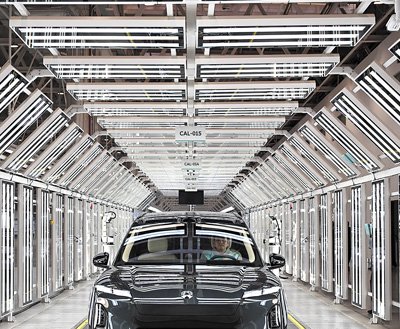
智谱CEO谈DeepSeek冲击;字节正研发新一代豆包AI耳机;携程回应涉嫌垄断被立案调查;传一加手机CEO刘作虎遭通缉...
Sou Hu Cai Jing· 2026-01-15 02:24
Group 1 - The Chinese government has extended the personal income tax refund policy for home purchases until December 31, 2027, which aims to stimulate the real estate market by allowing tax refunds based on the sale and purchase amounts of properties [3][3][3] - The U.S. State Department announced a suspension of visa processing for 75 countries, effective January 21, as part of a reevaluation of screening and review processes [3][3][3] - The U.S. has imposed a 25% tariff on certain imported semiconductors and related products, effective January 15, as part of its trade policy [4][4][4] Group 2 - OpenAI has signed a three-year agreement with Cerebras to procure up to 750 megawatts of computing power, with the total deal exceeding $10 billion, focusing on AI chip technology [7][8][8] - Skild AI has completed a $1.4 billion financing round, raising its valuation to over $14 billion, with participation from major investors including SoftBank and Nvidia [25][25] - Proxima, an AI biotechnology company, has secured $80 million in seed funding, led by DCVC, to advance its research and development efforts [26][26][26] Group 3 - The Chinese smartphone market is projected to see Huawei regain the top position by 2025, with an estimated total shipment of 285 million units, reflecting a slight decline of 0.6% year-on-year [22][22][22] - The private equity firm, Huanfang Quantitative, reported a 56.6% average return in 2025, with assets under management exceeding 70 billion yuan, making it one of the leading quantitative hedge funds in China [6][6][6] - Ctrip is under investigation for alleged monopolistic practices, with the company stating it will cooperate fully with regulatory authorities [13][13][13]

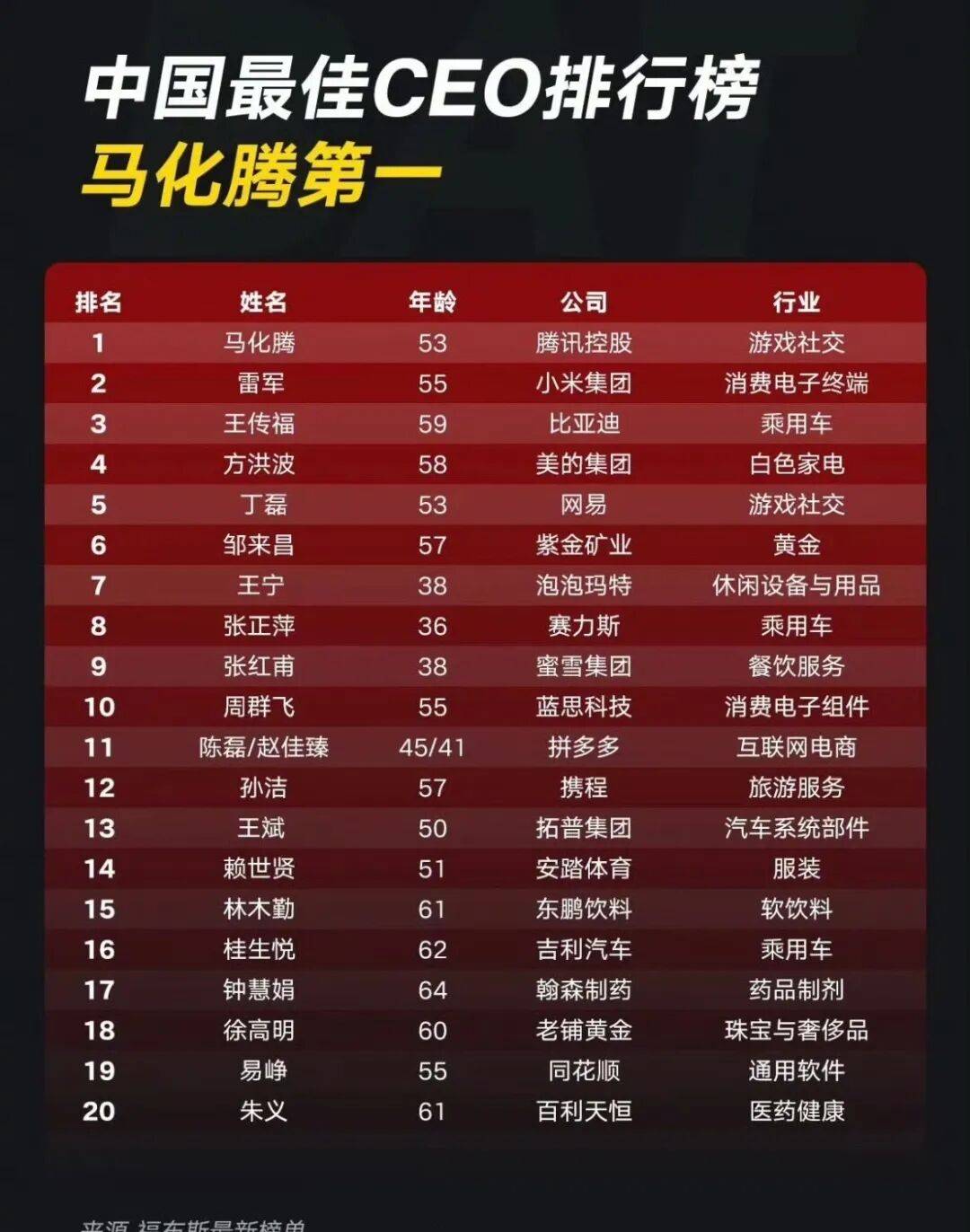
约 20 万元起售,「丐版」特斯拉即将入华,舒适配置全砍
Xin Lang Cai Jing· 2026-01-15 02:21
Core Viewpoint - Tesla plans to introduce a standard version of Model 3/Y in the Chinese market, aiming to stimulate demand and stabilize sales amid a maturing product cycle [1][26]. Group 1: Product Launch and Pricing - The standard version of Model 3/Y is expected to enter the Chinese market soon, with Model 3 leading the launch followed by Model Y [3]. - The anticipated starting prices for the standard versions are approximately 200,000 RMB for Model 3 and 230,000 RMB for Model Y, reflecting a significant price reduction from their North American counterparts [4][3]. Group 2: Product Features and Adjustments - The standard versions will feature significant reductions in comfort and luxury configurations, focusing more on the driving tool aspect rather than comfort [14]. - Key changes include the removal of certain aesthetic features, a downgrade in interior materials, and a reduction in battery capacity, leading to a decrease in range to around 516 kilometers [12][9][7]. - The standard version will also have a simplified naming structure, with the Premium version above it, which retains more features [5][6]. Group 3: Software and Subscription Model - Tesla is shifting from a one-time purchase model for Full Self-Driving (FSD) to a subscription-based model, aiming to increase recurring revenue [15][20]. - This transition is expected to enhance the company's valuation by providing a more stable income stream, with potential subscription prices in China estimated between 400-600 RMB per month [20] . Group 4: Market Challenges and Competition - Despite the introduction of the standard version, Tesla's sales in North America have declined, indicating that the new model may not attract enough new customers and could cannibalize higher-end sales [23][26]. - The competitive landscape in China is intense, with local brands like Geely, BYD, and Xiaomi offering more luxurious features at similar price points, which may undermine the appeal of Tesla's standard version [26][23]. - If the standard version fails to resonate with price-sensitive consumers, it could dilute Tesla's brand value and market share in China [26].

再生材料推广难在消费端接受度不高,需政策激励与约束并举
Xin Lang Cai Jing· 2026-01-15 02:06
Core Viewpoint - The National Development and Reform Commission and six other departments have jointly released the "Action Plan for Promoting the Application of Recycled Materials," emphasizing the automotive industry as a key area for increasing the use of recycled materials [3] Group 1: Action Plan and Industry Focus - The action plan encourages automotive manufacturers to enhance the application of recycled steel, non-ferrous metals, and glass in components such as frames, bodies, and wheels, and to achieve large-scale application of recycled plastics in interior and exterior parts [3] - It promotes collaboration between automotive manufacturers and companies involved in dismantling scrapped vehicles, recycling materials, and producing parts to establish a closed-loop supply system for recycled materials [3] Group 2: Design and Recycling Challenges - Current automotive product designs focus on performance and cost, often neglecting future recycling needs, leading to difficulties in material separation during dismantling [5] - There is a lack of unified technical standards for green design, which complicates the recycling process and affects the quality of recycled materials [5] - Companies like Geely are beginning to integrate a closed-loop collaborative mechanism throughout the product lifecycle, from design to recycling [5][6] Group 3: Industry Standards and Support - Recycled aluminum companies and industry associations need to advance standardization efforts, as existing standards are based on primary aluminum, which does not account for the complexities of recycled materials [7] - The establishment of a comprehensive service system and support platform is necessary to track data throughout the design, production, use, and recycling processes [7] Group 4: Consumer Awareness and Market Dynamics - Consumer awareness and acceptance of low-carbon products directly influence their willingness to pay for such products, which is currently low in China compared to Europe [8][9] - The perception of recycled materials among Chinese consumers often associates them with lower quality, creating resistance to paying a premium for low-carbon attributes [8][9] - As the second-hand car market matures and lifecycle management becomes more prevalent, consumer understanding of vehicles as "circular assets" is expected to improve [10] Group 5: Government Role and Incentives - The government is encouraged to create green consumption scenarios and incentivize the production of green products, similar to early support for electric vehicles [10] - Suggestions include providing subsidies for vehicles containing a certain percentage of recycled materials and rewarding companies that adopt green design practices [10]

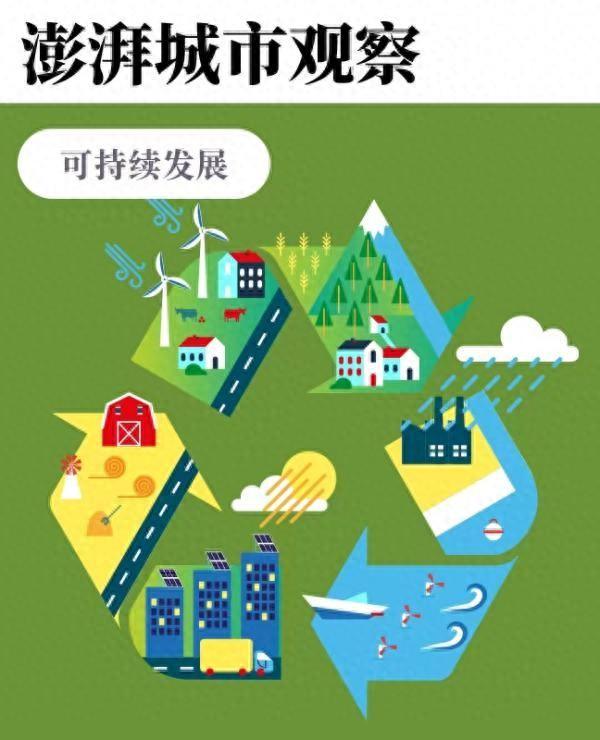
金元证券每日晨报-20260115
Jinyuan Securities· 2026-01-15 01:54
2026 年 01 月 15 日 每日晨报 | 指数 | 开盘价 | 收盘价 | 近一交易日% | 近20交易日% | | --- | --- | --- | --- | --- | | 道琼斯工业 | 49,088 49,150 | | -0.09 | 1.51 | | 纳斯达克 | 23,564 23,472 | | -1.00 | 1.80 | | 标普500 | 6,937 | 6,927 | -0.53 | 1.62 | | 富时100 | 10,137 10,184 | | 0.46 | 5.55 | | 日经225 53,827 54,341 | | | 1.48 | 8.36 | | 上证综指 | 4,139 | 4,126 | -0.31 | 6.67 | | 深证成指 | 14,194 14,249 | | 0.56 | 8.67 | | 科创50 | 1,479 | 1,501 | 2.13 | 13.80 | | 恒生指数 | 26,972 27,000 | | 0.56 | 3.94 | | 主要市场股指表现 | | | | | | 15.00 (%) | | 近一交易日% | 近2 ...
1月15日投资早报|向日葵被证监会立案,中信证券2025年净利润300.51亿元同比增长38.46%,今日一只新股上市
Sou Hu Cai Jing· 2026-01-15 00:40
Market Performance - On January 14, 2026, the A-share market showed mixed results with the Shanghai Composite Index closing at 4126.09 points, down 0.31%, while the Shenzhen Component Index rose 0.56% to 14248.6 points, and the ChiNext Index increased by 0.82% to 3349.14 points. Over 2700 stocks rose, with total trading volume reaching 3.94 trillion yuan, an increase of 290 billion yuan from the previous trading day [1] - The Hong Kong stock market saw a late rally, with the Hang Seng Index rising 0.56% to 26999.81 points and a total trading volume of 340.39 billion HKD. The Hang Seng China Enterprises Index increased by 0.32%, while the Hang Seng Tech Index rose by 0.66% [1] - In the U.S. stock market, all three major indices closed lower, with the Dow Jones Industrial Average down 42.36 points (0.09%) at 49149.63 points, the Nasdaq down 238.12 points (1.00%) at 23471.75 points, and the S&P 500 down 36.75 points (0.53%) at 6926.99 points [1] New Stock Listings - A new stock, Zhixin Co., Ltd. (stock code 603352), was listed today with an issue price of 21.88 yuan per share and a price-to-earnings ratio of 26.85. The company specializes in the development, processing, production, and sales of automotive welding parts and related molds, serving major clients such as Changan Automobile, Geely, Ford, NIO, Li Auto, BYD, Great Wall Motors, and others [3] Regulatory News - The Shanghai Stock Exchange announced that some investors engaged in abnormal trading behavior during the trading of Guosheng Technology, leading to self-regulatory measures such as account trading suspensions. The exchange reiterated the importance of cautious investment and compliance with trading regulations [4] - A joint meeting was held by the Ministry of Industry and Information Technology, the National Development and Reform Commission, and the State Administration for Market Regulation to address the need for orderly competition in the new energy vehicle industry. The meeting emphasized the rejection of chaotic "price wars" and the importance of maintaining a fair market environment, with strict actions against non-compliant companies [6] Housing Policy - The Ministry of Finance, the State Taxation Administration, and the Ministry of Housing and Urban-Rural Development announced the continuation of personal income tax policies supporting residents' housing exchanges. From January 1, 2026, to December 31, 2027, taxpayers selling their own homes and purchasing new ones within one year will receive tax refunds based on the sale price of the old home [5]

沃镭智能科创板IPO已问询 位居本土第三方检测装备厂商第一位
智通财经网· 2026-01-15 00:16
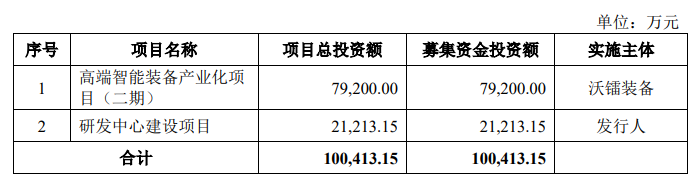
Core Viewpoint - Hangzhou Wolai Intelligent Technology Co., Ltd. has applied for listing on the Shanghai Stock Exchange's Sci-Tech Innovation Board, with a fundraising target of 1.004 billion yuan, and is recognized as a key "little giant" enterprise in the field of intelligent manufacturing solutions for emerging industries such as new energy vehicles and power semiconductors [1]. Group 1: Company Overview - Wolai Intelligent focuses on the research, development, production, sales, and service of intelligent detection equipment and intelligent manufacturing production lines, providing comprehensive solutions for the new energy vehicle and power semiconductor industries [1]. - The company has developed advanced detection technologies and intelligent control technologies, achieving domestic leadership in automotive electronic testing technology platforms and breaking the long-standing foreign monopoly in related technologies and products [1][2]. Group 2: Market Position and Technology - The company has established six core technologies, including multi-parameter mixed testing technology for automotive electronics and high-precision assembly technology for automotive electronic intelligent measurement and control [2]. - Wolai Intelligent has a high market share in key application areas such as automotive electronic controllers and intelligent driving domain controllers, with a projected market share of 10.2% in production-level intelligent driving domain controller testing equipment by mid-2025, ranking first among domestic third-party testing equipment manufacturers [3]. Group 3: Financial Performance - The company reported revenues of approximately 262 million yuan, 377 million yuan, 734 million yuan, and 267 million yuan for the years 2022, 2023, 2024, and the first half of 2025, respectively [4]. - Net profits for the same periods were approximately 26.8 million yuan, 34.8 million yuan, 84.9 million yuan, and 20.2 million yuan [4]. - The total assets of the company reached approximately 1.857 billion yuan in the first half of 2025, with a debt-to-asset ratio of 65.13% [5].