科大讯飞

Search documents
兴业证券:寻找计算机板块结构性机会 重点关注AI与国产化兑现、前沿创新的突破
智通财经网· 2025-12-10 03:33
Core Viewpoint - The current upward trend in the computer sector is driven by a combination of industrial innovation, policy support, and performance improvement, with a focus on AI innovation, sustainability of performance improvement, and the potential for policy deepening as key factors for future trends [1] Group 1: AI Applications - The performance enhancement of models is driven by Scaling Law, with intense competition among large language models and rapid advancements in domestic models, particularly with the Nano Banana Pro bringing a multi-modal breakthrough, highlighting the importance of iFLYTEK [1] - Enterprise-level AI is expected to commercialize significantly by 2026, with accelerated implementation in industrial, commercial, special industries, and power sectors, focusing on companies like Zhongkong Technology, Glodon, Huicheng Technology, Nengke Technology, State Grid Information, and Keda Wisdom [1] - General-level AI is seeing increased penetration in office, marketing, programming, finance, securities, intelligent driving, and other scenarios, with key companies including Kingsoft Office, Hehe Information, Foxit Software, Hand Information, Newland, Yonyou Network, Tax Friend, Tonghuashun, Hang Seng Electronics, Zhongke Chuangda, and Yingzi Network [1] Group 2: Domestic Innovation - The global demand for computing power is expanding, with domestic major companies increasing capital expenditures and domestic manufacturers gaining market share, focusing on core chip companies like Haiguang Information, Zhongke Shuguang, Digital China, Inspur Information, Unisoc, Moore Threads, Loongson Technology, Huibo Yuntong, and Zhiwei Intelligent [2] - The domestic software ecosystem is rapidly evolving, with strong growth in EDA, operating systems, and databases, highlighting companies like Gai Lun Electronics, China Software, Dameng Data, Taiji Co., and Top Software [2] - The cybersecurity sector is set to benefit from the upcoming implementation of the revised Cybersecurity Law and new AI security policies, with breakthroughs in quantum-resistant security, focusing on companies like Deepin Technology, Sanwei Xinan, and Tianrongxin [2] Group 3: New Technologies - Quantum technology is receiving policy support, with China holding a certain leading advantage, accelerating applications in quantum computing, communication, and measurement, focusing on companies like Guandun Quantum and Shenzhou Information [3] - Brain-computer interfaces are entering the 3.0 era, achieving breakthroughs in clinical applications, with promising prospects, highlighting iFLYTEK [3] - The commercial aerospace sector is breaking new ground, with a significant increase in the number of satellites in orbit, making "space computing power" a new hotspot in the AI industry, focusing on companies like Zhongke Xingtou, Aerospace Zhizhuang, and SuperMap Software [3] Investment Recommendations and Key Targets - The focus should be on AI, domestic innovation, and cutting-edge technological innovation, with key recommendations including Haiguang Information, Tonghuashun, Kingsoft Office, iFLYTEK, Digital China, Hehe Information, Newland, Glodon, Hand Information, and Nengke Technology [4]


山东肥城:一块钠离子电池“惊艳”突破的背后
Xin Hua Wang· 2025-12-10 02:10
Group 1: Smart Computing and Economic Transformation - The first smart computing application demonstration project in Feicheng has officially started operations, featuring a 100P high-performance computing center to boost the regional digital economy [1] - The project was signed within 300 hours of initial meetings, showcasing rapid development and strong attraction effects in Feicheng's recent initiatives [1] - Feicheng is transitioning from a traditional coal city to a "storage energy capital" and is focusing on strategic emerging industries and future industries to enhance economic quality and promote green transformation [1] Group 2: Sodium-Ion Battery Development - Shandong Zero One Four Advanced Materials Co., Ltd. is set to complete a 10GWh Prussian blue-based sodium-ion battery production line by 2026, with an expected annual output value of 1 billion yuan [2] - Sodium-ion batteries offer significant advantages in low-temperature performance, safety, and cost, making them particularly suitable for the energy storage market [2] - The local government has developed a comprehensive strategy for the sodium-ion battery industry, aiming to transition from breakthrough points to industry-wide aggregation [2] Group 3: Financial Support and Innovation - Feicheng provides multi-level capital tools, including angel investment and venture capital funds, to empower enterprise development [3] - A 23 million yuan technology achievement transformation loan has enabled Shandong Zero One Four to focus on research and development [3] - The dual-driven model of "capital + technology" is key to overcoming challenges related to long R&D cycles and high investment risks [3] Group 4: Energy Storage Projects - The 2×300MW salt cavern compressed air energy storage project in Feicheng is set to achieve full capacity grid connection by September next year, acting as a large "power bank" to balance electricity supply and demand [4] - Feicheng is developing a complete industrial development path for salt cavern energy storage, with a total installed capacity of 3480MW across various projects [4] - Once fully operational, these projects are expected to generate 6 billion kWh of electricity annually, reduce CO2 emissions by over 5.6 million tons, and achieve annual revenue exceeding 28.5 billion yuan [4] Group 5: Traditional Industry Optimization - The Shiheng Special Steel Group has become the only national digital leading enterprise in the steel industry in the province, implementing over 280 AI applications for full-process digital management [5] - During the 14th Five-Year Plan period, Feicheng has cultivated a total of 6 national and 20 provincial manufacturing champions, along with numerous digital transformation benchmarks [5] - The city aims to continue promoting its dominant industries, including new energy, new materials, and high-end chemicals, while building a modern industrial system characterized by intelligence, greenness, and integration [5]
OpenAI宣布推出首期OpenAI认证课程,AI人工智能ETF(512930)交投活跃
Xin Lang Cai Jing· 2025-12-10 02:02
消息面上,OpenAI当地时间12月9日宣布推出首期OpenAI认证课程,旨在提供实用的人工智能技 能:"人工智能基础课程"将通过与一批企业和公共服务合作伙伴的试点项目在ChatGPT平台推出;"教 师版ChatGPT基础课程"则已在Coursera平台上线。 AI人工智能ETF紧密跟踪中证人工智能主题指数,中证人工智能主题指数选取50只业务涉及为人工智能 提供基础资源、技术以及应用支持的上市公司证券作为指数样本,以反映人工智能主题上市公司证券的 整体表现。 数据显示,截至2025年11月28日,中证人工智能主题指数(930713)前十大权重股分别为中际旭创 (300308)、新易盛(300502)、寒武纪(688256)、中科曙光(603019)、澜起科技(688008)、科大讯飞 (002230)、海康威视(002415)、豪威集团(603501)、金山办公(688111)、浪潮信息(000977),前十大权重 股合计占比63.92%。 AI人工智能ETF(512930),场外联接(平安中证人工智能主题ETF发起式联接A:023384;平安中证人工 智能主题ETF发起式联接C:023385;平安中证人工智 ...
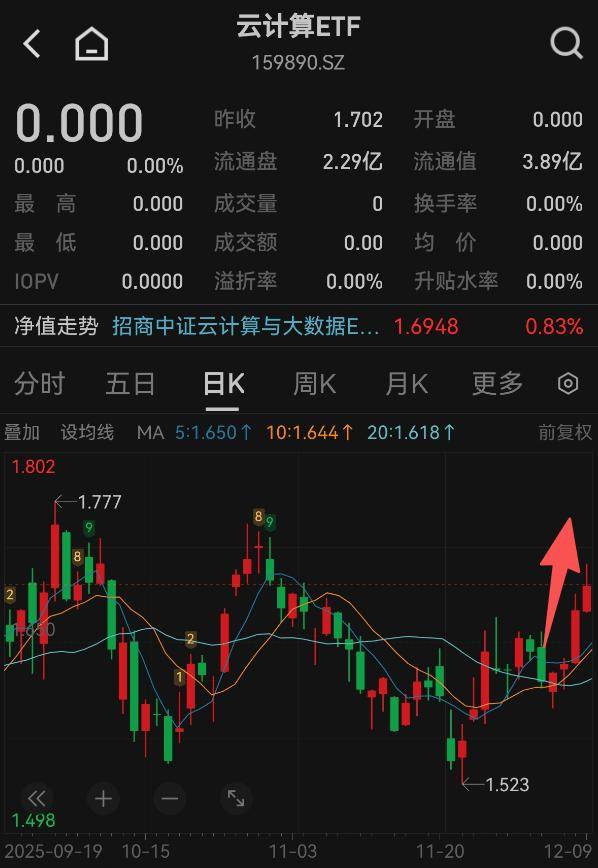
【行业观察】H200若放开如何影响算力格局?光模块强势,云计算ETF(159890)接连4日上涨!
Sou Hu Cai Jing· 2025-12-10 01:17
Core Viewpoint - Nvidia may be allowed to export H200 AI chips to China, which has positively impacted the computing power industry chain, leading to strong performance in related stocks and ETFs [1][3]. Group 1: Impact on Nvidia's Supply Chain - The potential approval for H200 exports is expected to directly benefit Nvidia's supply chain, including sectors like optical modules and PCBs [3]. - The news has led to a significant increase in the stock prices of companies involved in the optical module segment, such as Zhongji Xuchuang and Xinyi Sheng [1]. Group 2: Domestic Market Implications - If H200 exports are permitted, it may boost domestic investment in computing power infrastructure, benefiting local server manufacturers [3]. - The sentiment around domestic computing chips may experience short-term fluctuations, but the long-term focus will remain on self-sufficiency [3]. Group 3: Broader Industry Effects - The cloud computing ETF (159890) tracks a comprehensive index covering leading companies in optical modules, electronic terminals, and software development, reflecting strong market confidence in high-growth sectors [4]. - The approval of H200 chips could catalyze the domestic AI computing power construction process, sustaining the industry's growth [4]. - Open-source Securities suggests that if H200 is approved, it will benefit the domestic AI industry chain and accelerate the development of domestic AI models [4]. Group 4: Sector-Specific Demand Increases - Demand for Nvidia's series of computing power servers may restart, leading to increased needs in AI servers, supernode servers, and server power supply sectors [4]. - There may be a rise in demand for supporting infrastructure such as cooling equipment and power supply for AI servers [4]. - Networking demands may increase, driving the need for switching chips, data communication switches, optical modules, and copper connections [4]. - The recovery of H200 chip supply could promote the comprehensive upgrade of domestic large models, further expanding the demand for domestic computing chips [4].


一块钠离子电池“惊艳”突破的背后
Da Zhong Ri Bao· 2025-12-10 01:00
Core Viewpoint - The article highlights the successful integration of technological and industrial innovation in Feicheng, showcasing its transformation from a traditional coal city to a hub for new energy and materials, particularly through advancements in sodium-ion battery technology and energy storage solutions [2][3][5]. Group 1: Technological Advancements - Feicheng has launched its first intelligent computing application demonstration project, which will create a 100P high-performance computing center, significantly boosting the regional digital economy [2]. - The sodium-ion battery production line at Shandong Zero One Four Advanced Materials Co., Ltd. is expected to achieve an annual output value of 1 billion yuan by 2026, demonstrating the cost-effectiveness and safety advantages of sodium-ion batteries over lithium-ion batteries [3]. - The global first sodium-ion energy storage battery utilizing the Prussian blue technology has been delivered from Feicheng, indicating the city's leading position in the sodium battery industry [3]. Group 2: Strategic Planning and Support - Feicheng has developed a comprehensive development strategy for the "Tai Mountain Lithium Valley," focusing on nurturing new industries and enhancing existing ones through a full-chain innovation service platform [3]. - The local government provides multi-level capital support, including angel investment and venture capital, to empower enterprises throughout their development process [4]. Group 3: Energy Storage Initiatives - The underground salt cavern energy storage project in Feicheng is set to achieve full capacity grid connection by September next year, with a total installed capacity of 3,480 MW, capable of generating 6 billion kWh annually and reducing carbon emissions by over 5.6 million tons [5]. - The project aims to stabilize the power grid by storing energy during low demand and releasing it during peak demand, showcasing Feicheng's commitment to innovative energy solutions [5]. Group 4: Industrial Optimization - Feicheng is not only focusing on new industries but also optimizing traditional industries, as seen in the digital transformation of Shiheng Special Steel Group, which has implemented 280 AI applications for comprehensive digital management [6]. - The city has achieved significant milestones in manufacturing, with six national and 20 provincial champions, and has cultivated numerous digital transformation benchmarks [6].
打通成果转化“最后一公里” 重点领域应用中试基地建设提速
Zhong Guo Zheng Quan Bao· 2025-12-09 20:52
Core Insights - The establishment of the first national AI application pilot base for mobile terminals reflects a strong trend towards accelerating the industrialization of AI technology across various regions in China [1] - The "AI+" initiative aims to create a network of application pilot bases that serve as connectors for industry chain collaboration, accelerators for technology transfer, and incubators for high-quality applications [2] Group 1: Application Pilot Bases - Multiple application pilot bases have been initiated in key sectors such as manufacturing, healthcare, and transportation, with specific bases focusing on addressing common challenges in R&D and manufacturing capabilities [2] - The Shanghai pilot base in the manufacturing sector aims to tackle issues like insufficient intelligent R&D capabilities and the need for improved precision in complex manufacturing [2] - The transportation sector has seen the launch of three pilot bases in Qingdao, Mianyang, and Xiamen, focusing on smart ports, urban logistics, and international logistics supply chains [2] Group 2: Policy Support and Local Initiatives - Local governments are actively incorporating pilot platform construction into their development plans, with several regions outlining specific initiatives in their 14th Five-Year Plans [3] - Zhejiang and Shandong provinces have proposed the establishment of AI application pilot bases in healthcare and core technology areas, respectively, to promote innovation and development [3] Group 3: Participation of Innovative Entities - Various innovative entities, including listed companies, are actively participating in the construction and operation of application pilot bases, leveraging their technological and financial advantages [4] - iFlytek Medical Technology has won a bid worth 428 million yuan for a software service project at the healthcare pilot base, while Guangdian Yuntong has secured contracts totaling 308 million yuan for hardware and software projects [4] Group 4: Progress in Results Transformation - The establishment of application pilot bases has led to significant advancements in the efficient transformation of innovative results, particularly in the financial and healthcare sectors [7] - China UnionPay is advancing the construction of a national AI application pilot base in finance, focusing on developing a comprehensive support capability for "AI+Finance" applications [7] - In healthcare, a collaboration with Beijing Anzhen Hospital has resulted in the release of a large model for ultrasound diagnosis, enhancing the accuracy and efficiency of cardiovascular disease diagnosis [7] Group 5: Importance of Scene Cultivation - Accelerating scene cultivation and openness is crucial for the social testing of new technologies, with a focus on identifying key sub-industries and scenarios for the implementation of "AI+" [8] - The integration of technologies like large models and intelligent agents with consumer electronics and medical devices is expected to facilitate widespread adoption across various sectors [8]
重点领域应用中试基地建设提速
Zhong Guo Zheng Quan Bao· 2025-12-09 20:22
Group 1 - The establishment of the first national AI application pilot base for mobile terminals reflects a strong trend towards accelerating the industrialization of AI technology across various regions [1] - The pilot base aims to assist enterprises in achieving digital and intelligent upgrades from research and development to production [1][2] - Various local governments are actively promoting the construction of application pilot bases in key sectors such as manufacturing, healthcare, and transportation [1][2] Group 2 - The national AI application pilot bases serve as important links for technological innovation and results transformation, connecting scientific research with industrial demonstration and mass production [1][2] - Specific pilot bases have been initiated in manufacturing in Shanghai and in transportation in cities like Qingdao, Mianyang, and Xiamen, focusing on common challenges in these sectors [1][2] Group 3 - Despite advancements in AI technology, challenges remain in the deep integration of technology and industry, such as the mismatch between industry needs and available technologies [2] - The "AI+" initiative aims to create a network of pilot bases that act as connectors, accelerators, and incubators for technological results and quality applications [2] Group 4 - Listed companies are leveraging their technological and financial advantages to participate in pilot base projects, with notable contracts awarded, such as iFlytek's 428 million yuan project in healthcare [3] - The policy environment is increasingly supportive of private enterprises in building significant pilot platforms, as outlined in recent measures to promote private investment [3][4] Group 5 - The establishment of pilot bases has already shown positive results in the efficient transformation of innovative outcomes, particularly in the financial and healthcare sectors [4] - For instance, the China UnionPay is advancing its AI application pilot base in finance, focusing on building comprehensive support capabilities for industry-wide applications [4] Group 6 - The ongoing development of application pilot bases is expected to enhance resource aggregation and collaborative empowerment, providing stronger support for AI companies and research institutions [5][6] - Identifying key industries and scenarios for the implementation of "AI+" is crucial for the successful integration of new technologies into everyday applications [6]

四大赛道沉浸式竞技!2025智能机器人大赛圆满收官
机器人大讲堂· 2025-12-09 13:00
Core Viewpoint - The 2025 Intelligent Robot Competition successfully showcased advancements in China's intelligent robotics technology and its application potential, promoting the integration of talent, technology, products, scenarios, and capital in the industry [18]. Group 1: Competition Overview - The competition, themed "Leading Technology, Innovating the Future," was held on December 8-9, 2025, in Beijing, attracting participants from various sectors including enterprises, universities, and research institutions [1]. - A total of 73 teams advanced to the finals after rigorous preliminary evaluations, focusing on real industrial needs with an innovative competition format [1]. Group 2: Competition Tracks - The competition featured four main tracks: manufacturing, rehabilitation and elderly care, safety and emergency, and innovation, with a total of 7 events and 219 autonomous tasks [3]. - The manufacturing track highlighted the need for high precision and flexibility in industrial settings, showcasing robots like the flexible dual-arm collaborative robot and the Xinghai Tu R1 PRO robot, which excelled in tasks such as mixed parts sorting and packaging [3][7]. Group 3: Rehabilitation and Elderly Care - In the rehabilitation and elderly care track, robots addressed various needs from post-operative recovery to daily assistance, including bed-based service robots that help elderly individuals regain independence [7]. - Multi-functional elderly care robots were capable of performing repetitive tasks such as health monitoring and psychological therapy, demonstrating their versatility in caregiving [7]. Group 4: Safety and Emergency - The safety and emergency track showcased robots like the JW-601 bomb disposal robot, which can navigate complex terrains for hazardous tasks, and the Tianxuan non-explosion-proof inspection robot, which supports various operational modes [10]. - The participating devices covered a full range of emergency scenarios, reflecting China's solid technological foundation in special robotics [10]. Group 5: Innovation Track - The innovation track featured diverse explorations in robotics technology, including the Y-Hand M1 bionic dexterous hand and a high-voltage environment installation robot, enhancing automation in maintenance tasks [14]. - Other teams presented specialized solutions for vertical fields such as wind power and agriculture, indicating a trend towards professionalization and general intelligence in robotics [14]. Group 6: Conclusion and Future Directions - The successful conclusion of the competition marks a new chapter for the industry, emphasizing the importance of practical applications and the integration of innovative elements [18]. - The upcoming 2025 Intelligent Robot Conference on December 10 will further facilitate technology exchange and bridge the gap between research and real-world applications [18].
一则消息,全线爆发!
Ge Long Hui A P P· 2025-12-09 10:54
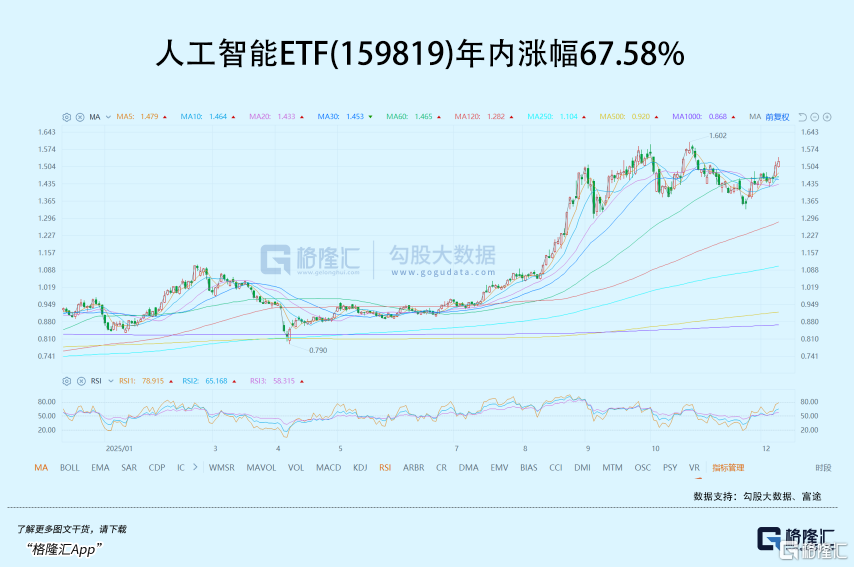
Core Insights - The reintroduction of NVIDIA's H200 to China is seen as a strategic move that could significantly benefit the AI industry in the country, addressing critical supply chain bottlenecks and enhancing computational capabilities [4][28] - The demand for AI computing power in China is expected to surge, with the number of generative AI models nearly doubling from 197 to 439 by mid-2025, indicating a substantial need for high-end computing resources [5][28] Beneficial Sectors - The core sectors that will benefit from the H200's approval include: 1. CPO (Coherent Photonic Optics) sector, which is projected to see a market size exceeding $2.2 billion by 2025, with Chinese companies holding over 30% market share [11][12] 2. AI cloud computing industry, where major players like Alibaba Cloud and Tencent Cloud are expected to increase their AI server clusters significantly, with NVIDIA's solutions regaining a market share of over 60% [14][15] Performance Metrics - CPO companies have shown impressive quarterly performance, with revenue growth rates of 56.83% for Zhongji Xuchuang and 152.53% for Xinyi Sheng, indicating a robust demand for AI computing infrastructure [16] - In the cloud computing sector, Alibaba Cloud reported a 34% year-on-year revenue increase, highlighting the growing importance of AI as a core growth driver [17] Investment Trends - Institutional investments in the AI computing and cloud sectors have surged, with active equity funds holding approximately 40% of their portfolios in computer, communication, and electronic sectors, marking a five-year peak [19][20] - The AI computing sector has become a focal point for institutional investors, with significant increases in holdings for leading CPO companies and AI server manufacturers [21][22] ETF Growth - The AI-focused ETF (159819) has seen substantial inflows, exceeding 6.8 billion yuan in 2025, making it the largest in its category, while the cloud computing ETF (516510) has also attracted over 300 million yuan [23][26][27] Conclusion - The approval of NVIDIA's H200 for the Chinese market is not merely a technical concession but a strategic interaction that could reshape the global AI industry landscape, providing immediate relief and long-term innovation incentives for China [28][29]


成立2年,估值250亿,这个70后第四次创业
Sou Hu Cai Jing· 2025-12-09 10:54
Core Insights - Hippocratic AI, an AI healthcare startup, has achieved a valuation of $3.5 billion (approximately 249 billion RMB) after raising $126 million in its latest funding round, marking a doubling of its valuation in less than a year [2][3] - The company focuses on developing non-diagnostic AI solutions to address global healthcare resource shortages, with applications in patient communication, information collection, and follow-up [2][12] Funding and Growth - Since its inception in May 2023, Hippocratic AI has completed multiple funding rounds, raising over $400 million in total [3] - The latest funding round (C round) took place in November 2025, raising $126 million, led by prominent investors including Andreessen Horowitz and General Catalyst [5] - The company has established partnerships with over 50 large healthcare systems and pharmaceutical companies across six countries, completing over 115 million clinical patient interactions without safety issues [7][18] Product and Technology - Hippocratic AI's core technology is a medical-specific large language model named Polaris, designed to ensure safety and practicality in patient interactions [12] - The company has launched a "Healthcare AI Agent App Store," allowing healthcare professionals to create and customize AI applications without programming knowledge, with over 1,000 non-diagnostic medical scenarios covered [17] - The AI agents have demonstrated high reliability, achieving a clinical evaluation accuracy rate of 99.38%, significantly surpassing the average of 81% for registered nurses in the U.S. [15] Market Position and Strategy - The company targets non-diagnostic patient communication tasks, such as pre-operative preparation and chronic disease management, effectively replacing traditional medical call centers [17] - The business model operates on a usage-based SaaS subscription, with costs approximately one-fourth of traditional human services, and high patient satisfaction ratings [17] - The global AI healthcare market is transitioning from concept to value realization, with a focus on addressing specific, measurable problems that meet regulatory requirements [21]