
大疆

Search documents
东海证券:8月新品发布或拉动扫地机器人需求 关注石头科技等
Zhi Tong Cai Jing· 2025-08-28 04:05
Core Insights - The Chinese robotic vacuum cleaner market is experiencing strong growth, with retail sales increasing by 41.1% year-on-year in the first half of 2025, and unit sales rising by 40.7% [1][2] - Leading companies are enhancing product competitiveness through technological innovations such as bionic robotic arms and AI interaction, which are expected to attract consumers despite challenges from high base comparisons in Q4 [1][2] Group 1: Market Performance - The domestic retail sales of robotic vacuum cleaners reached a significant growth of 41.1% year-on-year in H1 2025, with unit sales up by 40.7% [1] - The average online retail price of robotic vacuum cleaners showed a slight decline in May and June, with a year-on-year decrease of 4.9% and 5.0%, respectively, before a recovery in July [3] Group 2: Product Innovation and Brand Strategy - Major brands are focusing on product innovation to reduce market homogenization, incorporating advanced technologies to enhance user experience [1] - New product launches in August by leading brands like DJI, Roborock, and Ecovacs are expected to attract consumer interest, despite the anticipated challenges during the "Double Eleven" shopping festival [2] Group 3: Global Market Trends - The global smart robotic vacuum cleaner market is projected to ship 20.6 million units in 2024, with a year-on-year growth of 11.2%, and an expected sales revenue of $9.31 billion, reflecting a 19.7% increase [4] - The average price of robotic vacuum cleaners is anticipated to rise by 7.6% to $452 in 2024 due to technological advancements [4] Group 4: Competitive Landscape - Chinese brands dominate the global market, with the top four positions in robotic vacuum cleaner shipments held by Chinese companies, led by Roborock [5] - The growth of cross-border e-commerce has provided Chinese brands with opportunities to penetrate high-end overseas markets, with significant sales increases noted in North America and Northern Europe [5]


东海证券:8月新品发布或拉动扫地机器人需求 关注石头科技(688169.SH)等
智通财经网· 2025-08-28 03:57
Core Insights - The Chinese robotic vacuum cleaner market is experiencing strong growth, with retail sales increasing by 41.1% year-on-year in the first half of 2025, and sales volume rising by 40.7% [1][2] - Leading companies are enhancing product competitiveness through technological innovations such as bionic robotic arms and AI interaction, which are expected to attract consumers despite potential challenges in Q4 due to high base effects [1][2] Group 1: Market Performance - The domestic retail sales of robotic vacuum cleaners reached a significant growth rate of 41.1% year-on-year in H1 2025, with sales volume increasing by 40.7% [1] - The average online retail price of robotic vacuum cleaners showed fluctuations, with a decrease of 4.9% and 5.0% in May and June, respectively, followed by a slight increase of 4.3% in July [3] Group 2: Product Innovation and Brand Strategy - Major brands are focusing on product innovation to enhance user experience and reduce market homogenization, incorporating advanced technologies like self-cleaning and AI interaction [1] - In August, several leading brands, including DJI and Roborock, launched new products, indicating a competitive landscape and potential for attracting consumer interest [2] Group 3: Global Market Trends - The global smart robotic vacuum cleaner market is projected to ship 20.6 million units in 2024, with a year-on-year growth of 11.2%, and an expected sales revenue of $9.31 billion, reflecting a 19.7% increase [4] - Chinese brands dominate the global market, with the top four brands in Q1 2025 being Chinese, led by Roborock, which achieved significant market share in various international channels [5]
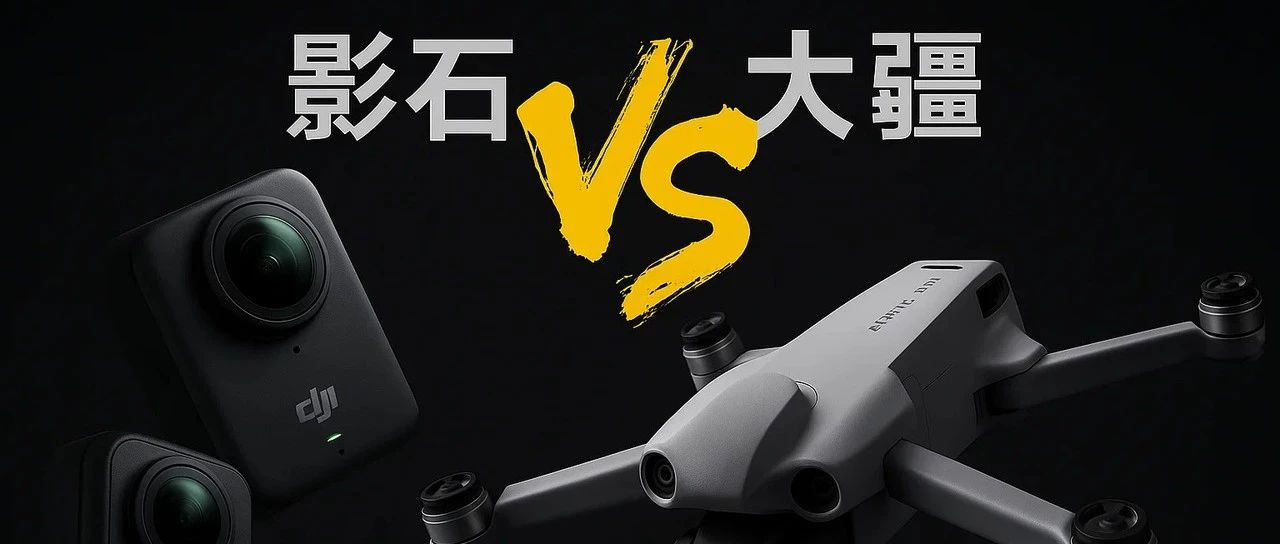
影石无人机升空,能否撼动大疆?
新财富· 2025-08-27 14:54
Core Viewpoint - The competition in the consumer electronics industry, particularly in the drone sector, is intensifying as companies like影石创新 and大疆 are directly challenging each other's core products, indicating a significant shift in market dynamics [2][4][10]. Group 1: Company Strategies - 影石创新 is entering the drone market with its brand影翎 Antigravity, launching the影翎A1, an 8K panoramic drone expected to be released in early 2026, which has already led to a surge in its stock price [2][3]. - 大疆 has responded by launching its Osmo360 panoramic camera, priced at 2500 yuan, which is significantly cheaper than影石's flagship product, indicating a price war in the market [3][10]. - Both companies are located in Shenzhen and are vying for dominance in the smart imaging sector, with影石 positioning itself as a formidable competitor to大疆 [4][10]. Group 2: Market Positioning - 大疆 has established itself as a leader in the drone industry over the past two decades, leveraging its technological innovations and supply chain efficiencies to dominate the consumer drone market [8][10]. - 影石创新, founded in 2010, has successfully captured market share in the panoramic camera segment, positioning itself as a strong challenger to大疆, with a focus on creative software solutions rather than just hardware specifications [10][11]. - The competition is characterized by a fundamental difference in product philosophy, with大疆 focusing on professional-grade quality and影石 emphasizing creative freedom and user-friendly experiences [13][21]. Group 3: Market Potential - The global panoramic camera market is estimated to be around 60 billion yuan, with影石 holding an 81% market share, indicating a strong foothold in this niche [23][24]. - The global drone market is projected to reach 88.9 billion USD, with the consumer drone segment valued at 24 billion USD, where大疆 currently holds 70% market share [24]. - 影石's entry into the drone market signifies its ambition to tap into a broader market, leveraging its expertise in panoramic imaging technology to explore new growth opportunities [22][24].


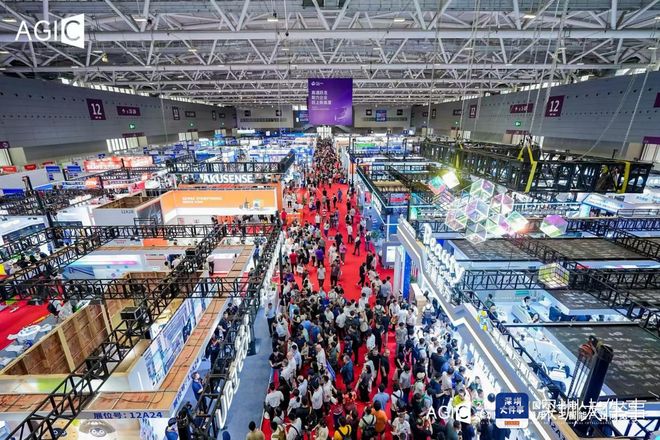
超千家AI企业聚鹏城,深圳(国际)通用人工智能大会启幕
Nan Fang Du Shi Bao· 2025-08-27 12:42
Core Insights - The 2025 AGIC Shenzhen International General Artificial Intelligence Conference and Expo commenced on August 27, celebrating the 45th anniversary of Shenzhen Special Economic Zone with a display of 12,000 drones and AI-driven light shows [1][3] - The conference aims to showcase the latest trends and applications in artificial intelligence, featuring over 1,000 brands and 2,000 cutting-edge products [3][4] - The event is expected to generate a signing amount exceeding 30 billion RMB, with initial estimates already surpassing 20 billion RMB [5] Group 1: Event Overview - The conference theme is "Model-Driven, Intelligent Future," and it spans three days, concluding on August 29 [3] - It features four main exhibition halls covering AGI, intelligent sensing, smart terminals, and IoT, with an exhibition area of 80,000 square meters [3][4] - The event has attracted top tech talents from 20 countries, including Germany, France, Japan, and Singapore, with numerous global AI technologies making their debut [3][4] Group 2: Industry Impact - The conference is designed to accelerate industry integration and technology transfer, providing a high-end platform for global AI innovation and cross-industry collaboration [4] - A total of 300 professional buyer groups are organized to facilitate targeted business matching, with over 7,000 buyer representatives attending [4][5] - The event also emphasizes the importance of Shenzhen as a hub for AI innovation, with local enterprises showcasing nearly 160 new products, marking a 1.62 times increase from 2024 [8][10] Group 3: Future Directions - Shenzhen aims to become a leading AI city by 2026, focusing on open application scenarios, inclusive computing power, and a robust industrial ecosystem [7] - The conference includes over 40 high-level parallel forums, featuring more than 15 academicians and 500 industry leaders discussing the future of AGI [11][12] - Experts emphasize the need for collaboration and innovation in AI to address challenges and leverage opportunities in the rapidly evolving tech landscape [12][13]


汇聚超千家AI企业,深圳这场展会秀“AI+”硬实力
Nan Fang Du Shi Bao· 2025-08-27 12:18
Group 1 - The 2025 AGIC Shenzhen International General Artificial Intelligence Conference and Expo opened with over 1,000 brands from 20 countries participating, expecting more than 120,000 professional visitors over three days [1][7] - The event showcased the latest AI innovations, including the announcement of the "Top 50 AI+ in the Guangdong-Hong Kong-Macao Greater Bay Area" and the "Top 10 Chief AI Officers" [1][9] - The conference highlighted the growth of the AI industry in Shenzhen, with a 23.6% increase in participating companies and over 25% growth in exhibited products compared to 2024 [2][7] Group 2 - The conference featured significant advancements in AI applications, including the introduction of new humanoid service robots and industrial collaborative robots by local companies [2][3] - The event also emphasized the importance of AI in various sectors, with discussions on the integration of AI in scientific research and its potential to transform industries [4][5] - The focus on "elastic computing power" was highlighted as a key area for developing a more accessible and stable computing infrastructure for AI applications [5][6] Group 3 - The conference served as a marketplace, organizing 300 professional buyer groups and attracting over 7,000 buyer representatives, with expected contract amounts exceeding 3 billion yuan [7][9] - The regional collaboration was a highlight, with a "main venue + sub-venue" model promoting participation from the Greater Bay Area cities, enhancing the full-chain display of AI applications [7][8] - Shenzhen's AI industry is projected to reach a scale of 368.5 billion yuan by 2024, with a significant number of enterprises and a robust industrial foundation [8][9]
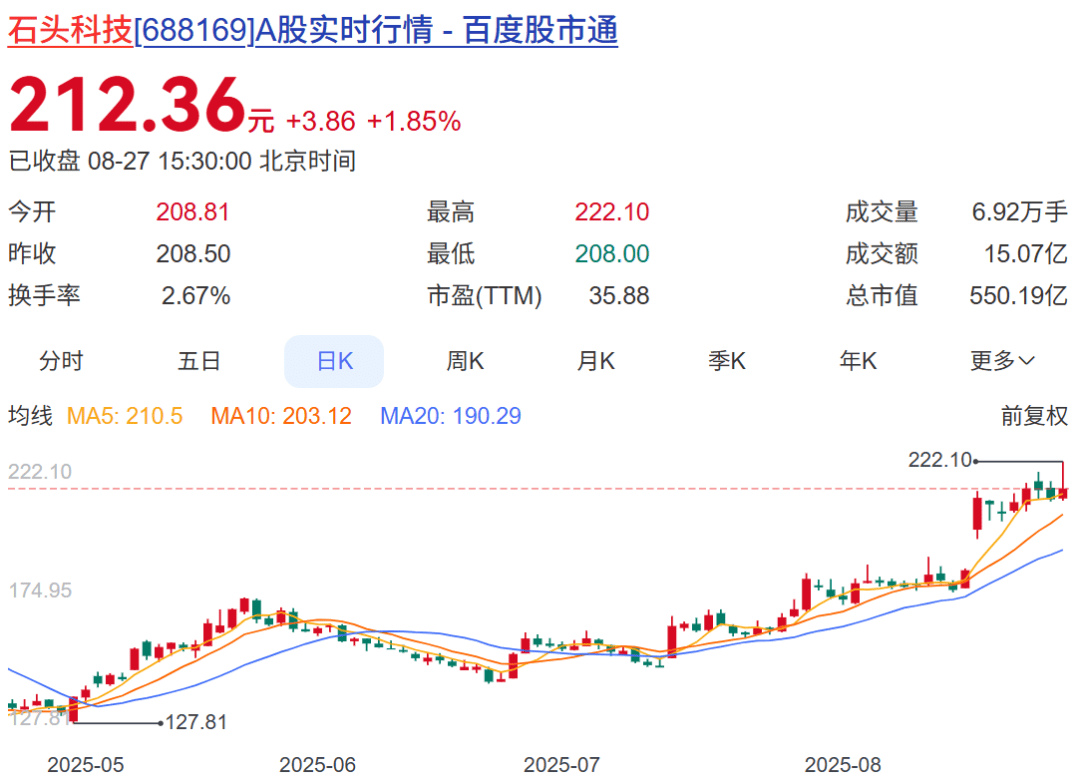
石头科技“贪大”,昌敬“不务正业”
Sou Hu Cai Jing· 2025-08-27 12:06
Core Viewpoint - The article discusses the decline of Stone Technology, once a leading player in the robotic vacuum market, highlighting the challenges faced by the company due to its founder's shift in focus towards electric vehicle development and the resulting impact on its financial performance and investor confidence [1][4][22]. Financial Performance - In the first half of the year, Stone Technology reported a revenue increase of 78.96% year-on-year, reaching approximately 7.9 billion yuan, but the net profit excluding non-recurring gains fell by 41.96% [15][16]. - From 2022 to 2024, Stone Technology's revenue grew from 66.1 billion yuan to 119.18 billion yuan, while net profit decreased from 11.84 billion yuan to 19.77 billion yuan, indicating a troubling trend of increasing revenue but declining profitability [11][14]. - The company's net profit for Q3 2024 dropped by 43.4% year-on-year, marking the largest single-quarter decline since its IPO [11][14]. Market Position and Competition - Stone Technology maintains a leading market share in the robotic vacuum sector but faces increasing competition from established rivals like Ecovacs and new entrants such as DJI [4][22]. - Despite achieving a global market share of 19.3% in Q1 2025, the company is experiencing challenges in its high-end market strategy, particularly in overseas markets where gross margins have declined [22][23]. Leadership and Strategic Direction - Founder Chang Jing's focus has shifted towards his new venture, Extreme Stone Automotive, leading to concerns about his commitment to Stone Technology [4][8][20]. - Chang's significant stock sell-off, totaling nearly 9 billion yuan, has raised questions about his priorities and the financial health of Stone Technology [20][23]. - The company is preparing for a secondary listing on the Hong Kong Stock Exchange, which is seen as a critical step for expanding its global market presence [21][23]. Investor Sentiment - Investor confidence has waned, with some expressing frustration over Chang's perceived lack of focus on Stone Technology amid his automotive ambitions [4][18][23]. - The company's stock price has significantly declined, with a market capitalization drop of approximately 46% from its peak [16][22].
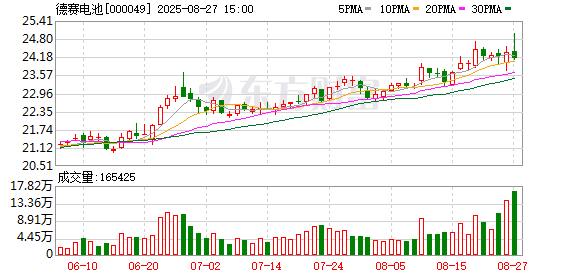
德赛电池:公司积极开拓无人机相关电池业务
Zheng Quan Ri Bao· 2025-08-27 11:41
Group 1 - The company is actively expanding its battery business related to drones and has provided battery products for clients such as DJI [2] - Currently, the revenue contribution from the drone battery business is very low [2]

华为高管:世界上根本没有免费的东西
半导体芯闻· 2025-08-27 10:40
Core Viewpoint - Huawei's automotive business is rapidly expanding, particularly in the field of assisted driving, with various collaboration models with car manufacturers being explored [2][3]. Group 1: Collaboration Models - Huawei's automotive business unit (BU) collaborates with car manufacturers through multiple models, including component supply, single intelligence (either smart cockpit or assisted driving), dual intelligence (both smart cockpit and assisted driving), and full-stack solutions [2]. - The collaboration process involves Huawei supporting car manufacturers throughout the entire lifecycle, from product definition and design to manufacturing and marketing [2][7]. Group 2: Technology Approach - Huawei's approach to assisted driving does not align with the Vision-Language-Action (VLA) model favored by some car manufacturers; instead, it emphasizes the World and Action (WA) model, which directly controls the vehicle through sensory inputs [3][9]. - The WA model is considered by Huawei to be the ultimate solution for achieving true autonomous driving, bypassing the language processing step [9]. Group 3: Commercialization and Market Strategy - Huawei does not have a specific short-term commercialization goal for its assisted driving technology, focusing instead on long-term user-centered strategies and sustainable investment [7]. - The company believes that the market for assisted driving features will evolve, and that pricing strategies should reflect the ongoing development and maintenance costs associated with these technologies [12]. Group 4: Industry Trends and Future Outlook - The number of players in the autonomous driving space is expected to decrease as the industry consolidates, with future success relying heavily on data-driven approaches [10]. - The differentiation in assisted driving technology is minimal, as the primary goal remains zero accidents and fatalities, with pricing determined by perceived value to consumers [11].
华为高管:世界上根本没有免费的东西
Di Yi Cai Jing Zi Xun· 2025-08-27 08:51
Core Insights - Huawei's automotive business is rapidly expanding its assisted driving solutions and collaborating with various car manufacturers, including Baojun, Leap Motor, and Hongqi, indicating a growing presence in the industry [2][3] - The company emphasizes a diverse cooperation model with car manufacturers, ranging from component supply to full-stack solutions, enhancing their capabilities from product definition to marketing [2][9] - Huawei's approach to assisted driving technology diverges from the prevalent Vision-Language-Action (VLA) model, focusing instead on a World and Action (WA) model that utilizes direct sensory inputs for vehicle control [3][10] Cooperation Models - Huawei's cooperation with car manufacturers includes multiple models: component supply, single intelligence (either smart cockpit or assisted driving), dual intelligence (both), and full-stack solutions [2][9] - The collaboration process is designed to deepen over time, with Huawei supporting car manufacturers throughout the entire product lifecycle, from design to marketing [2][9] Technology Perspective - Huawei does not endorse the VLA approach, believing it is not the ultimate solution for autonomous driving; instead, it prioritizes the WA model, which aims for direct control through sensory inputs [3][10] - The company acknowledges the rapid development of assisted driving technology and anticipates a consolidation of players in the market, driven by data, computing power, and algorithms [11] Commercial Strategy - Huawei does not have a specific short-term profitability target for its automotive business, focusing instead on long-term user-centered investments and sustainable growth [8] - The company argues that there is no such thing as a free service in the automotive sector, as costs are often hidden in vehicle pricing or future service fees [13]

大疆扫地机器人被指会撞上玻璃窗!客服称暂无法识别或将改进
Nan Fang Du Shi Bao· 2025-08-27 07:02
Core Insights - DJI's ROMO robot vacuum has been reported to have issues recognizing glass obstacles, leading to collisions with windows [1][2] - The company acknowledges the problem and suggests users set glass areas as "cleaning no-go zones" in the map settings to avoid such incidents [1] - The ROMO series was launched on August 6, featuring advanced obstacle avoidance technology with a claimed 99.9% recognition rate [2] Product Details - The ROMO series is priced between 4,699 yuan and 7,399 yuan, with an average selling price around 5,000 yuan on e-commerce platforms [2] - The product utilizes DJI's proprietary drone technology for path planning and obstacle detection [2]
