
邮储银行

Search documents
关于景顺长城基金管理有限公司旗下部分基金新增晋商银行为销售机构的公告
Shang Hai Zheng Quan Bao· 2025-12-16 19:05
Group 1 - The company has signed a sales agreement with Jinshan Bank to sell certain funds starting from December 17, 2025 [1] - The sales process, opening status, handling time, methods, and fee discounts will be determined by Jinshan Bank [1] - Investors can inquire about details through the company's customer service [3] Group 2 - The company has also signed a sales agreement with China Postal Savings Bank to sell certain funds through the "You Ni Tong Ying" platform starting from December 17, 2025 [6] - Similar to the agreement with Jinshan Bank, the sales process and fee discounts will be based on the platform's arrangements [6] - Investors can consult details through the customer service of China Postal Savings Bank [8] Group 3 - The company has entered into a sales agreement with Shanxi Securities to sell the "Jingshun Changcheng Jingying Shuangli Bond Fund" starting from December 17, 2025 [10] - The sales process and fee discounts will be determined by Shanxi Securities [10] - Investors can inquire about details through the customer service of Shanxi Securities [13] Group 4 - The company has appointed Wang Gaobin as an assistant fund manager for two specific funds, effective immediately [16] - Wang Gaobin holds a master's degree in economics and has 7 years of experience in the securities and fund industry [17]


多家银行调整代理上金所贵金属业务 重点“清理”无持仓不动户
Shang Hai Zheng Quan Bao· 2025-12-16 18:34
Core Viewpoint - The tightening of personal precious metal trading by banks acting as agents for the Shanghai Gold Exchange is aimed at managing market risks, complying with regulatory pressures, and fulfilling investor suitability obligations, leading to a more concentrated and mature market structure in the precious metals investment sector [1][2][3]. Group 1: Bank Actions - Several banks, including Industrial and Commercial Bank of China (ICBC), have begun to clear inactive "three-no" clients (no positions, no inventory, no debts) from their precious metal trading services [1][2]. - ICBC announced that starting December 19, 2025, it will transfer the balances of these clients' margin accounts to their settlement accounts and terminate related business functions [1]. - Other banks such as Agricultural Bank of China and China Construction Bank have also announced similar adjustments to their precious metal trading services [2]. Group 2: Market Implications - The banks' actions are seen as a response to increased compliance costs and market risk management, especially following the introduction of new gold tax regulations [2][3]. - The reduction of inactive accounts may lead to a decrease in speculative trading and a potential decline in market liquidity and trading activity in the short term [4][5]. - In the long term, the shift is expected to guide funds towards more transparent and regulated markets, reducing volatility and promoting rational trading behavior among institutional clients [5][6]. Group 3: Business Transformation - The retail precious metal business of banks is transitioning from a focus on trading channels to asset allocation services, moving away from high-risk, high-leverage products [6]. - Banks are expected to promote lower-risk investment products such as gold ETFs and physical gold sales, catering to the demand for risk-averse investment options [6]. - This transformation indicates a shift towards a "light asset" model, focusing on providing asset allocation services rather than merely facilitating transactions [6].
多家银行调整代理上海黄金交易所贵金属业务
Zheng Quan Ri Bao· 2025-12-16 16:09
Core Viewpoint - Recent adjustments by commercial banks regarding the agency business for personal precious metals trading at the Shanghai Gold Exchange are aimed at enhancing risk management and protecting investor interests due to increased market volatility and compliance requirements [1][4]. Group 1: Business Adjustments - Industrial and Commercial Bank of China (ICBC) announced on December 15 that it will strengthen management of its agency business for personal precious metals trading at the Shanghai Gold Exchange [1]. - Several banks, including major state-owned banks and joint-stock banks, have issued similar announcements regarding the adjustment of their agency business for personal precious metals trading [2][3]. - ICBC will transfer the balances of margin accounts with no positions, no inventory, and no debts to the linked settlement accounts starting December 19, 2025, and will terminate related business functions [2]. Group 2: Account Cleanup - Banks are focusing on cleaning up accounts with no positions, no inventory, and no debts, urging clients to withdraw funds [2][3]. - China Construction Bank and other banks have previously issued notices for clients to transfer their margin balances and terminate agreements related to personal precious metals trading [3]. - The adjustments reflect a broader trend among banks to suspend or stop new trading activities in personal precious metals due to compliance and market conditions [4]. Group 3: Risk Management - The agency business for personal precious metals trading involves various risks, including market, compliance, operational, and reputational risks, with market risk being the most significant [5]. - The ongoing volatility in the precious metals market is testing banks' risk management capabilities and pushing them to innovate in product offerings and customer service [5].
关于黄金交易,多家银行调整
Shang Hai Zheng Quan Bao· 2025-12-16 15:33
Core Viewpoint - The Shanghai Gold Exchange's personal precious metals trading business is tightening as banks like ICBC are actively clearing inactive "three-no" customers (no positions, no inventory, no debts) to manage market risks and comply with regulatory pressures [1][3][4]. Group 1: Bank Adjustments - Multiple banks, including ICBC, have announced adjustments to their agency business for the Shanghai Gold Exchange, with ICBC set to transfer inactive customers' margin account balances to settlement accounts starting December 19, 2025 [3]. - Other banks such as Agricultural Bank of China and Postal Savings Bank have also indicated similar adjustments, with Agricultural Bank planning to terminate agreements with inactive customers starting October 29, 2023 [3]. Group 2: Market Implications - Experts believe that the tightening of bank policies will lead to a more concentrated market with institutional clients, potentially resulting in a more mature and stable market structure [1][5][7]. - The reduction in active personal investors may lead to a decrease in trading volume and liquidity in the short term, but it could also encourage a shift towards more professional trading platforms [6][7]. Group 3: Business Transformation - The retail precious metals business of banks is transitioning from a trading channel to asset allocation services, moving away from high-risk, high-leverage products towards more stable financial products like gold ETFs [9]. - This shift indicates a broader trend in the banking sector towards providing risk-averse investment options that meet consumer demand for gold as a hedge and asset allocation tool [9].
金融护航风帆劲 邮储银行助力企业国际化发展迈入快车道
Sou Hu Cai Jing· 2025-12-16 14:35
Core Insights - Tianhong Electric Technology Co., Ltd. has rapidly grown since its establishment in 2019, achieving an annual output value of 700 million yuan, supported by 19 million yuan in credit from Postal Savings Bank [1][2] Financial Support and Partnership - Tianhong Electric has a deep partnership with Postal Savings Bank, with an annual transaction amount exceeding 500 million yuan and multiple accounts established for margin and foreign exchange [2] - The financial services provided by Postal Savings Bank have been crucial for Tianhong Electric, particularly in securing funds for raw material procurement and fulfilling large orders [2] Production Capacity and Workforce - The company operates a modern production facility covering 80,000 square meters and employs over 380 staff, including more than 50 technical professionals [2] - Tianhong Electric's product range includes various power equipment, with specific production capacities such as 240,000 kVA for 220kV oil transformers (10 units annually), 20 units for 110kV transformers, and 10,000 units for 35kV/10kV transformers [2] International Expansion Strategy - Tianhong Electric is accelerating its internationalization strategy, planning to establish a bonded warehouse in Kazakhstan and an assembly plant in Indonesia, while also developing photovoltaic-specific transformers for the Middle East [2] - Postal Savings Bank aims to support Tianhong Electric's international market expansion through a comprehensive suite of services, including cross-border settlement and trade financing [2] Digital Transformation Initiatives - The company plans to build a cross-border e-commerce platform for power equipment and develop an intelligent quotation system that automatically matches grid parameters for 43 countries [2] - Postal Savings Bank will provide digital financial services to support Tianhong Electric's digital transformation, utilizing big data analysis for precise financing and risk management solutions [2]

工行将关闭贵金属“三无”客户交易 年内已有近10家银行行动
Sou Hu Cai Jing· 2025-12-16 13:49
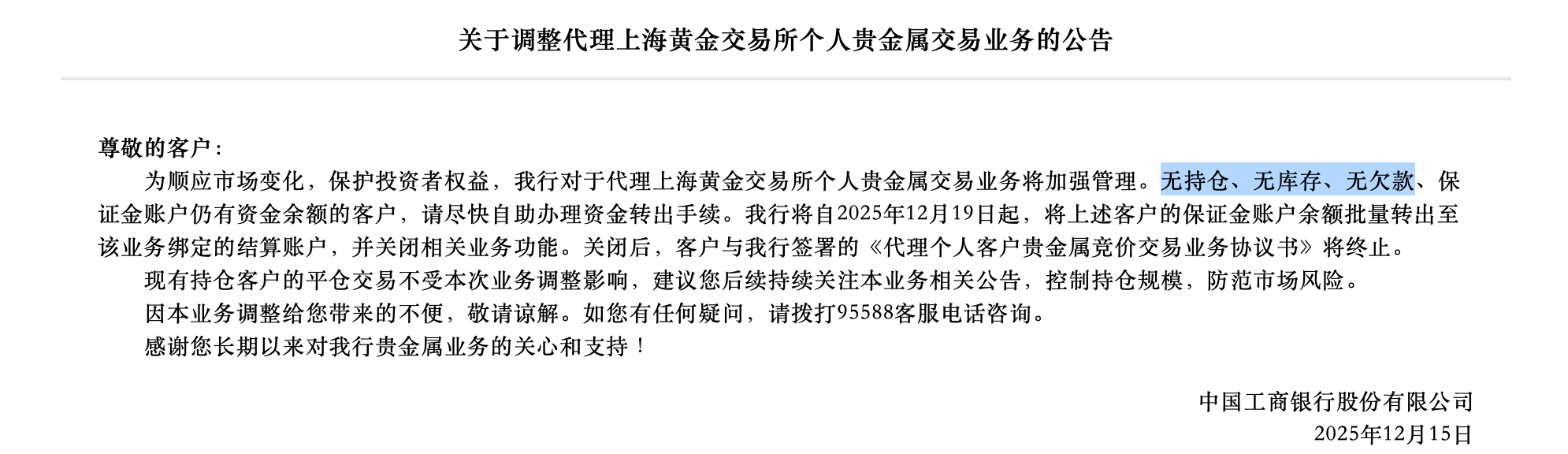
Core Viewpoint - The Industrial and Commercial Bank of China (ICBC) will close the personal precious metals trading services for "three no" clients (no positions, no inventory, no debts) starting December 19, urging customers with remaining balances to withdraw promptly [1][4]. Group 1: Business Adjustments - ICBC's decision is part of a broader trend among nearly ten commercial banks, including Agricultural Bank of China, China Construction Bank, and others, to gradually phase out personal precious metals trading services for "three no" clients since September [4]. - The banks have been adjusting their services to protect individual investors, especially in light of increased volatility in precious metal prices, which poses significant risks for retail investors [4][5]. Group 2: Market Context - The precious metals market has shown remarkable performance this year, with international gold prices increasing by approximately 60% and silver prices rising over 110% as of December 15 [6][7]. - In response to market conditions, banks have made changes to their gold business, including adjustments to minimum investment amounts and risk management protocols [7].

金融+产业+物流 德庆贡柑的 “三位一体”振兴模式
2 1 Shi Ji Jing Ji Bao Dao· 2025-12-16 11:22
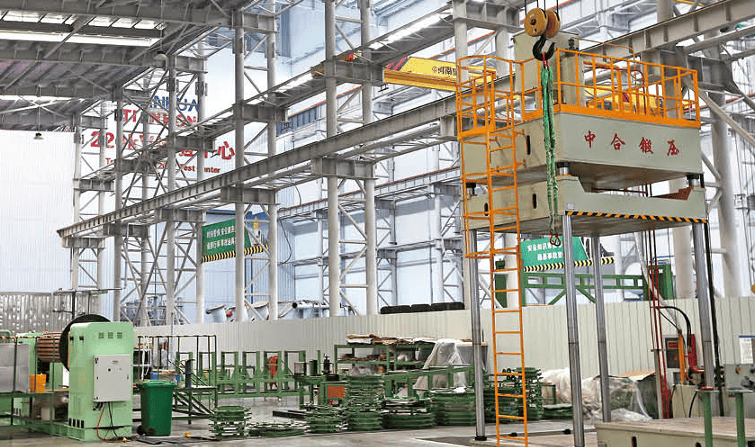
Core Insights - The success of the Deqing Gonggan industry is attributed to its high-quality product endowment and the "finance + industry + logistics" integrated revitalization model, which provides a replicable path for high-quality development in specialty agriculture [1] Group 1: Financial Services - Financial services play a core role as the "funding engine" in the integrated model, with Postal Savings Bank of China (601658) Deqing County branch offering targeted loan products that address the pain points of farmers regarding "difficult and slow financing" [1] - The bank has integrated online approval and credit loans into agricultural production scenarios, significantly improving the efficiency of capital turnover in the industry [1] Group 2: Industry Development - Deqing Gonggan, recognized as a "Yue brand" specialty agricultural product, has achieved scale planting and brand operation with the support of financial services, leading to a steady increase in yield [1] - Individual farms are expected to reach an annual output of 400,000 pounds and sales of 900,000 yuan this year, creating a virtuous cycle of "high quality - high yield - good benefits" [1] Group 3: Logistics Collaboration - Logistics collaboration has effectively addressed the "last mile" issue, with the bank leveraging its unique advantage of "bank + postal logistics" to deeply integrate financial and logistics services [1] - This integration allows farmers to receive financial support while enjoying convenient agricultural product delivery services, establishing a comprehensive ecosystem of "growing well, selling well, and receiving quickly" [1] Group 4: Impact and Reach - By the end of October 2025, the Postal Savings Bank Deqing County branch's model has served over 1,600 agricultural operating entities, with cumulative agricultural loans exceeding 300 million yuan [2] - The model has created a brand reputation of "sending agricultural products through postal services" and "seeking loans from Postal Savings," aligning precisely with the development needs of specialty agriculture [2]
内银股延续跌势 机构称信贷需求待修复 债市波动对银行影响整体可控
Zhi Tong Cai Jing· 2025-12-16 10:34
Core Viewpoint - The banking sector continues to experience a downward trend, with major banks showing significant declines in stock prices due to weak credit demand and market volatility [1] Group 1: Stock Performance - Agricultural Bank of China (601288) fell by 3.11%, trading at HKD 5.3 [1] - China Construction Bank (601939) decreased by 2.12%, trading at HKD 7.39 [1] - China Merchants Bank (600036) dropped by 1.84%, trading at HKD 49.72 [1] - Industrial and Commercial Bank of China (601398) declined by 1.97%, trading at HKD 5.97 [1] Group 2: Market Analysis - According to Galaxy Securities, effective credit demand remains weak, and the trend of deposit migration has slowed [1] - Recent fluctuations in the bond market have raised concerns, with 10-year and 30-year government bond yields at 1.84% and 2.25% respectively, showing an upward trend since early November [1] - The impact on bank trading positions is short-term and relatively low, with the central bank focusing on financial market stability [1] Group 3: Dividend Insights - Changjiang Securities noted that the four major state-owned banks have recently completed their mid-term dividend ex-dividend dates, which historically leads to stock price adjustments [1] - The mid-term dividend ex-dividend date for these banks was moved up to December this year, with expectations for other large banks like China Transportation Bank and Postal Savings Bank to follow suit [1] - Long-term investors may find good entry points if stock price adjustments occur due to ex-dividend trading factors [1]



邮储银行:不再设立监事会,相关制度同时废止
Bei Jing Shang Bao· 2025-12-16 10:31
据悉,现任监事白建军、陈世敏、李跃、谷楠楠不再担任邮储银行监事及监事会相关职务,上述监事均 确认与该行无不同意见,也无任何其他相关事项需要通知该行股东及债权人。邮储银行监事会相关制度 同时废止。 北京商报讯(记者宋亦桐)12月16日,邮储银行(601658)发布公告指出,该行于2025年10月9日召开的 2025年第二次临时股东大会审议批准了《关于修订 <中国邮政储蓄银行股份有限公司章程> 的议案》和 《关于中国邮政储蓄银行不再设立监事会的议案》。近日,邮储银行收到《国家金融监督管理总局关于 邮储银行修改公司章程的批复》,自该行公司章程修订获核准生效之日起,该行不再设立监事会,由董 事会审计委员会依法行使监事会相关职权。 ...
这类个人贵金属账户请注意!工商银行19日开始清理
Xin Lang Cai Jing· 2025-12-16 10:17
Core Viewpoint - The recent adjustments by major banks in China regarding personal precious metals trading reflect a cautious approach towards market risks, with several banks tightening their management of such businesses to protect investor interests [1][3][7]. Group 1: Bank Adjustments - On December 15, Industrial and Commercial Bank of China (ICBC) announced enhanced management for personal precious metals trading, urging clients with idle accounts to withdraw funds by December 19 [1][4]. - Other banks, including Agricultural Bank of China, China Construction Bank, and several regional banks, have also followed suit, indicating a broader trend of reducing personal precious metals business [1][6][7]. - The adjustments are part of a larger industry trend, with banks closing accounts that have had no trading activity for extended periods, reflecting a shift in risk management strategies [7][8]. Group 2: Market Context - The tightening of personal precious metals trading comes in the wake of a new tax policy implemented in October, which distinguishes between investment and non-investment gold, increasing compliance costs for banks [11][12]. - The new tax regulations require banks to track the use of physical gold more stringently, leading to operational challenges, particularly for smaller banks [11][12]. - The demand for gold has shifted towards more liquid financial products like ETFs, which offer lower costs and greater convenience compared to physical gold investments [12]. Group 3: Future Outlook - The global gold market has seen significant price increases, with a reported rise of over 60% in 2025, driven by economic expansion and geopolitical uncertainties [12]. - Looking ahead to 2026, the gold market is expected to experience a dynamic balance of various forces, with ongoing structural demand from investors and central banks potentially supporting prices, while economic recovery and interest rate changes may exert downward pressure [12].
