
清华大学

Search documents
全球首款亚埃米级快照光谱成像芯片“玉衡”问世
Ke Ji Ri Bao· 2025-10-15 23:22
Core Insights - Tsinghua University's Professor Fang Lu's team has developed the world's first sub-angstrom snapshot spectral imaging chip named "Yuheng," marking a significant advancement in intelligent photonics technology for high-precision imaging and measurement [1][2]. Group 1: Technological Breakthrough - The "Yuheng" chip addresses long-standing challenges in spectral imaging systems, specifically resolution, efficiency, and integration [2]. - The chip measures approximately 2 cm x 2 cm x 0.5 cm and operates within a wide spectral range of 400 to 1000 nanometers, achieving sub-angstrom spectral resolution and tens of millions of pixels in spatial resolution [1]. Group 2: Applications and Impact - The chip can be widely applied in fields such as machine intelligence, airborne remote sensing, and astronomical observation [2]. - For astronomical observations, the "Yuheng" chip can capture the complete spectrum of nearly 10,000 stars per second, potentially reducing the survey period for the Milky Way's 100 billion stars from thousands of years to under ten years [2].
北京外国语大学谢韬:强调“当代性”的中国学更符合时代需要|聚焦世界中国学大会
Guo Ji Jin Rong Bao· 2025-10-15 11:57
Core Viewpoint - The second World Sinology Conference held in Shanghai focused on the theme of "Historical China and Contemporary China from a Global Perspective," highlighting the significance of Sinology in understanding modern China and its global implications [1][2]. Group 1: Key Themes of the Conference - The conference featured five parallel forums discussing topics such as the continuity and innovation of civilization from a global perspective, theoretical analysis and experiential insights of Chinese-style modernization, and the future of youth in Sinology [1]. - The emphasis was placed on the unique scale and speed of Chinese-style modernization, which has achieved what took Western developed countries over a century in less than eighty years within a nation of over one billion people [1][2]. Group 2: Leadership and Governance - The leadership of the Chinese Communist Party (CCP) is identified as a fundamental prerequisite for the modernization process, providing necessary political stability and order [2]. - The modernization is framed as a transformation of the national governance system and capabilities, with the primary goal of enhancing people's welfare and achieving national prosperity [2]. Group 3: Academic Development and Focus - Several Chinese universities are actively promoting the construction of Sinology and offering degree programs aimed at international students [3]. - A distinction is made between "Sinology," which traditionally focuses on ancient Chinese history and culture, and "Chinese Studies," which centers on contemporary China, aiming to help the world better understand its political, economic, and social dynamics [3].
超62亿,43高校科研院所仪器采购意向汇总(2025年9月)
仪器信息网· 2025-10-14 09:09
Core Insights - The total budget for instrument procurement intentions from universities and research institutions in 2025 exceeds 62 billion [2] - The National Development and Reform Commission announced the issuance of 1,880 billion yuan in long-term special bonds to support equipment updates, with education being a key focus area [3] - There is a noticeable rebound in the demand for equipment updates, characterized by "policy-driven, high-end upgrades, and accelerated domestic substitution," which is expected to continue in the second half of the year [3] Procurement Summary - A total of 35 universities and research institutions have announced procurement plans with a budget exceeding 60 billion [4] - Notable procurement amounts include: - Peking University: 1.39 billion - Beijing Union Medical College: 3.14 billion - Tsinghua University: 1.83 billion - Chinese Academy of Sciences Nanhai Marine Research Institute: 6.1 billion [5][6][7] Historical Context - Previous months' procurement intentions included: - 40 billion from 35 universities in August 2025 - Over 57 billion from 48 universities in July 2025 - Over 45 billion from 37 universities in June 2025 - Over 34 billion from 34 universities in May 2025 - Over 42 billion from 32 universities in April 2025 - Over 46 billion from 30 universities in March 2025 - Over 23.5 billion from 13 universities in February 2025 [8]

苹果重大宣布:新捐赠!
证券时报· 2025-10-14 04:42
Core Viewpoint - Apple has announced a new donation program to Tsinghua University aimed at fostering sustainable innovation skills among students, building on a decade-long partnership [2][3]. Group 1: Donation Program - The donation will establish a university-wide initiative to equip students with knowledge and skills necessary for sustainable innovation in their future careers [3]. - Apple CEO Tim Cook expressed pride in advancing the collaboration with Tsinghua University and emphasized the importance of empowering students to contribute to environmental efforts [3]. Group 2: Environmental Initiatives - With Apple's support, Tsinghua University will create research platforms and promote collaborative innovation between academia and industry to cultivate green innovation talent [5]. - Apple has achieved carbon neutrality in its global operations since 2020 and is working towards a goal of carbon neutrality across its entire supply chain and product lifecycle by 2030 [5]. - Currently, over 90% of Apple's manufacturing in China is powered by renewable energy [5]. Group 3: Product Launch - Tim Cook recently appeared in Shanghai to announce the pre-order date for the iPhone Air, which will begin on October 17 and officially launch on October 22 [5]. - The iPhone Air is Apple's thinnest iPhone to date at 5.6 mm and utilizes a pure eSIM design, eliminating the physical SIM card slot [6]. - Due to incomplete eSIM support conditions, the iPhone Air will not be available in mainland China at the same time as its global release [6].


高校劳动教育“应有何为”
Zhong Guo Qing Nian Bao· 2025-10-13 03:33
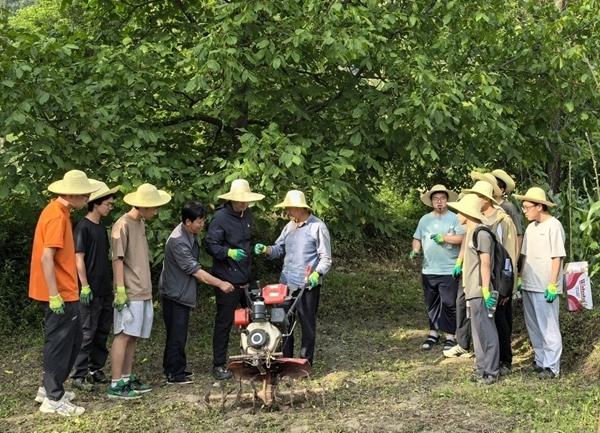
Core Viewpoint - Tsinghua University has introduced a labor education course aimed at enhancing students' understanding of labor and its significance in modern industrial systems, addressing concerns about the disconnect between students and practical labor experiences [1][4][12]. Group 1: Course Objectives and Structure - The course "Modern Industrial Systems and Labor Practice" is a mandatory course for the Marxist Theory major, designed to provide students with practical labor experiences alongside theoretical knowledge [1][4]. - The course includes three main components: theoretical learning, labor practice, and enterprise visits, allowing students to engage directly with the industrial environment [6][8]. - The course aims to deepen students' understanding of the labor process and the relationship between labor and production, moving beyond simplistic views of labor [5][10]. Group 2: Educational Philosophy and Rationale - The course is rooted in the educational tradition of the Communist Party and aligns with the goal of cultivating well-rounded socialist builders and successors [2][4]. - There is a recognition that modern students are increasingly distanced from agricultural and industrial production, necessitating a more hands-on approach to labor education [4][12]. - The course seeks to bridge the gap between theoretical knowledge and practical application, emphasizing the importance of understanding the material basis of labor [5][10]. Group 3: Student Experiences and Insights - Students reported that their experiences in labor practice provided them with a more profound appreciation for the challenges faced by workers, transforming abstract concepts into tangible understanding [8][9]. - The labor practice component involved physically demanding tasks, which helped students realize the effort behind production processes and the value of labor [8][9]. - Students expressed that the course fostered a sense of camaraderie and teamwork, enhancing their overall educational experience [9]. Group 4: Challenges and Future Directions - The course faces challenges in ensuring depth and professionalism in labor education, with ongoing efforts to refine and improve the curriculum based on student feedback [10][12]. - There is an emphasis on the need for continuous exploration and adaptation of labor education practices to better integrate with industrial realities [11][12]. - The course aims to establish a more systematic approach to labor education in higher education, addressing existing gaps and enhancing the overall quality of labor-related learning [12].
高校劳动教育“应有何为” 清华马院探索劳动教育必修课
Zhong Guo Qing Nian Bao· 2025-10-12 23:11
Core Viewpoint - Tsinghua University has introduced a labor education course aimed at enhancing students' understanding of labor through practical experience in agricultural and industrial settings, addressing the disconnect between students and the realities of labor in modern society [1][2][10]. Group 1: Course Objectives and Structure - The course "Modern Industrial Systems and Labor Practice" is a mandatory course for the Marxist Theory major, designed to provide students with a comprehensive understanding of labor through direct engagement in industrial settings [1][3]. - The course consists of three main components: theoretical learning, labor practice, and enterprise visits, allowing students to connect theoretical knowledge with real-world labor experiences [6][7][8]. - The course aims to cultivate a deeper understanding of the labor process, moving beyond superficial knowledge to a more profound appreciation of the complexities of modern production [3][10]. Group 2: Educational Philosophy and Rationale - The course is rooted in the educational philosophy of cultivating well-rounded individuals who understand the importance of labor in society, as emphasized by national educational policies [2][11]. - There is a recognition that traditional labor education in universities has been lacking in depth and professional relevance, necessitating a more integrated approach that combines theory with practical experience [10][11]. - The course seeks to bridge the gap between students and the realities of labor, fostering a sense of empathy and understanding towards workers and the labor process [2][3][11]. Group 3: Student Experiences and Insights - Students participating in the course reported significant shifts in their understanding of labor, moving from abstract concepts to tangible experiences that highlight the challenges faced by workers [6][7][9]. - The hands-on labor practice component allows students to engage directly with the physical demands of industrial work, leading to a greater appreciation for the labor involved in production [7][9]. - Feedback from students indicates a desire for more extensive labor practice experiences to deepen their understanding of industrial labor processes [10][11].

又一批大学,被放了“鸽子”
Hu Xiu· 2025-10-11 07:25
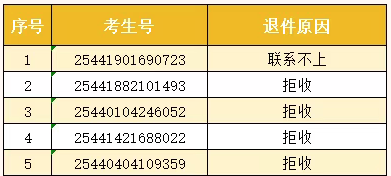
大学刚刚开学一个月,不少高校已在陆续公布"新生弃学名单"。 这意味着,今年又有不少学校被学生放了"鸽子"。 扬州大学公示的名单中,有68名大一新生放弃入学。此前不久,山东一所高校公告,498名新生放弃入 学,引发热议。 职业类院校成为"重灾区",一些学生甚至连录取通知书都选择"拒收"。 一边是"千军万马过独木桥"的激烈竞争,一边却是主动放弃来之不易的入学资格。 在这看似矛盾的现象背后,折射出了当下年轻人怎样的选择与考量? 多地高校官宣新生弃学名单 扬州大学教务处近期发布的公示显示,该校已被录取的68名2025级新生,因未按规定的时间及有关要求 办理入学手续,根据学校相关规定——拟作放弃入学资格处理。 这不是该校第一次被"放鸽子"。根据去年的统计,该校有78名新生放弃入学。 扬州大学是江苏省属重点综合性大学,为江苏省人民政府和教育部共建高校。学校前身是1902年由近代 著名实业家、教育家张謇先生创办的通州师范学校和通海农学堂,拥有国家级重点学科2个。 广西民族大学公告显示,今年有300多名本科新生放弃入学资格。该校今年计划面向全国31个省(市、 区)招收新生9165人,其中普通本科8800人,预科365人。 " ...
走进高校场馆,上一堂科学课
Ren Min Ri Bao· 2025-10-11 02:43
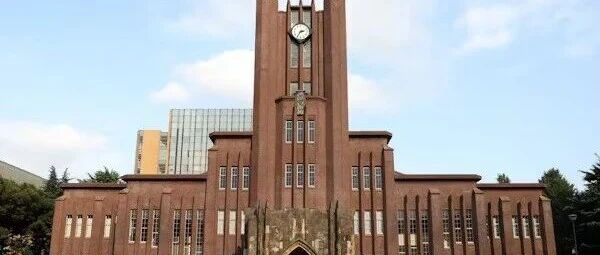
Core Points - The article highlights the importance of university museums in fostering scientific interest and innovation among students through exhibitions and storytelling of renowned scientists' contributions [2][3][4][5][6][7][8][9] Group 1: University Museums and Their Role - University museums serve as vital components of the scientific innovation system, providing students with immersive experiences in science and technology [2] - Exhibitions in these museums often showcase the historical contributions of scientists, inspiring students to pursue careers in science and technology [3][4][5][6] - The museums aim to instill a sense of national pride and responsibility among students, encouraging them to contribute to their country's development [3][4][6][9] Group 2: Student Experiences and Aspirations - Students express a deep emotional connection to the stories of scientists, which motivates them to commit to their studies and future careers [3][4][7] - Many students report that visiting these museums has solidified their academic and career aspirations, particularly in fields related to science and technology [4][8][9] - The museums provide a platform for students to engage with scientific knowledge actively, fostering a culture of inquiry and innovation [6][7][8]
走进高校场馆,上一堂科学课(校馆弦歌)
Ren Min Ri Bao· 2025-10-09 22:22
Core Points - The article highlights the importance of university museums in fostering scientific interest and innovation among students through engaging exhibits and stories of renowned scientists [2][3][4][5][8]. Group 1: University Museums and Their Role - University museums serve as vital components of the scientific innovation system, providing students with immersive experiences in science and technology [2]. - Exhibits in these museums often showcase the contributions of historical figures in science, inspiring students to pursue their academic and professional goals [3][4][5]. Group 2: Inspirational Stories of Scientists - The stories of scientists like Qian Xuesen and Yuan Longping are prominently featured, emphasizing their dedication to national development and the impact of their work on future generations [3][4]. - Students express how these narratives motivate them to contribute to their fields and serve their country, reflecting a strong sense of responsibility and ambition [4][9]. Group 3: Engaging Exhibits and Activities - Various universities organize activities and exhibitions that highlight significant scientific achievements, such as the development of nuclear energy and aerospace technology [5][6][7]. - The hands-on experiences and educational programs offered in these museums are designed to ignite students' passion for science and technology [8][9].