
银河航天

Search documents
北京6G产业发展论坛在北京亦庄举办
Xin Jing Bao· 2025-11-18 03:36
Core Insights - The Beijing 6G Industry Development Forum was successfully held during the 2025 6G Development Conference, focusing on the theme "Intelligently Drawing the Future, Beijing's Colorful 6G" [1] - The forum highlighted ten significant advancements from the Beijing 6G Laboratory, including prototypes for a 256TR U6G base station and a large-scale electromagnetic lens oscillator [1] - The 256TR U6G base station prototype, led by Beijing ZTE Digital Star Cloud Technology Co., achieved a peak downlink speed of 20Gbps under the U6G frequency band, validating U6G as a potential candidate frequency for 6G [1] Industry Developments - Experts from various sectors shared insights on 6G vision, industry collaboration, and open experimental devices, discussing applications in autonomous driving, urban governance, and enterprise private networks [1] - Beijing Economic and Technological Development Zone aims to establish a leading position in the 6G industry by focusing on standard research, key technology breakthroughs, and innovative application scenarios [1] - A special support policy for 6G was released in July, proposing ten measures including funding for core product development and application demonstration rewards to build a comprehensive support system [1] Ecosystem and Collaboration - The Beijing 6G Laboratory is being constructed to support the development of four innovation laboratories focusing on intelligent connectivity, sensing, and integration of space and ground technologies [1] - The development zone is building the 6G SPACES new ecological community, leveraging partnerships with leading companies like ZTE and Hongshan Technology to create a comprehensive industrial service capability [1] - Over 80 upstream and downstream companies have already gathered in the Beijing Economic and Technological Development Zone, covering key areas such as chip devices, base station equipment, and satellite communication equipment, forming an initial 6G industry chain [1]
实探2025年6G发展大会:从愿景到实景 6G创新生态加速成型
Zheng Quan Ri Bao Zhi Sheng· 2025-11-14 16:08
Core Insights - The 6G development landscape is becoming clearer, with a focus on the integration of 6G and AI, multi-technology fusion, and specific application scenarios [2][3][4] - The 6G industry is expected to empower various sectors and consumer markets, becoming a new economic growth point during the 14th Five-Year Plan period [1][2] - Continuous testing and validation are essential for the maturation of 6G technology, which must meet high performance, low cost, and compatibility with existing networks [7][8] Industry Developments - The 6G Development Conference is recognized as the most comprehensive and influential international event in the domestic 6G field, guiding the transition from technical vision to industrial reality [1] - China has completed the first phase of 6G technology testing, accumulating over 300 key technology reserves [2] - The integration of AI with 6G is expected to enhance user experiences and drive the development of new terminal innovations [2][3] Technological Integration - The trend of deep multi-technology integration is evident, with a shift from mere connectivity to intelligent connectivity, requiring collaboration with AI and satellite internet [4][5] - Companies like XinKe Mobile and Yinxing Aerospace are actively developing equipment and solutions that support the "space-ground integration" concept essential for 6G [5][6] Market Opportunities - Major telecom operators and companies like XinKe Mobile and AsiaInfo Technology are already investing in 6G, indicating a growing market interest [8] - As 6G standards are established, companies involved in network planning, infrastructure construction, and core component manufacturing are expected to benefit significantly [8] Future Outlook - The year 2026 is anticipated to be a pivotal year for the integration of 6G and AI, with more innovative technologies expected to emerge [3] - The complexity and collaborative nature of the 6G industry necessitate a comprehensive ecosystem that spans the entire value chain, from technology development to commercial application [7][8]

破局商业航天规模化制造难题,西测测试探路超级代工厂模式
2 1 Shi Ji Jing Ji Bao Dao· 2025-11-14 08:39
Core Insights - The Chinese commercial aerospace sector is experiencing a golden opportunity for development due to policy encouragement and capital support, but reliability and safety in manufacturing have become critical issues for sustainable growth [1][6] - Xicetest (301306), originally focused on inspection and testing, is transitioning to become a "super OEM" for commercial aerospace, aiming to address manufacturing efficiency, quality consistency, and cost control challenges in the industry [1][8] Company Overview - Xicetest was established in 2010 and specializes in third-party inspection and testing services for military and civilian aircraft products, offering a range of services including environmental and reliability testing, electronic component screening, and electromagnetic compatibility testing [3] - The company is expanding its operations across China, with significant laboratory construction in cities like Xi'an, Chengdu, Beijing, and Wuhan, aiming to enhance its service density and broaden its business scope [3] Business Transformation - Following its listing on the ChiNext board in July 2022, Xicetest's business structure is rapidly changing; inspection and testing services, which accounted for 94.43% of revenue in 2020, are projected to drop to 61.85% by 2024, while electronic assembly services are expected to rise to 37.03% [4] - The explosive growth of the electronic assembly business is laying the foundation for Xicetest's development in commercial aerospace manufacturing [4] Strategic Initiatives - In June 2023, Xicetest announced plans to create a comprehensive service chain that integrates electronic assembly, component screening, environmental testing, and electromagnetic compatibility testing, enhancing its service capabilities from component to system level [5] - The concept of a "commercial aerospace super OEM" was introduced in a strategic partnership with Xingyilianxin, aiming to create a closed-loop service for commercial aerospace that includes component screening, large-scale production, and full-process testing [5] Market Context - The high-end manufacturing capabilities in China's commercial aerospace are primarily held by state-owned enterprises, making it challenging for private companies to establish themselves as super OEMs [6] - The commercial aerospace sector is rapidly growing, driven by national policies encouraging private investment and the increasing demand for satellite internet infrastructure and low-altitude economy [7] Competitive Advantages - Xicetest claims to possess five key capabilities necessary for participating in commercial aerospace manufacturing: reliable supply chain management, scalable production capabilities, professional testing experience, fault diagnosis and problem rectification abilities, and comprehensive industry certifications [6] - The integration of inspection and manufacturing services is expected to enhance production efficiency, reduce costs by 30%, shorten delivery cycles by 50%, and achieve a 100% first-time delivery pass rate [8] Future Outlook - As the commercial aerospace market continues to grow, Xicetest's super OEM business is expected to scale up, positioning the company to better control production rhythms and improve competitive advantages [9]

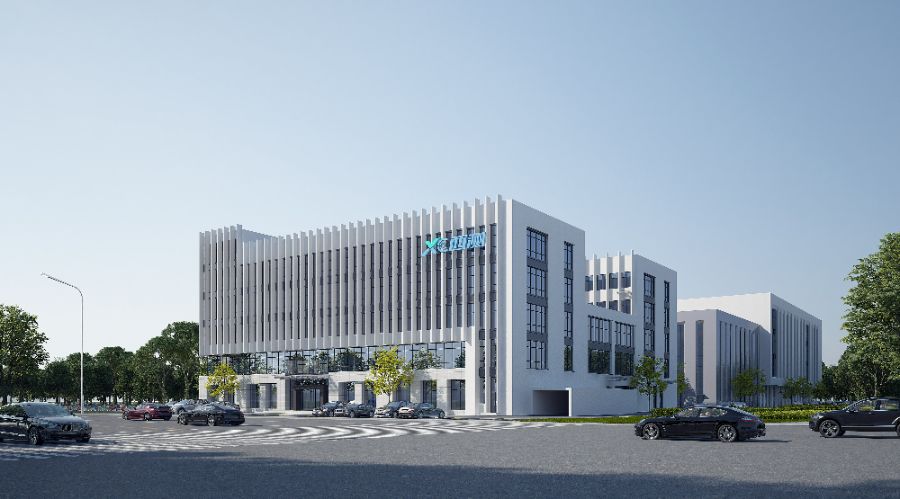
6G已从实验室构想走向产业落地的关键期 几大应用场景抢先看
Mei Ri Jing Ji Xin Wen· 2025-11-14 00:34
Core Viewpoint - The transition from 5G to 6G is underway, with significant advancements in technology and applications, marking a critical phase for the industry [1][2]. Group 1: 6G Development Progress - China has conducted 6G technology trials for four consecutive years, completing the first phase and establishing over 300 key technology reserves [2]. - By June 2025, China is expected to hold approximately 40.3% of global 6G patent applications, leading the world [2]. - The IMT-2030 promotion group plans to complete 6G vision demand research by 2025 and achieve commercial deployment by 2030 [2]. Group 2: Key Features and Applications - The core features of 6G include "integrated sensing and computing," which covers various fields such as low-altitude economy, smart cities, and smart homes [2]. - "AI for Network" and "Network for AI" are two main directions under the "integrated intelligence" concept, enhancing network performance and providing ubiquitous AI access [3]. Group 3: Commercialization and Market Potential - The transition to 6G will require substantial investments, with the commercial viability of the technology being a primary concern for operators [4]. - AI terminals are anticipated to be a new revenue highlight for 6G, with mobile terminals evolving alongside network capabilities [4][5]. - By 2030, smartphones are projected to account for 91% of mobile connections, although user upgrade cycles are lengthening [4]. Group 4: Industrial and Aerospace Applications - Intelligent industrial modules are expected to be key applications in the 6G era, offering significant advantages over 5G modules, including ultra-low latency and dynamic scheduling capabilities [5]. - The integration of satellite internet into 6G is seen as a transformative element, enhancing user experience and emergency response capabilities [6].
中国抢滩390亿太空算力市场
21世纪经济报道· 2025-11-13 14:51
Core Viewpoint - The article discusses the emerging trend of space computing driven by the increasing demand for AI computational power, highlighting initiatives by major tech companies to establish data centers in space to address the limitations of terrestrial data centers [1][4][20]. Group 1: Space Computing Initiatives - Nvidia launched its H100 GPU into space on November 2, marking the first instance of a data center-grade GPU being sent to low Earth orbit [2][8]. - Elon Musk announced plans to expand the Starlink V3 satellite network to build space data centers, aiming for a deployment of 100 GW of data centers annually within 4-5 years [2][9]. - Google initiated the "Project Suncatcher," planning to launch two prototype satellites equipped with TPU chips by early 2027 to deploy AI computing directly in space [2][10]. Group 2: Advantages of Space Computing - Space offers unique environmental advantages, such as solar panels receiving eight times more solar energy than those on Earth, which can alleviate the pressure on terrestrial resources [6][4]. - In-orbit computing can process vast amounts of data generated by satellites, significantly reducing the time required to transmit valuable data back to Earth from hours to seconds [6][7]. Group 3: Market Potential - The market for in-orbit data centers is projected to reach $39 billion by 2035, with a compound annual growth rate of 67.4%, indicating a significant opportunity for the space economy [6][14]. - The Chinese commercial space industry is expected to grow from approximately 1 trillion yuan in 2020 to 2.3 trillion yuan by 2024, with a projected value of around 8 trillion yuan by 2029 [15]. Group 4: Technological Challenges - The development of space computing faces challenges such as high radiation levels affecting chip reliability and the need for effective thermal management in the vacuum of space [19][18]. - The economic feasibility of space computing hinges on reducing launch costs to around $200 per kilogram, which could make the annualized launch power costs comparable to current terrestrial data center electricity costs [18][19]. Group 5: Strategic Positioning - Companies like Guoxing Aerospace are positioning themselves as full-chain participants in the space computing industry, focusing on satellite manufacturing and advanced AI-driven data analysis services [11][15]. - The article emphasizes the potential for Chinese companies to leverage the nascent nature of the space computing sector to overcome existing technological limitations in terrestrial data centers [20].



2025年第43周:跨境出海周度市场观察
艾瑞咨询· 2025-11-09 00:05
Group 1: Cross-Border Expansion and Market Trends - China and UAE's bilateral trade has surpassed $100 billion, with over 15,000 Chinese companies operating in the UAE, 90% of which plan to expand into the Middle East market [2][3] - The Dubai IFZA Free Zone has established its first office in Shanghai to facilitate Chinese companies' entry into the UAE and Middle East, aiming for a 30% increase in the number of serviced Chinese companies by 2024 [2][3] - The Chinese gaming industry is experiencing a significant reshuffle in the overseas mobile game market, with Tencent maintaining the top position but slowing growth, while MiHoYo and Muto Technology have seen substantial ranking increases [5] Group 2: Industry-Specific Developments - The global market for AI short dramas is expected to grow significantly by 2025, with China focusing on local production and AI optimization to enhance efficiency and reduce costs [6] - China's commercial aerospace sector is accelerating its international cooperation, with the successful launch of satellites for various countries, showcasing the maturity and cost-effectiveness of its technology [8] - The Chinese home robot market is thriving globally, with a 16.5% year-on-year increase in shipments, and Chinese brands holding four of the top five positions in the global market share [13] Group 3: Brand Strategies and Market Penetration - Chinese tea brands are rapidly expanding overseas, with Mixue Ice Cream and Heytea adopting different strategies to capture markets in Southeast Asia and Europe, respectively [19][20] - The sports goods industry in China is projected to reach an export value of $28.396 billion in 2024, driven by brand building and supply chain efficiency [18] - BYD has achieved impressive overseas sales, with a significant market share in Europe and plans to surpass Toyota by 2025, despite facing challenges in market education and after-sales service [27] Group 4: Technological Innovations and Globalization - Haier Biomedical is transitioning from product export to ecosystem co-building, focusing on laboratory solutions and smart medication to enhance its global competitiveness [28] - Chery Automobile has seen a 26.2% year-on-year increase in exports, emphasizing a strategy of localized production and a comprehensive product matrix [29] - SHEIN is transforming from a super retail entity to a super ecological entity, leveraging flexible supply chains and digital tools to enhance its global manufacturing capabilities [25]

母基金研究中心助力中央广播电视总台首届《直通未来年度盛典》
母基金研究中心· 2025-11-08 08:47
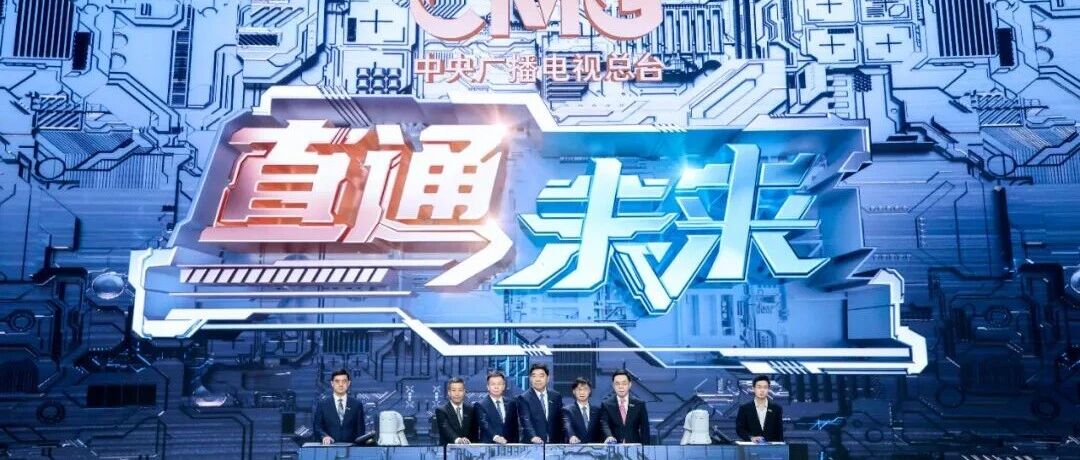
Group 1 - The event "Directly Connecting to the Future Annual Ceremony" was held in Suzhou, Jiangsu Province, focusing on the theme "The Future of Industry, Industry of the Future" to showcase future industry samples and share emerging technology commercialization models [2] - The ceremony aligns with the strategic direction of nurturing and expanding emerging and future industries as outlined in the 20th Central Committee's Fourth Plenary Session, presenting innovative achievements in future industry tracks and analyzing application scenarios and development paths [4][5] - The event featured key figures from various sectors, including the Ministry of Industry and Information Technology and representatives from leading future industry companies, highlighting advancements in low-altitude economy, artificial intelligence, embodied intelligence, commercial aerospace, brain-computer interfaces, and future energy [7][8] Group 2 - The ceremony included discussions on the development, opportunities, and challenges in the commercial aerospace sector, featuring industry leaders and experts [11] - The Mother Fund Research Center announced the initiation of the 2025 annual list evaluation to encourage excellence in private equity mother funds and promote healthy development in the equity investment industry [13][17]
发展6G产业,北京将培育全息通信、无人驾驶等典型应用
Xin Jing Bao· 2025-11-04 13:09
Core Insights - Beijing will host the 2025 6G Development Conference, focusing on the systematic layout of the 6G industry and the establishment of a 6G laboratory to explore "killer" application scenarios such as holographic communication and autonomous driving [1] Group 1: 6G Industry Development Strategy - Beijing is the first in the country to clarify its 6G development strategy, establishing a 6G technology overall group and initiating the construction of a 6G laboratory [2] - The city has formed a collaborative development pattern with "1 overall group + 1 laboratory + 2 R&D bases + 2 industrial bases," aiming to create a globally influential 6G innovation development pilot area [2] - Key enterprises like ZTE and Xiaomi are leading the charge, with a mechanism established for collaboration with major telecom operators [2] Group 2: Technological Breakthroughs - Beijing has built a small-scale experimental environment for 6G, achieving a single-user speed of 8Gbps in tests [3] - ZTE has made over 30 key technological breakthroughs, including the release of prototype machines and satellite payloads [3] - Hongshan Technology has achieved global leadership in ultra-high-speed long-distance terahertz transmission [3] Group 3: Future Development Plans - The city will focus on application ecology, core technologies, and industrial layout to support 6G development [4] - There will be an emphasis on market-scenario-business-network collaboration to identify core enterprises in the industry chain [4] - Key areas of focus include communication network architecture, new spectrum utilization, and intelligent signal processing [4] Group 4: Resource Coordination - The Beijing Economic and Information Technology Bureau will promote the coordination of 6G innovation resources across the city [5] - A communication and collaboration platform will be established among upstream and downstream enterprises in the 6G industry chain [5] - Major enterprises such as ZTE, Hongshan Technology, and Xiaomi will be engaged to form a collaborative mechanism for shared demand, technology, and outcomes [5]
中国航天技术点燃亚太青年“太空梦”
Xin Hua She· 2025-10-30 03:30
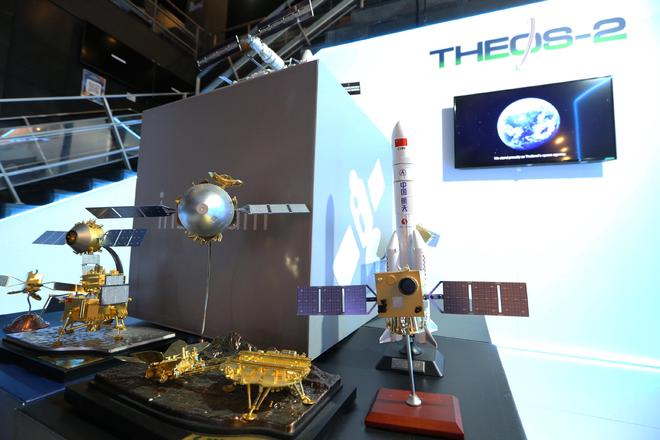
Group 1: Core Insights - The Thailand Space Expo showcased the critical role of remote sensing satellite data in disaster management, with a focus on flood-prone areas [1] - The collaboration between Thailand and China in space technology is deepening, particularly in talent development and project cooperation [3][5] - The Asia-Pacific Space Cooperation Organization plays a key role in facilitating educational opportunities for students from member countries, including Thailand [3] Group 2: Talent Development and Collaboration - Thai students benefit from scholarships to study in Chinese universities, gaining exposure to advanced space technologies [3] - Pakistan signed a cooperation agreement with China to select and train astronauts, marking a significant step in international collaboration in manned space missions [5] - Malaysian youth are increasingly interested in space technology, influenced by China's advancements in the field [5] Group 3: Commercial Space Initiatives - Chinese commercial space companies are prioritizing talent development and technical exchange in the Asia-Pacific region [6] - A partnership between a Chinese commercial space company and a Malaysian firm aims to establish a space talent training platform [6] - Collaboration between Chinese companies and Thai universities is enhancing local capabilities in low-orbit satellite technology [6][8]
通讯|中国航天技术点燃亚太青年“太空梦”
Xin Hua She· 2025-10-30 00:50
Group 1: China-Thailand Space Cooperation - The Thailand Space Expo showcased the role of remote sensing satellite data in disaster prevention and mitigation, highlighting the collaboration between China and Thailand in space technology and talent exchange [1] - The establishment of the "Sirindhorn International Center for Earth Space Information Science" has facilitated significant cooperation in talent training and project development between China and Thailand [2] - Thai students have the opportunity to study at top Chinese universities, enhancing their skills in advanced space technologies [2] Group 2: Broader Regional Impact - Pakistan signed a cooperation agreement with China to select and train astronauts for participation in Chinese space station missions, marking a new chapter in bilateral cooperation in manned spaceflight [2] - Malaysian youth are increasingly interested in China's space technology, with Chinese companies showcasing innovative products at international exhibitions [3] - Chinese commercial space companies are focusing on talent development and technical exchange in the Asia-Pacific region, with plans to establish a space talent training platform in collaboration with Malaysian companies [3][4] Group 3: Technological Advancements - Galaxy Space has established a ground testing station for low Earth orbit broadband communication in Thailand, enhancing local educational institutions' exposure to cutting-edge satellite technology [4] - The collaboration between Chinese commercial space companies and Thai universities aims to develop high-level low Earth orbit communication satellites in the future [4]